This guide explores the essential construction and retail value of every major link style found in modern jewelry inventory. For many jewelry retailers and customers, the sheer variety of link styles can be overwhelming. Selecting the wrong chain for a pendant or failing to understand the structural limits of certain weaves often leads to broken pieces and dissatisfied clients. By mastering all types of chains , you can provide expert recommendations that balance aesthetics with longevity, ensuring your customers walk away with a piece that truly lasts.
Why learn all types of chains for your shop?

Mastering the technical specifications of every link style is the best way to elevate your retail expertise. You must understand all types of chains to help customers select pieces that fit their lifestyle and wardrobe. This knowledge allows you to justify premium pricing and reduce the frequency of customer returns due to breakage.
How does chain knowledge drive retail sales?
You become a trusted consultant rather than just a salesperson when you can explain the mechanics of a weave. This depth of knowledge builds the narrative required for high-end sales and repeat business.
The truth is:
- Technical expertise builds client trust.
- Proper pairing prevents pendant damage.
- Narrative selling justifies higher margins.
Key Takeaway: Deep knowledge of chain mechanics transforms you into a specialized consultant, directly increasing your shop’s perceived value and sales conversion rates.
| Retail Benefit | Impact on Business | |
|---|---|---|
| Customer Trust | High retention rates | |
| Technical Advice | Reduced return claims | |
| Upselling | Increased average order value |
This data illustrates how professional expertise correlates with improved retail performance metrics.
What are all types of chains in the classic category?

Classic styles like cable and curb form the foundation of any successful jewelry retail inventory. You should stock all types of chains that offer high durability for daily wear and simple repairability. These staples are easy to sell because of their universal recognition and timeless appeal across all demographics.
Why is the cable chain a jeweler’s staple?
The cable chain consists of uniform round or oval links that are simple yet incredibly sturdy for their size. It is the most common choice for displaying pendants because it provides a clean, minimalist backdrop.
Make no mistake:
- It is the easiest style to repair.
- It resists kinking during storage.
- It fits almost any pendant bail.
Key Takeaway: Cable chains are the most versatile inventory items, offering high reliability for customers who prioritize functionality and ease of maintenance.
| Classic Style | Primary Use | Strength Level | |
|---|---|---|---|
| Cable | Pendants/Charms | High | |
| Figaro | Standalone/Men’s | Medium-High | |
| Curb | Heavy medallions | Very High |
These structural benchmarks help you guide customers toward the most appropriate classic link for their specific needs.
Which are all types of chains for modern aesthetics?
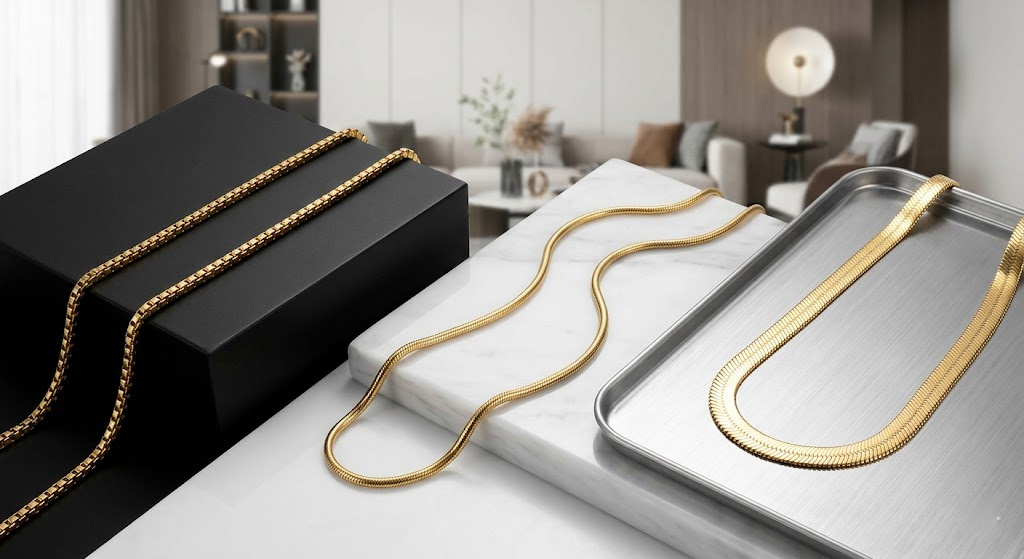
Modern chain designs focus on sleek lines and light-reflecting surfaces that appeal to a fashion-forward clientele. When stocking all types of chains, you should include geometric styles that provide a contemporary edge to your showcase. These pieces often serve as standalone statement necklaces or sophisticated layering components.
Why do customers prefer the sleek box chain?
Box chains feature square links that interlock to create a smooth, four-sided surface with a modern, architectural feel. They are exceptionally strong for their weight, making them a popular choice for securing valuable pendants.
Best of all:
- They offer a unique geometric shimmer.
- They are highly resistant to snapping.
- They look elegant at any length.
Key Takeaway: Box chains provide a perfect balance of modern geometric style and structural integrity, making them a top-tier choice for daily-wear jewelry.
| Modern Style | Aesthetic Appeal | Storage Requirement | |
|---|---|---|---|
| Box | Architectural | Standard | |
| Snake | Seamless/Fluid | Must lay flat | |
| Herringbone | Mirror-like shine | Delicate/High care |
Understanding these modern profiles allows you to match the right aesthetic with the customer’s level of maintenance commitment.
How do all types of chains with texture stand out?
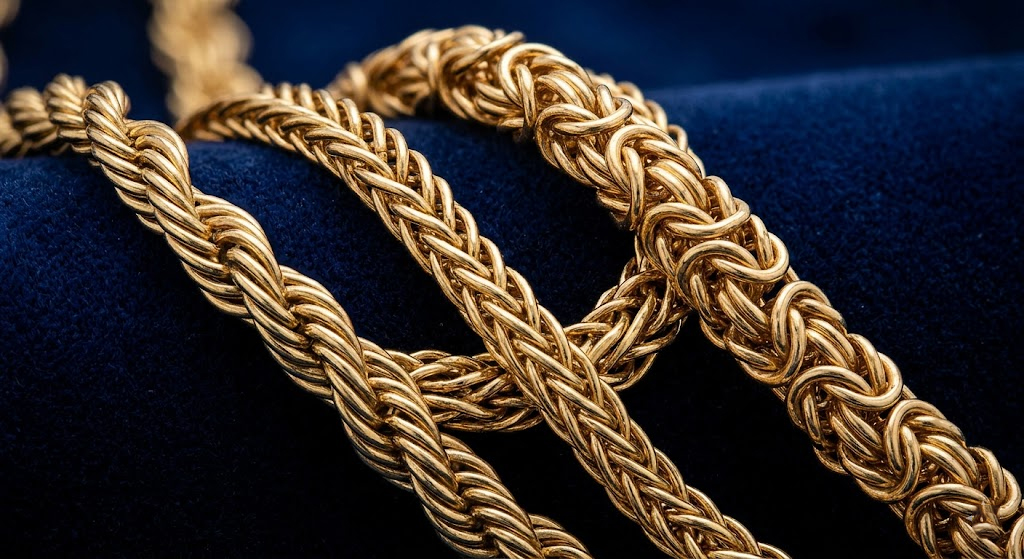
Textured chains use complex weaving patterns to create visual depth and a luxurious feel that flat links cannot replicate. By offering all types of chains with intricate textures, you appeal to clients looking for unique craftsmanship. These styles are often sold as premium pieces because of the labor-intensive manufacturing processes involved in their creation.
Why is the rope chain a top-tier seller?
The rope chain is constructed from multiple small links that are twisted together to resemble a traditional fiber rope. It is one of the most durable and light-reflecting styles on the market, making it a favorite for both men and women.
You’ll find that:
- It captures light from every angle.
- It provides maximum tensile strength.
- It stands out as a solo piece.
Key Takeaway: Textured chains like the rope weave offer a high-perceived value through their complex design and superior strength, making them ideal for investment jewelry.
| Textured Style | Complexity | Recommended Use | |
|---|---|---|---|
| Rope | High | Versatile/Investment | |
| Wheat | Very High | Heavy Pendants | |
| Byzantine | Extreme | Luxury Statement |
This hierarchy of texture helps you explain the value proposition of labor-intensive weaves to your high-end clientele.
What are all types of chains for heavy pendants?
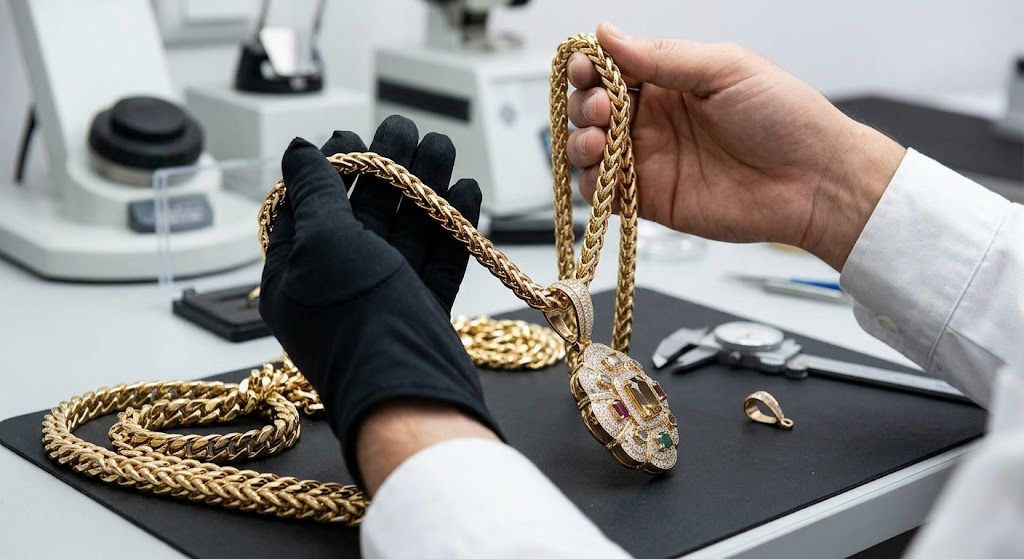
Heavy pendants require specific link structures that can withstand constant tension without stretching or snapping. You must curate all types of chains that prioritize weight distribution and link thickness to protect your customers’ valuable stones. Recommending a flimsy chain for a large medallion is a common mistake that leads to lost items and damaged reputations.
Which link structures offer the best support?
Solid link styles like the curb, wheat, and rope are the gold standard for supporting significant pendant weight. These designs distribute the load across a larger surface area, reducing the risk of a single point of failure.
Think about it:
- Interlocking links resist stretching.
- Solid metal construction prevents snapping.
- Thicker gauges provide extra security.
Key Takeaway: Security is the primary concern for heavy pendants, and selecting solid, interlocking weaves is the only way to ensure the long-term safety of the piece.
| Secure Styles | Pendant Weight | Longevity | |
|---|---|---|---|
| Solid Rope | Heavy | Excellent | |
| Wheat | Medium-Heavy | Superior | |
| Franco | Very Heavy | Exceptional |
Choosing the right support structure ensures your customers’ most precious assets remain secure during everyday wear.
Why are all types of chains like the paperclip trending?
The rise of the paperclip chain has revolutionized the fashion jewelry market by introducing a lightweight, bold aesthetic. Including all types of chains like the paperclip in your collection helps you capture the interest of younger, trend-conscious shoppers. These pieces are highly versatile and are currently a staple in the popular “layered necklace” look.
How did paperclip links become a fashion must?
The paperclip chain uses elongated oval links that create a minimalist yet striking appearance that fits both casual and formal settings. Its success lies in its ability to look substantial without the high cost of a heavy, solid-link chain.
But wait, there’s more:
- It is perfect for layering.
- It offers a modern, airy feel.
- It accommodates multiple charms.
Key Takeaway: Trending styles like the paperclip chain are essential for driving volume sales and attracting a demographic that values current fashion over traditional classicism.
| Fashion Style | Layering Potential | Target Demographic | |
|---|---|---|---|
| Paperclip | Maximum | Gen Z / Millennial | |
| Singapore | High | Mature / Classic | |
| Bead | Medium | Casual / Youth |
Strategically placing these trending items in your inventory helps your shop maintain a relevant and forward-thinking brand image.
Which all types of chains are best for men’s jewelry?
Men’s jewelry demands chains that offer significant presence and a sense of rugged durability. When selecting all types of chains for a male audience, focus on styles with flatter profiles and heavier weights that sit comfortably against the skin. These pieces are often the primary jewelry item a man will wear, so they must withstand substantial use.
Why is the Cuban link a cultural powerhouse?
The Cuban link is a variation of the curb chain that features thicker, rounder links for a bolder and more luxurious appearance. It has become synonymous with status and high fashion, making it an essential item for any professional jeweler.
As you know:
- It offers a heavy, premium feel.
- It lies perfectly flat on the chest.
- It is virtually indestructible.
Key Takeaway: Men’s chains should prioritize bold aesthetics and extreme durability, with the Cuban link serving as the ultimate statement piece for this market.
| Men’s Style | Cultural Impact | Profile | |
|---|---|---|---|
| Cuban | High Status | Heavy / Flat | |
| Figaro | Classic | Rhythmic / Varied | |
| Franco | Modern Rugged | Square / Dense |
Highlighting these masculine traits allows you to cater effectively to the growing segment of men’s luxury accessories.
What are all types of chains for specialty designs?
Specialty chains are designed for specific cultural, historical, or fashion-focused applications that standard links cannot fill. Stocking all types of chains in the specialty category allows your shop to stand out as a destination for unique and niche jewelry. These designs often carry stories of heritage or specific engineering feats that fascinate customers.
What is the unique origin of the mariner chain?
The mariner chain, or anchor chain, is inspired by the heavy chains used to secure ships in harbors. Each oval link features a central horizontal bar that prevents the chain from tangling or kinking, even under high stress.
You will see that:
- It has a distinct nautical theme.
- The bar adds significant strength.
- It is highly resistant to tangles.
Key Takeaway: Specialty chains like the mariner link provide unique selling points based on their historical origins and specialized structural advantages.
| Specialty Style | Unique Feature | Customer Appeal | |
|---|---|---|---|
| Mariner | Center bar | Nautical / Strong | |
| Singapore | Twisted sparkle | Feminine / Glitter | |
| Baht | High-karat gold | Cultural / Investment |
Offering these unique designs positions your store as a comprehensive source for both standard and rare jewelry styles.
How to maintain all types of chains in a collection?
Proper maintenance is critical for protecting the longevity of high-end jewelry and maintaining its retail luster. You should educate your customers on the specific care required for all types of chains to prevent damage like kinking or oxidation. Providing this after-care advice is a hallmark of a professional jeweler who cares about product longevity.
How do you prevent kinking in flat chains?
Flat chains like the herringbone or snake styles are prone to permanent damage if they are bent or twisted beyond their natural flexibility. Instructing customers to store these pieces flat or hanging is the most effective way to prevent costly repairs.
Keep in mind:
- Never sleep in delicate chains.
- Store pieces individually.
- Use soft, protective pouches.
Key Takeaway: Customer education on chain maintenance is just as important as the sale itself, as it prevents dissatisfaction from avoidable structural damage.
| Maintenance Task | Frequency | Target Chain Type | |
|---|---|---|---|
| Professional Cleaning | Annually | All types | |
| Flat Storage | Daily | Snake / Herringbone | |
| Inspection | Monthly | Pendants / Charms |
Proactive maintenance advice ensures that your clients’ jewelry remains in pristine condition for generations.
How to display all types of chains for impact?
The way you present your inventory directly influences the customer’s perception of its value and quality. Using the right all types of chains display techniques allows you to highlight the unique sparkle and texture of each link style. High-quality displays and packaging create a luxury experience that justifies higher price points and builds brand loyalty.
Which displays highlight intricate textures?
Neck displays with high-contrast fabrics like velvet or leatherette are ideal for making the metallic sheen of a chain stand out. For textured styles like rope or Byzantine, use displays that allow the chain to drape naturally and catch the light.
Believe it or not:
- Darker colors highlight gold shine.
- Proper draping shows link fluidly.
- Premium packaging adds perceived value.
Key Takeaway: Professional presentation and high-quality packaging are the final steps in the sales process that solidify the premium nature of your jewelry collection.
| Display Type | Best For | Visual Impact | |
|---|---|---|---|
| Bust / Neck | Statement Pieces | High | |
| Flat Tray | Multiple Pendants | Medium | |
| Roll / Case | Sets / Collections | Professional |
This strategic approach to visual merchandising ensures every piece in your inventory is presented in its best possible light.
Frequently Asked Questions
Can I wear a snake chain with a heavy pendant?No, because snake chains are prone to kinking under significant weight and are difficult to repair. It is better to use a cable or wheat chain for heavy items to ensure structural safety.
What’s the best chain for someone who is very active?A solid curb or rope chain is the best choice for active lifestyles. These designs are highly durable, resist snapping, and can handle the stress of constant movement.
How do I know if a chain is hollow or solid?You can determine this by checking the weight and price point of the piece. Hollow chains are much lighter and less expensive than their solid counterparts, but they require much more care to avoid crushing the links.
Can I repair a herringbone chain if it kinks?No, a kinked herringbone chain is almost impossible to restore to its original smooth surface. Once the flat links are bent, they leave a permanent mark, so prevention is the only real solution.
What’s the best way to prevent jewelry from tarnishing in the shop?Use anti-tarnish storage solutions and high-quality display cases that limit exposure to air and moisture. Providing customers with specialized pouches during the sale will also help them maintain the shine at home.
Conclusion
This guide has detailed the essential characteristics, durability, and retail strategies for managing every major link style in your inventory. We have addressed the challenges of choosing the right support for pendants and identifying trending designs to capture market interest. By applying these insights, you can elevate your shop’s expertise and provide the high-level service that modern jewelry buyers expect. Our vision is to empower jewelers with the tools and knowledge needed to create unforgettable brand experiences. If you are ready to enhance your presentation and protect your collection, please contact us today to discuss our premium wholesale solutions.