
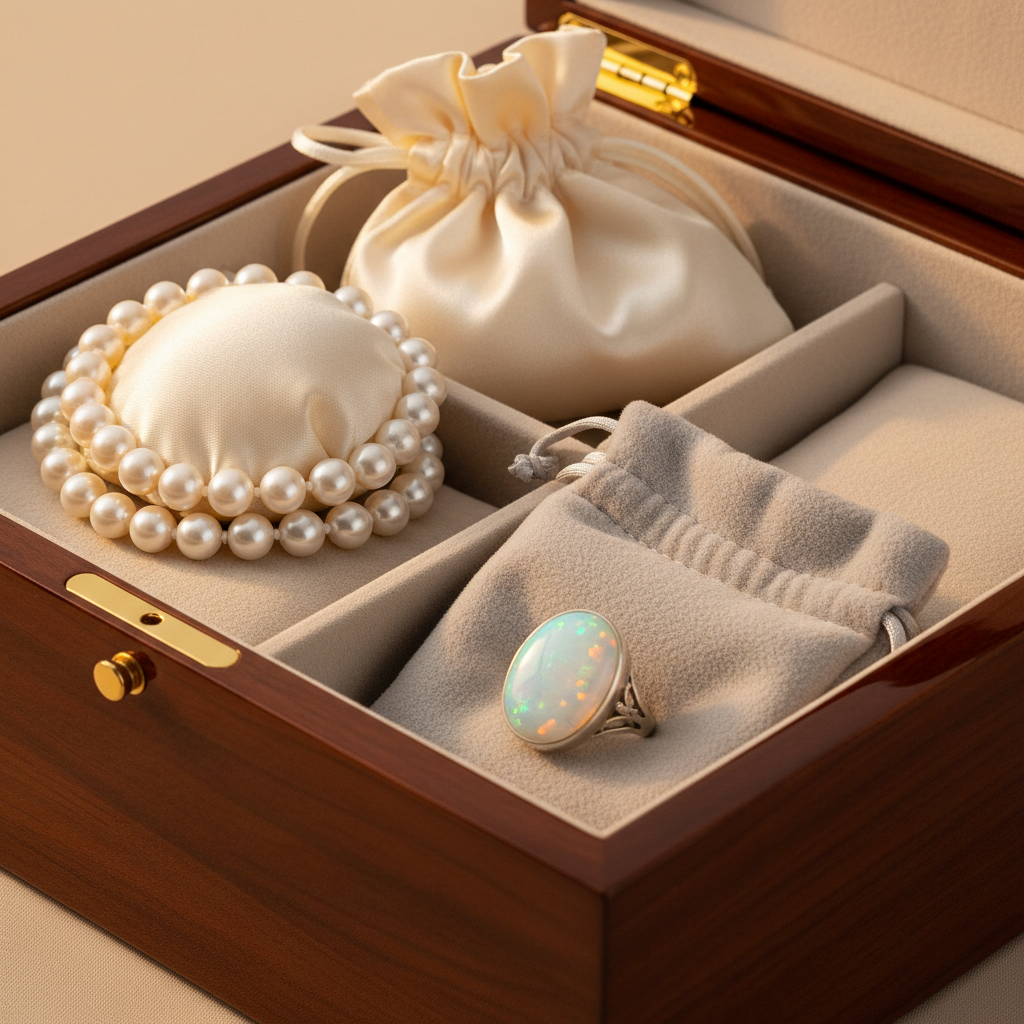
Organizing a jewelry box effectively requires a systematic approach that prioritizes both visibility and physical protection for every unique piece. You know the frustration of untangling a gold chain minutes before a dinner party or discovering a missing earring back in the bottom of a dark drawer. It is more than just an eyesore; poor storage can lead to micro-scratches, tarnishing, and permanent damage to your most expensive heirlooms. If you want to know how do you organize a jewelry box? the secret lies in categorizing by frequency of use and material type to ensure your treasures remain as radiant as the day you bought them.
How do stackable trays save space?
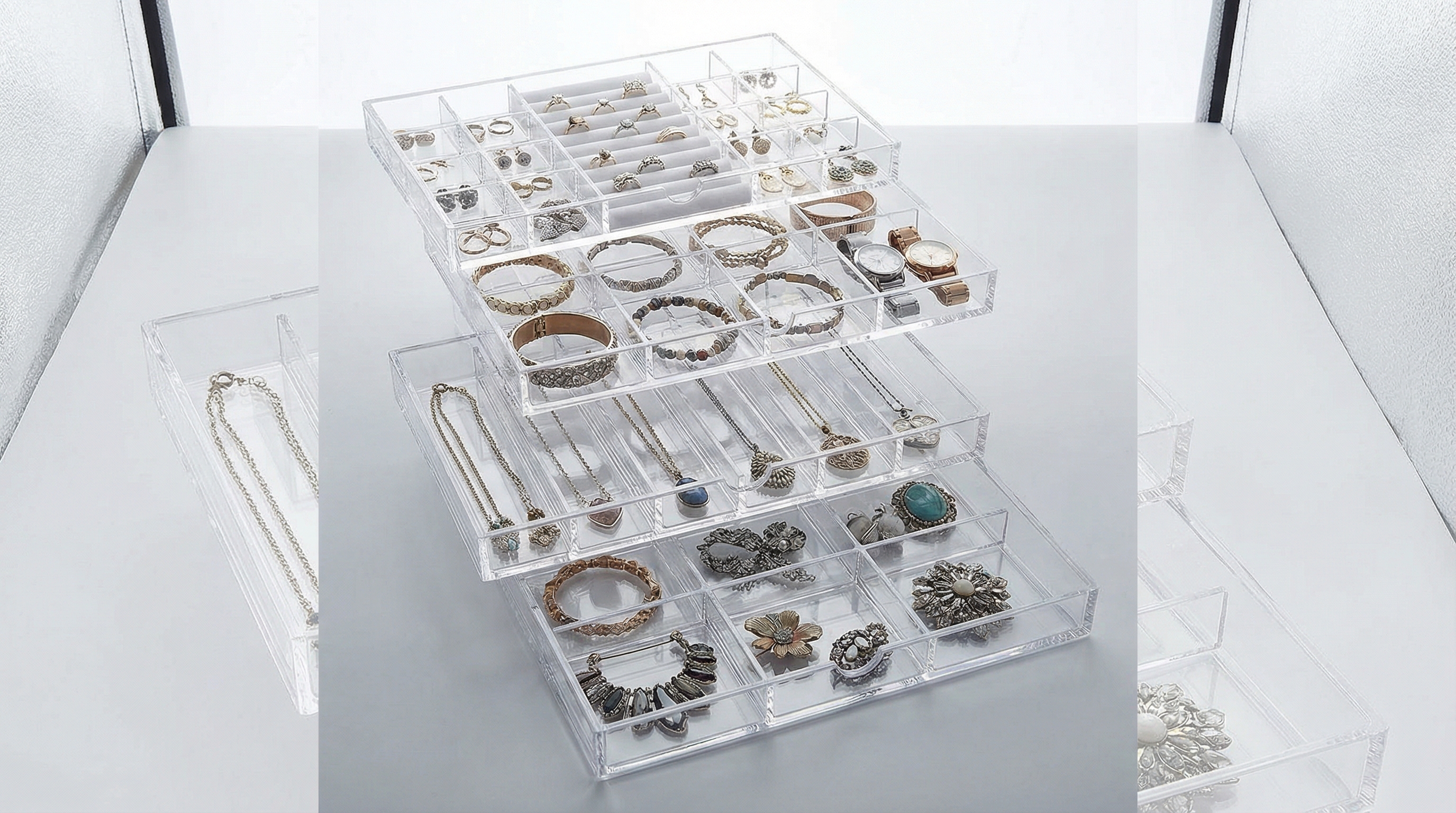
Stackable trays save space by utilizing vertical height on your vanity or inside a safe, allowing you to layer your collection without increasing the footprint of your storage. When you look at how do you organize a jewelry box? you will find that these modular systems allow for easy expansion as your collection grows. You can dedicate specific levels to different categories, such as rings on the top and statement necklaces at the base.
Maximizing Vertical Efficiency
These trays often come with transparent lids or open tops that allow you to see your options at a glance. By stacking, you keep your most-worn items accessible while protecting the pieces underneath from dust.
Think about it: Vertical storage is the only way to keep a large collection manageable in a small bedroom.
- Top tier for daily rings and studs.
- Middle tier for bracelets and watches.
- Bottom tier for bulky statement pieces.
Customizing Your Layers
You can mix and match different internal configurations to fit your specific needs. This flexibility is perfect for those whose collections are heavy on one particular type of jewelry.
Key Takeaway: Stackable trays offer a modular, space-saving solution that grows alongside your collection while maintaining organization.
| Tip | Benefit | |
|---|---|---|
| Vertical Stacking | Minimizes counter footprint | |
| Clear Lids | Improves visibility of options | |
| Modular Inserts | Fits specific jewelry types |
Why is decluttering the first step?
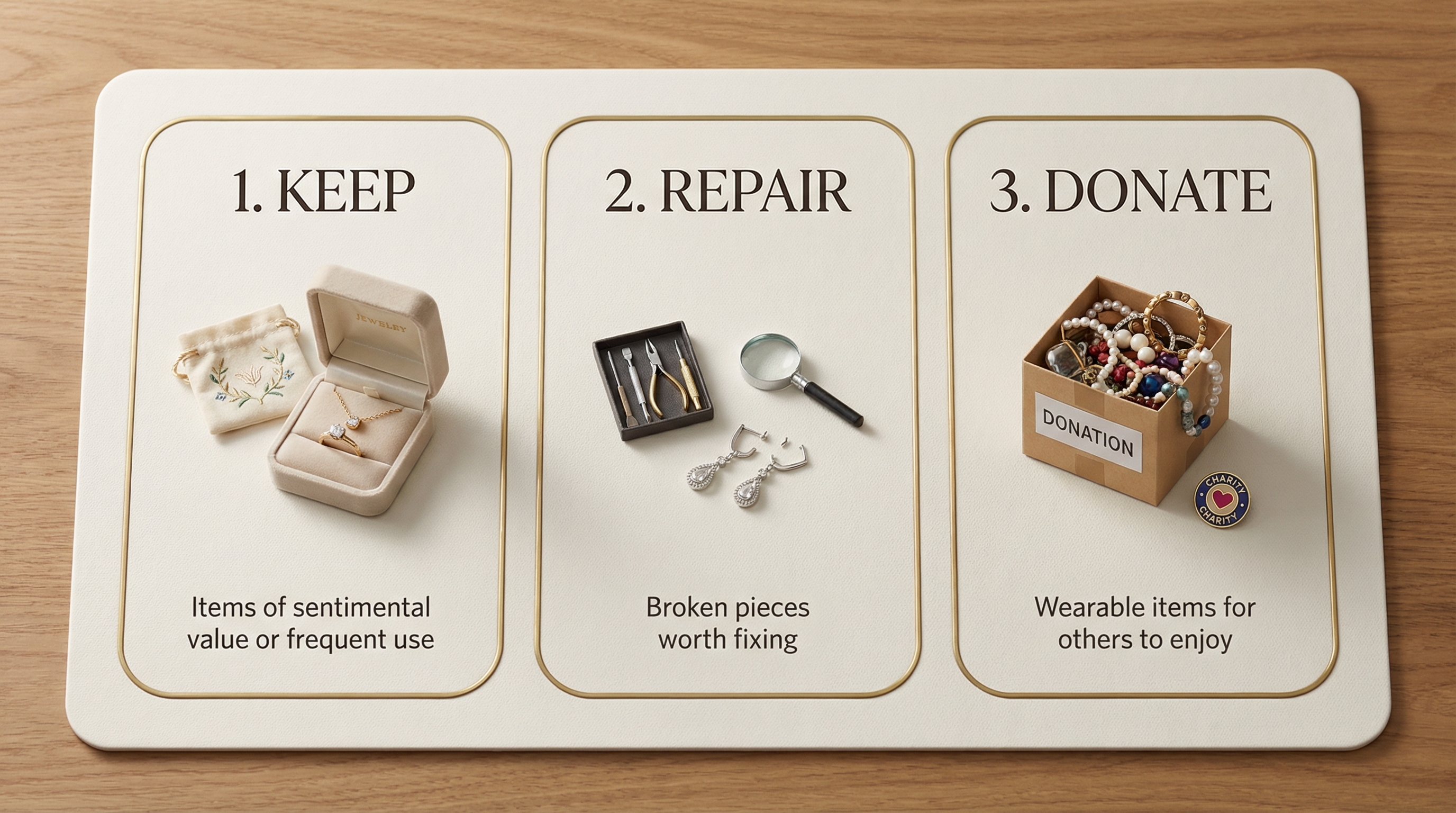
Decluttering is the essential first step because it removes broken, tarnished, or unloved items that occupy valuable real estate in your box. Understanding how do you organize a jewelry box? starts with a clear inventory of what you actually wear and what is just taking up space. By clearing out the “noise,” you give your truly special pieces the space they need to shine and prevent overcrowding.
Sorting Your Collection
You should categorize your items into three distinct piles: keep, repair, and donate or sell. This process helps you identify which pieces need professional cleaning or a new clasp before they go back into storage.
The best part? You might rediscover a hidden gem that you haven’t worn in years.
- Check for loose stones or broken clasps.
- Identify silver that needs polishing.
- Remove costume jewelry that has lost its plating.
Creating High-Value Space
Once you have narrowed down your collection, you can better determine the size and style of organization you truly need. This prevents you from buying a storage solution that is either too large or lacks the right compartments.
Key Takeaway: A regular decluttering routine ensures your organization system remains functional and features only the pieces you love.
| Category | Action Required | |
|---|---|---|
| Keep | Store in dedicated compartments | |
| Repair | Take to a professional jeweler | |
| Donate/Sell | Clear space for new treasures |
Can wall hooks prevent necklace tangles?
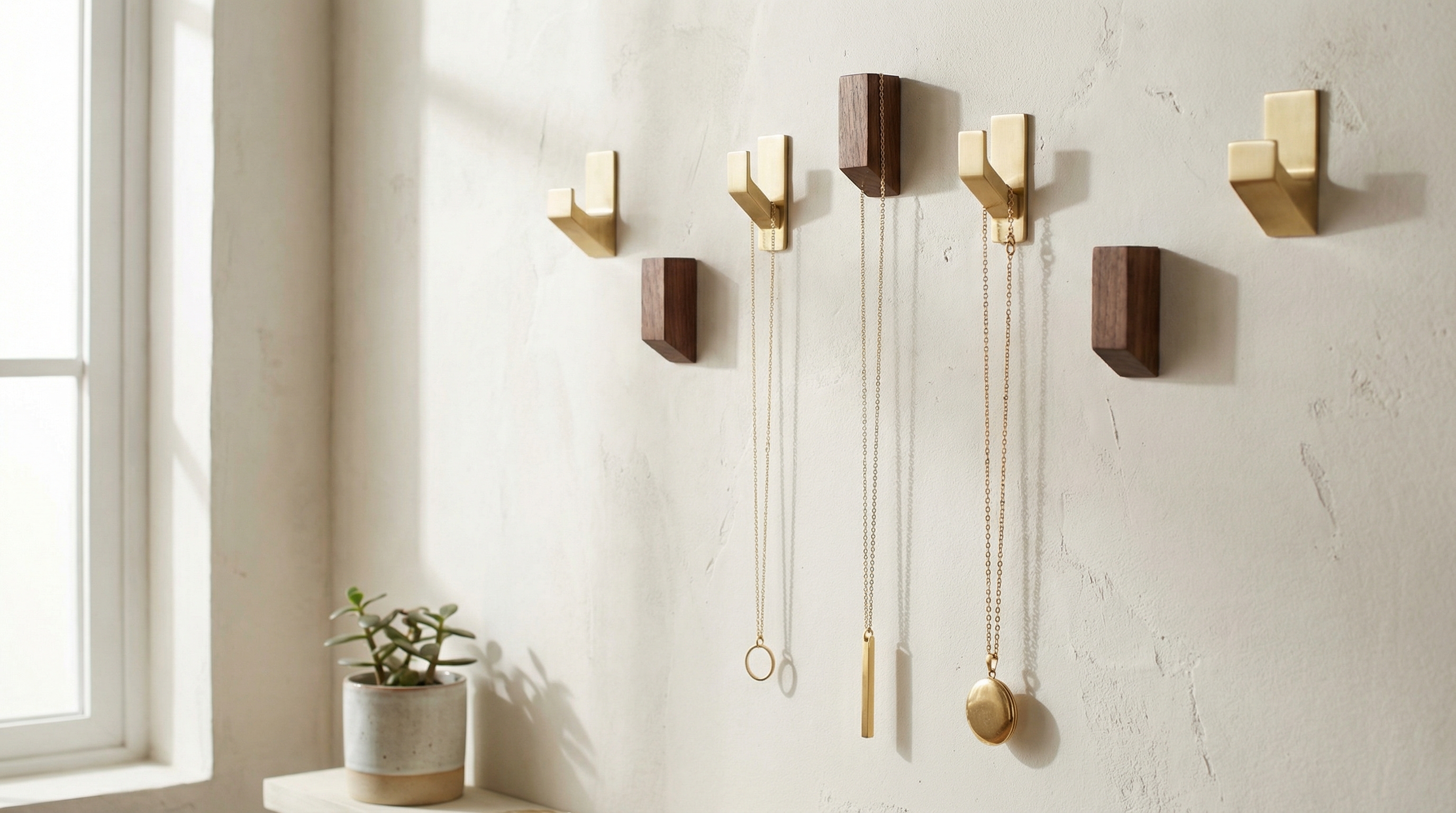
Wall hooks prevent necklace tangles by using gravity to keep individual chains hanging straight and separated from one another. This vertical approach is a game-changer when considering how do you organize a jewelry box? because it eliminates the friction that causes fine gold chains to knot. It also turns your shimmering collection into a functional piece of wall art that simplifies your morning routine.
Protecting Delicate Chains
Delicate “whisper” chains are notoriously difficult to untangle once they have knotted in a heap. By hanging them individually, you preserve the structural integrity of the metal and prevent accidental snags.
Here is the kicker: Vertical storage is the ultimate solution for anyone frustrated by “necklace nests.”
- Space hooks at least two inches apart.
- Hang by length to avoid overlapping.
- Use smooth, finished hooks to prevent scratching.
Using Hooks for Design
You can choose hooks that match your room’s decor, from minimalist brass pegs to ornate vintage-style fixtures. This allows your jewelry to serve as a personalized aesthetic element in your dressing area.
Key Takeaway: Wall storage is the most effective way to keep necklaces knot-free while saving precious vanity counter space.
| Solution | Best For | primary Benefit | |
|---|---|---|---|
| Individual Hooks | Long necklaces | Prevents all tangles | |
| Hanging Racks | Multiple thin chains | Consolidates vertical space | |
| Pegboards | Versatile collections | Adjustable spacing |
What is the best travel storage?
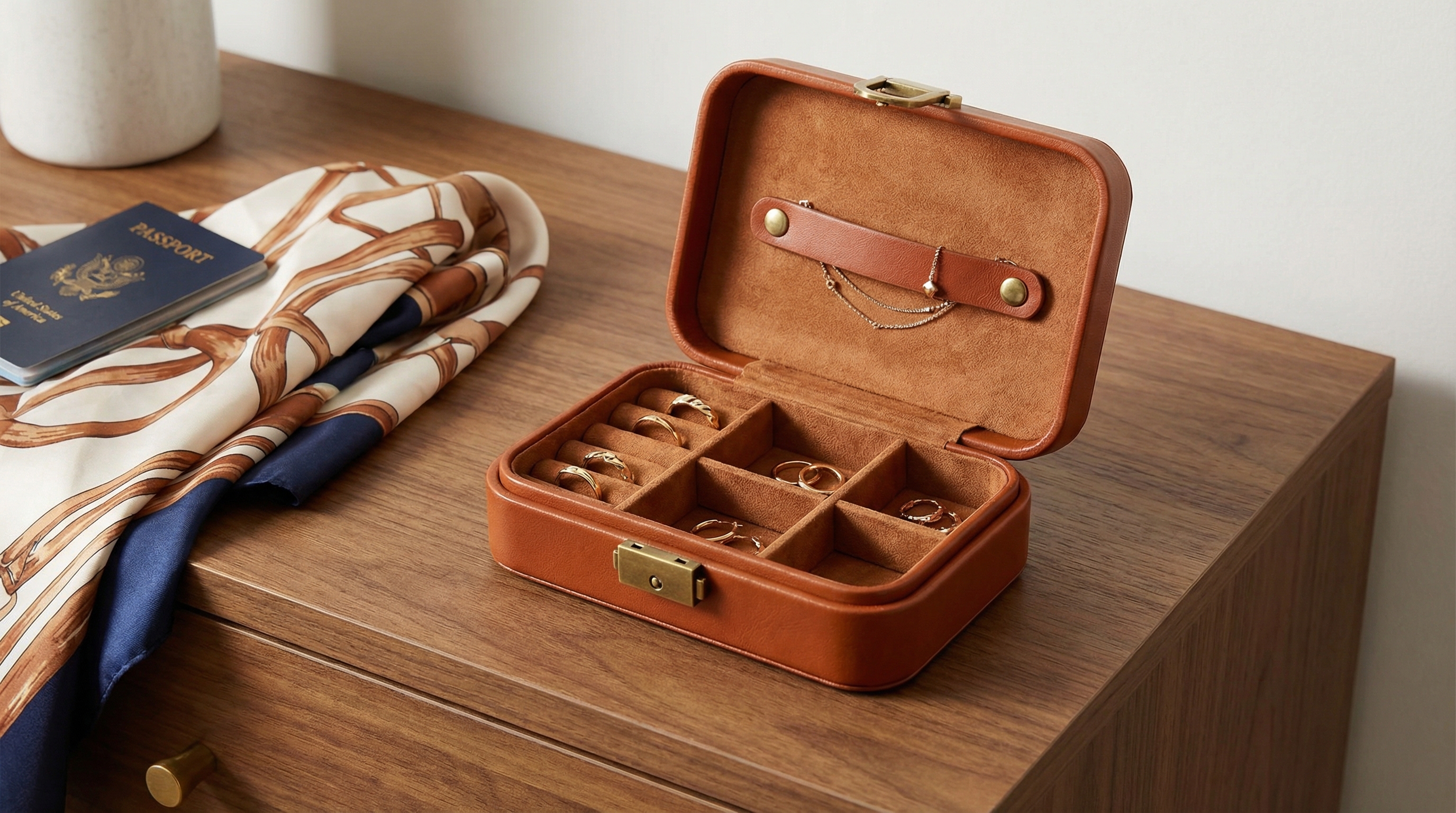
The best travel storage is a compact, hard-shell jewelry case that features individual padded compartments to keep items stationary during transit. When researching how do you organize a jewelry box? for your next trip, you must prioritize security and physical protection from luggage compression. A dedicated travel case prevents earrings from bending and necklaces from weaving together while you are on the move.
Securing Your Valuables
A good travel case should have specific sections for rings, earrings, and a snap-closure pouch for necklaces. This ensures that even if your bag is shifted or dropped, your diamonds won’t come into contact with your pearls.
Let’s face it: Toss-in pouches are a recipe for damaged jewelry when traveling.
- Always keep jewelry in your carry-on bag.
- Use cases with zip closures for maximum security.
- Choose a velvet-lined interior to cushion shocks.
Roll-up vs. Hard Case
While jewelry rolls are great for space efficiency, a hard-shell case provides much better protection against crushing. If you are traveling with structured bracelets or luxury watches, a hard case is non-negotiable.
Key Takeaway: Invest in a dedicated, partitioned travel case to ensure your jewelry arrives at your destination organized and undamaged.
| Travel Storage | Space Usage | Protection Level | |
|---|---|---|---|
| Hard-Shell Case | Moderate | Very High | |
| Jewelry Roll | Minimal | Moderate | |
| Individual Pouches | High | Low |
How do you keep earrings in matching pairs?
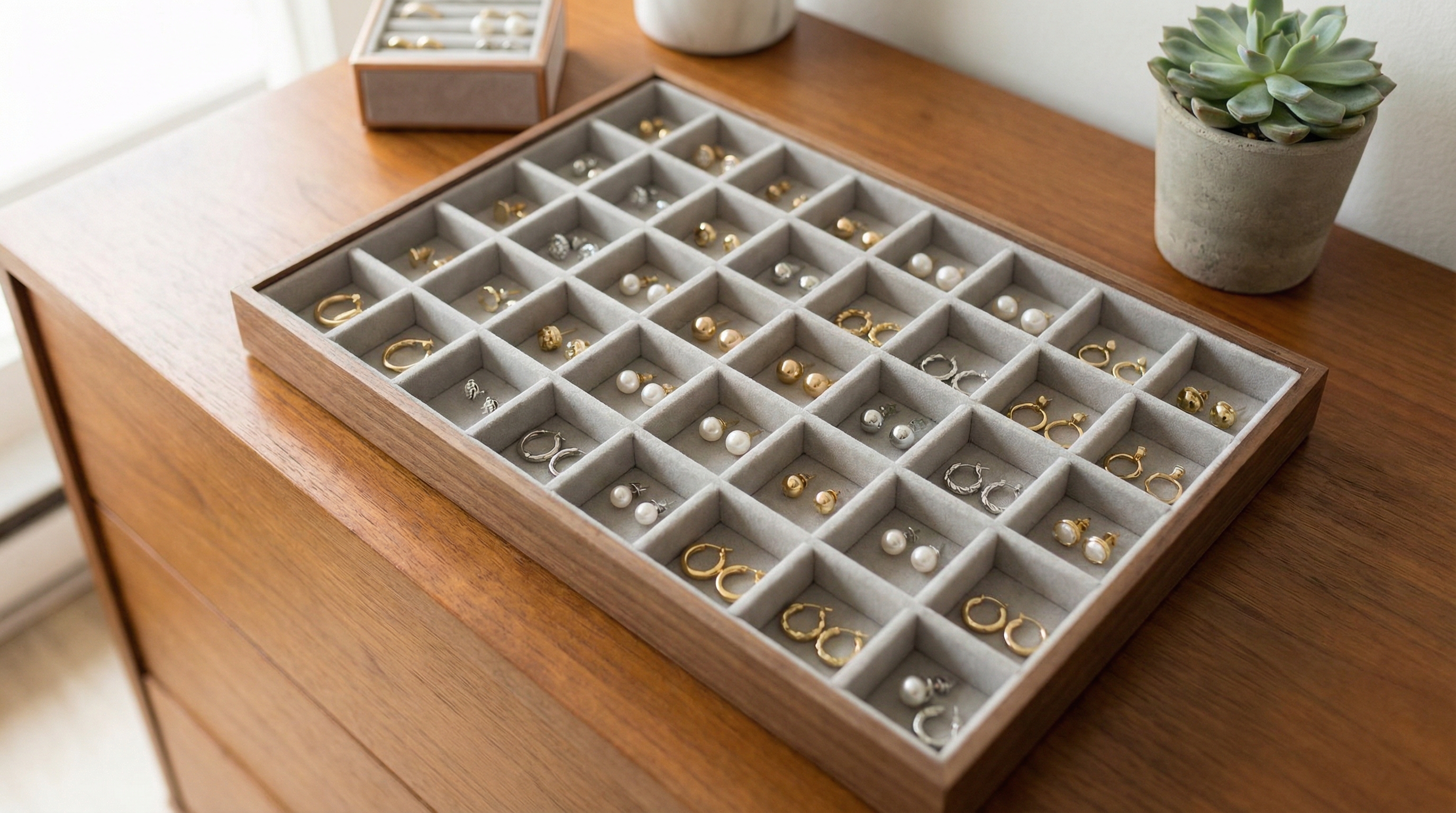
You keep earrings in matching pairs by utilizing a specialized grid-based tray where each pair is assigned its own small, dedicated compartment. This is the most efficient answer to how do you organize a jewelry box? because it prevents the decorative fronts and functional backs from drifting apart. A visible grid allows you to scan your entire collection instantly, making it effortless to coordinate with your outfit.
Using Grid Trays
Grid trays are especially effective for studs and small hoops that tend to get lost in larger bins. By keeping them in a flat, organized layout, you reduce the time spent searching for a missing match.
Think about this: A grid tray is like a map for your ears; everything has a coordinate.
- Group by color for easier matching.
- Keep daily staples in the center row.
- Use adjustable dividers for larger drop earrings.
Managing Oversized Styles
For larger statement earrings, look for organizers that offer deeper sections or longer channels. Hanging mesh stands are also a great alternative for those who prefer to see their earrings dangling.
Key Takeaway: A compartment-based grid system is the only way to permanently solve the problem of missing or mismatched earrings.
| Storage Style | Best For | Visibility | |
|---|---|---|---|
| Grid Trays | Studs and small hoops | Excellent | |
| Mesh Stands | Drop and hook earrings | High | |
| Tiered Trees | Long statement pieces | Moderate |
Is a luxury box necessary for fine jewelry?
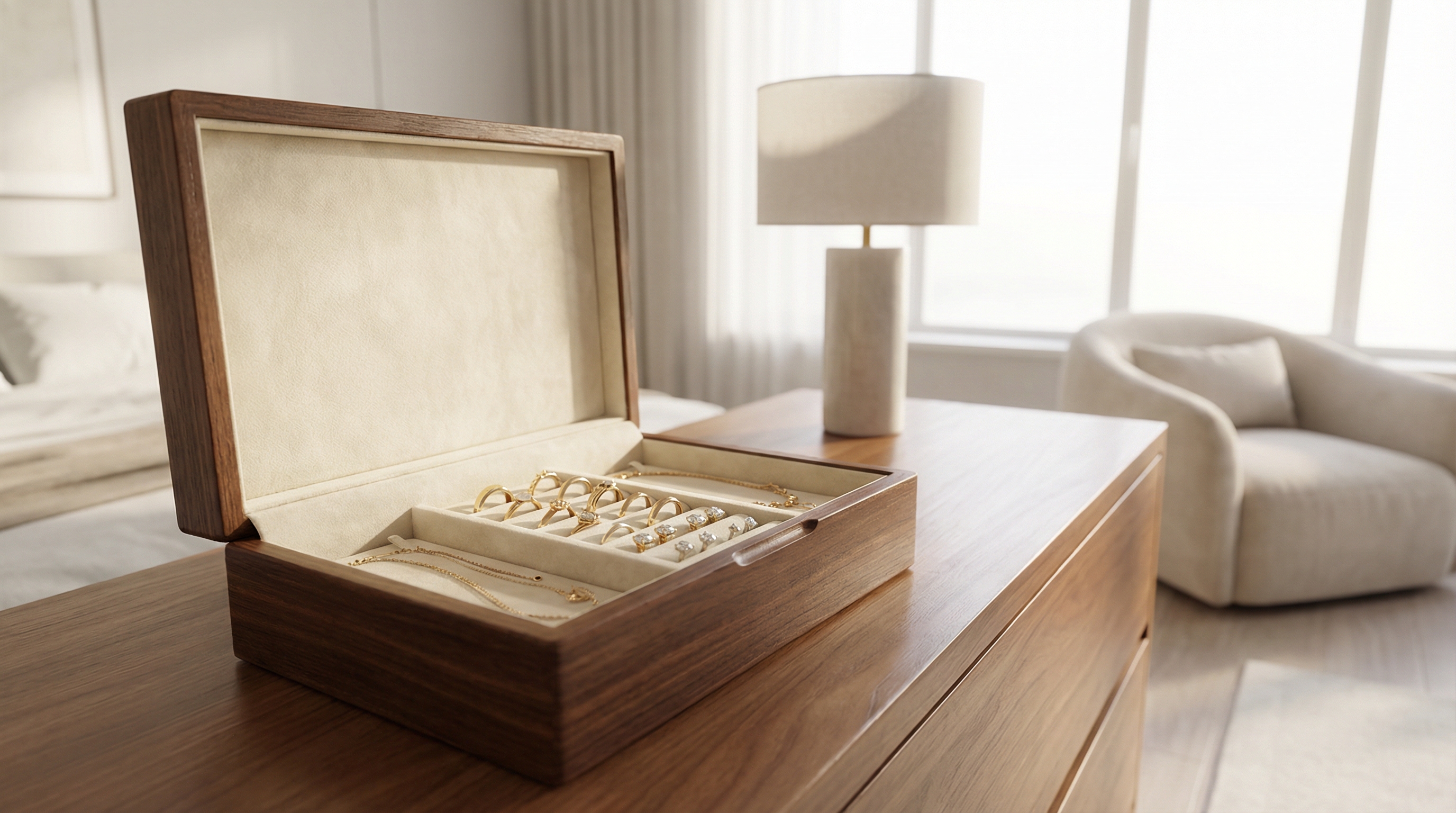
A luxury box is necessary for fine jewelry because it provides a climate-controlled environment and anti-tarnish lining that chemical-free boxes lack. When asking how do you organize a jewelry box? for high-value items, you must consider the long-term preservation of the metals and gemstones. A high-quality wooden or velvet-lined box shields your treasures from UV light and humidity, which are the primary causes of tarnishing and gemstone fading.
Protecting Your Investment
Fine jewelry requires a soft, non-abrasive surface to prevent the metal from rubbing and creating dull spots. Luxury boxes are engineered with high-density foam and premium fabrics that cushion your items during storage.
Believe me: Quality storage is the cheapest insurance you can buy for your diamonds.
- Look for integrated locks for extra security.
- Choose boxes with anti-tarnish fabric linings.
- Ensure the box has a heavy, protective lid.
Built-in Organization Features
Luxury boxes often include specialized sections for every type of jewelry, from ring rolls to watch pillows. This all-in-one approach keeps your most delicate treasures organized and protected in a single, beautiful location.
Key Takeaway: A luxury jewelry box is a vital investment for protecting the luster and value of fine jewelry over the decades.
| Feature | Importance | Benefit | |
|---|---|---|---|
| Anti-Tarnish Lining | High | Prevents silver oxidation | |
| Locked Lid | High | Increases physical security | |
| Plush Padding | High | Prevents scratches/scuffs |
Should you choose a display or a closed box?
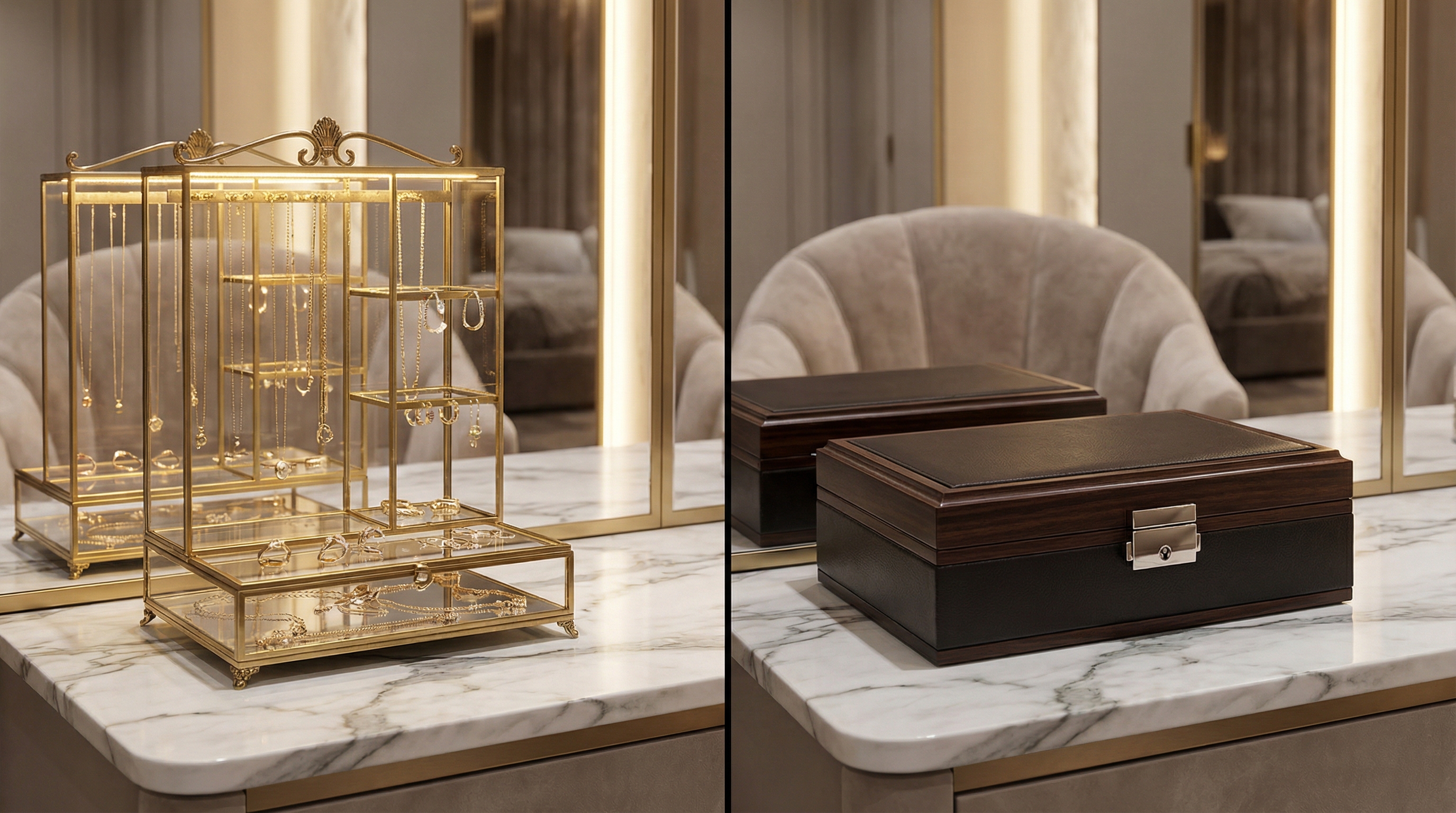
Choosing between a display or a closed box depends on whether you value immediate accessibility for daily wear or maximum protection for long-term storage. When deciding how do you organize a jewelry box? for your home, you should consider your local environment and how often you wear specific items. Open displays are excellent for your daily rotation, while closed boxes are non-negotiable for delicate pearls and fine silver.
The Case for Open Displays
Open displays allow your jewelry to act as home decor, keeping your favorite necklaces and bracelets within arm’s reach. They are perfect for people who find that “out of sight” means “out of mind.”
Here is the truth: Accessibility is the key to actually wearing the jewelry you own.
- Best for costume jewelry and daily staples.
- Allows for rapid styling in the morning.
- Saves space on vanity surfaces.
The Case for Closed Boxes
Closed boxes provide a barrier against dust, moisture, and sunlight, which can all damage delicate materials over time. They offer a much cleaner aesthetic for those who prefer a minimalist bedroom environment.
Key Takeaway: Use a hybrid approach: open displays for your weekly rotation and closed boxes for your high-value heirlooms.
| Method | Pros | Cons | |
|---|---|---|---|
| Open Display | Easy access, decorative | Dust buildup, UV exposure | |
| Closed Box | Maximum protection, secure | Slower access, takes space | |
| Drawer Insert | Hidden, very organized | Requires specific furniture |
What is the secret to necklace protection?
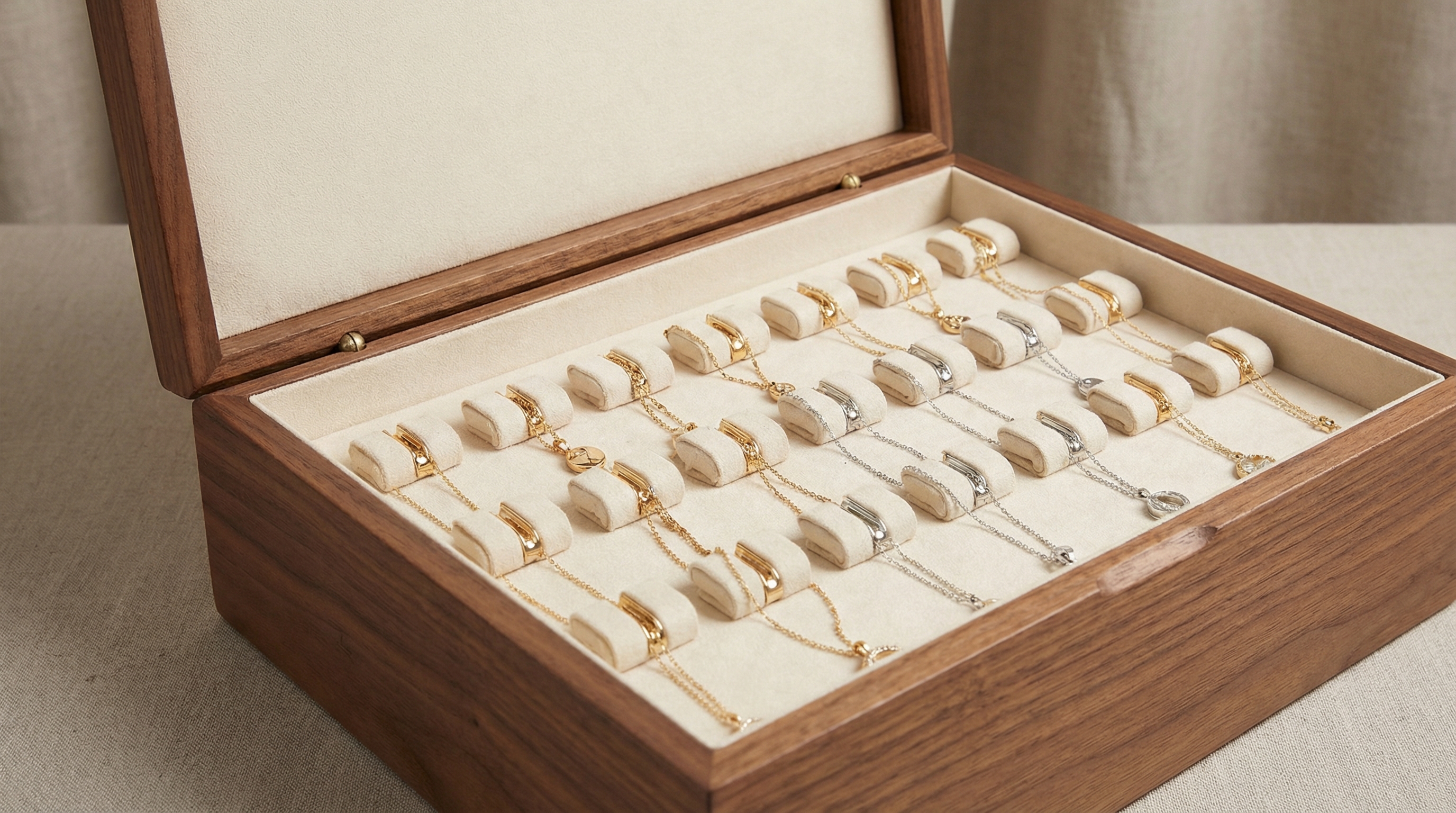
The secret to necklace protection is utilizing individual compartments and snap-closures that keep the pendant stationary and the chain taut. When you understand how do you organize a jewelry box? correctly, you realize that necklaces are the most prone to damage when allowed to slide around. A dedicated necklace box ensures that delicate links aren’t strained and heavy pendants don’t scratch against one another.
Preventing Chain Stress
Chain stress occurs when a heavy pendant is allowed to dangle or shift, putting pressure on the small links near the clasp. Storing them in a box with supportive clips keeps the weight distributed evenly.
It’s a simple fact: Isolated storage is the only way to avoid the “knot from hell.”
- Always close the clasp before storing.
- Use individual pouches for extra-long chains.
- Lay heavy statement collars flat on velvet.
Managing Pendant Placement
Placing your pendant in a central, recessed area prevents it from rubbing against the chain. This is especially important for soft gemstones like opals or pearls that can be easily scratched by metal.
Key Takeaway: Dedicated necklace boxes with snaps and individual channels are the gold standard for protecting long and delicate chains.
| Necklace Type | Recommended Storage | Risk Prevented | |
|---|---|---|---|
| Fine Gold Chain | Hanging snap or hook | Knotting/Tangling | |
| Heavy Statement | Padded flat drawer | Clasp strain/Stretch | |
| Gemstone Pendant | Recessed compartment | Stone scratches |
Can drawer inserts customize your storage?
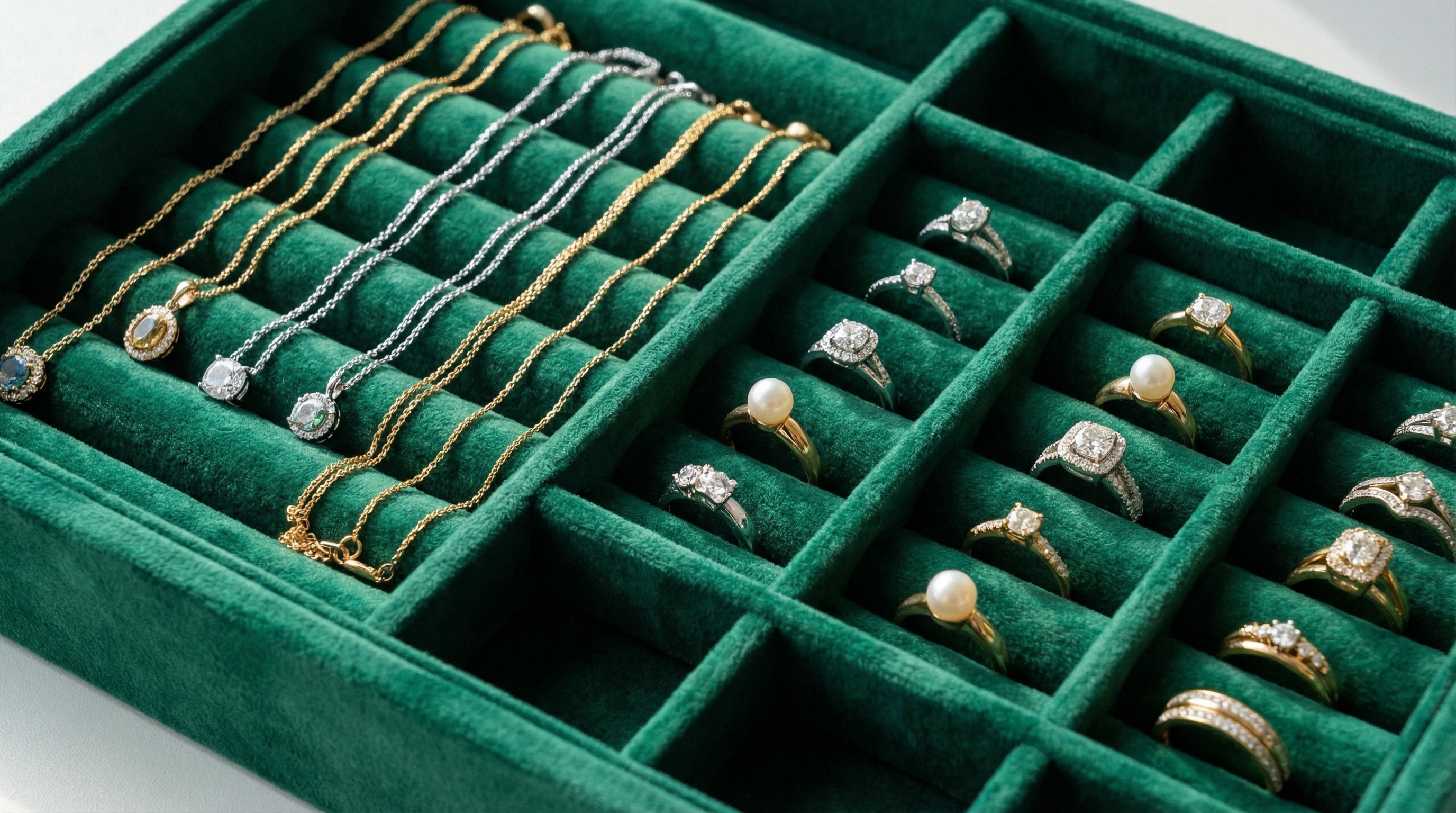
Drawer inserts allow you to customize your storage by turning any standard piece of furniture into a professional-grade jewelry station with modular dividers. This is a sophisticated answer to how do you organize a jewelry box? because it keeps your countertops clear while providing a massive amount of organized space. You can arrange the inserts “Tetris-style” to accommodate everything from bulky bangles to tiny stud earrings.
Transforming Your Vanity
By using velvet-lined inserts, you protect your jewelry from the hard surfaces of a wooden or plastic drawer. This creates a luxurious “boutique” feel every time you open your dresser to get ready.
Think about this: Why buy a new box when you can convert an entire drawer?
- Measure your drawer dimensions twice.
- Mix ring rolls with open square bins.
- Use non-slip pads to keep inserts stationary.
Long-Term Flexibility
As your collection changes, you can simply swap out one insert for another. This makes drawer organization the most scalable and adaptable solution for a lifelong jewelry enthusiast.
Key Takeaway: Drawer inserts provide a clean, integrated storage solution that maximizes existing furniture and adapts to your collection’s growth.
| Insert Component | Best For | Storage density | |
|---|---|---|---|
| Ring Rolls | Bands and rings | Very High | |
| Grid Dividers | Earrings and charms | High | |
| Long Channels | Bracelets and watches | Medium |
Why should you sort by material?
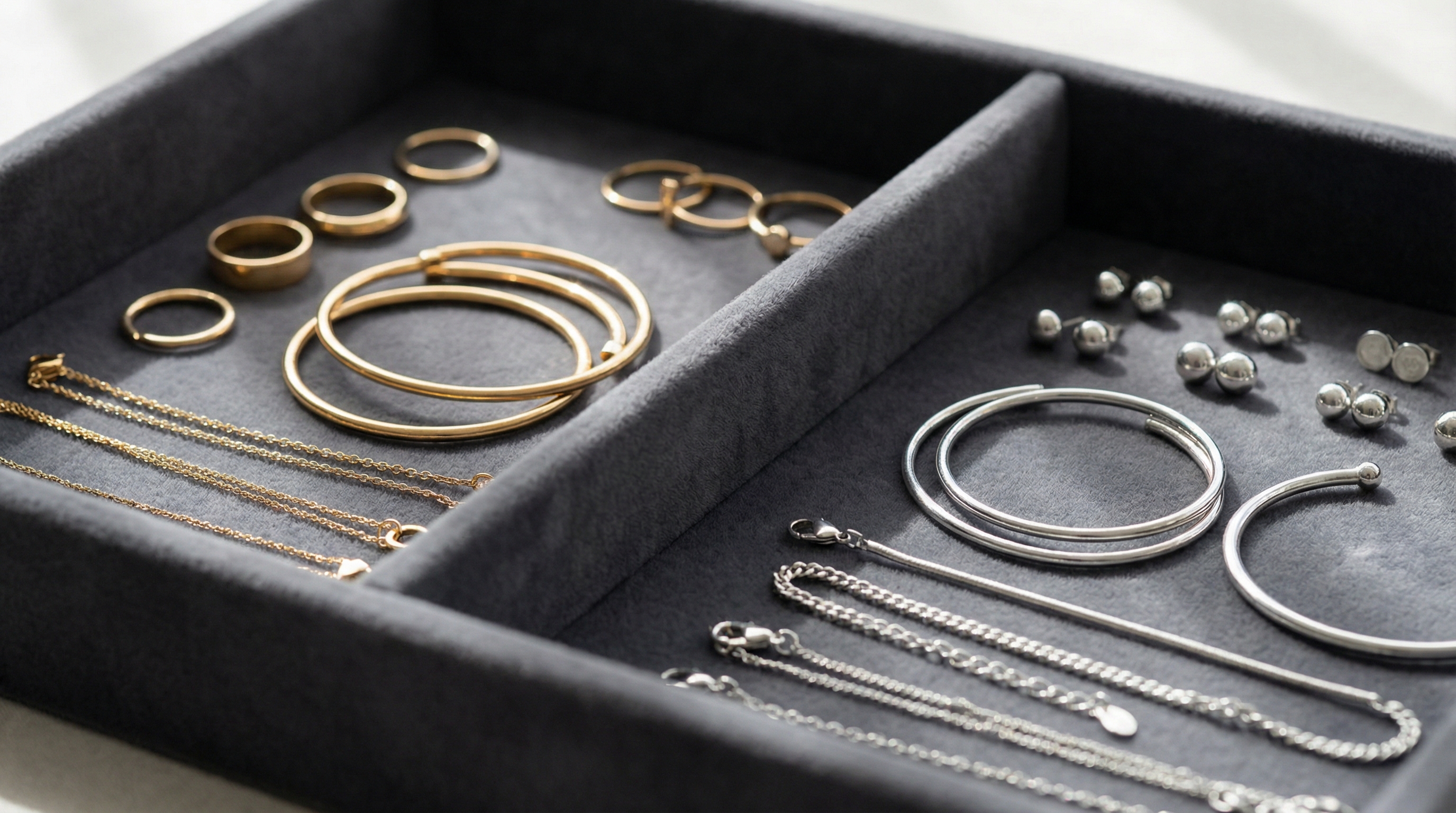
You should sort by material to prevent chemical reactions, such as cross-metal tarnishing, that occur when different alloys are stored in direct contact. When considering how do you organize a jewelry box? for longevity, you must keep silver away from gold to prevent the sulfur in the silver from dulling the gold’s luster. This material-first approach simplifies your cleaning routine and ensures every piece stays in pristine condition.
Avoiding Tarnish Transfer
Tarnish is a chemical reaction that can actually “spread” if a heavily oxidized piece of silver is touching a clean one. By creating physical barriers between material types, you slow down the oxidation process significantly.
Make no mistake: Mixing metals in one big heap will ruin your silver twice as fast.
- Keep sterling silver in airtight pouches.
- Group all solid gold together.
- Store costume jewelry far from fine metals.
Streamlining the Selection
Sorting by material also helps you coordinate your look more quickly. If you know you want to wear gold today, you only need to look at one specific section of your tray or box.
Key Takeaway: Material-based organization is a preventative maintenance strategy that protects the chemical integrity and shine of your jewelry.
| Metal Type | Storage Requirement | Primary Threat | |
|---|---|---|---|
| Sterling Silver | Airtight with anti-tarnish | Oxidation (Sulfur) | |
| Solid Gold | Soft velvet padding | Scratches/Dulling | |
| Costume/Plated | Individual isolation | Flaking/Tarnishing |
Conclusion
Mastering jewelry organization is about creating a system that balances aesthetic beauty with practical preservation. By utilizing stackable trays, dedicated necklace boxes, and material-based sorting, you ensure that your treasures are always ready to wear. Remember, a well-organized box doesn’t just save time; it protects your financial and sentimental investments for years to come.
Brand Stand: YiXin Jewelry Packaging specializes in crafting premium, factory-direct storage solutions that elevate your brand and protect your finest treasures. Whether you need custom luxury boxes or innovative display series, we provide the quality and precision your collection deserves.
Ready to transform your collection? contact us today for a free quote on custom organization solutions.
FAQ
Can I store my pearls in a standard jewelry box?Pearls are very soft and can be scratched by almost any other jewelry material. You should always store them in a separate silk pouch or a dedicated velvet compartment away from metal chains.
What is the best way to prevent silver from tarnishing in a box?Use anti-tarnish strips or small silica gel packets inside your box to absorb moisture and sulfur. Keeping the box closed when not in use is also vital for slowing down oxidation.
How often should I declutter my jewelry box?A seasonal declutter, roughly every six months, is ideal. This allows you to check for repairs, polish tarnished items, and ensure your organization system still fits your current style.
Is it safe to hang heavy necklaces?While hanging prevents tangles, extremely heavy statement pieces can stretch or damage the clasp over time. For heavy collars, it is safer to lay them flat in a padded drawer.
Should I keep the original boxes my jewelry came in?If the boxes are high quality and fit your organization system, you can keep them. However, most people find that consolidated trays or inserts save much more space and offer better visibility.