
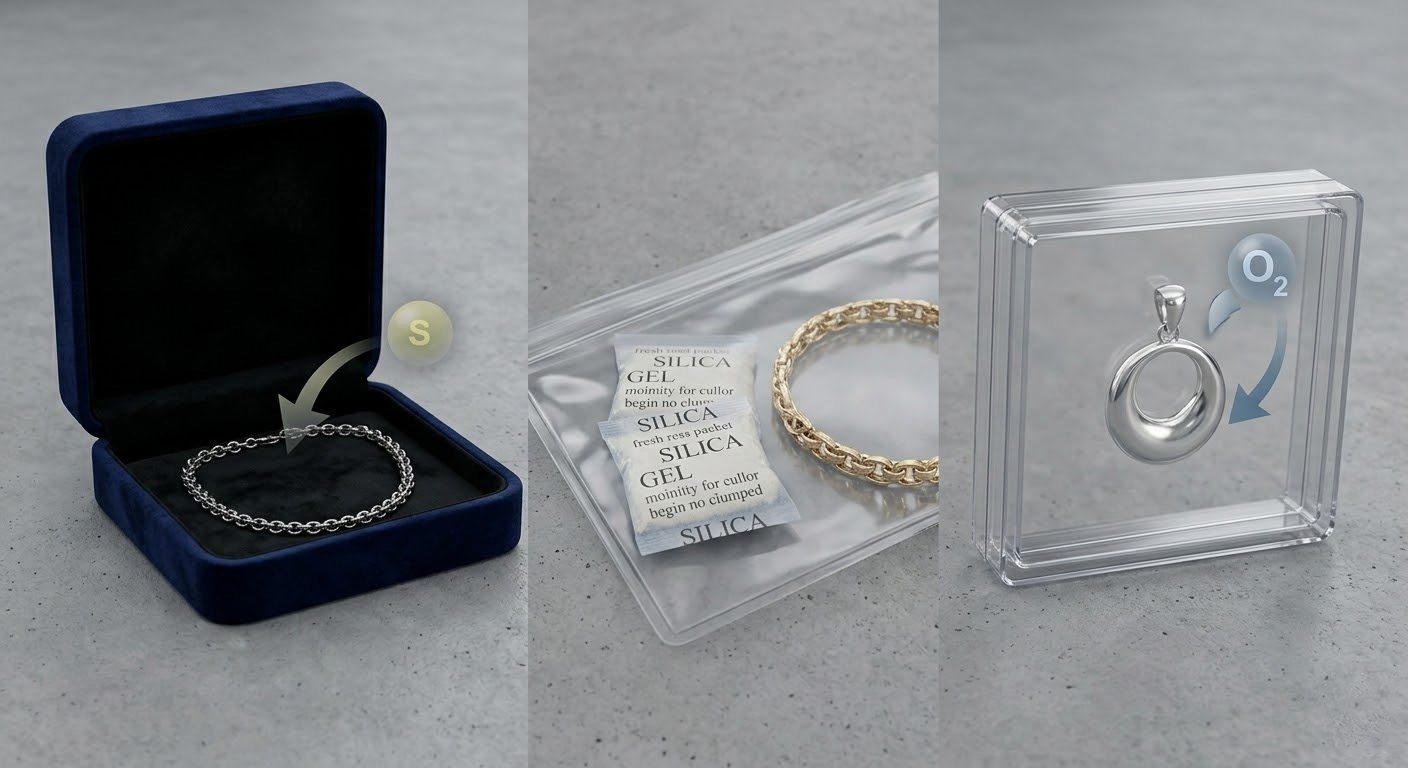
The most effective way to store jewelry and prevent tarnish is to keep each piece in a cool, dry, and dark environment within airtight or chemically treated containers. There is nothing more frustrating than opening your collection to find your favorite silver necklace has turned a dull, muddy black or your gold rings have lost their luster. This degradation doesn’t just look bad; for retailers, it can lead to a damaged brand reputation and significant financial loss due to unsellable inventory. High-quality professional storage is the definitive solution to ensure your How to Store Jewelry to Prevent Tarnish strategy keeps your collection in showroom condition for years.
Chemical causes and how to store jewelry to prevent tarnish
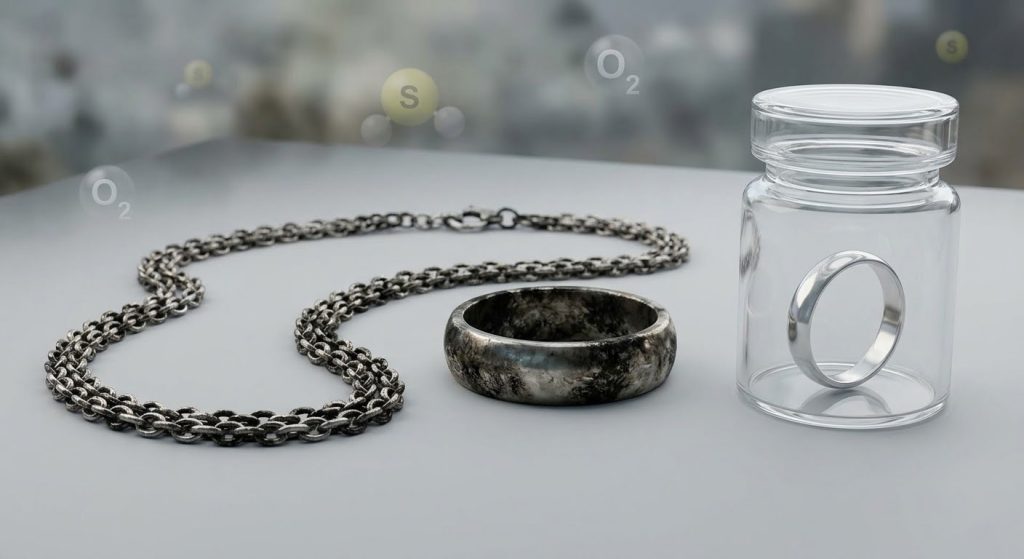
Tarnish is primarily caused by chemical reactions between metal and atmospheric elements like oxygen and sulfur, necessitating physical barriers for How to Store Jewelry to Prevent Tarnish . You must understand that even the air in a clean room contains trace gases that eat away at a metal’s finish.
Why does silver turn black over time?
Silver reacts specifically with sulfur compounds in the air to create silver sulfide. You will notice this as a yellowish film that eventually turns into a hard, black crust.
Think about it… Even if you aren’t wearing the jewelry, the environment is constantly attacking the surface. This is why protective storage is never optional.
- Sulfur exposure
- Oxidizing agents
- Atmospheric pollutants
How do perfumes and lotions damage metal?
Your daily beauty products are often the secret culprits behind rapid tarnishing. Chemicals like alcohol and synthetic oils can create a sticky residue that traps moisture against the metal surface.
But that’s not all… The interaction between these chemicals and the copper alloys in jewelry can even lead to skin discoloration. Professional-grade boxes help by providing a neutral environment that limits external chemical contact.
| Product Type | Impact on Metal | Tarnish Risk Level | |
|---|---|---|---|
| Perfume | High alcohol content dries and corrodes | High | |
| Lotion | Traps moisture and oils on surface | Medium | |
| Hairspray | Creates a filmy, dulling layer | High |
This table illustrates how common household items can compromise the integrity of your jewelry’s finish. Proper storage acts as the final line of defense against these everyday chemical threats.
Key Takeaway: You can significantly extend the life of your jewelry by ensuring it is clean and dry before placing it in a specialized storage box that blocks chemical interactions.
Humidity factors & how to store jewelry to prevent tarnish
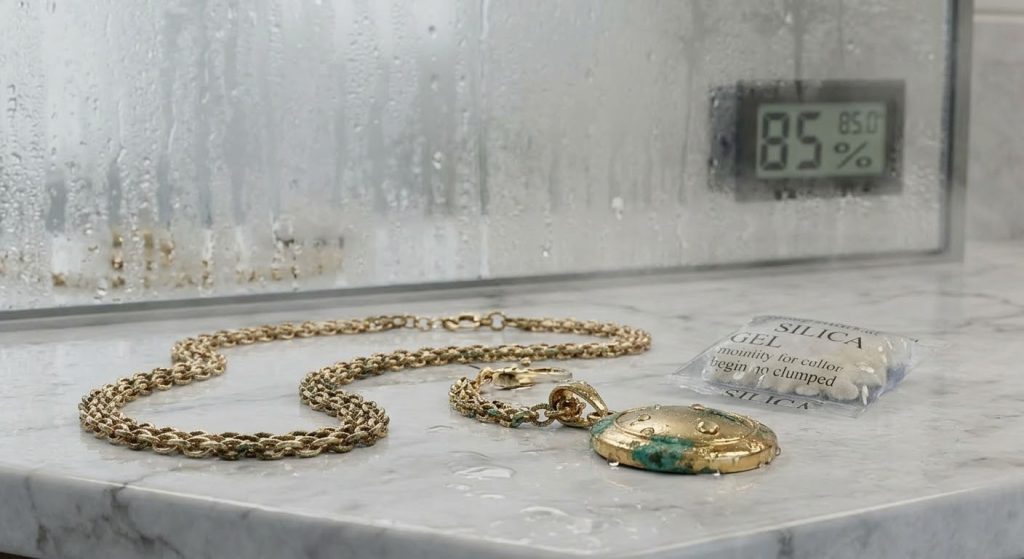
High humidity levels act as a powerful catalyst for oxidation, so you must control the micro-climate for How to Store Jewelry to Prevent Tarnish. When the air is moist, the rate of chemical reactions on the metal surface increases exponentially.
Can moisture speed up the oxidation process?
Yes, water molecules in the air facilitate the exchange of electrons that causes tarnish. You will find that jewelry stored in humid regions tarnishes much faster than in arid climates.
Here is the kicker: Even if your room feels dry, a small spike in humidity can trigger a reaction that ruins a polished finish overnight.
- Accelerated rust
- Pitting of metals
- Weakened adhesives
Where is the worst place to keep your collection?
The bathroom is arguably the most dangerous place to store any jewelry. You are exposing your pieces to steam, high heat, and fluctuating moisture levels every single day.
Think about it… Leaving a gold-plated necklace on a bathroom counter is essentially inviting the plating to flake off within weeks.
| Environment | Humidity Level | Tarnish Speed | |
|---|---|---|---|
| Bathroom | 80%+ | Extremely Fast | |
| Bedroom Closet | 40-50% | Moderate | |
| Airtight Box | <10% | Very Slow |
Managing the moisture levels in your storage area is the most critical step in preventing the natural decay of fine metals. Avoiding damp areas is the simplest way to protect your investment.
Key Takeaway: You must keep your jewelry away from moisture-heavy zones like bathrooms to prevent the water-induced oxidation that destroys precious metals.
Top environment tips: how to store jewelry to prevent tarnish
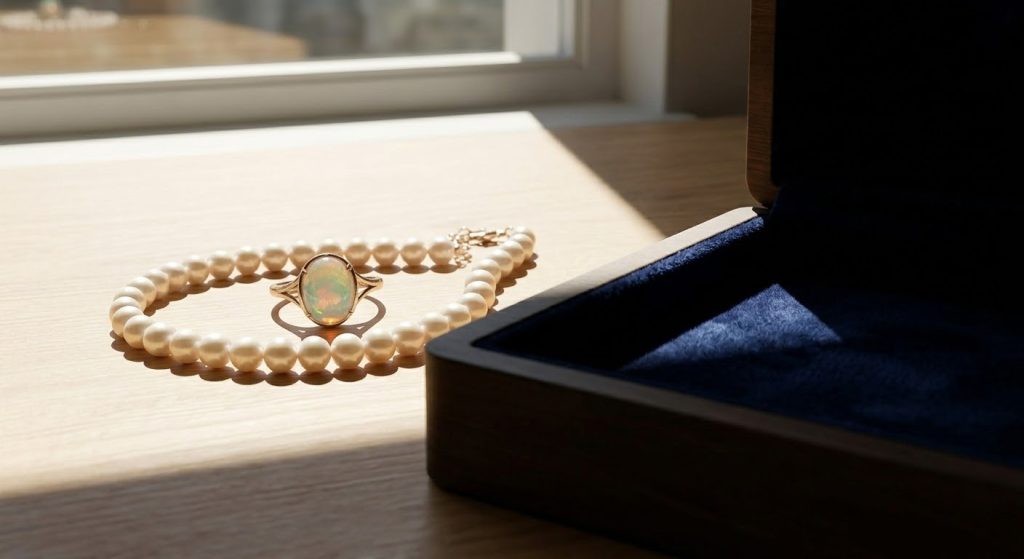
Setting up a stable, dark, and climate-controlled environment is the gold standard for How to Store Jewelry to Prevent Tarnish . Consistency is your best friend when it comes to maintaining the structural and aesthetic integrity of your pieces.
Should you keep your boxes in a dark location?
Light, especially UV rays from the sun, can cause certain gemstones to fade and speed up tarnish on metals. You should prioritize opaque storage solutions that keep your items in total darkness when not in use.
The best part? Dark storage also prevents the temperature fluctuations that happen when sunlight hits a glass jewelry case.
- UV protection
- Color preservation
- Temperature stability
Why avoid direct sunlight for gemstones?
Sunlight doesn’t just heat the metal; it can actually dehydrate organic gems like opals and pearls. You might see your beautiful stones become brittle or lose their “fire” if they are left in a window-facing display.
But that’s not all… Direct heat can cause the metal to expand and contract, potentially loosening the prongs that hold your diamonds in place.
| Light Source | Potential Damage | Recommended Protection | |
|---|---|---|---|
| Direct Sun | Fading & Dehydration | Opaque Jewelry Box | |
| Fluorescent | Minimal but constant heat | Soft Lining | |
| LED Display | Safe for most items | Neutral Positioning |
While lighting is necessary for display, long-term storage should always favor darkness to maintain the original color and strength of the jewelry.
Key Takeaway: You should store your collection in a dark, temperature-stable drawer or closet to prevent the fading and warping caused by sun exposure.
Using materials for how to store jewelry to prevent tarnish
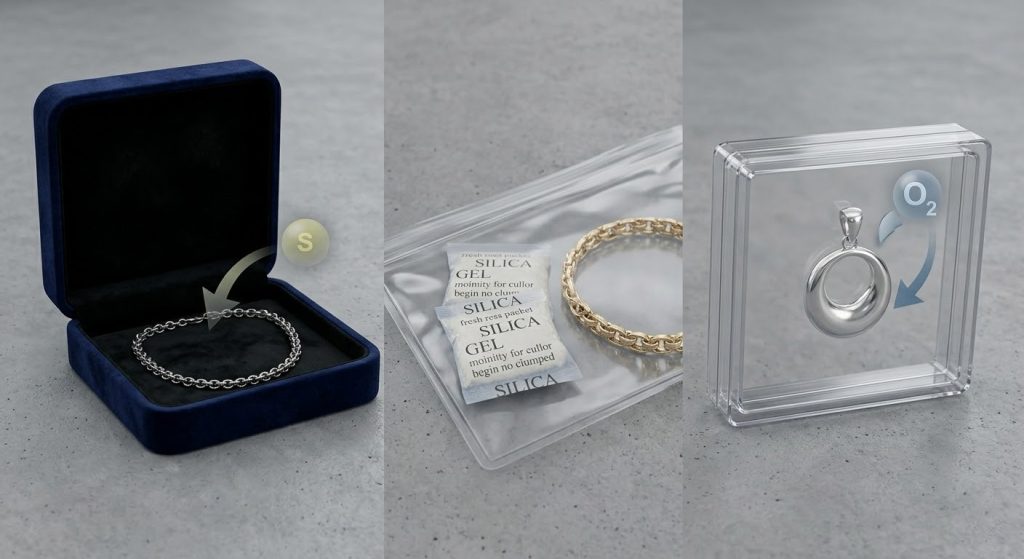
The specific materials used in your packaging determine its effectiveness for How to Store Jewelry to Prevent Tarnish. Professional manufacturers integrate anti-tarnish technologies directly into the linings of their boxes.
Do silica gel packets really absorb moisture?
Silica gel is incredibly efficient at pulling excess moisture out of the air inside a jewelry box. You should always include these small packets in your storage containers to maintain a bone-dry environment.
It gets better… These packets are inexpensive and can be “recharged” simply by drying them out, making them a sustainable choice for long-term care.
- Moisture absorption
- Humidity control
- Mold prevention
How does anti-tarnish fabric protect your pieces?
Specialized fabrics are treated with silver or other minerals that “trap” sulfur before it can reach your jewelry. You will find that these linings act like a magnet for the gases that cause tarnishing.
Believe it or not… A box lined with the right fabric can keep a silver ring bright for years without a single polishing.
| Material | Primary Defense | Longevity | |
|---|---|---|---|
| Treated Velvet | Chemical Absorption | 1-3 Years | |
| Silica Gel | Moisture Removal | 6 Months | |
| PE Film | Oxygen Barrier | Permanent |
Using a combination of these materials creates a comprehensive shield that addresses both moisture and chemical threats simultaneously.
Key Takeaway: You can maximize protection by choosing jewelry boxes that feature active anti-tarnish linings and moisture-absorbing inserts.
Silver methods: how to store jewelry to prevent tarnish
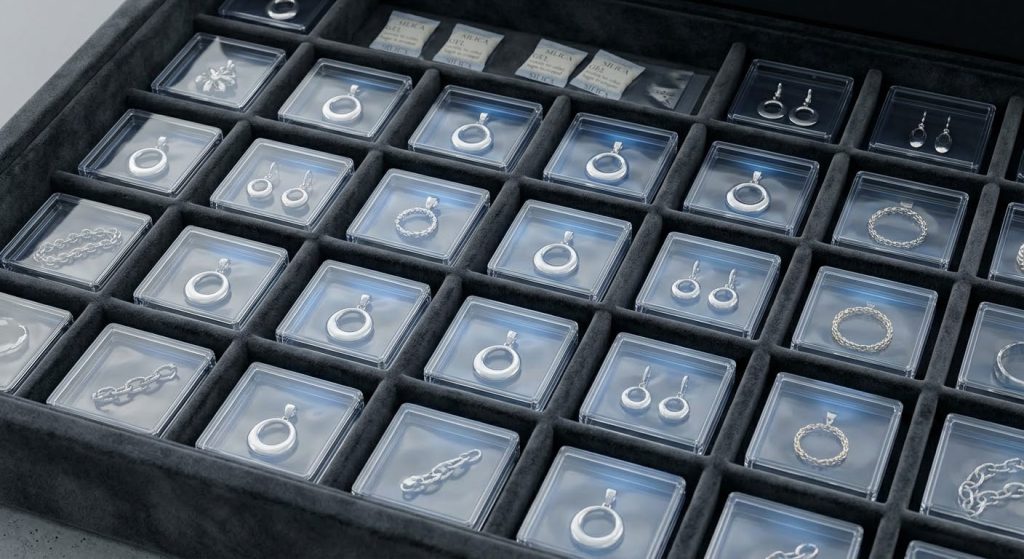
Silver requires the most specialized care, making individual airtight separation vital for How to Store Jewelry to Prevent Tarnish . Because silver is highly reactive, it needs a “zero-oxygen” environment to remain pristine.
Are airtight bags effective for sterling silver?
Airtight zip-lock bags are a fantastic and low-cost way to stop the tarnishing process. You should squeeze out as much air as possible before sealing to minimize the oxygen left inside.
Think about it… If there is no air, there is no sulfur, and if there is no sulfur, there is no tarnish.
- Oxygen exclusion
- Dust prevention
- Scratch protection
Why should you separate each silver item?
Storing silver items together can lead to “tarnish transfer” where one oxidized piece ruins the others. You should also be aware that silver is a soft metal and can easily be scratched by harder stones or gold pieces.
But that’s not all… Individual compartments prevent the tangling of chains, which often leads to breakage during the cleaning process.
| Separation Method | Benefit | Best For | |
|---|---|---|---|
| Small Poly Bags | Total Seal | Chains & Pendants | |
| Fabric Pouches | Soft Padding | Large Bangles | |
| Slotted Trays | Easy Access | Rings & Earrings |
Separation is the only way to ensure that your silver collection stays organized and chemically isolated from harmful environmental factors.
Key Takeaway: You must store each silver piece individually in an airtight environment to prevent chemical cross-contamination and physical damage.
Airtight gold tips: how to store jewelry to prevent tarnish
Even though gold is more stable than silver, the alloys used in 10k or 14k gold still require airtight solutions for How to Store Jewelry to Prevent Tarnish. These base metals, like copper and zinc, will oxidize even if the gold itself does not.
Why does gold alloy dull over time?
Pure 24k gold does not tarnish, but almost all jewelry is made of alloys for increased durability. You will see these alloys react with the environment, causing your gold pieces to look “dirty” or lose their mirror-like finish.
Here is the kicker: The lower the karat, the more non-gold metal is present, and the faster the piece will likely tarnish.
- Copper oxidation
- Surface dullness
- Alloy breakdown
Is individual partitioning necessary for gold?
Gold is a relatively soft metal that can be easily scratched by harder gemstones like diamonds. You should use partitioned boxes with soft inserts to keep each piece secure and immobile.
It gets better… High-quality foam or velvet inserts not only prevent scratches but also help create a tighter seal around the jewelry to block out air.
| Gold Type | Tarnish Risk | Care Requirement | |
|---|---|---|---|
| 24K Gold | Very Low | Scratch Protection | |
| 18K Gold | Low | Light Air Seal | |
| 14K / 10K | Moderate | Full Airtight Storage |
Even if you own high-karat gold, professional storage prevents the accumulation of dust and skin oils that can eventually lead to a dull appearance.
Key Takeaway: You should treat gold alloys with the same airtight care as silver to maintain the brightness of the copper and zinc within the metal.
Costume care and how to store jewelry to prevent tarnish
Costume jewelry features thin plating that is highly susceptible to the environment, making soft-lined storage essential for How to Store Jewelry to Prevent Tarnish . Once the plating on costume jewelry begins to fail, the piece is often impossible to repair.
How to protect thin metal plating from flaking?
The best way to protect plating is to reduce friction and eliminate moisture. You should ensure your storage boxes have a very soft lining that won’t abrasive the microscopic layer of gold or silver on the surface.
Think about it… Every time a costume ring rubs against another object, a tiny layer of its finish is lost forever.
- Anti-abrasion lining
- Dry environment
- Gentle handling
Why are soft fabric-lined boxes better for budget sets?
Budget-friendly jewelry often uses reactive base metals like brass or nickel under a thin coating. You need a fabric-lined box to wick away any residual skin oils that could eat through that coating from the inside out.
But that’s not all… A soft lining also provides a cushion that prevents the stones in costume jewelry—which are often glued in—from being knocked loose.
| Care Step | Purpose | Result | |
|---|---|---|---|
| Wipe with Cloth | Remove skin oils | Stops corrosion | |
| Soft Compartment | Prevent friction | Keeps plating intact | |
| Cool Storage | Protect adhesives | Stops stone loss |
Costume jewelry can look expensive and last for years if you are diligent about keeping it away from the moisture and friction that causes “turning.”
Key Takeaway: You can preserve the look of budget jewelry by using soft, dry compartments that prevent the thin plating from wearing away.
Organic gem care: how to store jewelry to prevent tarnish
Organic gems like pearls and opals require a unique approach to How to Store Jewelry to Prevent Tarnish because they contain moisture and need to “breathe.” While you must block sulfur to protect the metal settings, you cannot use bone-dry environments for the gems themselves.
Do pearls need to breathe to keep their luster?
Pearls are composed of organic matter that can become brittle and crack if stored in a completely airtight, moisture-free plastic bag. You should use breathable fabric pouches or linen-lined boxes that allow for a tiny amount of air circulation.
The best part? A slightly breathable environment keeps the pearl’s nacre hydrated, ensuring that iconic iridescent glow stays vibrant.
- Moisture retention
- Nacre protection
- Natural luster
Why keep hard metals away from delicate nacre?
Nacre is extremely soft and can be permanently scratched by almost any metal or harder gemstone. You must store your pearl strands or opal rings in dedicated sections where they won’t touch other jewelry.
Think about it… A single diamond earring floating in the same pouch as a pearl necklace can cause hundreds of tiny scratches in just one day.
| Gem Type | Sensitivity | Storage Need | |
|---|---|---|---|
| Pearls | Chemicals & Scratches | Soft Breathable Cloth | |
| Opals | Dehydration & Heat | Stable Humidity | |
| Coral | Acids & Oils | Clean, Dry Fabric |
Organic gems require a delicate balance of protection from tarnish-causing sulfur and the prevention of dehydration. Proper storage achieves this equilibrium.
Key Takeaway: You should store organic gems in breathable fabric pouches within a larger box to protect the metal from tarnish without drying out the stones.
Common mistakes in how to store jewelry to prevent tarnish
Many people unknowingly use storage methods that actually accelerate damage, which is why avoiding these pitfalls is key for How to Store Jewelry to Prevent Tarnish . Using the wrong materials can cause more harm than no storage at all.
Why you should never use standard plastic bags?
Standard plastic bags often contain PVC or other acidic chemicals that can “off-gas” and cause rapid metal corrosion. You must ensure that any plastic used is specifically labeled as “acid-free” or “archival-safe.”
Believe it or not… Cheap plastic can actually melt onto jewelry if the temperature rises, creating a sticky mess that is nearly impossible to remove.
- Chemical off-gassing
- Acidic reactions
- Heat sensitivity
Is forgetting to clean after wear a big issue?
Yes, leaving sweat, perfume, and skin cells on your jewelry before putting it away is a recipe for disaster. You are essentially sealing those corrosive elements inside the box with your jewelry.
Think about it… Five seconds of wiping with a microfiber cloth can save you an hour of polishing later.
| Common Mistake | Consequence | Correct Action | |
|---|---|---|---|
| Using Cardboard | Contains sulfur/glue | Use treated boxes | |
| Storing Dirty | Traps salt/acids | Clean before storage | |
| Overcrowding | Scratches & Tangling | Use partitions |
Avoiding these simple errors will keep your collection safe and drastically reduce the amount of maintenance required to keep your jewelry looking its best.
Key Takeaway: You must avoid using low-quality plastics and cardboard, and always clean your pieces before storage to prevent self-induced tarnishing.
Factory packaging: how to store jewelry to prevent tarnish
The ultimate solution is to utilize professional-grade containers designed by specialists for How to Store Jewelry to Prevent Tarnish. Factory-direct solutions offer technologies that consumer-grade boxes simply cannot match.
How do premium linings provide extra defense?
Factory-grade linings often incorporate activated carbon or specialized polymers that neutralize corrosive gases on contact. You are getting a laboratory-tested environment that is specifically engineered to keep metal bright.
Here is the kicker: These linings are designed to be non-shedding and lint-free, ensuring your jewelry is always ready for display.
- Gas neutralization
- Lint-free surface
- Impact resistance
Why choose 3D floating displays for protection?
3D floating boxes use high-tension PE film to suspend the jewelry in mid-air, creating a near-total vacuum seal. You get a stunning visual presentation while completely isolating the piece from the surrounding atmosphere.
It gets better… Because the film is flexible, it conforms to the shape of the jewelry, preventing any movement that could cause scratches or breakage during transport.
| Packaging Tech | Protective Benefit | Industry Use | |
|---|---|---|---|
| Activated Lining | Chemical Shield | Retail Storage | |
| 3D Floating Film | Vacuum Seal | High-end Display | |
| Custom Molded Foam | Physical Security | Shipping & Logistics |
Investing in professional-grade packaging is the most effective way to protect high-value inventory and ensure long-term customer satisfaction.
Key Takeaway: You can achieve the highest level of tarnish prevention by using factory-engineered packaging that combines chemical neutralization with airtight seals.
Conclusion
Preserving the brilliance of your jewelry doesn’t have to be a struggle. By understanding the chemical causes of tarnish and implementing professional storage strategies—from humidity control to specialized PE film boxes—you can keep every metal and gemstone in perfect condition. At YiXin Jewelry Packaging, our mission is to provide global brands and collectors with the highest quality, science-backed storage solutions that protect both the jewelry and the brand’s integrity. To elevate your storage game and safeguard your collection, contact us today for expert guidance and custom packaging solutions.
Frequently Asked Questions
Can I use a regular cardboard shoebox to store my jewelry?No, you should avoid regular cardboard because it often contains acids and sulfur used in the paper-making process that will accelerate tarnishing. It is much better to use a dedicated jewelry box with a neutral lining.
What is the best way to store sterling silver long-term?The best method is to place silver in an acid-free, airtight plastic bag with an anti-tarnish strip. This double-layer approach blocks both oxygen and harmful atmospheric gases.
Is it true that gold-plated jewelry tarnishes faster than solid gold?Yes, it is true because the thin layer of gold eventually allows the reactive base metal underneath to interact with the air. This is why costume and plated jewelry require even stricter moisture control.
How often should I replace anti-tarnish strips or silica packets?You should generally replace them every six to twelve months depending on the humidity of your local climate. Once the strips change color or the silica gel feels “heavy,” they are no longer providing peak protection.
Can I store all my jewelry together in one large pouch?No, you should never do this because different metals can react with one another, and harder stones will easily scratch softer metals. Always use individual compartments or small separate bags.