
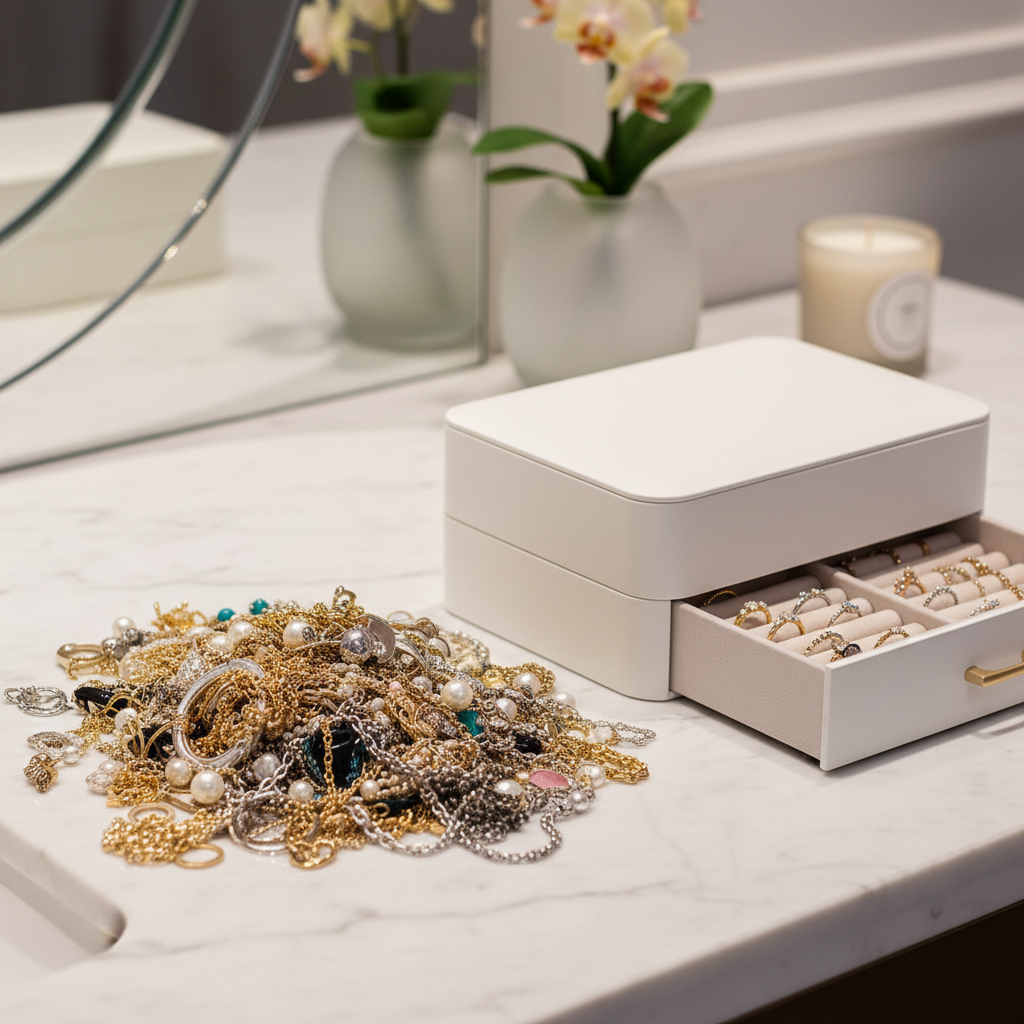
You organize a jewelry box by categorizing your pieces by type, removing items you no longer wear, and utilizing specialized inserts like ring rolls or necklace hooks. It is incredibly frustrating to reach for your favorite necklace only to find it tangled in a massive knot with three other chains. This morning chaos turns a simple routine into a stressful search that wastes your time and ruins your mood. By learning how do you organize a jewelry box? effectively, you can transform your collection into a streamlined, beautiful display that makes getting ready a joy.
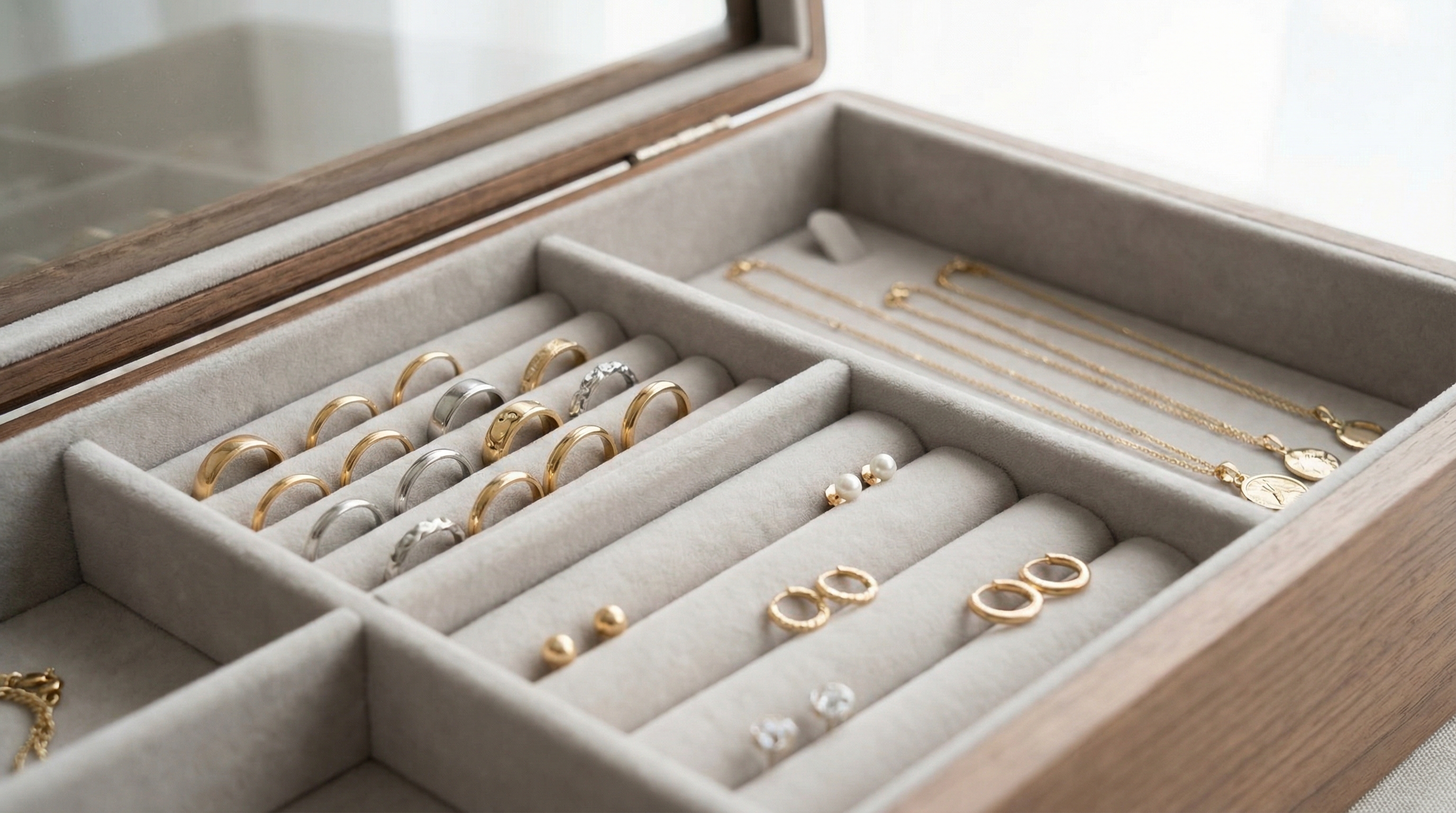
How do you organize a jewelry box by grouping?
You organize a jewelry box by grouping items of the same category together to ensure you can find what you need instantly. Sorting your collection into logical sections is the most effective way to understand how do you organize a jewelry box? for long-term maintenance. When every item has a dedicated zone, you stop losing small pieces like earring backs or thin rings.
Should you sort jewelry by material or type?
The best way to start is by separating your items into broad categories like “necklaces,” “earrings,” and “rings.” Look:
- Group all gold-toned items together if you style by color.
- Keep fine jewelry in a separate, more secure section from costume pieces.
- Place your most-worn “daily” items in the easiest-to-reach top tray.
The best part? You will finally see everything you own at a single glance.
Key Takeaway: Logical grouping reduces the mental load of choosing accessories during a busy morning.
| Grouping Method | Benefit | Best For | |
|---|---|---|---|
| By Jewelry Type | Fast identification | General collections | |
| By Metal Color | Aesthetic harmony | Fashion-forward users | |
| By Daily Use | Quick accessibility | Minimalist routines |
Categorizing by frequency of use is often the most practical starting point for busy professionals.
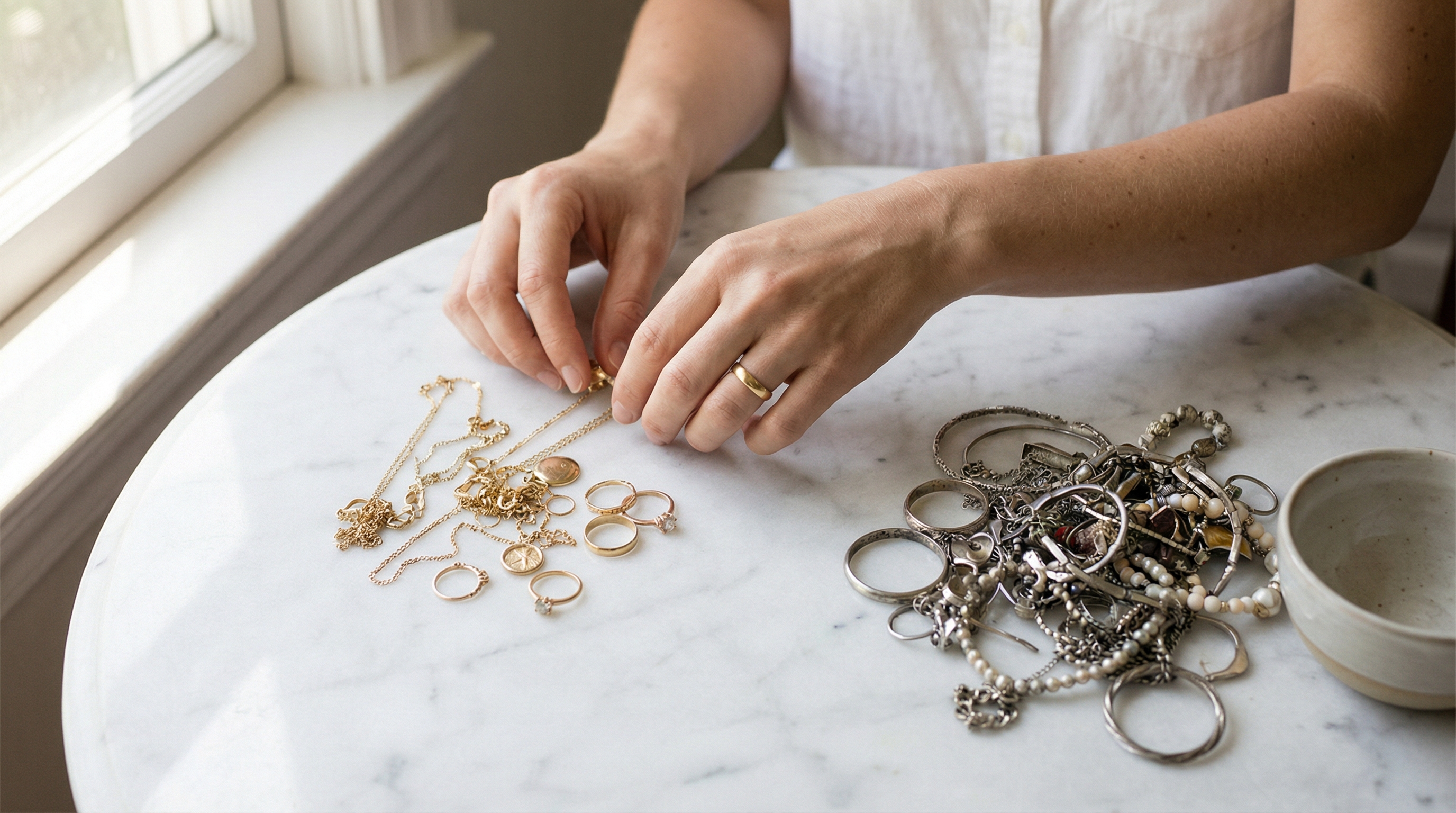
How do you organize a jewelry box by decluttering?
You organize a jewelry box by performing a thorough edit and removing any pieces that are broken, tarnished, or no longer match your personal style. Deciding which items to keep is a critical step in how do you organize a jewelry box? because it prevents overcrowding. A cluttered box makes it impossible to see the pieces you actually love and want to wear.
How do you decide what to keep or toss?
You should evaluate each piece based on when you last wore it and its current condition. The kicker?
- Donate items that are in good shape but no longer fit your fashion sense.
- Sell high-value pieces that you haven’t touched in over two years.
- Discard costume jewelry that has lost its plating or has broken clasps.
Here is the deal: if you haven’t worn it in a year, you probably won’t wear it today.
Key Takeaway: A curated collection is much easier to manage than an overflowing one filled with “maybe” items.
| Action | Impact | Priority | |
|---|---|---|---|
| Donate | Clears space, helps others | High | |
| Sell | Recovers investment | Medium | |
| Repair | Restores functionality | High |
Regularly thinning out your collection ensures that your jewelry box remains a functional tool rather than a junk drawer.
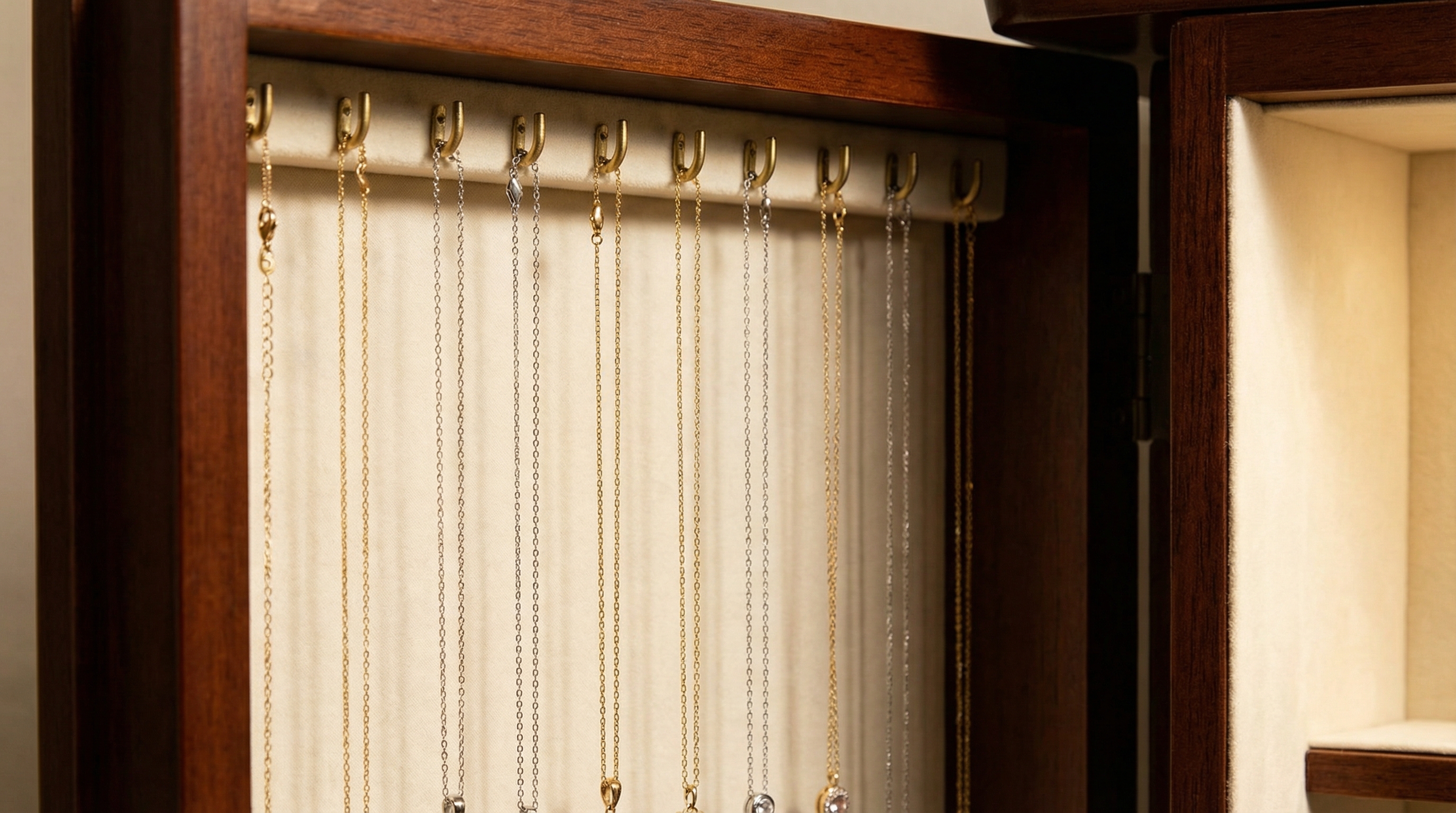
How do you organize a jewelry box for necklaces?
You organize a jewelry box for necklaces by using vertical hooks or long, individual compartments to keep chains completely separate. Preventing tangles is the primary goal when learning how do you organize a jewelry box? for delicate chains. When necklaces touch, they naturally intertwine, leading to potential damage and morning frustration.
What prevents necklace tangles most effectively?
Hanging necklaces on hooks is the most reliable way to keep them from knotting together. Think about it:
- Use adhesive hooks on the inside of a jewelry cabinet door.
- Lay chains flat in long, velvet-lined trays if you prefer drawer storage.
- Thread thin chains through a drinking straw for travel or temporary storage.
Believe it or not, even a small amount of separation can save you hours of untangling work.
Key Takeaway: Vertical storage is the gold standard for maintaining the integrity of delicate necklace chains.
| Storage Tool | Tangle Prevention | Space Efficiency | |
|---|---|---|---|
| Vertical Hooks | Excellent | High | |
| Flat Divided Trays | Good | Medium | |
| Individual Pouches | Fair | High |
Utilizing vertical space is often the “secret weapon” for managing large necklace collections without creating a mess.
How do you organize a jewelry box for rings?
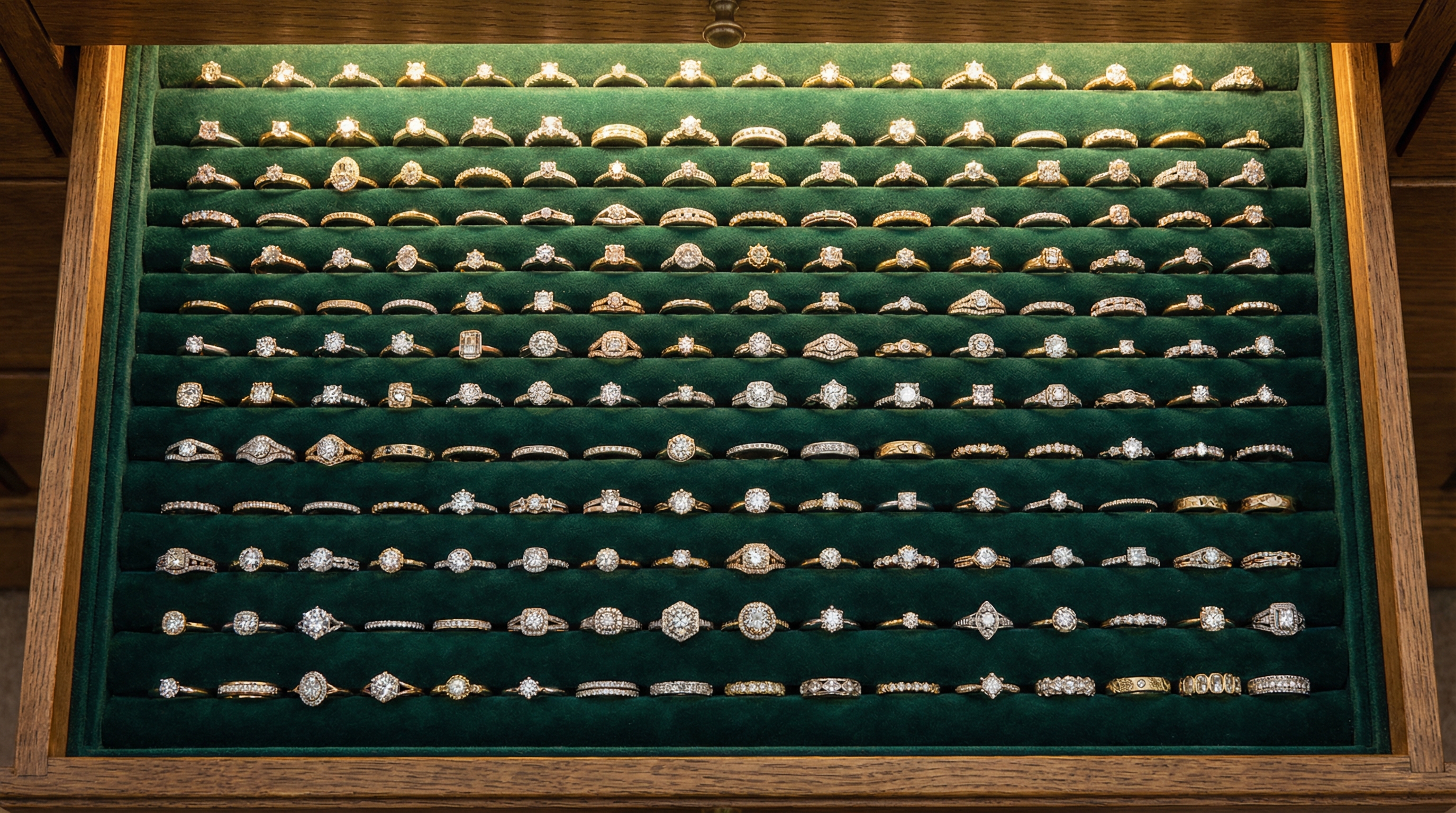
You organize a jewelry box for rings by inserting them into padded ring rolls that keep each piece upright and clearly visible. Ring rolls are the most efficient solution for how do you organize a jewelry box? because they maximize horizontal space while protecting stones. Without these rolls, rings tend to pile up in small dishes, scratching each other and making it hard to find matching bands.
How do you maximize ring roll storage?
You should arrange your rings by metal type or stone color within the rolls to create a visual catalog. In fact,
- Place wedding and engagement rings in the most protected central rows.
- Use wider gaps in the rolls for chunky statement rings or cocktail pieces.
- Keep stackable bands together so you can grab a full set at once.
The best part? You’ll never have to dig through a pile of metal to find your favorite sparkler again.
Key Takeaway: Ring rolls offer a professional “boutique” look while providing the best protection for precious metals.
| Feature | Benefit | Best For | |
|---|---|---|---|
| Padded Rolls | Scratched prevention | Fine jewelry | |
| Open Trays | High visibility | Large cocktail rings | |
| Tiered Displays | Space saving | Wide collections |
Investing in a box with high-quality velvet rolls is the quickest way to upgrade your ring organization.
How do you organize a jewelry box for bracelets?
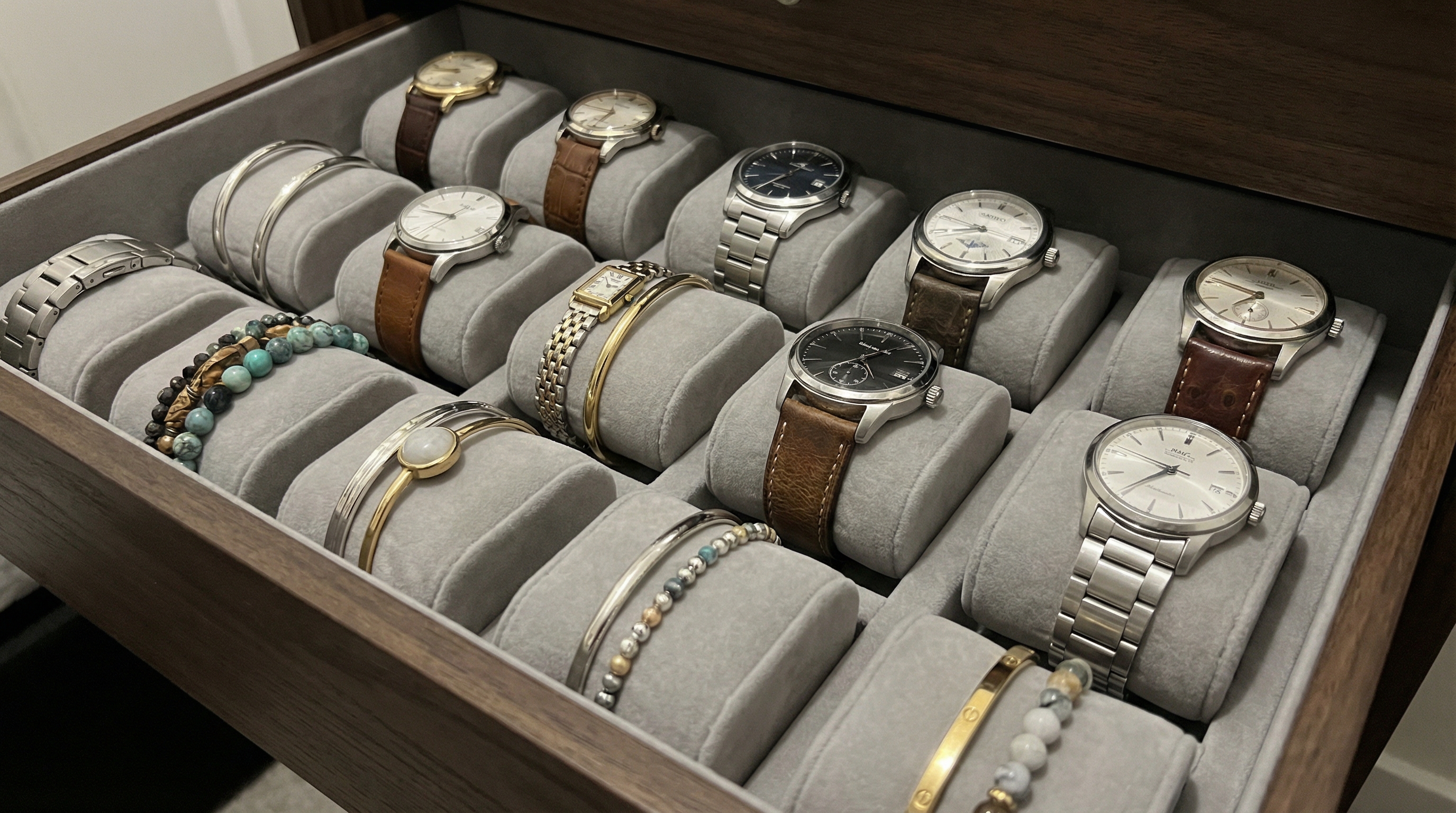
You organize a jewelry box for bracelets by using soft pillows for rigid cuffs and partitioned compartments for flexible chains. Understanding how do you organize a jewelry box? for wristwear requires a mix of storage shapes to accommodate different styles. If you toss bangles and delicate link bracelets into the same bin, they will inevitably scratch or dent each other.
Which inserts work best for chunky bracelets?
Velvet pillows are ideal because they maintain the shape of the bracelet while preventing it from sliding around. Wait, there’s more:
- Use long, narrow dividers for tennis bracelets and thin chains.
- Stack rigid bangles on a vertical jewelry T-bar to save drawer space.
- Store watches in dedicated square slots with their own cushions.
Bottom line: keeping bracelets tensioned or flat prevents the structural damage caused by clumping.
Key Takeaway: Using soft, shaped inserts preserves the “roundness” of cuffs and protects the finish of your bracelets.
| Bracelet Type | Recommended Storage | Protection Level | |
|---|---|---|---|
| Rigid Cuffs | Velvet Pillows | Very High | |
| Chain Links | Flat Dividers | High | |
| Bangles | Vertical T-Bars | Medium |
Mixing pillows with flat compartments allows you to house a diverse bracelet collection within a single drawer.
How do you organize a jewelry box for earrings?
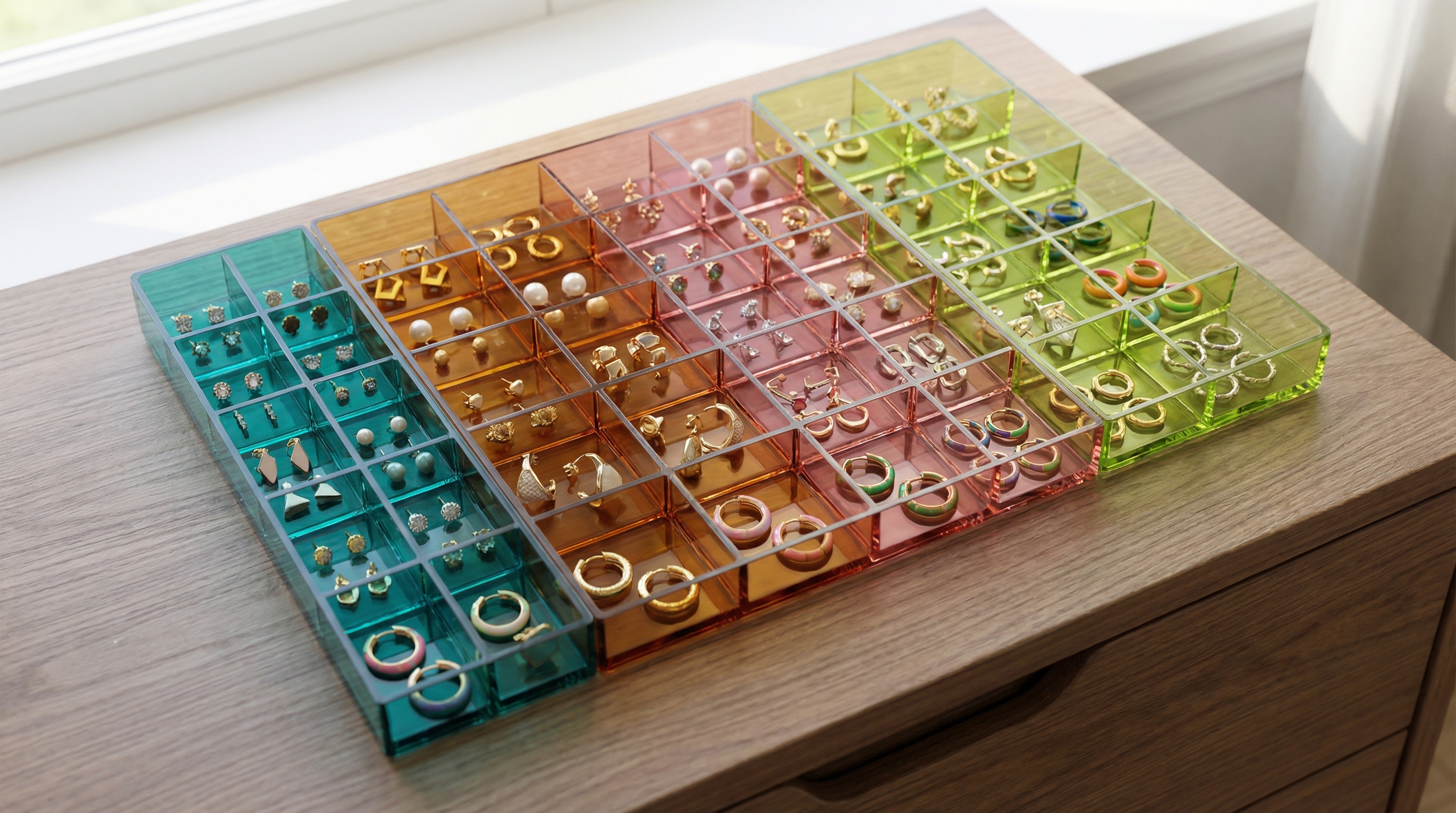
You organize a jewelry box for earrings by utilizing a multi-compartment grid tray that keeps every pair together in its own tiny cell. When figuring out how do you organize a jewelry box? for earrings, the goal is to eliminate the “missing mate” syndrome. A grid system ensures that as soon as you take an earring off, it has a specific home waiting for it.
How do you manage small studs and large hoops?
You should use a tray with varying cell sizes to accommodate both tiny diamond studs and oversized statement hoops. Check this out:
- Dedicate the smallest 1×1 cells to your daily stud collection.
- Use larger rectangular cells for dangling earrings and chandeliers.
- Hang hoops on a mesh screen or specialized earring card for maximum visibility.
The kicker? You will save minutes every morning by not having to hunt for a matching earring back.
Key Takeaway: A “one pair per square” rule is the only way to stay organized if you have a large earring collection.
| Earring Style | Grid Size | Access Speed | |
|---|---|---|---|
| Studs | Small (1×1) | Instant | |
| Drops | Medium (1×2) | Fast | |
| Hoops | Large (2×2) | Moderate |
Small grid trays can often be stacked, allowing you to store hundreds of earrings in a very small footprint.
How do you organize a jewelry box for maintenance?
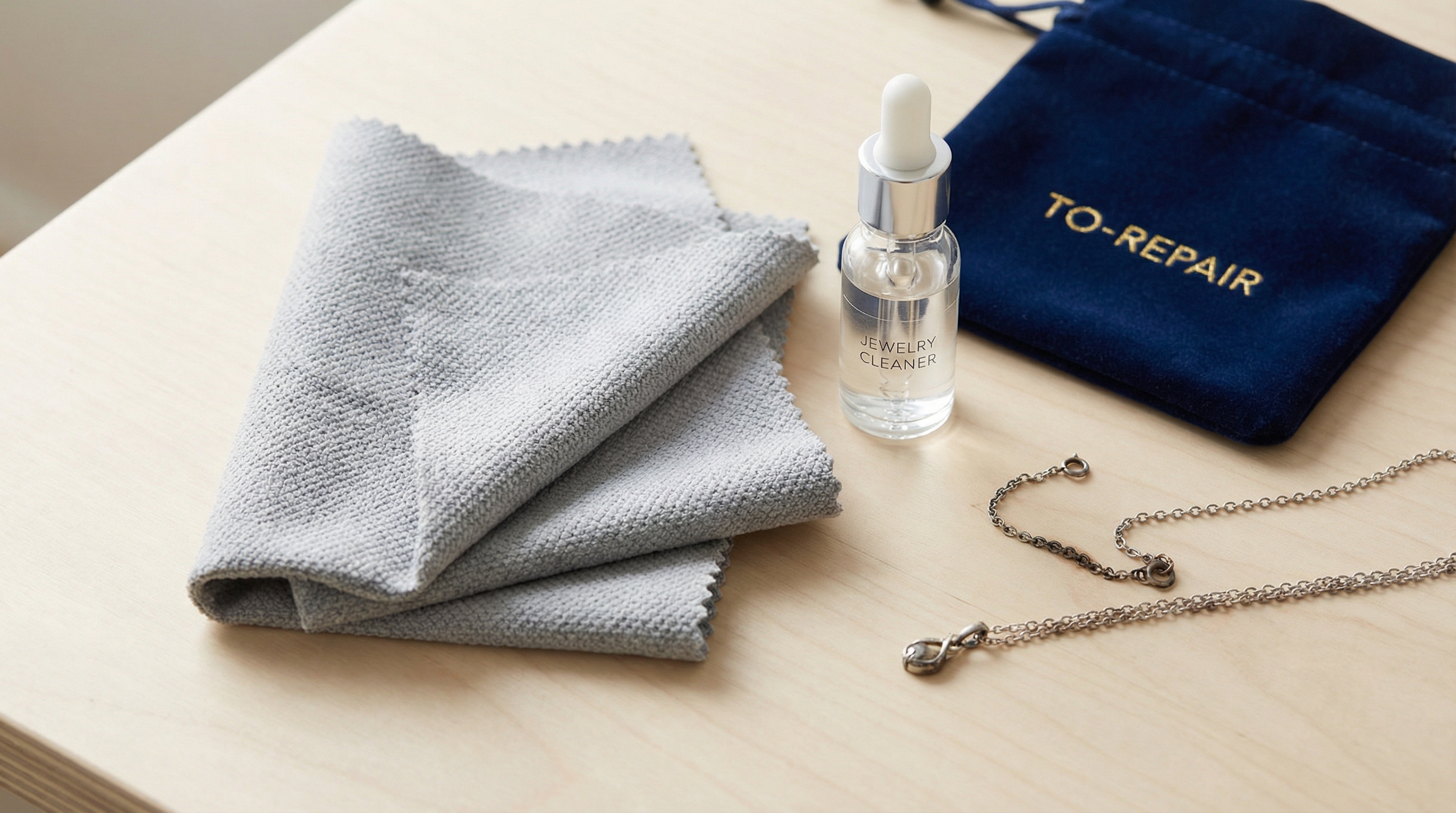
You organize a jewelry box for maintenance by setting aside a dedicated pouch or corner for items that need professional cleaning or repair. A major part of how do you organize a jewelry box? is ensuring that everything inside is actually wearable. If your box is filled with broken clasps and tarnished silver, you are wasting space on items you cannot use.
Why should you keep a “repair pouch” inside?
Keeping a small pouch specifically for damaged items prevents them from getting mixed back into your “ready-to-wear” rotation. Look:
- Include a microfiber polishing cloth in your top drawer for quick touch-ups.
- Use anti-tarnish strips in the bottom of the box to protect silver pieces.
- Schedule a “maintenance day” once a season to take the repair pouch to a jeweler.
Here is the deal: if it stays in the repair pouch for more than six months, consider if you truly want to keep it.
Key Takeaway: A healthy jewelry box only contains items that are clean, functional, and ready to be worn immediately.
| Maintenance Item | Use Case | Frequency | |
|---|---|---|---|
| Polishing Cloth | Removing oils/fingerprints | Daily/Weekly | |
| Anti-tarnish Strips | Preventing silver oxidation | Seasonal | |
| Repair Pouch | Holding broken pieces | As needed |
Proactive maintenance keeps your jewelry looking brand new and prevents long-term damage from oxidation.
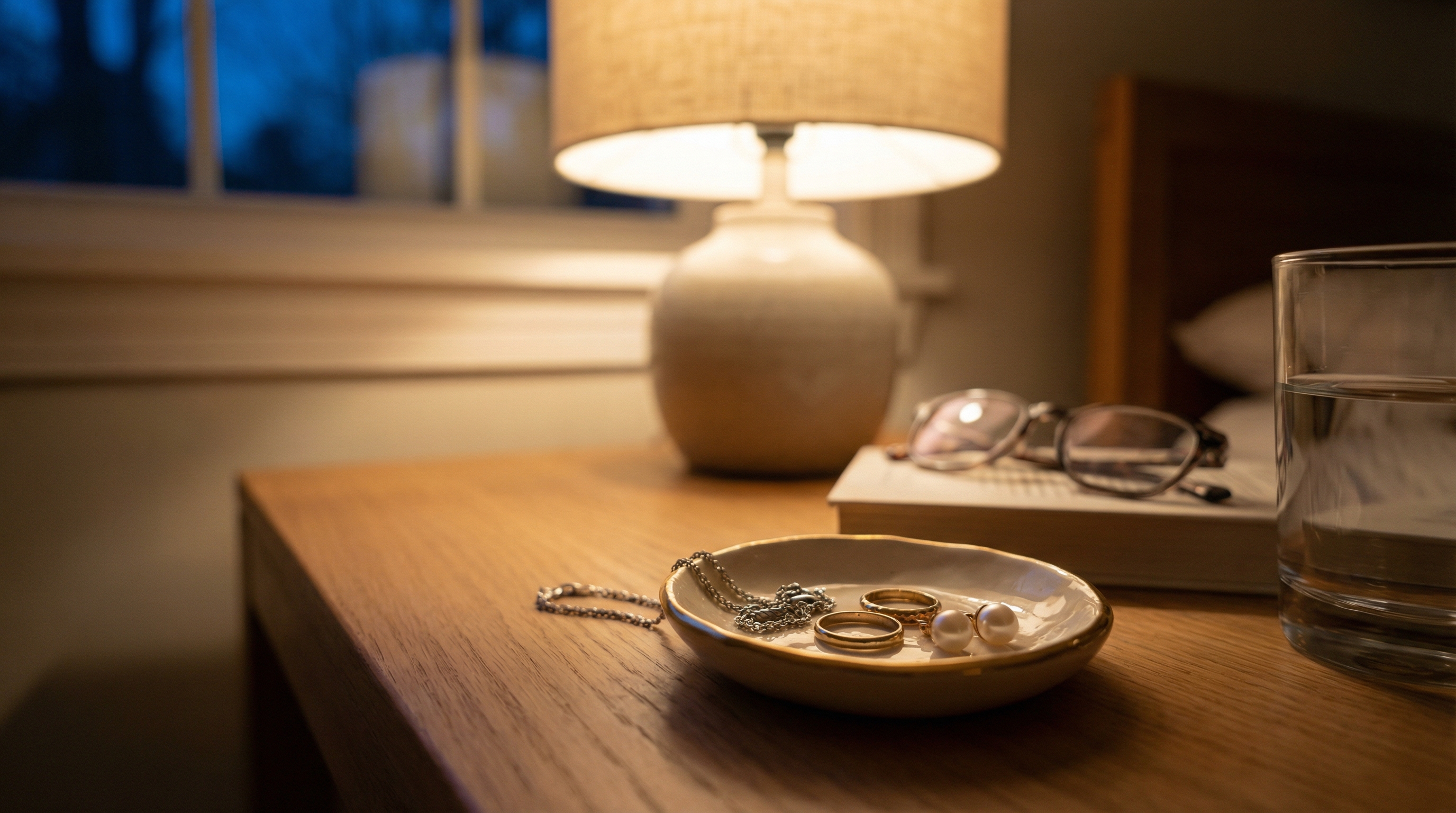
How do you organize a jewelry box with drop zones?
You organize a jewelry box with drop zones by placing a small decorative dish on your nightstand for temporary storage before moving items back to the main box. This strategy is a life-saver for how do you organize a jewelry box? because it prevents you from leaving jewelry scattered around the house. When you are tired at night, you are less likely to walk to your dresser, so a “catch-all” dish keeps things safe until morning.
Where is the best place for a secondary dish?
The most effective location for a drop zone is wherever you typically remove your jewelry, such as the bedside table or bathroom counter. The best part?
- It protects your rings from slipping down the drain if placed near the sink.
- It keeps your jewelry away from the edges of nightstands where it could fall.
- It creates a consistent habit that makes morning “reset” time much faster.
Think about it: five seconds to put a ring in a dish saves thirty minutes of searching the floor later.
Key Takeaway: Drop zones act as a bridge between wearing your jewelry and storing it properly in its permanent home.
| Zone Type | Location | Purpose | |
|---|---|---|---|
| Nightstand Dish | Bedroom | Sleep-time removal | |
| Vanity Tray | Bathroom | Skincare/Shower removal | |
| Entryway Bowl | Front door | “Home from work” dump |
A “reset” routine every morning ensures the drop zone stays empty and the jewelry box stays complete.
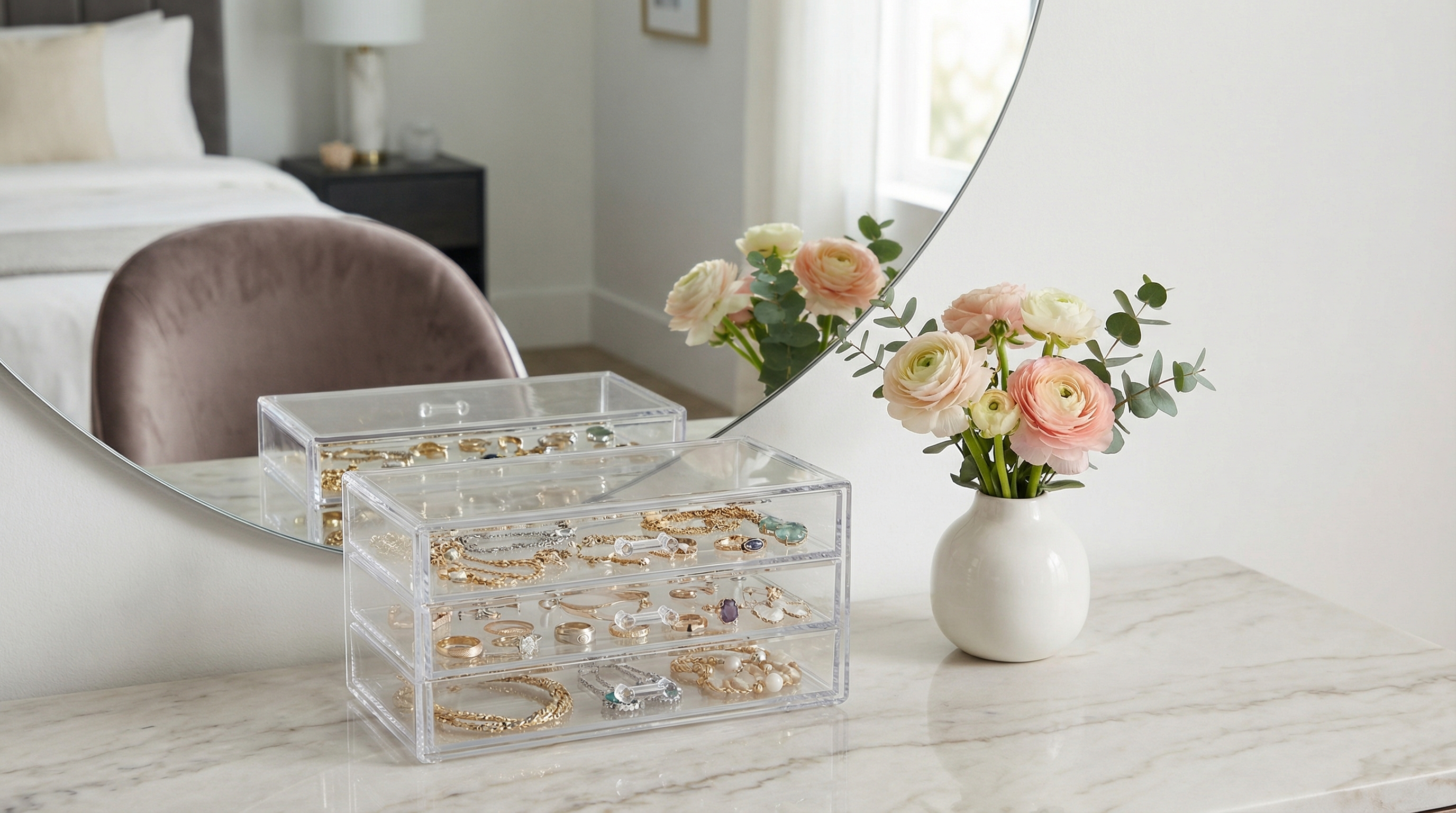
How do you organize a jewelry box for visual appeal?
You organize a jewelry box for visual appeal by using transparent acrylic drawers or glass-topped cases that turn your collection into home decor. Aesthetics play a huge role in how do you organize a jewelry box? because you are more likely to maintain a system that looks beautiful. Clear storage allows you to enjoy the sparkle of your pieces even when you aren’t wearing them.
Why is visibility so important for organization?
When you can see your jewelry through clear lids, you are less likely to forget about pieces buried at the bottom of a drawer. In fact,
- Acrylic drawers allow light to hit your jewelry, making it easier to see colors.
- Stackable clear units save vertical space on your vanity or dresser.
- Using colored velvet liners inside clear boxes adds a personalized, luxury touch.
The kicker? Clear storage also makes it immediately obvious when your system is starting to get messy.
Key Takeaway: Visual transparency encourages better organization habits and turns your jewelry into a styled display.
| Material Type | Pros | Cons | |
|---|---|---|---|
| Clear Acrylic | Maximum visibility | Shows fingerprints | |
| Wood & Glass | Classic look | Heavier/Bulky | |
| All-Velvet | Ultimate protection | Zero visibility |
Combining clear drawers with velvet inserts provides the perfect balance of aesthetic appeal and physical protection.
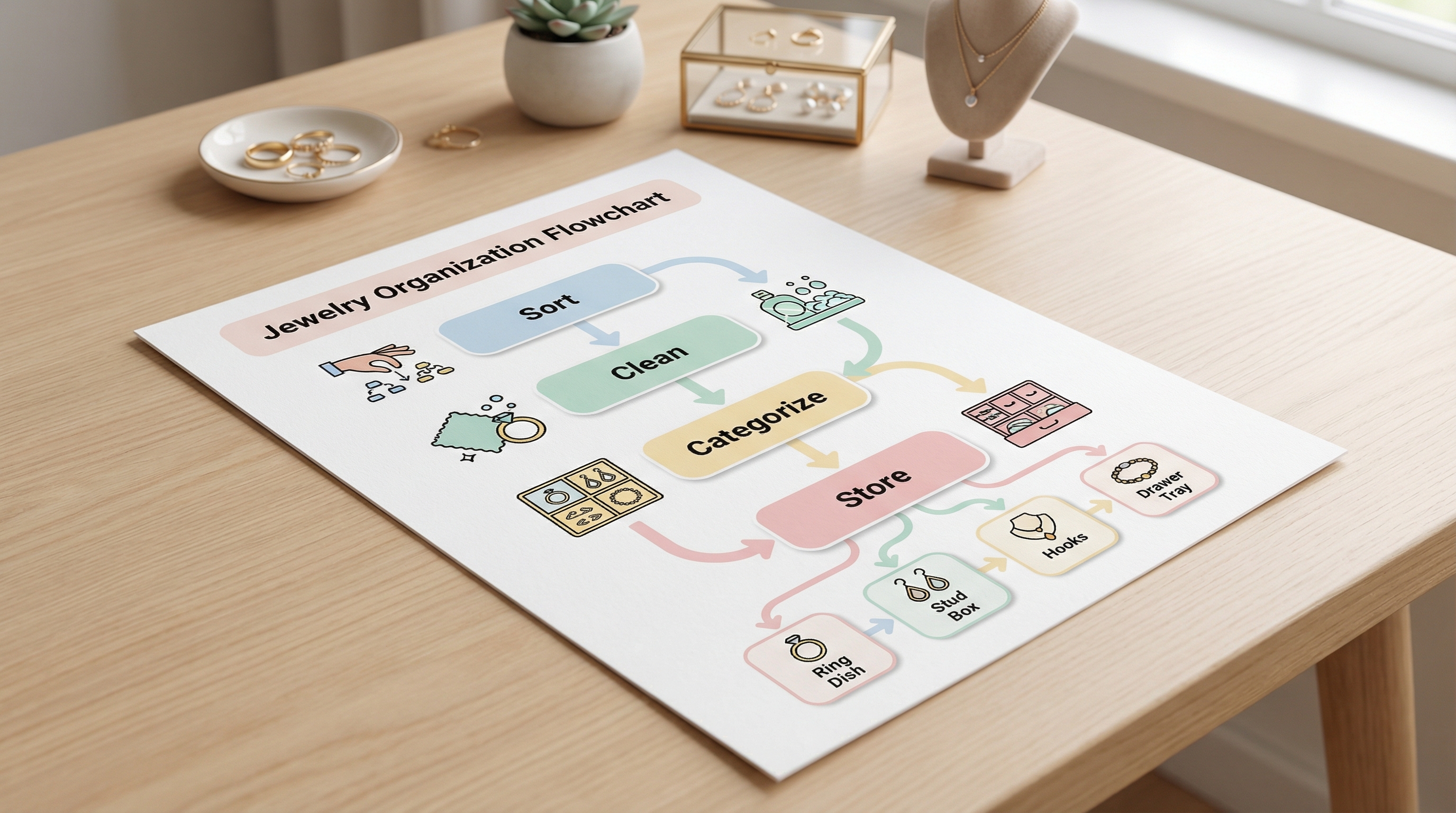
How do you organize a jewelry box strategically?
You organize a jewelry box strategically by following a step-by-step workflow that starts with sorting and ends with a sustainable storage plan. A strategic approach to how do you organize a jewelry box? ensures that you don’t just “tidy up,” but actually build a system that lasts for years. Without a plan, your box will return to its original cluttered state within weeks.
What are the steps to a permanent system?
A permanent system requires a dedicated setup phase followed by a very simple daily maintenance routine. Here is the deal:
- Start with a “total empty” where every piece of jewelry is out on a table.
- Categorize using the flowchart method to decide where each piece belongs.
- Label your drawers or sections if you have a very large or complex collection.
Wait, there’s more: a strategic layout places your most-used items in the “prime real estate” of the top-most drawers.
Key Takeaway: Strategy is the difference between a one-time cleaning and a lifetime of organized accessories.
| Step | Focus | Goal | |
|---|---|---|---|
| Phase 1 | Audit & Sort | Identify what you have | |
| Phase 2 | Mapping | Assign homes for everything | |
| Phase 3 | Maintenance | Daily “return to home” |
By following a logical flowchart, you eliminate the guesswork and ensure every piece of jewelry is protected and accessible.
Organizing a modern jewelry box is about more than just cleaning; it is about creating a functional system that respects the value of your collection. By grouping items by type, ruthlessly decluttering, and using specialized inserts like ring rolls and necklace hooks, you can eliminate the morning “tangle stress” forever. A well-organized box not only protects your investment but also ensures that you actually wear and enjoy the pieces you own. To find the perfect high-quality storage solution for your collection, contact us today and let our experts help you design a system that works for your unique lifestyle.
FAQ Section
Can I use household items to organize my jewelry?Yes, you can use items like ice cube trays for earrings or small decorative bowls for rings. However, household items often lack the soft velvet lining necessary to prevent long-term scratching on fine metals.
What’s the best way to prevent silver from tarnishing in a box?The best way is to use anti-tarnish strips or store silver in airtight Ziploc bags inside your box. Minimizing exposure to air and moisture is the only way to stop oxidation.
How do I know if my jewelry box is too small?Your box is too small if items are overlapping, chains are touching, or you have to dig to find what you need. If you cannot see every piece at a glance, it is time to upgrade to a larger or modular system.
Can I store pearls with other gemstones?No, you should never store pearls in direct contact with harder gemstones like diamonds. Pearls are very soft and will easily be scratched by the sharp facets of other stones.
What’s the best way to travel with jewelry?The best way is to use a dedicated travel jewelry roll or small zippered pouch with individual sections. Avoid putting all your jewelry into one large bag, as this is a recipe for a tangled mess.