
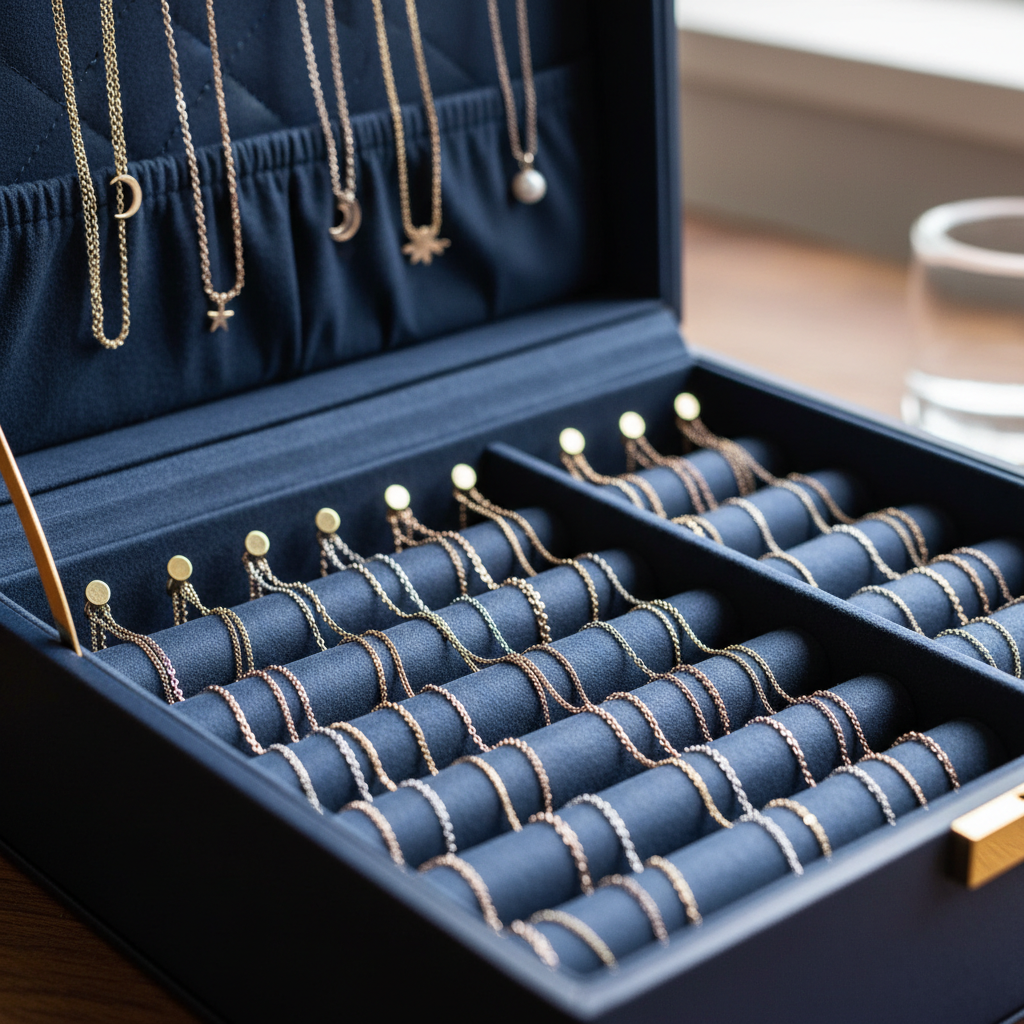
Organizing your jewelry box involves a systematic process of decluttering, categorizing, and selecting the right storage solutions to keep your collection pristine. Many jewelry lovers struggle with a jumbled mess where large items get tangled and small earrings vanish at the bottom. This chaos not only makes getting ready stressful but can also lead to permanent damage or scratches on your most precious heirlooms. The good news is that by learning how do you organize necklaces in a jewelry box? and implementing a professional layout using a specialized necklace box , you can transform your storage into a functional gallery.
Why Should You Empty Your Jewelry Box First?
Emptying your jewelry box first is the only way to perform a comprehensive inventory and deep clean the storage surface. Before you ask how do you organize necklaces in a jewelry box? , you must see the full scale of your collection without any hidden layers. Removing everything allows you to spot items needing repair or those you haven’t worn in years.
Assessing Your Current Collection
A “blank slate” approach reveals the true condition of your jewelry and the box itself. You might find missing earring backs or discover that your box lining has accumulated abrasive dust.
Cleaning the Interior Surface
- Use a microfiber cloth to wipe down velvet linings.
- Vacuum small crevices with a soft brush attachment.
- Check for any signs of tarnish-inducing moisture.
Key Takeaway: You cannot effectively organize a space until it is completely cleared and sanitized to protect your delicate assets.
| Step | Action | Benefit | |
|---|---|---|---|
| Clearance | Empty the entire box | Full visibility of all items | |
| Audit | Sort by repair/keep/donate | Reduces clutter immediately | |
| Sanitize | Clean interior fabric | Prevents scratches from debris |
Starting with an empty box ensures that your new organization system is built on a foundation of cleanliness and purpose.
How Do You Untangle Knotty Necklace Chains?
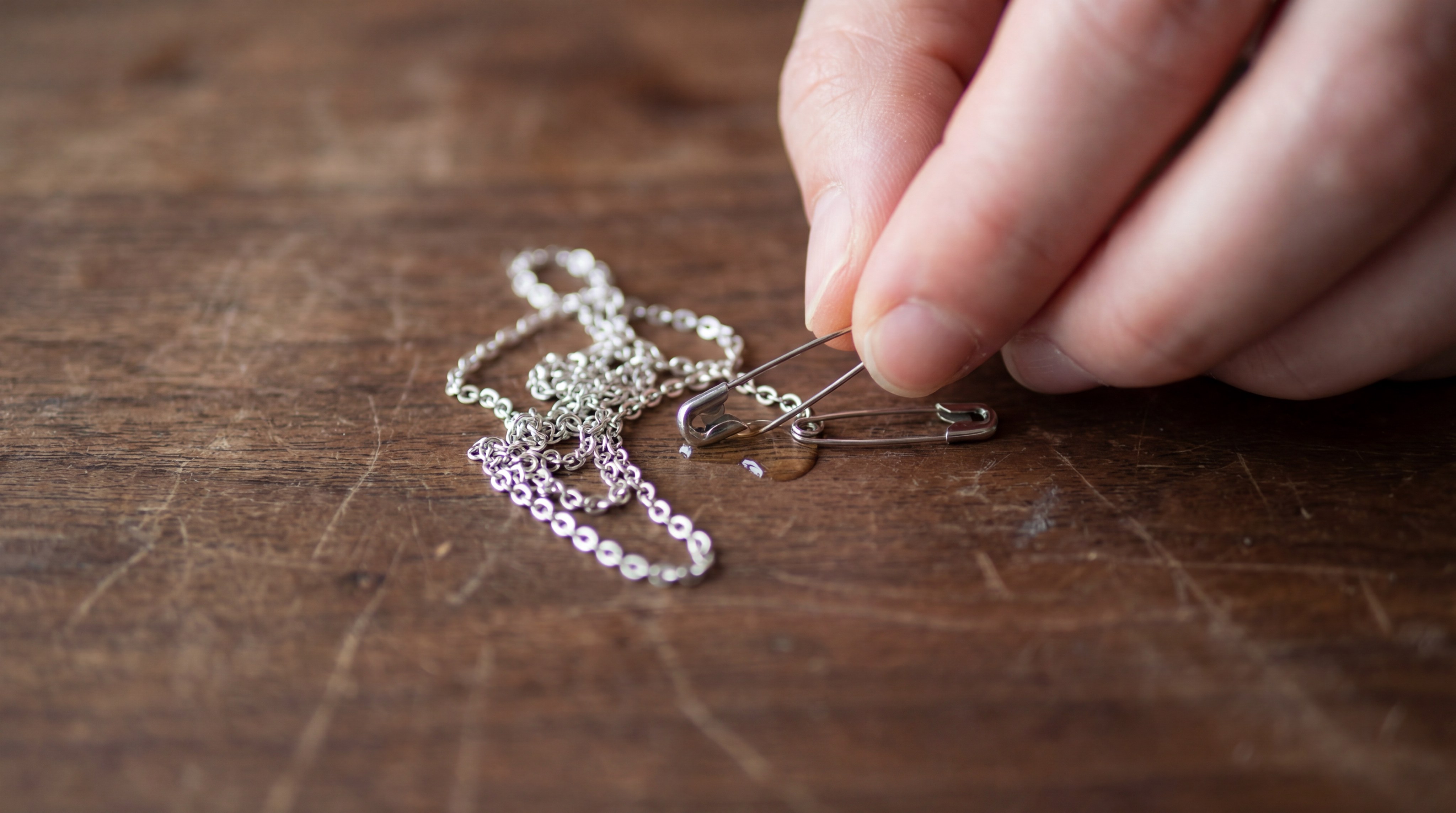
Untangling knotty necklace chains requires patience and precision tools like safety pins and baby oil to prevent link breakage. Often, the biggest hurdle when deciding how do you organize necklaces in a jewelry box? is dealing with the pre-existing tangles that accumulated from poor storage habits. Lubricating the metal allows tight knots to slide apart without the need for force.
The Safety Pin Precision Method
Place the tangled chain on a hard, flat surface to prevent it from tightening further. Use two safety pins to gently tease the center of the knot outward until the loops loosen.
Using Baby Oil for Tough Knots
- Apply a tiny drop of oil to the knot center.
- Work the links with pins to encourage sliding.
- Clean the necklace with mild soap after untangling.
Key Takeaway: Never pull a knot tight; use lubrication and fine-point tools to tease links apart safely.
| Tool | Purpose | Advantage | |
|---|---|---|---|
| Safety Pins | Mechanical separation | High precision for micro-links | |
| Baby Oil | Lubrication | Reduces friction between links | |
| Hard Surface | Stability | Prevents accidental knot tightening |
Untangling your chains is the first step toward a knot-free future where every piece is ready to wear.
What Is the Best Way to Group Jewelry?
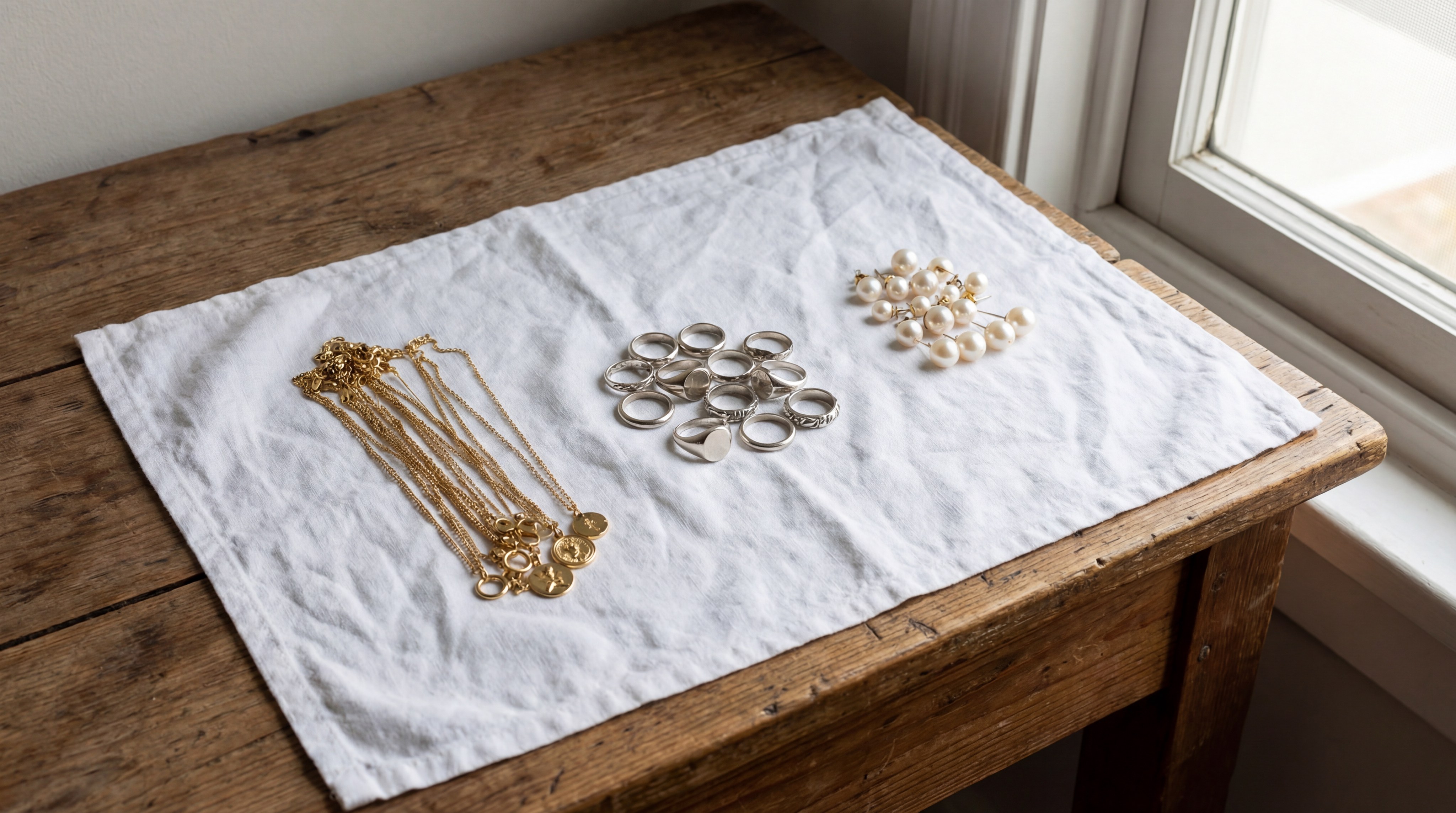
The best way to group jewelry is by a combination of material type and frequency of use to ensure accessibility and protection. When considering how do you organize necklaces in a jewelry box? , it is vital to keep different metals separate to prevent chemical reactions and physical scratching. Sorting by occasion also streamlines your morning routine by keeping everyday essentials at the forefront.
Categorizing by Metal and Material
Group gold, silver, and rose gold pieces into distinct sections. This prevents harder metals from marring softer materials like pearls or high-karat gold.
Sorting by Occasion and Style
- Keep “everyday” studs and chains together.
- Separate statement necklaces and evening wear.
- Archive seasonal or heirloom pieces in protected zones.
Key Takeaway: Logical grouping by material and lifestyle needs reduces search time and physical wear on your pieces.
| Category | Sorting Logic | Storage Goal | |
|---|---|---|---|
| Metal Type | Silver vs. Gold | Prevent tarnish and scratches | |
| Frequency | Daily vs. Special Occasion | Improve morning efficiency | |
| Type | Earrings vs. Bracelets | Specific compartment matching |
A well-categorized jewelry box functions like a curated boutique, making every choice feel intentional and effortless.
Should You Use Custom Inserts for Organization?
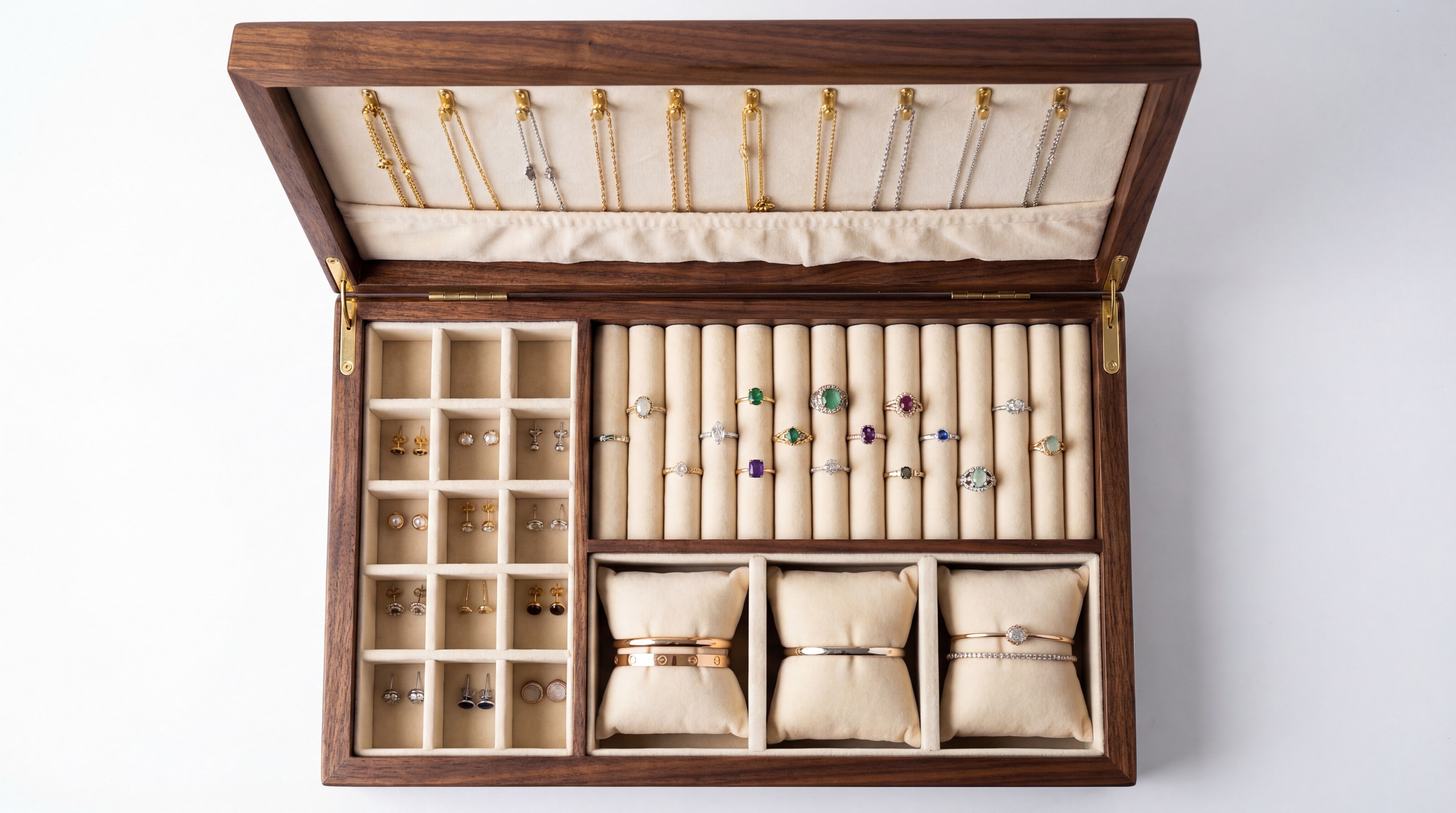
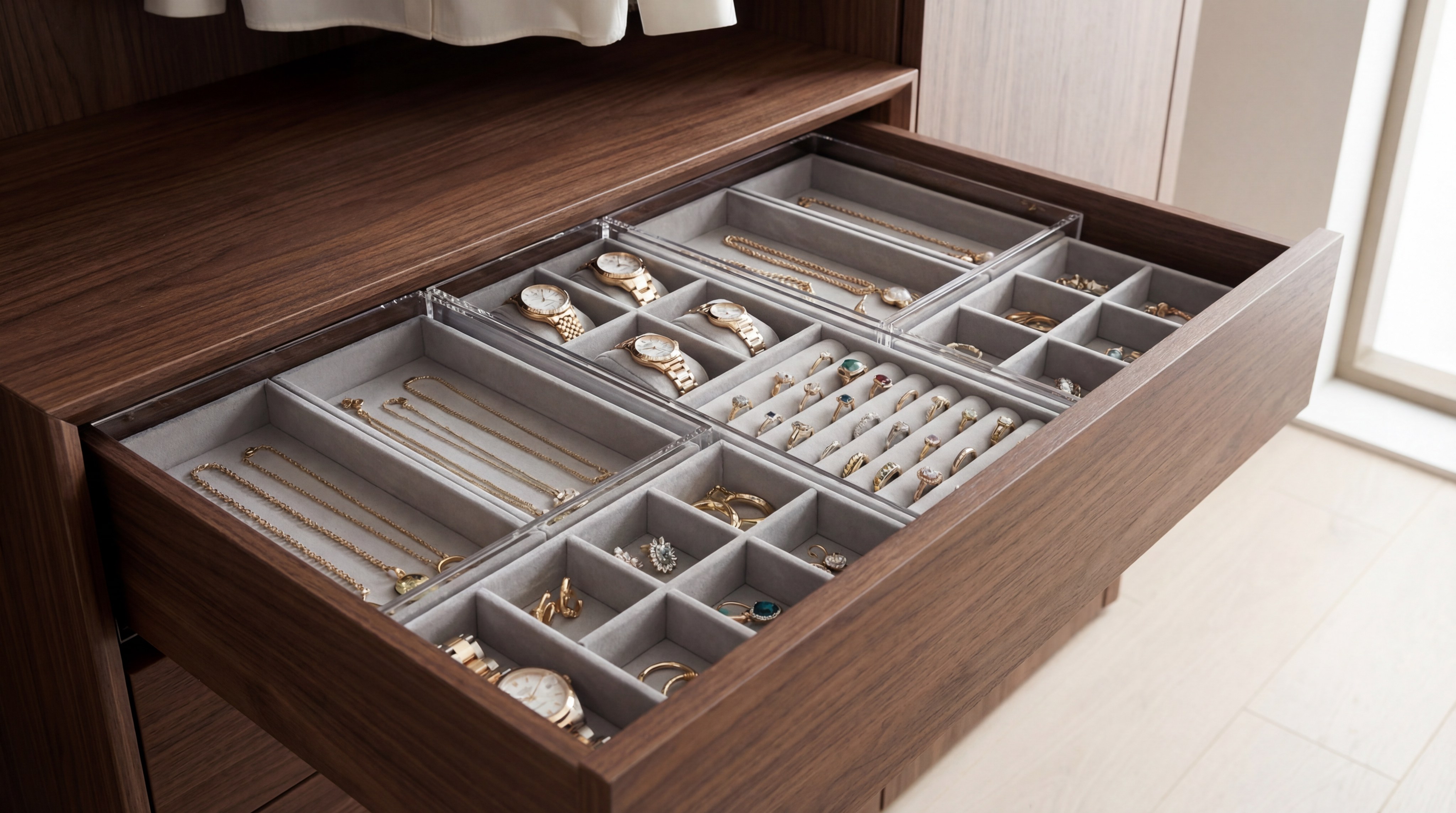
You should use custom inserts because they allow for modular growth and ensure every unique piece has a perfectly sized, non-slip compartment. When you master how do you organize necklaces in a jewelry box?, you realize that standard boxes often lack the specific dimensions for oversized watches or dainty pendants. Investing in a custom jewelry box architecture provides the stability needed to keep items from shifting.
Benefits of Modular Compartments
Modular inserts can be rearranged as your collection evolves. They are particularly effective for preventing small charms from migrating into larger sections meant for bracelets.
Choosing Specialized Architecture
- Select ring rolls for maximum density.
- Use grid trays for stud earrings.
- Incorporate large wells for chunky bangles.
Key Takeaway: Customization is the ultimate secret to a permanent organization system that adapts to your changing style.
| Insert Type | Best For | Benefit | |
|---|---|---|---|
| Ring Rolls | Bands and Gemstone rings | Keeps pieces upright and visible | |
| Grid Trays | Stud earrings and charms | Prevents pairs from separating | |
| Deep Wells | Watches and thick bracelets | accommodates bulkier dimensions |
Modular inserts transform a standard drawer into a professional-grade display that protects your investments.
How Do You Prevent Necklaces from Tangling?
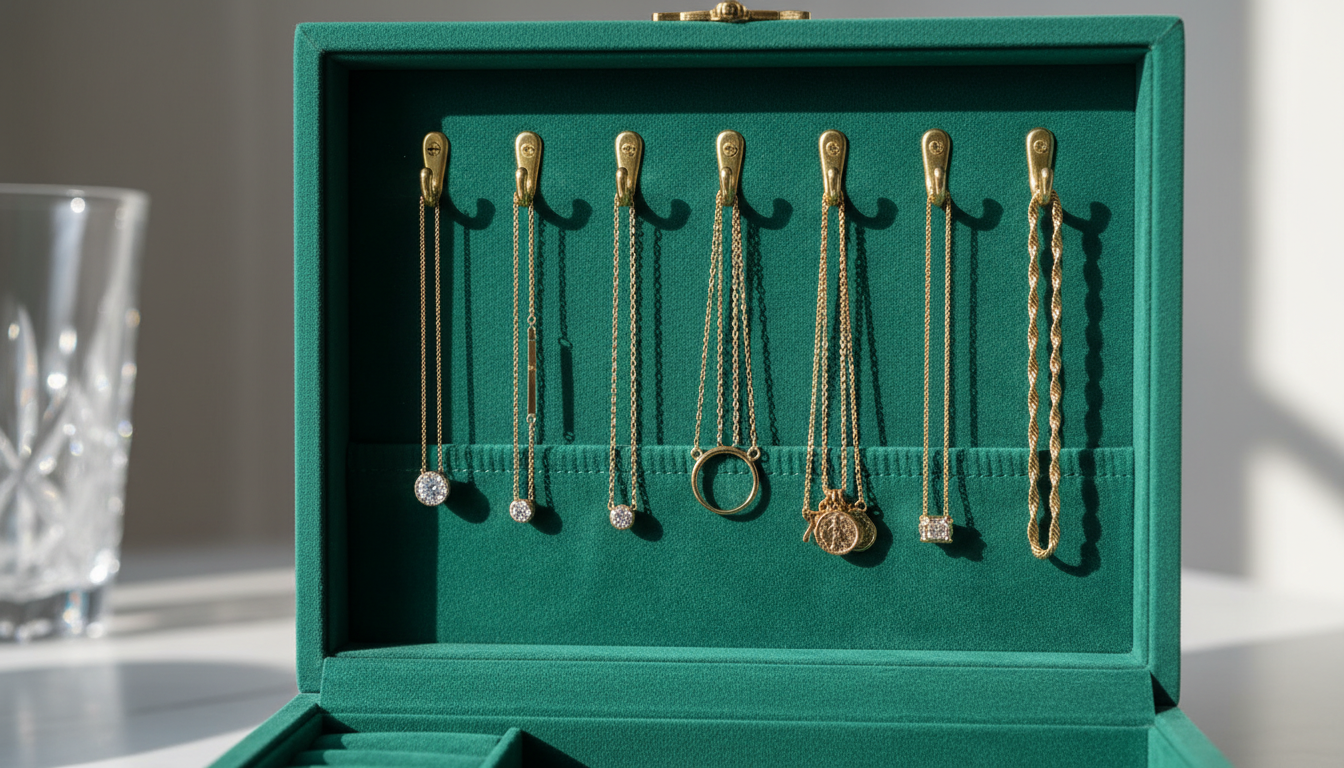
To prevent necklaces from tangling, you must utilize vertical hanging hooks or individual protective barriers like tissue paper to keep chains isolated. The definitive answer to how do you organize necklaces in a jewelry box? is gravity-fed storage. By hanging each chain separately, you eliminate the contact points where intertwining and knotting typically occur during movement.
Utilizing Built-in Hanging Hooks
Vertical storage is the gold standard for thin chains. Ensure each hook holds only one necklace to maintain complete link separation.
Alternative Wrapping Methods
- Wrap delicate chains in acid-free tissue.
- Use “press-and-seal” wrap for travel.
- Thread chains through drinking straws for budget isolation.
Key Takeaway: Physical separation is the only guaranteed way to stop necklaces from becoming a tangled mess.
| Method | Best For | Storage Type | |
|---|---|---|---|
| Vertical Hooks | Everyday necklaces | High visibility/Easy access | |
| Tissue Wrapping | Long-term storage | Dust and tarnish protection | |
| Individual Pouches | Travel or chunky pieces | Impact protection |
Hanging your necklaces not only saves time but also showcases the beauty of your collection like an art display.
Can Ribbon Help You Organize Small Earrings?
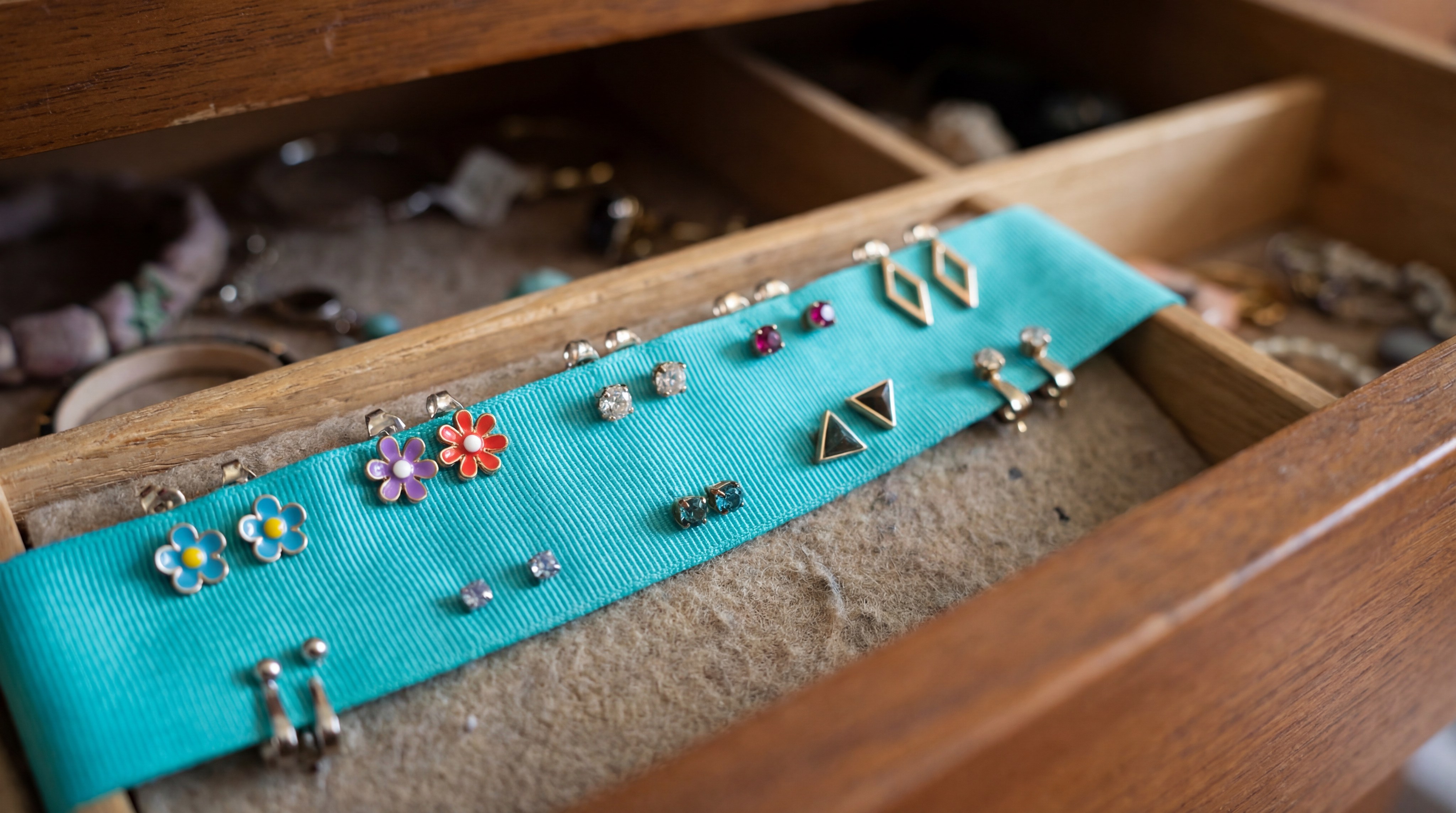
Ribbon can effectively organize small earrings by acting as a portable “card” that keeps pairs together and prevents them from sinking to the bottom of the box. As you consider how do you organize necklaces in a jewelry box?, don’t neglect the tiny studs that are easily lost. Poking earrings through a grosgrain ribbon creates a secure, flat surface that fits into any compartment.
Creating a DIY Earring Card
Cut a length of heavy ribbon and space your pairs out evenly. Secure the backs on the opposite side to lock them in place.
Upgrading to Specialized Boxes
- Look for pre-drilled earring holes.
- Use a dedicated earring box for high-volume collections.
- Choose boxes with transparent lids for quick selection.
Key Takeaway: Keeping pairs together is the primary goal of earring organization to avoid the “missing mate” frustration.
| Solution | Portability | Best Piece | |
|---|---|---|---|
| Ribbon Strip | Excellent for travel | Studs and small hoops | |
| Grid Box | Fixed organization | Large collections | |
| Lined Tray | High visibility | Statement earrings |
Using a ribbon is a clever, low-cost way to ensure you never lose a favorite earring to the depths of a drawer.
Is a Binder Ring Useful for Storing Rings?
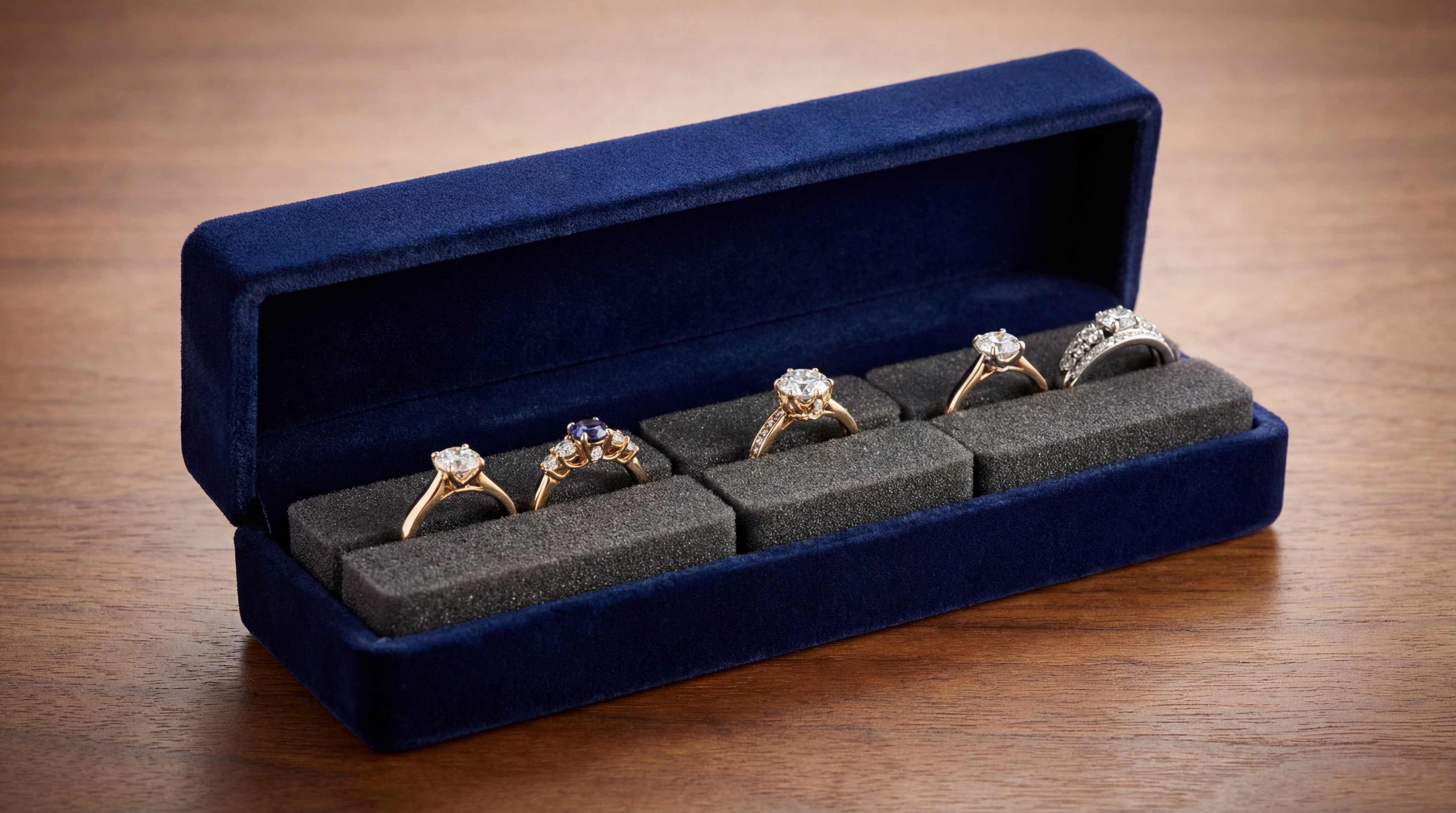
A binder ring is highly useful for keeping wedding sets or stackable bands together so they don’t separate and get lost in larger sections. While you are busy learning how do you organize necklaces in a jewelry box?, don’t forget the efficiency of grouping rings. Sliding multiple bands onto a small ring creates a single “unit” that is easy to grab and store.
Keeping Band Sets Together
Binder rings are perfect for rings that are always worn together. They prevent the bands from rubbing against each other and causing unnecessary scratches.
Switching to a Padded Ring Box
- Use foam rolls for gemstone protection.
- A professional ring box keeps pieces upright.
- Velvet lining prevents metal-on-metal friction.
Key Takeaway: Grouping by “wear sets” saves time and protects the structural integrity of your bands.
| Ring Storage | Advantage | Best Environment | |
|---|---|---|---|
| Binder Ring | Keeps sets together | Travel or small boxes | |
| Foam Rolls | Prevents scratches | Professional jewelry boxes | |
| Individual Slots | Showcases gemstones | High-end collections |
Effective ring storage ensures that your most sentimental pieces remain as radiant as the day you received them.
How Do You Store Pieces You Wear Daily?
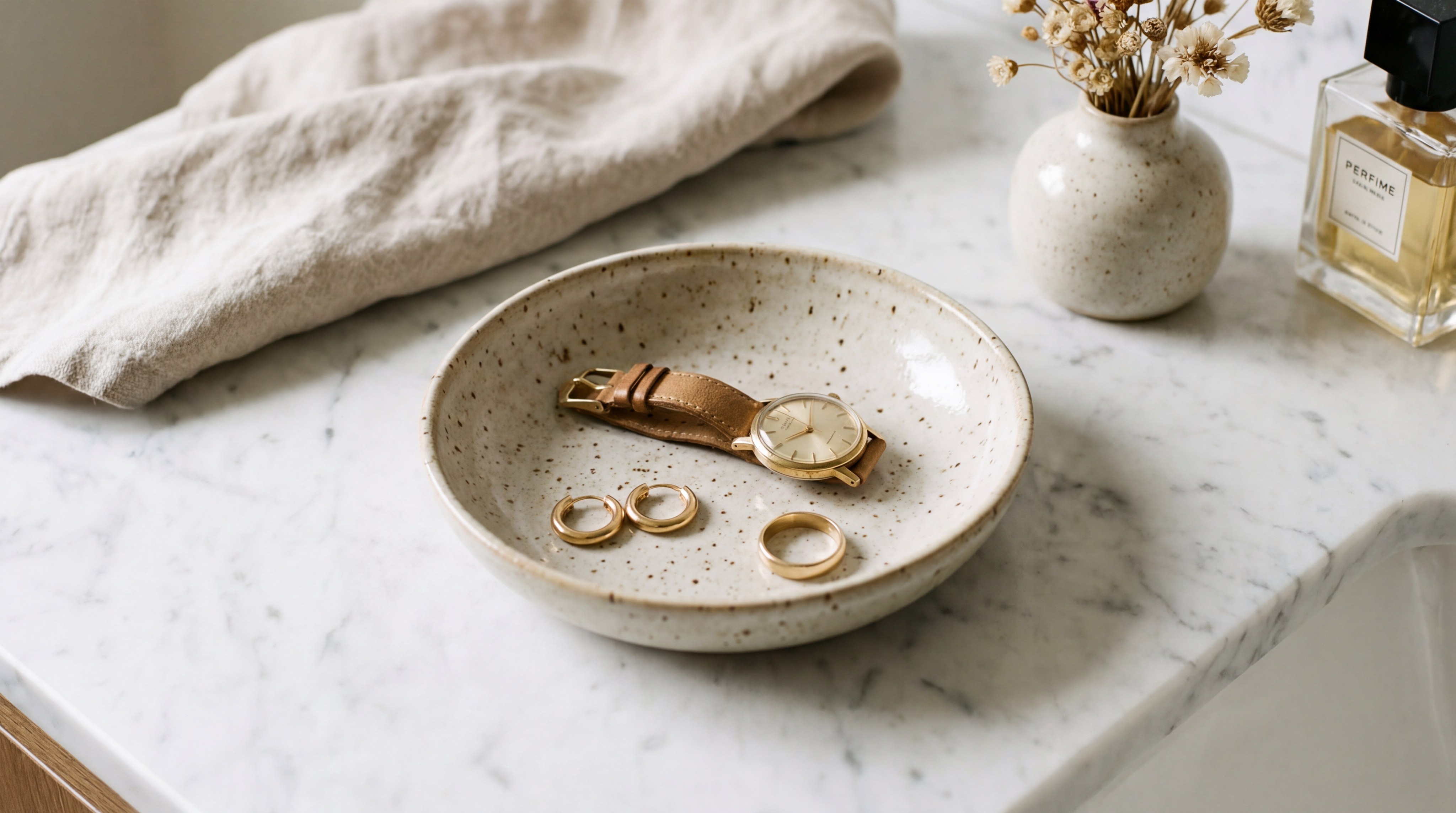
Storing daily pieces in open trays or accessible vanity dishes prevents you from disrupting your main organization system when you are in a rush. When you are asked how do you organize necklaces in a jewelry box?, the answer often involves long-term protection, but daily wear requires speed. A dedicated “landing zone” keeps your favorites within arm’s reach while maintaining a tidy dresser.
Using Open Trays for Accessibility
Place a small ceramic dish or tray on your marble vanity for the 2-3 items you wear every single day. This creates a designated spot that prevents “countertop clutter.”
Selecting a Versatile Bracelet Box
- Use soft pillow inserts for watches.
- Choose a bracelet box for bangles.
- Ensure the tray is lined with soft fabric.
Key Takeaway: Accessibility is king for daily essentials; keep them visible and separate from your deeper archives.
| Storage Spot | Accessibility | Best For | |
|---|---|---|---|
| Vanity Dish | Instant access | Wedding bands/Studs | |
| Watch Pillow | Protective display | Luxury timepieces | |
| Top Drawer | Balanced protection | Daily rotation items |
A designated “daily tray” acts as a staging area that preserves the order of your entire jewelry collection.
Where Should You Store Rare Luxury Items?
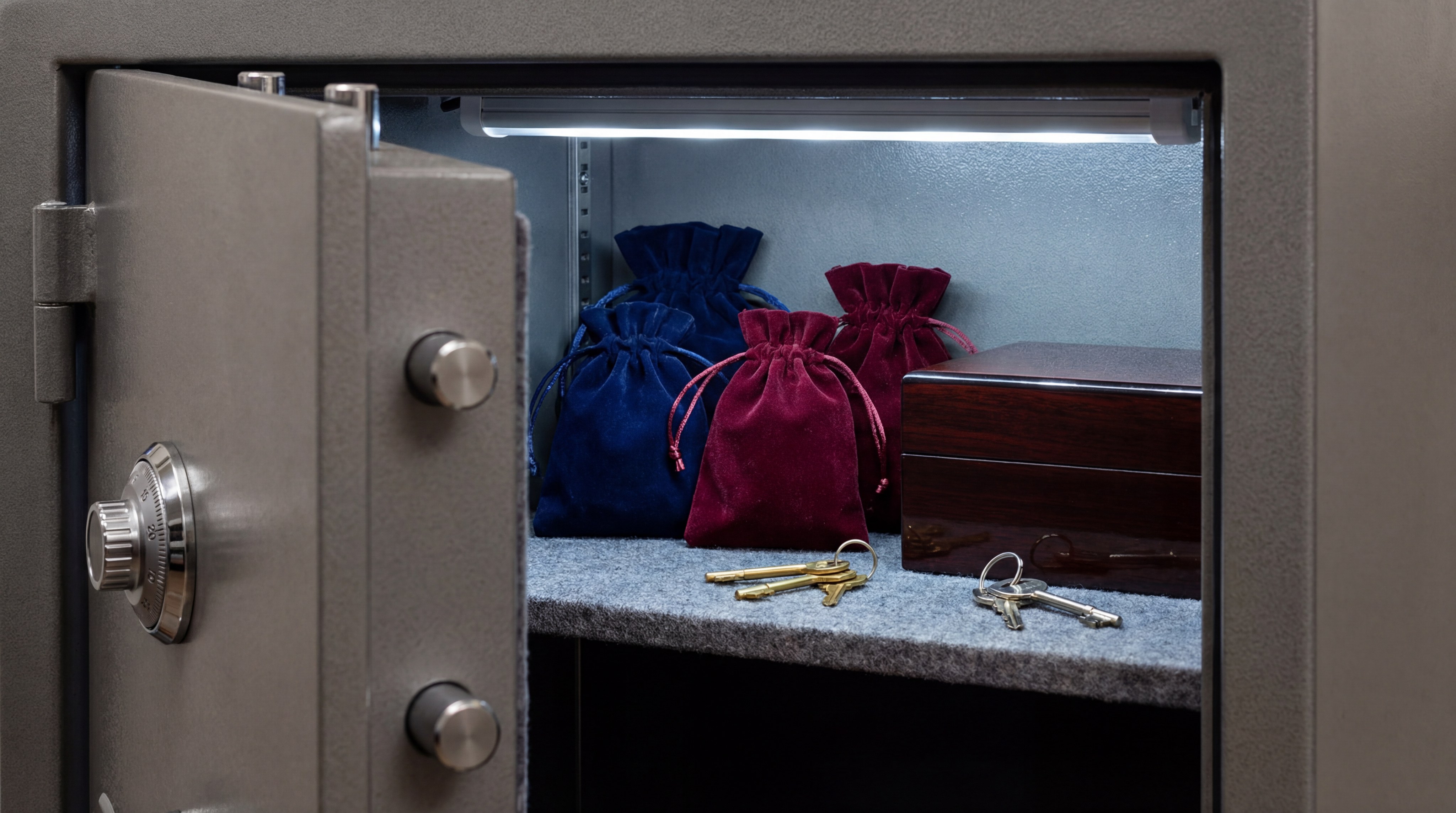
Rare luxury items should be stored in individual protective pouches within a secure, fireproof home safe to ensure both safety and environmental stability. Beyond the basic question of how do you organize necklaces in a jewelry box?, high-value heirlooms require an extra layer of defense. Storing them in standard tabletop boxes leaves them vulnerable to theft and environmental hazards.
Investing in a Secure Home Safe
A safe provides a temperature-controlled, secure environment. It is the best place for items with high sentimental or financial value that are rarely worn.
Protective Soft Pouch Solutions
- Use suede or velvet pouches.
- Prevent “stone-on-stone” contact.
- Store pouches upright for easy identification.
Key Takeaway: High-value pieces deserve a storage solution that prioritizes security and long-term preservation.
| Security Level | Storage Method | Protection Type | |
|---|---|---|---|
| Standard | Wooden Jewelry Box | Dust and Organization | |
| Enhanced | Locked Drawer | Privacy and Order | |
| Maximum | Fireproof Safe | Theft/Environment/Damage |
Storing your most precious stones in a safe ensures they remain part of your family’s legacy for generations.
How Often Should You Clean Your Jewelry Box?
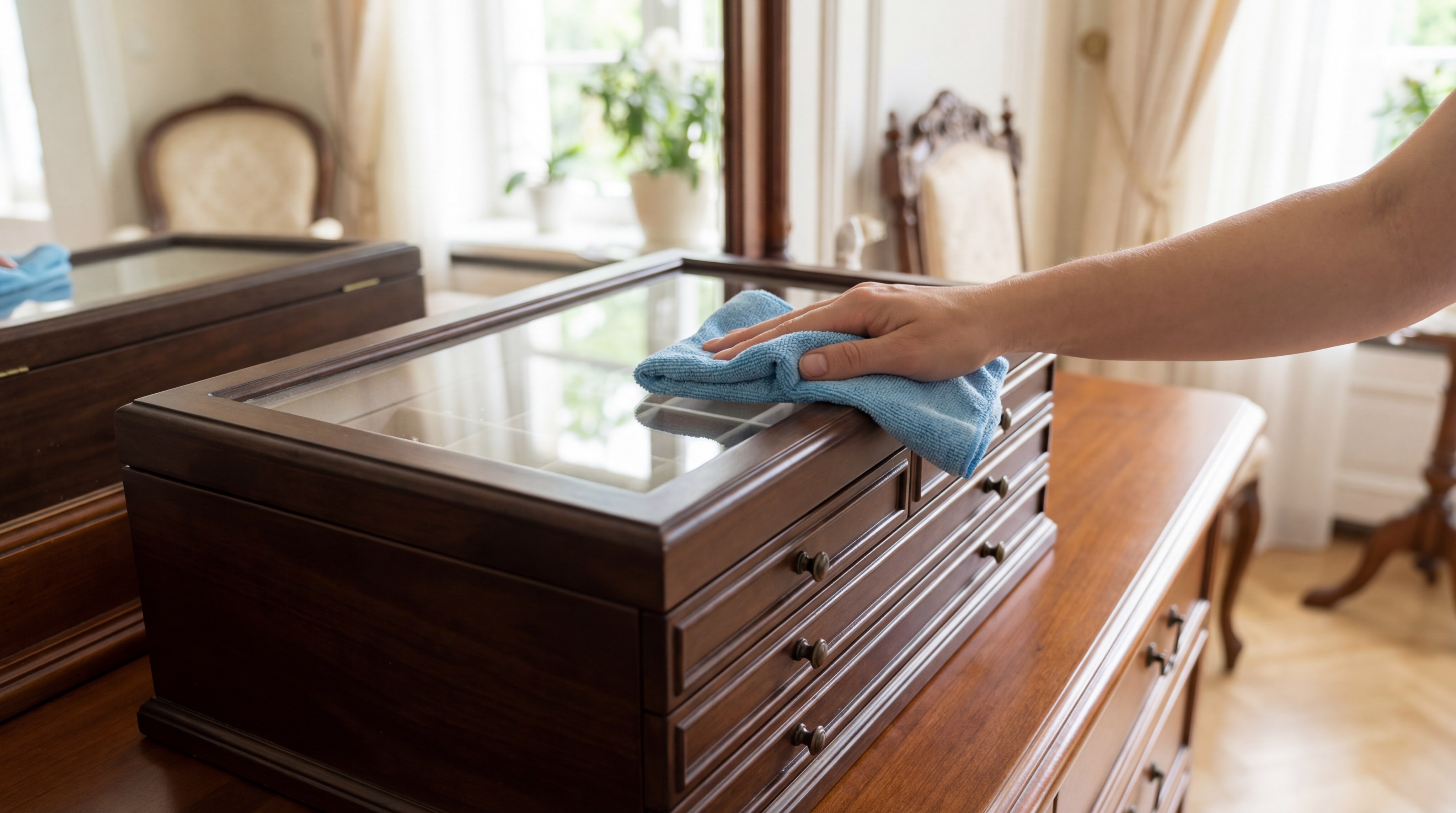
You should clean your jewelry box at least once a month to prevent the buildup of dust and tarnish-inducing particles. While you focus on how do you organize necklaces in a jewelry box?, maintenance is what keeps that organization sustainable. A quick monthly wipe-down ensures your storage remains a healthy environment for your gold and gemstones.
The Monthly Maintenance Routine
Set a recurring calendar alert to tidy your box and put pieces back in their designated spots. Organization is a lifestyle habit that requires consistent small actions.
Preventing Dust and Tarnish Buildup
- Polish glass lids with microfiber.
- Check for tarnish on silver pieces.
- Wipe down exterior wood or leather.
Key Takeaway: Consistent maintenance is the only way to ensure your jewelry box remains a functional and beautiful asset.
| Routine | Frequency | Action | |
|---|---|---|---|
| Tidying | Weekly | Return pieces to spots | |
| Deep Clean | Monthly | Wipe interior and exterior | |
| Audit | Quarterly | Check for repairs/tarnish |
A well-maintained jewelry box is a reflection of the value you place on your personal style and investments.
Summary and Next Steps
Achieving a perfectly organized jewelry box is about more than just aesthetics; it is about protecting your financial and sentimental investments. By categorizing your pieces, utilizing vertical necklace storage, and maintaining a monthly routine, you ensure that every piece of jewelry is ready to wear at a moment’s notice.
At YiXin Packaging, we believe that the right storage solution can elevate your entire collection. Whether you are a private collector or a brand looking for premium packaging, our expert-designed boxes offer the ultimate in protection and style.
Ready to upgrade your storage? Contact us today to discover how our professional solutions can transform your collection.
Frequently Asked Questions
Can I use a binder ring for rings with large gemstones?It is better to use a padded ring box for large gemstones. Binder rings are great for plain bands, but heavy stones can scratch the metal of neighboring rings if not separated by foam rolls.
What’s the best way to prevent silver from tarnishing in a box?Store silver pieces in individual air-tight bags or include anti-tarnish strips in your jewelry box. Keeping the box in a cool, dry place also significantly slows down the tarnishing process.
Can I store pearls in the same compartment as diamonds?No, you should never store pearls with diamonds. Diamonds are the hardest gemstone and will easily scratch the soft surface of a pearl, leading to permanent damage.
What’s the best method for organizing stud earrings?The best method is using a grid tray or a ribbon strip. This ensures that the two pieces of the pair stay together and prevents the small backings from getting lost.
Can I hang heavy statement necklaces on standard hooks?Yes, but ensure the hooks are securely attached to a solid backing. For extremely heavy pieces, laying them flat in a lined drawer may be safer to prevent stretching the chain over time.