
Cleaning an old jewelry box effectively requires a delicate balance of gentle dusting, specialized solvent application, and careful moisture management to preserve the item’s historical integrity. You may have found a stunning vintage piece at an estate sale, only to realize it is coated in decades of grime and musty odors. Applying the wrong cleaning agent can permanently warp antique wood or dissolve delicate silk linings, turning a precious heirloom into a ruined relic. This guide provides expert-approved methods on how to clean antique jewelry box components safely, ensuring your treasures shine once again.
Why is it important to know how to clean antique jewelry box safely?

Knowing how to clean antique jewelry box safely is vital because it ensures the preservation of historical materials while preventing irreversible chemical damage. Vintage items often use organic glues and natural dyes that react poorly to modern household cleaners. You must prioritize conservation over aggressive scrubbing to maintain the box’s structural integrity and resale value.
Assessing Material Sensitivity
- Silk and Velvet: These fibers become brittle over time and can tear if rubbed.
- Solid Wood: Old finishes like shellac are easily dissolved by alcohol-based cleaners.
- Adhesives: Animal-based glues used in the 19th century are water-soluble and may fail if soaked.
- Metal Patina: Over-polishing can remove the aged character that gives antique brass its value.
Preventing Structural Damage
But wait, there is more: excessive moisture is the primary enemy of vintage storage. If water seeps into the wood grain, it can cause the lid to swell and eventually crack the original finish. You should always aim for a “dry-clean-first” approach to mitigate these risks.
Key Takeaway: Always test a small, inconspicuous area before applying any cleaning solution to the entire box.
| Material | Risk Level | Primary Threat | |
|---|---|---|---|
| Wood | Medium | Warping/Cracking | |
| Fabric | High | Fraying/Staining | |
| Hardware | Low | Tarnish/Rust |
Careful assessment of these materials prevents accidental destruction during the restoration process.
What materials do you need for how to clean antique jewelry box projects?

To successfully execute how to clean antique jewelry box projects, you need a specialized toolkit that avoids harsh industrial chemicals. You should gather soft, non-abrasive tools that allow for precision cleaning without scratching the delicate surfaces. Having the right supplies on hand prevents the temptation to use harmful substitutes like paper towels or bleach.
Essential Cleaning Tools
- Microfiber Cloths: Use these for lint-free wiping and gentle buffing of smooth surfaces.
- Soft Bristle Brushes: Makeup brushes or soft toothbrushes reach into tight corners and crevices.
- Compressed Air: This removes loose dust from delicate hinges without physical contact.
- Distilled Water: Avoiding tap water prevents mineral buildup on sensitive wood finishes.
Safe Solvents and Cleaners
Here is the kicker: even the mildest dish soap should be used sparingly and only when diluted. You should opt for pH-neutral cleaners specifically designed for fine furniture or delicate textiles. Avoid any products containing ammonia, bleach, or high concentrations of alcohol.
Key Takeaway: Using professional-grade tools ensures that you do not introduce new scratches or chemical burns to the antique.
| Tool | Recommended Use | Avoid For | |
|---|---|---|---|
| Soft Brush | Corner dusting | Wet scrubbing | |
| Microfiber | Surface buffing | Removing heavy grease | |
| Distilled Water | Mild damp wiping | Fabric immersion |
A dedicated toolkit serves as the foundation for a safe and successful restoration outcome.
How do you begin the initial dusting for how to clean antique jewelry box?

The first step in how to clean antique jewelry box items is removing loose debris that can act as an abrasive during deeper cleaning. Dust particles often contain silica, which can scratch delicate wood or lacquer if you start wiping immediately. You must carefully lift the dust away rather than pushing it further into the grain or fabric fibers.
Using Compressed Air Safely
- Maintain Distance: Keep the nozzle at least six inches away from the surface.
- Short Bursts: Use quick puffs to prevent moisture buildup from the canister.
- Directional Flow: Blow dust out of the box rather than deeper into the corners.
- Nozzle Tips: Use plastic extensions to avoid metal-on-wood contact.
The Soft Brush Technique
But that is not all: for stubborn dust in ornate carvings, a soft-bristled brush is your best friend. You should gently flick the bristles across the surface to dislodge dirt from recessed areas. This manual approach offers more control than automated air tools and is much safer for loose veneers.
Key Takeaway: Removing loose particles first prevents permanent scratches during the subsequent liquid cleaning phases.
| Dusting Method | Surface Type | Benefit | |
|---|---|---|---|
| Compressed Air | Hinges/Deep Corners | No-contact cleaning | |
| Soft Brush | Carved Wood/Fabric | Controlled debris removal | |
| Microfiber | Flat Exterior Panels | High surface area coverage |
Starting with a dry cleaning phase protects the most sensitive layers of the jewelry box.
What are the best ways for how to clean antique jewelry box wood?

When considering how to clean antique jewelry box wood exteriors, you must use moisture control to prevent the grain from rising or cracking. You should apply a very thin layer of high-quality furniture wax after cleaning to restore the original luster. If you prefer a modern alternative for daily use, you might explore a custom jewelry box with durable, easy-to-clean finishes.
- Damp Wiping: Use a cloth that is barely damp with distilled water and mild soap.
Revitalizing Old Wood Finishes
- Grain Direction: Always wipe in the direction of the wood grain to avoid streaks.
- Immediate Drying: Follow up with a dry cloth instantly to remove any residual moisture.
- Waxing: Apply a pea-sized amount of beeswax to protect the surface from humidity.
Treating Dried Leather
But wait, there is more: if your box has leather accents, they likely need hydration to prevent peeling. You should use a dedicated leather conditioner that is free from silicones or heavy oils. Apply the conditioner in a circular motion and allow it to absorb fully before buffing with a clean cloth.
Key Takeaway: Maintaining the correct moisture balance in wood and leather prevents the material from becoming brittle.
| Product | Frequency | Primary Purpose | |
|---|---|---|---|
| Beeswax | Bi-annually | Surface protection | |
| Leather Balm | Annually | Preventing cracks | |
| Distilled Water | Monthly | Basic dusting |
Proper wood and leather care ensures the exterior remains as beautiful as the day it was crafted.
How can you manage how to clean antique jewelry box velvet linings?

The most delicate part of how to clean antique jewelry box interiors is the fabric, which often holds dust and microscopic mold spores. You must be extremely cautious with liquids here, as velvet and silk can easily watermark or lose their texture. If your internal ring box padding is severely damaged, replacement may be a better long-term solution than intensive cleaning.
Vacuuming Delicate Linings
- Nylon Screen: Place a piece of pantyhose over the vacuum nozzle to protect the fabric.
- Low Suction: Use the lowest setting possible to avoid pulling the fabric away from the glue.
- Dabbing Motion: Gently press the nozzle against the velvet rather than sliding it.
- Crevice Tool: Use small attachments to reach the corners of the ring slots.
Spot Cleaning Velvet
Believe it or not: most stains in old velvet can be lifted with a simple dry-cleaning sponge. You should avoid getting the backing material wet, as this can cause the glue to seep through and create a permanent hard spot. If a liquid is necessary, use a specialized upholstery foam that dries quickly without saturating the fibers.
Key Takeaway: Vacuuming with a protective barrier is the safest way to remove allergens and dust from fabric interiors.
| Cleaning Tool | Fabric Type | Effectiveness | |
|---|---|---|---|
| Dry Sponge | Velvet/Silk | High for surface oils | |
| Low-Power Vac | All Linings | Best for loose dust | |
| Upholstery Foam | Cotton/Linen | Good for deep stains |
Textile care requires a “less is more” philosophy to avoid damaging the delicate internal structures.
What methods work for how to clean antique jewelry box hardware?
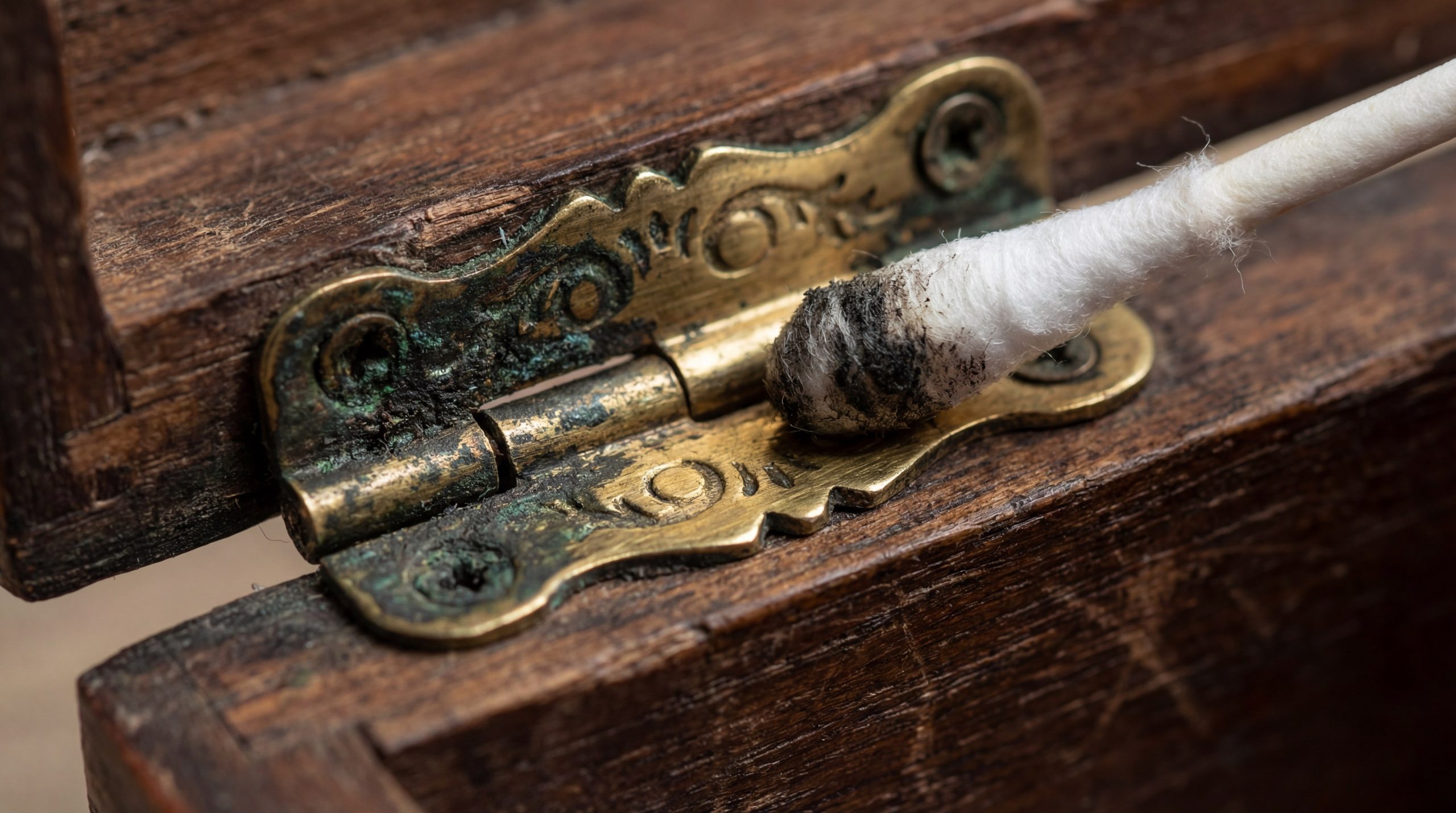
Metal components are vital to the functionality of the piece, and how to clean antique jewelry box hardware requires precision. You should use a cotton swab to apply polish specifically to the metal, ensuring none touches the surrounding wood or fabric. If you appreciate functional hardware, notice how a professional necklace box utilizes reinforced hinges for maximum security and longevity.
Removing Brass and Silver Tarnish
- Masking: Use painter’s tape to cover the wood around the hinges and locks.
- Non-Abrasive Paste: Apply a tiny amount of metal polish with a cotton swab.
- Gentle Friction: Rub in small circles until the tarnish transfers to the swab.
- Final Wipe: Use a clean, dry swab to remove all polish residue immediately.
Lubricating Sticky Hinges
Here is the kicker: you should never use WD-40 or heavy oils on antique jewelry box hinges. These products can migrate into the wood and cause permanent staining or rot over time. Instead, use a dry graphite lubricant or a tiny amount of clear paraffin wax to ensure the lid opens smoothly.
Key Takeaway: Masking the surrounding area is the only way to safely polish hardware without damaging the wood finish.
| Lubricant | Safety Rating | Result | |
|---|---|---|---|
| Graphite | High | Smooth motion, no mess | |
| Paraffin Wax | High | Long-lasting, invisible | |
| Liquid Oil | Low | High risk of wood stains |
Precise hardware maintenance prevents mechanical failure while keeping the metal looking bright and clean.
How do you eliminate odors when you how to clean antique jewelry box?
Musty smells are a common hurdle in how to clean antique jewelry box restorations, often requiring patience rather than harsh chemicals. These odors are usually caused by trapped moisture or old perfume spills that have permeated the porous wood and fabric. You should focus on absorbing the scent rather than masking it with sprays that could cause staining.
Natural Deodorizing Agents
- Baking Soda: Place a small open container inside the box and close the lid for 48 hours.
- Activated Charcoal: Use charcoal sachets to pull moisture and odors out of the lining.
- Cedar Chips: These provide a natural, pleasant scent while deterring moths and insects.
- Coffee Grounds: Dried grounds are excellent at neutralizing strong chemical or old perfume smells.
Air Circulation Techniques
But wait, there is more: sometimes the best remedy for a musty box is simply fresh air and indirect sunlight. You should leave the box open in a well-ventilated room with low humidity for several days. Avoid direct sunlight, as the UV rays can fade the exterior finish and dry out the internal adhesives.
Key Takeaway: Absorption methods are far safer for delicate interiors than using liquid deodorizing sprays.
| Agent | Duration | Best For | |
|---|---|---|---|
| Baking Soda | 2-3 Days | General mustiness | |
| Charcoal | 1 Week | Deep-seated damp smells | |
| Fresh Air | Ongoing | Mild stale odors |
Patience is essential when removing odors, as rushing the process with liquids can lead to mold growth.
Can you use liquids during how to clean antique jewelry box restoration?
One of the biggest risks in how to clean antique jewelry box processes is over-saturation, which leads to mold or glue failure. You should always use a “damp-not-wet” approach when a liquid cleaner is absolutely necessary for grime removal. If you see the wood start to darken or the fabric become saturated, you must stop immediately and blot the area dry.
The Damp Cloth Rule
- The Squeeze Test: Wring your cloth until no more drops of water fall out.
- Sectional Cleaning: Work in small areas of two square inches at a time.
- Double-Wiping: Always follow a damp wipe with a dry microfiber buff.
- Solvent Selection: Use only distilled water or highly diluted pH-neutral soap.
Avoiding Immersion
Here is the kicker: you should never submerge any part of an antique jewelry box in water or cleaning solution. Immersion will cause the wood to expand, the veneer to peel, and the internal cardboard structures to collapse. If a stain is too deep to be removed with a damp cloth, it is often safer to leave it as “character” rather than risking the item’s life.
Key Takeaway: Moisture should be used as a last resort and kept to the absolute minimum necessary for cleaning.
| Action | Safety Status | Consequence of Failure | |
|---|---|---|---|
| Damp Wiping | Safe | Minor streaks (fixable) | |
| Immersion | Dangerous | Structural collapse | |
| Steam Cleaning | Dangerous | Glue dissolution |
Strict moisture control is the hallmark of a professional-grade restoration project.
How should you maintain pieces after how to clean antique jewelry box?
Once you’ve completed how to clean antique jewelry box steps, long-term maintenance ensures you won’t have to repeat the deep clean soon. You should store the box in a climate-controlled environment where temperature and humidity levels remain stable. For those who frequently travel, comparing these techniques with a sturdy bracelet box can help you choose the best storage for each specific piece.
Ideal Storage Environments
- Humidity Control: Keep the box in an area with 45-55% relative humidity to prevent wood cracking.
- Light Exposure: Store away from windows to prevent UV damage to the fabric and wood stain.
- Temperature Stability: Avoid attics or basements where extreme heat or cold can brittle the adhesives.
- Airflow: Do not seal the box in plastic bags; allow the natural materials to “breathe.”
Regular Maintenance Kits
But that is not all: keeping a small maintenance kit nearby makes it easy to handle minor dust before it becomes grime. You should include a soft brush and a dedicated microfiber cloth for weekly dusting. This proactive approach prevents the buildup of oils from your hands and environmental pollutants on the box surface.
Key Takeaway: Consistent, light maintenance is far better for an antique than occasional, aggressive deep cleaning.
| Feature | Requirement | Reason | |
|---|---|---|---|
| Humidity | 45-55% | Prevents wood warping | |
| Location | Interior Closet | Blocks UV light | |
| Dusting | Weekly | Prevents oil buildup |
Proper storage and light upkeep will keep your vintage jewelry box in museum-quality condition for years.
When is it time to replace a piece instead of how to clean antique jewelry box?
Sometimes, despite knowing how to clean antique jewelry box components, the structural damage is too great for safe jewelry storage. You must recognize when a box is hazardous to your gems, especially if it harbors active mold or acidic residues. In these cases, upgrading to a modern Pe film jewelry box provides a clean, dust-free environment for your most valuable items.
Identifying Irreparable Mold
- Sooty Residue: Black or green spots that reappear after cleaning indicate an active colony.
- Slimy Texture: If the wood or fabric feels slick even when dry, the material is likely rotting.
- Pungent Smell: An overwhelming odor that resists charcoal and baking soda suggests deep internal growth.
- Health Risk: Active mold can trigger allergies or damage the metal in your jewelry.
Upgrading to Modern Protection
But wait, there is more: if the antique box is unstable, it can actually scratch your jewelry or cause tarnish to accelerate. Modern storage solutions offer archival-quality materials that do not outgas harmful chemicals like old glues might. You can keep the antique box as a decorative display piece while using a newer, safer container for your actual jewelry collection.
Key Takeaway: Your jewelry’s safety should always take precedence over the desire to use a damaged antique box.
| Condition | Action Recommendation | Risk to Jewelry | |
|---|---|---|---|
| Active Mold | Replace immediately | High (Corrosion/Fungus) | |
| Broken Hinges | Professional Repair | Medium (Physical Damage) | |
| Faded Fabric | Optional Restoration | Low (Aesthetic only) |
Recognizing the limits of restoration ensures that your jewelry remains protected in the best possible environment.
When should you disassemble an antique jewelry box for cleaning?
Remove hardware only when the construction is documented
Photograph hinges, screws, trays, and lining edges before removing anything. Keep every fastener labeled and stop if the wood is split, the hardware is hand-peened, or the fabric is bonded beneath decorative trim. In those cases, clean in place or consult a conservator.
Sanitize without saturating historic materials
Use dry extraction first, then spot-treat only the affected area. Avoid soaking wood, veneer, leather, silk, or old adhesives. Allow each layer to dry fully with gentle air circulation before the box is closed or reassembled.
FAQ Section
Can I use vinegar to clean an old jewelry box? You should avoid vinegar because its high acidity can eat through old lacquer finishes and damage the delicate fibers of silk linings. While it is a great household cleaner, it is too aggressive for the sensitive materials found in most antiques.
Can I replace the velvet lining myself? You can replace the lining if you are comfortable with precision cutting and using archival-safe glues, but it is often a complex task. For high-value heirlooms, a professional upholsterer is recommended to ensure the fit is perfect and no damage occurs to the wood.
Can I use a hairdryer to speed up the drying process? You must never use a hairdryer or any direct heat source because rapid temperature changes cause wood to warp and crack. Air drying in a room with a gentle fan is the only safe way to remove residual moisture.
Can I polish the wood with olive oil? You should never use food-grade oils like olive oil because they eventually go rancid and create a sticky, foul-smelling residue. Stick to high-quality furniture salves or beeswax designed for wood preservation.
Can I use Windex on the glass inserts? You can use glass cleaner, but you should spray it onto a cloth first rather than directly onto the glass. This prevents the liquid from running down into the wood frame and causing the surrounding material to swell or rot.
Conclusion
Restoring a vintage piece requires patience and the right techniques to avoid accidental damage. By following these expert tips on how to clean antique jewelry box items, you can ensure your family heirlooms or thrifted finds remain beautiful for generations. Proper care not only enhances the appearance of the box but also provides a safe, clean environment for your most precious accessories. If you are looking for professional-grade packaging or need advice on bulk custom orders, feel free to contact us today for expert assistance.