
If your copper jewelry looks dull, you can restore its original luster using simple household pantry items like lemon juice, salt, or baking soda. Frequent exposure to air and moisture causes natural oxidation, but knowing how to clean copper jewelry ensures your favorite rings and bracelets maintain their brilliant, warm glow for years. By following a structured maintenance routine, you can prevent deep corrosion and keep your collection looking professional and brand new.
Why does copper jewelry tarnish over time?
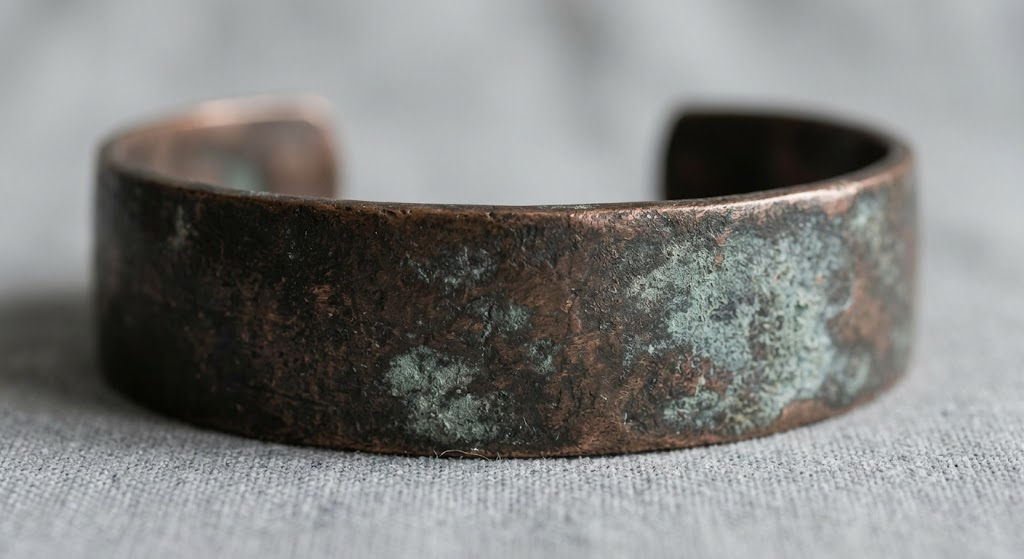
Copper reacts with oxygen and sulfur in the air to create a dark layer known as tarnish or patina. This chemical process is accelerated by humidity and skin oils, making it essential to understand how to clean copper jewelry effectively to prevent permanent surface damage.
Understanding oxidation processes
Metal oxidation is a natural reaction where copper atoms lose electrons to oxygen molecules in the environment.
- Humidity acts as a catalyst for faster tarnishing.
- Sulfur compounds in the air create dark brown or black spots.
- Personal care products like lotions can leave chemical residue.
Here is the deal: You don’t have to be a chemist to see the effects of “noble” metal reactions on your skin.
- Oxidation creates that characteristic green tint on your wrist or neck.
- Tarnish is actually a protective layer the metal grows to defend itself.
- High-pollution areas can cause jewelry to darken within just a few days.
The role of skin acidity
Every person has a unique skin pH level that dictates how quickly their copper jewelry will change color.
- Acidic sweat reacts faster with raw copper surfaces.
- Dietary habits can occasionally influence sweat composition and metal reactions.
- Regular wiping after wear can neutralize these biological acids.
The truth is: Your body chemistry is a major factor in your jewelry’s maintenance schedule.
- High acidity requires more frequent polishing sessions.
- Using a barrier like thin wax can help if your skin is particularly reactive.
- Keeping the metal dry is the first line of defense against “green skin.”
Key Takeaway: Understanding the causes of tarnish helps you identify the best preventive measures to extend the interval between deep cleanings.
| Cause | Effect | Solution | |
|---|---|---|---|
| Oxygen | Steady darkening | Airtight storage | |
| Humidity | Rapid green patina | Silica gel packs | |
| Skin Oils | Spotty dullness | Microfiber wiping |
Constant exposure to the elements is the primary enemy of copper’s natural pinkish-orange brilliance.
Can lemon and salt remove heavy copper tarnish?
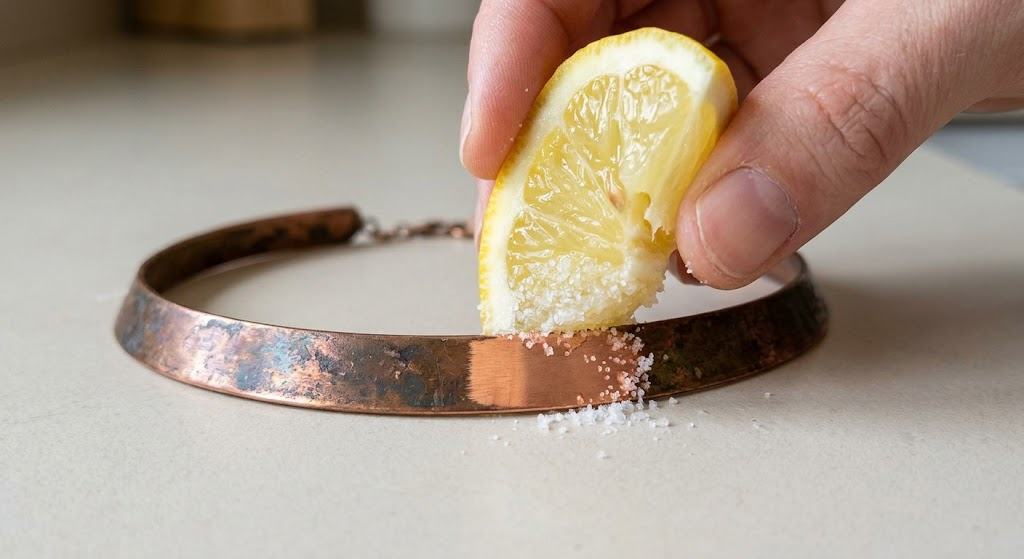
Yes, the citric acid in lemon combined with the mild abrasiveness of salt creates a powerful natural cleaner that dissolves oxidation instantly. To learn how to clean copper jewelry with this method, simply sprinkle fine salt over a lemon wedge and rub the metal gently.
The chemistry of citric acid
Citric acid is a natural chelating agent that binds to copper oxides and pulls them away from the metal surface.
- Lemon juice breaks the bond of the tarnish layer.
- Table salt provides the mechanical friction needed for stubborn spots.
- The reaction is visible almost immediately upon contact.
But wait, there’s more: This kitchen-based solution is often more effective than expensive branded chemicals.
- It is biodegradable and safe for most skin types.
- You can reach crevices easily using a soft toothbrush dipped in the juice.
- Rinsing with warm water afterward is crucial to stop the acidic reaction.
Proper rinsing and drying steps
Residual acid or salt can cause “pitting” or secondary corrosion if not removed completely after the polishing process.
- Use lukewarm distilled water for the final rinse.
- Pat dry with a lint-free cloth rather than air drying.
- Ensure no moisture remains in hollow links or settings.
Check this out: Drying is actually the most important part of the entire cleaning ritual.
- Water spots can leave permanent mineral marks on polished copper.
- A hair dryer on a “cool” setting can remove moisture from intricate filigree.
- Never store the jewelry until it is 100% bone dry to the touch.
Key Takeaway: Natural household acids provide a cost-effective and highly efficient way to restore shine without using harsh industrial degreasers.
| Ingredient | Role | Benefit | |
|---|---|---|---|
| Lemon Juice | Chemical Dissolver | Eco-friendly oxidation removal | |
| Table Salt | Mechanical Abrasive | Scrubs away thick buildup | |
| Distilled Water | Neutralizer | Prevents secondary chemical spots |
A fast rinse and dry cycle ensures that your natural cleaning efforts don’t lead to immediate re-tarnishing.
Is baking soda safe for polished copper?
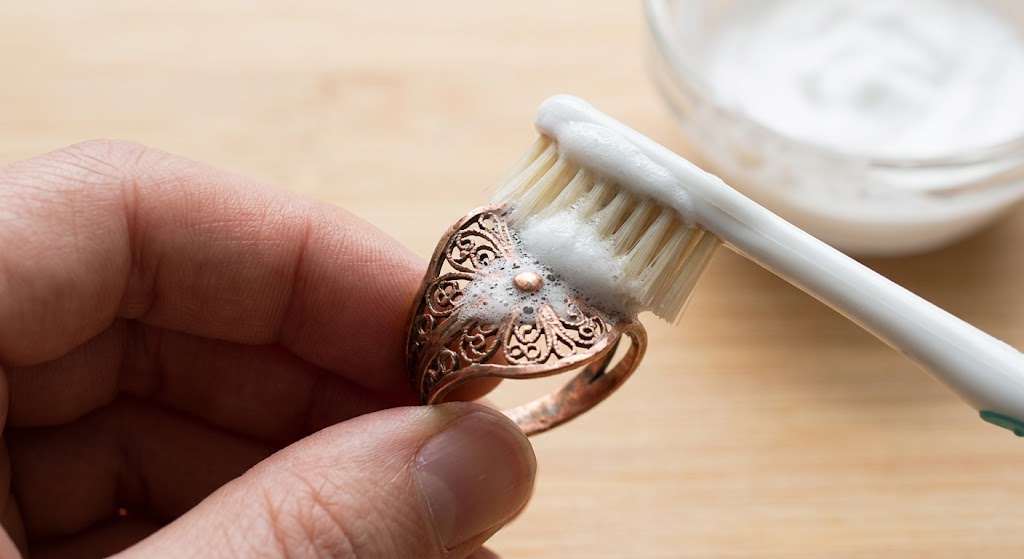
Baking soda is a safe, mild alkaline abrasive that can be mixed into a paste to scrub away surface debris without scratching the copper. When researching how to clean copper jewelry, many experts recommend a baking soda and vinegar paste for pieces that have intricate textures or engraved details.
Making an effective cleaning paste
A thick consistency allows the cleaner to sit on the metal and work into the deeper recesses of the jewelry design.
- Mix three parts baking soda with one part water or vinegar.
- Apply with a soft cloth or a very soft-bristled brush.
- The bubbling action of vinegar helps lift loose particles.
Believe it or not: This bubbling “fizz” is actually carbon dioxide gas helping to mechanically dislodge grime.
- It is significantly gentler than steel wool or harsh scouring pads.
- You can leave the paste on for two minutes for a deeper clean.
- It works exceptionally well on copper chains with many small links.
Avoiding surface scratches
While baking soda is gentle, using too much pressure or coarse rags can still create micro-abrasions that dull the metal over time.
- Always use a “soft” or “extra-soft” toothbrush.
- Apply the paste in circular motions rather than vertical strokes.
- Rinse thoroughly to ensure no grainy residue remains in the settings.
Keep this in mind: You want to lift the tarnish, not sand down the metal itself.
- High-polish surfaces require the lightest touch possible.
- Microfiber cloths are the gold standard for applying any cleaning paste.
- If the piece has soft gemstones (like turquoise), keep the paste away from the stones.
Key Takeaway: Baking soda offers a controlled mechanical cleaning method that is safer for the metal’s structural integrity than heavy-duty industrial polishes.
| Tool | Usage | Safety Level | |
|---|---|---|---|
| Soft Cloth | Surface buffing | High | |
| Soft Toothbrush | Crevice cleaning | Medium | |
| Baking Soda Paste | Oxidation removal | High |
Using a gentle paste ensures your jewelry retains its sharp edges and fine details while losing its dull tarnish.
What are the benefits of commercial polishes?
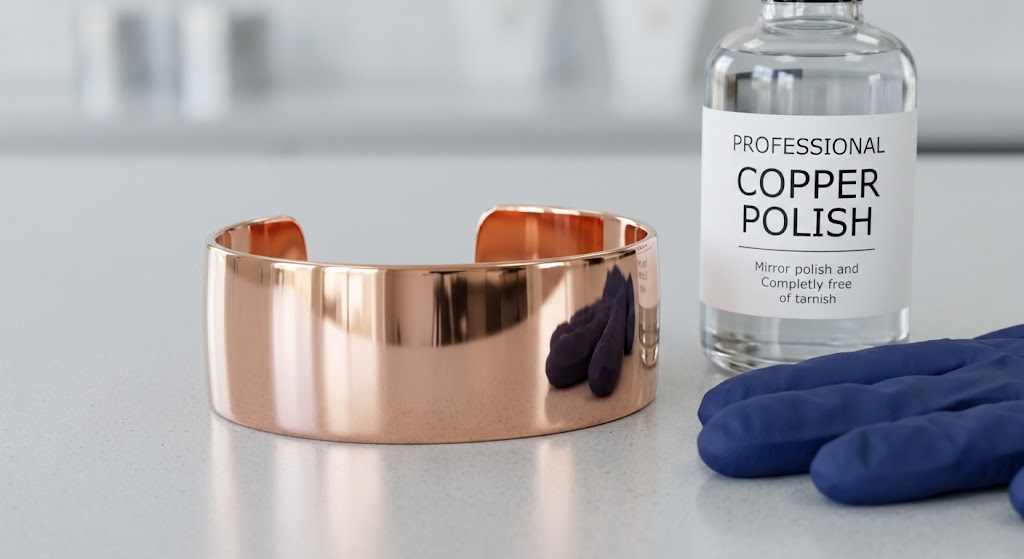
Commercial polishes are formulated with specialized anti-tarnish agents that leave a microscopic protective film on the copper surface. If you are looking for how to clean copper jewelry with long-lasting results, professional creams often outperform home remedies for preventing future oxidation.
Industrial anti-tarnish agents
Chemical manufacturers include ingredients that slow down the rate at which oxygen can bond with the copper atoms after cleaning.
- They provide a “brilliant” mirror finish that is hard to achieve with food.
- Some versions include light waxes for extra moisture resistance.
- They are ideal for high-value designer copper pieces.
Here is the deal: Professional polishes are engineered specifically for the molecular structure of red metals.
- One small bottle can last a jewelry owner several years.
- They often contain surfactants that degrease the metal while polishing.
- The chemical barrier can keep a piece shiny for weeks longer than a lemon wash.
Handling chemicals safely
Because these products contain synthetic compounds, they should be used in well-ventilated areas to avoid inhaling fumes.
- Wear nitrile gloves to prevent hand staining or irritation.
- Read the label to ensure the polish is safe for “raw” copper.
- Avoid contact with porous gemstones or pearls.
The fact is: Safety should always come first when working with non-organic cleaning compounds.
- Always store these chemicals out of reach of children or pets.
- Use a dedicated cloth for chemical polishing and do not mix it with food tools.
- A quick soap and water wash after using chemicals ensures no skin irritation.
Key Takeaway: Commercial solutions provide a superior aesthetic finish and an invisible shield that reduces the frequency of necessary maintenance.
| Product Type | Goal | Duration of Shine | |
|---|---|---|---|
| Liquid Polish | Deep cleaning | Medium | |
| Polishing Cream | Mirror finish | Long | |
| Anti-Tarnish Wipes | Quick touch-ups | Short |
Investing in a quality commercial polish pays off in the form of a more professional, high-end appearance for your copper pieces.
How do you restore antique copper jewelry?
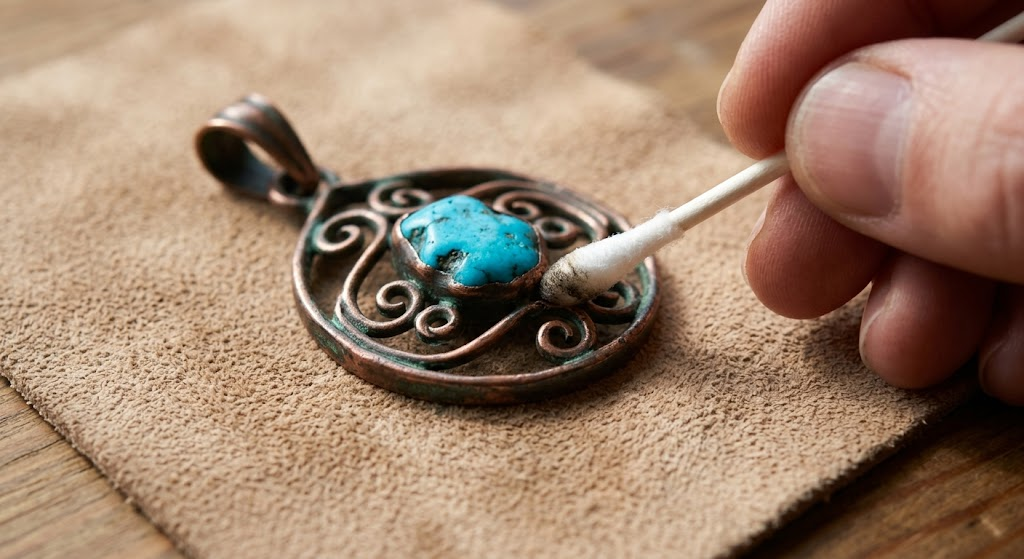
Restoring antique copper requires a delicate touch to remove grime without destroying the “history” or valuable patina of the piece. When deciding how to clean copper jewelry that is vintage, start with the mildest possible method (warm soapy water) before moving to acids.
Preserving valuable patina
Many collectors value the “aged” look of antique copper, which features deep browns and greens developed over decades.
- Never use harsh abrasives on signed or numbered antique pieces.
- Focus only on removing “active” corrosion (bright green flaky spots).
- Consult a professional if the piece appears to be museum-grade.
But wait, there’s more: A total restoration back to “shiny new” can actually decrease the resale value of a vintage item.
- Only clean the parts that come in direct contact with your skin.
- Use a dry, soft brush to remove dust before applying any liquids.
- “Selective polishing” highlights the high points while leaving the depths dark.
Cleaning around gemstones
Antique copper jewelry often features “cold-set” stones or delicate glass that can be damaged by acids or immersion.
- Avoid soaking antique pieces in lemon juice or vinegar.
- Use cotton swabs to apply cleaner only to the copper portions.
- Check for loose settings that may be further weakened by moisture.
You should know: Old glues and foil-backed stones are extremely sensitive to moisture and chemicals.
- A damp cloth is usually enough for the front of a gem-set antique piece.
- Always dry the piece immediately with a soft, warm breeze from a hair dryer.
- If the stone feels loose, take it to a bench jeweler before attempting to clean it.
Key Takeaway: Antique restoration is about balance—removing enough dirt to make the piece wearable while keeping enough patina to prove its age.
| Action | Recommended? | Reason | |
|---|---|---|---|
| Acid Bath | No | Can harm old settings/stones | |
| Cotton Swab Cleaning | Yes | High precision for mixed materials | |
| Microfiber Buffing | Yes | Enhances shine without metal loss |
Gentle, localized cleaning protects the integrity and the financial value of your historical copper collection.
Why is a microfiber cloth best for buffing?
Microfiber cloths are engineered to trap microscopic tarnish particles within their fibers rather than dragging them across the metal surface. Any guide on how to clean copper jewelry will emphasize that the final buffing stage defines the quality of the light reflection.
Fiber technology and metal safety
Standard cotton or paper towels can contain coarse wood pulps that leave tiny scratches on soft metals like copper.
- Microfiber is non-abrasive and lint-free.
- The high surface area of the fibers absorbs oils instantly.
- It can be washed and reused hundreds of times.
Here is the deal: One simple cloth can replace many liquid cleaners for daily maintenance.
- It “grabs” the tarnish at a molecular level.
- You can use a dry microfiber cloth to restore shine in about 30 seconds.
- It is the safest tool for high-polish, mirror-finished items.
Achieving a mirror finish
The secret to a professional shine is “high-speed” buffing with very light pressure using a clean section of the cloth.
- Rotate the cloth frequently to avoid reapplying trapped tarnish.
- Use small, rapid circular motions to generate a tiny amount of heat.
- Finish with a final wipe using a completely fresh, dry microfiber.
Check this out: The “heat” generated from friction helps the metal’s surface molecules settle into a smoother plane.
- This creates that deep, “liquid” look that high-end copper is known for.
- It also helps the anti-tarnish film from your polish spread more evenly.
- If the cloth turns black, it means it is working—time to switch to a clean spot!
Key Takeaway: Using the right cloth is just as important as using the right cleaner; it prevents micro-scratches and ensures a flawless shine.
| Cloth Type | Advantage | Best For | |
|---|---|---|---|
| Microfiber | No lint/scratches | Daily buffing | |
| Jewelry Cloth | Chemically treated | Deep tarnish | |
| Cotton Flannel | High absorbency | Removing pastes |
High-quality buffing tools transform a standard cleaning job into a luxury restoration.
Can you use clear lacquer to seal copper?
Clear lacquer or specialized jewelry sealants can be applied to copper to create an airtight barrier that prevents oxidation and skin discoloration. Mastering how to clean copper jewelry is only half the battle; sealing the metal is the best way to “lock in” the shine.
DIY coating techniques
You can use clear nail polish or a dedicated metal spray to protect the parts of the jewelry that touch your skin.
- Clean and dry the piece perfectly before applying any coating.
- Apply multiple thin layers rather than one thick, globby coat.
- Allow at least 24 hours of drying time before wearing the item.
But wait, there’s more: A sealant prevents that “green skin” reaction that many people dislike.
- It is nearly invisible if applied correctly and evenly.
- You can remove old lacquer with acetone if it starts to peel or yellow.
- It is perfect for the inside of rings or the back of large pendants.
When to avoid sealants
Not all copper jewelry should be sealed, especially pieces that rely on a natural, evolving patina for their artistic appeal.
- Avoid sealing pieces with moving parts like thick chains or hinges.
- Check if the manufacturer already applied a professional “e-coating.”
- Do not seal jewelry with heat-sensitive stones.
Think about this: Sealants can sometimes make a piece of jewelry feel “plastic” or less organic.
- Over time, lacquer can chip, allowing tarnish to form in ugly patches.
- Removing a failing sealant can be a messy and time-consuming process.
- Only seal if the “green skin” reaction is a dealbreaker for you.
Key Takeaway: Chemical sealants offer a permanent-ish solution to oxidation, making copper jewelry as maintenance-free as gold or platinum.
| Method | Permanence | Best For | |
|---|---|---|---|
| Clear Nail Polish | Low | Ring interiors | |
| Spray Lacquer | Medium | Large decorative pieces | |
| Professional E-coating | High | High-end designer jewelry |
A well-applied coating ensures your hard work in polishing stays visible for months instead of days.
How should copper jewelry be stored?
The best way to store copper jewelry is in a cool, dry, airtight environment with anti-tarnish strips or silica gel packets. Knowing how to clean copper jewelry won’t help if your storage habits invite rapid re-tarnishing through moisture exposure.
Airtight containers and pouches
Isolating the metal from the sulfur and oxygen in the room air is the most effective way to slow down the oxidation cycle.
- Use individual “Ziploc” bags for each piece to prevent scratches.
- Soft velvet-lined boxes provide cushioning but should remain closed.
- Anti-tarnish strips absorb the sulfur molecules before they hit the metal.
Here is the deal: Preventive storage saves you hours of cleaning time over the course of a year.
- If your jewelry box is in the bathroom, the steam is destroying your copper.
- Even a simple plastic container is better than an open jewelry tree.
- Separation prevents different metals from reacting with each other (galvanization).
The danger of bathroom storage
The high humidity from showers and the presence of aerosolized hairsprays make bathrooms the worst place for copper.
- Steam enters even loosely closed jewelry boxes.
- Chemicals in perfume and hairspray bond quickly with raw copper.
- Fungal growth in damp boxes can cause permanent metal pitting.
Listen to the experts: Keep your jewelry in a bedroom or a dedicated walk-in closet away from water.
- A dry environment is the cheapest “anti-tarnish” tool you own.
- Add a few grains of rice or a silica packet to your storage bags to pull out moisture.
- Never put your jewelry on until after your perfume and hairspray have dried.
Key Takeaway: Proper storage creates a stable micro-environment that preserves your jewelry’s shine between uses.
| Storage Tool | Function | Effectiveness | |
|---|---|---|---|
| PE Film Box | 3D airtight suspension | Excellent | |
| Velvet Pouch | Scratch protection | Good | |
| Plastic Baggy | Low-cost air barrier | Very Good |
Small changes in where you keep your items can double the duration of your copper’s luster.
Is toothpaste good for cleaning copper?
While many people use toothpaste as a “hack” for cleaning jewelry, most modern formulations are too abrasive and contain whitening chemicals that can damage copper. If you must use it, choose a plain white paste (not gel) and test a small area while researching how to clean copper jewelry.
Abrasiveness and chemical risks
Whitening toothpastes contain silica or calcium carbonate particles that can leave permanent swirling scratches on soft copper.
- Gels usually lack the ingredients needed to break down tarnish.
- Fluoride and other additives can cause a weird chemical film.
- It is very difficult to rinse out of small links or hinges.
Believe it or not: Toothpaste was a better cleaner 40 years ago before all the complex additives.
- Modern “micro-beads” can get stuck in stone settings forever.
- The strong mint oils can react with certain copper alloys.
- A dedicated metal polish is often cheaper per ounce than premium toothpaste.
Safer alternative: Dish soap
A mild, grease-cutting dish soap mixed with warm water is a much safer “daily” cleaner than any brand of toothpaste.
- It removes skin oils and grime without any risk of abrasion.
- It is easy to rinse clean without leaving any white residue.
- It won’t harm the vast majority of gemstones or organic materials.
Keep it simple: Sometimes the most basic solution is the most professional one.
- A 5-minute soak in soapy water can loosen 90% of daily dirt.
- Use a soft makeup brush to gently scrub around the edges.
- This should be your first step before trying any acidic cleaners like lemon.
Key Takeaway: Avoid the “toothpaste myth”—it is too risky for fine jewelry and can lead to dullness and deep micro-scratches.
| Alternative | Benefit | Risk Level | |
|---|---|---|---|
| Toothpaste | Instant results | High (Scratches) | |
| Soap & Water | Safe for all | Low | |
| Baking Soda Paste | Controlled scrub | Medium |
Choosing safer, specialized cleaners ensures your copper jewelry doesn’t lose its smooth surface over time.
When should you visit a professional?
You should consult a professional jeweler if your copper piece is a valuable antique, contains high-end gemstones, or has deep pitting that home methods cannot reach. While you now know how to clean copper jewelry at home, some heavy restoration requires the use of an ultrasonic cleaner or a polishing wheel.
Ultrasonic cleaning limitations
Professional ultrasonic machines use high-frequency sound waves to blast dirt out of impossible-to-reach places.
- They are highly effective for dense copper chains.
- However, they can shatter certain stones (like opal or emerald).
- Jewelers can professionally re-set stones that have become loose.
Here is the deal: A professional cleaning usually costs very little but delivers a “factory” finish.
- They can use high-speed buffs to remove deep scratches that hand-buffing can’t.
- They have access to industrial-grade e-coatings for permanent sealing.
- A professional check-up can identify cracked links before you lose the piece.
Identifying permanent damage
If your copper jewelry has “pitting” (small holes in the surface), home cleaning will only make the holes look shinier—it won’t fix them.
- Pitting is caused by long-term neglect or exposure to harsh salt water.
- A jeweler may be able to sand and re-finish the surface.
- Extreme corrosion may require the metal to be melted and recast.
The takeaway is clear: Don’t wait until the metal is structurally compromised to give it the care it needs.
- If a home remedy doesn’t work after two tries, stop and see a pro.
- Forcing a cleaning can do more harm than good on a weakened piece.
- Most jewelers offer advice and a quick inspection for free.
Key Takeaway: Professionals have the specialized tools to address mechanical damage and deep-set grime that home methods simply cannot touch.
| Service | Outcome | Best For | |
|---|---|---|---|
| Ultrasonic Clean | Deep crevice removal | Complex chains | |
| Machine Buffing | Zero-scratch mirror finish | Bangles/Plates | |
| Stone Re-setting | Long-term security | Antique rings |
Professional intervention ensures your most cherished copper investments are preserved for the next generation.
Keeping your copper jewelry in pristine condition is truly a passion for us at YiXin Packaging. We believe that every beautiful piece of jewelry deserves to be presented and protected by superior packaging that prevents tarnish and enhances brand value. Whether you are a retail brand or an online seller, our mission is to provide the industrial-grade solutions you need to keep your collections shining. To learn more about our protective 3D display boxes or to start your own custom project, please contact us today . Elevate your brand experience with YiXin—where precision manufacturing meets luxury design.
Frequently Asked Questions
Can I use vinegar to clean my copper rings? Yes, vinegar is excellent. Because it is an acid, it breaks down copper acetate (tarnish) effectively. Mix it with flour or salt to create a paste for a more controlled application that stays where you put it.
What is the best way to prevent the “green skin” effect? The best way is to keep the metal dry and apply a thin barrier. You can use clear nail polish or a specialized wax on the inside of the band to stop the direct chemical reaction with your sweat.
How often should I polish my copper jewelry? It depends on your environment. Generally, a quick buff with a microfiber cloth after every use is best, but a deep acidic clean is usually only needed once every two to four weeks.
Are there some stones I should never clean with lemon juice? Definitely. Avoid using acids near porous stones like pearls, turquoise, opal, or malachite. These gems can be permanently etched or dulled by even brief contact with lemon or vinegar.
Why does my copper jewelry turn dark even when I don’t wear it? This is caused by ambient moisture and sulfur in the air. To stop this, store your jewelry in an airtight box or a sealed plastic bag with an anti-tarnish strip to absorb the oxygen.