
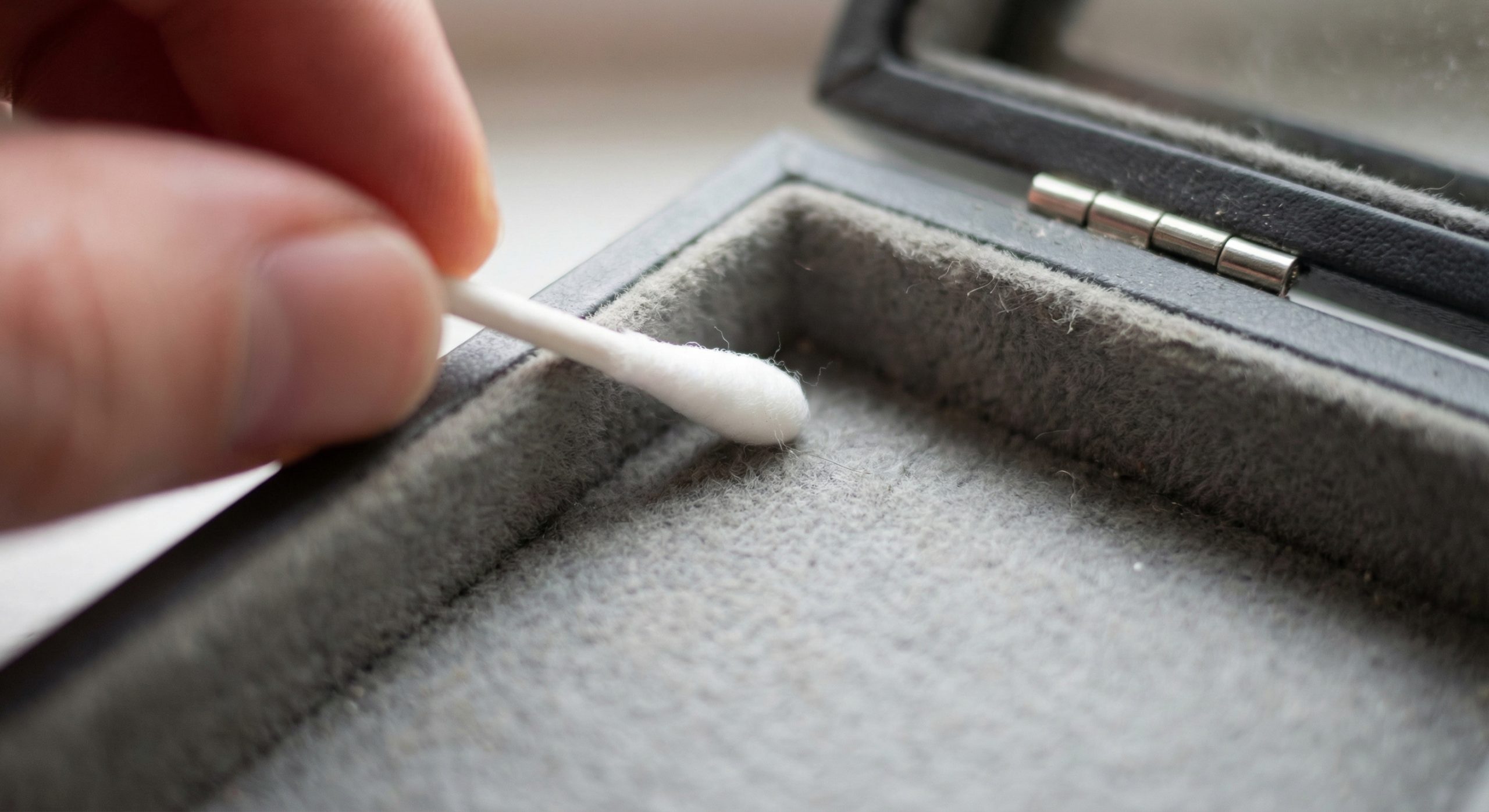
To clean felt in a jewelry box, you should primarily use dry methods like soft brushing or vacuuming to avoid damaging the delicate compressed fibers. You have likely invested significant capital into a high-end collection, only to find the presentation marred by unsightly lint, dust, or localized staining. Leaving these contaminants unaddressed not only devalues the unboxing experience but can also transfer oils and grit to your precious metals and stones. By learning the professional secrets of how to clean felt jewelry box interiors, you can restore that factory-fresh appearance and ensure your storage remains a pristine sanctuary for your inventory.
Why master how to clean felt jewelry box liners?

Mastering how to clean felt jewelry box linings is essential because felt is a non-abrasive material that prevents scratches but easily traps damaging particulates. This material is favored by manufacturers for its shock absorption and moisture regulation properties.
The value of non-abrasive protection
Felt provides a soft cushion that protects high-karat gold and soft gemstones from surface abrasions. When the lining is dirty, these particles can act like sandpaper against your jewelry.
Here is the truth:
- Clean felt maintains the item’s market value.
- Dust-free environments prevent chemical reactions.
- Soft textures reduce the risk of metal fatigue.
Why does felt trap debris?
The dense, interlocking fiber structure of felt acts as a natural magnet for hair, skin cells, and atmospheric dust. This creates a cluttered look that detracts from the luxury feel of your packaging.
Key Takeaway: Maintaining a clean interior ensures your jewelry remains in showroom condition while extending the life of the storage unit itself.
| Maintenance Factor | Benefit to User | |
|---|---|---|
| Fiber Integrity | Prevents scratching of soft gems | |
| Aesthetic Appeal | Enhances the perceived value of jewelry | |
| Dust Control | Stops grit from entering mechanical parts |
This table illustrates why keeping the interior pristine is a functional necessity rather than just a cosmetic choice.
Which tools help how to clean felt jewelry box lint?
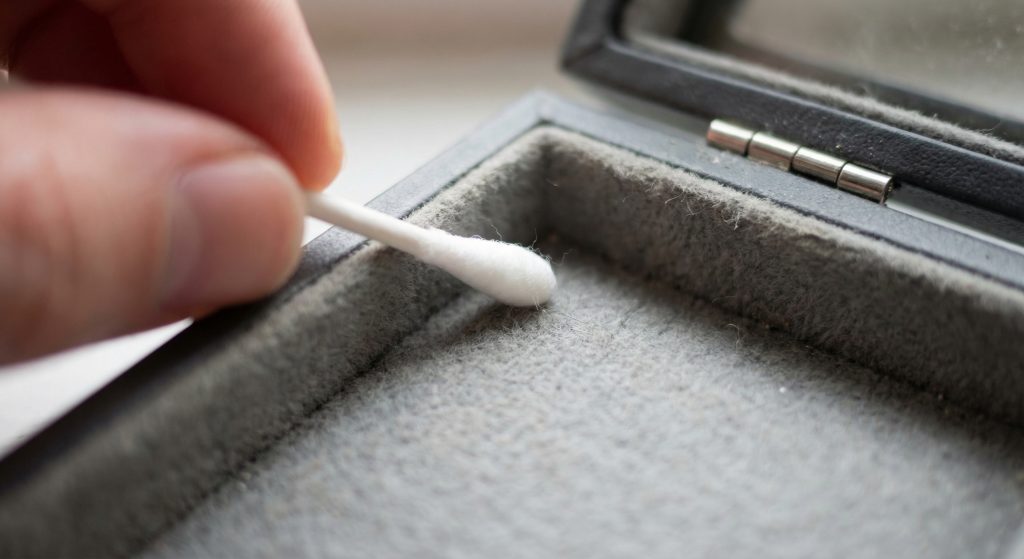
The best tools for how to clean felt jewelry box lint are soft-bristled brushes, lint rollers, and specialized cotton swabs for tight corners. These tools allow for mechanical cleaning without introducing harmful moisture or heat to the material.
Is a lint roller safe?
A high-quality lint roller or a loop of masking tape is incredibly effective for lifting surface debris from flat areas. You should use light pressure to ensure you do not pull the fibers loose from the base.
Think about it:
- Tape lifts hair and dander instantly.
- Rollers cover large areas in seconds.
- Gentle pressure preserves the felt’s nap.
Should I use makeup brushes?
A clean, unused makeup brush is an excellent tool for agitating dust out of deep crevices. The soft bristles reach where larger tools cannot without causing surface pilling or fraying.
Key Takeaway: Selecting the right precision tools prevents accidental damage to the delicate adhesive bond holding the felt in place.
| Tool Type | Primary Use Case | |
|---|---|---|
| Soft Brush | Crevices and dividers | |
| Lint Roller | Large flat compartments | |
| Cotton Swabs | Corner spot cleaning |
Choosing the appropriate instrument ensures that you can reach every corner of your custom jewelry box without compromising its structural integrity.
Should you pre-test how to clean felt jewelry box fabrics?
You must always perform a spot test before beginning how to clean felt jewelry box surfaces to check for colorfastness and fiber reaction. Applying cleaners blindly can lead to permanent discoloration or the dissolving of the internal structural glues.
How do I perform a spot test?
Apply a minute amount of your chosen solution to an inconspicuous corner using a cotton swab. Wait several minutes and then blot the area with a white cloth to see if any dye transfers.
Here is the deal:
- Dyes in felt are often not waterproof.
- Glues can soften when exposed to solvents.
- Natural wool reacts differently than synthetic felt.
What if the color bleeds?
If the color transfers to your testing swab, you must immediately pivot to 100% dry cleaning methods. Attempting a wet clean on non-colorfast felt will result in a ruined box and potentially stained jewelry.
Key Takeaway: A simple five-minute test can save a high-value display box from becoming an unsalvageable loss.
| Test Action | Desired Result | |
|---|---|---|
| Swab Application | No fiber swelling | |
| Blotting Test | No color transfer to cloth | |
| Drying Period | Surface returns to original texture |
This precautionary step is the hallmark of professional maintenance and protects your long-term investment.
Can water ruin how to clean felt jewelry box attempts?
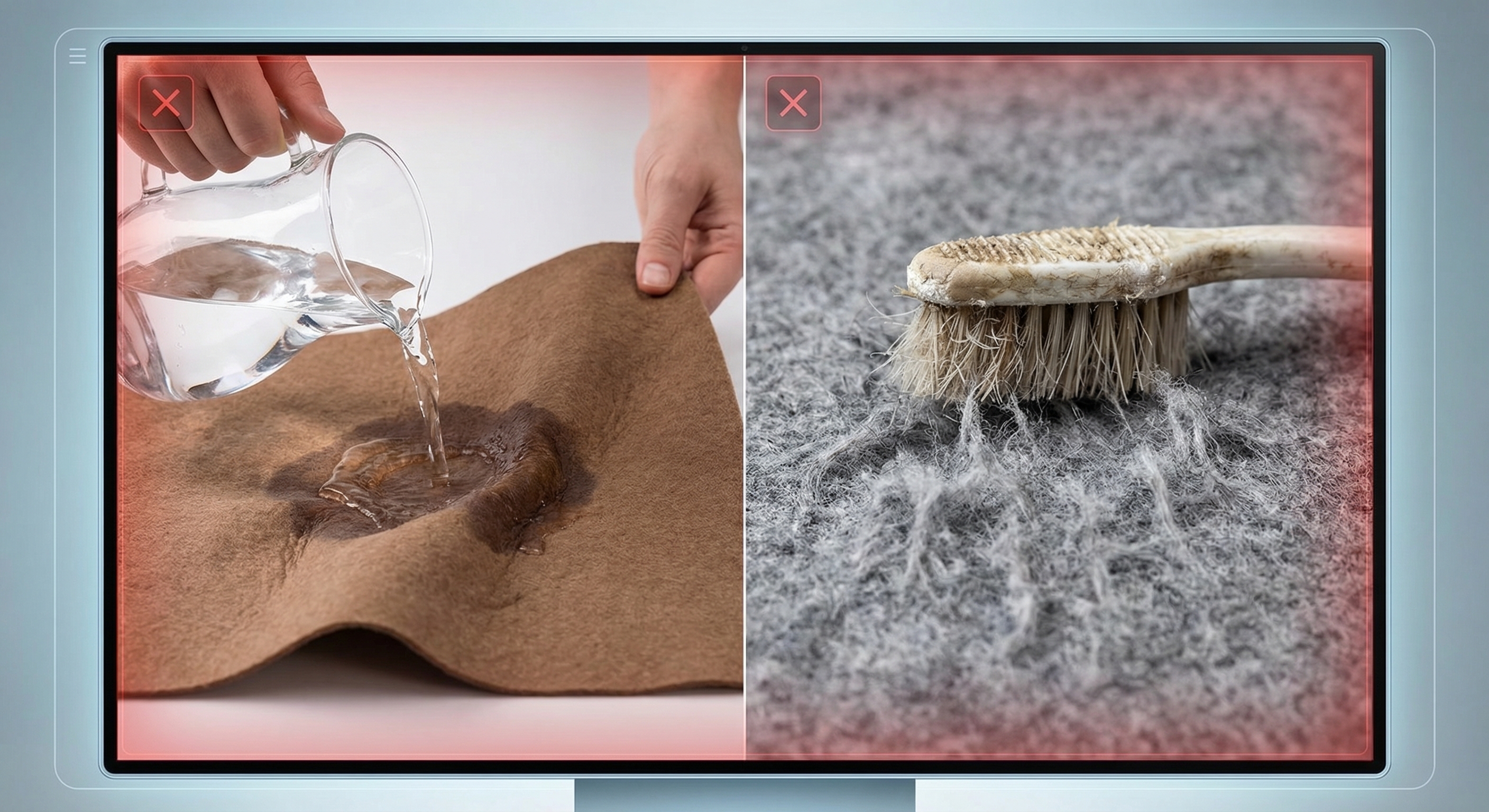
Yes, excessive water is the primary cause of failure when determining how to clean felt jewelry box linings because it causes fiber pilling and structural warping. Felt is not a woven fabric; it is held together by friction and can disintegrate if saturated.
Why does felt “pill”?
Moisture causes individual fibers to swell and untangle from their compressed state. Once this happens, the surface becomes fuzzy and “pilled,” losing its luxurious, smooth texture forever.
But wait:
- Water can warp the wood or paperboard base.
- Humidity promotes mold growth in dark boxes.
- Dried water spots leave permanent rings.
Is mold a risk?
If you trap moisture inside a closed jewelry box, you create a breeding ground for mildew. This not only smells musty but can actually corrode certain metal alloys over time.
Key Takeaway: Minimizing liquid exposure is the most important rule in maintaining the longevity and beauty of your storage solution.
| Moisture Risk | Potential Damage | |
|---|---|---|
| Over-saturation | Structural warping of the box | |
| Slow Drying | Mold and mildew development | |
| Heavy Scrubbing | Permanent fiber pilling |
Careful moisture management prevents the common pitfalls that many DIY cleaners encounter during the restoration process.
Do vacuums simplify how to clean felt jewelry box care?
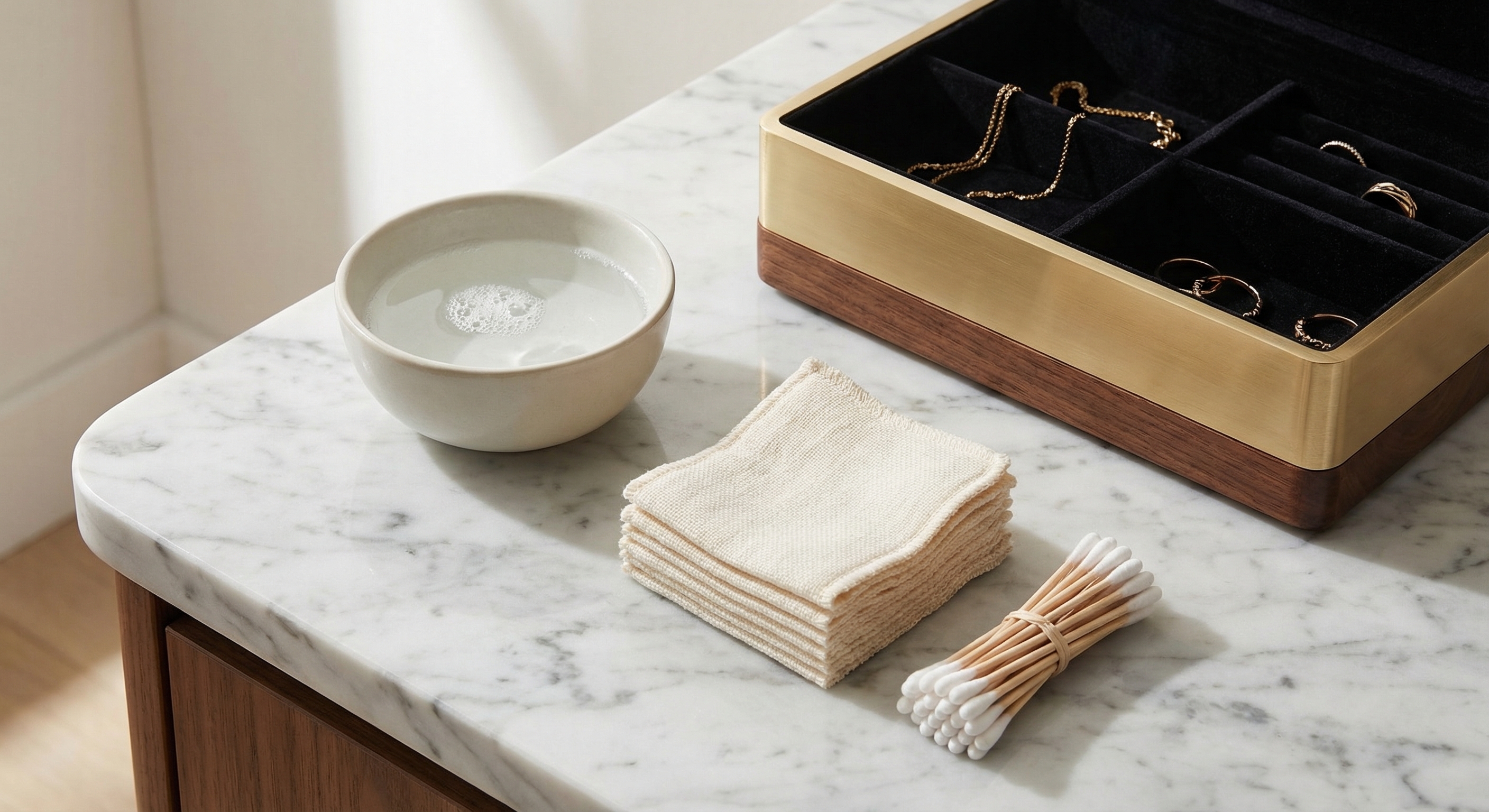
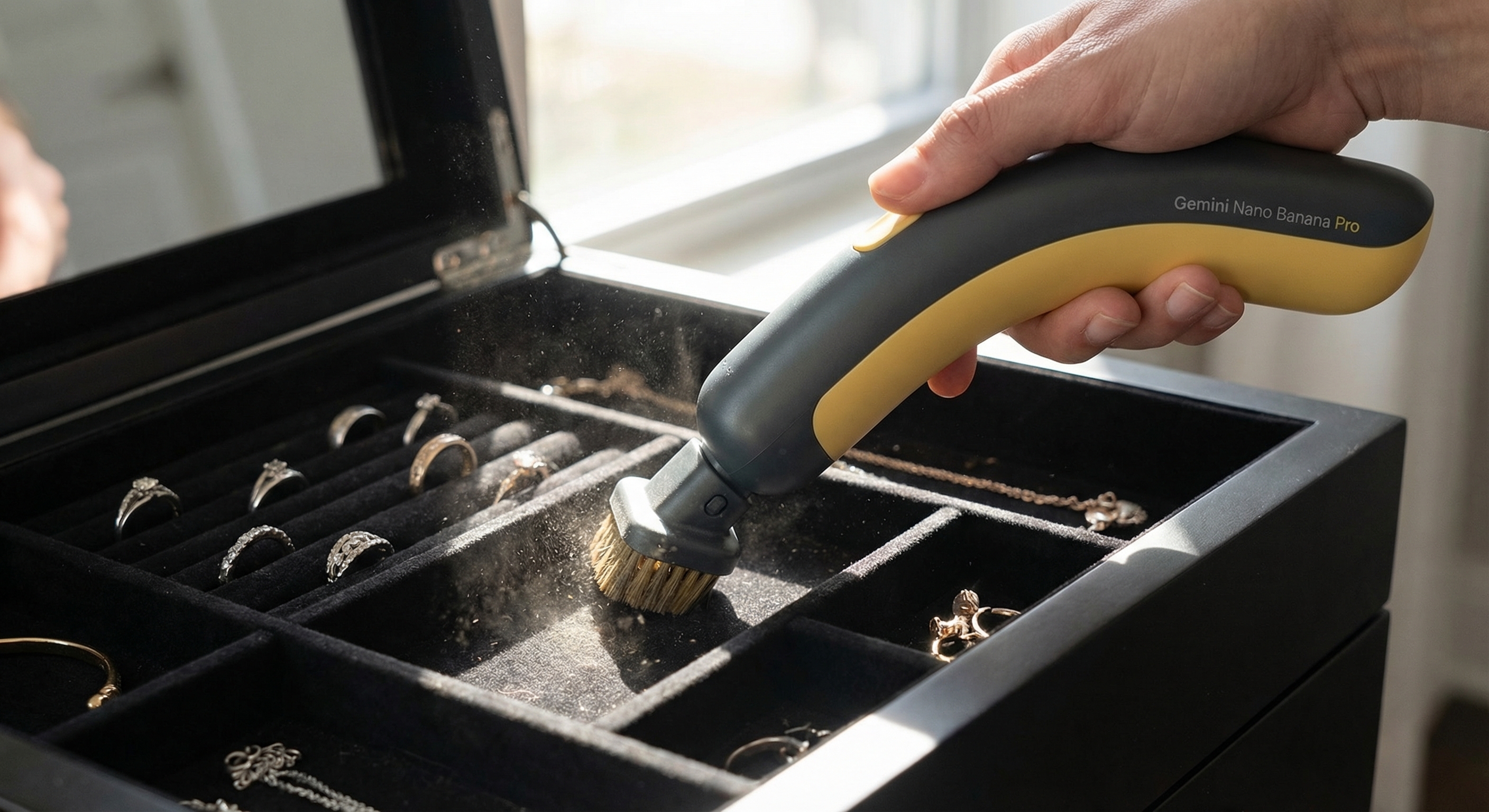
A handheld vacuum with a soft brush attachment is the most efficient method for how to clean felt jewelry box interiors without causing any damage. It allows you to extract dust that has settled deep within the fiber matrix.
Which attachment is best?
You should use a narrow crevice tool or a dedicated micro-brush kit designed for electronics. These attachments provide high suction in a small area, perfect for cleaning narrow ring slots.
Look at the facts:
- Suction removes dust without surface friction.
- It prevents the redistribution of grit.
- No chemicals are required for this step.
Can high suction pull the felt?
If the felt is poorly adhered, high suction can lift the fabric away from the box frame. You should always use the lowest effective power setting to ensure the lining stays secure.
Key Takeaway: Regular vacuuming prevents the buildup of abrasive dust, significantly reducing the frequency of more invasive cleaning needs.
| Vacuum Feature | Advantage for Felt | |
|---|---|---|
| Brush Attachment | Loosens embedded dirt gently | |
| Narrow Crevice Tool | Reaches into deep ring slots | |
| Adjustable Suction | Protects delicate adhesive bonds |
Utilizing mechanical extraction is the safest way to maintain the interior cleanliness of any custom jewelry box collection.
Can soap assist how to clean felt jewelry box stains?
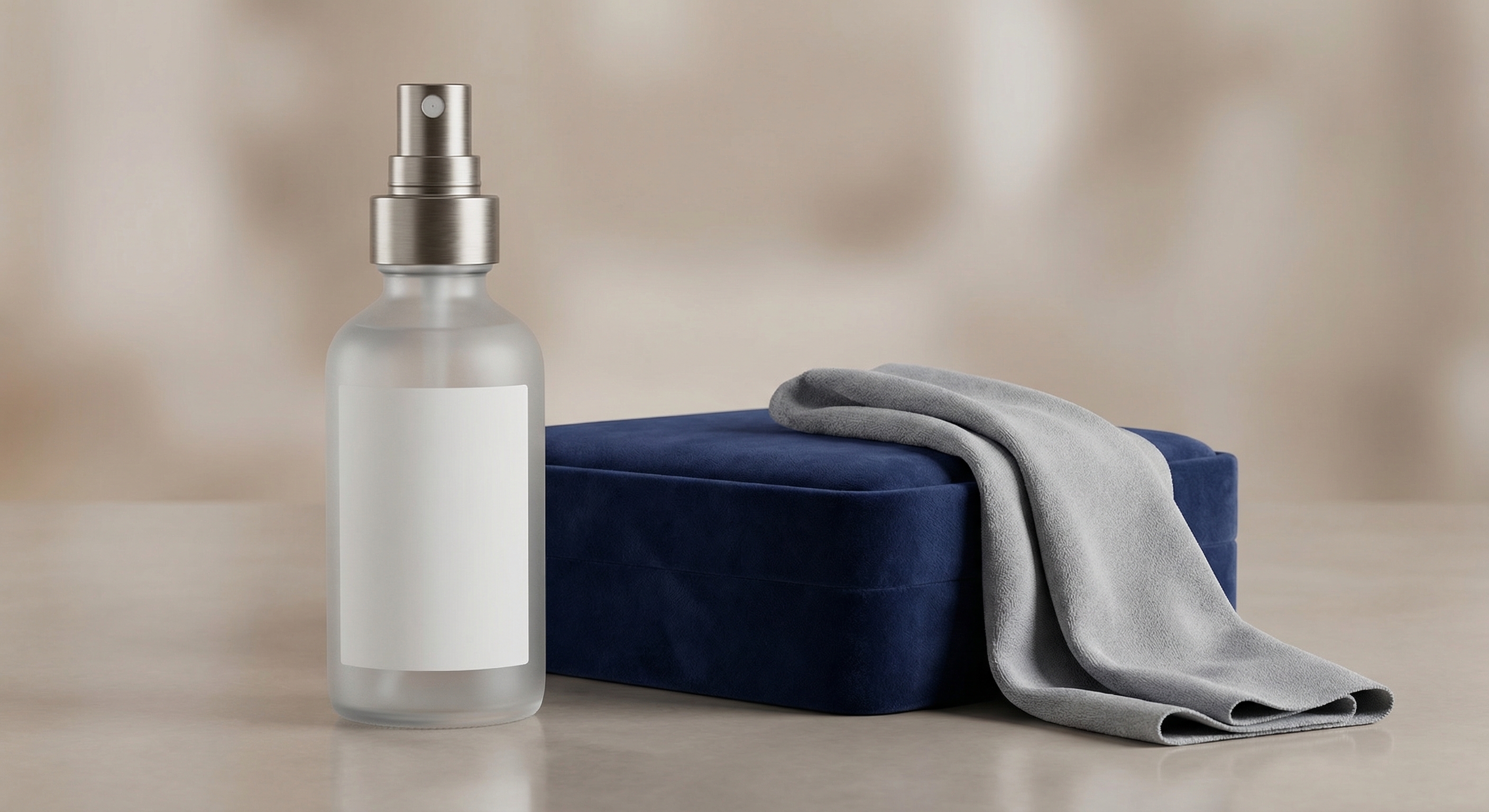
A very dilute solution of pH-neutral soap can help how to clean felt jewelry box stains if they are fresh and haven’t set into the fibers. The key is to use the smallest amount of moisture possible to lift the contaminant.
How to mix the solution?
Mix one drop of gentle dish soap into a cup of lukewarm water. You should aim for a solution that provides cleaning power without leaving a sticky, residue-attracting film behind.
Here is the secret:
- Dabbing is mandatory; rubbing is prohibited.
- Cotton pads control the moisture level.
- Immediate blotting prevents water rings.
What soap is safest?
Avoid soaps with heavy perfumes or dyes, as these can transfer to your jewelry. A clear, fragrance-free soap is the gold standard for luxury textile maintenance.
Key Takeaway: Using a controlled, mild solution allows for the removal of organic stains without damaging the delicate felt chemistry.
| Cleaning Element | Purpose | |
|---|---|---|
| Neutral Soap | Breaks down organic oils | |
| Lukewarm Water | Aids in stain suspension | |
| Blotting Cloth | Removes moisture instantly |
Proper chemical dilution ensures that the cleaning process does not introduce new issues like residue or fiber hardening.
Are sprays safe for how to clean felt jewelry box care?
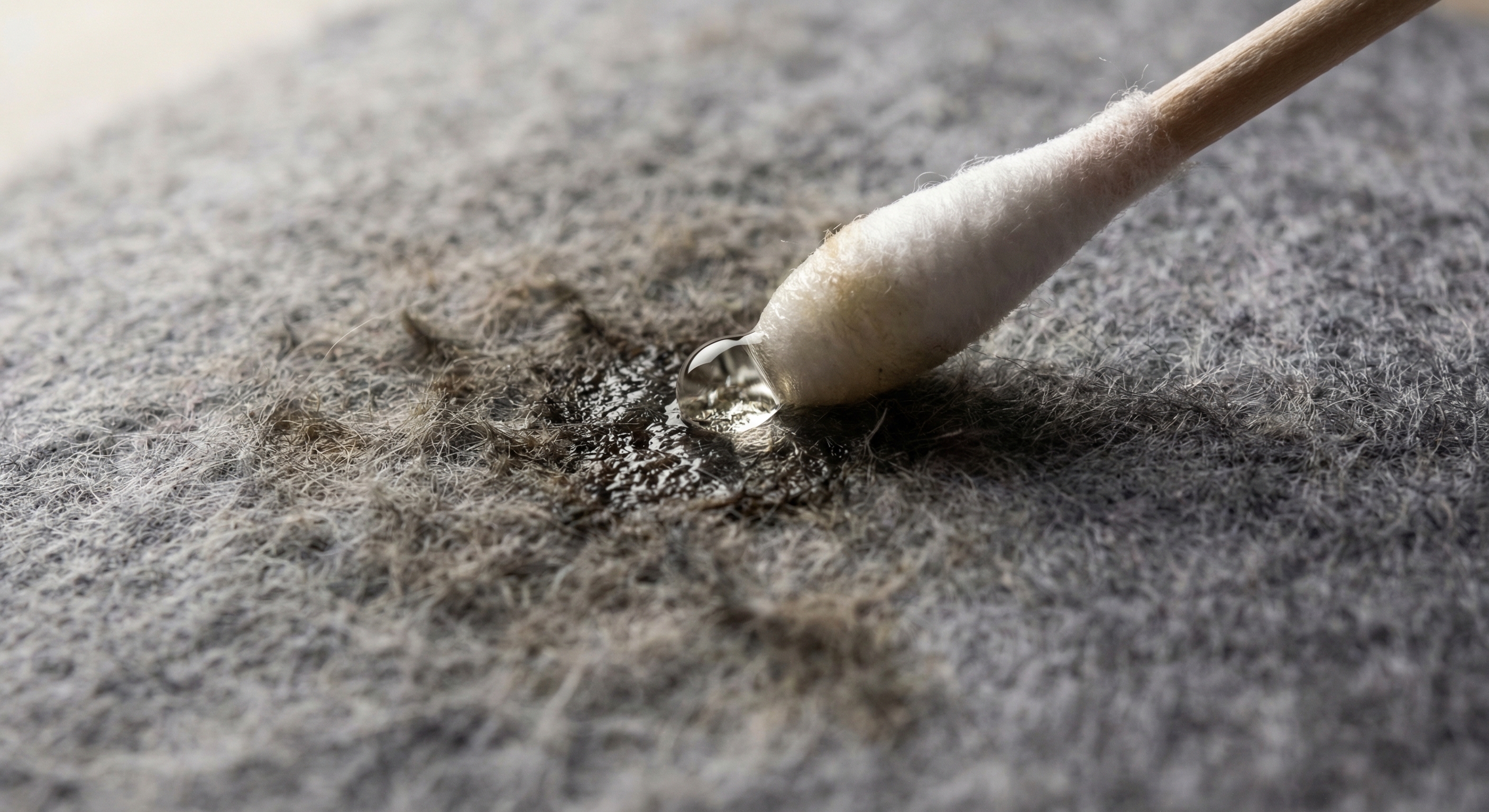
Specialized upholstery or fabric sprays can be safe for how to clean felt jewelry box liners if they are applied to a cloth first rather than directly onto the felt. This prevents the liquid from pooling and soaking through to the box’s foundation.
Can I use fabric fresheners?
While they smell nice, some fresheners contain oils that can eventually yellow the felt or tarnish silver jewelry. It is always better to use a professional-grade textile cleaner designed for delicate fabrics.
Believe it or not:
- Direct spraying causes uneven drying.
- Solvent-based sprays can dissolve glues.
- Mist applications are safer than streams.
How do I apply the spray?
Mist the cleaner onto a microfiber cloth until it is barely damp. Gently press the cloth onto the affected area to transfer the cleaning agent without over-saturating the fibers.
Key Takeaway: Indirect application methods provide the benefits of chemical cleaning while eliminating the risks of over-saturation and warping.
| Application Method | Risk Level | |
|---|---|---|
| Direct Spraying | High (Warping/Staining) | |
| Cloth Transfer | Low (Controlled Cleaning) | |
| Swab Spotting | Minimum (Precision Work) |
Following these guidelines allows you to leverage modern cleaning technology without endangering the structural integrity of your packaging.
How to remove oil if you how to clean felt jewelry box?
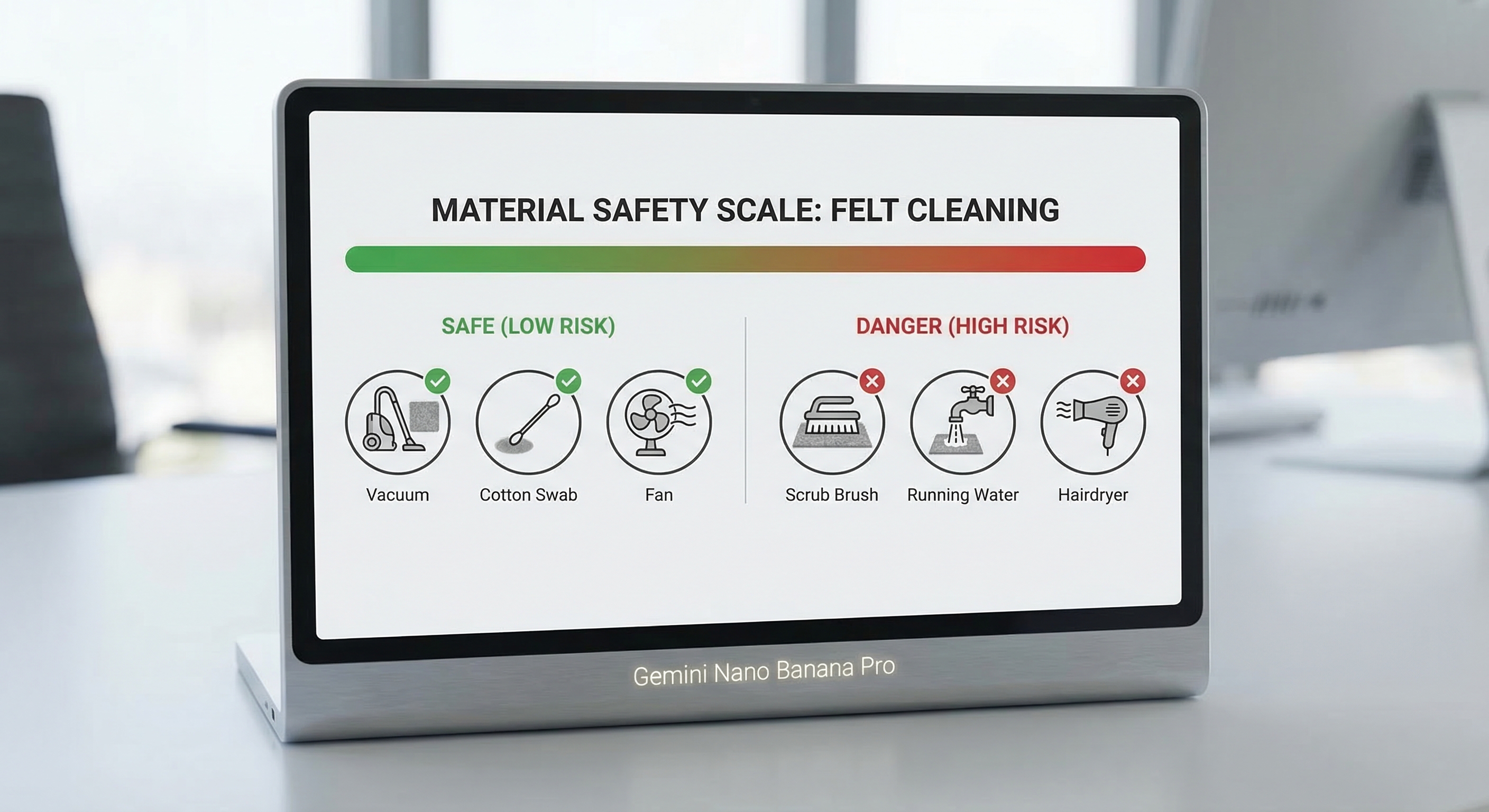
To remove oily residues or sticky tape marks, you should use a tiny amount of coconut oil or a specialized adhesive remover during the how to clean felt jewelry box process. Oils can actually neutralize adhesives, allowing them to be lifted without tearing the felt.
Does oil stain the felt?
If used in excess, yes. You must use only a microscopic drop on a cotton swab and work in small, circular motions before immediately cleaning the area with a damp, soapy cloth.
Here is the deal:
- Oil dissolves stubborn glue residues.
- Small amounts are easy to neutralize.
- Circular motions lift debris from fibers.
What about sticky tape?
If tape was used to secure jewelry, it might leave a tacky film. Gently dabbing with a citrus-based cleaner or a trace of oil will break that bond without pulling the felt’s nap.
Key Takeaway: Managing adhesives requires a “like-dissolves-like” approach that prioritizes chemical dissolution over mechanical pulling.
| Solvent Type | Target Debris | |
|---|---|---|
| Coconut Oil | Dried adhesive and tape | |
| Citrus Cleaner | Heavy grease or oil spots | |
| Rubbing Alcohol | Ink or pigment stains |
By understanding the chemistry of the stain, you can choose the most effective and least invasive removal method.
Does rice improve how to clean felt jewelry box drying?
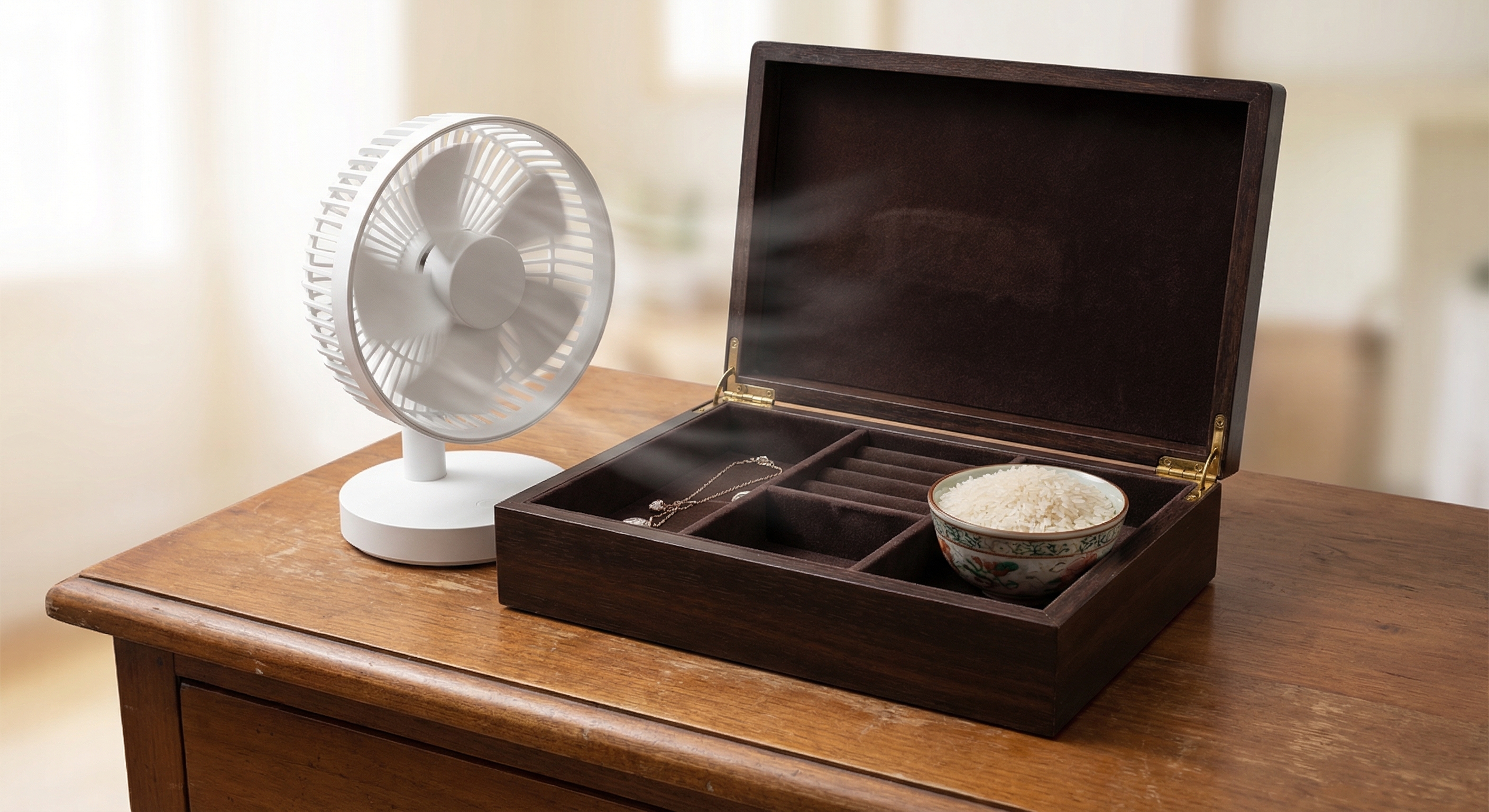
Yes, using desiccant materials like rice or silica gel can significantly speed up the how to clean felt jewelry box drying phase. These materials wick moisture away from the felt and the underlying structure, preventing long-term damage.
Can I use a hairdryer?
Never use a hairdryer or direct sunlight, as the intense heat can cause the felt to shrink and the adhesive to fail. Natural airflow combined with desiccant materials is the only safe path.
Think about this:
- Heat makes felt fibers brittle.
- UV light fades deep velvet colors.
- Slow drying prevents structural warping.
How to use rice safely?
Place dry, clean rice in a thin cloth pouch and set it inside the damp compartment. This creates a localized dry zone that pulls moisture out of the fabric overnight.
Key Takeaway: Passive drying techniques are safer than active heating, ensuring the box retains its shape and the felt its soft texture.
| Drying Method | Safety Rating | |
|---|---|---|
| Oscillating Fan | Extremely Safe | |
| Rice Pouch | Very Safe | |
| Hairdryer/Sun | Dangerous (High Risk) |
Patience during the drying phase is just as important as the cleaning itself to ensure a successful restoration.
How to prevent dirt in how to clean felt jewelry box ring box units?
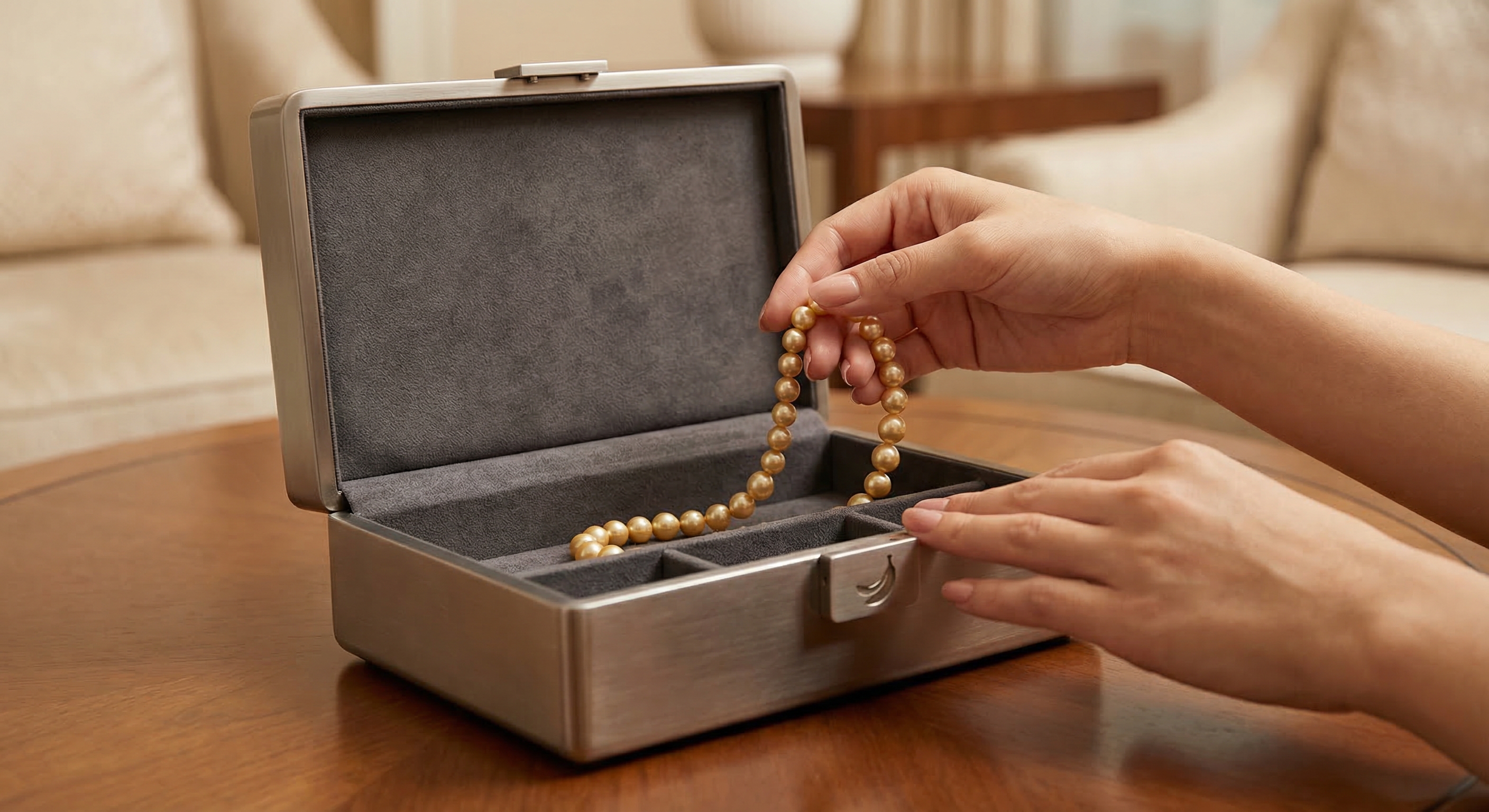
The best way to maintain how to clean felt jewelry box ring box units is to wipe down all jewelry after wear and before storage. This simple habit prevents skin oils and perfumes from ever reaching the lining in the first place.
Should I use silica packets?
Keeping a small silica gel packet hidden in your box is a great proactive step. It manages the internal micro-climate, preventing the humidity that leads to mold and musty odors.
It’s easy:
- Wipe jewelry with a soft cloth.
- Keep the box lid closed when not in use.
- Dust the exterior surfaces weekly.
Why does jewelry transfer dirt?
Lotions, soaps, and natural oils cling to rings and bracelets. When placed in the box, the felt acts as a sponge, absorbing these substances and eventually forming visible stains.
Key Takeaway: Prevention is significantly easier and cheaper than restoration, preserving the luxury unboxing experience for years to come.
| Preventive Step | Expected Result | |
|---|---|---|
| Jewelry Wiping | Removes oils before storage | |
| Lid Closure | Stops atmospheric dust entry | |
| Silica Packets | Prevents moisture buildup |
Implementing these daily routines will minimize the need for deep cleaning and keep your about page-worthy products looking flawless.
Learning how to clean felt in a jewelry box correctly is a vital skill for anyone handling high-value accessories. By avoiding the temptation to scrub or soak the material, and instead relying on precision tools and dry extraction, you protect both the storage vessel and its contents. We understand that your packaging represents your brand’s commitment to quality. If you find your current storage solutions are beyond repair or if you are looking to upgrade your brand’s presentation, please contact us today . We help brands move from generic packaging to bespoke, luxury experiences that captivate customers. Our vision is to empower jewelry businesses with factory-direct pricing and uncompromising quality, ensuring your treasures always have a home that matches their brilliance.
FAQ
Can I use a toothbrush to scrub the felt?Never. Even a soft toothbrush can be too abrasive and cause the felt to “fuzz” or pill, permanently ruining the texture.
What is the best way to get rid of a musty smell?Yes, you can sprinkle baking soda over the felt, let it sit for 24 hours to absorb the odor, and then carefully vacuum it out.
How do I know if the felt is beyond repair?Usually, if the felt is pilling severely, thinning to the point where the base material shows, or has a persistent odor, it is time for a replacement.
Can I use rubbing alcohol to sanitize the lining?Yes, but only as a very light mist. Do not soak the area, as high concentrations can occasionally affect the color of dyed felt.
How do I remove ink stains from felt?Dab the area with a cotton swab dipped in rubbing alcohol, working from the outside of the stain inward to prevent spreading.