
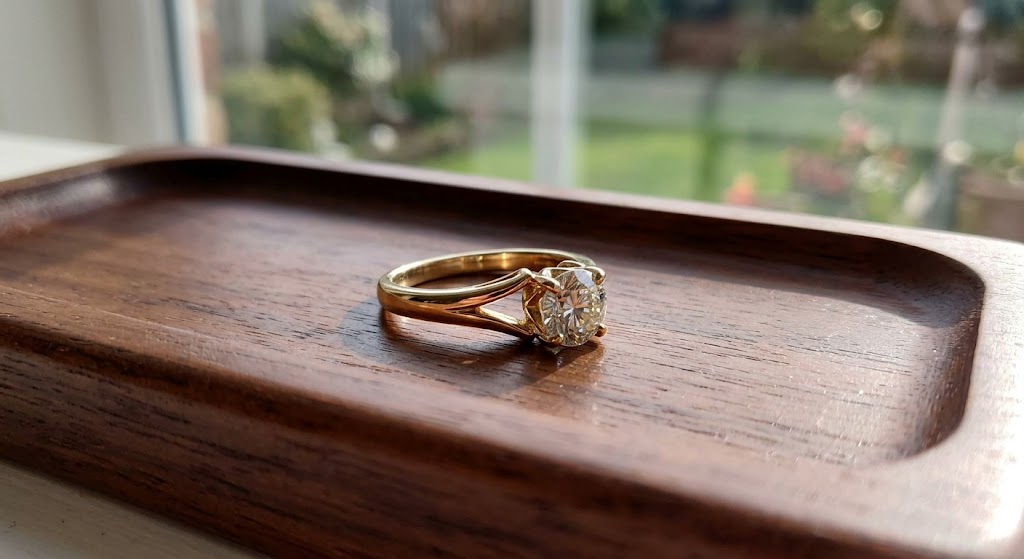
To clean gold jewelry, you should soak the pieces in a solution of warm water and mild dish soap before gently scrubbing them with a soft-bristled brush. Many jewelry owners notice their favorite rings and necklaces losing their signature luster over time due to daily exposure to oils and environmental pollutants. This buildup not only dulls the aesthetic appeal but can also lead to long-term corrosion if left unaddressed. Learning how to clean gold jewelry correctly is the only way to preserve the professional finish and financial value of your high-end collection.
Why learn how to clean gold jewelry properly?
Proper cleaning prevents the accumulation of skin oils and cosmetic chemicals that create a cloudy film on the metal’s surface. Understanding how to clean gold jewelry is essential for any professional or collector looking to maintain the integrity of their assets. Consistent care ensures that the gold alloys remain stable and vibrant for years.
Why does gold lose its luster?
Gold loses its shine because the alloys mixed with the pure gold react with oxygen and moisture in the air. Fingerprints and lotions also create a physical barrier that prevents light from reflecting off the surface of the metal.
Here is the kicker:
- 14k and 18k gold contain copper and silver.
- These metals are prone to oxidation.
- Cosmetic buildup traps dirt against the gold.
Why does this matter? Regular maintenance stops these reactions before they cause permanent damage.
| Factor | Detail | |
|---|---|---|
| Main Culprits | Skin oils, sweat, lotion, hairspray | |
| Cleaning Frequency | Bi-weekly for daily wear; Monthly for others | |
| Risk of Neglect | Permanent dullness and weakened prongs |
Regularly addressing these factors prevents the need for aggressive professional restoration later.
Key Takeaway: Routine cleaning prevents permanent tarnish and ensures your jewelry remains a high-value asset.
What tools are needed for how to clean gold jewelry?
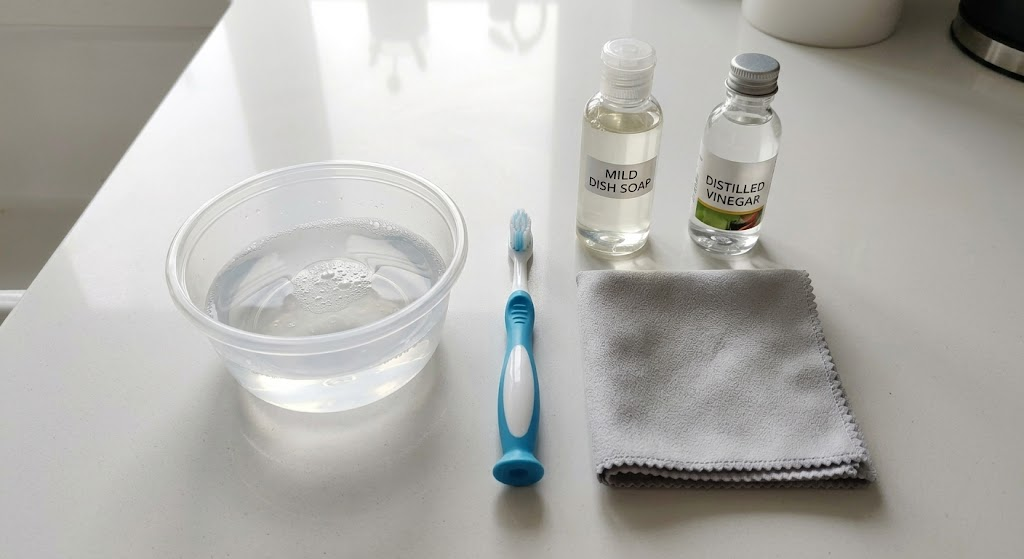
You need a small plastic bowl, lukewarm water, mild dish soap, and an extra-soft toddler toothbrush. Having the correct supplies for how to clean gold jewelry prevents the accidental introduction of micro-scratches that occur when using paper towels or stiff brushes. Professional results require gentle, non-abrasive materials.
What should you avoid using?
You must avoid using bleach, chlorine, or abrasive scrubbing pads like steel wool on your gold. These chemicals can break down the gold alloys, making the piece brittle and prone to snapping.
Think about this:
- Bleach causes “stress corrosion cracking.”
- Stiff brushes leave visible swirl marks.
- Toothpaste can be too abrasive for high-karat gold.
The best part? Most of the safe tools you need are already in your home.
| Tool | Recommended Type | |
|---|---|---|
| Brush | Extra-soft toddler toothbrush | |
| Cloth | Microfiber or specialized polishing cloth | |
| Bowl | Small plastic or ceramic container |
Proper tool selection is the first line of defense against accidental damage during maintenance.
Key Takeaway: Using the right tools is 50% of the job; soft materials protect the delicate surface of the gold.
How to clean gold jewelry with soap and water?
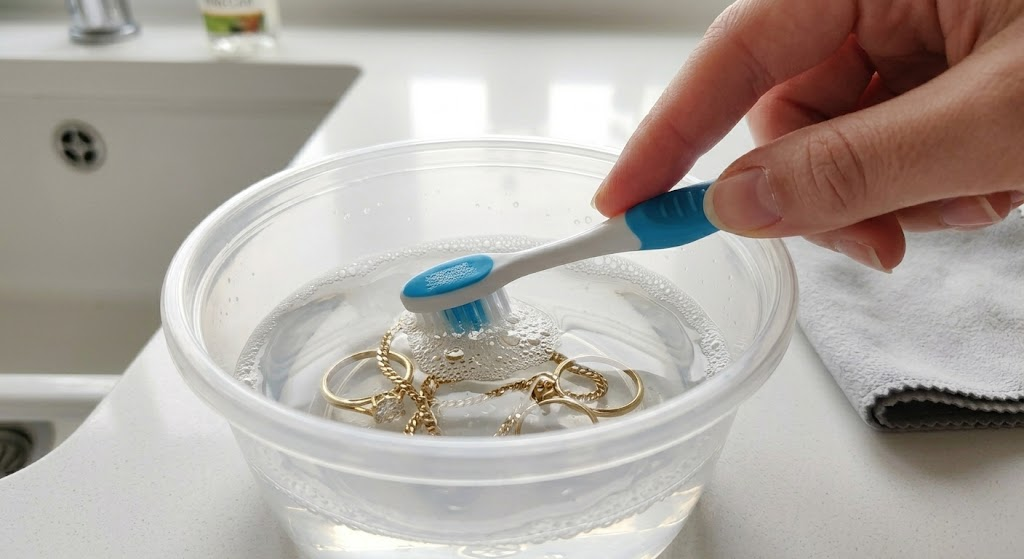
Submerge your gold items in a mixture of warm water and a few drops of mild dish soap for about twenty minutes. Mastering how to clean gold jewelry with this foundational method is the safest way to lift grime without risking chemical damage. This simple soak loosens oils trapped in intricate designs or behind gemstone settings.
Why use a soft toothbrush?
A soft toothbrush allows you to gently “tickle” dirt out of hard-to-reach crevices without scratching the metal. Focus on the areas around the clasps and the underside of rings where skin contact is most frequent.
But wait, there is more:
- Bristles reach where fingers cannot.
- Circular motions help dislodge caked-on dirt.
- Gentle pressure protects the gold’s finish.
Why does this matter? It ensures a comprehensive clean that restores the piece’s original showroom sparkle.
| Step | Action | |
|---|---|---|
| 1. Soak | 15-20 minutes in lukewarm soapy water | |
| 2. Detail | Gentle brushing of crevices and backs | |
| 3. Rinse | Clean water rinse to remove soap film |
A systematic approach to soaking and detailing ensures no residue is left to dull the gold.
Key Takeaway: Patience is better than pressure; a long soak does the hard work so you don’t have to scrub.
Is baking soda safe for how to clean gold jewelry?
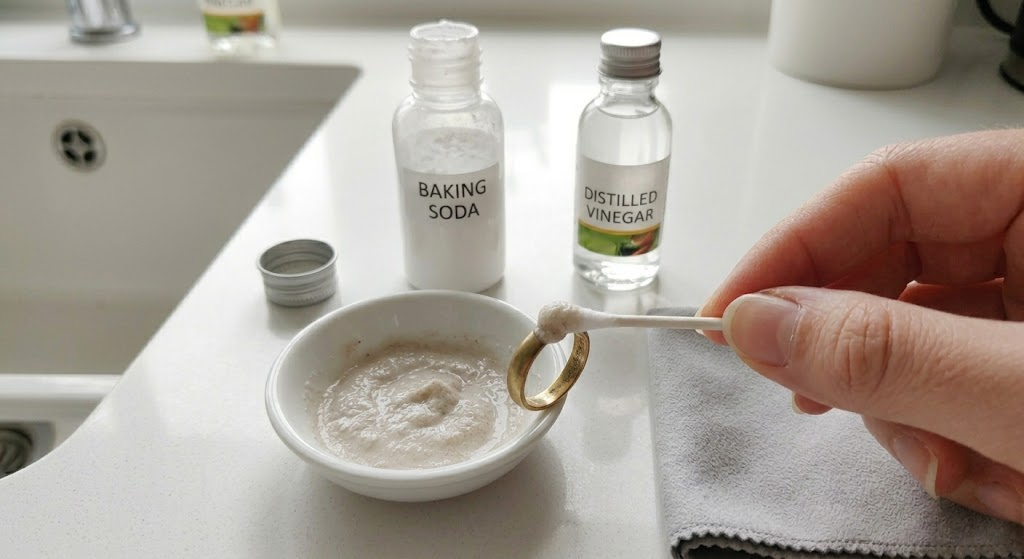
Baking soda is safe for plain gold bands but should be used with extreme caution on high-polish finishes or soft gemstones. When investigating how to clean gold jewelry that has stubborn buildup, a baking soda paste can provide a mild abrasive action. However, you should never use this method on pearls or opals as it can scratch their delicate surfaces.
How to mix a safe cleaning paste?
Create a safe cleaning paste by mixing three parts baking soda with one part water until it reaches a toothpaste-like consistency. Apply this gently with a cotton swab rather than a brush to minimize the risk of surface scratching.
Keep this in mind:
- Use a 3:1 ratio for the best results.
- Apply only to the metal surfaces.
- Rinse with vinegar for an extra shine boost.
The kicker? The effervescent reaction between baking soda and vinegar lifts deep-seated grime effectively.
| Component | Ratio/Detail | |
|---|---|---|
| Paste Mix | 3 Parts Soda : 1 Part Water | |
| Application | Use a cotton swab, not a brush | |
| Rinse Agent | Distilled white vinegar for extra shine |
This chemical reaction provides a deeper clean than soap alone for neglected or heavy pieces.
Key Takeaway: Baking soda is an effective “deep clean” for sturdy gold pieces but requires a cautious touch.
How to clean gold jewelry with soft gemstones?
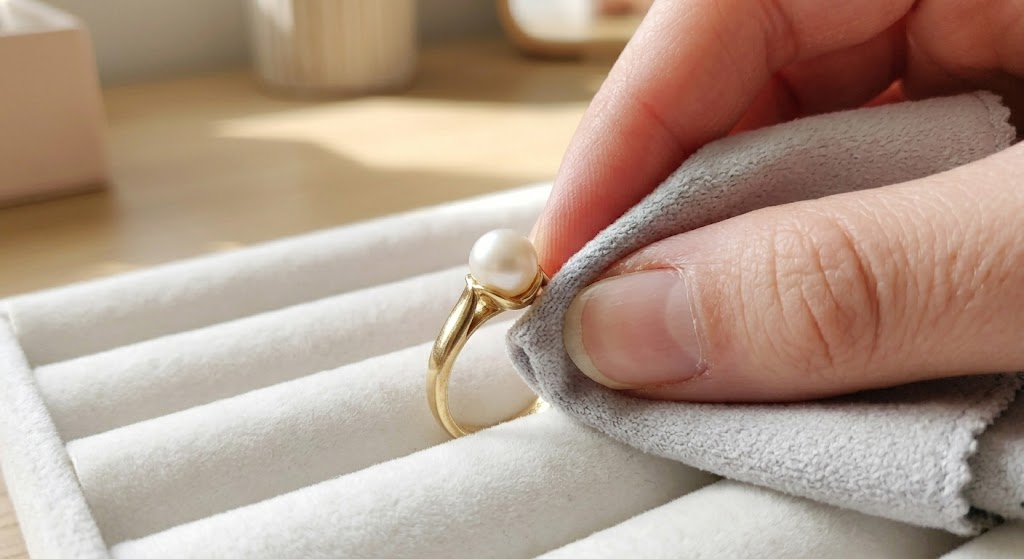
Use a lint-free cloth dampened with a mild soap solution to wipe the gold parts only, avoiding the stones entirely. Knowing how to clean gold jewelry that contains porous gems like pearls or emeralds prevents irreversible water damage. These stones can absorb liquids, which leads to internal cracking or permanent discoloration.
Can water damage porous stones?
Water and soap can penetrate the surface of porous stones, causing them to lose their natural luster or even rot from the inside. Instead of soaking, you should use a “dry clean” method where you only address the metal components.
Here is why:
- Pearls are organic and sensitive to chemicals.
- Emeralds often have oil treatments that water ruins.
- Turquoise can change color if it absorbs soap.
But wait, there is more:
- Use a slightly damp cloth for the gold.
- Immediately dry the piece with a microfiber towel.
- Store these pieces separately to avoid scratches.
| Stone Type | Cleaning Method | |
|---|---|---|
| Diamonds/Sapphires | Soap soak and soft brush | |
| Pearls/Opals | Dry or slightly damp cloth only | |
| Emeralds | Professional cleaning recommended |
Different materials require specific protocols to ensure the longevity of the entire jewelry piece.
Key Takeaway: Always identify your gemstones before choosing a cleaning method to avoid irreversible stone damage.
How to clean gold jewelry from heavy tarnish?
You can remove heavy tarnish by lining a bowl with aluminum foil and filling it with hot water mixed with baking soda. This specific technique for how to clean gold jewelry utilizes an ion transfer process to pull the tarnish off the metal. It is highly effective for vintage pieces that have developed a dark, matte finish over the years.
How to buff away surface oxidation?
After the chemical soak, use a high-quality jewelry polishing cloth to buff the surface in long, even strokes. This step is crucial for restoring the mirror-like finish that the chemical reaction might have temporarily dulled.
Think about this:
- Avoid circular motions that trap dust.
- Use a clean section of the cloth frequently.
- Apply firm but gentle pressure while buffing.
The best part? You will see the luster return almost instantly as you buff.
| Material | Purpose | |
|---|---|---|
| Aluminum Foil | Acts as a catalyst for ion transfer | |
| Boiling Water | Accelerates the tarnish removal process | |
| Buffing Cloth | Restores the final mirror-like finish |
Combining chemical removal with manual buffing provides the most comprehensive restoration for tarnished gold.
Key Takeaway: Tarnish is a chemical layer that often requires a chemical solution rather than physical scrubbing.
When to seek professional help for how to clean gold jewelry?
Professional help is required if the jewelry is an antique, features “invisible” settings, or has loose stones. While learning how to clean gold jewelry at home is efficient, high-value items often need the specialized equipment found in a jeweler’s workshop. Professionals use high-pressure steam and ultrasonic cleaners that offer a level of sterilization home methods cannot match.
Are commercial cleaners safe?
Commercial “dips” are safe if used strictly according to the manufacturer’s instructions, but they are often very acidic. Leaving gold in these solutions for too long can actually eat away at the solder joints that hold the piece together.
Here is the kicker:
- Most dips require only 30 seconds of contact.
- Rinse the jewelry immediately after dipping.
- Never use dips on jewelry with stones.
Why does this matter? Misusing commercial chemicals can lead to the structural failure of your favorite items.
| Method | Best For | Risk Level | |
|---|---|---|---|
| Jewelry Dips | Plain gold chains | Medium (Acidic) | |
| Ultrasonic | Hard stones & gold | High (can loosen stones) | |
| Professional | Antiques/Heirlooms | Low (Expert handled) |
Choosing between home care and professional services depends on the complexity and value of the piece.
Key Takeaway: Commercial products offer speed, but professional services offer safety for high-value or fragile items.
How to clean gold jewelry while checking for damage?
You should use the cleaning process as an opportunity to inspect the prongs, clasps, and links for signs of wear. Developing a routine for how to clean gold jewelry allows you to act as a detective for your collection. Since soap acts as a lubricant, it makes it much easier to identify mechanical issues before they lead to the loss of a piece.
Why check clasps during cleaning?
Clasps can become clogged with hair or debris, which prevents them from closing securely and puts the jewelry at risk of falling off. Testing the spring tension while the piece is clean ensures that the mechanism is functioning at its peak performance.
Keep this in mind:
- Soap helps the spring move more freely.
- It reveals if the alignment has shifted.
- Clean clasps are less likely to snag on clothing.
Why does this matter? A simple five-second check can save you from losing an expensive investment.
| Component | What to Look For | |
|---|---|---|
| Prongs | Snags, thin tips, or gaps | |
| Clasps | Spring tension and alignment | |
| Chains | Kinks or thinning links |
Regular inspections during maintenance are the best way to catch minor issues before they become major repairs.
Key Takeaway: Use your cleaning routine as a monthly safety inspection to prevent the loss of your jewelry.
Which habits avoid the need for how to clean gold jewelry?
You can avoid frequent cleaning by following the “last on, first off” rule for all your gold pieces. Reducing the frequency of how to clean gold jewelry is much easier if you keep the metal away from perfumes and hairsprays. These products contain chemicals that react with the alloys in gold, leading to rapid dulling and tarnish.
Is it safe to shower with gold?
Showering with gold jewelry is not recommended because soaps and conditioners leave a waxy film that builds up in the crevices. Additionally, the chlorine found in swimming pools can cause stress corrosion, making your gold brittle over time.
Think about this:
- Shower gel creates a film that masks shine.
- Chlorine can actually dissolve certain gold alloys.
- Hard water leaves mineral deposits on the metal.
The kicker? Taking ten seconds to remove your jewelry will save you thirty minutes of cleaning later.
| Activity | Impact on Gold | Recommendation | |
|---|---|---|---|
| Swimming | Chlorine causes brittleness | Remove before entry | |
| Skincare | Creates a dull film | Apply 10 mins before jewelry | |
| Sleeping | Causes physical wear/bending | Remove and store safely |
Adopting these preventative habits significantly extends the interval between necessary deep cleaning sessions.
Key Takeaway: Prevention is easier than cure; keeping jewelry away from chemicals reduces cleaning frequency.
How to clean gold jewelry for long-term storage?
Before storing gold, you must ensure it is completely dry and placed in an airtight, fabric-lined container. Proper storage is the final step in how to clean gold jewelry because it protects the metal from oxidation caused by humidity. Keeping pieces separated also prevents harder gemstones from scratching the softer gold surfaces of other jewelry.
How to organize gold for protection?
Organize your collection by using individual compartments or soft pouches for every item to eliminate metal-on-metal friction. This level of organization ensures that your gold remains in showroom condition even when it is not being worn.
But wait, there is more:
- Individual slots prevent chain tangling.
- Velvet linings absorb excess moisture.
- Anti-tarnish strips can be added to the box.
Why does this matter? It preserves the work you put into cleaning and prevents physical damage during transit or storage.
| Storage Type | Benefit | |
|---|---|---|
| Velvet Lining | Absorbs moisture and prevents scratches | |
| Individual Slots | Prevents tangling and metal-on-metal friction | |
| Anti-Tarnish Strips | Chemically neutralizes sulfur in the air |
Strategic storage solutions turn a simple cleaning routine into a comprehensive preservation strategy for your collection.
Key Takeaway: Proper storage is the final step in maintenance, preserving the work you put into cleaning.
FAQ: Maintaining Your Gold Collection
- Can I use toothpaste to clean my gold rings? It is generally discouraged because the abrasive silicas in toothpaste can scratch high-karat gold.
- What is the best way to dry gold jewelry? You should use a lint-free soft cloth or allow the piece to air dry on a clean towel.
- Can I use boiling water on all gold? No, you should only use it on plain gold, as extreme heat can crack gemstones or melt jewelry glue.
- What is the best household item for a quick shine? A clean, dry microfiber cloth is the safest tool for a fast buff to remove fingerprints.
- Can I use Windex to clean my gold? While it is popular for diamonds, the ammonia can be too harsh for certain gold alloys and should be used sparingly.
Conclusion: Preserve Your Sparkle
Maintaining a gold collection requires a balance of gentle cleaning techniques and strategic preventative habits. This guide has solved the problems of tarnish, oil buildup, and accidental chemical damage, offering you a clear path to long-lasting brilliance. We are committed to providing the highest quality protection for your valuables, ensuring your legacy remains as bright as the day it was created. Our industry vision is to bridge the gap between luxury craft and sustainable preservation for collectors worldwide.
Ready to give your jewelry the home it deserves?Explore our range of premium, protective packaging solutions designed to keep your collection tarnish-free. Contact us today for custom jewelry boxes that combine elegance with the highest standards of protection.