
You can restore your jewelry’s original sparkle by using a gentle solution of warm water and mild dish soap to remove accumulated oils and dirt. Your favorite pieces inevitably lose their brilliance over time as body lotions, perfumes, and environmental dust create a dull film on the surface. If left uncleaned, this grime can lead to permanent tarnish or even skin irritation, causing your cherished investments to feel like old, neglected items. Learning how to clean jewelry at home is the perfect solution to ensure your collection stays radiant for years without the high cost of professional servicing.
How to clean jewelry at home safely?
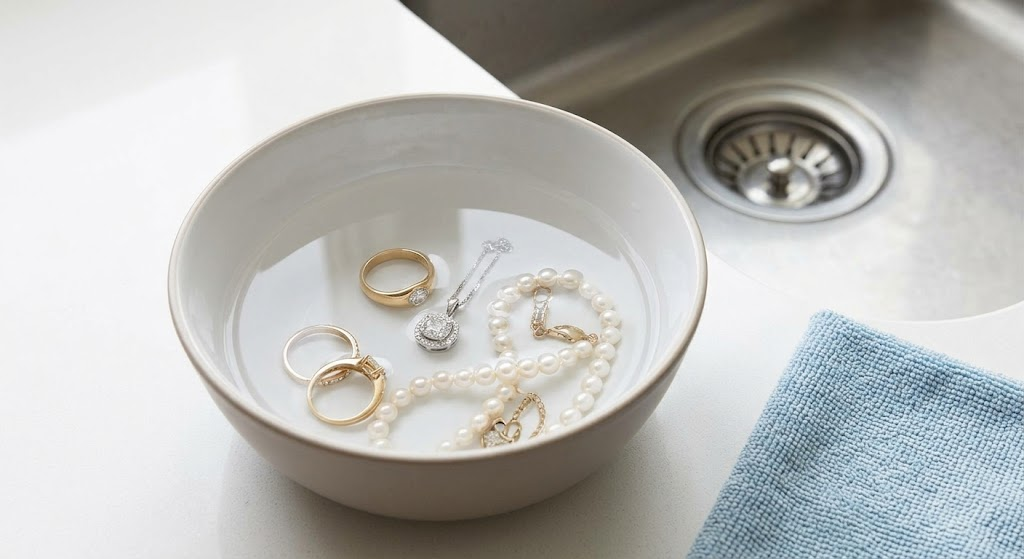
To learn how to clean jewelry at home safely, you must first identify the metal and stone types to ensure you do not use damaging chemicals. Using a bowl of lukewarm water rather than a sink with an open drain is the most critical safety precaution you can take.
What are the first safety steps?
Think about it: most people lose their precious earring backs or small rings because they rinse them directly over an open sink. To prevent this, always work over a flat surface or use a dedicated cleaning container.
- Plug all sink drains securely.
- Use a bowl of lukewarm water.
- Inspect stones for loose settings before scrubbing.
But here’s the kicker: even the safest cleaning solution can be ruined if you don’t rinse your items thoroughly to remove soap residue. Always dry your pieces immediately with a lint-free cloth to prevent water spots from forming.
Key Takeaway: Always prioritize item security by using a bowl and checking for loose stones before you begin the cleaning process.
| Safety Step | Action Required | Benefit | |
|---|---|---|---|
| Drain Protection | Use a bowl or plug | Prevents loss of jewelry | |
| Water Temp | Lukewarm water | Prevents heat-related stone cracking |
This structured approach to safety ensures that the cleaning process remains risk-free for your most valuable assets.
Why learn how to clean jewelry at home?
Understanding how to clean jewelry at home is essential for maintaining both the sentimental beauty and the long-term financial value of your collection. Regular maintenance prevents the buildup of corrosive substances like sweat and hairspray that can degrade delicate metal alloys over time.
Is value preservation important?
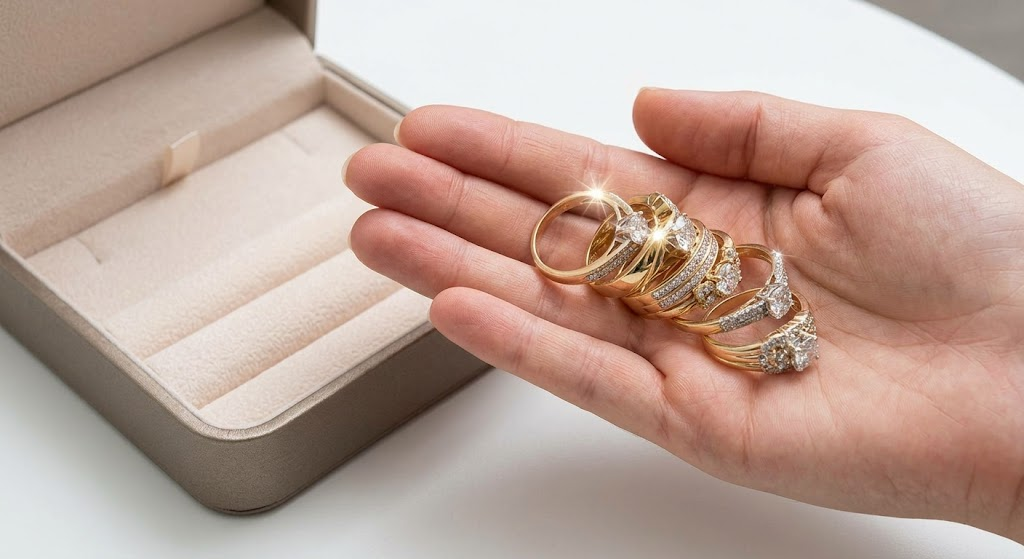
Look: your jewelry is an investment that requires consistent care to prevent the metal from becoming pitted or dull. Storing your clean items in a custom jewelry box further protects them from environmental humidity and dust.
- Prevents permanent metal tarnish.
- Reduces the risk of skin rashes.
- Keeps gemstones sparkling and clear.
Believe it or not, a piece that is cleaned bi-weekly will retain its “store-bought” look for decades compared to neglected items. Taking ten minutes to care for your rings ensures they remain heritage-quality pieces.
Key Takeaway: Consistent home cleaning preserves the integrity of the metal and the clarity of stones while preventing hygiene issues.
| Reason | Impact | Outcome | |
|---|---|---|---|
| Hygiene | Removes bacteria | Prevents skin irritation | |
| Value | Maintains luster | Protects financial investment |
Maintaining a regular schedule is the most effective way to ensure your collection never loses its charm or market value.
How to clean jewelry at home with dish soap?
Using a mild dish soap is the most effective and universal way how to clean jewelry at home for most common metal types. This household staple effectively cuts through heavy grease and lotion residue without the use of harsh, abrasive chemicals.
How do you mix the solution?
You might be wondering: what is the ideal ratio for a cleaning solution that won’t harm my precious metals? Simply add two to three drops of mild, fragrance-free dish soap into a bowl of warm, not boiling, water.
- Use grease-cutting liquid soap.
- Mix until small bubbles form.
- Soak pieces for 15 minutes.
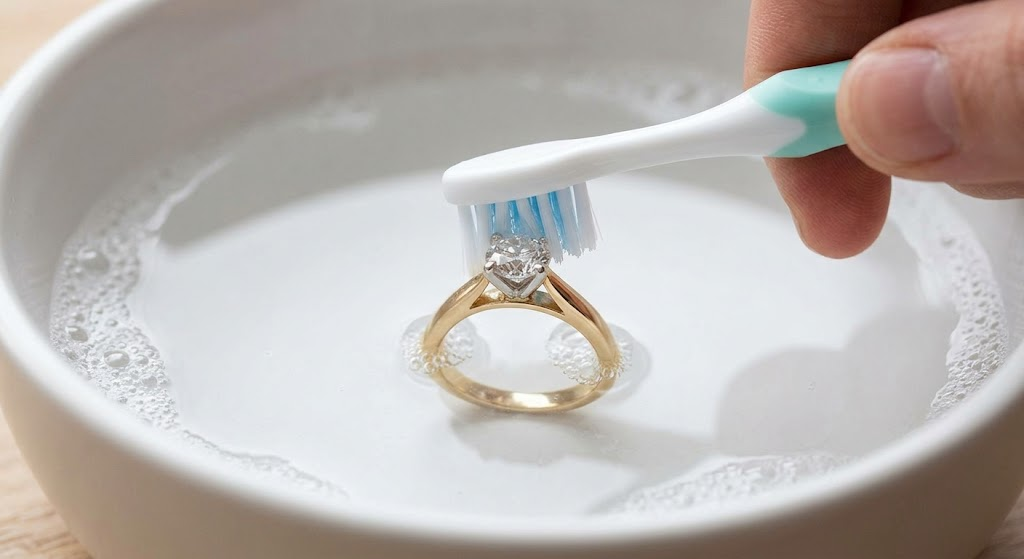
But here’s the kicker: the soaking process does the heavy lifting by loosening the grime tucked into the tiny crevices of your jewelry. After soaking, use a soft-bristled brush to gently sweep away any remaining debris before a final rinse.
Key Takeaway: A simple mixture of mild soap and warm water is the gold standard for removing daily grime and oils safely.
| Component | Recommendation | Purpose | |
|---|---|---|---|
| Soap Type | Mild/Fragrance-free | Avoids chemical film | |
| Water Temp | Warm (Lukewarm) | Loosens oils effectively |
Simple ingredients often yield the best results when trying to restore a professional-level shine to your everyday wear.
How to clean jewelry at home: Gold items?
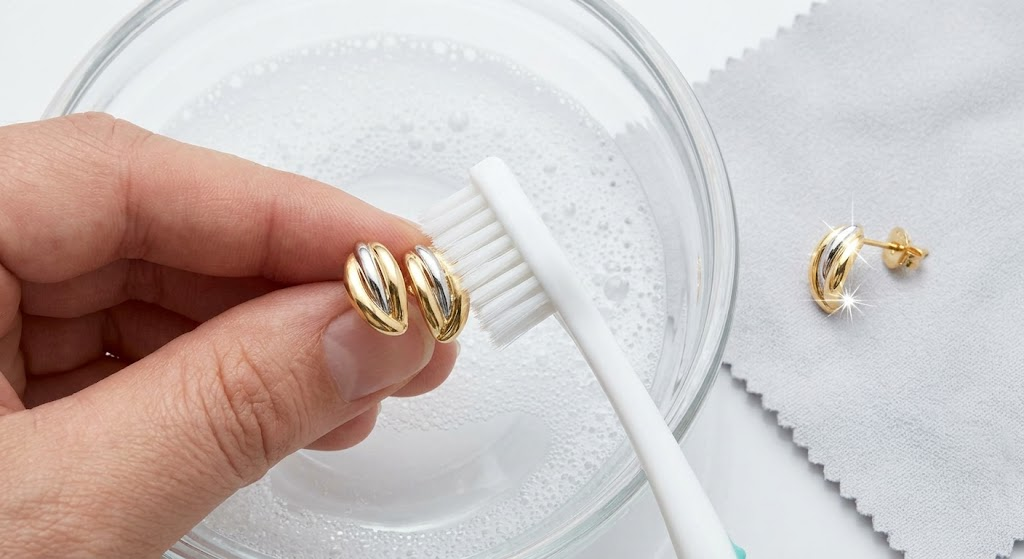
Cleaning gold involves a specific approach to how to clean jewelry at home that focuses on gentle agitation to avoid scratching the soft metal. Whether you own yellow, white, or rose gold, the goal is to remove buildup while preserving the polished finish.
Can you scrub gold pieces?
Make no mistake: gold is a relatively soft metal that can develop micro-scratches if you use a stiff brush or abrasive cleaners. After a gentle scrub, placing your rings in a high-quality ring box will help prevent them from scratching against other items.
- Use an extra-soft toothbrush.
- Scrub in a circular motion.
- Rinse with cool running water.
The truth is: white gold often has a rhodium plating that can wear off if scrubbed too vigorously or too often. Be sure to pat the jewelry dry with a microfiber cloth rather than rubbing it harshly to maintain the shine.
Key Takeaway: Use the softest tools available to clean gold surfaces to prevent scratching the metal or wearing down specialty platings.
| Gold Type | Cleaning Focus | Tool Choice | |
|---|---|---|---|
| Yellow Gold | Removing daily oils | Extra-soft brush | |
| White Gold | Preserving rhodium | Microfiber buffing |
Gentleness is the most important factor when dealing with gold to ensure the surface remains smooth and reflective.
How to clean jewelry at home: Silver pieces?
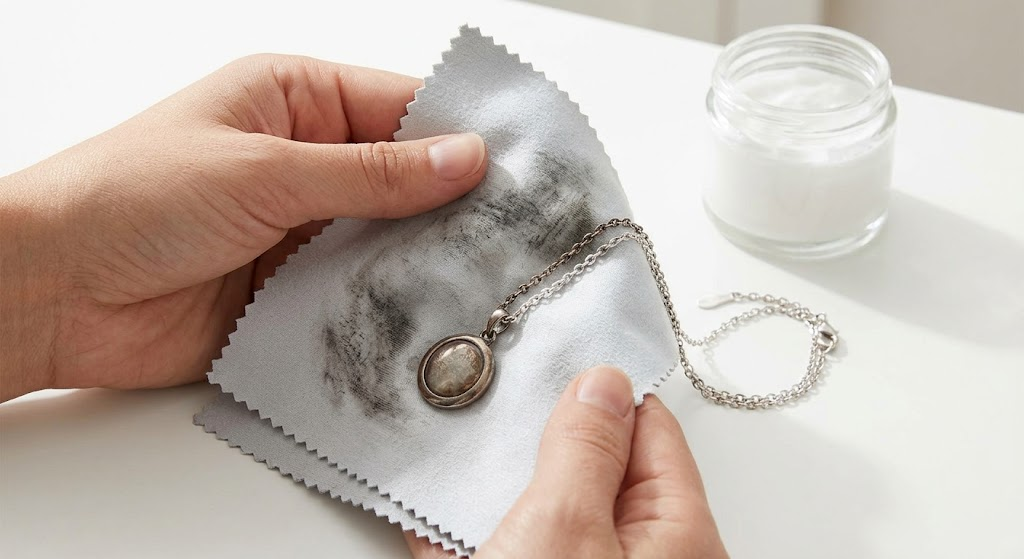
To master how to clean jewelry at home for silver, you must use a method that specifically targets oxidation and the resulting black tarnish. Silver reacts with sulfur in the air, creating a layer of silver sulfide that requires more than just soap and water to remove.
How do you remove tarnish?
Think about it: silver tarnishes the moment it is exposed to the atmosphere, meaning your necklaces need regular attention. For light tarnish, a silver polishing cloth is your best friend, as it contains specialized cleaners that lift oxidation.
- Use a dedicated polishing cloth.
- Rub in straight-line motions.
- Avoid circular rubbing patterns.
But here’s the kicker: for heavy tarnish, a paste made of baking soda and water can be applied gently to lift the dark film. Always rinse silver thoroughly to ensure no abrasive particles remain in the detailed engravings of the piece.
Key Takeaway: Silver requires specific anti-tarnish tools or baking soda pastes to neutralize the oxidation that causes darkening.
| Method | Intensity | Best For | |
|---|---|---|---|
| Polishing Cloth | Light | Weekly maintenance | |
| Baking Soda Paste | Heavy | Restoring old pieces |
Using the right chemical reaction is the only way to effectively strip away tarnish without damaging the underlying sterling silver.
How to clean jewelry at home: Gemstones?
Identifying stone hardness is the most critical part of learning how to clean jewelry at home for diamond or gemstone pieces. While hard stones like diamonds can handle a bit of scrubbing, soft or porous stones require a much more delicate touch.
Are all stones treated the same?
The truth is: diamonds are incredibly durable and can be soaked to remove the oils that dim their fire. However, once you clean your pendants, storing them in a padded necklace box prevents the stones from scratching each other during storage.
- Soak diamonds for 20 minutes.
- Scrub the pavilion (bottom).
- Use a lint-free cloth for drying.
But here’s the kicker: porous stones like opals or turquoise should never be submerged in water because they can absorb liquids and discolor. Instead, use a damp cloth to wipe the surface and dry them immediately to protect their internal structure.
Key Takeaway: Hard stones benefit from soaking and light scrubbing, while porous stones should only be wiped with a damp cloth.
| Stone Category | Example | Cleaning Rule | |
|---|---|---|---|
| Hard Stones | Diamond, Sapphire | Soak and scrub | |
| Porous Stones | Opal, Turquoise | Wipe only; no soak |
Tailoring your technique to the specific gemstone ensures you enhance its beauty without causing internal fractures or discoloration.
How to clean jewelry at home: Pearls?
Learning how to clean jewelry at home for pearls requires a “less is more” strategy that avoids all immersion and chemical exposure. Pearls are organic gems created by living organisms, making them highly susceptible to acids and dehydration.
Why are pearls so delicate?
Look: even the mildest dish soap can be too harsh for the delicate nacre of a pearl if used frequently. To keep them pristine, always follow the “last on, first off” rule to prevent contact with makeup and perfume.
- Use a soft, damp cloth.
- Wipe each pearl individually.
- Lay flat to dry on a towel.
Believe it or not, hanging a wet pearl necklace to dry can stretch the silk thread and lead to breakage. Always ensure they are completely dry before returning them to their storage pouch to prevent mold or thread rot.
Key Takeaway: Pearls must never be submerged or exposed to chemicals; a simple wipe with a damp cloth is all they need.
| Material | Concern | Safe Method | |
|---|---|---|---|
| Pearl Nacre | Chemical erosion | Damp cloth wipe | |
| Silk Thread | Stretching/Rot | Lay flat to dry |
Organic materials require a specialized, non-invasive approach to maintain their natural luster and structural strength over time.
How to clean jewelry at home using vinegar?
A solution of white vinegar and salt is a powerful way to understand how to clean jewelry at home when dealing with stubborn metal tarnish. Vinegar is an acetic acid that can dissolve mineral deposits and oxidation, leaving gold and silver looking brand new.
Is vinegar safe for metals?
Think about it: vinegar is a natural cleaner, but its acidic nature means you must limit the exposure time for your jewelry. If you are unsure about the safety of your specific piece, it is wise to contact a professional for a consultation.
- Mix 1/2 cup vinegar with salt.
- Soak for only a few minutes.
- Rinse very thoroughly with water.
But here’s the kicker: you should never use vinegar on pearls or soft stones like emeralds as the acid will eat away at the gemstone itself. Only use this method for solid metal pieces or those with very hard, non-porous stones.
Key Takeaway: Vinegar is an excellent acid-based cleaner for metals but is dangerous for organic and soft gemstones.
| Cleaner | Compatibility | Risk | |
|---|---|---|---|
| White Vinegar | Gold, Silver | Acidic damage | |
| Salt | Heavy tarnish | Abrasive if not dissolved |
Using household acids like vinegar requires caution and a deep understanding of the materials to avoid irreversible surface damage.
How to clean jewelry at home: Avoid risks?
You must understand how to clean jewelry at home by knowing which common household chemicals can destroy your precious items. Many “hacks” found online suggest using substances that are far too aggressive for the delicate alloys used in modern jewelry.
Which chemicals are dangerous?
Believe it or not: bleach and chlorine are the enemies of gold, as they can actually break down the metal structure and cause it to become brittle. Avoid these at all costs, especially when cleaning around the house or swimming in a pool.
- Avoid chlorine and bleach.
- Never use acetone on gems.
- Skip abrasive toothpastes.
The truth is: even boiling water can be a major risk, as the thermal shock can cause gemstones with internal inclusions to shatter instantly. Always stick to lukewarm temperatures to ensure the physical stability of your rings and necklaces.
Key Takeaway: Avoid harsh industrial chemicals, boiling water, and abrasive pastes to prevent structural failure or discoloration.
| Dangerous Agent | Target | Effect | |
|---|---|---|---|
| Chlorine/Bleach | Gold Alloys | Brittleness/Breakage | |
| Boiling Water | Gemstones | Thermal shock cracking |
Protecting your jewelry from high-risk chemicals is just as important as the cleaning process itself for long-term durability.
How to clean jewelry at home: Best tools?
Selecting the right tools is the final step in how to clean jewelry at home effectively without leaving unsightly marks. Using improper tools like paper towels or stiff brushes can dull the finish of your jewelry over time.
Which brush is best?
Look: a standard medium or hard toothbrush is far too abrasive for jewelry and will leave tiny scratches on the metal’s surface. Always opt for a “baby” toothbrush or a brush specifically designed for jewelry with extra-soft bristles.
- Use extra-soft bristles only.
- Employ a microfiber cloth.
- Use a wooden toothpick for dirt.
But here’s the kicker: a wooden toothpick is a secret weapon for gently dislodging compacted dirt from the tiny gaps between a stone and its metal prongs. This allows you to reach the most difficult areas without the risk of scratching the stone or the setting.
Key Takeaway: Specialized soft brushes and microfiber cloths are the only tools that should touch your precious jewelry surfaces.
| Tool | Benefit | Best For | |
|---|---|---|---|
| Baby Toothbrush | Ultra-soft cleaning | Intricate settings | |
| Microfiber Cloth | Lint-free drying | Final buffing |
Investing in a few low-cost, high-quality tools will significantly improve the results of your home maintenance routine.
Frequently Asked Questions (FAQ)
Can I clean my jewelry with toothpaste?No, you should never use toothpaste because it contains abrasive silica that can permanently scratch gold, silver, and soft gemstones.
What’s the best way to clean a diamond ring?The most effective method is soaking the ring in warm soapy water for twenty minutes and then gently brushing the underside of the diamond.
Can I use ammonia for all my jewelry?No, ammonia is a judgment call that should only be used for diamonds and gold, as it can damage silver and organic gems like pearls.
Can I use boiling water to sanitize my rings?No, boiling water is dangerous because the extreme heat can cause gemstones like emeralds to crack or loosen from their settings.
What’s the best frequency for home cleaning?Cleaning your jewelry once every two weeks is the ideal frequency to prevent the heavy buildup of oils and keep your pieces sparkling.
Conclusion
Restoring the brilliance of your collection is a simple yet rewarding task when you follow the correct procedures. By applying these expert tips on how to clean jewelry at home, you ensure that your treasures remain as luminous as the day you first wore them. Remember that safe cleaning is only half the battle; proper storage in premium packaging is essential to prevent future tarnish. For more professional advice on jewelry care and customized packaging solutions, please contact us today . Our vision is to empower every jewelry lover with the knowledge and tools to protect their most meaningful investments for a lifetime.