
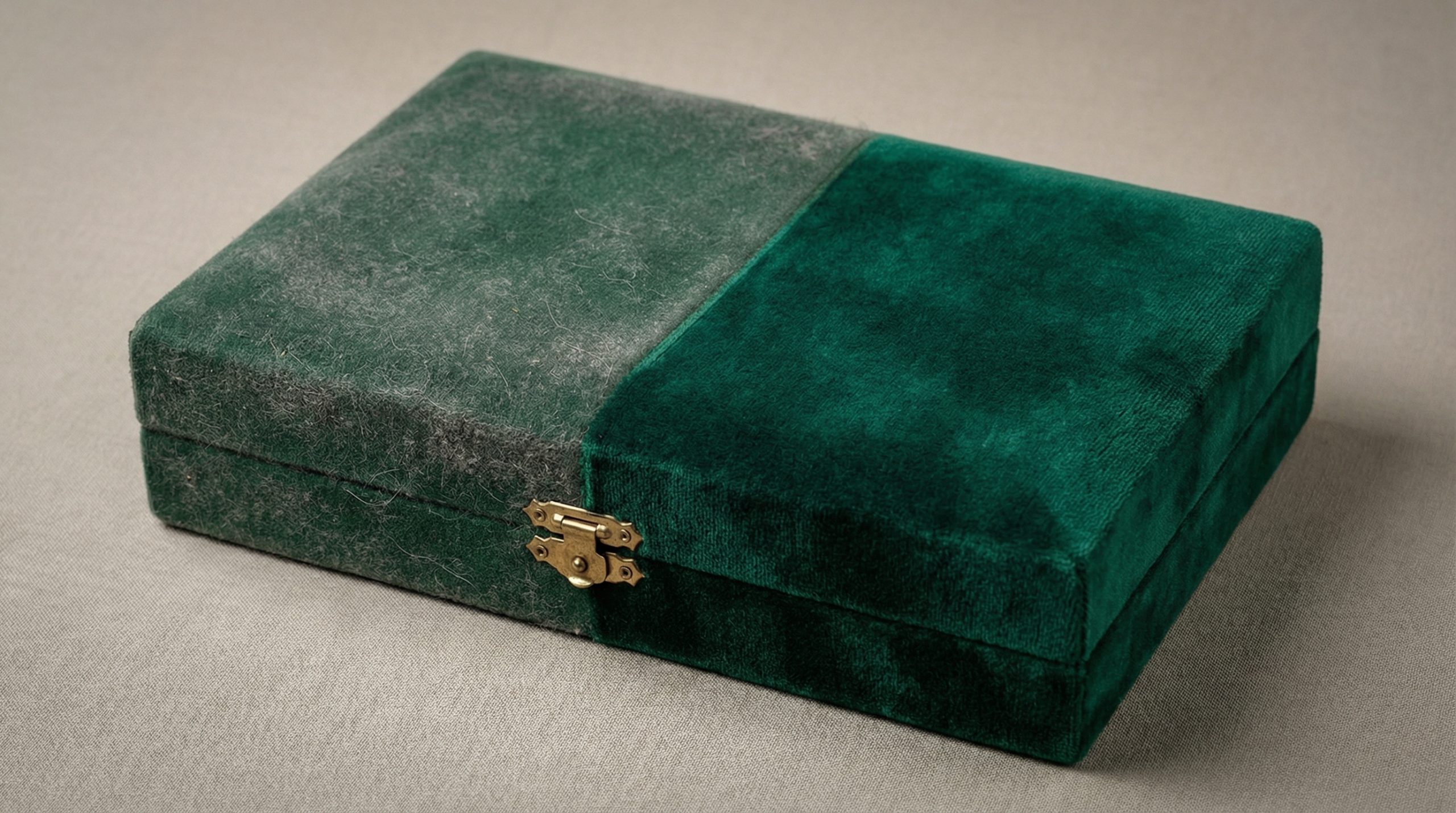
To effectively restore your storage, you must use a soft-bristled brush to remove surface dust and a gentle blotting technique with mild detergent for deeper stains. It is heartbreaking to see a once-vibrant velvet box become a magnet for unsightly lint, oils, and grime that dull its luxurious sheen. If you ignore these accumulations, the abrasive particles can eventually scratch your delicate gemstones and tarnish your precious metals. Fortunately, this definitive guide on how to clean velvet jewelry box will show you exactly how to preserve your box’s elegance while ensuring your treasures remain in a pristine environment.
Why does your velvet box need special care?
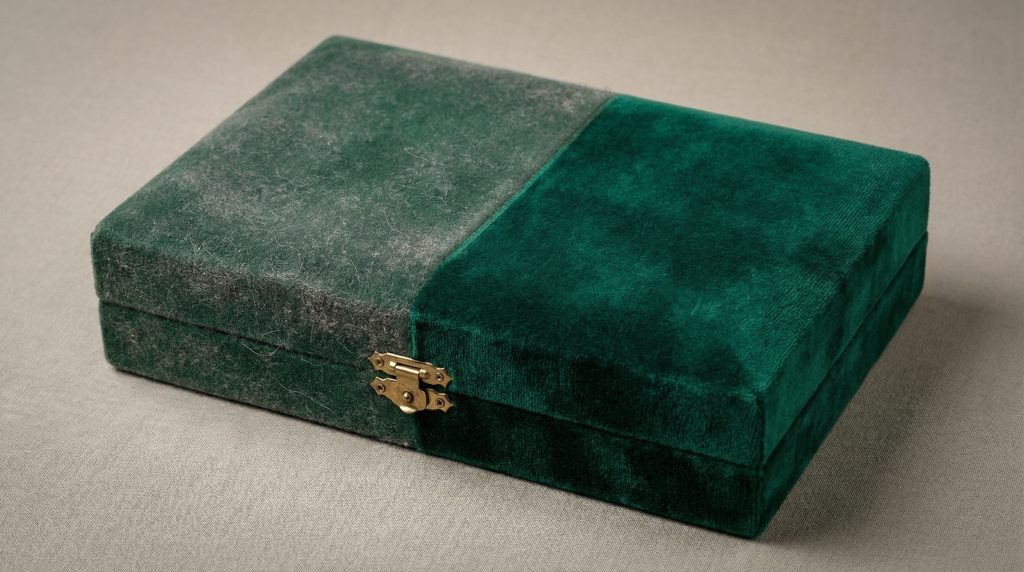
Velvet is a plush, delicate fabric that traps atmospheric pollutants and skin oils within its dense fibers, making specialized maintenance essential. Understanding how to clean velvet jewelry box surfaces prevents the fibers from matting down and losing their signature shimmer. Because velvet is often adhered to structural cardboard or wood, using the wrong liquids can cause the entire box to warp or the adhesive to fail. You must treat this material with the same reverence you show for the high-end jewelry stored inside.
Is the fabric prone to permanent damage?
The short answer is yes, as aggressive scrubbing can create “bald spots” where the delicate pile is permanently ripped away from the backing. You must avoid any cleaning method that involves rough friction or harsh industrial chemicals.
- Velvet fibers are easily crushed.
- Matting occurs when oils saturate the pile.
- Bald spots cannot be repaired.
- UV light causes rapid color fading.
Here is the kicker: even the humidity in your room can affect how the velvet sits. You should always prioritize dry cleaning methods before introducing any form of moisture to the fabric surface.
Can dust actually harm your jewelry?
Dust is not just a cosmetic issue; it often contains microscopic abrasive particles that can wear down the finish of soft metals like gold. When you learn how to clean velvet jewelry box interiors, you are essentially creating a safer sanctuary for your collection.
- Dust acts as an abrasive.
- Particles can clog intricate filigree.
- Debris traps moisture against metals.
- Clean velvet reflects light better.
The truth is, a dirty box can lead to more frequent polishing sessions for your rings and necklaces. Keeping the storage environment clean is the first step in a holistic jewelry care routine.
Why is the nap direction so important?
The “nap” refers to the specific direction the velvet fibers lay, which dictates how the fabric reflects light and feels to the touch. You will notice that brushing against the grain creates a darker, textured look, while brushing with it restores the smooth glow.
- Brushing against the grain lifts dirt.
- Brushing with the grain restores shine.
- Consistent direction prevents clumping.
- Proper nap maintenance extends box life.
But wait, there is more to it than just aesthetics. Maintaining the nap ensures that the fabric remains soft enough to prevent micro-scratches on polished silver and platinum surfaces.
Key Takeaway: Velvet requires a “less is more” approach where dry, gentle techniques are prioritized over wet, aggressive cleaning to protect both the fabric and the jewelry.
| Care Factor | Impact Level | Recommended Tool | |
|---|---|---|---|
| Dust Removal | High | Soft Makeup Brush | |
| Stain Treatment | Moderate | Distilled Water/Soap | |
| Nap Restoration | High | Velvet Brush | |
| Scent Control | Low | Baking Soda |
A proactive maintenance schedule ensures that your luxury packaging remains a functional and beautiful asset for your brand or personal collection.
What materials are required for cleaning?
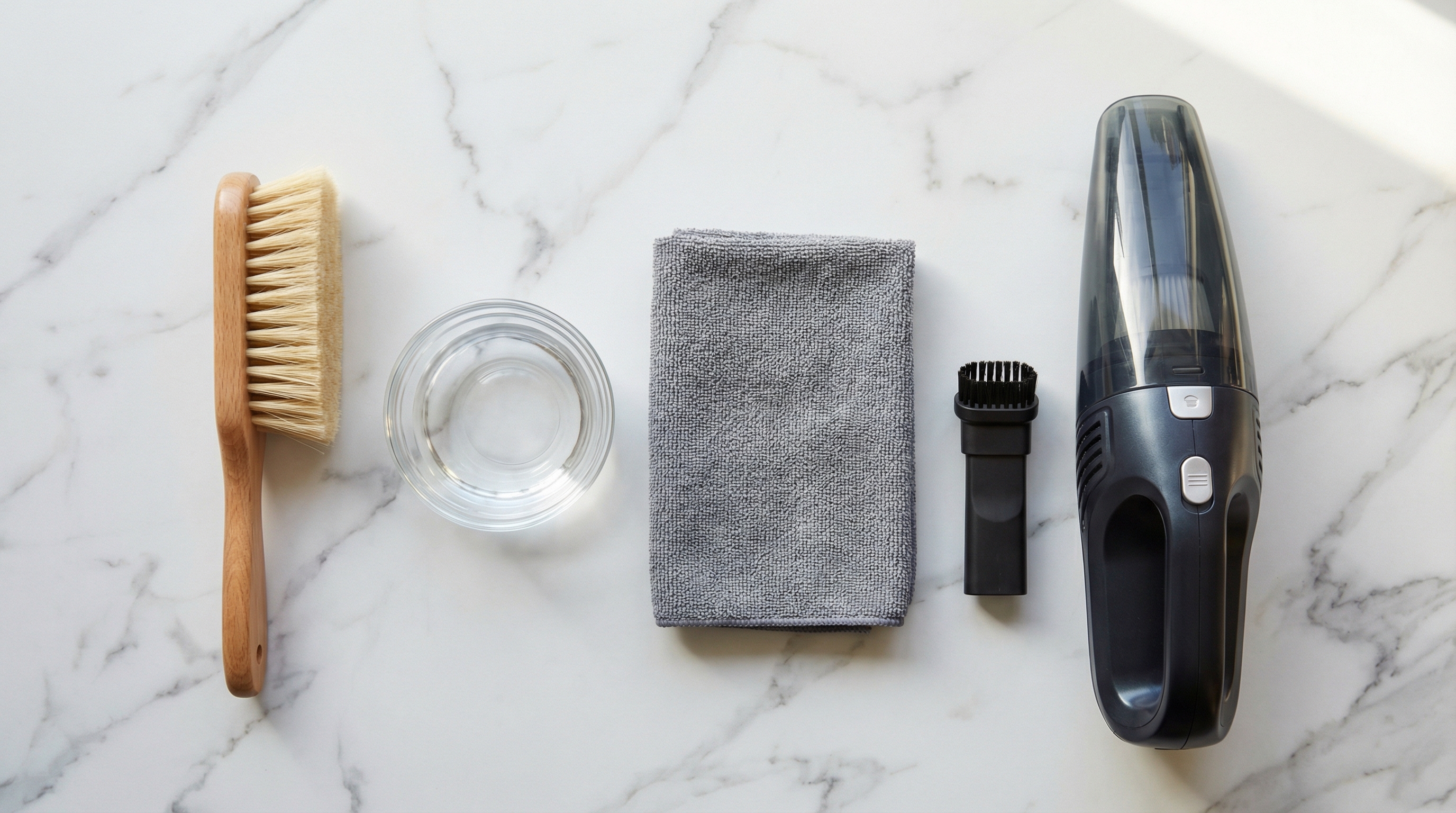
The core materials needed for how to clean velvet jewelry box include a soft-bristled brush, distilled water, a gentle dish soap, and high-quality microfiber cloths. Using the right tools is 90% of the battle, as household items like paper towels can leave behind even more lint. You should assemble a dedicated cleaning kit to ensure you never accidentally use a brush contaminated with household oils. Preparation is the key to achieving a showroom-quality finish without risking structural damage.
Why use distilled water over tap?
Tap water contains minerals and chlorine that can leave unsightly white rings or “water spots” once the fabric dries. You should always opt for distilled or deionized water to ensure a residue-free cleaning process.
- Distilled water lacks minerals.
- It prevents crusty residue.
- It reduces the risk of bleaching.
- Distilled water is safer for dyes.
Believe it or not, the microscopic minerals in tap water can actually harden the velvet fibers over time. Switching to distilled water is a small change that makes a massive difference in the long-term softness of the box.
Are all brushes safe for velvet?
You must avoid any brush with stiff nylon or plastic bristles, as these can snag the delicate loops of the fabric. Instead, you should search for brushes made from soft natural hair, such as goat hair or high-quality synthetic makeup brushes.
- Goat hair brushes are ideal.
- Makeup powder brushes work well.
- Avoid stiff upholstery brushes.
- Check for loose bristles before starting.
It gets better: a clean, unused soft-bristled toothbrush can be perfect for reaching into the narrow ring slots that larger brushes might miss. Just ensure the bristles are “soft” or “extra-soft” to prevent surface abrasion.
What soap is best for spot cleaning?
You should look for a pH-neutral, clear dish soap or a specialized delicate fabric wash that does not contain added dyes or perfumes. When you are determining how to clean velvet jewelry box stains, the simplicity of the detergent is your greatest protection.
- Clear soaps prevent staining.
- pH-neutral formulas protect fibers.
- Avoid bleach or ammonia.
- Minimal foam is easier to rinse.
The secret is to use only a tiny drop. You are creating a very dilute solution, as too much soap will leave a sticky residue that attracts even more dust in the future.
Key Takeaway: Professional results depend on using mineral-free water and soft, natural brushes that lift debris without disturbing the structural integrity of the velvet.
| Material | Required Quality | Purpose | |
|---|---|---|---|
| Distilled Water | High Purity | Prevents mineral spots | |
| Dish Soap | pH-Neutral/Clear | Dissolves oils safely | |
| Microfiber Cloth | Lint-Free | Blotting and drying | |
| Brush | Soft Natural Hair | Dusting and nap lifting |
Investing in these specific supplies will save you money in the long run by preventing the need to replace expensive custom boxes due to cleaning errors.
How do you properly remove surface dust?
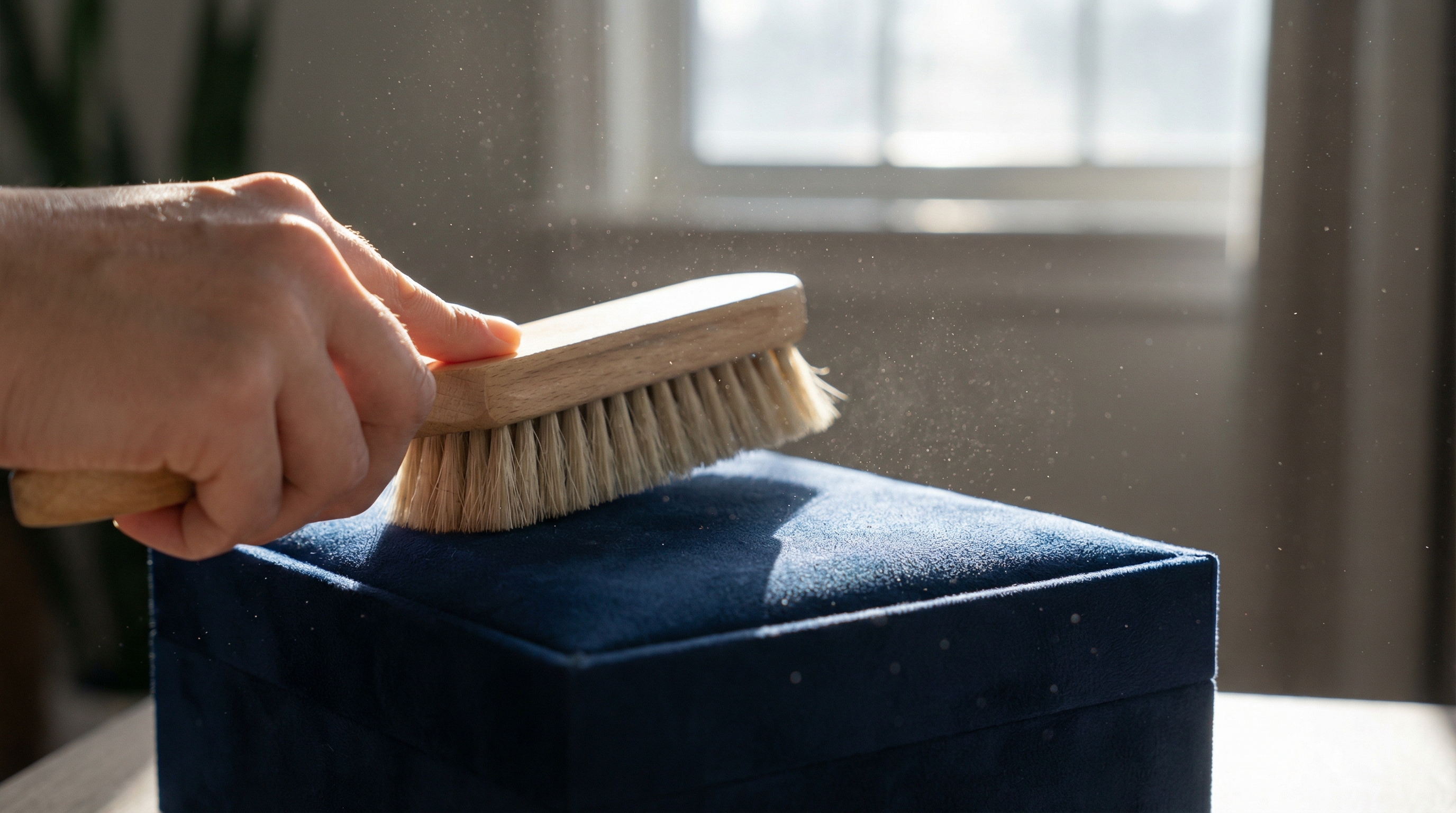
To remove surface dust effectively, you should use a soft-bristled brush in long, sweeping motions following a single direction to lift particles without burying them deeper. Regular dusting is the most important part of how to clean velvet jewelry box accessories because it prevents the buildup of abrasive grime. You should perform this light maintenance at least once a month, or whenever you notice the color of the velvet starting to look slightly muted. This simple step keeps the plush exterior looking vibrant and prevents long-term fiber matting.
Can you use a vacuum cleaner?
Yes, you can use a vacuum, but only if it features a soft brush attachment and is set to the lowest possible suction level. You must be extremely careful not to let the hard plastic of the nozzle touch the velvet directly.
- Use the lowest suction setting.
- Always use the brush attachment.
- Hold the nozzle slightly above.
- Work from top to bottom.
Best of all, a vacuum can pull out hidden dust from deep within the necklace hooks and corner seams that a manual brush might miss. It is the fastest way to refresh a large collection of boxes.
How do you handle stubborn lint?
Sometimes, tiny fibers or pet hair become entwined in the velvet and refuse to move even with a brush. In these cases, you can use a small piece of low-tack painter’s tape or a dedicated lint roller designed for delicate clothes.
- Use low-tack tape only.
- Dab gently; never rub.
- Avoid high-tack packing tape.
- Roll in one consistent direction.
The truth is, high-tack adhesives can pull the velvet fibers right out of the backing. Always test the tape on the bottom of the box first to ensure it doesn’t leave a sticky residue behind.
Should you brush in a specific pattern?
You should always start by brushing against the grain to lift the dust, and then finish by brushing with the grain to smooth everything over. This “two-step” technique is a staple of how to clean velvet jewelry box protocols used by professional archivists.
- Against the grain lifts dust.
- With the grain restores luster.
- Use long, fluid strokes.
- Avoid circular scrubbing motions.
But wait, there is more: pay close attention to the edges and seams. Dust tends to settle in the “valleys” of the box construction, so spend an extra moment detail-brushing those specific areas.
Key Takeaway: Dry dusting with a soft brush or low-suction vacuum is a safe, non-invasive way to maintain the box’s appearance and protect the contents from abrasive debris.
| Cleaning Tool | Best For | Caution Level | |
|---|---|---|---|
| Handheld Vacuum | Deep dust removal | High (Suction risk) | |
| Makeup Brush | Detail/Slot cleaning | Low (Very safe) | |
| Lint Roller | Pet hair/Stubborn lint | Medium (Adhesive risk) | |
| Microfiber Duster | Quick surface wipe | Low (Daily use) |
Consistently removing surface particles is the most effective way to ensure your velvet storage remains soft to the touch and visually stunning for years.
What is the best way to treat stains?
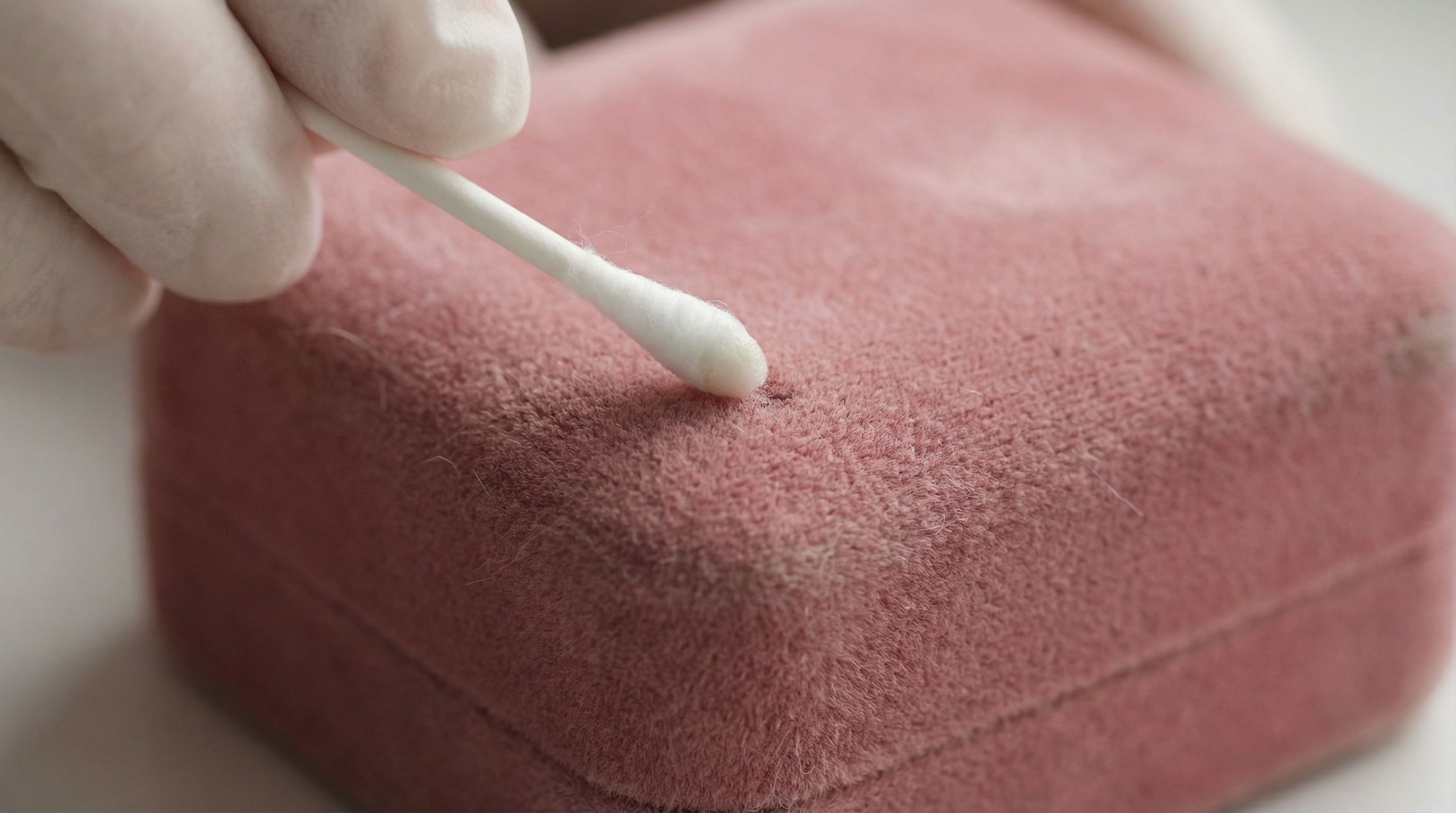
The best way to treat stains involves using a damp cotton swab and a blotting motion to lift the contaminant away from the fibers without saturating the backing. Mastering how to clean velvet jewelry box stains requires patience and a “less is more” approach with moisture. You must never rub the stain, as this forces the liquid deeper into the structure and can lead to permanent fiber distortion. If a spill happens, acting quickly is your best defense against a permanent mark on your luxury storage.
How do you mix the cleaning solution?
You should mix one drop of mild detergent into a cup of warm distilled water until a few light suds appear on the surface. You do not want a thick, soapy foam; rather, you need “conditioned” water that can break down oils.
- Use one drop of soap.
- Warm water dissolves oils faster.
- Stir gently to avoid bubbles.
- Only dip the tip of the swab.
Here is the kicker: if the solution is too concentrated, it will leave a stiff patch on the velvet once it dries. If you can feel a “crunchy” texture after cleaning, you used too much soap.
What is the proper blotting technique?
You should press the damp swab or cloth directly onto the stain and lift it straight up, repeating this process with a clean section of the tool each time. This vertical movement pulls the stain up into the absorbent material.
- Press vertically, never horizontally.
- Use a fresh swab frequently.
- Work from the outside in.
- Check for color transfer often.
The truth is, working from the center of a stain outward will only spread the mark. By starting at the edges, you contain the mess and prevent the liquid from creating a larger water ring.
Can you use specialized velvet cleaners?
There are commercial velvet upholstery cleaners available, but you must ensure they are safe for the specific type of velvet (silk, cotton, or synthetic) used in your box. You should always perform a patch test on a hidden area, like the bottom or the inside of a flap.
- Check the ingredient list.
- Avoid solvent-based cleaners.
- Test for colorfastness first.
- Follow the “rinse” instructions.
Best of all, many high-end brands offer their own care kits. If you are unsure, you can learn more about our company’s dedication to quality on our about us page to see why we recommend specific gentle methods.
Key Takeaway: Spot cleaning must be done with extreme precision, using minimal moisture and a vertical blotting motion to prevent spreading the stain or damaging the box structure.
| Stain Type | Treatment Method | Success Rate | |
|---|---|---|---|
| Makeup/Powder | Dry Brush + Blot | High | |
| Oil/Fingerprints | Dilute Soap Blot | Moderate | |
| Ink/Pen Marks | Professional Cleaner | Low | |
| Water Rings | Distilled Water Mist | High |
Treating stains immediately prevents them from setting into the fibers, which is critical for maintaining a high-value brand image and protecting your investment.
Can baking soda remove stubborn odors?
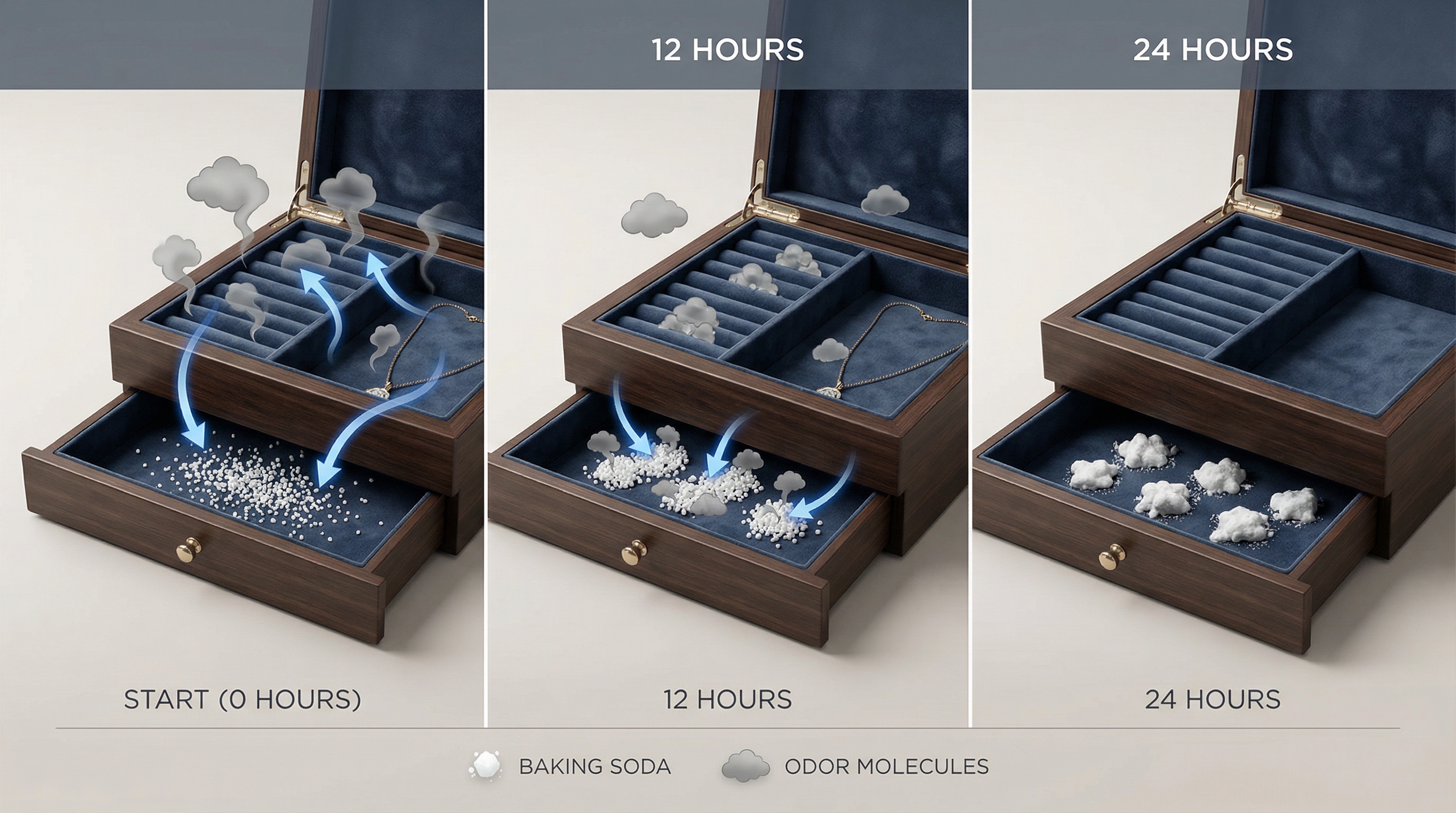
Baking soda is an excellent dry deodorizer that can neutralize musty scents or perfume buildup within the velvet lining without using harmful sprays. When considering how to clean velvet jewelry box interiors for odors, avoiding liquid fresheners is paramount to prevent mold. You can simply place an open container of baking soda inside the box or sprinkle a very fine, even layer directly onto the fabric. This method is especially effective for vintage boxes that have been stored in damp environments or drawers for many years.
How long should the baking soda sit?
You should let the baking soda dwell for at least 24 to 48 hours to allow it to fully absorb the microscopic odor molecules trapped in the pile. For very strong odors, you might need to repeat the process with a fresh batch of powder.
- 24 hours for light scents.
- 48 hours for musty odors.
- Keep the box closed during.
- Avoid moving the box around.
But wait, there is more: if the odor is particularly stubborn, you can place the jewelry box inside a larger sealed container with a bowl of baking soda next to it. This creates a “deodorizing chamber” that works on the exterior and interior simultaneously.
What is the safest removal method?
You must use a low-suction vacuum with a brush attachment to remove every speck of the powder once the time is up. Any leftover baking soda can act as an abrasive or turn into a paste if it ever gets damp later.
- Use a soft brush attachment.
- Vacuum in multiple directions.
- Use a clean brush for corners.
- Wipe with a dry microfiber cloth.
It gets better: the baking soda actually helps lift some of the deep-seated dust as it is vacuumed away. You will likely notice that the velvet looks slightly brighter after this “dry shampoo” treatment.
Are there alternatives to baking soda?
If you are worried about the mess of loose powder, you can use activated charcoal sachets or cedar blocks placed inside the box for a few days. These are excellent for those who want to know how to clean velvet jewelry box odors without any risk of residue.
- Activated charcoal is very effective.
- Cedar provides a natural scent.
- Avoid strong floral sachets.
- Silica gel helps with mustiness.
The truth is, perfumes and floral sachets only mask odors. Baking soda and charcoal actually remove the odor molecules from the environment, providing a much cleaner and healthier storage space for your jewelry.
Key Takeaway: Baking soda is a safe, dry method for neutralizing odors, but it must be completely vacuumed out to prevent abrasive damage or future residue issues.
| Deodorizer | Method | Best For | |
|---|---|---|---|
| Baking Soda | Direct Sprinkle | Deep fabric odors | |
| Charcoal Sachet | Placement Inside | Gentle air freshening | |
| Cedar Block | Placement Inside | Repelling pests/Musty smells | |
| Silica Gel | Placement Inside | Moisture-related odors |
Managing the scent of your jewelry storage is just as important as the visual appeal, as it contributes to the overall “luxury feel” of your collection.
How do you clean the interior slots?
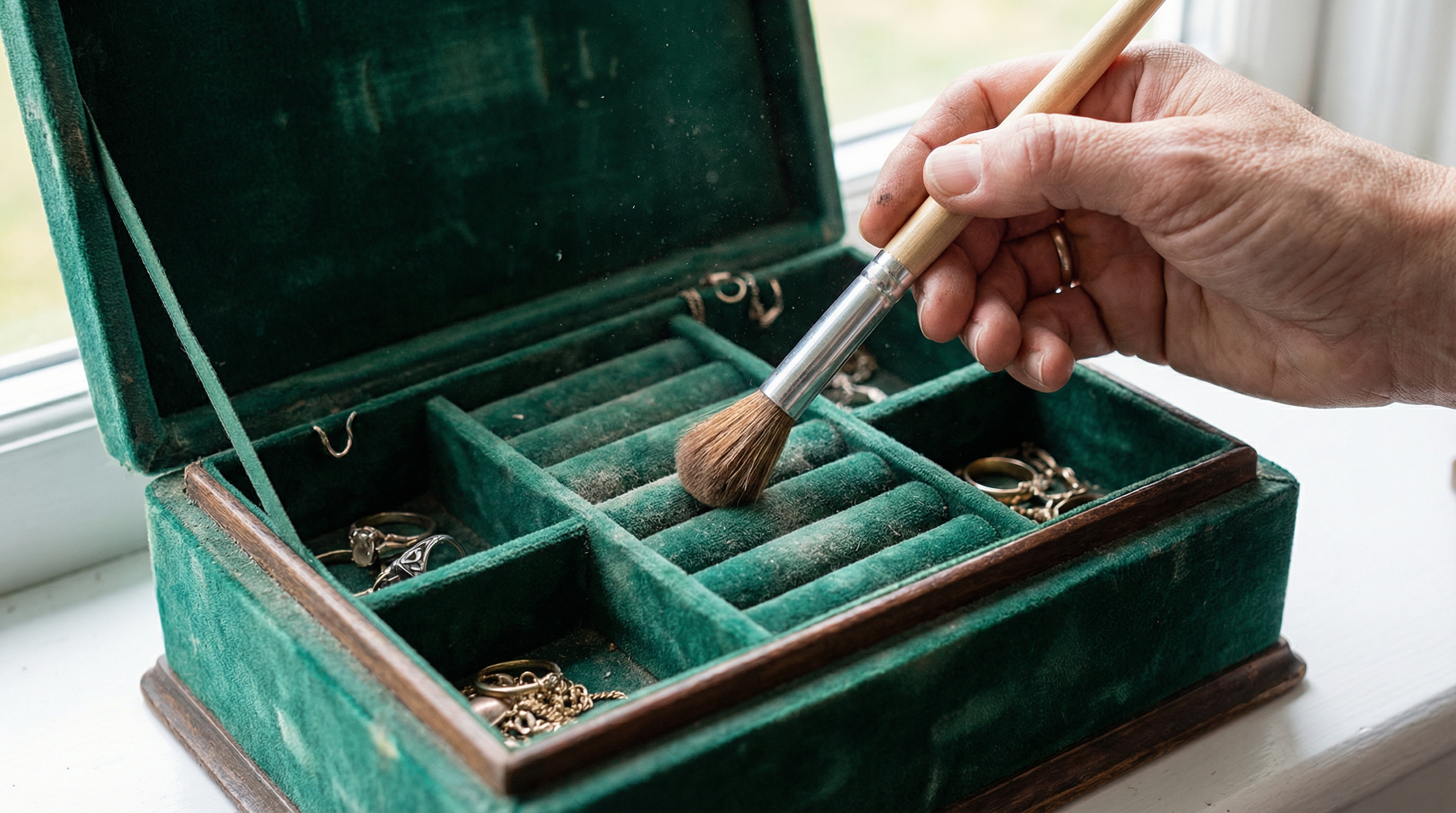
To clean the narrow interior slots, you should use a fine-tip cotton swab or a very soft detail brush to reach into the crevices where dust and jewelry filings accumulate. When you are learning how to clean velvet jewelry box interiors, the difficulty lies in the tight spaces designed for rings and earrings. You must be extremely gentle to avoid bending the internal foam or cardboard structure. Keeping these slots clean ensures that your jewelry doesn’t sit in a bed of abrasive metal dust that can scratch polished surfaces.
How do you remove debris from ring rolls?
You should run a soft brush along the length of the rolls to loosen any trapped particles, and then use a vacuum to suck them out. If the rolls are particularly tight, a piece of folded painter’s tape can be inserted and moved side-to-side.
- Brush along the roll length.
- Use narrow vacuum attachments.
- Painter’s tape picks up lint.
- Check for small earring backs.
Here is the kicker: small jewelry pieces like butterfly backs can get lost in the deep pile of the rolls. Cleaning these areas thoroughly ensures you don’t accidentally scratch a ring with a hidden piece of metal.
Is it safe to clean necklace hooks?
You should use a dry, soft-bristled brush to sweep around the hooks, as moisture can cause metal hooks to rust or the velvet around them to discolor. If the hooks are tarnished, you should clean them separately with a polishing cloth.
- Keep the area bone dry.
- Use detail brushes for corners.
- Wipe hooks with a silver cloth.
- Avoid snagging the velvet fibers.
The secret is to support the back of the box while cleaning the hooks. Many velvet boxes have a thin lid structure, and applying too much pressure can cause the hinges to weaken or the lid to snap.
How do you handle deep corner grime?
You can use a wooden toothpick wrapped in a tiny amount of lint-free cloth to “fish out” the grime that collects in the 90-degree angles of the box. This specialized part of how to clean velvet jewelry box maintenance ensures a professional, high-end look.
- Toothpicks provide precision.
- Wrap cloth tightly to avoid lint.
- Dampen cloth slightly if needed.
- Work with a magnifying glass.
But wait, there is more: if the corners are particularly dirty, it might be a sign that you need a more protective storage solution, such as a high-quality jewelry pouch for individual pieces inside the box.
Key Takeaway: Interior cleaning requires specialized small tools like cotton swabs and toothpicks to reach tight spaces without damaging the internal structure or padding.
| Interior Feature | Cleaning Tool | Difficulty Level | |
|---|---|---|---|
| Ring Slots | Tape / Cotton Swab | Medium | |
| Necklace Hooks | Polishing Cloth / Brush | Low | |
| Hidden Pockets | Vacuum / Tweezers | High | |
| Removable Trays | Full Microfiber Wipe | Low |
Detailing the interior of your box not only looks better but also protects the integrity of your jewelry by removing metallic filings and abrasive dust.
Is moisture safe for velvet linings?
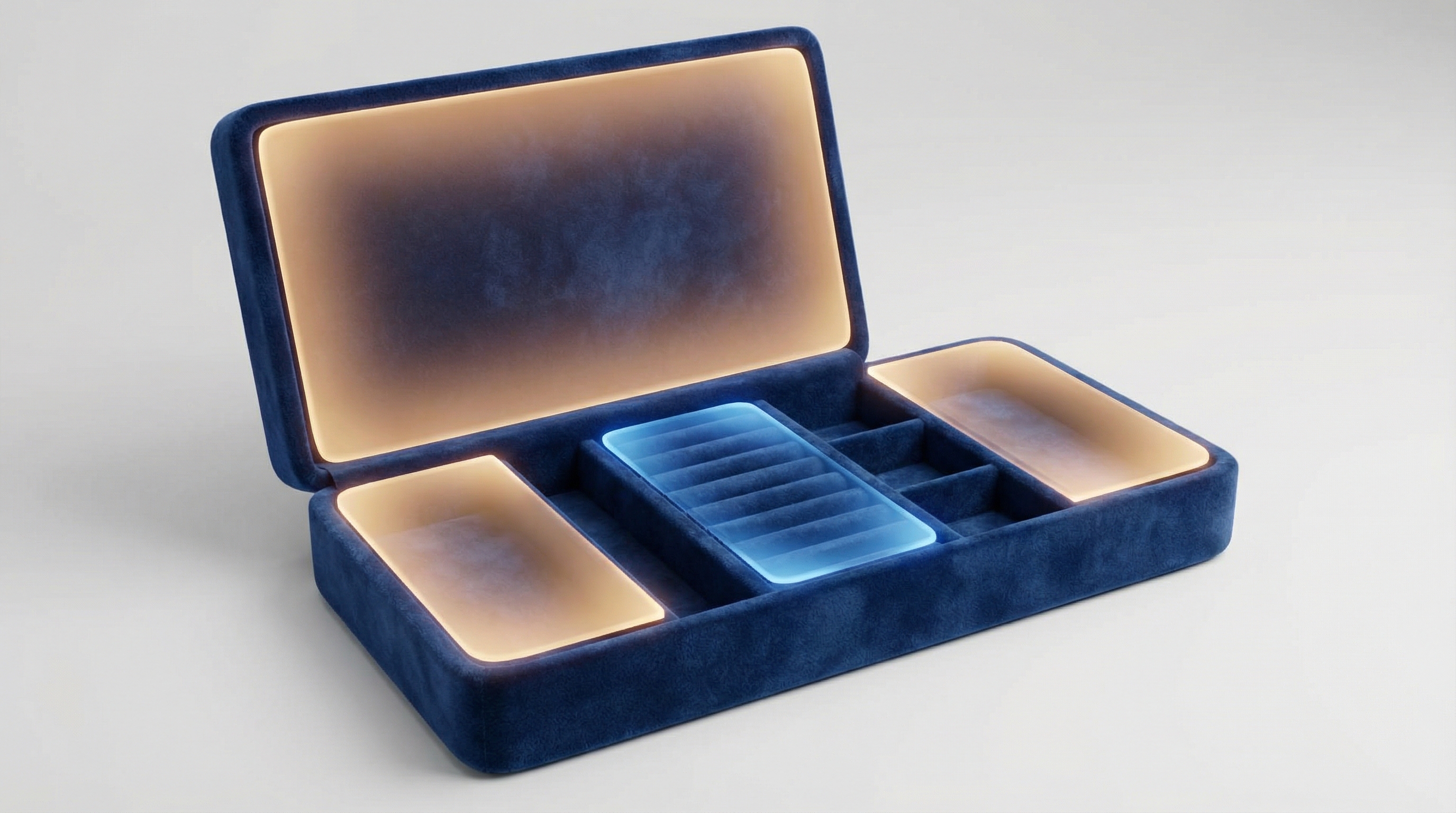
Moisture is generally unsafe for velvet linings because it can cause the fabric to shrink, the colors to bleed, and the underlying adhesive to lose its bond. When determining how to clean velvet jewelry box components, you should treat liquid as a final resort for permanent stains. Excessive water can also seep into the structural cardboard, causing the box to lose its shape or develop a “bubbled” appearance. You must always prioritize “dry” cleaning methods and only use a damp tool when absolutely necessary for spot treatment.
What happens if the box gets too wet?
If the velvet becomes saturated, the fibers will clump together and may never return to their original plush state, even after drying. Furthermore, moisture trapped in the padding is a breeding ground for mold and mildew.
- Fibers clump and mat down.
- Cardboard structure warps.
- Adhesive can seep through.
- Mildew creates permanent odors.
Believe it or not, a wet velvet box can actually accelerate the tarnishing of your silver jewelry. The moisture creates a humid micro-climate inside the box that reacts with the metal, ruining your collection.
How do you dry a damp spot safely?
You should always allow a velvet box to air dry in a well-ventilated, shaded area away from direct sunlight or heat sources. You should never use a hairdryer, as the high heat can melt synthetic fibers or scorch natural ones.
- Use a fan for air circulation.
- Keep out of direct sunlight.
- Never use a hairdryer/heater.
- Allow at least 24 hours to dry.
The truth is, rushing the drying process is where most people cause permanent damage. Even if the surface feels dry, the internal padding might still be damp, so give it plenty of time before putting jewelry back in.
Is steam a better alternative?
You can use a very light mist of steam from a distance to help “re-fluff” crushed velvet, but you must be careful not to let large droplets form on the fabric. Steam should only be used as a finishing touch, not a primary cleaning agent.
- Hold steamer 12 inches away.
- Move the steamer constantly.
- Brush immediately after steaming.
- Avoid the structural seams.
Best of all, steaming can help you understand how to clean velvet jewelry box areas that have become “crushed” by heavy rings or necklaces. The light heat and moisture relax the fibers so they can be brushed back into their upright position.
Key Takeaway: Moisture should be used sparingly and only with distilled water to prevent structural warping, fiber matting, or mineral staining.
| Moisture Level | Recommended Use | Risk Factor | |
|---|---|---|---|
| Bone Dry | Routine dusting | None | |
| Mist (Steam) | Fluffing crushed pile | Moderate | |
| Damp (Blot) | Spot stain removal | High | |
| Saturated | None (Avoid) | Critical (Structural loss) |
By strictly controlling the amount of liquid used, you ensure that the velvet remains soft and the box remains structurally sound for a lifetime of use.
How do you restore the velvet’s texture?
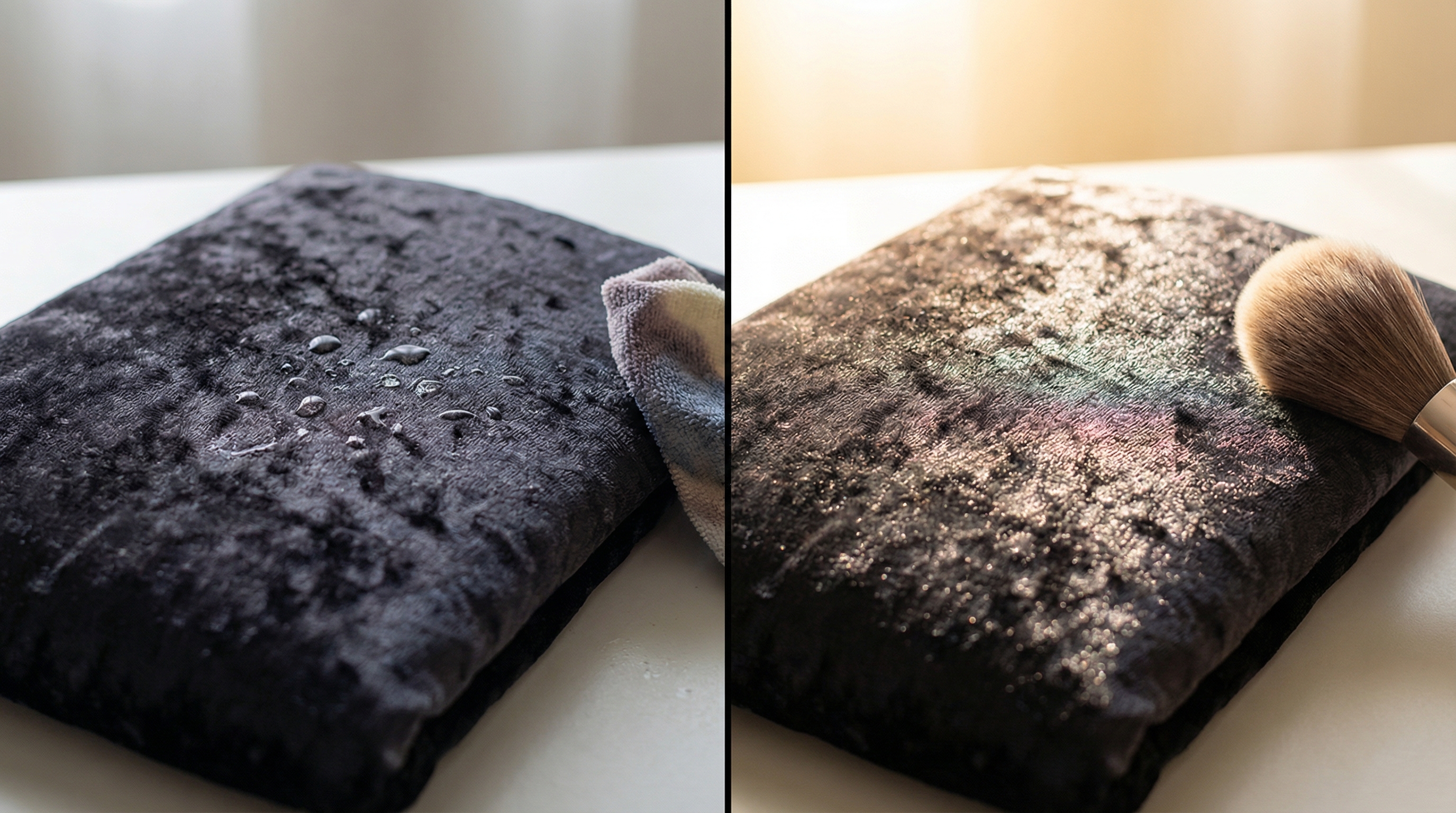
Restoring the velvet’s texture involves brushing the fibers back into their original nap direction once the fabric is completely dry. This is a critical step in how to clean velvet jewelry box maintenance because it brings back the fabric’s signature shimmer and soft hand-feel. You should use a soft-bristled brush and work in short, light strokes to “tease” the fibers back into an upright position. If your box has developed flat patches from heavy jewelry, this restoration process can make it look brand new again.
What is the best brush for restoration?
A dedicated velvet brush or a high-quality goat hair brush is ideal for restoration because the bristles are firm enough to move the fibers but soft enough not to scratch them. You can also use a clean, dry microfiber cloth to buff the surface gently.
- Natural goat hair is best.
- Suede brushes are too harsh.
- Microfiber works for buffing.
- Always ensure the brush is clean.
But wait, there is more: if the fibers are very flat, you can use a clean, dry soft-bristled toothbrush to detail small areas. This level of precision is what differentiates a standard cleaning from a professional restoration.
How do you fix “crushed” velvet?
If a heavy piece of jewelry has left a permanent indentation, you can use a combination of light steam and gentle brushing to lift the fibers. You should brush against the indentation while the fibers are still slightly warm from the steam.
- Steam relaxes the fibers.
- Brush against the crush.
- Repeat the process twice.
- Let dry before closing the lid.
The truth is, some synthetic velvets are harder to restore than natural ones. However, a consistent brushing routine will help prevent these indentations from becoming permanent in the first place.
Should you use fabric softeners?
No, you should never use fabric softeners or conditioning sprays on velvet jewelry boxes. These products contain oils and chemicals that will leave a film on the fibers, attracting more dust and potentially damaging your jewelry.
- Conditioners leave oily residue.
- They can discolor the fabric.
- Oils attract atmospheric dust.
- Chemicals may react with metals.
It gets better: the best “conditioner” for velvet is simply a regular dusting and brushing. If you want to customize your experience further, you can learn how to customize your jewelry packaging to choose more durable velvet types from the start.
Key Takeaway: Restoring the texture is a dry process that uses soft brushes to lift the nap, ensuring the velvet retains its luxurious light-reflecting properties.
| Restoration Technique | Tool | Best For | |
|---|---|---|---|
| Nap Lifting | Goat Hair Brush | Dull/Matted surfaces | |
| Indentation Repair | Steam + Toothbrush | Crushed fibers from rings | |
| Shimmer Buffing | Microfiber Cloth | Restoring shine | |
| Corner Detailing | Fine Detail Brush | Intricate seams |
Regularly restoring the nap ensures that your box always looks its best when presented to customers or used in your personal daily routine.
Where should you store your velvet box?
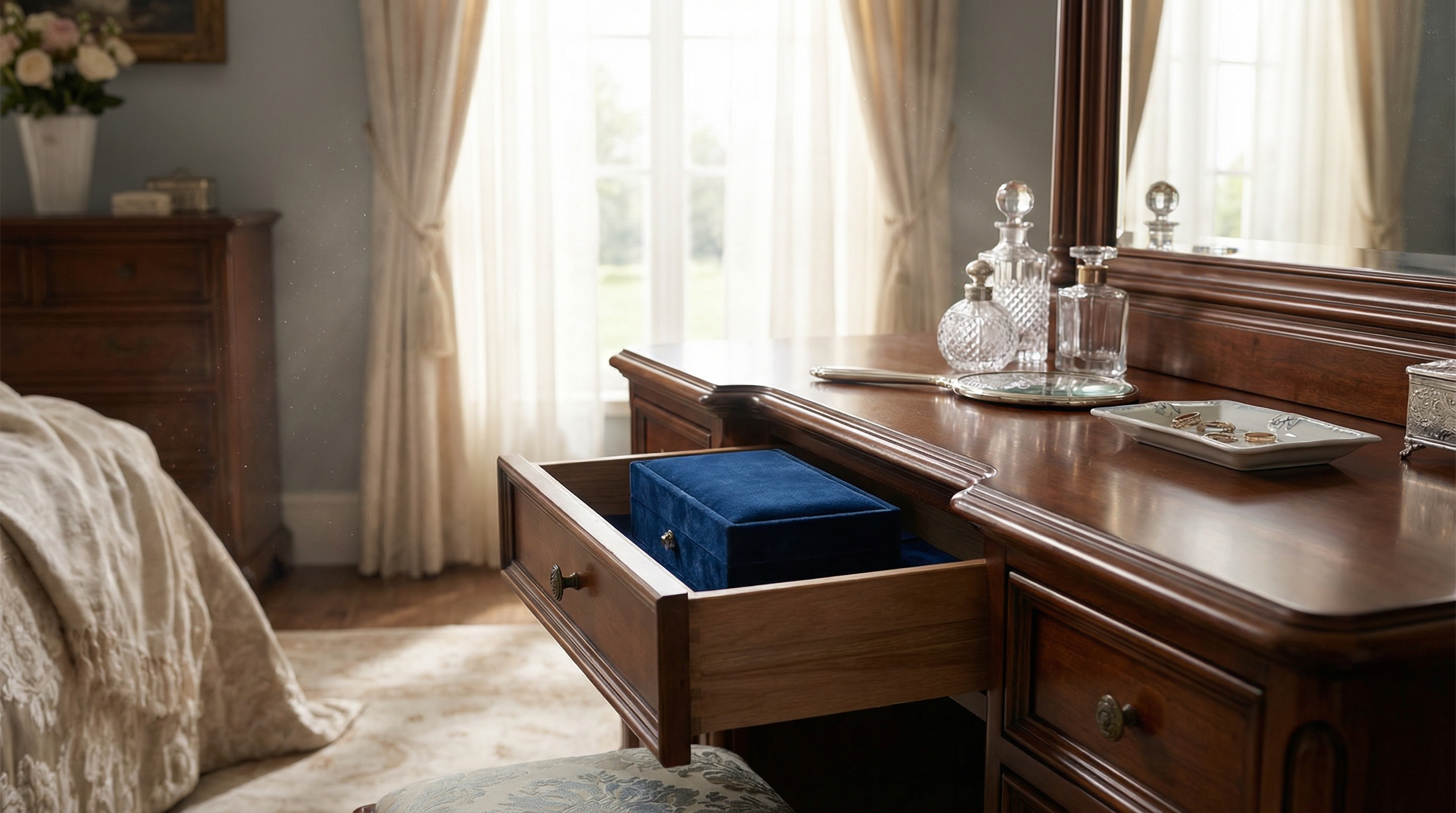
You should store your velvet box in a cool, dry, and dark environment, such as a dedicated vanity drawer or a shaded shelf, to prevent color fading and fiber rot. Proper storage is the ultimate “passive” step in how to clean velvet jewelry box maintenance because it prevents the need for deep cleaning. High humidity can cause the velvet to become limp and musty, while direct sunlight will bleach the vibrant dyes in a matter of months. A controlled environment is the best protection for both the box and the precious items it contains.
Why is sunlight so damaging?
UV rays break down the chemical bonds in textile dyes, leading to rapid fading and “sun bleaching” on the exposed side of the box. You will notice that a box kept near a window will quickly lose its rich color and look aged.
- UV rays bleach the dye.
- Heat makes fibers brittle.
- Light causes uneven fading.
- Direct sun can melt adhesives.
Here is the kicker: some of the most beautiful velvet colors, like deep emerald and royal blue, are the most susceptible to UV damage. Keeping your box in a drawer is the simplest way to maintain its value.
How does humidity affect velvet?
High humidity levels can cause the velvet fibers to absorb moisture, leading to a “limp” texture and increasing the risk of mold growth within the structural padding. You should aim for a consistent humidity level between 40% and 50%.
- Moisture leads to mold/mildew.
- Dampness weakens glue bonds.
- Fibers lose their upright nap.
- Musty odors are hard to remove.
The truth is, a damp box can also cause your jewelry to tarnish much faster. You can place a small silica gel packet inside the drawer where you store your boxes to help manage excess moisture.
Is it safe to stack velvet boxes?
You should avoid stacking heavy velvet boxes directly on top of each other, as the weight can permanently crush the plush nap on the lid of the bottom box. If you must stack them, use a piece of acid-free tissue paper or a soft cloth between them.
- Weight causes permanent crush marks.
- Friction can snag the fibers.
- Adhesives may stick together.
- Tissue paper provides a barrier.
Best of all, using individual compartments in a drawer prevents the boxes from sliding around and rubbing against each other. This level of organization is the hallmark of a professional-grade jewelry collection.
Key Takeaway: Storage in a dark, dry drawer with silica gel protection prevents the most common causes of velvet degradation, including fading, mold, and crushing.
| Storage Risk | Preventative Action | Long-Term Benefit | |
|---|---|---|---|
| UV Fading | Store in a drawer | Maintains vibrant color | |
| High Humidity | Use silica gel packets | Prevents mold and rot | |
| Fiber Crushing | Avoid heavy stacking | Keeps nap plush | |
| Dust Buildup | Keep lid closed | Reduces cleaning frequency |
By choosing the right storage location, you reduce the physical stress on the fabric and ensure that your box remains in pristine condition for decades.
When should you replace the jewelry box?
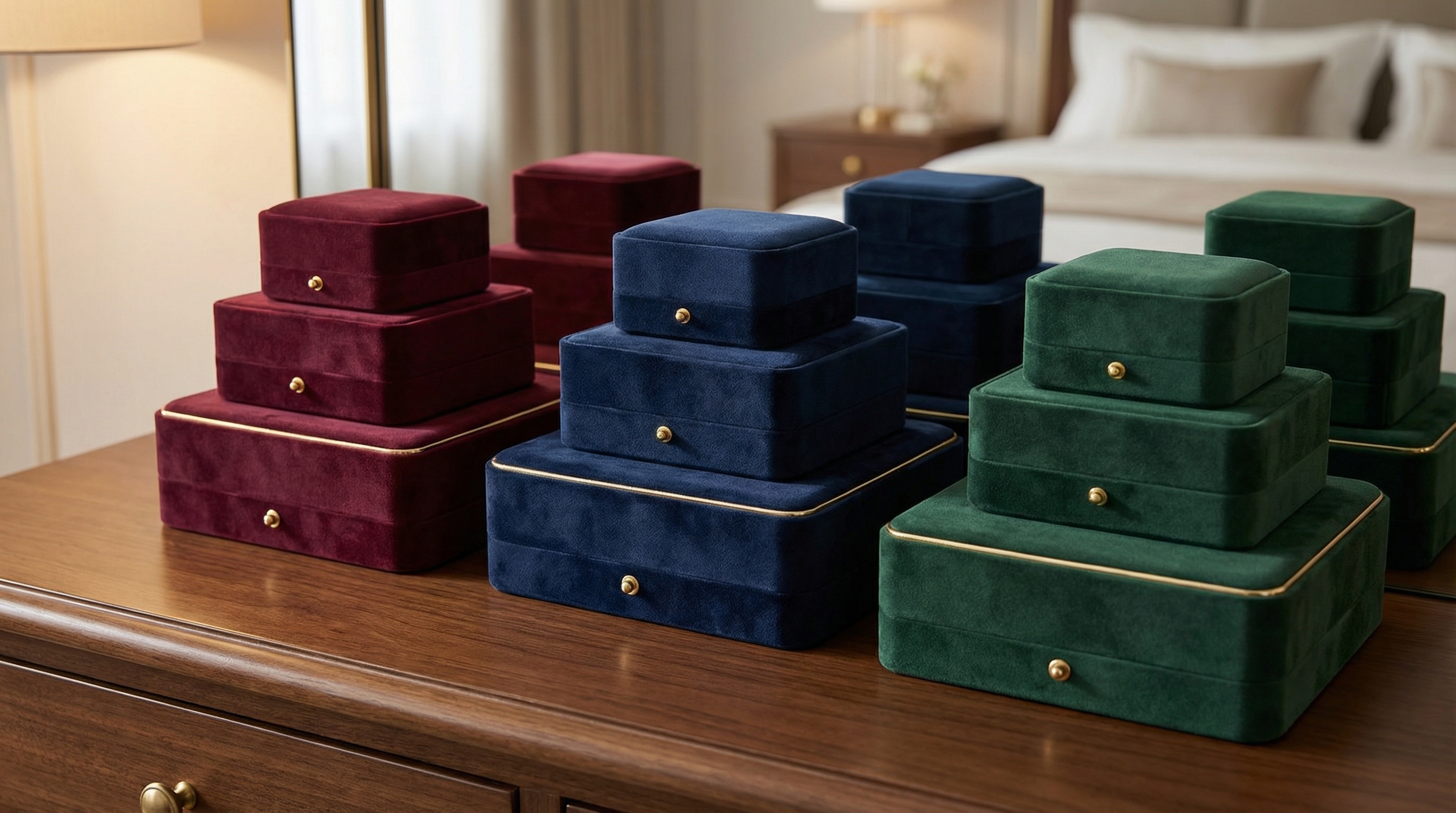
You should replace the jewelry box if you notice “balding” patches where fibers have fallen out, structural warping from moisture, or deep stains that do not respond to cleaning. Knowing how to clean velvet jewelry box is helpful, but some damage is simply irreversible. If the internal padding has collapsed or the hinges have become unstable, the box no longer provides the necessary protection for your jewelry. At this stage, investing in a high-quality replacement is the best way to safeguard your precious collection.
What are the signs of “balding”?
Balding occurs when the velvet pile is ripped away from its woven backing, leaving a flat, threadbare patch that looks significantly lighter or darker than the rest of the box. This is usually caused by aggressive scrubbing or age-related fiber degradation.
- Pile is missing from the base.
- Fabric looks shiny and flat.
- Fibers come off in your hand.
- The mark cannot be brushed out.
It gets better: modern high-density velvets are much more resistant to balding than older versions. If your current box is failing, it is the perfect time to upgrade to a more durable, professional-grade solution.
Can structural warping be fixed?
No, once the internal cardboard or wood has absorbed enough moisture to warp or “bubble,” it cannot be returned to its original flat state. A warped box may not close properly, exposing your jewelry to dust and air.
- The lid doesn’t sit flush.
- The base feels soft or spongy.
- Visible “bubbles” under the fabric.
- Internal slots have shifted.
The truth is, a warped box can actually put pressure on your jewelry in the wrong places, potentially bending delicate earring posts or scratching ring bands. Replacement is the only safe option for your collection.
When does a stain become permanent?
If you have tried the blotting method with a mild detergent multiple times and the stain remains visible, it has likely bonded with the fibers or bleached the dye. Continuing to clean a permanent stain will only damage the surrounding fabric.
- Stain resists multiple treatments.
- Fabric texture is getting rougher.
- The dye around the stain is fading.
- The mark is an oil or ink spill.
But wait, there is more: a stained box ruins the “unboxing experience” for customers and looks unprofessional on a vanity. If you are a brand owner, ensuring your packaging looks perfect is a critical part of your marketing strategy.
Key Takeaway: Irreversible fiber loss, structural warping, or persistent deep stains are clear indicators that the box must be replaced to maintain beauty and protection.
| Sign of Failure | Repairable? | Recommendation | |
|---|---|---|---|
| Surface Dust | Yes | Dry Brush | |
| Light Stains | Yes | Blot with Soap | |
| Bald Spots | No | Replace Box | |
| Warped Lid | No | Replace Box |
Choosing a high-quality replacement ensures that your jewelry is housed in a safe, beautiful environment that reflects the true value of your treasures.
FAQ
Can I use a hairdryer to speed up the drying process? No, you should never use a hairdryer on velvet. The high heat can melt synthetic fibers (like polyester velvet) or cause natural fibers to shrink and become brittle. Always air dry in a well-ventilated, shaded area.
Is it safe to use rubbing alcohol for stubborn stains? Rubbing alcohol is generally too harsh for velvet and can dissolve the adhesives used to attach the fabric to the box. It can also cause the dye to bleed. Stick to distilled water and a tiny drop of pH-neutral soap.
How often should I deep clean my velvet box? You should only “deep clean” (using moisture) when a visible stain occurs. However, you should dry-brush or vacuum the box once a month to prevent dust from becoming embedded in the fibers.
What is the best way to remove pet hair? Low-tack painter’s tape is the safest method for removing pet hair. Avoid high-tack lint rollers or packing tape, as these can pull the velvet pile right off the backing fabric.
Why does my velvet box smell musty? A musty smell usually indicates that the box has been stored in a high-humidity environment or that the internal padding once got damp. Use baking soda or activated charcoal to neutralize the odor and move the box to a dry location.
Conclusion
Maintaining a luxurious velvet jewelry box is a delicate balance of regular preventative care and precise spot cleaning. By mastering how to clean velvet jewelry box components—from the shimmering exterior nap to the intricate interior slots—you ensure that your precious collection remains protected in an environment that matches its elegance. Remember to prioritize dry cleaning methods, use only distilled water for stains, and store your boxes away from the damaging effects of sunlight and humidity. A well-cared-for box is more than just a container; it is a testament to the value you place on your jewelry. If your current storage has reached the end of its lifespan or you are looking to elevate your brand’s packaging, please contact us today to explore our premium, custom-crafted velvet solutions designed for longevity and style.