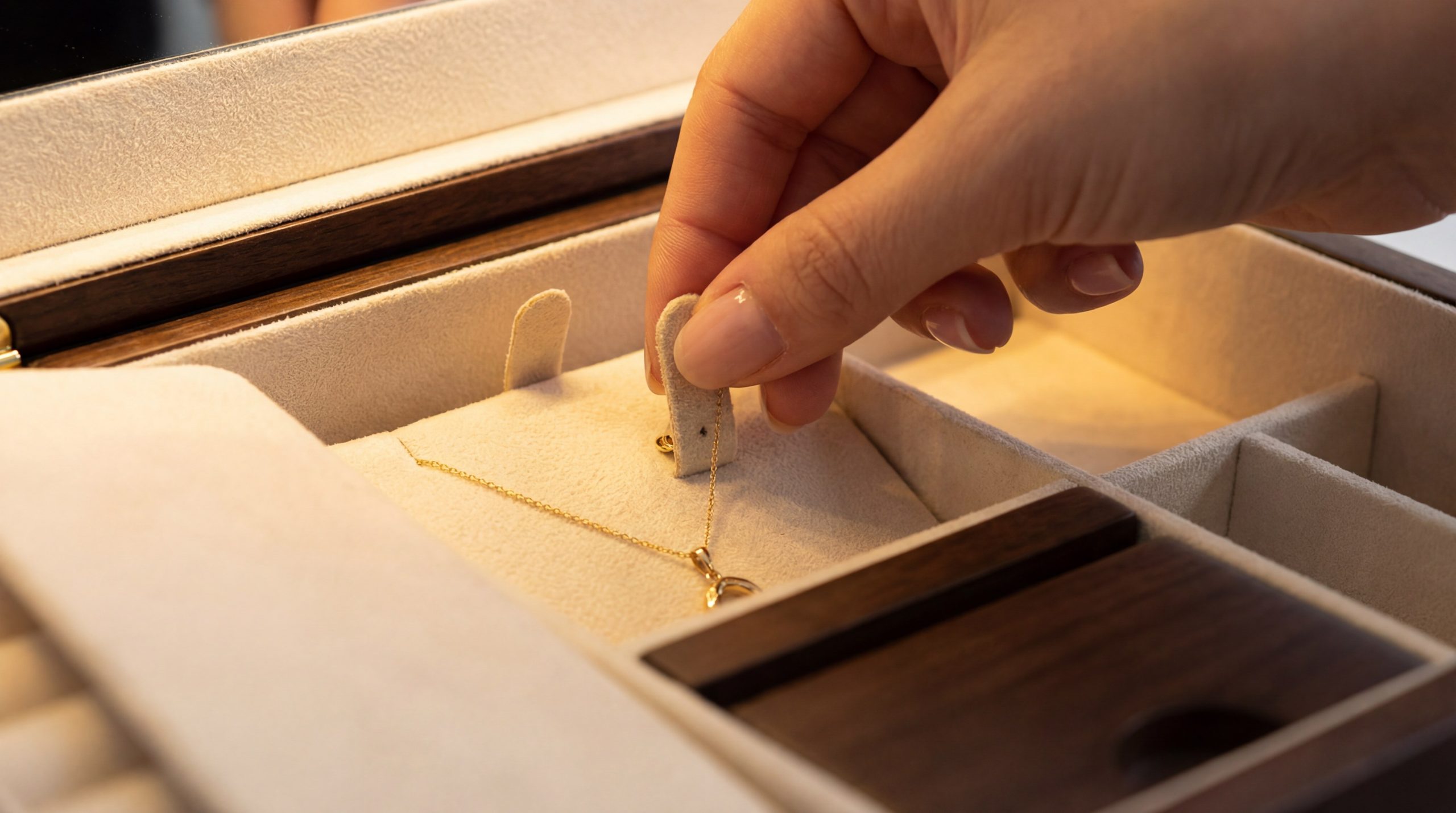
Tangled necklaces represent a significant loss of both time and product value for high-end jewelry retailers. When delicate chains become knotted, the risk of metal fatigue or surface scratching increases during the untangling process. Mastering how to hang necklaces in jewelry box structures is the most effective way to maintain a professional presentation and ensure your inventory remains in showroom condition.
Why is proper necklace organization important?
Proper necklace organization preserves the physical integrity of the metal and prevents the formation of permanent kinks. For jewelry brands, a tangle-free inventory reduces the labor time spent by staff preparing displays for customers. Effective techniques for how to hang necklaces in jewelry box compartments directly correlate with higher brand perceived value and customer satisfaction.
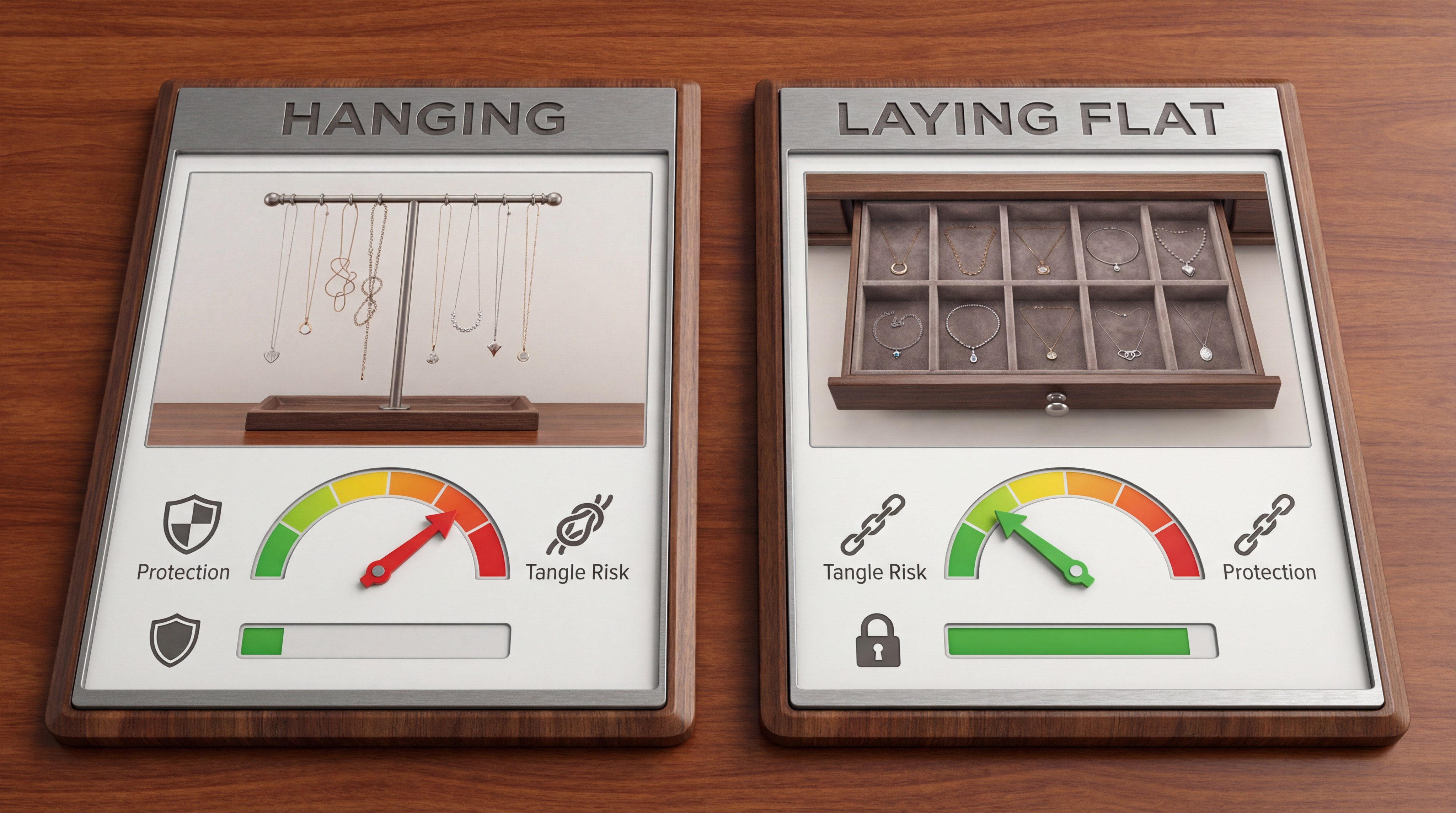
Does organization affect brand perception?
Professional storage solutions signal to the buyer that the jewelry is a high-value asset worthy of care. If a customer sees a tangled mess, their trust in the brand’s quality control diminishes instantly.
- Decreases return rates due to damaged links.
- Enhances the premium unboxing experience.
- Protects the luster of precious metals from scratches.
Think about this:
| Organization Metric | Impact on Business | |
|---|---|---|
| Tangle Rate | Lower rates decrease staff labor costs | |
| Surface Damage | Prevents micro-scratches on polished gold | |
| Presentation | Increases the likelihood of a high-value sale |
The data shows that organized storage is not just an aesthetic choice but a financial necessity for retail longevity.
Key Takeaway: Consistent organization prevents physical degradation and reinforces the luxury status of your jewelry collection through superior presentation.
How to choose the right jewelry box?
You should look for boxes that feature vertical depth and reinforced internal hooks designed for long chains. Understanding how to hang necklaces in jewelry box units requires selecting a structural design that keeps the pendant and chain separated from other items.
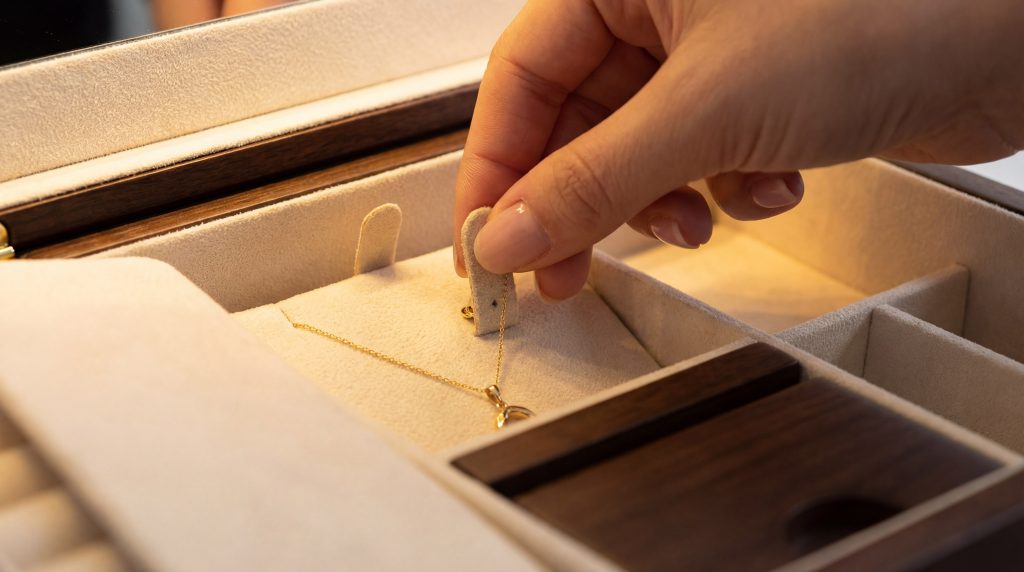
Which box geometry works best?
Rectangular boxes are often superior for long necklaces because they allow the chain to hang straight without needing to be coiled. This prevents the “memory” effect where chains retain a curved shape after long periods of storage.
- Slider rigid boxes offer modern accessibility.
- Magnetic closures provide a secure seal for transport.
- Portrait-oriented boxes maximize vertical hanging space.
Check this out:
| Box Style | Best For | |
|---|---|---|
| Slider Rigid | High-frequency retail access | |
| Magnetic Flip-Top | Luxury gift presentation | |
| Deep Neck Lid | Large statement necklaces |
Choosing the correct box shape is the foundational step in preventing chain tangles before they even occur.
Key Takeaway: The physical dimensions and closure type of the jewelry box dictate how effectively a necklace can be suspended without movement.
How to prepare necklaces for hanging?
You must always fasten the clasp and ensure the chain is fully untangled before placing it on a hook. Preparation is a critical step in how to hang necklaces in jewelry box workflows because a loose clasp is the primary cause of internal box tangles.
Should you clean necklaces before storage?
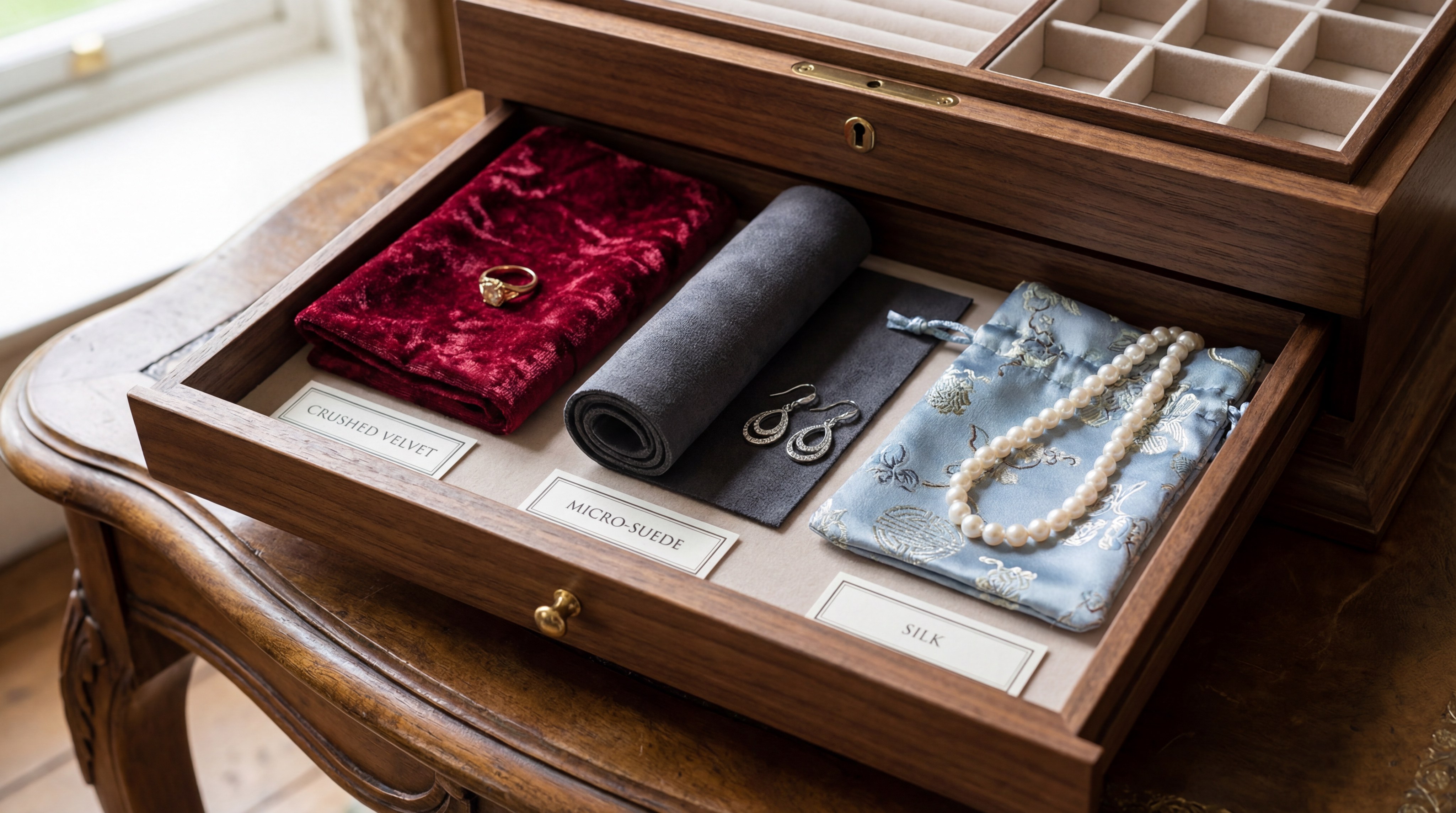
Cleaning removes skin oils and environmental residues that can cause tarnishing while the necklace is stored. This step ensures that the metal remains bright and the chain does not stick to the fabric lining of the box.
- Wipe chains with a lint-free microfiber cloth.
- Check the integrity of the clasp mechanism.
- Ensure the pendant is centered on the chain.
But that’s not all:
| Prep Step | Benefit | |
|---|---|---|
| Clasp Fastening | Prevents the chain from sliding off hooks | |
| Micro-Cleaning | Maintains metal luster and prevents tarnish | |
| Tension Check | Identifies weak links before they break |
A few seconds of preparation can save hours of refurbishment or the loss of a valuable customer relationship.
Key Takeaway: Fastening the clasp is the single most important action you can take to ensure a necklace stays securely on its hanger.
How to use hooks and hangers correctly?
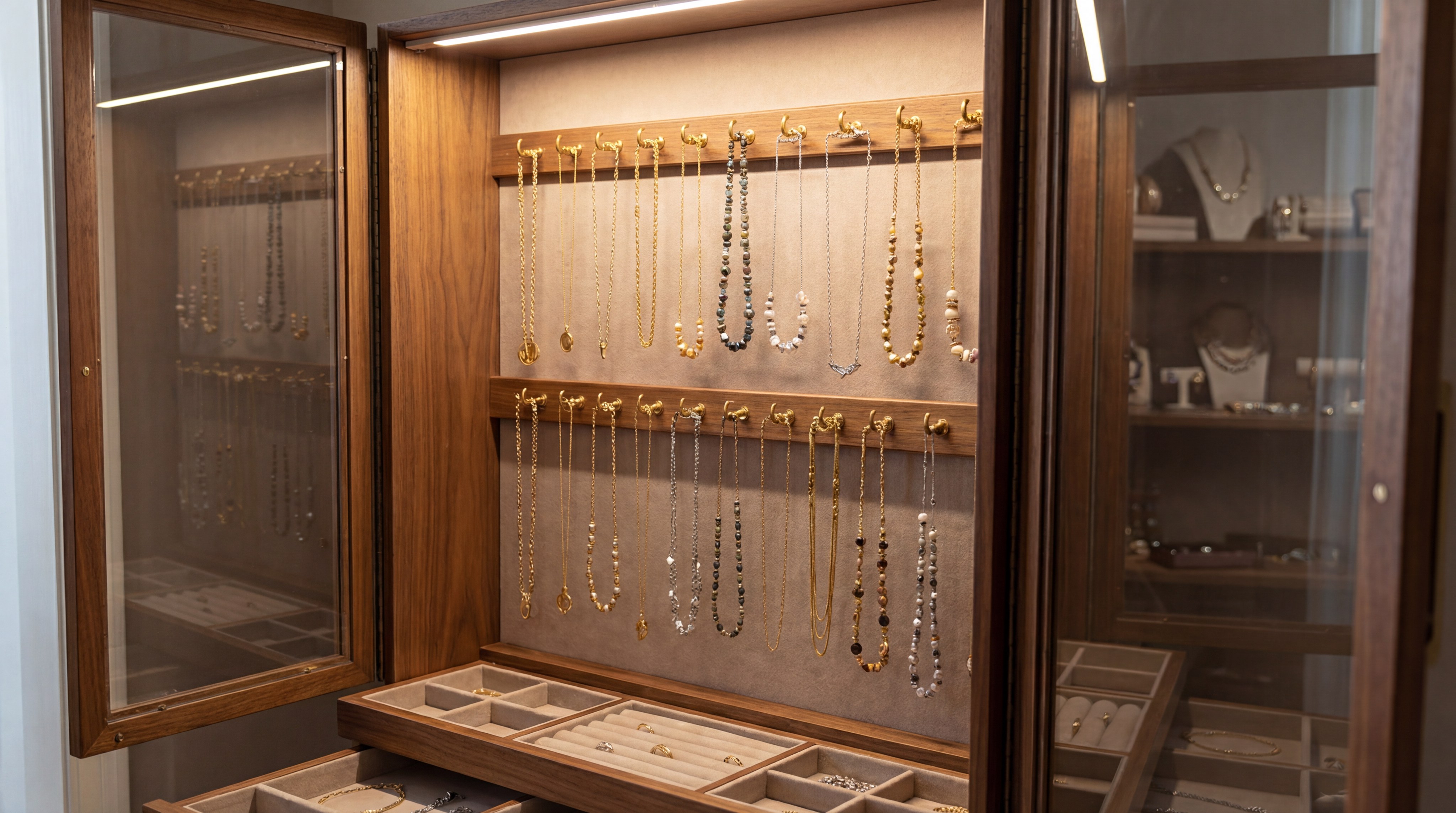
You should hang one necklace per hook to avoid the friction that leads to micro-scratches and chain knots. Learning how to hang necklaces in jewelry box setups often involves using specialized displays like 3D floating film boxes for maximum visibility.
What is the optimal hook placement?
Hooks should be placed at the highest point of the box interior to allow the chain to fall naturally without hitting the bottom. This gravity-fed approach keeps the links aligned and prevents the chain from bunching up.
- Use metal hooks for heavy statement pieces.
- Ribbon loops are ideal for delicate, thin chains.
- Spacing should be at least 1cm between necklaces.
The best part?
| Hanger Type | Weight Capacity | Visibility | |
|---|---|---|---|
| Brass Hooks | High (Heavy pieces) | Excellent | |
| Ribbon Loops | Low (Delicate chains) | Good | |
| Floating Film | Medium (Standard items) | Superior |
Using the right hardware ensures that the necklace remains a focal point while being protected from external movement.
Key Takeaway: Individual hanging is mandatory for high-value inventory to eliminate the possibility of inter-chain tangling and surface abrasions.
How to layer necklaces for efficiency?
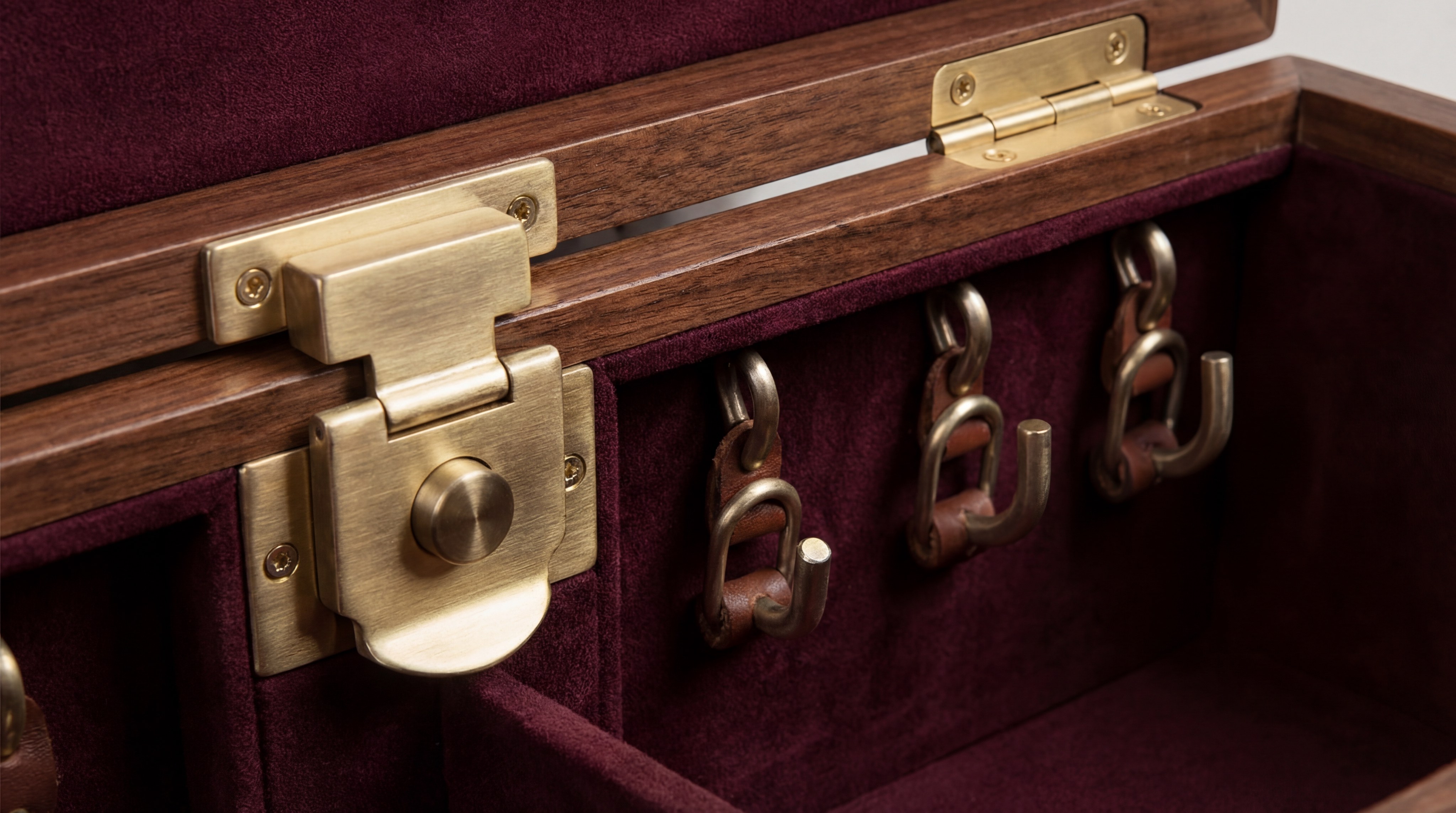
You can maximize storage by hanging the longest chains on higher hooks and shorter pieces on lower tiers. This layering technique for how to hang necklaces in jewelry box interiors allows you to store more inventory without compromising the safety of individual pieces.
Can layering prevent chain overlapping?
By staggering the heights of your hooks, you ensure that pendants do not strike each other when the jewelry box is moved. This vertical stacking is particularly useful for retailers with limited display space.
- Increases storage capacity by up to 40%.
- Keeps all pieces visible for quick selection.
- Reduces the horizontal footprint of the display.
Here is the kicker:
| Layering Method | Space Saved | Risk Level | |
|---|---|---|---|
| Vertical Staggering | High | Low (Safe) | |
| Horizontal Grouping | Low | High (Tangle Risk) | |
| Offset Hanging | Medium | Lowest |
Layering is a sophisticated storage strategy that balances high-density inventory management with luxury protection standards.
Key Takeaway: Vertical staggering is the most space-efficient way to organize a diverse collection of necklace lengths in a single box.
How to secure and close the box?
You must use a jewelry pad or a high-density foam insert to anchor the necklaces before closing the lid. For those mastering how to hang necklaces in jewelry box protocols, this final step prevents the chains from swinging during shipping or transport.
Why is foam padding necessary?
Foam padding acts as a shock absorber, keeping the chain pressed against the back of the box so it cannot slip off the hook. This is essential for B2B distributors who ship products globally.
- Prevents chain “whiplash” during transit.
- Protects the inner lining from sharp pendants.
- Ensures the box opens with a perfect presentation.
Look at the facts:
| Security Tool | Function | Effectiveness | |
|---|---|---|---|
| EVA Foam Insert | Anchors chain in place | 95% | |
| Silk Jewelry Pad | Soft cushioning | 70% | |
| Elastic Retention Band | Constant tension | 85% |
Securing the contents is the only way to guarantee that the effort you put into hanging the necklace remains intact.
Key Takeaway: A secure closing procedure using padding is the final insurance policy against transit damage and display disruption.
Which box styles prevent chain tangling?
Deep, portrait-oriented rigid boxes are the most effective at preventing chains from overlapping or knotting. When researching how to hang necklaces in jewelry box designs, you should prioritize boxes with built-in dividers that isolate each chain.

Are partitioned boxes better?
Partitioned boxes provide physical walls between necklaces, making it impossible for one chain to migrate into the space of another. This is the gold standard for high-end collections that require zero-contact storage.
- Eliminates the possibility of “chain migration.”
- Makes inventory counting and auditing faster.
- Enhances the structural integrity of the box.
It gets even better:
| Box Feature | Organization Benefit | |
|---|---|---|
| Vertical Orientation | Allows for gravity-based alignment | |
| Physical Dividers | Total chain isolation | |
| Recessed Hooks | Prevents hooks from catching on the lid |
The architecture of the box is the first line of defense against the chaos of tangled jewelry.
Key Takeaway: Strategic box geometry and internal partitions provide the physical barriers necessary to maintain a perfect, tangle-free environment.
Can custom inserts improve storage?
Customized EVA or velvet inserts provide a tailored fit that prevents even the most delicate chains from shifting. Our how to hang necklaces in jewelry box manufacturing standards focus on precision-cut inserts that match the exact weight and length of your necklaces.
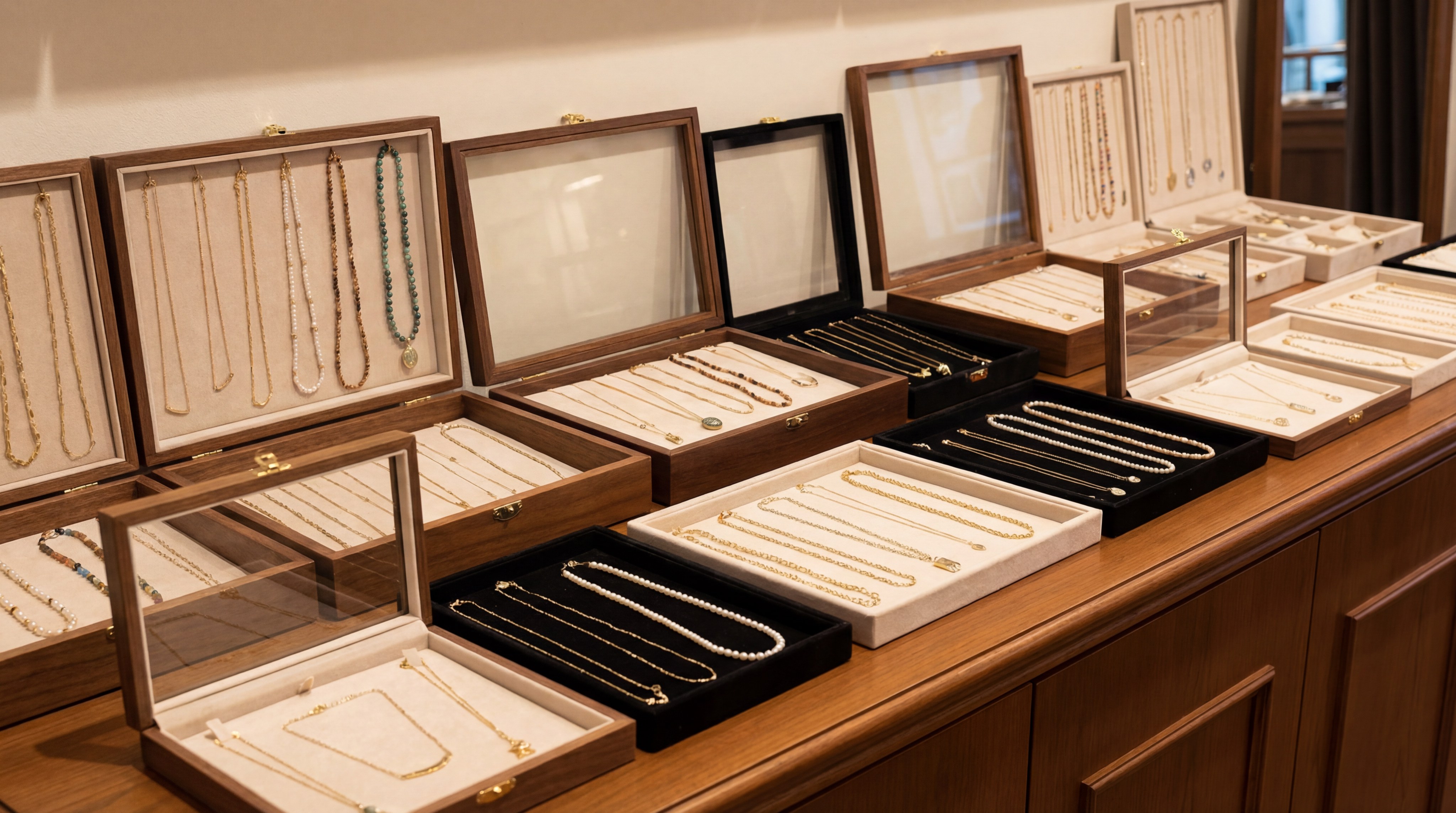
What are the benefits of EVA foam?
EVA foam is highly durable and can be molded to include specific grooves for chains and pendants. Unlike standard sponge, it does not degrade over time and provides a firm grip on the jewelry.
- Precision fit for specific necklace models.
- Available in anti-tarnish treated materials.
- Increases the perceived luxury of the packaging.
Here is why:
| Insert Material | Durability | Customization | |
|---|---|---|---|
| High-Density EVA | Superior | Excellent | |
| Standard Foam | Moderate | Limited | |
| Molded Plastic | High | Very High |
Custom inserts transform a standard container into a professional-grade storage tool that protects your brand’s bottom line.
Key Takeaway: Investing in custom-engineered inserts ensures that every necklace in your collection has a perfectly fitted, secure home.
What materials protect long necklaces best?
Micro-suede and treated velvet are the best materials because they provide enough friction to hold chains while remaining soft enough to prevent scratches. Choosing the right lining is essential for how to hang necklaces in jewelry box setups that will be used for long-term storage.
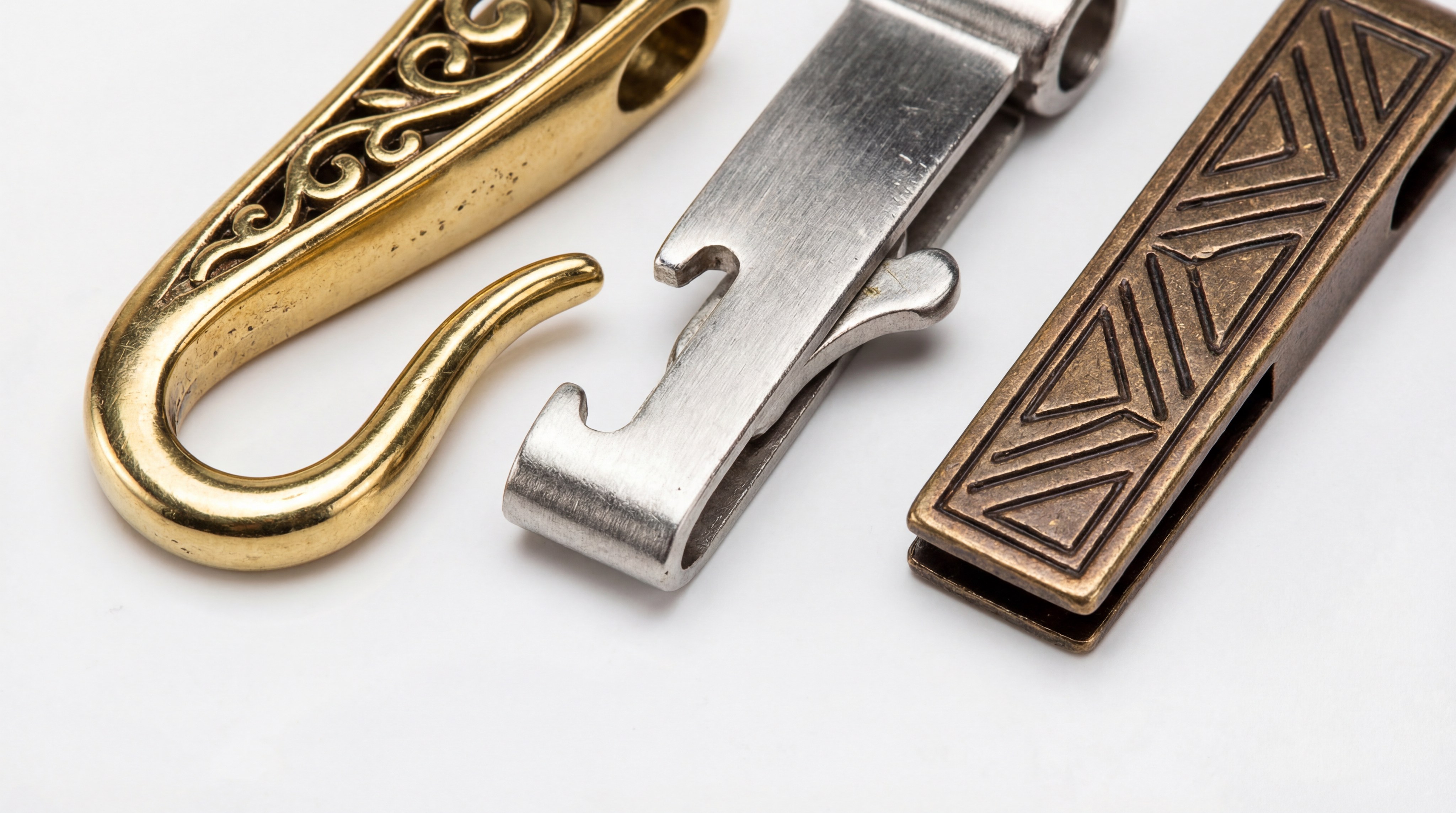
Does the lining prevent tarnishing?
Some premium linings are treated with anti-tarnish chemicals that neutralize the gases causing silver and low-karat gold to darken. This maintains the “factory fresh” look of your inventory for years.
- Micro-suede offers a modern, high-friction surface.
- Velvet provides a classic, luxury aesthetic.
- Silk is beautiful but can be too slippery for hooks.
Believe it or not:
| Material | Friction Level | Anti-Scratch | |
|---|---|---|---|
| Micro-Suede | High | Superior | |
| Treated Velvet | Medium | Excellent | |
| Satin/Silk | Low | Good |
The choice of fabric is a balance between the aesthetic of the unboxing experience and the practical requirement of chain stability.
Key Takeaway: High-friction materials like micro-suede are functionally superior for hanging long necklaces because they prevent the chains from sliding.
How to maintain a tangle-free collection?
You should conduct weekly inspections of your hanging hardware and re-secure any necklaces that have shifted. Regular maintenance is the final pillar of how to hang necklaces in jewelry box management, ensuring that minor shifts don’t turn into major knots.
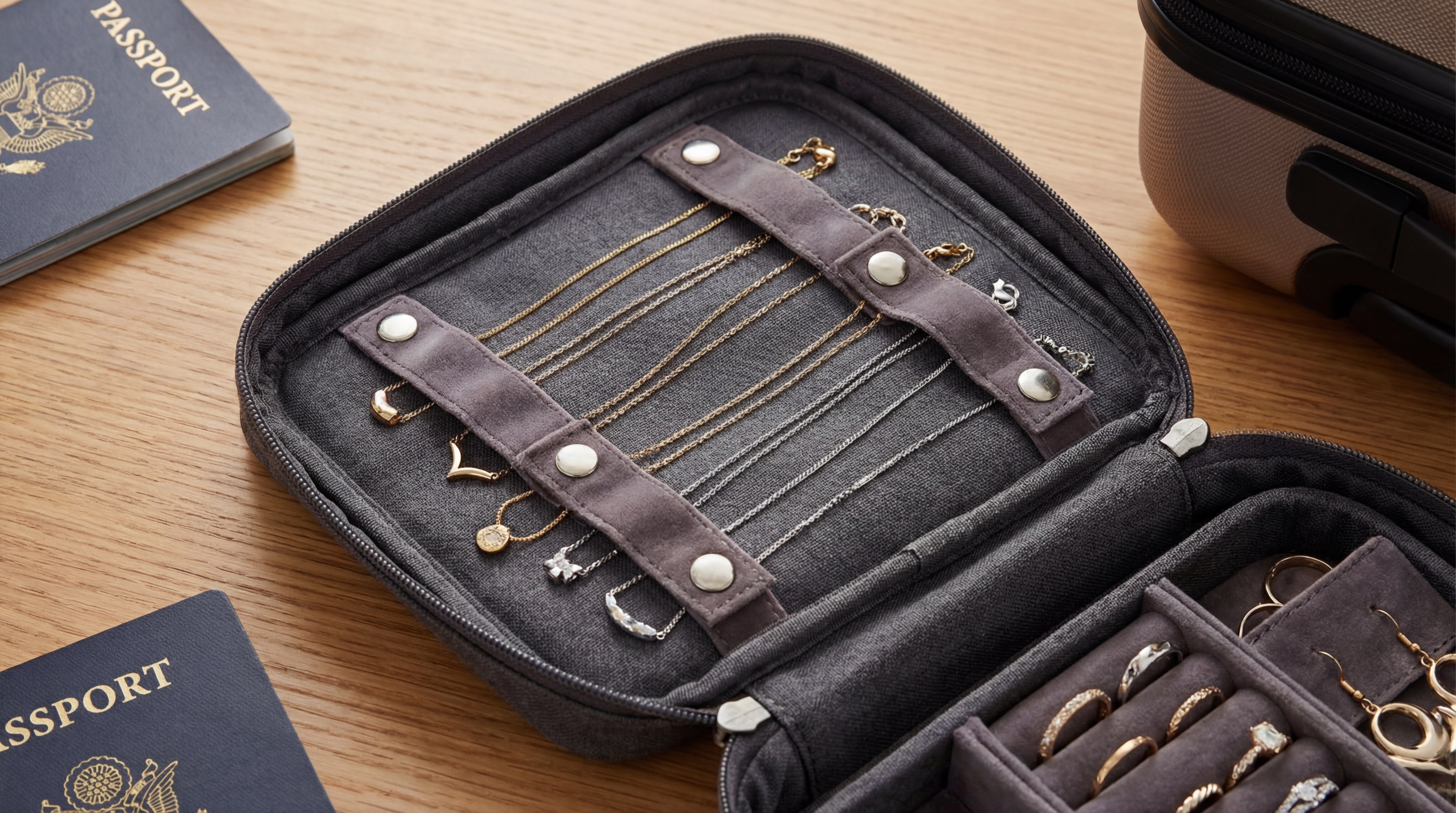
How to train staff on organization?
Consistency is key, so providing your team with a standardized checklist for packing and displaying necklaces will reduce errors. A well-trained staff can identify a potential tangle before it causes damage.
- Standardize the “clasp-first” rule for all items.
- Use digital inventory photos to show correct hanging.
- Replace damaged hooks or worn foam inserts immediately.
This is the bottom line:
| Maintenance Task | Frequency | Expected Result | |
|---|---|---|---|
| Hook Integrity Check | Monthly | Prevents necklace falls | |
| Re-cleaning Chains | Quarterly | Maintains inventory luster | |
| Foam Pad Replacement | Bi-Annually | Ensures secure anchoring |
A proactive approach to maintenance preserves the value of your jewelry and the efficiency of your retail operations.
Key Takeaway: Ongoing maintenance and staff education are required to turn a good storage system into a fail-safe inventory protection strategy.
Conclusion
Effective necklace storage is a blend of structural selection, meticulous preparation, and the right internal hardware. By implementing these professional standards, your brand can eliminate the costs associated with tangled inventory and provide a truly premium experience for your clients. If you are ready to upgrade your brand’s packaging with custom-engineered solutions, please contact us today for a consultation on your bulk storage needs.
Frequently Asked Questions
Can I store multiple necklaces on a single hook?No, you should never hang multiple necklaces together as this is the most common cause of complex knots and metal scratching. Each piece should have its own dedicated hanger.
What’s the best way to handle very long chains in a small box?The best method is to use a taller portrait box, but if you must use a small box, loop the chain once over a high-friction micro-suede hook and secure the bottom with an elastic band.
Can customized inserts prevent tangling during international shipping?Yes, high-density EVA foam inserts are designed specifically to anchor the chain against the backing, preventing movement even during the vibrations of long-distance transport.
What’s the best material for necklace box linings?Micro-suede is generally considered the best B2B material because it offers the highest friction to keep necklaces from sliding while providing excellent anti-scratch protection.
Can I use ribbon loops instead of metal hooks?Yes, ribbon loops are an excellent alternative for very delicate chains as they provide a soft touch and can be customized in color to match your brand’s aesthetic.