Choosing the right jewelry box for your collection involves balancing protective utility with a cohesive presentation that reflects your brand’s value. Many professional retailers struggle with inventory damage or lackluster displays that fail to justify a premium price point. Poorly organized stock leads to tarnished metals and tangled chains, which ultimately harms your bottom line and reputation. Implementing a strategic jewelry box classification allows you to safeguard your investments while providing a memorable experience for every customer.
What is the basic jewelry box classification?

The basic jewelry box classification organizes containers by their intended storage environment and the specific structural requirements of the jewelry pieces. This system allows you to streamline your retail operations and ensure that each item is stored in a way that prevents chemical or physical degradation. Using the right category helps your staff locate items quickly and maintain a high standard of presentation.
Think about it:
Standard retail storage categories
Retailers must categorize boxes based on whether they are for display, transport, or long-term vaulting.
- Countertop display boxes.
- Back-stock storage bins.
- Shipping-safe mailing boxes.
- Premium customer gift cases.
Protective lining standards
The interior material is a crucial part of how we define storage suitability. Most classifications prioritize anti-tarnish linings and soft-touch fabrics to maintain the shine of precious metals.
Key Takeaway: Understanding basic classifications helps you optimize your inventory workflow while protecting your products from environmental damage.
| Classification Type | Primary Use | Protection Level | |
|---|---|---|---|
| Display Boxes | Showcasing to customers | Moderate | |
| Shipping Boxes | Fulfillment and transport | High | |
| Storage Boxes | Back-inventory management | Maximum |
The diverse range of basic classifications ensures that every stage of the jewelry lifecycle is supported by appropriate packaging.
How does jewelry box classification sort rings?

This jewelry box classification identifies rings by their shank width and the height of their settings to determine the necessary slot depth. Selecting the correct ring box ensures that high-profile stones do not touch the lid, which could lead to scratches or loose prongs. By matching the box to the ring style, you provide a secure fit that prevents the item from shifting during transit.
Here is the kicker:
Slot configurations and spacing
Single-slot boxes are standard for engagement pieces, while multi-slot boxes serve as efficient storage for wedding bands.
- Single-slot velvet boxes.
- Dual-slot anniversary boxes.
- Multi-row ring trays.
Key Takeaway: Matching the ring’s physical dimensions to the slot depth is essential for preventing stone damage and ensuring a snug presentation.
| Ring Type | Box Requirement | Feature | |
|---|---|---|---|
| Engagement Ring | High-clearance lid | Central focal point | |
| Wedding Band | Narrow slot | Secure foam insert | |
| Fashion Ring | Standard depth | Versatile padding |
Selecting specific ring containers within the classification system ensures your most delicate items remain stationary and safe.
Why does jewelry box classification fit necklaces?

A functional jewelry box classification for necklaces prioritizes the prevention of chain tangling and pendant abrasion. Using a dedicated necklace box allows you to secure the chain behind a velvet insert, keeping the focal piece centered and visible. This approach is vital for retailers who need to present long chains without the risk of knots forming during customer viewing.
You should consider this:
Hooks and recessed compartments
Proper necklace storage requires specific hardware like hooks or clips to maintain tension across the length of the piece.
- Elasticated back pouches.
- Dual-hook pendant holders.
- Flat-lay velvet boards.
Key Takeaway: Necklaces require tension-based storage solutions to eliminate the risk of tangling and maintain a professional display.
| Necklace Style | Ideal Box Type | Securing Method | |
|---|---|---|---|
| Delicate Chain | Slim flat box | Top hooks | |
| Heavy Pendant | Deep square box | Recessed padding | |
| Choker | Round collar box | Circular insert |
Properly classified necklace packaging significantly reduces the time spent untangling stock before a sale.
How does jewelry box classification handle watches?

Standard jewelry box classification treats watches as high-volume items that require structured cushions to maintain the shape of the strap or bracelet. A professional watch box provides a soft pillow that prevents the watch band from kinking or losing its tension. This classification also considers the height of the watch face to ensure the lid doesn’t apply direct pressure to the glass.
Think about it:
Cushion density and diameter
The internal pillow must be firm enough to support the weight of a luxury watch while remaining soft enough to compress for smaller bands.
- Removable velvet pillows.
- Adjustable watch holders.
- Multi-watch display cases.
Key Takeaway: Watch boxes must provide structural support through internal cushions to preserve the integrity of the watch band and face.
| Watch Component | Box Requirement | Priority | |
|---|---|---|---|
| Watch Face | Clearance height | Scratch prevention | |
| Leather Strap | Circular pillow | Shape retention | |
| Metal Bracelet | Firm support | Link protection |
Using specialized watch storage ensures that both the movement and the aesthetic components are shielded from impact.
Is luxury a key jewelry box classification?

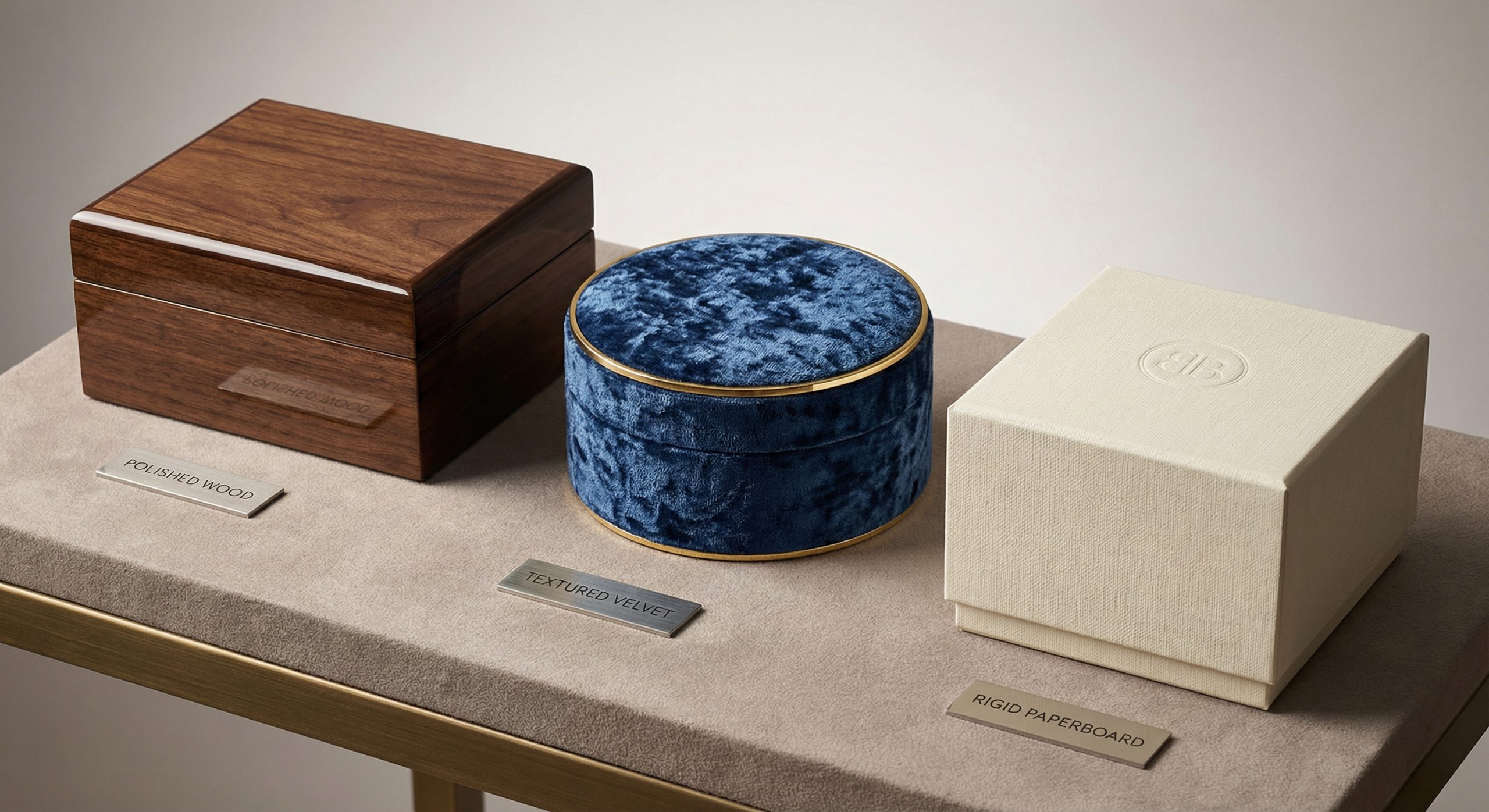
Luxury is a distinct jewelry box classification that emphasizes high-end materials like solid wood, leather, and premium velvet to enhance the perceived value of the item. These boxes often feature weighted lids and magnetic closures to provide a satisfying tactile experience for the customer. For premium brands, the luxury classification is not just about protection, but about reinforcing the prestige of the jewelry inside.
Here is the kicker:
Premium finishes and textures
High-end packaging often utilizes hand-stitched leather or lacquered wood finishes to differentiate itself from standard retail options.
- Genuine leather exteriors.
- Polished mahogany shells.
- Suede-lined interiors.
Key Takeaway: Luxury classifications focus on the sensory experience, using weight and texture to justify a higher price point for the consumer.
| Luxury Tier | Material Choice | Closure Type | |
|---|---|---|---|
| Premium | Faux leather / Velvet | Friction fit | |
| Elite | Genuine leather | Magnetic | |
| Ultra-Luxe | Lacquered wood | Hinged lock |
Investing in the luxury category allows you to build a stronger brand narrative through superior packaging quality.
How do materials alter jewelry box classification?
The materials used in construction fundamentally change the jewelry box classification by determining the box’s durability and price point. Paper-based boxes are cost-effective for high-volume sales, while plastic or metal-framed boxes offer superior protection for shipping. You must choose materials that align with your brand’s sustainability goals and the physical needs of your jewelry.
Think about it:
Core structural materials
The exterior shell dictates how the box will withstand environmental factors like moisture or physical impact during transit.
- Rigid cardboard frames.
- Molded plastic shells.
- Solid wood constructions.
Key Takeaway: Material selection determines the balance between cost-efficiency and the long-term durability of your packaging.
| Material | Durability | Eco-Friendliness | |
|---|---|---|---|
| Recycled Paper | Moderate | High | |
| Molded Plastic | High | Low | |
| Natural Wood | Maximum | Moderate |
By understanding material science, you can choose a classification that fits your budget while meeting protection standards.
Can branding shape jewelry box classification?
Customized jewelry box classification allows you to incorporate specific branding elements like logos, colors, and unique textures into the design. Branding transforms a generic container into a marketing tool that continues to represent your business long after the sale is complete. This classification is essential for creating a recognizable identity in a competitive market.
Here is the kicker:
Customization and logo integration
Retailers can use various printing techniques to ensure their brand is the first thing a customer sees upon receiving their jewelry.
- Foil hot-stamping.
- Debossed brand logos.
- Custom color matching.
Key Takeaway: Branding-focused classification turns your packaging into an extension of your marketing strategy and customer loyalty program.
| Branding Method | Visual Impact | Cost per Unit | |
|---|---|---|---|
| Silk Screen | High | Low | |
| Hot Stamping | Premium | Moderate | |
| Custom Insert | Subtle | High |
Branded packaging ensures that your jewelry is associated with a professional and consistent corporate image.
What is the best jewelry box classification for travel?
Travel-oriented jewelry box classification focuses on portability, security, and space-saving designs for customers on the move. These boxes are typically lightweight and feature secure zippers or snap closures to prevent items from falling out in a suitcase. They prioritize internal organization with specialized compartments for different types of jewelry to prevent friction during movement.
Think about it:
Portability and security features
A good travel box must be compact enough to fit in a carry-on while offering enough padding to survive rough handling.
- Zippered pouch designs.
- Foldable jewelry rolls.
- Hard-shell travel cases.
Key Takeaway: Travel classifications prioritize security and compactness to ensure jewelry remains organized and safe during transit.
| Travel Type | Box Style | Primary Benefit | |
|---|---|---|---|
| Short Trip | Small square case | Compactness | |
| Long Vacation | Jewelry roll | Capacity | |
| Business Travel | Hard-shell box | Maximum security |
Offering travel-specific packaging provides additional value to your customers by solving their mobile storage problems.
How does jewelry box classification aid gifting?
Gifting-specific jewelry box classification prioritizes aesthetics and the “reveal” moment to create an emotional connection with the recipient. Boxes designed for gifts often include decorative elements like ribbons, outer sleeves, or specialized inserts for an earring box to ensure the presentation is perfect. This classification helps retailers provide a “ready-to-give” solution that saves the customer time and effort.
Here is the kicker:
Presentation and unboxing elements
The unboxing experience is enhanced by layers of packaging that build anticipation before the jewelry is actually seen.
- Ribbon-pull drawers.
- Decorative outer sleeves.
- Integrated gift cards.
Key Takeaway: Gift classification focuses on the emotional impact of the presentation, making the packaging as memorable as the jewelry itself.
| Gift Occasion | Packaging Style | Key Feature | |
|---|---|---|---|
| Anniversary | Deep velvet box | Romantic feel | |
| Graduation | Modern paper box | Clean aesthetic | |
| Birthday | Bright colored box | Fun presentation |
Gift-ready classifications increase the appeal of your products for customers looking for a complete, hassle-free purchase.
How to pick your ideal jewelry box classification?
Choosing your ideal jewelry box classification requires a thorough analysis of your product dimensions, brand positioning, and budget. You must ensure that the box size matches the jewelry scale to prevent excessive movement while maintaining a professional look. Ultimately, the best choice is one that protects the item, fits your shipping logistics, and delights your target audience.
Think about it:
Balancing cost and quality
You need to find a middle ground where the packaging is high-quality enough to protect the jewelry without being prohibitively expensive.
- Assessing volume discounts.
- Testing shipping durability.
- Sampling different linings.
Key Takeaway: The ideal classification is a strategic choice that aligns your physical protection needs with your brand’s financial and aesthetic goals.
| Selection Factor | Business Impact | Priority | |
|---|---|---|---|
| Internal Size | Protection | High | |
| Exterior Style | Brand Image | Moderate | |
| Unit Cost | Profit Margin | High |
A well-informed selection process ensures that your packaging supports your business growth and customer satisfaction.
At YiXin Jewelry Packaging, we specialize in high-quality, customizable solutions that bridge the gap between protection and style. We believe that professional packaging is the silent ambassador of your brand, and our mission is to provide the industry with the most reliable classification systems available. To elevate your brand’s presentation and protect your valuable collections, contact us today to discuss your custom packaging needs.
Frequently Asked Questions
What’s the best material for a premium ring presentation?Velvet or high-grade leatherette is the ideal choice. These materials provide a classic, luxurious feel while offering a secure, non-abrasive grip on the ring.
Can I use one universal box for all my accessories?No, it is not recommended for professional retailers. Different pieces require specific inserts—like hooks for necklaces or pillows for watches—to prevent damage and tangling.
How do I know if my pieces require anti-tarnish linings?Yes, if you sell silver or plated jewelry, anti-tarnish linings are essential. These specialized fabrics contain treated fibers that neutralize sulfur gases, preventing the oxidation that causes metal to blacken.
What’s the best travel option for delicate chains?A jewelry roll or a specialized flat pouch with hooks is the best option. These designs keep the chains taut, which is the only reliable way to prevent knots during movement.
Can I customize standard packaging to fit my brand?Absolutely, customization is highly recommended for B2B clients. Most professional suppliers offer hot-stamping or custom color runs to ensure your packaging matches your corporate identity perfectly.