
To find the perfect storage solution, you must accurately map your room’s dimensions and movement zones before purchasing. You often invest significant time and capital into curated inventory, yet a single measurement error can render a beautiful storage unit completely unusable in a professional setting. This creates operational friction, leading to cluttered workspaces and potential damage to high-end accessories. Learning How to Measure for a Jewelry Armoire provides the structural foundation needed to optimize your floor plan and safeguard your assets effectively.
Why Learn How to Measure for a Jewelry Armoire?

Professional space planning ensures that your high-value furniture pieces integrate seamlessly with your existing operational workflow. Understanding How to Measure for a Jewelry Armoire prevents the costly logistical nightmare of returning oversized units. Proper planning also maximizes the aesthetic appeal of your display area.
Does placement impact workflow?
Locating your storage in a high-traffic area requires precise spatial awareness to maintain safety standards. You must ensure that the unit does not obstruct emergency exits or primary walkways.
- Measure the total square footage of the room.
- Identify permanent fixtures like radiators or built-in shelving.
Think about this: A well-placed armoire enhances efficiency.
- Key Takeaway: Early planning mitigates risk and optimizes the long-term utility of your storage investment.
| Feature | Importance Level | Purpose | |
|---|---|---|---|
| Floor Plan Sync | High | Avoids operational bottlenecks | |
| Safety Clearance | Critical | Maintains workplace safety standards | |
| Workflow Integration | Medium | Streamlines access to inventory |
The data above highlights why spatial planning is a non-negotiable step in professional furniture procurement.
How to Measure for a Jewelry Armoire: Freestanding?
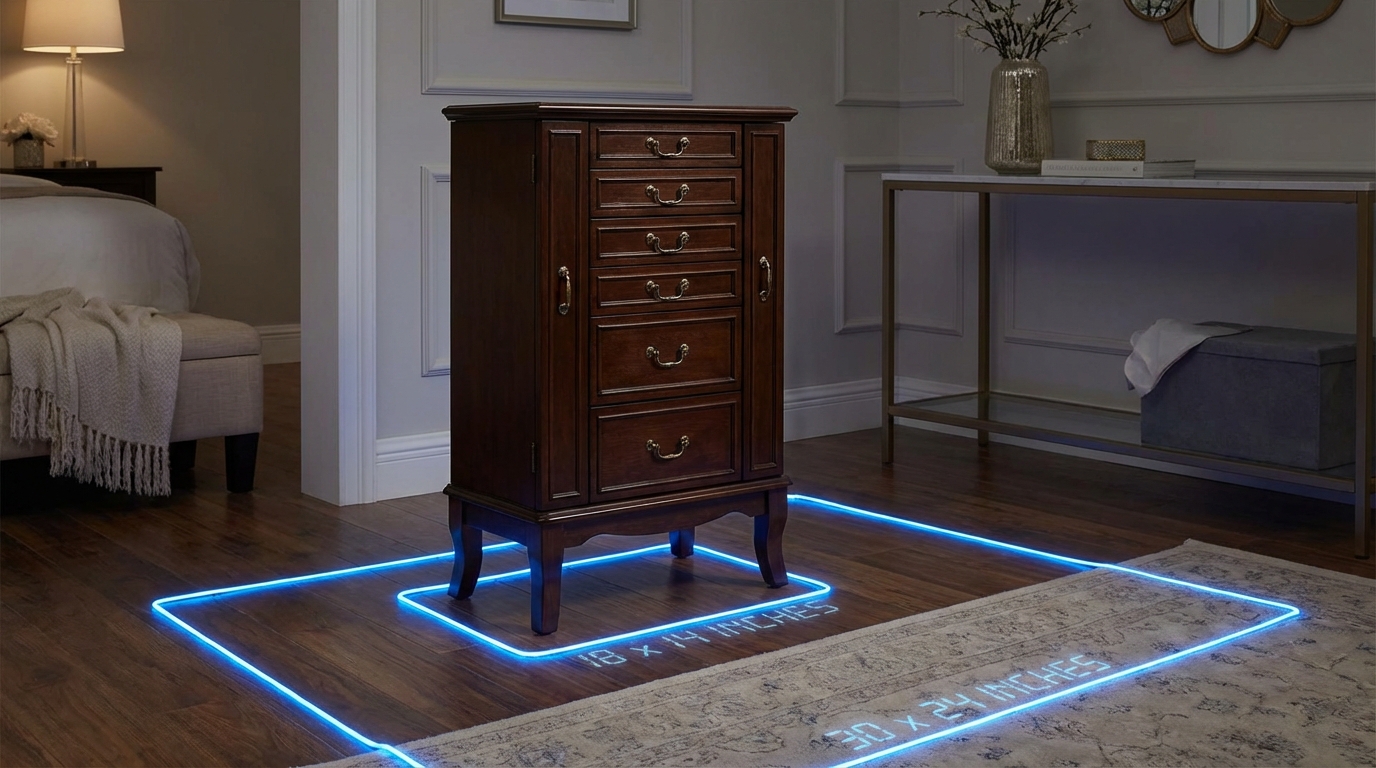
Calculating the floor footprint is the primary step when learning How to Measure for a Jewelry Armoire of the freestanding variety. You need to measure the width and depth of the base to ensure the floor can support the concentrated weight. This is particularly vital in commercial buildings with specific load-bearing requirements.
How to account for base stability?
Floor surfaces must be completely level to prevent the unit from tipping during operation. You should use a laser level to check for sloped surfaces before committing to a specific spot.
- Use blue tape to outline the base on the floor.
- Account for the thickness of any rugs or floor coverings.
Here is the thing: Stability is the foundation of furniture safety.
- Key Takeaway: A stable base footprint ensures the safety of both the operator and the delicate contents within.
| Measurement Type | Target Metric | Tool Required | |
|---|---|---|---|
| Base Width | Exact inches | Steel tape measure | |
| Base Depth | Exact inches | Steel tape measure | |
| Surface Level | 0-degree tilt | Bubble or laser level |
The following table summarizes the core metrics required to establish a secure and functional floor footprint.
How to Measure for a Jewelry Armoire Wall Space?
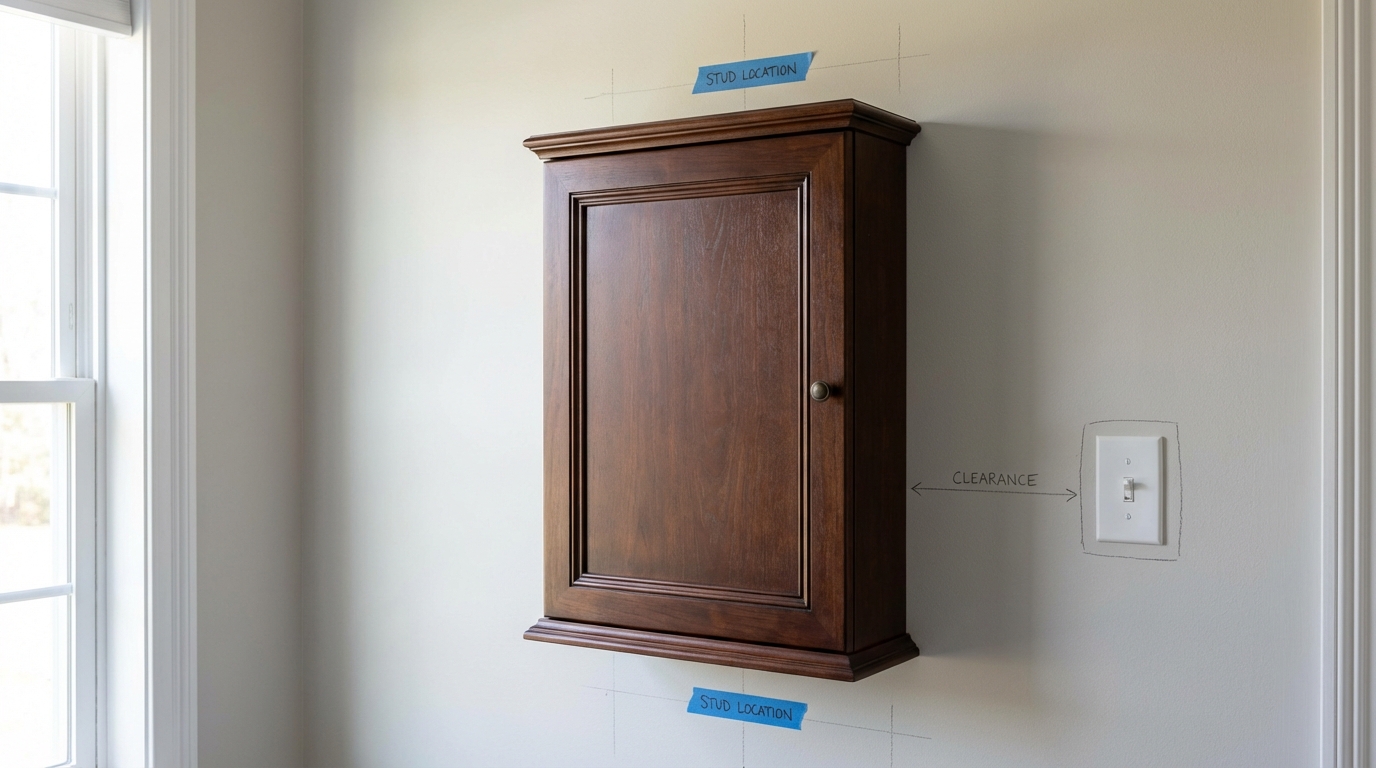
Wall-mounted units require you to identify structural support points while applying the principles of How to Measure for a Jewelry Armoire. You must locate wall studs to ensure the mounting hardware can sustain the unit’s weight once fully loaded. Failure to do so can result in significant property damage and loss of inventory.
Are there hidden obstacles?
Walls often house electrical conduits, plumbing, or HVAC vents that could interfere with installation. You should use a high-quality stud finder that also detects live wires and pipes.
- Mark the vertical center of the intended wall space.
- Verify that no light switches or outlets are obstructed.
Why does this matter? Structural integrity prevents catastrophic installation failures.
- Key Takeaway: Secure mounting into structural studs is mandatory for any wall-hanging jewelry storage unit.
| Wall Check | Action | Requirement | |
|---|---|---|---|
| Stud Location | Verify center | 16-inch or 24-inch intervals | |
| Obstacle Sweep | Scan for wires | Clear of electrical/plumbing | |
| Load Capacity | Weight test | Must support 2x unit weight |
Use these structural guidelines to ensure your wall-mounted storage remains safely anchored under full load.
How to Measure for a Jewelry Armoire Door Clearance?
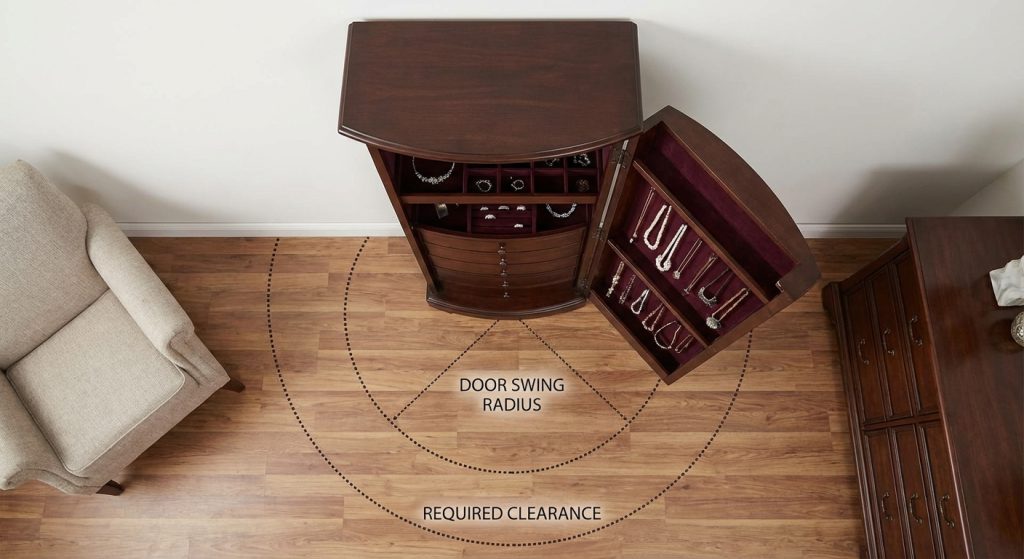
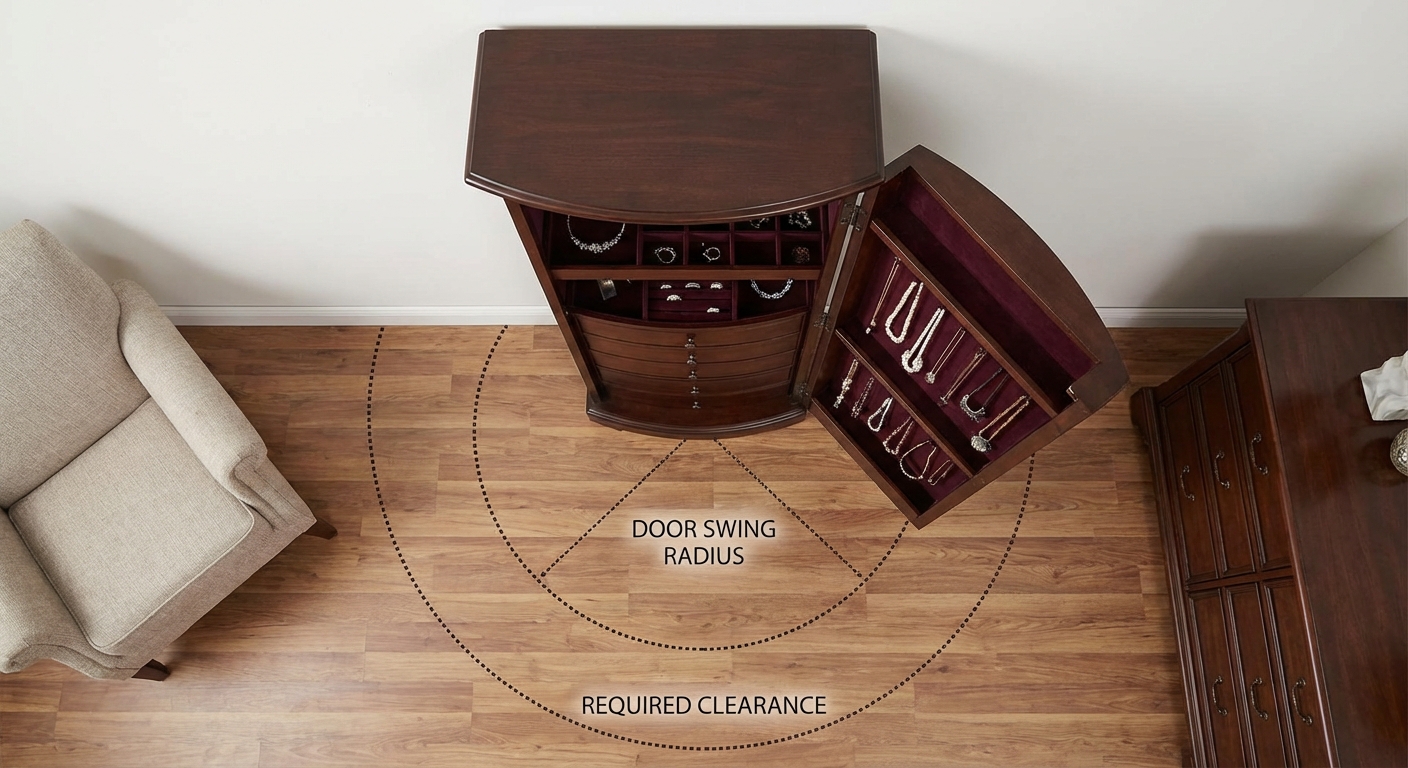
Measuring the door’s swing radius is a critical component of knowing How to Measure for a Jewelry Armoire to prevent collisions with other objects. You must calculate the distance from the hinge to the outer edge of the door when fully extended. This ensures the door can open at least 90 degrees for full access to interior compartments.
How much space is enough?
You should aim for at least 24 inches of clear space in front of the door for an operator to stand comfortably. This prevents the user from being trapped between the open door and another piece of furniture.
- Measure the door width.
- Add an additional 18-24 inches for user standing room.
The result? Seamless access improves daily operational efficiency.
- Key Takeaway: Sufficient door clearance is necessary for both accessibility and the physical protection of the unit’s hinges.
| Clearance Zone | Recommended Space | Purpose | |
|---|---|---|---|
| Swing Radius | Door width + 2″ | Prevents wall/furniture impact | |
| Standing Room | 24 inches | Operator comfort and safety | |
| Side Clearance | 6 inches | Access to side-hinged panels |
Proper clearance ensures that your staff can access inventory without damaging the unit or surrounding furniture.
How to Measure for a Jewelry Armoire Total Height?
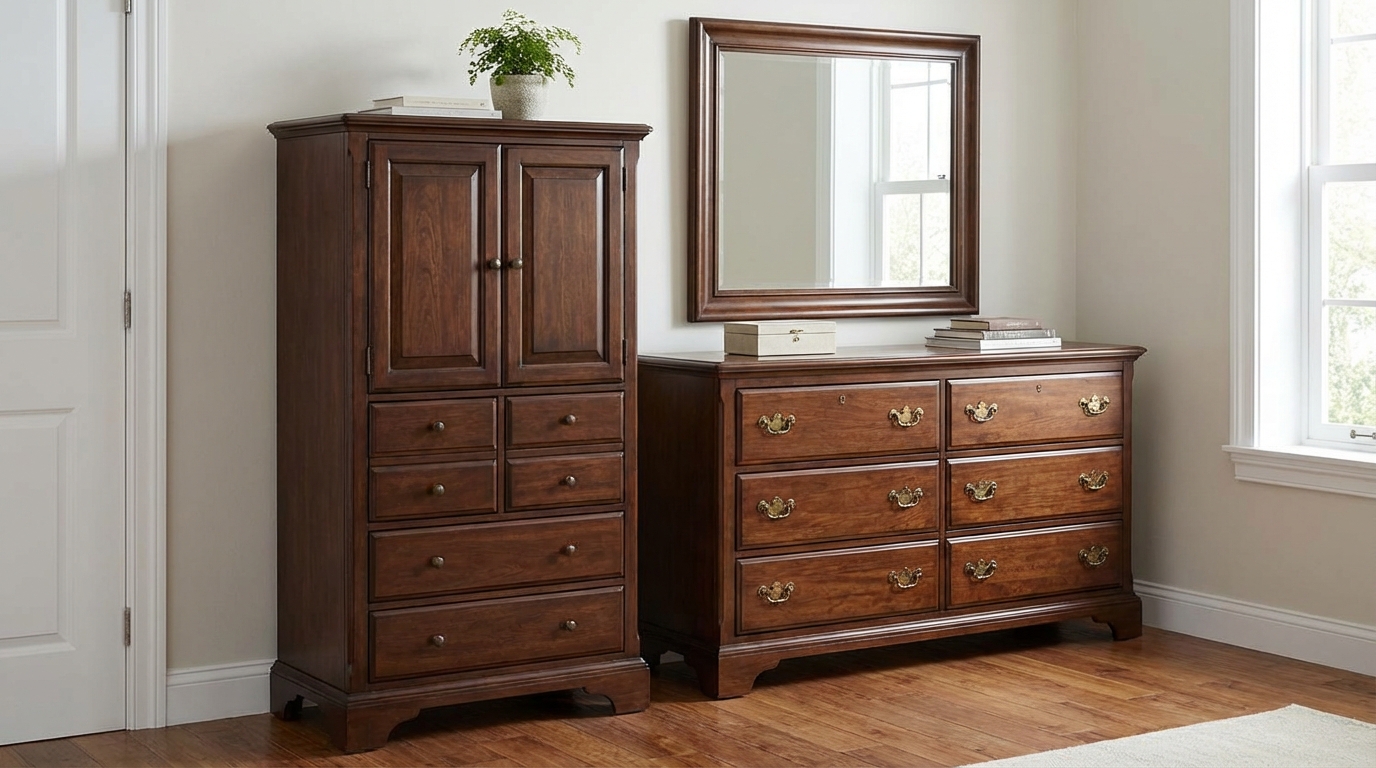
Vertical dimensions must be analyzed carefully when mastering How to Measure for a Jewelry Armoire to ensure the unit fits under ceiling height or wall decor. You should measure from the floor to the highest point of the unit, including any decorative molding or top lids. This measurement determines if the piece will visually overwhelm the room or clash with existing sightlines.
Is height tied to ergonomics?
The top surface of the armoire should be at a height that allows for easy viewing if it contains a mirror. You want to avoid placing mirrors too high or too low for the average user.
- Check for ceiling fan clearance if the unit is tall.
- Measure existing furniture to maintain a consistent horizontal line.
Consider the following: Sightlines affect the overall professional look of the room.
- Key Takeaway: Total height impacts both the aesthetic balance of the room and the ergonomic accessibility of the top compartments.
| Unit Type | Typical Height | Consideration | |
|---|---|---|---|
| Slim Standing | 40 – 50 inches | Great for small footprints | |
| Large Wardrobe | 60+ inches | Requires high ceiling clearance | |
| Wall Mounted | Adjustable | Set to user eye-level |
Balancing height with room proportions ensures a professional and harmonious environment.
How to Measure for a Jewelry Armoire Drawer Depth?
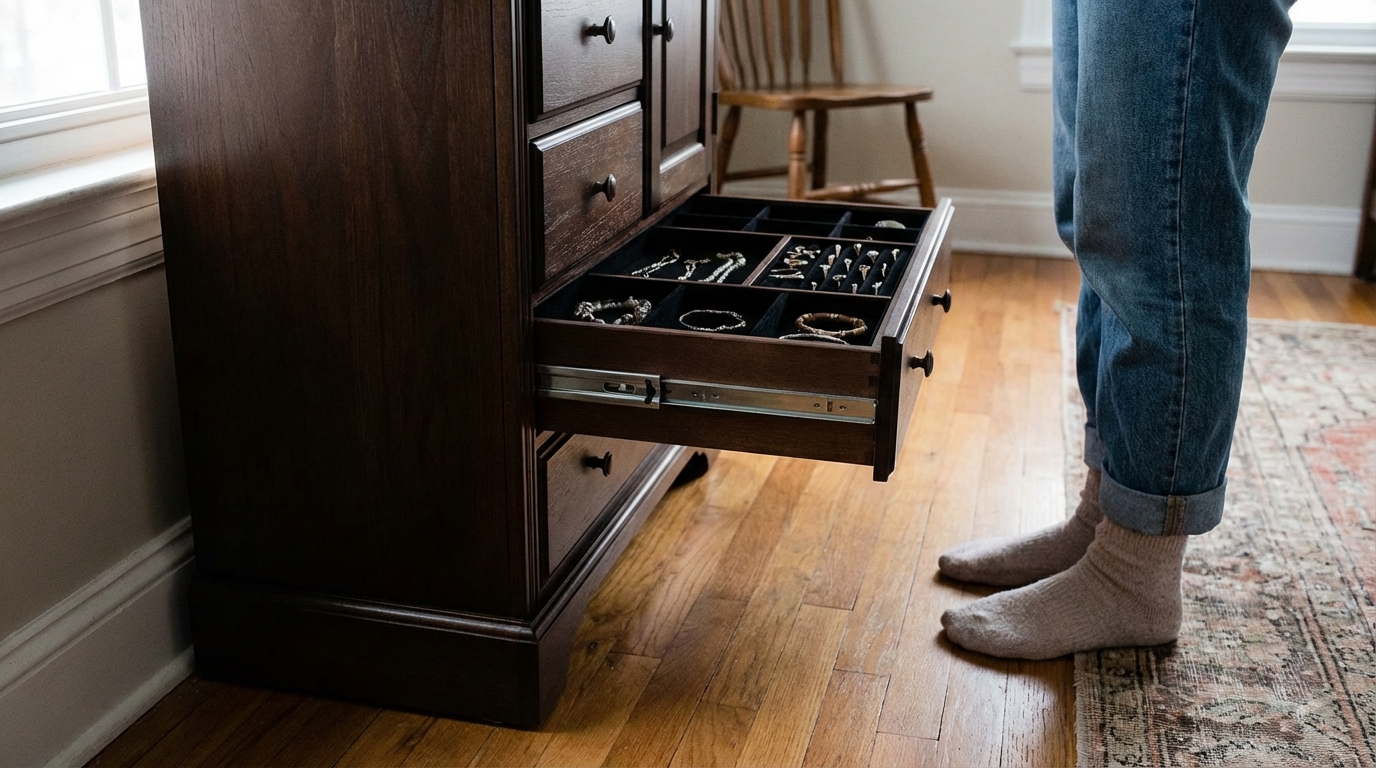
Calculating the extension distance of the drawers is a vital part of How to Measure for a Jewelry Armoire for safe operational use. You need to know how far each drawer travels when fully open to prevent blocking walkways or hitting bedframes. Drawers often extend significantly, doubling the effective depth of the furniture during use.
Can you fit specialized inserts?
The internal depth of the drawers must be measured to see if they can accommodate custom earring boxes or ring trays. You must ensure that the drawer slides are rated for the weight of your specific jewelry collection.
- Measure the drawer’s full extension length.
- Verify internal clearance for tall jewelry displays.
Think about this: An obstructed drawer is a useless drawer.
- Key Takeaway: Accurate drawer extension measurements prevent spatial conflicts and ensure full access to stored valuables.
| Component | Measurement Needed | Benefit | |
|---|---|---|---|
| Slide Extension | Full travel length | Prevents aisle blockages | |
| Internal Depth | Vertical height | Fits bulkier storage boxes | |
| Drawer Width | Side-to-side | Determines tray capacity |
Understanding these depths allows you to plan for a smooth workflow without physical obstructions.
How to Measure for a Jewelry Armoire Side Storage?
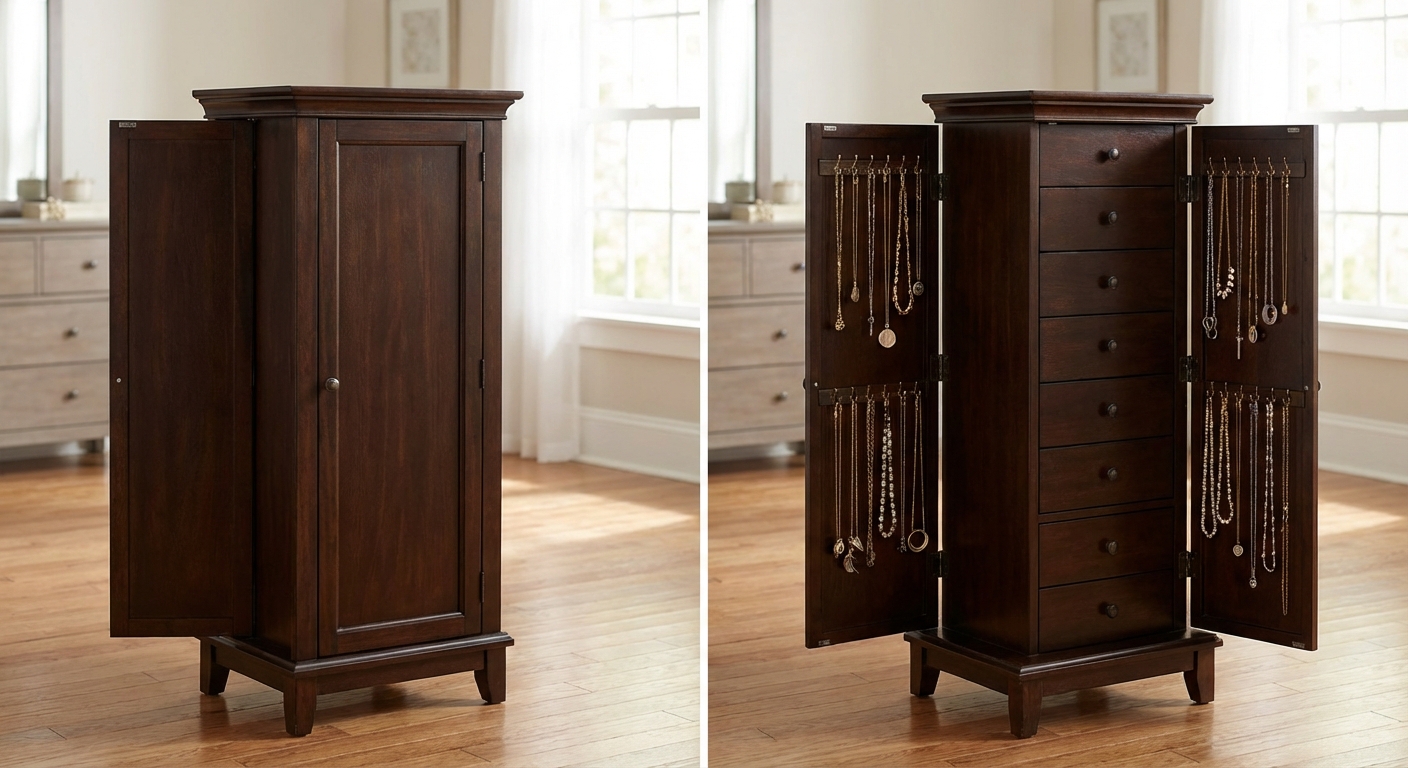
Side-access compartments demand extra horizontal clearance when you are learning How to Measure for a Jewelry Armoire. Many professional-grade units feature wings that swing out to hold necklace boxes or hanging chains. You must ensure that there is enough lateral space on both sides of the unit for these doors to open 180 degrees.
Why check side angles?
If you place the armoire in a corner, one side door may be rendered completely unusable. You should allow for at least 12 inches of space on either side of the main cabinet body.
- Measure the width of the side-swinging doors.
- Check for clearance against wall moldings or door frames.
It gets better: Full expansion maximizes your storage capacity.
- Key Takeaway: Side storage requires significant lateral space that must be factored into the unit’s total “open width.”
| Position | Clearance Requirement | Status | |
|---|---|---|---|
| Left Side Door | 12 – 15 inches | Mandatory for access | |
| Right Side Door | 12 – 15 inches | Mandatory for access | |
| Corner Placement | Not recommended | Limits dual-side access |
Calculating lateral swing ensures you can utilize 100% of the storage features your unit provides.
How to Measure for a Jewelry Armoire Lift-Top Lid?
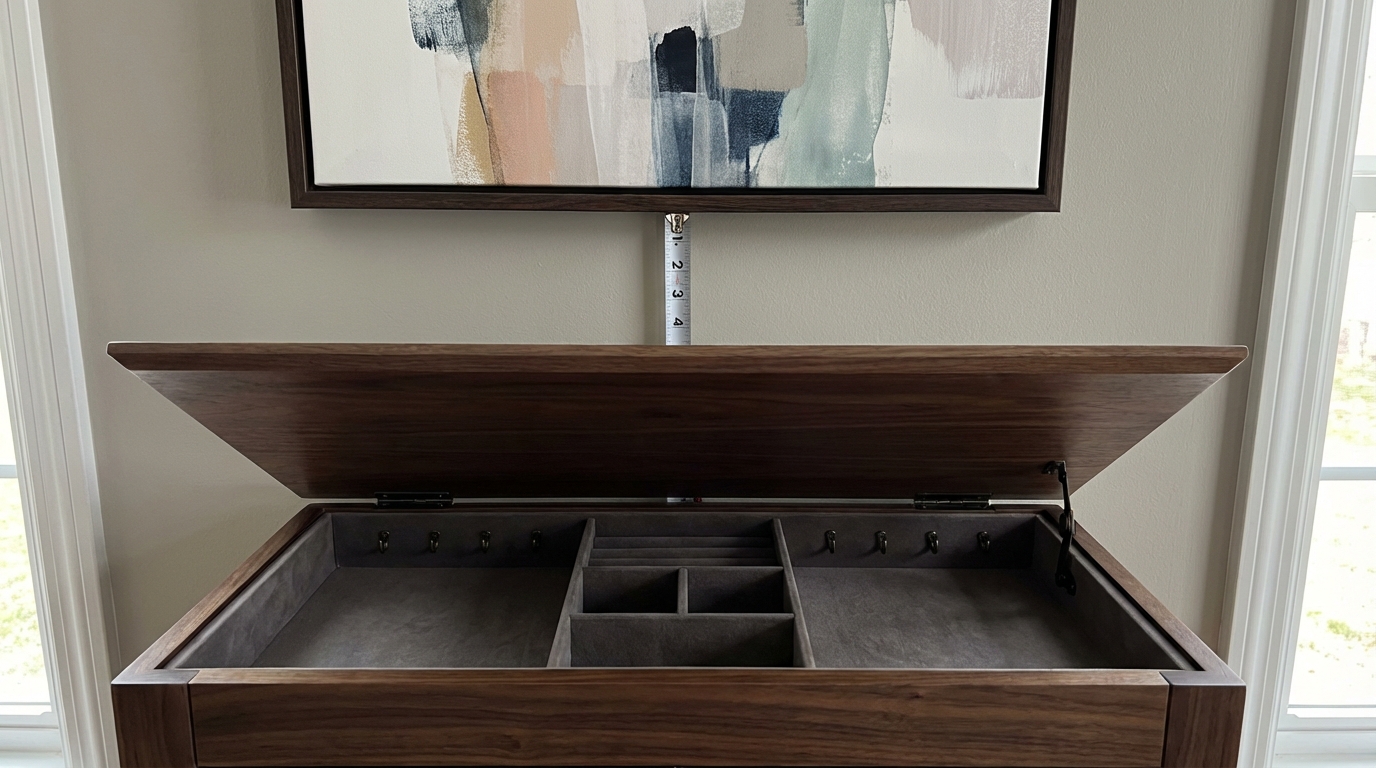
Vertical clearance above the unit is essential when determining How to Measure for a Jewelry Armoire with a top-opening lid. You need to account for the height of the lid when it is fully raised to avoid hitting wall art, lamps, or low-hanging shelves. This lid often houses a vanity mirror, making its full extension necessary for everyday use.
Will it hit the wall?
If the hinges are at the back, the lid may require a gap between the armoire and the wall to open fully. You should measure the depth required for the lid’s arc of motion.
- Measure the height of the lid.
- Add this height to the unit’s base height for total vertical clearance.
The logic is simple: Clearance prevents damage to walls and furniture.
- Key Takeaway: Lift-top lids require both vertical and potentially rear clearance to function without damaging the unit’s hinges.
| Lid State | Total Height Requirement | Impact | |
|---|---|---|---|
| Closed | Standard unit height | Basic footprint | |
| Fully Open | Unit height + Lid height | Functional height | |
| Wall Gap | 2 – 4 inches | Hinge protection |
Always verify vertical space to ensure your vanity mirror remains functional and safe from overhead obstructions.
How to Measure for a Jewelry Armoire Path of Entry?
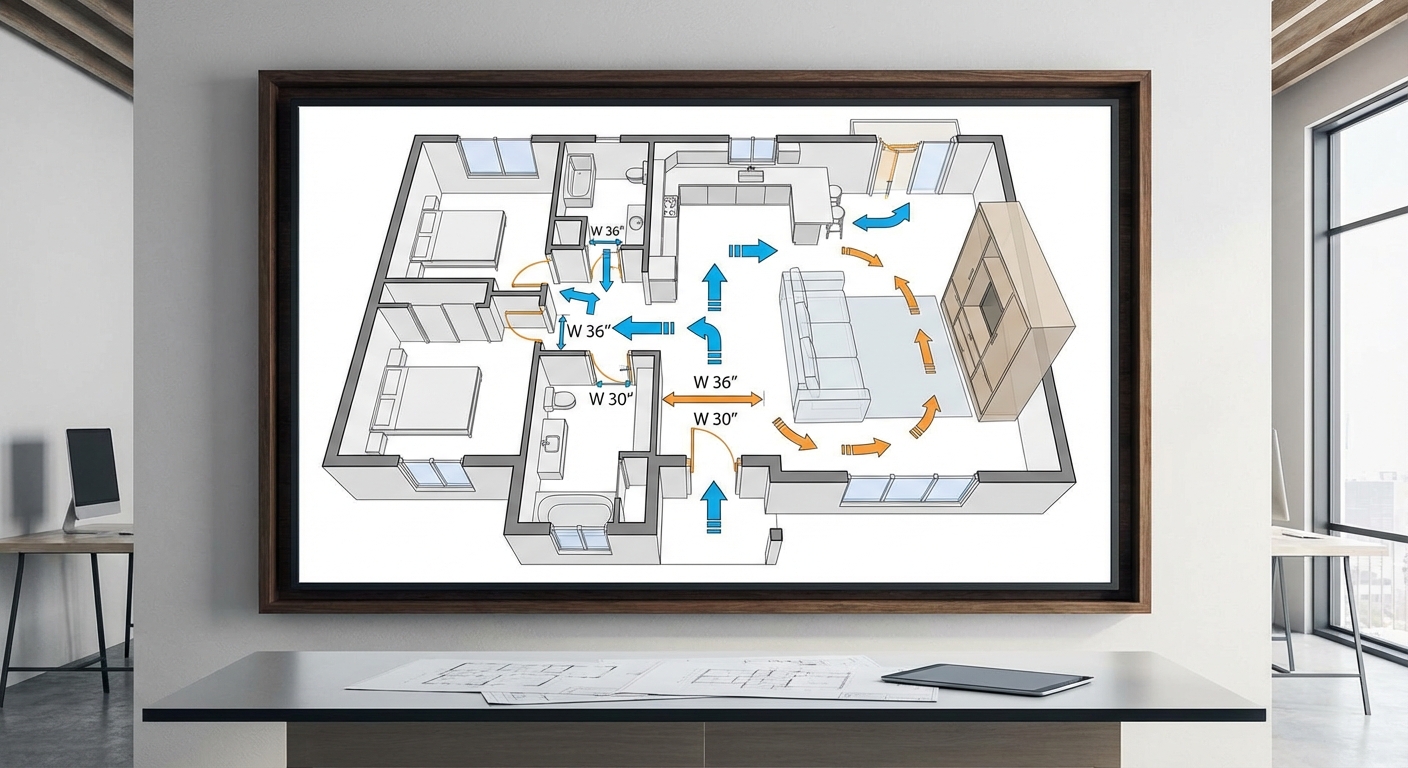
Logistical success depends on your ability to map the delivery route while applying How to Measure for a Jewelry Armoire. You must measure every doorway, hallway, and stairwell that the unit must pass through to reach its final destination. Professional furniture often ships in large, protective crates that are wider than the unit itself.
What about tight turns?
Stairwell landings often present the greatest challenge for large vertical cabinets. You should measure the ceiling height and the turn radius of every corner on the delivery path.
- Measure the narrowest door frame.
- Account for elevator interior dimensions if applicable.
Think about this: A unit that doesn’t fit through the door is a failed investment.
- Key Takeaway: The “path of entry” measurements are just as critical as the final room placement dimensions.
| Entry Point | Min Width Needed | Check Status | |
|---|---|---|---|
| Main Doorway | Unit width + 4″ | Clear | |
| Hallway Corner | Diagonal radius | Clear | |
| Stairwell | Vertical height | Clear |
Verify these logistical points to ensure your delivery proceeds without damage to your facility or the new furniture.
How to Measure for a Jewelry Armoire Layout Needs?
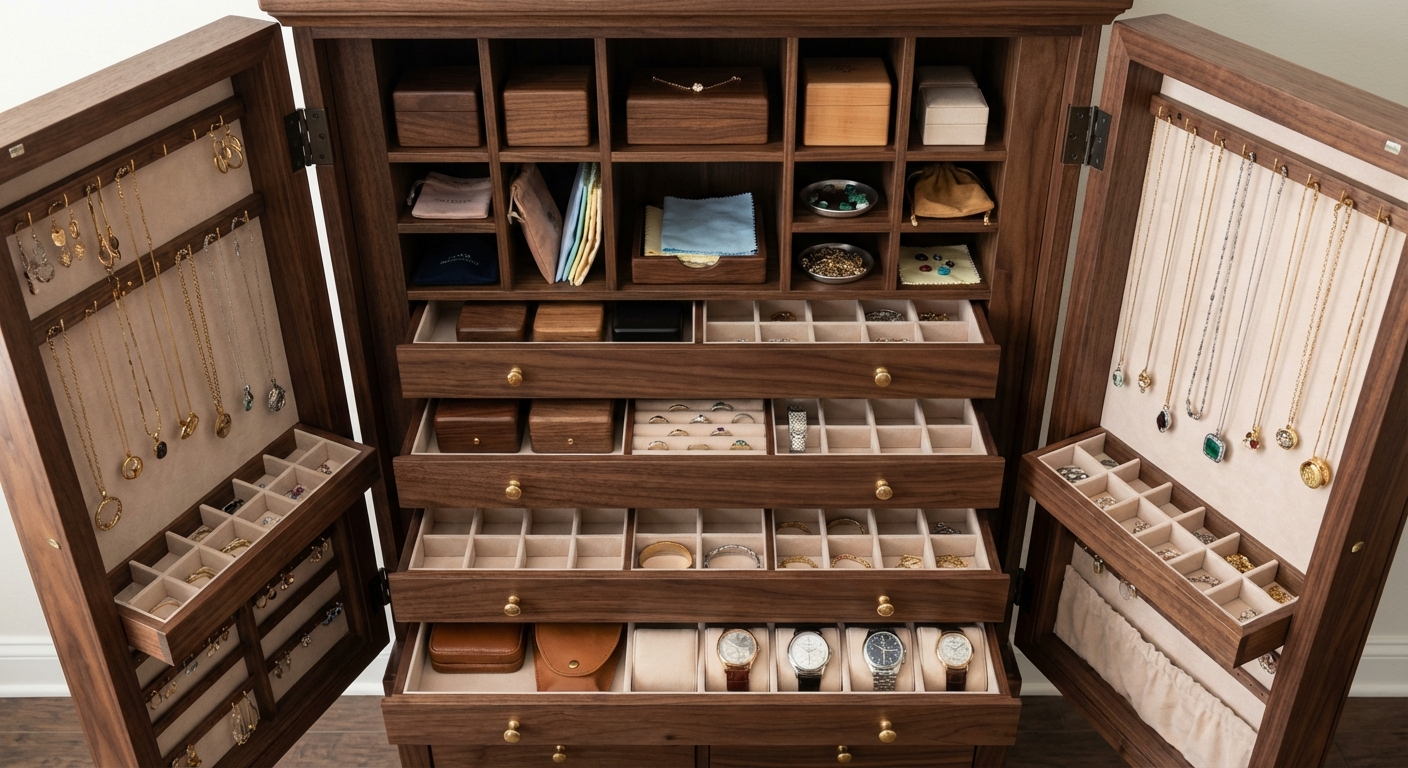
Internal capacity must align with your current and future inventory when learning How to Measure for a Jewelry Armoire. You should inventory your collection by type to determine if you need more hanging hooks for necklaces or specialized slots for ring boxes . A professional layout ensures that high-value items are organized and easily accessible for rapid deployment.
How to plan for growth?
You should choose a unit that offers roughly 20% more internal capacity than your current inventory requires. This allows for business growth without needing to replace your storage solution within a few months.
- Count the number of rings, watches, and necklaces.
- Allocate space for bulkier items like bracelet boxes .
The secret? Organization is the key to inventory security.
- Key Takeaway: Internal measurements must be prioritized to ensure the unit can actually house your specific jewelry collection efficiently.
| Item Type | Required Storage Feature | Capacity Plan | |
|---|---|---|---|
| Necklaces | Vertical hanging hooks | Current + 20% | |
| Rings | Padded foam slots | Current + 20% | |
| Bracelets | Deep drawers/pillows | Current + 20% |
Mapping your inventory against internal dimensions guarantees that your new armoire will meet your operational requirements for years to come.
Conclusion
Mastering the art of furniture measurement is the only way to ensure your storage solutions are both functional and safe. By following this guide, you have solved the critical problem of spatial planning, allowing for a seamless integration of new assets into your professional environment. From a brand standpoint, we believe that premium jewelry deserves a meticulously planned home that reflects the quality of the items within. To ensure your collection is perfectly protected, contact us today for expert advice on custom inserts and professional packaging solutions.
FAQ: Frequently Asked Questions
- What’s the best way to visualize the unit in my space? Judgment: Use blue painter’s tape. This creates a physical outline on your floor or wall that allows you to walk around the space and test for real-world clearance and workflow obstructions.
- Can I place a heavy armoire on a plush carpet? Judgment: Yes, but use a stabilizing base. Carpet can cause taller units to lean or wobble, so you must measure for a solid furniture pad or anti-tip hardware to ensure safety.
- What’s the best clearance for side-swinging necklace doors? Judgment: Allow at least 12 inches per side. These doors often house hooks for necklaces and require a full 180-degree swing to allow the user to view and retrieve items without straining the hinges.
- Can I install a wall-mounted unit on drywall alone? Judgment: No, always anchor to studs. Jewelry armoires are heavy and become significantly heavier when loaded; anchoring directly into structural studs is the only way to prevent the unit from falling.
- What’s the best height for a built-in vanity mirror? Judgment: Align with eye-level. You should measure the height of the primary user and ensure the center of the mirror sits approximately 58 to 60 inches from the floor for optimal ergonomics.