
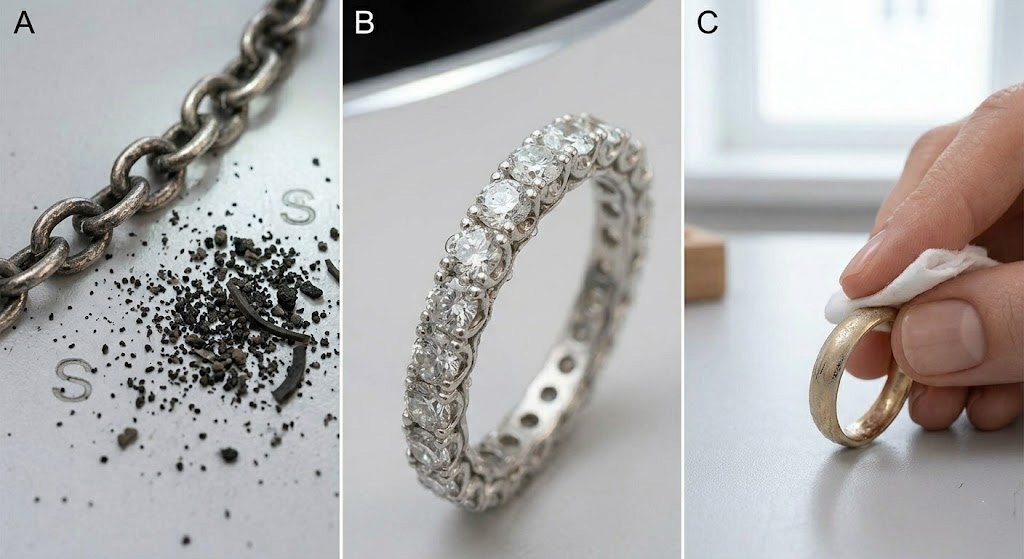
You can store jewelry to prevent tarnish by keeping pieces in a cool, dry, and airtight environment using specialized anti-tarnish materials and individual compartments. Maintaining a high-value collection becomes a significant challenge when environmental factors begin to dull the brilliance of your metals. It is incredibly frustrating to discover that your favorite silver chains have turned black or your gold bracelets have lost their luster due to simple storage neglect. Fortunately, mastering how to prevent tarnish on jewelry is straightforward when you implement professional-grade packaging solutions and environmental controls.
Why is it vital to know how to prevent tarnish on jewelry?
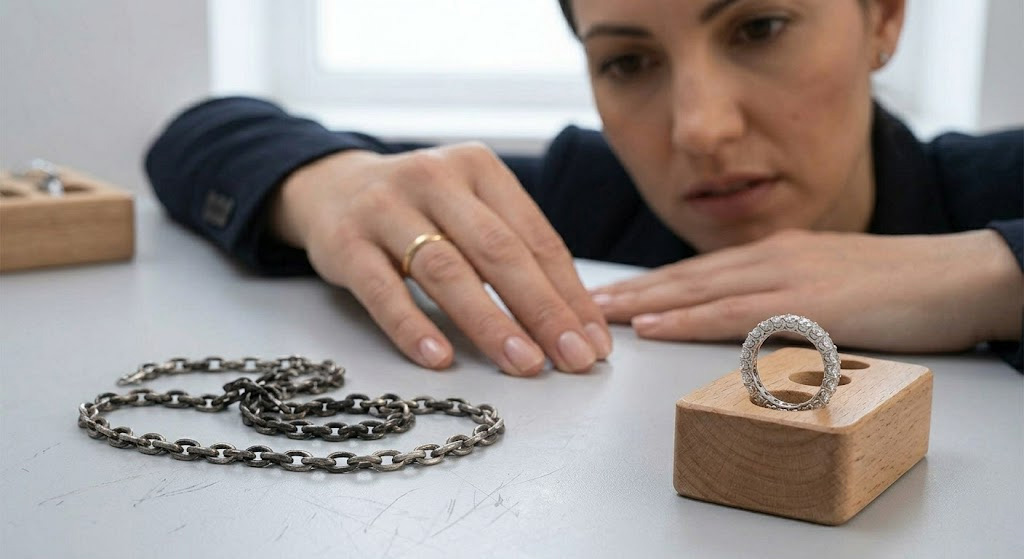
Understanding the chemistry of metal protection ensures that your collection maintains its market value and aesthetic appeal for years. Learning how to prevent tarnish on jewelry is the most effective way to protect your long-term inventory investment from oxidation. Without these preventative steps, chemical reactions with the air will inevitably degrade the surface of your pieces.
Does oxidation affect every metal?
Most metals, including sterling silver and low-karat gold, react with sulfur and oxygen in the atmosphere. This reaction creates a thin layer of corrosion that we recognize as tarnish or discoloration.
Believe it or not: even gold can appear dull if the alloys mixed with it, such as copper, begin to oxidize.
How does tarnish impact resale value?
- Tarnish creates a perception of neglect which can lower the appraised value of fine jewelry.
- Persistent oxidation can lead to permanent pitting or structural damage in delicate filigree.
- Professional cleaning costs can eat into your profit margins if storage isn’t handled correctly.
Key Takeaway: Proactive storage is always more cost-effective than reactive cleaning or restoration.
| Storage Factor | Impact on Value | Solution | |
|---|---|---|---|
| Air Exposure | High (Oxidation) | Use airtight boxes | |
| Metal Contact | Medium (Scratches) | Individual slots | |
| Moisture | High (Corrosion) | Silica gel packets |
Understanding why protection matters is the first step toward a pristine collection.
What causes need you to learn how to prevent tarnish on jewelry?
Environmental triggers like sulfur, moisture, and chemical pollutants are the primary culprits behind jewelry oxidation. When you investigate how to prevent tarnish on jewelry, you quickly realize that the air around you is filled with reactive elements. These invisible threats work silently to strip the shine from your necklaces and rings.
Why is sulfur the enemy of silver?
Sulfur compounds in the air react instantly with silver to create silver sulfide, the black coating known as tarnish. This gas is often found in urban pollution, certain papers, and even some fabrics.
Wait, there’s more: sulfur can even be found in common household items like rubber bands or certain types of wood.
Does your skin chemistry play a role?
- Natural skin oils and sweat can trap moisture against the metal surface.
- Acids from perfumes and lotions accelerate the chemical breakdown of metal finishes.
- Residue from everyday wear acts as a magnet for dust and air pollutants.
Key Takeaway: External pollutants and personal care products are major contributors to metal degradation.
| Cause | Effect | Preventative Action | |
|---|---|---|---|
| Pollution | Rapid Tarnish | Sealed containers | |
| Humidity | Corrosion | Desiccant packs | |
| Chemicals | Plating Loss | Wipe after wear |
Identifying these causes allows you to build a defense strategy that keeps your jewelry bright.
Does air quality change how to prevent tarnish on jewelry?
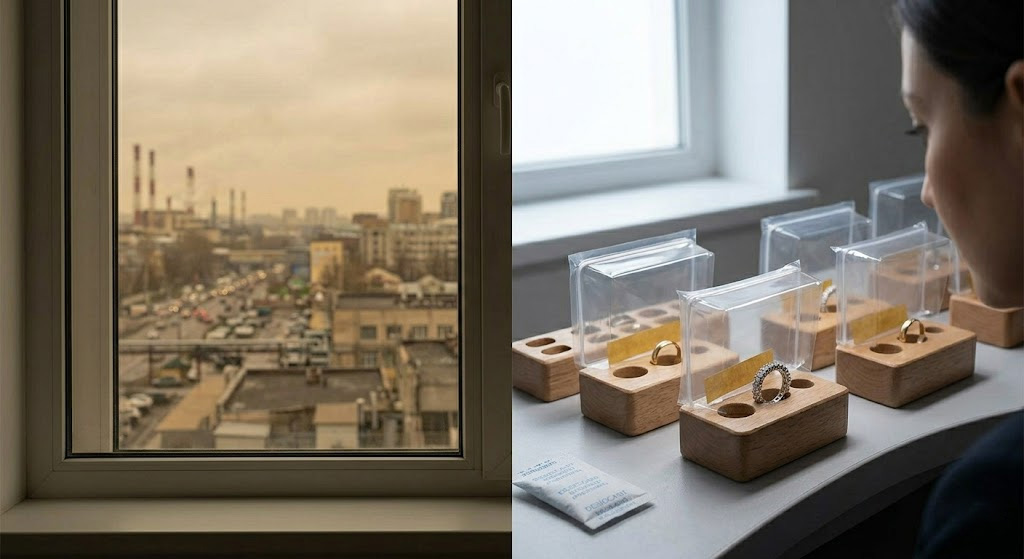
Air quality is a decisive factor because pollutants like sulfur dioxide act as catalysts for the tarnishing process. Utilizing specialized tech in how to prevent tarnish on jewelry involves creating a physical barrier between the metal and the ambient atmosphere. Urban environments often require more rigorous sealing methods than rural areas with cleaner air.
Are urban environments more dangerous?
City air often contains higher concentrations of industrial pollutants that react quickly with precious metals. If you live in a high-traffic area, your jewelry is at a much higher risk of rapid oxidation.
Here is the kicker: even the gases released by new furniture or paint in your home can cause jewelry to tarnish faster.
Should you use vacuum-sealed storage?
- Vacuum-sealed bags completely remove the oxygen needed for the tarnish reaction to occur.
- Suspension packaging provides a similar benefit by clamping the item between protective films.
- Limiting the surface area exposed to air is the most effective way to slow down oxidation.
Key Takeaway: Eliminating air contact is the single most effective way to stop the tarnish reaction.
| Air Element | Threat Level | Protection Method | |
|---|---|---|---|
| Oxygen | High | Airtight seals | |
| Sulfur Dioxide | Extreme | Anti-tarnish strips | |
| Dust | Low | Fabric lining |
Controlling the air around your jewelry creates a micro-environment of permanent brilliance.
Is cleaning the first step in how to prevent tarnish on jewelry?
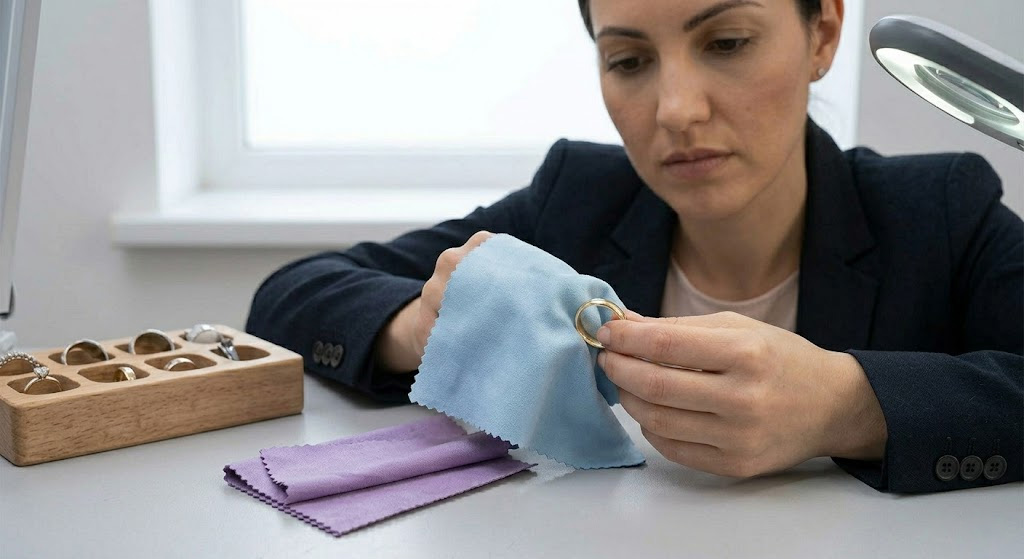
Yes, because storing jewelry with surface contaminants like oils or sweat will trap those reactive elements against the metal. When you practice how to prevent tarnish on jewelry, you must ensure every piece is physically clean before it enters a storage box. Even a small amount of residue can cause localized pitting or permanent staining during long-term storage.
What is the safest cleaning method?
You should use a soft, lint-free microfiber cloth to gently wipe down your pieces after every single wear. This simple habit removes skin oils and environmental dust before they can cause a reaction.
Think about this: using harsh chemicals or abrasive toothbrushes can actually create microscopic scratches that make tarnishing happen faster.
Why avoid water for certain pieces?
- Water can get trapped in hollow links or under gemstones, leading to internal corrosion.
- Costume jewelry often uses adhesives that can be dissolved or weakened by moisture.
- Pearls are organic and can be damaged if they are submerged in water for too long.
Key Takeaway: A dry, gentle wipe is the safest preparation for placing your jewelry into storage.
| Cleaning Tool | Best For | Benefit | |
|---|---|---|---|
| Microfiber Cloth | All Metals | Removes oils | |
| Polishing Cloth | Silver/Gold | Restores luster | |
| Soft Brush | Gemstones | Removes debris |
Cleaning is the foundation of a preservation routine that prevents tarnish from starting.
Where is the best place for how to prevent tarnish on jewelry?
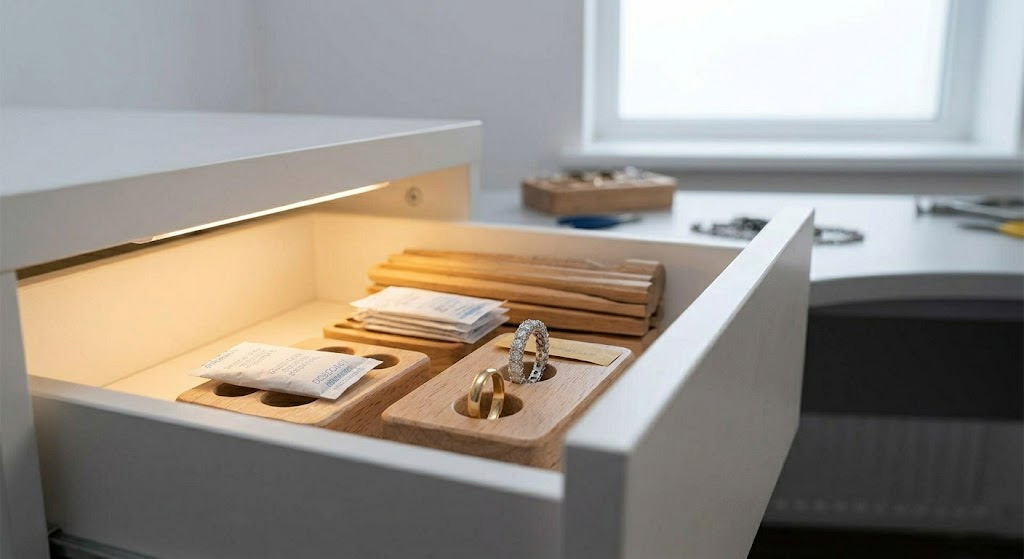
The ideal storage location is a cool, dark, and dry space away from direct sunlight or temperature fluctuations. When selecting a how to prevent tarnish on jewelry location, you must avoid the bathroom due to the high levels of steam and moisture. A dedicated jewelry box kept inside a bedroom closet or dresser drawer is usually the best option for most collectors.
Why is the bathroom a tarnish trap?
Bathrooms experience constant humidity spikes from showers, which acts as a catalyst for the oxidation of silver and copper. Moisture in the air will find its way into even moderately sealed boxes, accelerating the aging process of your pieces.
Believe it or not: even the steam from a hot shower can penetrate standard jewelry box lids.
Is sunlight a threat to your collection?
- UV rays can cause certain gemstones like amethyst or smoky quartz to fade over time.
- Heat from the sun can dry out organic materials like pearls or opals, causing them to crack.
- High temperatures can degrade the adhesives used in many modern jewelry designs.
Key Takeaway: Stability in temperature and humidity is essential for long-term jewelry preservation.
| Location | Risk | Recommendation | |
|---|---|---|---|
| Bathroom | High Humidity | Avoid completely | |
| Window Sill | UV/Heat | Move to shade | |
| Closet | Minimal | Ideal for storage |
Choosing the right environment ensures that your protective packaging can do its job effectively.
Do anti-tarnish bags aid how to prevent tarnish on jewelry?
Professional anti-tarnish bags provide a chemical and physical barrier that neutralizes the gases responsible for oxidation. These specialized tools are a core component of how to prevent tarnish on jewelry for professional jewelers and serious collectors alike. Unlike standard plastic bags, these contain treated materials that actively absorb sulfur before it reaches your silver.
How do anti-tarnish strips work?
Anti-tarnish strips are infused with compounds that act like a magnet for sulfur and other atmospheric pollutants. Placing one of these inside your jewelry box creates a protective zone that extends the time between cleanings.
It gets better: these strips are extremely affordable and can protect your jewelry for up to a full year.
Should you use silica gel packets?
- Silica gel absorbs excess moisture, preventing the “damp” conditions that lead to corrosion.
- They are especially important if you live in a tropical or humid climate where air moisture is high.
- Combining silica gel with anti-tarnish strips provides a dual-layer defense system.
Key Takeaway: Active chemical protection is the best way to supplement your physical storage containers.
| Protective Tool | Function | Replacement | |
|---|---|---|---|
| Tarnish Strips | Neutralize sulfur | Every 6-12 months | |
| Silica Gel | Absorb moisture | When saturated | |
| Velvet Pouches | Prevent scratches | As needed |
Using the right materials transforms a simple box into a high-tech preservation chamber.
Does organization help how to prevent tarnish on jewelry?
Proper organization prevents metals from touching each other, which stops both physical scratching and potential chemical reactions. Implementing how to prevent tarnish on jewelry through compartmentalization ensures that a tarnished silver piece doesn’t “infect” a neighboring gold item. Separate slots for necklaces also prevent the tangling that can lead to broken chains or weakened links.
Why separate different metals?
Silver tarnishes much faster than gold, and the silver sulfide can potentially transfer to other pieces if they are in direct contact. Keeping your different metal types in their own drawers or pouches is a fundamental best practice.
Wait, there’s more: harder gemstones like diamonds can easily scratch softer metals like gold if they are stored in the same pile.
How do dividers improve longevity?
- Dividers keep chains straight, preventing the friction that can wear down metal plating.
- Individual ring slots ensure that delicate prongs aren’t bent by the weight of other items.
- Pendant hooks keep necklaces from bunching at the bottom of a box where moisture traps.
Key Takeaway: Separation is the key to preventing both surface damage and cross-contamination tarnish.
| Organizer Type | Best For | Benefit | |
|---|---|---|---|
| Ring Slots | Rings/Studs | Prongs stay safe | |
| Necklace Hooks | Chains | No tangles/knots | |
| Trays/Dividers | Bracelets | Prevent scratches |
A well-organized box makes it easier to maintain your collection while keeping every piece safe.
Can airflow impact how to prevent tarnish on jewelry for pearls?
Unlike most metals, organic pearls actually require a small amount of airflow to prevent the nacre from dehydrating and cracking. When you learn how to prevent tarnish on jewelry, you must treat pearls as the exception to the “airtight” rule. Storing pearls in a plastic bag or a vacuum-sealed case for a long time will cause them to lose their natural luster.
Why are pearls so sensitive?
Pearls are organic gems made of calcium carbonate and water, which means they can literally “choke” if kept in a completely sealed environment. They need to breathe the natural moisture from the air to maintain their structural integrity.
To put it simply: if pearls get too dry, they will turn brittle and the surface will start to flake off.
What is the best fabric for pearls?
- Soft silk pouches are the gold standard because they are gentle on the delicate surface.
- Breathable cotton bags allow for enough air circulation while still providing protection from dust.
- Avoid storing pearls in rough fabrics like wool or linen which can cause surface abrasions.
Key Takeaway: Pearls require breathable storage to maintain their moisture levels and natural glow.
| Gem Type | Air Requirement | Ideal Container | |
|---|---|---|---|
| Sterling Silver | None (Airtight) | Sealed PE Case | |
| Organic Pearls | Moderate (Breathable) | Silk Pouch | |
| Gold Alloys | Minimal | Fabric-lined Box |
Balancing airflow for organics and airtight seals for metals is the hallmark of an expert collector.
Do DIY hacks assist in how to prevent tarnish on jewelry?
Simple household items like school chalk or baking soda can act as surprisingly effective moisture and odor absorbers in a pinch. When you need a quick solution for how to prevent tarnish on jewelry , these DIY methods can help maintain a dry environment. However, you must ensure these materials never come into direct contact with the jewelry surface to avoid scratching.
Can chalk really absorb humidity?
Standard white school chalk is highly porous and will naturally pull moisture out of the air inside a small jewelry box. Placing a few pieces of chalk in the corner of your drawer is a time-tested trick for keeping silver bright.
In other words: chalk acts like a low-cost version of a professional silica gel packet.
Is baking soda safe for storage?
- Baking soda neutralizes acidic gases in the air that can cause certain metals to discolor.
- A small open container of baking soda in your jewelry closet can help keep the air neutral.
- Never use baking soda as a scrub, as its abrasive particles will scratch gold and silver.
Key Takeaway: DIY hacks are useful for air control but should never touch the jewelry directly.
| DIY Hack | Material | Purpose | |
|---|---|---|---|
| Moisture Trap | White Chalk | Humidity control | |
| Acid Neutralizer | Baking Soda | Gas absorption | |
| Soft Barrier | Cotton Balls | Padding/Air gap |
Using household items as secondary defense can save you money while protecting your collection.
Why avoid plastic for how to prevent tarnish on jewelry?
Standard plastic bags can release chemicals over time that actually accelerate the tarnishing of silver and the dulling of gold. When researching how to prevent tarnish on jewelry, experts always warn against using low-quality PVC plastics. These materials can trap moisture against the metal and even leave a sticky residue that is difficult to remove.
Does plastic release harmful gases?
Many cheap plastics “off-gas” as they age, releasing acidic compounds that are highly reactive with metal surfaces. This can lead to rapid discoloration or even the permanent degradation of the metal’s finish.
Here is the deal: if you must use plastic, ensure it is high-density polyethylene (PE) or polypropylene, which are chemically stable.
What are the risks of trapped moisture?
- Plastic creates a non-breathable seal that can trap humidity inside the bag.
- Condensed moisture leads to water spots and accelerated corrosion on copper-based alloys.
- Trapped air inside a plastic bag still contains enough oxygen to cause silver to turn black.
Key Takeaway: Only use archival-grade, acid-free plastics if you choose to go the plastic route.
| Material | Risk Level | Recommendation | |
|---|---|---|---|
| Standard PVC | High | Avoid completely | |
| Archival PE Film | Low | Safe for display | |
| Acid-Free Paper | Minimal | Safe for wrapping |
Avoiding the wrong materials is just as important as choosing the right ones for your storage.
FAQ: Common Storage Questions
- Can I store silver and gold together?It is best to separate them. Silver tarnishes faster and can transfer sulfur compounds to adjacent gold pieces, causing them to dull.
- What’s the best humidity level for jewelry?Ideally, keep your jewelry in an environment with less than 50% humidity to prevent moisture-related corrosion.
- How do I know if a jewelry box is anti-tarnish?Look for labels specifying “sulfur-free” or “tarnish-resistant” linings, as these are chemically treated to protect metals.
- Can I use a hair dryer to fix wrinkled film boxes?Yes, a quick blast of hot air will cause the specialized PE suspension film to shrink back to its original flat state.
- What’s the best way to store costume jewelry?Keep it completely dry and stored in individual soft pouches to prevent the thin plating from scratching or flaking off.
Conclusion: Preserve Your Investment
Protecting your collection from the elements is an essential part of jewelry ownership that pays dividends in beauty and value. By understanding the specific needs of different metals—from the airtight requirements of sterling silver to the breathable needs of organic pearls—you can create a storage system that works. Implementing professional-grade packaging, maintaining a clean environment, and avoiding common mistakes like high-humidity storage will ensure your pieces remain radiant.
Your jewelry tells a story, and it is up to you to keep that story shining. Contact us today to find the perfect factory-direct packaging solutions that shield your treasures from tarnish and time. Together, we can ensure your collection stays as brilliant as the day you first wore it.