
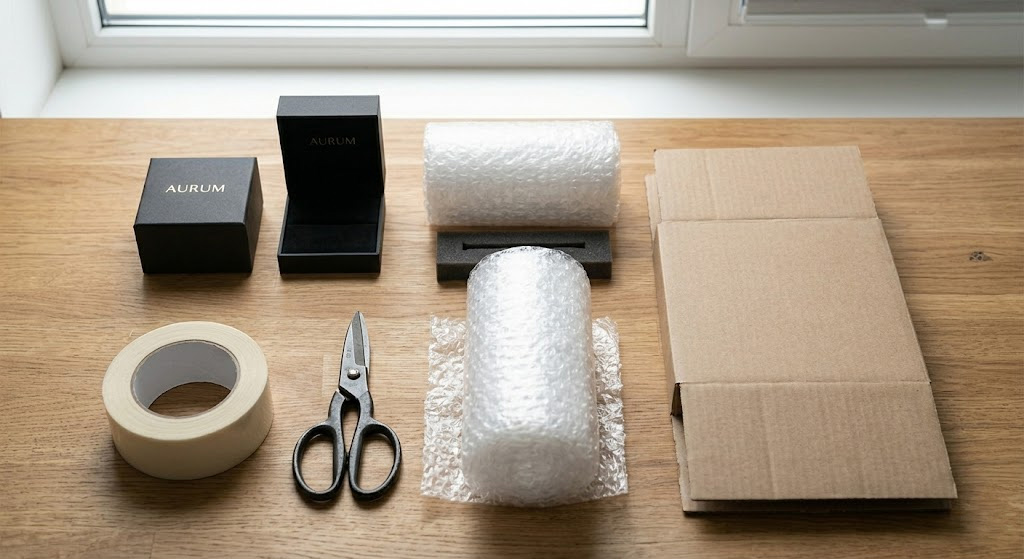
You ship expensive jewelry by using a double-boxing technique, applying discreet labeling, and selecting a carrier that offers full insurance and signature-required delivery. Shipping high-value items involves significant anxiety regarding potential theft, loss, or damage during transit. For jewelry professionals, a single lost package doesn’t just represent a financial blow; it compromises your hard-earned reputation. By following a structured approach to mailing jewelry , you can ensure every piece arrives safely while maintaining a premium unboxing experience.
Why is safety vital when mailing jewelry?
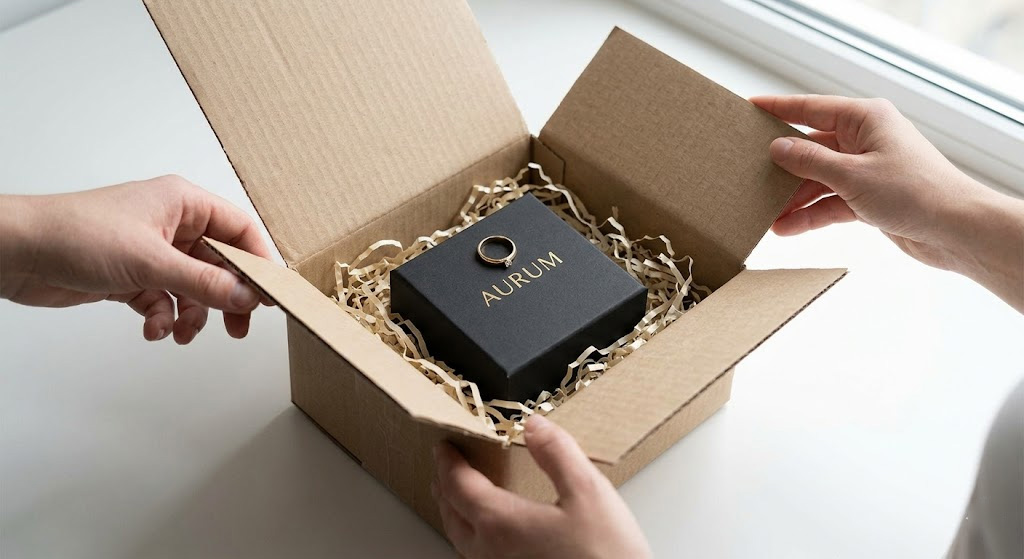
Safety is the cornerstone of high-value logistics because it protects your profit margins and ensures long-term customer loyalty. When you are mailing jewelry, the way the item is handled reflects directly on your brand’s perceived value and commitment to excellence.
Maintaining Brand Integrity
A secure package signals to the recipient that you treat their purchase with the utmost respect. Professional packaging minimizes the risk of negative reviews and builds immediate trust with the buyer. Consistent delivery success reduces customer service inquiries and prevents logistical headaches.
But wait, there’s more.
- Professional packaging reduces the risk of returns.
- Tamper-evident seals build buyer confidence.
- Secure transit protects your online reputation.
Protecting Customer Investment
Safe transit ensures that the financial and emotional value of the jewelry remains intact until it reaches the final destination. Secure shipping shows your customer that you value the piece just as much as they do. This commitment to quality builds long-term relationships and encourages repeat business.
Think about this for a second.
- Damage-free delivery prevents expensive chargebacks.
- High-quality inserts stop internal movement.
- Shock-absorbent layers prevent stone displacement.
Key Takeaway: Prioritizing safety in your shipping workflow prevents expensive loss claims and safeguards your professional reputation in a competitive market.
| Safety Factor | Impact on Business | |
|---|---|---|
| Secure Packaging | Reduces damage claims | |
| Proper Labeling | Minimizes theft risk | |
| Transit Speed | Increases customer satisfaction |
This structure ensures that every variable contributing to a successful delivery is controlled and optimized for high-value logistics.
What are the risks involved in mailing jewelry?
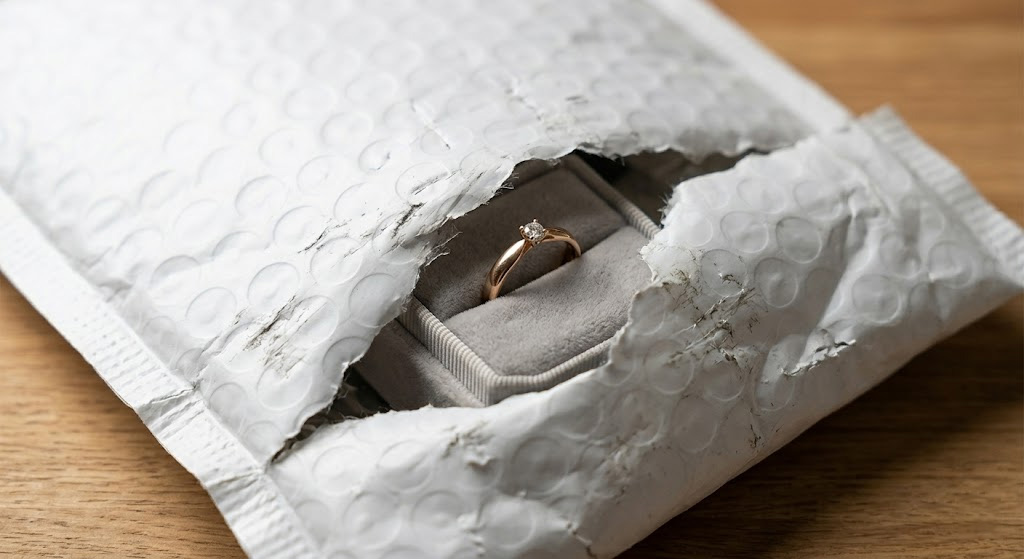
The primary risks when shipping valuables include physical damage from impact, theft due to recognizable packaging, and loss during carrier hand-offs. Understanding these hazards is the first step toward effectively mailing jewelry without complications.
Physical Damage Hazards
Jewelry is delicate and susceptible to scratches, stone displacement, or bending if not cushioned correctly within its container. Vibration during transit can loosen prongs, while pressure from heavier boxes can crush flimsy outer packaging. Extreme temperature changes may also affect certain sensitive gemstones.
Here is the kicker.
- Crush-proof boxes prevent impact damage.
- Foam inserts dampen transit vibrations.
- Sealed internal containers protect against moisture.
Theft and Loss Risks
High-value items are often targeted by opportunistic thieves if the outer packaging hints at the expensive contents inside. Brand names on the box invite unwanted attention, and small packages are easier to pocket in sorting facilities. Packages left without signature requirements are also prone to theft after delivery.
Check this out.
- Discreet labels hide the value of the contents.
- Double-boxing makes tampering obvious and difficult.
- Tracking services monitor every hand-off.
Key Takeaway: Identifying risks allows you to implement specific defensive measures like double-boxing and discreet labeling to neutralize potential threats.
| Risk Category | Mitigation Strategy | |
|---|---|---|
| Physical Impact | Use high-density foam inserts | |
| Theft | Avoid branding on outer boxes | |
| Logistics Loss | Always use tracking and signatures |
A proactive risk assessment is the most effective way to prevent costly errors before they happen.
How should you prepare items before mailing jewelry?
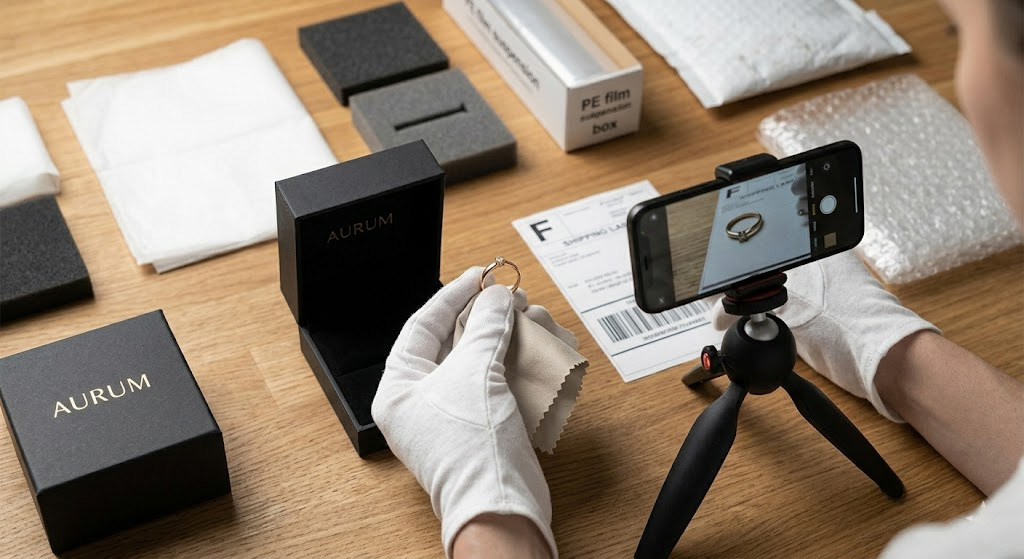
Preparation begins with a thorough inspection and cleaning to ensure the item is in perfect condition before being secured for transit. When mailing jewelry, you must verify that every component is immobilized to prevent internal friction during the shipping journey.
Cleaning and Documentation
Every piece should be polished and photographed next to the shipping label to provide evidence of its condition. You should remove fingerprints with a microfiber cloth and check that all clasps and prongs are secure. Documenting serial numbers or certificates of authenticity is also a vital step for insurance purposes.
It gets even better.
- High-resolution photos prove the item’s condition.
- Clasp checks prevent “damaged on arrival” claims.
- Documentation speeds up insurance processing.
Immobilizing the Piece
The goal is to ensure that the jewelry does not move or rattle inside its primary box, which could lead to scratches. You can use PE film jewelry boxes to suspend items securely in place. Wrapping chains individually in tissue or using jewelry cards prevents knotting during transit.
You might be wondering.
- Suspension packaging prevents all movement.
- Soft tissue paper protects delicate surfaces.
- Foam padding fills all internal gaps.
Key Takeaway: Meticulous preparation serves as your first line of defense against both physical damage and potential fraudulent insurance claims.
| Prep Step | Purpose | |
|---|---|---|
| Photography | Proof for insurance claims | |
| Immobilization | Prevents transit scratches | |
| Cleaning | Enhances unboxing experience |
By documenting the item’s state before packing, you create a transparent audit trail for both you and your customer.
Which materials are best for safely mailing jewelry?
The best materials for shipping valuables are those that combine impact resistance with water-resistant and tamper-evident properties. Effectively mailing jewelry requires a combination of soft internal buffers and rigid external shields.
Protective Inner Packaging
Inner packaging should focus on presentation and scratch prevention using non-abrasive materials like velvet or high-quality paper. Custom-fitted necklace boxes prevent shifting and maintain a luxury feel for the recipient. Anti-tarnish strips are also useful for protecting silver and plated items from oxidation.
The best part?
- Velvet linings prevent surface abrasions.
- Rigid inner boxes provide structural support.
- Custom inserts keep components separate.
Sturdy Outer Containers
The outer box must be a neutral, heavy-duty corrugated container that provides a crush-proof barrier against external weight. Double-walled cardboard boxes offer superior protection compared to standard single-wall versions. Using reinforced H-tape sealing ensures the package cannot be opened and resealed without leaving obvious signs.
Think about this for a second.
- Corrugated cardboard absorbs heavy impacts.
- Neutral colors prevent package profiling.
- Reinforced tape resists weather and tampering.
Key Takeaway: High-quality packaging materials provide the structural integrity and security needed to survive the rigors of global shipping systems.
| Material Type | Recommended Use | |
|---|---|---|
| Corrugated Box | Outer impact protection | |
| PE Film/Foam | Internal item suspension | |
| Reinforced Tape | Tamper-evident sealing |
Selecting the right materials is a direct investment in your product’s safety and your customer’s satisfaction.
Is double-boxing required when mailing jewelry?
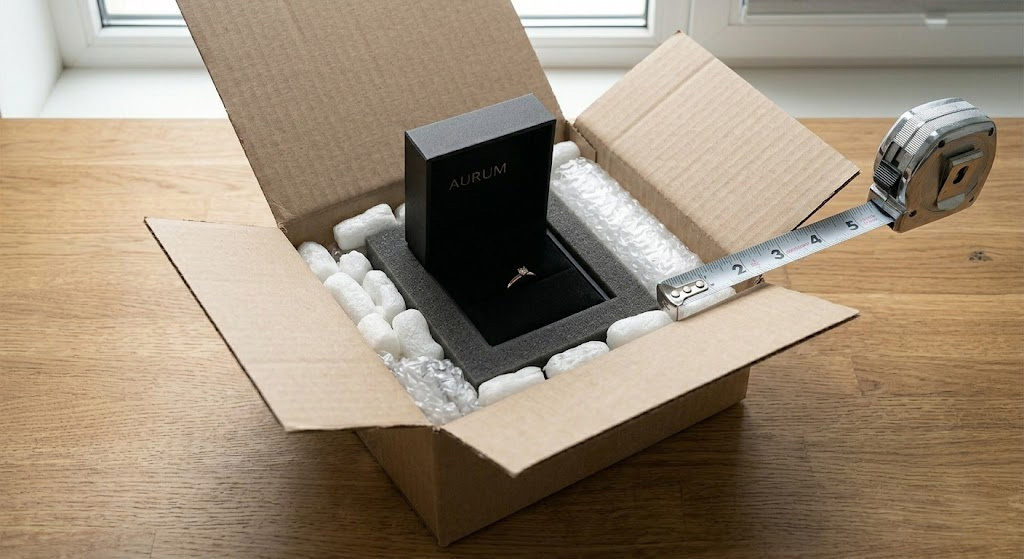
Double-boxing is a mandatory industry standard for high-value items because it provides two layers of protection and makes tampering significantly more difficult. When mailing jewelry, this “box-within-a-box” method acts as a vital shock absorber against drops and heavy pressure.
The Internal Box Layer
The first layer is the decorative jewelry box which holds the item securely in place using customized inserts. You should place the jewelry in its retail box and secure that box with a small tape strip or rubber band. This ensures that the lid cannot pop open if the package is dropped or shaken.
It gets even better.
- Decorative boxes create the first impression.
- Tape strips prevent accidental opening.
- Internal padding stops internal rattling.
The External Buffer Zone
The secondary layer involves placing the small jewelry box into a larger shipping container filled with shock-absorbent materials. You must leave at least two inches of space on all sides of the inner box to create a “crumple zone.” Testing the outer box for any movement before final sealing is a critical step in this process.
Here is the kicker.
- Two inches of space protects the inner box.
- Bubble wrap fills the surrounding gaps.
- Crumpled paper offers cheap, effective cushioning.
Key Takeaway: Double-boxing is the most effective way to protect delicate items from both structural failure and opportunistic theft during the shipping process.
| Layer | Primary Function | |
|---|---|---|
| Inner Box | Presentation and immobilization | |
| Buffer Material | Shock and vibration absorption | |
| Outer Box | Privacy and structural strength |
This redundancy ensures that even if the outer container is compromised, the actual product remains safe and hidden.
How can you keep labels discreet when mailing jewelry?
Discreet labeling involves omitting any words that suggest high value, such as specific luxury brand names or the word “jewelers.” When mailing jewelry , your goal is to make the package look as mundane as possible to avoid attracting thieves.
Vague Shipping Descriptions
Use generic business names or the names of individuals in the return address to mask the nature of the contents. You might replace “Luxury Diamond Boutique” with “L.D.B. Logistics” or simply use a warehouse address. Describing contents as “Fashion Accessories” or “Metalwork” on documentation also helps maintain a low profile.
You might be wondering.
- Abbreviated names hide the industry type.
- Generic descriptions satisfy customs rules.
- Standard fonts blend in with normal mail.
Secure Sealing Techniques
Using the H-taping method across all seams of the outer box ensures that the package cannot be opened without leaving evidence. You should apply tape to all corners and the center seam using opaque, heavy-duty tape. Avoid using branded tape on the outermost container as it advertises the contents to everyone who handles it.
Check this out.
- H-taping seals all possible entry points.
- Opaque tape hides the box’s inner flaps.
- Generic tape prevents package identification.
Key Takeaway: A boring, nondescript box is your best defense against theft during the many hand-offs in the global shipping process.
| Label Element | Safe Alternative | |
|---|---|---|
| Return Address | Use initials or “Shipping Dept” | |
| Content Description | Use “Fashion Accessory” | |
| Branding | Keep only on the inside box |
Security through obscurity is a proven strategy for getting high-value shipments to their destination without incident.
Should you buy insurance before mailing jewelry?
Purchasing insurance is essential for any item whose value exceeds the standard carrier liability, which is typically quite low. When mailing jewelry, you must ensure the coverage amount reflects the full replacement value of the piece, not just the cost of materials.
Standard Carrier Limitations
Standard insurance from major carriers often has strict exclusions for fine jewelry and may require specific shipping methods for full coverage. USPS Registered Mail offers the highest security and coverage levels for very high-value items. You should always read the fine print to confirm that “jewelry” or “precious metals” are not excluded from your chosen tier.
But wait, there’s more.
- Basic liability usually covers only $100.
- Registered Mail covers up to $50,000.
- Special accounts may be needed for FedEx.
Third-Party Specialty Insurance
Third-party providers specialize in high-value logistics and often offer more comprehensive coverage at better rates than standard carriers. These specialists understand jewelry-specific risks like “mysterious disappearance” which standard policies might ignore. They also provide guidance on carrier-approved packaging standards to ensure claims are paid if necessary.
The best part?
- Faster claims processes save business time.
- Lower premiums are available for bulk shippers.
- Coverage often includes international transit risks.
Key Takeaway: Never ship high-value items without verifying that your insurance policy explicitly covers fine jewelry and the full retail value of the shipment.
| Insurance Type | Best For | |
|---|---|---|
| Carrier Insurance | Low to mid-value items | |
| Third-Party | High-value and wholesale | |
| Registered Mail | Maximum security and indemnity |
Insurance provides the financial safety net necessary to operate a jewelry business with confidence and peace of mind.
Does international law change when mailing jewelry?
International shipping introduces complexities such as customs duties, import restrictions, and varying carrier regulations across different countries. Successfully mailing jewelry overseas requires diligent research into the destination’s specific legal requirements before the package leaves your hands.
Customs and Duties
Every country has different thresholds for when jewelry becomes subject to import taxes and value-added tax (VAT). You should always include a detailed commercial invoice inside the box to help customs officials process the package efficiently. Being honest about the value is essential to avoid seizure or heavy fines by foreign customs agents.
Here is the kicker.
- Clear invoices prevent customs delays.
- Accurate values ensure legal compliance.
- Pre-calculating duties helps set buyer expectations.
Regional Import Restrictions
Some countries strictly prohibit the import of precious metals or loose gemstones through standard postal services. You must check the prohibited items list for the destination country to ensure your shipment is legally allowed to enter. Using trackable, door-to-door courier services is usually the most reliable way to navigate international logistics.
Let’s dig a little deeper.
- Postal prohibitions vary by national law.
- Tamper-proof standards must meet international rules.
- Door-to-door tracking provides global visibility.
Key Takeaway: International success depends on accurate documentation and a clear understanding of global trade regulations and prohibited items lists.
| Global Factor | Requirement | |
|---|---|---|
| Customs Forms | Must match the invoice value | |
| Import Tax | Often paid by the recipient | |
| Restricted Items | Varies by country (e.g., silver/gold) |
Navigating global regulations correctly prevents your high-value goods from being held or confiscated by international authorities.
What steps ensure success when mailing jewelry?
The final steps to guarantee a successful delivery include requiring a signature and maintaining a clear digital trail of the shipment’s progress. Before mailing jewelry, double-check that all contact information is accurate to prevent delivery delays or the risk of the package being returned.
Signature and Delivery Logs
Requiring an adult signature ensures that the package is handed directly to a person rather than being left unattended. You should use “Signature Required” for all jewelry shipments to prevent “porch piracy” or claims of non-receipt. Keeping digital copies of the signed delivery receipt provides vital proof for both you and your insurance provider.
Think about this for a second.
- Signatures prove successful package hand-off.
- Digital logs provide real-time status updates.
- Daily monitoring catches routing errors early.
Final Verification Review
Conduct a final inspection of the package’s weight and seal integrity before handing it over to the shipping carrier. You should verify that the weight on the label matches the actual weight of the box to prevent “empty box” fraud. Taking a final photo of the sealed box on the post office counter provides definitive proof of shipping.
Check this out.
- Weight matching prevents fraudulent claims.
- Counter photos prove the package was sent.
- Receipt storage ensures you have tracking proof.
Key Takeaway: Active tracking and signature requirements are the only ways to confirm that your valuable shipment reached its intended owner securely.
| Step | Action Item | |
|---|---|---|
| Signature | Request “Adult Signature Required” | |
| Tracking | Share tracking link with customer | |
| Record Keeping | Store photos and receipts for 1 year |
Executing these final checks creates a secure chain of custody that protects both the seller and the buyer.
How do you choose the right carrier for mailing jewelry?
Choosing the right carrier depends on the value of the item, the required speed of delivery, and the specific security protocols offered. When mailing jewelry , you should compare the specialized high-value services of major logistics providers to find the best fit.
Registered Mail Security
Registered Mail is often considered the gold standard for high-value items because every person who touches the package must sign for it. The package is kept in locked containers during transit, providing the highest level of security against internal theft. While it may be slower than express services, the indemnity coverage can go up to $50,000.
It gets even better.
- Locked transit containers provide maximum safety.
- Complete chain of custody logs are kept.
- Higher indemnity limits cover major pieces.
Private Courier Services
Private couriers offer faster transit times and specialized high-value divisions that handle jewelry shipments exclusively. These services often include enhanced tracking and specialized handling protocols that bypass standard automated sorting machines. This reduced handling can significantly lower the risk of damage or loss during the shipping process.
The best part?
- Reduced handling lowers damage risks.
- Express transit minimizes time in the system.
- Direct hand-offs increase delivery success.
Key Takeaway: Selecting a carrier with specialized jewelry protocols is essential for maintaining the security of high-value items throughout the logistics chain.
| Carrier Service | Primary Benefit | |
|---|---|---|
| Registered Mail | Maximum security and high indemnity | |
| Priority Express | Fast transit with basic security | |
| Private Courier | Specialized handling and speed |
The right carrier acts as your partner in logistics, ensuring that your expensive products are treated with the care they deserve.
Common Questions About Mailing Jewelry
Can I use a padded envelope for mailing jewelry?
It is not recommended because envelopes are easily crushed and do not provide the structural protection of a rigid box. For expensive items, the lack of rigidity increases the risk of the jewelry being bent or stones being knocked loose during sorting.
What’s the best way to mail a diamond ring?
The best way is using USPS Registered Mail combined with a double-boxing system and third-party specialty insurance. This combination provides the highest level of physical protection and financial coverage available for individual high-value pieces.
How do I prevent necklaces from tangling during shipping?
You should secure the necklace to a rigid jewelry card or wrap it in acid-free tissue paper before placing it into a fitted box. Using suspension packaging like a PE film box is the most effective method for keeping the chain immobile.
How do I know if my insurance covers international shipping?
You must review your policy’s “territorial limits” section or contact your agent directly to confirm coverage for specific destination countries. Many standard policies exclude certain regions due to high risk, so verification before shipping is vital.
Can I use my brand name on the shipping label?
It is best to avoid using your full brand name if it includes keywords like “Jewelers” or “Diamonds” that reveal the box’s contents. Using initials or a generic warehouse name is a much safer alternative that maintains a low profile during transit.
For professional guidance on creating the perfect, secure unboxing experience for your customers, please contact us today to discuss our range of durable and elegant packaging solutions. We are dedicated to helping jewelry sellers protect their investments with premium materials designed for the modern logistics landscape.