
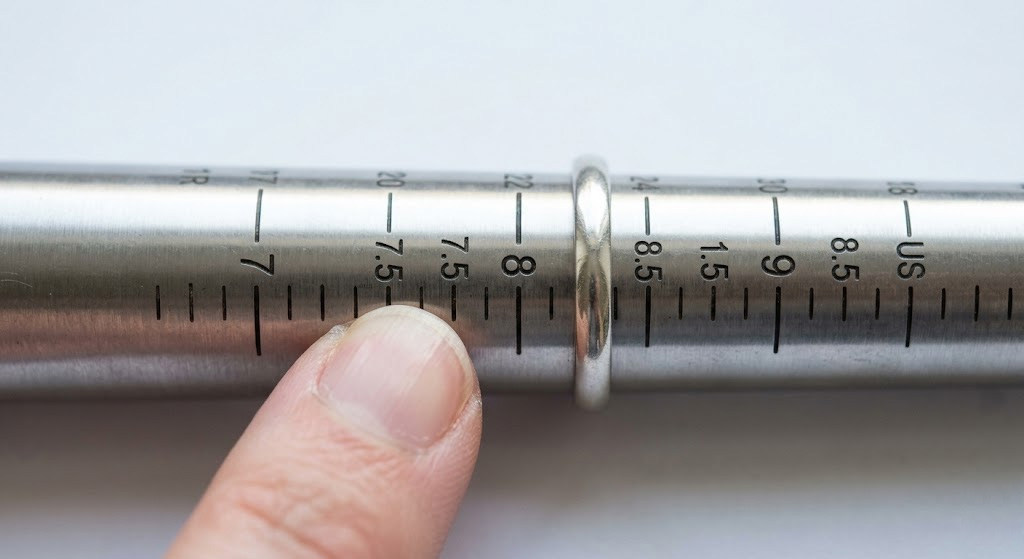
To read a ring sizer stick, you must slide a ring onto the tapered mandrel and identify the specific measurement line where the leading edge of the band naturally rests. Many jewelry retailers struggle with inaccurate measurements that lead to high return rates and eroded profit margins. These sizing errors agitate your customers and create logistical nightmares that could easily be avoided with proper technical training. To solve these operational bottlenecks, mastering how to read a ring sizer stick is the most effective way to ensure your inventory management and customer service remain flawless.
What is the best way to learn how to read a ring sizer stick?
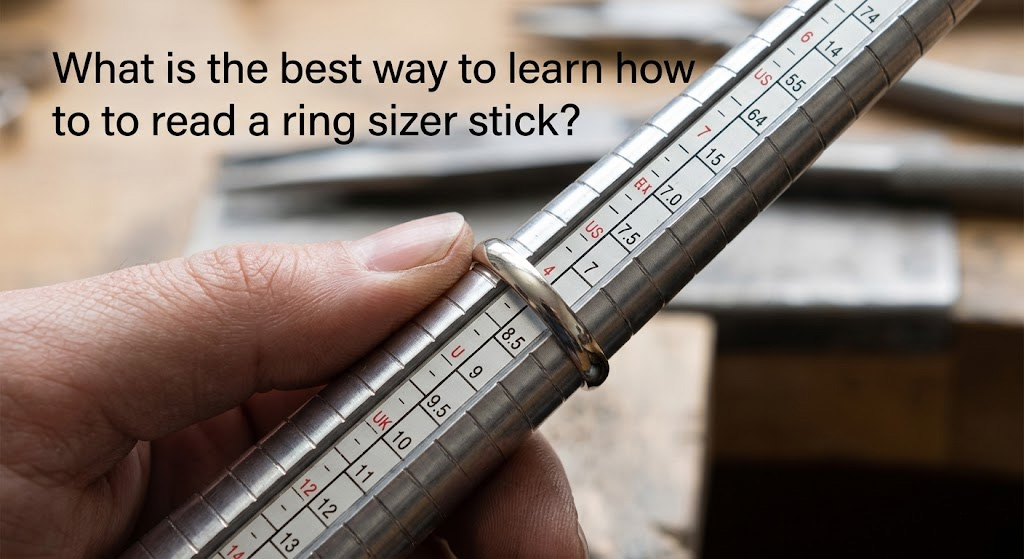
The best way to learn is by understanding that you must align the “leading edge”—the side of the ring that hits the stick first—with the etched increments on the tool. Learning how to read a ring sizer stick requires a basic understanding of the tool’s physical geometry and marking systems. You should practice with standard bands before moving on to complex, wide, or irregularly shaped rings.
What exactly is a jewelry mandrel?
A mandrel is a tapered, rod-like tool used by professionals to measure and occasionally shape rings.
But that’s not all.
- It serves as a universal reference point for stock.
- It allows you to verify sizing from suppliers instantly.
- It helps in maintaining consistent sizing across your brand.
How does the tapered design work?
The rod increases in diameter from the tip to the base, allowing different ring sizes to stop at specific points.
Think about it.
If the rod were a perfect cylinder, every ring would slide to the bottom. The taper ensures that a size 7 stops exactly at the mark designated for that circumference.
Standard components of a sizer tool
Most sticks feature a handle, a tapered body, and multiple measurement scales etched into the surface.
Here is why:
- Multiple scales allow for international conversion.
- Etched marks prevent fading during heavy retail use.
- The handle provides the grip needed for steady readings.
Key TakeawayUnderstanding the physical construction of the mandrel is the foundation for accurate retail sizing and inventory management.
| Component | Function | Material Priority | |
|---|---|---|---|
| Tapered Rod | Determines ring size | High-grade metal or plastic | |
| Measurement Scale | Provides numerical data | Lasered or etched lines | |
| Handle | Stability during use | Ergonomic grip |
How does the tool’s taper angle influence the spacing between half-sizes on different brand models?
Why must you know how to read a ring sizer stick accurately?
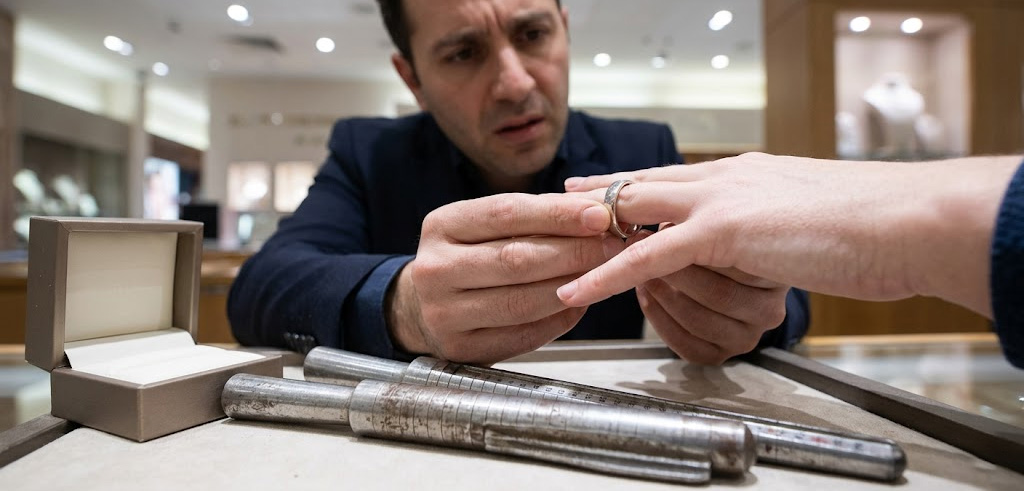
Accurate reading is essential because it prevents the high costs associated with professional resizing and ensures your customers enjoy a comfortable, secure fit. Mastering how to read a ring sizer stick allows you to provide a premium service level that builds long-term brand loyalty. You will find that precision in the initial measurement phase significantly reduces the likelihood of “rings lost to water” or “painful swelling” complaints.
Ensuring daily comfort and fit
A ring that is measured correctly feels like a natural extension of the wearer’s finger without causing restriction.
Here’s the deal.
- Correct sizing prevents skin irritation from friction.
- It ensures the ring doesn’t slip during handwashing.
- It accommodates the natural changes in finger volume.
Preventing expensive resizing costs
Resizing a ring, especially those with pavé settings or alternative metals, can be incredibly expensive and risky.
The bottom line?
You save your business hundreds of dollars per transaction by getting the size right the first time. Many modern metals, like tungsten, cannot even be resized, making the initial measurement critical.
Getting the perfect size for gifts
When a customer buys a gift, the unboxing experience is ruined if the ring does not fit the recipient.
Best of all?
- It increases the emotional value of the gift.
- It eliminates the need for a post-holiday return.
- It proves your expertise as a professional jeweler.
Key TakeawayPrecision sizing is a cost-saving measure that simultaneously enhances the customer experience and protects the physical integrity of the jewelry.
| Impact Area | Benefit | Risk of Error | |
|---|---|---|---|
| Profitability | Lower return shipping costs | High labor costs for resizing | |
| Customer Loyalty | Increased trust and repeat sales | Negative reviews and lost sales | |
| Product Integrity | No structural stress from resizing | Weakened shanks or lost stones |
Why do retailers often overlook the hidden costs of “free” resizing services when analyzing their annual profit margins?
Can different tools teach how to read a ring sizer stick?
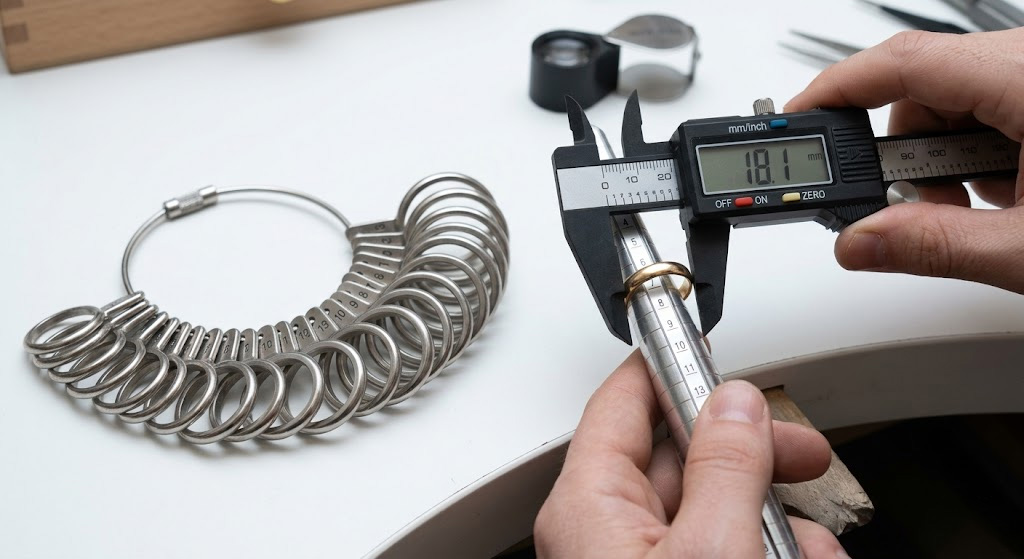
Yes, using supplementary tools like ring gauges and digital calipers can help you cross-reference and verify your skills on a standard stick. While you learn how to read a ring sizer stick, you should observe how different tools provide different perspectives on the same measurement. You can use a set of finger gauges to find the wearer’s size and then use the stick to confirm the physical dimensions of the jewelry piece itself.
Using ring gauges for finger sizing
Ring gauges are sets of individual metal or plastic rings used to find the circumference of a person’s finger.
But that’s not all.
- They help you understand the “feel” of a size.
- They are the primary tool for custom-fitting sessions.
- They translate physical comfort into a numerical value.
Benefits of electronic digital sizers
Digital sizers use sensors to provide an instant numerical readout on a screen for maximum precision.
Think about it.
These tools remove the human error associated with visual alignment. While they are more expensive, they are excellent for checking the accuracy of your manual reading skills.
Why professional jewelers use mandrels
Mandrels are preferred for retail inventory because they are fast, durable, and don’t require batteries or calibration.
Here is why:
- They are virtually indestructible in a shop environment.
- They allow for quick checks of large batches of inventory.
- They can be used to straighten slightly bent ring shanks.
Key TakeawayWhile digital and finger-based tools exist, the mandrel remains the industry standard for verifying the physical size of finished jewelry.
| Tool Type | Primary Use | Best Feature | |
|---|---|---|---|
| Ring Gauge | Finger Sizing | Tactile feedback for customer | |
| Mandrel Stick | Ring Verification | Speed and batch processing | |
| Digital Sizer | Precision Analysis | Automated numerical readout |
How does the shift toward digital sizing tools affect the tactile expertise required by traditional bench jewelers?
Does material affect how to read a ring sizer stick?
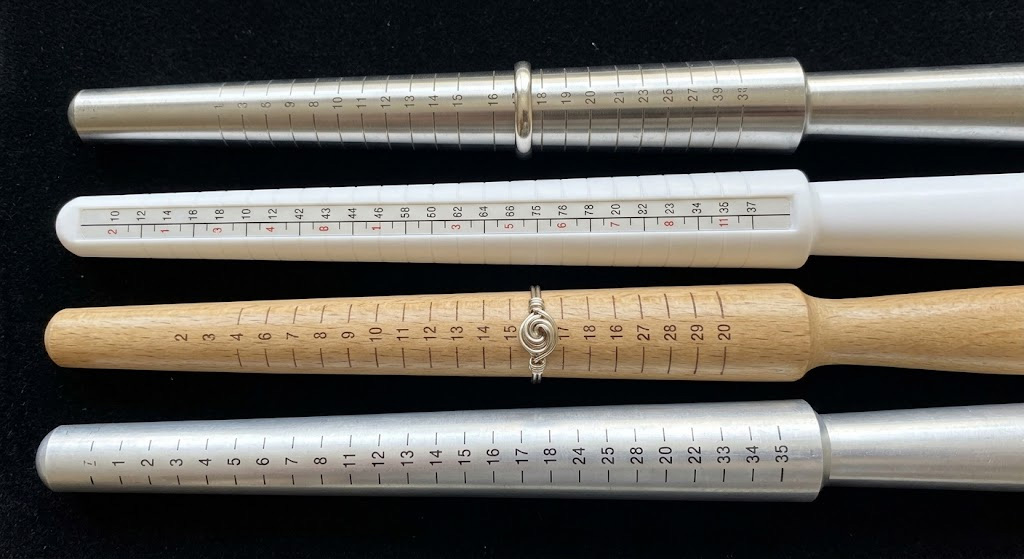
The material of the stick—whether metal, plastic, or wood—affects the weight, durability, and visibility of the markings you are trying to interpret. When learning how to read a ring sizer stick , you must choose a material that suits your specific retail environment. You will find that metal offers the most precision, while plastic or wood might be safer for highly delicate or soft-metal pieces.
Metal sticks for high precision
Metal mandrels are the gold standard for professionals because they do not warp and the marks stay clear forever.
Best of all?
- The weight provides a stable base for measuring.
- The markings are usually laser-etched for clarity.
- They can withstand the heat of a jewelry torch.
Plastic versions for home use
Plastic sticks are lightweight and affordable, making them perfect for basic retail giveaways or home use.
Here’s the deal.
They are easy to ship and carry, though they can eventually wear down or become scratched. You should check them periodically against a metal master to ensure they haven’t lost their shape.
Why use a wooden sizer stick?
Wooden sticks are often used for shaping or for rings made of very soft materials like 24k gold.
The bottom line?
- Wood will not scratch the inside of a polished band.
- They are preferred by artisans for custom wire wrapping.
- They offer a traditional aesthetic for boutique shops.
Key TakeawaySelecting the right material ensures that the tool lasts for years while protecting your customers’ precious jewelry from unnecessary wear.
| Material | Durability | Best Environment | |
|---|---|---|---|
| Stainless Steel | Extreme | High-volume retail stores | |
| Aluminum | High | Mobile jewelry consultants | |
| Plastic | Moderate | E-commerce customer kits |
If plastic mandrels are prone to thermal expansion, how much does a temperature change of 10 degrees affect a size 7 reading?
Is it hard to learn how to read a ring sizer stick’s marks?
It is not difficult to learn the markings as long as you understand the difference between diameter, circumference, and the various international sizing systems. The process of learning how to read a ring sizer stick involves memorizing the vertical lines that represent half-sizes and quarter-sizes. You must also be able to distinguish between US, UK, and European scales, which are often printed on opposite sides of the same rod.
Understanding the vertical increments
The vertical lines on the rod represent specific increments, with the longest lines usually denoting whole sizes.
But that’s not all.
- Medium lines typically represent half-sizes.
- The smallest notches indicate quarter-size steps.
- Consistency in which line you look at is vital.
How to interpret international sizes?
International scales use different logic, such as alphabetical letters for the UK or millimeter diameters for Europe.
Think about it.
If you have a global clientele, you cannot afford to mix up a US 7 with a UK N. Most professional sticks will have these conversions side-by-side for easy reference.
Reading measurements in millimeters
Millimeter scales measure the actual inner circumference or diameter, providing the most scientific data point.
Here is why:
- It is the most accurate way to communicate with factories.
- It helps when sizing irregular, non-standard bands.
- It allows for perfect precision in custom CAD designs.
Key TakeawayMastering the visual language of the mandrel’s markings allows you to communicate effectively with manufacturers and global customers alike.
| Sizing System | Scale Type | Common Region | |
|---|---|---|---|
| US/Canada | Numerical (1-15) | North America | |
| UK/Australia | Alphabetical (A-Z) | United Kingdom/AU | |
| EU/ISO | Millimeter (Circum.) | Europe |
Why do some manufacturers still rely on proprietary sizing scales that deviate from the ISO 8653 standard?
What are the steps for how to read a ring sizer stick?
The process involves cleaning the ring, sliding it down the mandrel until it stops naturally, and reading the line at the band’s center or edge. When you are performing the steps for how to read a ring sizer stick , you must maintain a steady hand and eye level. You should always double-check the reading to ensure the ring didn’t sit at an angle on the tapered rod.
How do you prepare the ring first?
Before measuring, ensure the ring is clean and free of any debris that could prevent it from sitting flush.
Best of all?
- It prevents scratches on your measurement tool.
- It ensures the ring slides smoothly to its true size.
- It provides a more professional experience for the client.
Placing the band on the mandrel rod
Hold the stick vertically and slide the ring down without using force or pressure.
Here’s the deal.
If you push the ring down, you are actually stretching the metal or getting a false reading. Let gravity do the work to find the natural stopping point of the band’s inner diameter.
Recording the final measurement
Look directly at the mark where the bottom edge of the ring rests and write down the number or letter.
The bottom line?
- Use eye-level viewing to avoid parallax error.
- Note if the ring falls exactly on a line or between two.
- Always specify which sizing system you are using (e.g., US 6.5).
Key TakeawayFollowing a standardized protocol for every measurement eliminates the variability that causes retail sizing discrepancies.
| Step | Action | Critical Check | |
|---|---|---|---|
| Slide | Gravity-assisted drop | No forced pressure | |
| Align | Eye-level visual check | Check leading edge | |
| Record | Written log with system | Note whole/half/quarter |
How can a standard operating procedure for ring sizing improve the training speed for new retail associates?
What impacts how to read a ring sizer stick precisely?
Precision is impacted by external factors like the width of the ring band, the temperature of the environment, and the shape of the ring’s shank. When you analyze how to read a ring sizer stick precisely, you must account for “perceived fit” versus “measured size.” You will find that a wide 10mm band will feel much tighter on a customer’s finger than a thin 2mm band of the same measured size.
Does finger swelling change the size?
Fingers change size throughout the day due to heat, hydration levels, and physical activity.
But that’s not all.
- Morning measurements are often smaller than evening ones.
- Dietary salt intake can cause temporary swelling.
- You should measure at the end of the day for the best fit.
Considering knuckle size and width
A ring must be large enough to pass over the knuckle but snug enough not to rotate on the finger.
Think about it.
If a customer has large knuckles, you may need to size the ring up and use “sizing beads” to keep it from spinning. The stick only tells you the ring’s size, not how it interacts with the knuckle.
How does ring material affect fit?
Harder metals like cobalt or titanium have zero “give,” whereas silver and gold may slightly conform to the finger over time.
Here is why:
- Non-resizable metals require 100% accuracy.
- Softer metals can be adjusted if the reading is slightly off.
- The weight of the metal can affect how “loose” the size feels.
Key TakeawayEnvironmental and physiological factors must be integrated into your measurement process to ensure the ring fits in real-world conditions.
| Factor | Effect on Fit | Professional Adjustment | |
|---|---|---|---|
| Band Width | Wider feels tighter | Add 0.25 to 0.5 size | |
| Temperature | Heat causes swelling | Measure when the hand is warm | |
| Shank Shape | Comfort-fit feels looser | Subtract 0.25 size |
If human fingers can fluctuate by an entire half-size in a single day, is a “perfect” ring size actually a myth?
What mistakes happen when learning how to read a ring sizer stick?
Common mistakes include reading the wrong side of the band, using a worn-out stick, or failing to convert international sizes correctly. If you want to avoid errors while learning how to read a ring sizer stick , you must standardize whether you read the center of the ring or the leading edge. You should also ensure your tools are inspected regularly for dents or fading that could obscure the measurement lines.
Avoiding ring misalignment issues
If a ring sits crooked on the mandrel, the diameter reading will be larger than the true size.
Best of all?
- Always hold the stick perfectly vertical during the check.
- Spin the ring slightly to ensure it is seated evenly.
- Look for light gaps between the stick and the band.
Forgetting about size conversions
Assuming all sticks use the same scale is a dangerous mistake that leads to catastrophic ordering errors.
Here’s the deal.
Always check the labels on your mandrel before starting. Some sticks have four different scales, and a tired associate can easily read the wrong column by mistake.
Using a worn or damaged tool
A mandrel that has been dropped can develop flat spots or burrs that prevent rings from sliding to their true position.
The bottom line?
- Inspect your tools every month for physical damage.
- Replace plastic sticks if the markings become unreadable.
- Store metal mandrels in a padded case to prevent nicks.
Key TakeawayVigilance in tool maintenance and measurement technique is the only way to maintain a “zero-defect” sizing policy in your shop.
| Error Type | Root Cause | Solution | |
|---|---|---|---|
| Parallax | Viewing at an angle | View marks at eye level | |
| System Mix-up | Multi-scale confusion | Use single-scale tools | |
| Tool Wear | Physical damage | Regular QC inspections |
How often should a retail store calibrate their sizing tools against a “master” mandrel to ensure cross-location consistency?
How does a digital tool change how to read a ring sizer stick?
Digital tools eliminate the subjective nature of visual interpretation by providing a high-contrast electronic display of the ring’s dimensions. When you transition from a manual method to a digital version, the way you understand how to read a ring sizer stick changes from “eyeballing” to data verification. You can use these tools to catch microscopic differences that the human eye might miss during a busy holiday rush.
Digital vs. manual measurement
Manual measurement relies on human vision, while digital tools use sensors to measure the exact internal diameter.
But that’s not all.
- Digital tools are faster for bulk inventory audits.
- They provide data that can be exported to inventory software.
- They reduce eye strain for staff working long shifts.
When are professional tools needed?
High-end custom jewelry and engagement rings require a level of precision that basic plastic sticks cannot provide.
Think about it.
When you are selling a $10,000 diamond, a 0.1mm error is unacceptable. Professional-grade steel mandrels or digital calipers are non-negotiable for high-ticket luxury items.
Handling irregular ring shapes
Square shanks or rings with large under-gallery designs are notoriously difficult to measure on a standard round stick.
Here is why:
- Irregular rings don’t sit flush on a round taper.
- Digital calipers can measure the widest and narrowest points.
- You may need specialized “oval” mandrels for these pieces.
Key TakeawayTechnology should complement, not replace, the fundamental skills of manual sizing to provide a fail-safe measurement system.
| Tool Category | Accuracy Level | Best For | |
|---|---|---|---|
| Standard Steel | High | General Retail | |
| Digital Caliper | Ultra-High | Custom CAD/Workshop | |
| Specialty Mandrel | Moderate | Unique Artisan Shapes |
Can the adoption of digital sizing tools reduce the “art” of the jeweler to a mere set of mathematical coordinates?
Can a beginner master how to read a ring sizer stick at home?
Beginners can certainly master this skill at home by using reference charts and practicing with rings of known sizes to build confidence. Learning how to read a ring sizer stick is a tactile skill that improves quickly with repetition and attention to detail. You should start by measuring your own rings and comparing your results with a professional jeweler’s measurement to verify your accuracy.
Using reference charts correctly
Printable charts are a great starting point, but they must be printed at 100% scale to be effective.
Best of all?
- They allow you to verify your home measurements instantly.
- They often include conversion tables for different brands.
- They are a free resource for learning the basics.
Comparing against well-fitting rings
The most reliable way to practice is to use a ring that you know fits perfectly as your “benchmark” size.
Here’s the deal.
If your benchmark ring is a size 6, it should consistently stop at the size 6 line on your stick. If it doesn’t, you know either your technique or your tool is the problem.
Where to find online sizing help?
Many jewelry supply websites offer video tutorials and interactive tools to help you refine your technique.
The bottom line?
- Visual learning helps you see the “gravity drop” method.
- Community forums can answer specific questions about wide bands.
- Online tools can help you convert your stick readings for global orders.
Key TakeawayWith a small investment in a basic mandrel and some focused practice, anyone can learn to size jewelry with professional-grade accuracy.
| Resource | Value | Limitation | |
|---|---|---|---|
| Practice Rings | High | Needs known sizes | |
| Video Guides | High | No tactile feedback | |
| Online Charts | Moderate | Printing scale errors |
If home-based sizing becomes perfectly accurate, will the role of the local jeweler shift from “expert fitter” to “technical consultant”?
FAQ About Sizing Tools
Can I use a sizer stick for rings with large stones? Yes, but you must ensure the stone setting does not hit the rod and prevent the band from sitting flush. If the setting is very deep, you may need to read the size from the side or use a mandrel with a “groove” cut into it to accommodate the stone.
What’s the best time of day to measure my finger? The late afternoon is the ideal time because your fingers have typically reached their maximum size due to daily activity. Measuring in the early morning when your hands are cold will likely result in a ring that is too tight once your body warms up.
How do I know if my ring sizer stick is accurate? You should compare it against a high-quality “master” mandrel or measure it with digital calipers at various points. If a size 10 mark does not correspond to the correct diameter in millimeters according to international standards, the tool is defective.
Can I use a stick to measure comfort-fit bands? Yes, but you must read the measurement at the center of the band rather than the edge. Because comfort-fit rings are domed on the inside, the “leading edge” reading will be smaller than the actual size the wearer feels on their finger.
Is it possible to measure a ring that is not perfectly round? No, a standard mandrel will give an inaccurate reading for misshapen or “egg-shaped” rings. You must first use a rawhide mallet to gently round the ring back into shape on the mandrel before taking a final measurement.
Summary
Mastering the use of a ring sizer stick is a fundamental requirement for anyone in the jewelry industry, from bench jewelers to retail associates. By understanding the nuances of material, band width, and environmental factors, you can eliminate the errors that lead to customer frustration and financial loss. Precision in sizing is not just a technical task; it is a critical component of professional brand presentation and customer care. To ensure your business operates with the highest standards of accuracy, contact us today to learn more about our professional tools and custom packaging solutions. We are committed to empowering jewelry brands with the precision and presentation they need to dominate the global luxury market.