
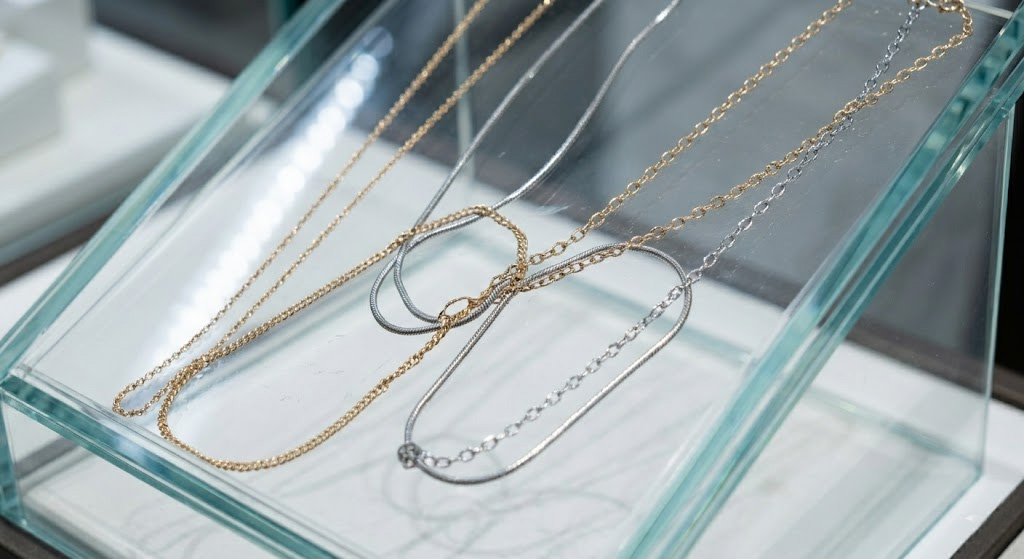
You can keep necklaces from tangling in displays by using individual bust forms, T-bar stands with sufficient spacing, and high-friction materials that prevent chains from sliding. A tangled necklace display is a missed sale waiting to happen, as it frustrates customers and creates a perception of low value. When chains intertwine, you risk permanent damage to delicate links and clasps, leading to significant inventory loss. Implementing professional strategies for how to stop necklaces from tangling ensures your jewelry remains pristine, accessible, and ready for purchase.
Why is necklace tangling a major risk for retail sales?
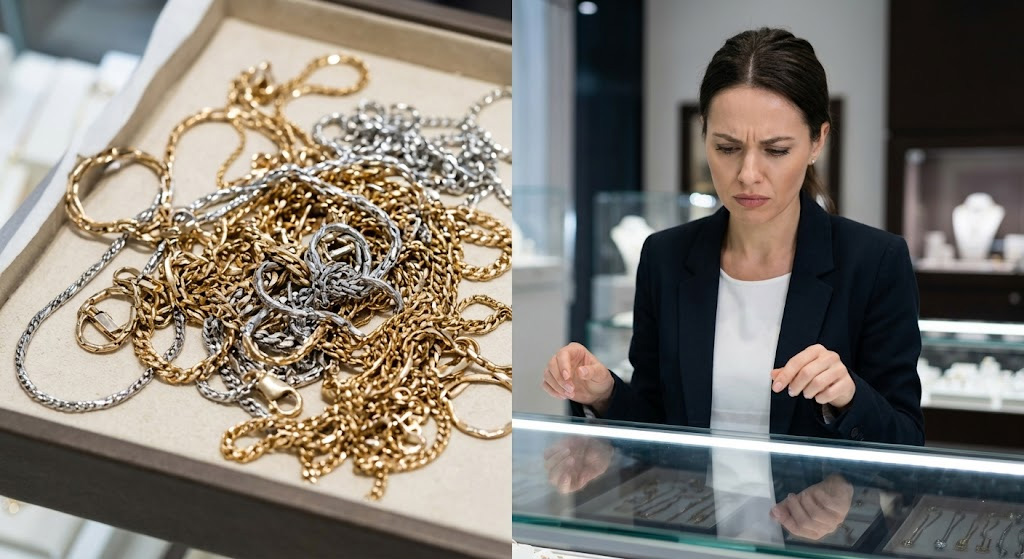
Tangling poses a significant risk to retail sales because it creates a barrier between the customer and the product. If a buyer has to wait for a staff member to untangle a piece, the emotional impulse to buy often fades. Learning how to stop necklaces from tangling is essential for maintaining a high-end brand image that commands premium prices. Proper organization protects your margins by preventing the need for deep discounts on “shop-worn” or damaged goods.
How does disorganized jewelry impact customer trust?
The presentation of your inventory serves as a direct reflection of your business’s attention to detail. When customers see a jumbled mess of chains, they subconsciously question the quality and authenticity of the jewelry.
Think about this:
- Disorganized displays suggest a lack of professionalism and care.
- Customers fear that tangled pieces may have hidden structural weaknesses.
- Visual clutter distracts from the unique design features of individual necklaces.
- A clean display allows the brilliance of the metal and gemstones to remain the focal point.
What are the financial costs of damaged inventory?
Beyond lost sales, the physical damage caused by knots can be incredibly expensive for a retailer to absorb. Fine gold and silver chains are prone to kinking, which often requires professional repair or complete scrapping.
The reality is:
- Staff time spent detangling is time taken away from active selling on the floor.
- Forceful detangling can stretch links, making the necklace prone to future breakage.
- Damaged clasps or bent pendants must be replaced at the retailer’s expense.
- Frequent handling of tangled items increases the accumulation of oils and dirt.
Key Takeaway: Maintaining tangle-free displays is a fundamental aspect of inventory management that protects both brand reputation and the bottom line.
| Risk Factor | Impact on Retailer | Long-term Consequence | |
|---|---|---|---|
| Visual Disarray | Lower Perceived Value | Reduced Customer Loyalty | |
| Physical Knots | Inventory Damage | Increased Overhead Costs | |
| Handling Time | Reduced Efficiency | Lower Conversion Rates |
Proper organization prevents the slow erosion of profits caused by damaged stock and inefficient service.
What are the primary causes of necklace knots in showcases?
Necklace knots are primarily caused by a combination of chain physics, environmental vibrations, and improper handling. To effectively master how to stop necklaces from tangling , you must understand how different chain styles react to their environment. Lightweight, fine-link chains are naturally more susceptible to “traveling” and knotting than heavy statement pieces. Minimizing the factors that lead to movement is the first step in creating a stable showcase.
How do chain weight and length affect tangling?
The physical characteristics of a necklace determine its likelihood of forming a knot during a typical retail day. Long, thin chains have a higher degree of freedom, allowing them to loop over themselves with minimal provocation.
Here is the kicker:
- Cable and link chains are more flexible and thus more prone to tight knots.
- Heavier pendants act as anchors but can cause the chain to snap if caught in a tangle.
- Longer necklaces (20 inches+) require more vertical space to prevent bottom-heavy loops.
- Snake chains and omegas are less likely to knot but can be permanently ruined by a single kink.
Does movement and friction create more knots?
Every time a showcase is opened or a tray is moved, the jewelry experiences micro-vibrations that encourage chain migration. Without a secure anchor point, gravity and friction work together to pull separate chains toward one another.
Let’s be honest:
- Glass showcases can act as amplifiers for floor vibrations or HVAC systems.
- Low-friction surfaces like polished acrylic allow chains to slide into each other.
- Frequent customer trials without immediate re-securing lead to rapid tangling.
- Static electricity in certain synthetic display fabrics can attract fine chains.
Key Takeaway: Understanding that chain length and environmental movement are the root causes of tangles allows for targeted display solutions.
| Cause | Physical Mechanism | Prevention Strategy | |
|---|---|---|---|
| Chain Length | Excessive slack creates loops | Use height-appropriate stands | |
| Low Friction | Chains slide and overlap | Implement non-slip surfaces | |
| Vibration | Micro-movements shift links | Secure chains with weighted ends |
Addressing these mechanical causes significantly reduces the daily maintenance required for a professional display.
Which display types offer the best protection against tangles?
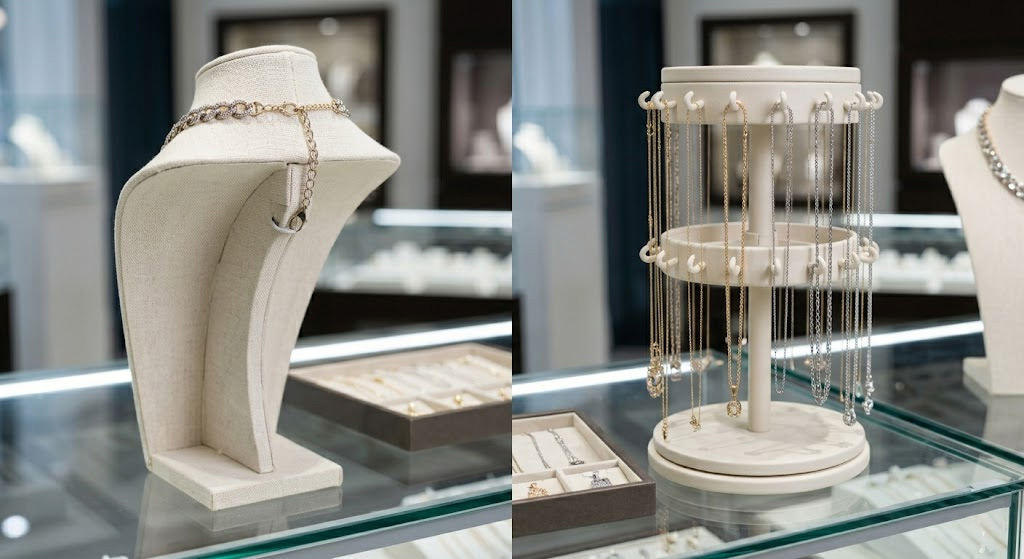
The most effective protection against tangles comes from displays that provide individual dedicated space for every piece of jewelry. Focusing on how to stop necklaces from tangling requires moving away from bulk hooks toward structured solutions like busts and compartmentalized trays. These displays ensure that even if the showcase is moved, the chains remain immobilized in their intended positions. Quality displays are an investment in the longevity of your most delicate inventory.
Why are individual bust displays preferred for high-end pieces?
Bust displays are the gold standard for high-end necklaces because they mimic the natural drape of the human body. This structure keeps the weight of the necklace distributed evenly, preventing the chain from bunching at a single point.
Look at it this way:
- They provide a three-dimensional view that highlights the pendant’s position.
- Most busts include rear hooks or slots to secure excess chain length.
- The fabric lining provides enough friction to keep the piece from sliding.
- Individual placement eliminates the possibility of one necklace touching another.
How do rotating stands reduce excessive handling?
Rotating stands allow customers to view a wide variety of necklaces without the need for a staff member to reach into the case repeatedly. This stability is a key component of a modern retail environment.
The secret is simple:
- Customers can browse the entire collection by simply turning the display.
- Each necklace hangs on its own dedicated hook with sufficient lateral spacing.
- Reduced manual handling means chains are less likely to be jostled out of place.
- They maximize vertical space, which is ideal for displaying longer chain lengths.
Key Takeaway: Specialized displays like busts and rotating stands provide the physical isolation necessary to prevent chain interference.
| Display Type | Best For | Tangle Prevention Level | |
|---|---|---|---|
| Jewelry Bust | Statement & High-End | Excellent (Individual) | |
| Rotating Stand | High-Volume & Daily Wear | High (Separated Hooks) | |
| Flat Tray | Pendants & Short Chains | Moderate (Requires Dividers) |
Selecting the right display type is the most proactive measure a retailer can take to ensure inventory safety.
How should retailers use T-bars for layered necklace displays?
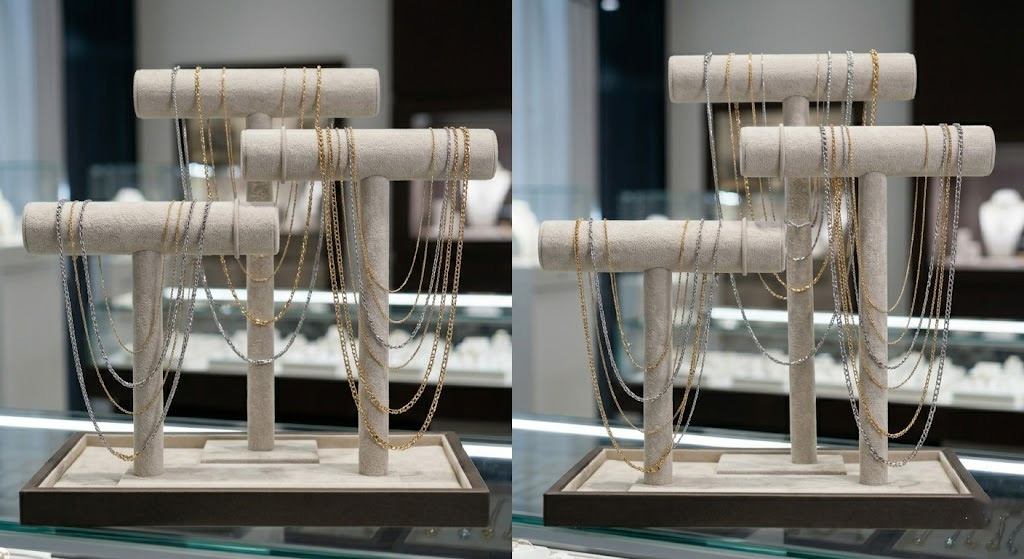
T-bars are versatile tools that allow for the vertical presentation of multiple necklaces while maintaining clear separation. When considering how to stop necklaces from tangling , the key is to avoid overcrowding the horizontal bar. By staggering the heights and styles of the pieces, you can create a dynamic look that remains organized throughout the day. T-bars are particularly effective for showing how different lengths of chains can be worn together.
What is the benefit of staggered hanging heights?
Staggering the heights of your necklaces ensures that the focal points of each piece do not overlap or compete for space. This technique creates a visual hierarchy that is both pleasing to the eye and functionally secure.
Consider these steps:
- Use T-bars of varying heights (e.g., 10″, 12″, and 14″) in a single arrangement.
- Place the longest necklaces on the tallest bar to prevent them from pooling on the base.
- Maintain at least two inches of horizontal space between each hanging chain.
- Group necklaces by style but vary the lengths to create a “waterfall” effect.
How to keep chains separate on a single horizontal bar?
If you must use a single bar for multiple pieces, you need a method to prevent the chains from sliding toward the center. Small adjustments to how the necklaces are draped can make a significant difference in stability.
Let’s dive in:
- Use small, discreet rubber “O-rings” on the bar to act as spacers between necklaces.
- Ensure the bar is perfectly level to prevent gravity from pulling all pieces to one side.
- Opt for T-bars with textured surfaces like velvet or suede rather than smooth metal.
- Limit the number of pieces per bar to no more than five to ensure easy access.
Key Takeaway: Staggered heights and horizontal spacers on T-bars allow for high-density displays without the risk of interlocking chains.
| T-Bar Strategy | Visual Effect | Practical Benefit | |
|---|---|---|---|
| Height Variation | Dynamic Waterfall Look | Prevents chain overlap | |
| Spacer Usage | Clean, Even Distribution | Stops chains from sliding | |
| Low-Density Setup | Luxury Aesthetic | Easier for staff to grab |
Strategic placement on T-bars transforms a simple hanging rack into a professional, tangle-resistant display.
Can non-slip materials really stop jewelry from shifting?
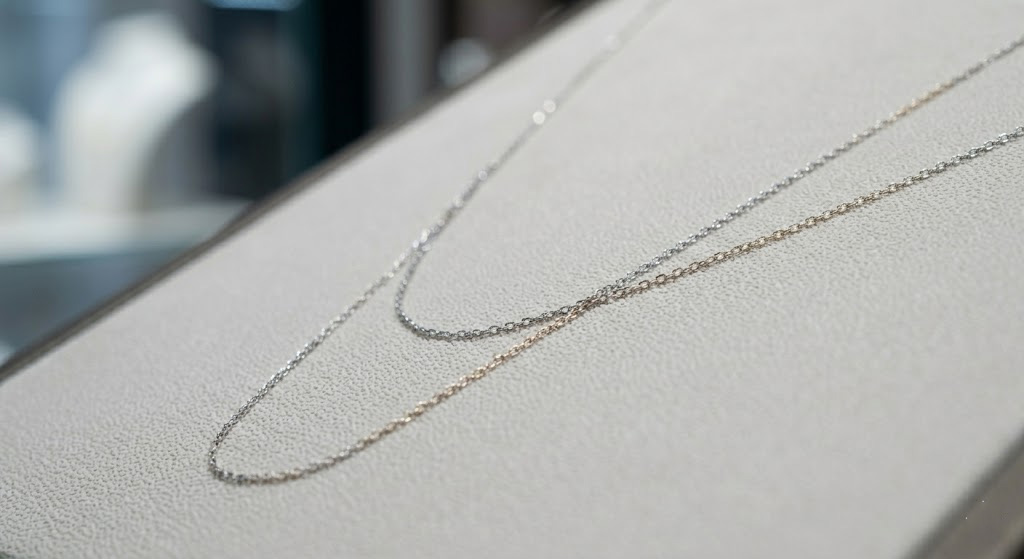
Non-slip materials are highly effective at immobilizing jewelry by increasing the coefficient of friction between the chain and the display surface. In the context of how to stop necklaces from tangling, materials like silicone, specialized “ice grip” fabrics, and high-quality velvet are essential. These surfaces “catch” the fine links of a chain, preventing them from sliding even when the display is tilted or moved. This technology allows for creative arrangements that would be impossible on traditional smooth surfaces.
How do grip-textured surfaces secure fine chains?
Grip-textured surfaces work by providing microscopic anchor points for the individual links of a necklace. This is particularly important for “whisper” chains that are so light they can be moved by a simple puff of air.
The kicker is:
- Textured fabrics prevent the “accordion” effect where chains bunch up at the bottom.
- They allow for precise positioning of pendants without the need for pins.
- The material absorbs minor vibrations that would otherwise cause chain migration.
- High-friction backings keep the entire display unit stable on glass shelves.
What are the advantages of fastener-free positioning?
Fastener-free positioning using non-slip materials is a game-changer for retail efficiency and aesthetics. It eliminates the need for unsightly pins, clips, or tape that can damage the jewelry or the display itself.
Think about this:
- Staff can set up or refresh a display in seconds rather than minutes.
- Customers can see the entire piece without clips obscuring the design.
- There is zero risk of scratching metal or snagging stones on sharp fasteners.
- The display maintains a clean, minimalist look that highlights the jewelry.
Key Takeaway: Non-slip materials provide invisible security that keeps chains perfectly positioned without damaging the inventory.
| Material Type | Friction Level | Best Application | |
|---|---|---|---|
| Premium Velvet | Moderate | Standard busts and trays | |
| Silicone Inserts | High | Slanted displays and travel | |
| Non-Slip Fabric | Very High | Fine chains and minimalist setups |
Integrating high-friction materials into your showcases is a low-cost, high-impact solution for preventing knots.
How do you effectively layer necklaces without creating a mess?
Effective layering requires a calculated approach to spacing and material selection to prevent the “nesting” of chains. When exploring how to stop necklaces from tangling , you must treat a layered set as a single unit with multiple moving parts. By mixing different weights and textures, you can ensure that if one chain shifts, it is less likely to catch on its neighbor. Layering is a powerful sales technique, but only if the presentation remains crisp and organized.
What is the ideal vertical distance between layered chains?
Vertical spacing is the most critical factor in preventing layered necklaces from twisting together. Without enough “breathing room,” the natural movement of the chains will inevitably lead to an interlocking mess.
Here is the kicker:
- Maintain a minimum of two inches between the bottom of one pendant and the next.
- Use an “extender” on the middle necklace to fine-tune the spacing perfectly.
- Ensure the shortest piece (the choker) is snug enough to stay high on the neck form.
- The longest piece should have the heaviest pendant to keep the entire stack taut.
Should you mix different metal weights and textures?
Mixing textures isn’t just a fashion choice; it’s a practical strategy for reducing the surface area where chains can stick together. Smooth chains and textured chains interact differently, which naturally reduces the risk of knotting.
Let’s be honest:
- Pair a flat “herringbone” chain with a round “cable” chain to minimize friction.
- Combine a thick “paperclip” link with a dainty “box” chain for visual and physical separation.
- Different weights react differently to movement, preventing them from swinging in unison.
- Avoid layering two identical fine chains, as they are the most likely to braid together.
Key Takeaway: Success in layering depends on maintaining vertical gaps and utilizing varied chain textures to prevent cohesion.
| Layering Rule | Goal | Result | |
|---|---|---|---|
| 2-Inch Gap | Vertical separation | Prevents chain-on-chain rubbing | |
| Weight Mixing | Inertia variation | Chains swing at different rates | |
| Style Variation | Friction reduction | Links cannot easily interlock |
Layered displays that follow these rules stay organized longer and allow customers to envision the full set.
What are the most efficient detangling techniques for staff?
Even with the best displays, tangles can happen, and staff must be trained to resolve them without causing damage. The primary rule for how to stop necklaces from tangling during the recovery process is to avoid pulling or tension at all costs. Using a combination of flat surfaces, fine tools, and patience will save pieces that might otherwise be deemed unsellable. Training your team in these techniques ensures that minor issues don’t become major losses.
How can simple lubricants assist in separating delicate links?
In cases where a knot is extremely tight, a tiny amount of lubricant can reduce the friction between the metal links, allowing them to slide apart. This technique should be used sparingly and only with materials that can be easily cleaned afterward.
The reality is:
- A drop of mineral oil or unscented baby oil can work wonders on stubborn knots.
- Use a fine-tipped paintbrush to apply the lubricant directly to the center of the knot.
- The oil allows the links to rotate freely, releasing the tension that holds the knot.
- Always clean the necklace thoroughly with a professional jewelry solution after detangling.
Why should you always detangle on a flat, smooth surface?
Detangling a necklace while holding it in the air is a recipe for disaster, as gravity adds tension to the knot. A flat surface allows you to manipulate individual links without the weight of the rest of the chain interfering.
Let’s dive in:
- Use a white or light-colored microfiber cloth to provide a clear, soft workspace.
- Employ two fine needles or specialized jewelry picks to gently pull the knot apart from the center.
- Working on a flat surface prevents the chain from slipping and creating a new knot elsewhere.
- It allows the staff member to rest their hands, ensuring a steady and precise touch.
Key Takeaway: Detangling should be treated as a precision repair task involving flat surfaces, fine tools, and, when necessary, lubricants.
| Tool | Purpose | Advantage | |
|---|---|---|---|
| Microfiber Cloth | Working surface | Prevents sliding and provides contrast | |
| Fine Needles | Manipulation | Allows for link-by-link separation | |
| Mineral Oil | Lubrication | Reduces friction in tight “deadlocks” |
By standardizing these detangling procedures, you minimize the risk of accidental breakage during inventory maintenance.
How does proper packaging prevent tangles during transport?
Packaging is the final line of defense in protecting jewelry after a sale or during inventory transfers. Retailers must focus on how to stop necklaces from tangling by choosing boxes and pouches that immobilize the chain. A necklace that is loose in a box will almost certainly arrive tangled, creating a poor unboxing experience for the customer. Professional packaging solutions are designed to keep the chain taut and the pendant centered.
Why are rigid boxes essential for delicate necklace storage?
Rigid boxes provide a protective shell that prevents external pressure from shifting the jewelry inside. For necklaces, the internal insert is just as important as the external structure of the box.
Consider this:
- Inserts with pre-cut notches allow the chain to be wrapped securely around the back.
- A padded top lid applies gentle pressure to keep the piece from moving during transit.
- Rigid boxes prevent the chain from being crushed or kinked by other items.
- They provide a premium presentation that justifies the price of luxury jewelry.
How do velvet pouches and soft linings reduce friction?
While boxes are best for transport, velvet pouches are excellent for long-term storage if they are designed correctly. The soft lining protects the metal’s finish while the fabric texture helps hold the chain in place.
Here is the kicker:
- Look for pouches with internal “divider” sections to keep the pendant away from the chain.
- Double-drawstring pouches allow for a tighter seal, reducing internal movement.
- Suede and velvet have high natural friction, which discourages the chain from looping.
- Soft linings prevent “metal-on-metal” contact that causes scratches and dullness.
Key Takeaway: High-quality packaging uses rigid structures and high-friction inserts to ensure necklaces remain perfectly positioned during movement.
| Packaging Element | Function | Benefit | |
|---|---|---|---|
| Notched Insert | Chain immobilization | Prevents movement and tangling | |
| Padded Lid | Constant pressure | Holds the piece against the insert | |
| Internal Dividers | Part separation | Keeps different components apart |
Investing in superior packaging ensures that the care you take in your display extends all the way to the customer’s home.
What daily habits ensure long-term display organization?
Consistency is the secret to a tangle-free showroom, and it starts with the daily habits of your sales team. Training staff on how to stop necklaces from tangling through “one-at-a-time” handling and proper evening storage prevents knots from ever forming. A five-minute check at the beginning and end of each shift can save hours of detangling later in the week. These habits create a culture of excellence and respect for the inventory.
How to train staff on one-at-a-time handling protocols?
The most common cause of tangles in a retail setting is a staff member trying to manage too many pieces at once. Establishing a strict protocol for handling jewelry ensures that every piece is given the attention it requires.
Think about this:
- Never allow more than two necklaces to be out of the case for a single customer.
- Always clasp the necklace immediately after a trial before laying it down.
- Teach staff to hold necklaces by the clasp and the pendant simultaneously to avoid swinging.
- Use a dedicated velvet “presentation tray” for all customer trials to keep pieces separated.
What are the best end-of-day storage practices for retailers?
The way jewelry is stored overnight determines how much work will be required the following morning. Taking the time to properly secure pieces before closing the vault is the best defense against morning “chaos.”
Let’s be honest:
- Never pile necklaces into a single tray or “catch-all” bowl overnight.
- Use compartmentalized storage trays where each necklace has its own padded slot.
- For necklaces on busts, ensure the rear hooks are engaged before moving the unit.
- If storage space is tight, use individual “anti-tarnish” bags for every single chain.
Key Takeaway: Daily discipline in handling and evening storage is the most effective way to eliminate tangles in a high-traffic retail environment.
| Daily Habit | Frequency | Impact | |
|---|---|---|---|
| One-at-a-Time Rule | Every Customer | Eliminates trial-based tangles | |
| Immediate Clasping | Every Use | Prevents loops from forming | |
| Individual Slot Storage | Every Night | Ensures a fresh start the next day |
When these habits become second nature to your team, the visual quality of your displays will improve dramatically.
How should back-stock be organized to avoid storage knots?
Back-stock organization is often overlooked, yet it is where most “invisible” damage occurs. To truly master how to stop necklaces from tangling , you must apply the same level of organization to your safe as you do to your showcases. High-volume inventory requires a system that is both space-efficient and protective. Using specialized inserts and individual compartments allows for rapid restocking without the frustration of detangling.
Can individual compartments save time during restocking?
Individual compartments are the ultimate solution for retailers who need to find and display items quickly. When every piece has a “home,” the risk of chains crossing and knotting is virtually eliminated.
Look at it this way:
- Stackable trays with 12 to 24 compartments maximize vault space while protecting stock.
- Clear lids or labeling allow staff to identify pieces without opening every box.
- Compartments prevent the “domino effect” where one tangled piece pulls others with it.
- They make inventory counts significantly faster and more accurate.
How to use specialized inserts for high-volume inventory?
For retailers with hundreds of identical chains, specialized “hanging” inserts or bulk chain cards are highly effective. These tools allow you to store many pieces in a very small footprint without them ever touching.
The secret is simple:
- Use plastic or cardboard “hang tags” where the chain is wrapped around a secure card.
- Store these cards vertically in a filing-style box for easy browsing.
- Ensure the clasp is hooked onto the card to prevent the chain from sliding off.
- This method is ideal for gold chains, silver basics, and simple pendant necklaces.
Key Takeaway: Back-stock should be organized using individual compartments or hang-cards to ensure items are display-ready at a moment’s notice.
| Back-stock Method | Best For | Storage Efficiency | |
|---|---|---|---|
| Multi-Grid Trays | Variety of styles | High | |
| Hang-Cards | Bulk chains | Very High | |
| Individual Pouches | High-value items | Moderate |
A well-organized back-stock system is the foundation of a smooth-running and profitable jewelry business.
Conclusion
Mastering the art of jewelry presentation is a journey of precision and discipline. By implementing the strategies outlined in this guide—from selecting high-friction displays to enforcing strict handling protocols—you can ensure your necklaces remain a source of profit rather than a source of stress. Your brand’s commitment to quality is visible in every neatly draped chain and perfectly centered pendant.
At YiXin Packaging, our vision is to empower jewelry retailers with the tools and packaging they need to create unforgettable brand experiences. We believe that every piece of jewelry deserves to be protected and presented with the utmost care. To upgrade your store’s organization and explore our range of professional solutions, contact us today . Let’s work together to make your jewelry the star of the show.
FAQs
Can I use household items like drinking straws to keep necklaces from tangling?
No, you should avoid this in a retail environment. While straws work for home storage, they look unprofessional in a commercial setting and can scratch delicate metals or trap moisture that leads to tarnish.
What’s the best way to handle very fine “whisper” chains?
The best way is to use high-friction silicone or “ice grip” displays. These materials hold the weight of the chain through microscopic friction, preventing the links from shifting even with the slightest movement.
How often should I check my displays for tangles?
You should perform a visual check every time a showcase is opened. Catching a potential loop or cross-over early prevents it from tightening into a knot that requires professional intervention.
Can I store different metals in the same compartment?
No, you should always keep different metals separate. Different metals have different hardness levels, and a harder metal (like 14k gold) can easily scratch a softer one (like sterling silver) if they rub together.
What should I do if a necklace is permanently kinked?
You should remove it from the display immediately and send it to a jeweler. Selling a kinked chain damages your reputation, as the customer will eventually notice the flaw, leading to a return and loss of trust.