
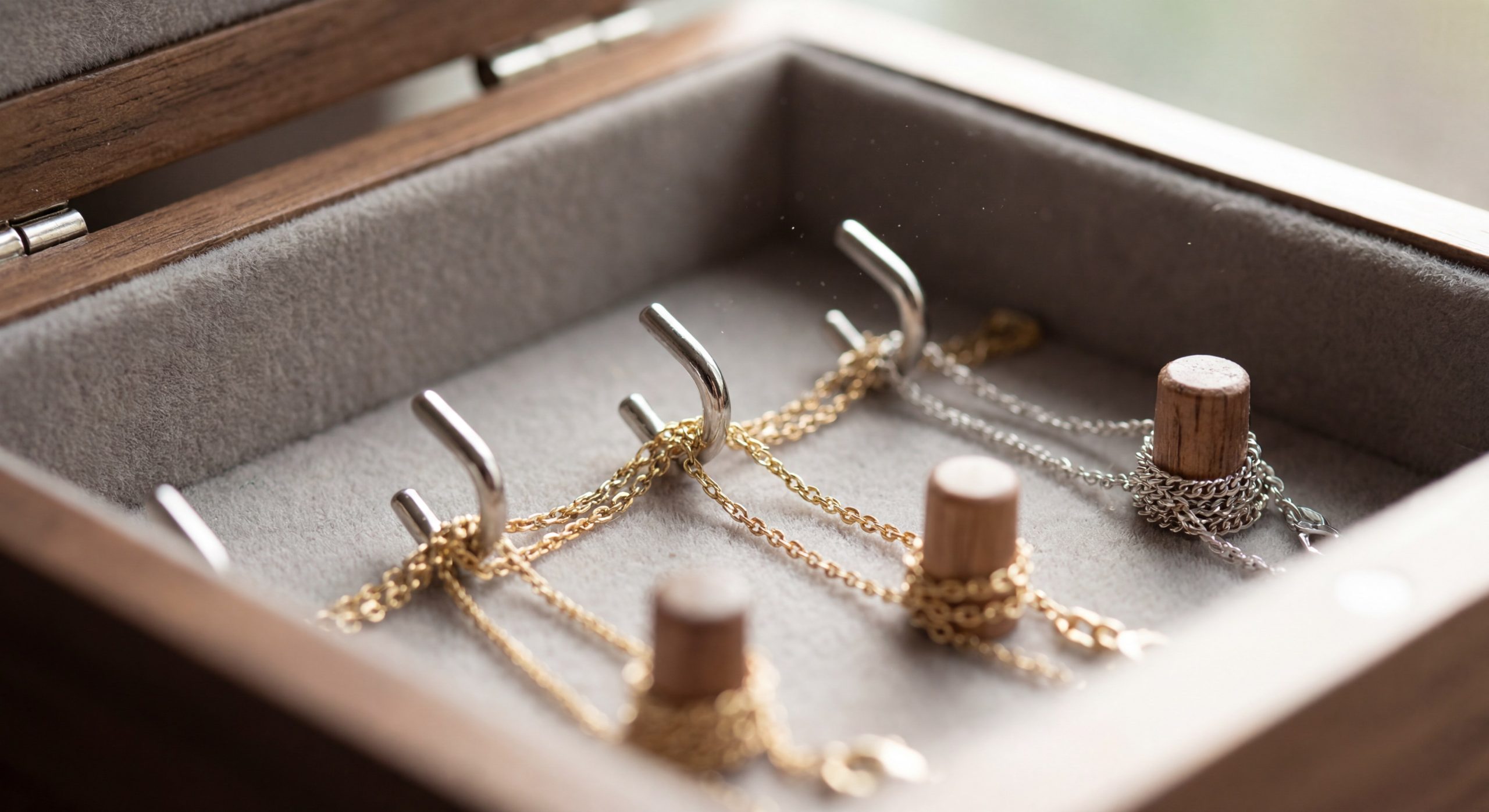
You can hang necklaces in a jewelry box by utilizing integrated hooks, side wings, or vertical carousels to ensure each chain remains individual and knot-free. This approach is the cornerstone of how to store necklaces in a jewelry box because it leverages gravity to prevent the overlapping that leads to frustrating clusters. When you choose a high-quality necklace box , you provide a structured environment that protects delicate metals from the environmental stressors that cause premature wear. Failing to organize your collection results in a chaotic mess that can lead to permanent kinks in your favorite gold or silver chains.
The best part?
A systematic approach saves you time every morning by making your favorite accessories immediately visible and accessible. By investing a small amount of effort into organization, you ensure that every piece is ready to wear without the need for stressful untangling sessions.
Why is necklace organization essential for your collection?
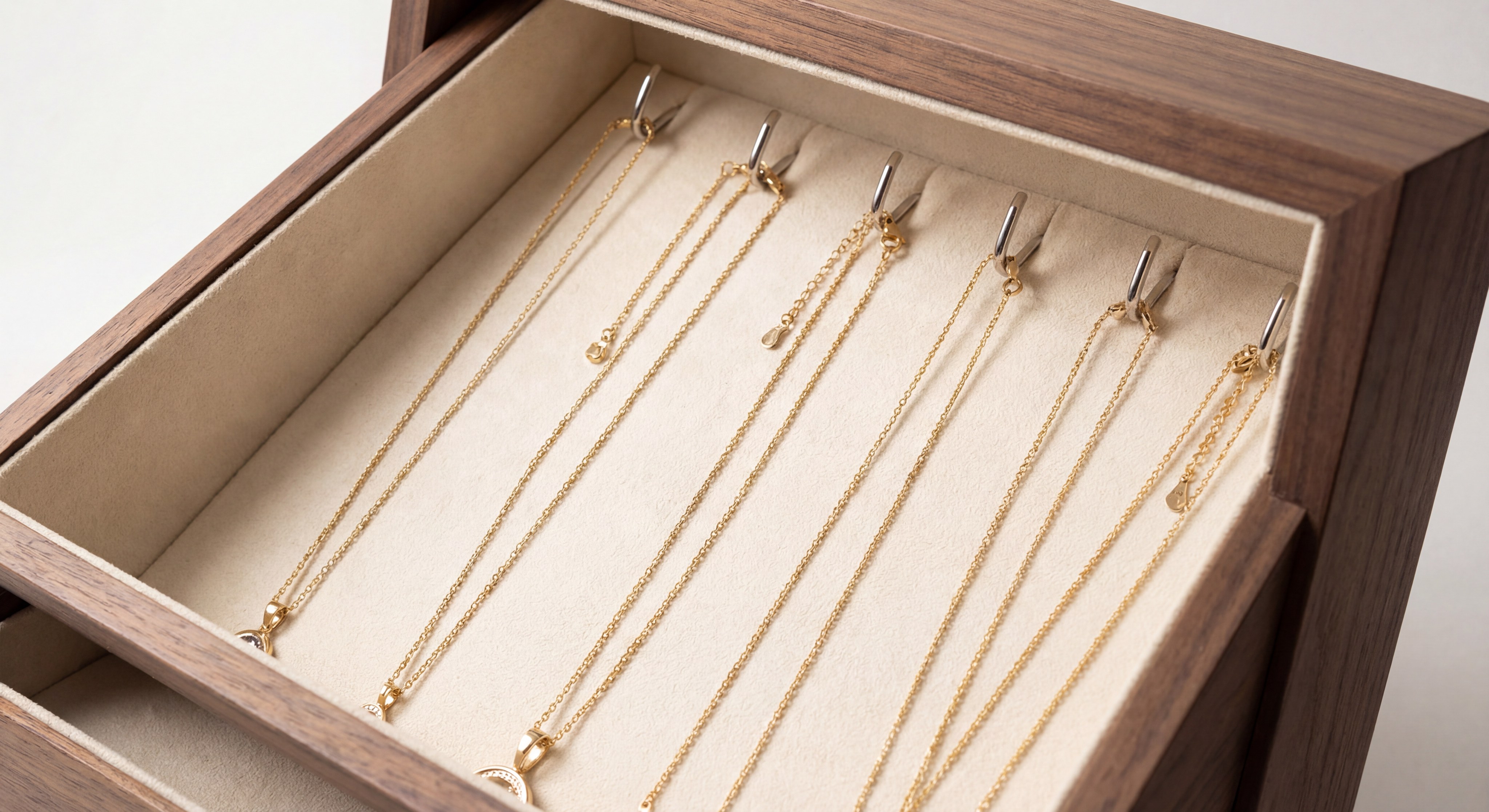
Proper organization is essential because it prevents the physical friction and chemical cross-contamination that occurs when different metals are shoved together in a single drawer. Learning how to store necklaces in a jewelry box effectively eliminates the risk of “chain nests,” which are the leading cause of micro-scratches and structural fatigue. When chains rub against one another, the friction can actually wear down the outer finish of plated items or dull the polish of solid metals.
How does order extend jewelry life?
Think about it: every time you pull a tangled chain to free it from a knot, you are applying mechanical stress that the delicate links were never designed to handle. This tension can stretch the metal or even snap the thin pins that hold high-end jewelry together.
- Kink Prevention: Straight storage keeps links aligned and prevents the sharp bends that cause metal failure.
- Tarnish Control: Separating items reduces the chemical reactions that happen when silver touches other reactive materials.
- Stone Security: Individual hanging ensures that hard gemstones do not chip or scratch the softer metal of neighboring pieces.
Can organization simplify your daily routine?
Beyond protection, a well-ordered system allows you to see the full breadth of your collection at a single glance. This visibility encourages you to rotate your pieces more frequently, ensuring that every necklace gets the wear it deserves rather than being forgotten at the bottom of a pile.
Key Takeaway: Organizing your jewelry is an investment in the longevity of your pieces, ensuring they remain as radiant as the day you bought them.
| Benefit | Description | Long-term Impact | |
|---|---|---|---|
| Stress Reduction | Prevents chain pulling | Longer-lasting links | |
| Surface Protection | Stops metal-on-metal rubbing | Maintains high-gloss shine | |
| Quick Selection | Full visibility of styles | Better utilization of collection |
The table above illustrates how systematic storage transforms a pile of metal into a preserved asset.
How should you assess your current jewelry box space?
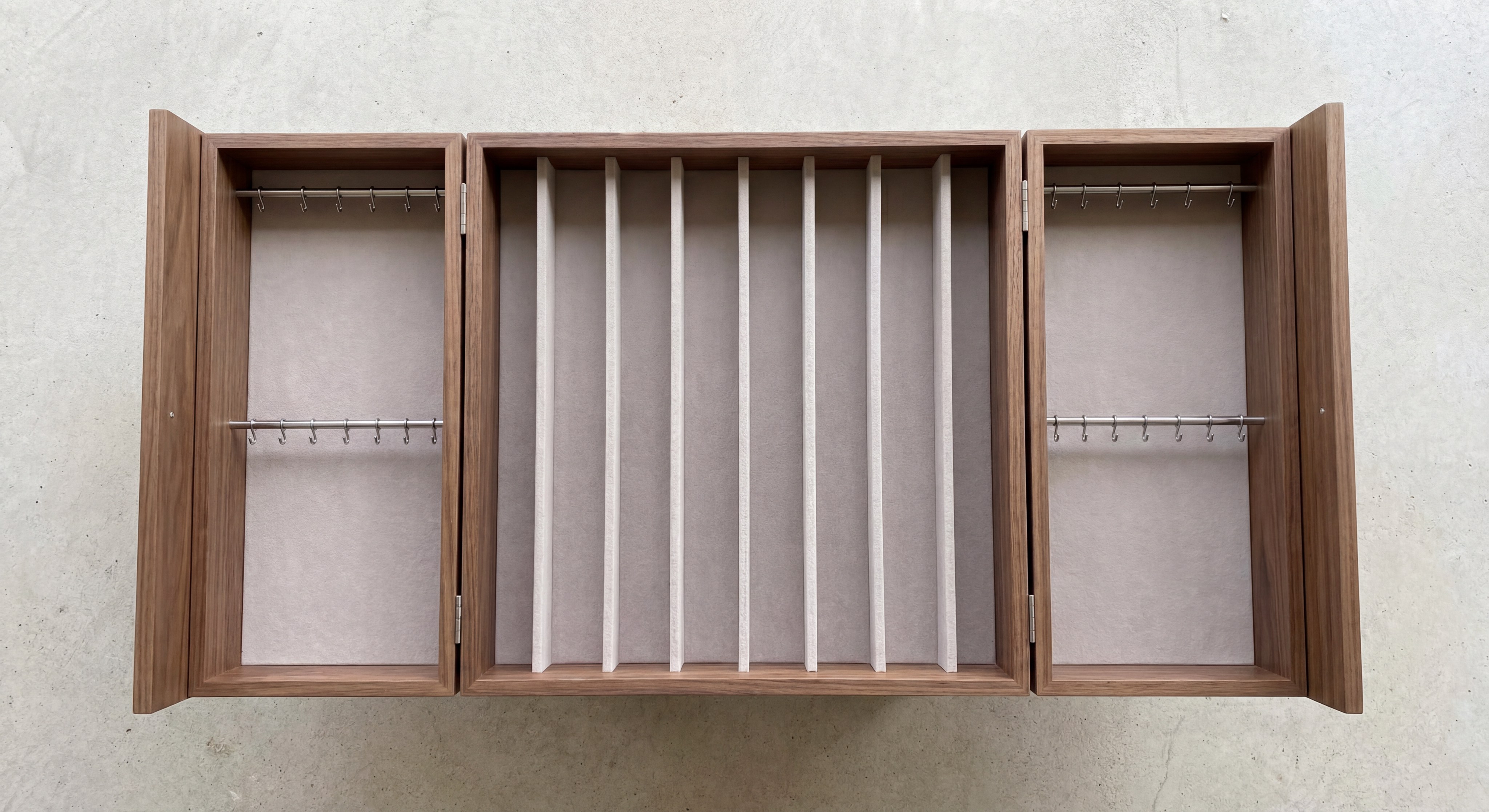
Assessing your space requires looking at the vertical height and the number of available attachment points to ensure your necklaces have room to breathe. To master how to store necklaces in a jewelry box, you must first determine if your current container has enough “drop” distance to keep long chains from bunching at the bottom. If the chains touch the floor of the compartment, they will eventually coil and entwine with any other item in that same area.
Is your current box large enough?
Here is the deal: if you find yourself doubling up necklaces on a single hook, your collection has already outgrown its current habitat. A cramped space is the most common reason for damaged jewelry, as the lack of airflow can also accelerate tarnishing in humid environments.
- Measure Verticality: Ensure you have at least 12 to 18 inches of clearance for standard opera-length pieces.
- Count Your Hooks: Aim for a 1:1 ratio of hooks to necklaces to maintain total isolation for each item.
- Check Side Clearance: Verify that side wings close fully without pinching the chains between the door and the frame.
What features should you look for in a new box?
If your assessment reveals a lack of space, you should look for a box that prioritizes hanging carousels or deep-set lid hooks. These features are specifically designed to manage the unique geometry of necklaces, which require more linear room than rings or studs.
Key Takeaway: Accurate spatial assessment allows you to allocate the right amount of room for each specific necklace length.
| Assessment Factor | Ideal Metric | Purpose | |
|---|---|---|---|
| Drop Distance | > 12 Inches | Prevents chain coiling | |
| Hook Spacing | 1-inch minimum | Stops pendant clashing | |
| Compartment Depth | > 2 Inches | Protects chunky statement pieces |
Careful measurement of your storage area ensures that no piece is subjected to unnecessary crowding.
What are the best methods to hang necklaces efficiently?
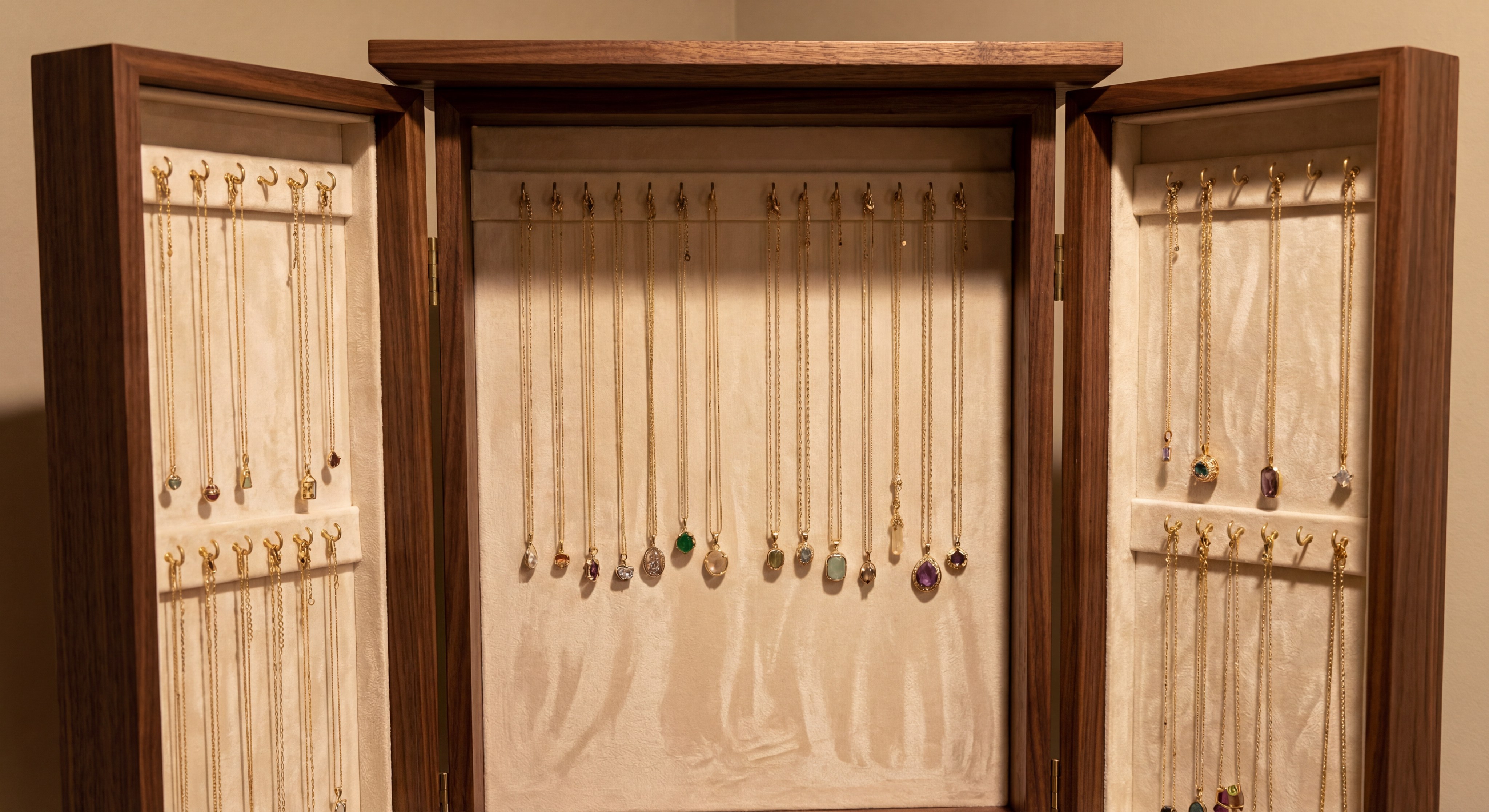
The most efficient methods involve using built-in hooks or vertical carousels that allow gravity to keep chains perfectly straight at all times. Learning how to store necklaces in a jewelry box often involves choosing a ring box or multi-purpose unit that features dedicated hanging racks. By utilizing the vertical planes of the lid and side doors, you maximize the efficiency of the box’s footprint without taking up valuable floor space.
Should you use a vertical carousel?
Believe it or not, a rotating carousel is often the most space-efficient way to house a large collection of medium-weight chains. These devices allow you to spin the entire rack, bringing the desired piece to the front without disturbing the items hanging next to it.
- Gravity Tension: Let the weight of the pendant act as a natural straightener for the chain.
- Staggered Placement: Hang shorter chokers on the inner hooks and longer pendants on the outer ones.
- Clasp Security: Always ensure the clasp is fastened to prevent the chain from sliding off during movement.
Is side-wing storage effective?
Side wings are perfect for exceptionally long necklaces that would otherwise drag on the bottom of a standard compartment. These fold-out doors usually feature hooks with catch-pouches at the bottom to hold any excess chain length safely in place.
Key Takeaway: Vertical hanging is the gold standard for preventing tangles and maximizing high-density storage.
| Method | Best Use Case | Efficiency Rating | |
|---|---|---|---|
| Lid Hooks | Lightweight chains | Moderate | |
| Carousels | Large collections | Very High | |
| Side Wings | Long opera pieces | High |
Selecting the right hanging method based on necklace length is the fastest way to achieve a professional look.
Can you use specialized inserts for better organization?
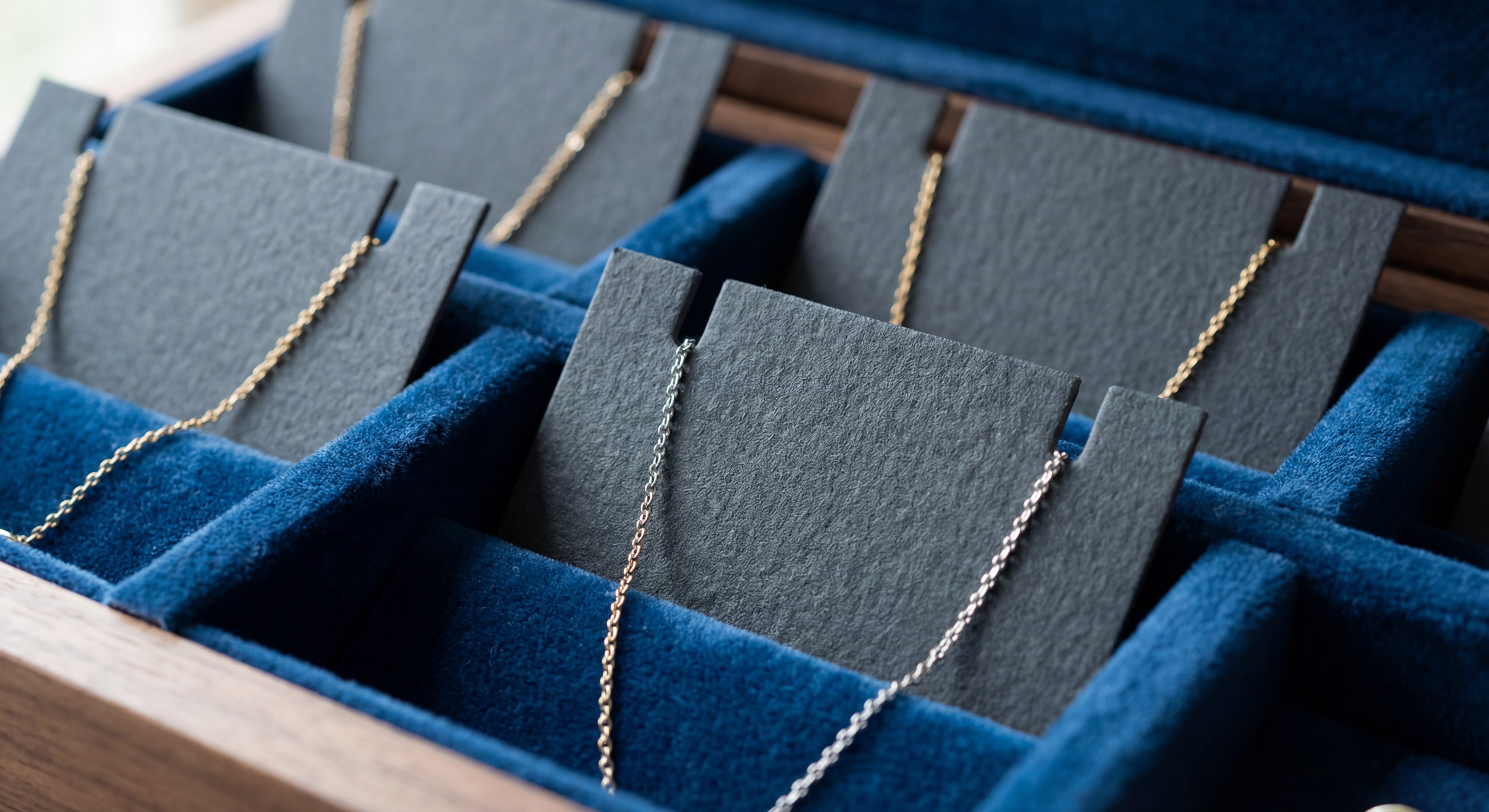
Yes, specialized inserts like velvet-lined foam or notched cards provide additional security for pieces that tend to slide during transport. When considering how to store necklaces in a jewelry box, look for inserts that use friction and specific cut-outs to hold items in place. These inserts are particularly useful for keeping pendants centered and preventing the chain from shifting as you open and close the box.
What are the benefits of velvet lining?
Let’s dive in. Velvet is not just for luxury; the tiny fibers create a microscopic “grip” that keeps metal from sliding around. This material is also non-abrasive, meaning it won’t strip away the delicate rhodium or gold plating that protects your jewelry from oxidation.
- Friction Fit: Notched foam cards hold the chain at two points, creating a secure “V” shape for display.
- Moisture Control: High-quality fabric linings can help absorb ambient moisture, which is a major cause of tarnish.
- Impact Cushioning: Padded inserts act as shock absorbers if you accidentally drop or tip your jewelry container.
Can inserts be customized?
Many modern storage solutions allow you to swap out inserts depending on the changing needs of your jewelry collection. If you add more bulky statement pieces, you can remove thin chain cards in favor of larger, deeper velvet-lined wells.
Key Takeaway: Specialized inserts transform a generic container into a professional-grade organization system.
| Insert Type | Material | Key Function | |
|---|---|---|---|
| Notched Cards | Rigid Cardboard/Plastic | Secures chain position | |
| Padded Trays | Foam and Velvet | Prevents impact damage | |
| Silk Pouches | Soft Textile | Maximum tarnish protection |
Utilizing high-quality inserts ensures that your jewelry remains stationary and safe even if the box is moved.
How do hooks and pegs prevent annoying chain tangles?
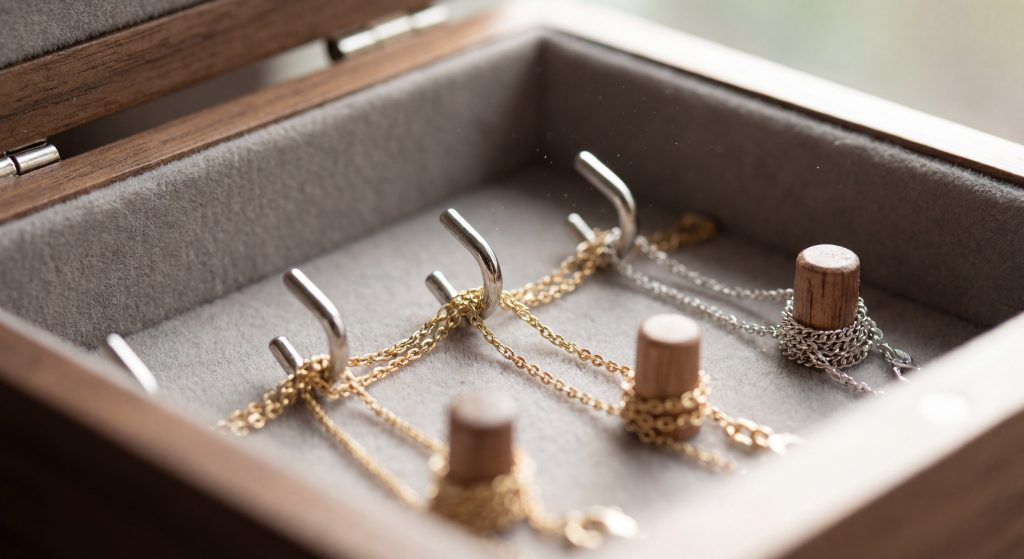
Hooks and pegs provide a fixed anchor point that isolates each necklace from its neighbors, preventing the intertwining that causes damage. When you focus on how to store necklaces in a jewelry box, hooks serve as the primary defense against the chaos of an open drawer. By ensuring each clasp is fastened around a sturdy peg, you remove the possibility of chains “traveling” and entwining with other pieces during storage. Using an earring box with additional hook attachments can further expand your storage capabilities for smaller, delicate necklaces.
Why is spacing so critical?
Consider this: if hooks are placed too close together, the pendants will naturally swing into one another every time the box is opened. This contact can lead to “chatter,” which creates tiny dents in soft gold or can loosen the prongs holding precious stones in place.
- Fixed Geometry: Hooks keep the top of the necklace in a permanent position.
- Vertical Tension: Pegs allow the chain to hang without twisting around itself.
- Isolation: Dedicated hooks ensure that a single tangled piece doesn’t ruin the entire collection.
Should you use curved or straight pegs?
Curved hooks are generally superior because they prevent the chain from slipping forward when you move the jewelry box. Straight pegs are easier for quick access but require a more stable, stationary storage environment to prevent items from falling off.
Key Takeaway: Fixed anchor points like hooks are the most reliable way to maintain a tangle-free environment.
| Feature | Curved Hook | Straight Peg | |
|---|---|---|---|
| Retention | High security | Lower security | |
| Accessibility | Slightly slower | Very fast | |
| Best Location | Side wings/Lid | Stationary drawers |
The design of your attachment points dictates how secure your necklaces will remain during daily use.
Which DIY solutions work for custom necklace storage?
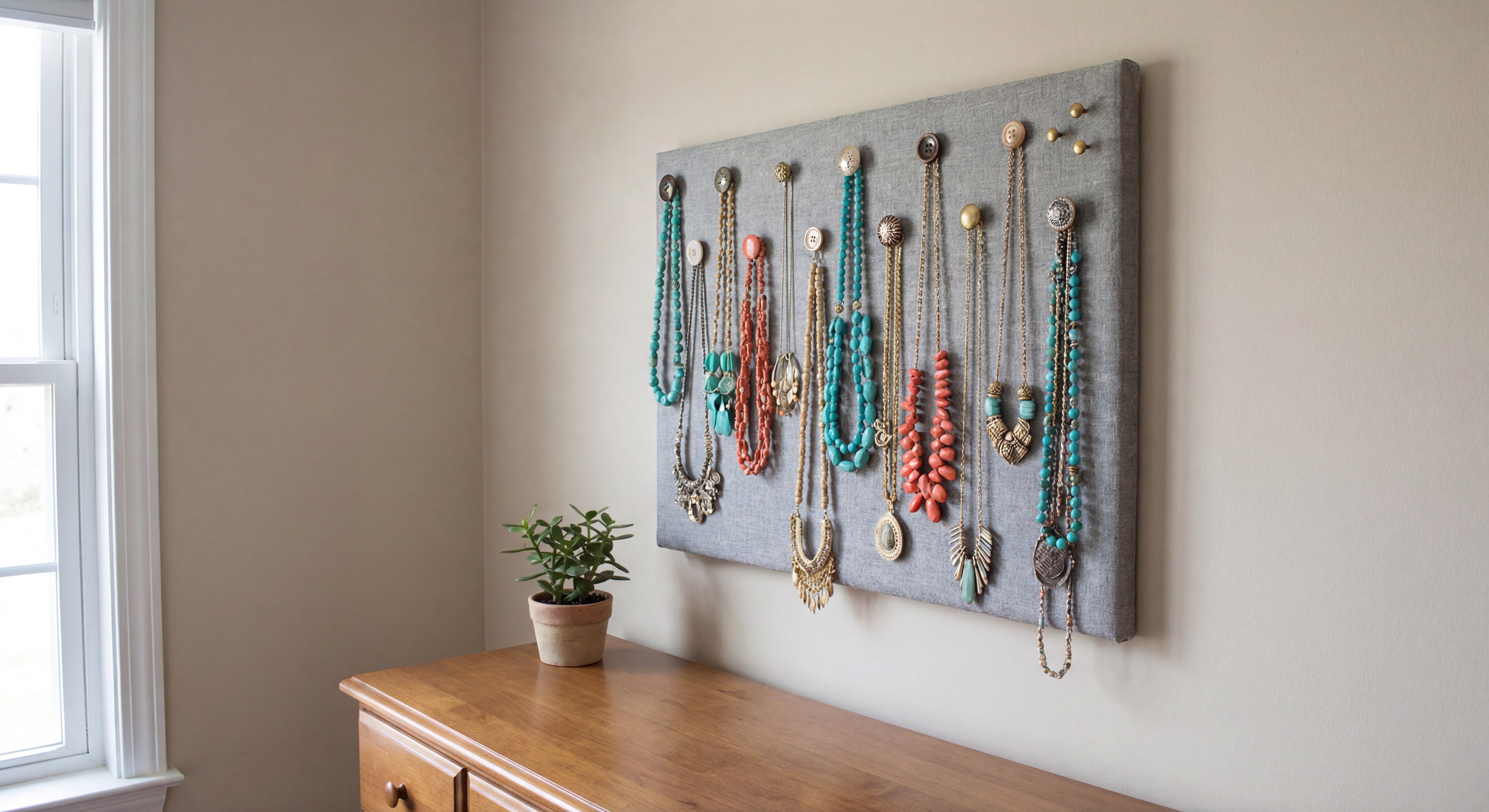
DIY solutions often involve repurposing household items like cork, command hooks, or even lace to create custom hanging zones within your existing storage. If you are struggling with how to store necklaces in a jewelry box that lacks built-in features, you can easily add your own. Small adhesive hooks or a strip of fabric-covered cork glued to the interior lid can double your hanging capacity in minutes.
Can you use pins on corkboards?
Check this out: a piece of cork covered in velvet allows you to place decorative pins exactly where you need them. This flexibility is perfect for collections that include a wide variety of lengths, from tiny chokers to massive statement necklaces.
- Custom Spacing: Move pins as your collection grows or changes style.
- Low Cost: Repurposed materials provide professional results without the luxury price tag.
- Personal Style: You can choose fabrics and pins that match your bedroom or dressing room decor.
What about magnetic strips?
Magnetic strips are a clever way to store lightweight metal chains without the need for traditional hooks. Simply attach a thin magnet to the back of your jewelry box wall, and your necklaces will snap into place, hanging vertically with minimal effort.
Key Takeaway: DIY modifications allow you to tailor your storage specifically to the unique dimensions of your collection.
| DIY Component | Benefit | Complexity | |
|---|---|---|---|
| Cork Strip | Completely adjustable | Low | |
| Adhesive Hooks | Immediate expansion | Very Low | |
| Fabric Pockets | Extra protection | Moderate |
Adding custom elements to your box allows for a tailored storage experience that fits your specific needs.
Should you categorize necklaces by style or length?
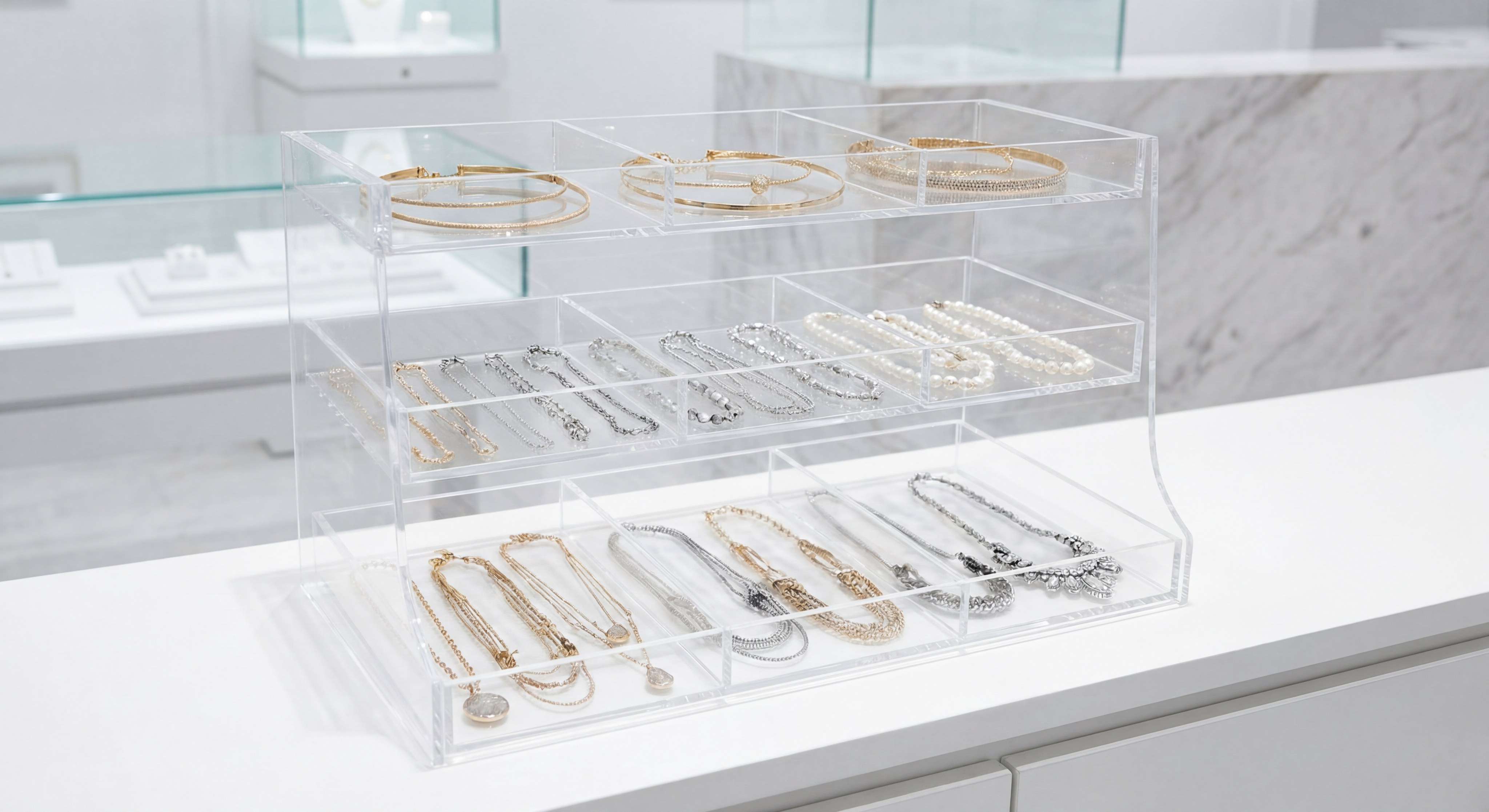
Categorizing by style is usually more practical for daily dressing, while categorizing by length is the superior method for preventing tangles. When deciding how to store necklaces in a jewelry box, a hybrid approach often works best for the average user. Placing chokers together and long pendants in a separate area ensures that long chains don’t dangle into the “zone” of shorter pieces. To further protect these groups, utilizing a bracelet box for your shorter, thicker neckpieces can be an ingenious way to keep items separate.
Why separate by metal type?
It gets better: separating your gold and silver isn’t just about looks; it’s about chemistry. Silver is a reactive metal that can transfer its tarnish to other pieces if they are stored in direct contact for long periods.
- Length Grouping: Keeps chains of similar “drop” distance in the same vertical plane.
- Style Sorting: Group “everyday” pieces in the most accessible spot.
- Material Isolation: Separate solid gold from plated items to prevent finish wear.
Is occasion-based sorting useful?
Storing your formal jewelry in a different section than your casual items prevents you from sifting through delicate pearls when you just need a simple chain. This reduces the amount of handling each piece receives, which directly translates to less wear and tear over time.
Key Takeaway: Strategic categorization simplifies your selection process and adds a professional aesthetic to your box.
| Category | Sorting Logic | Benefit | |
|---|---|---|---|
| Length | 16″, 18″, 24″+ | Best tangle prevention | |
| Metal | Gold vs. Silver | Prevents tarnish transfer | |
| Style | Minimalist vs. Bold | Faster morning selection |
Grouping your jewelry logically ensures you can find the perfect accessory without creating a mess.
How can you protect delicate chains from surface scratches?
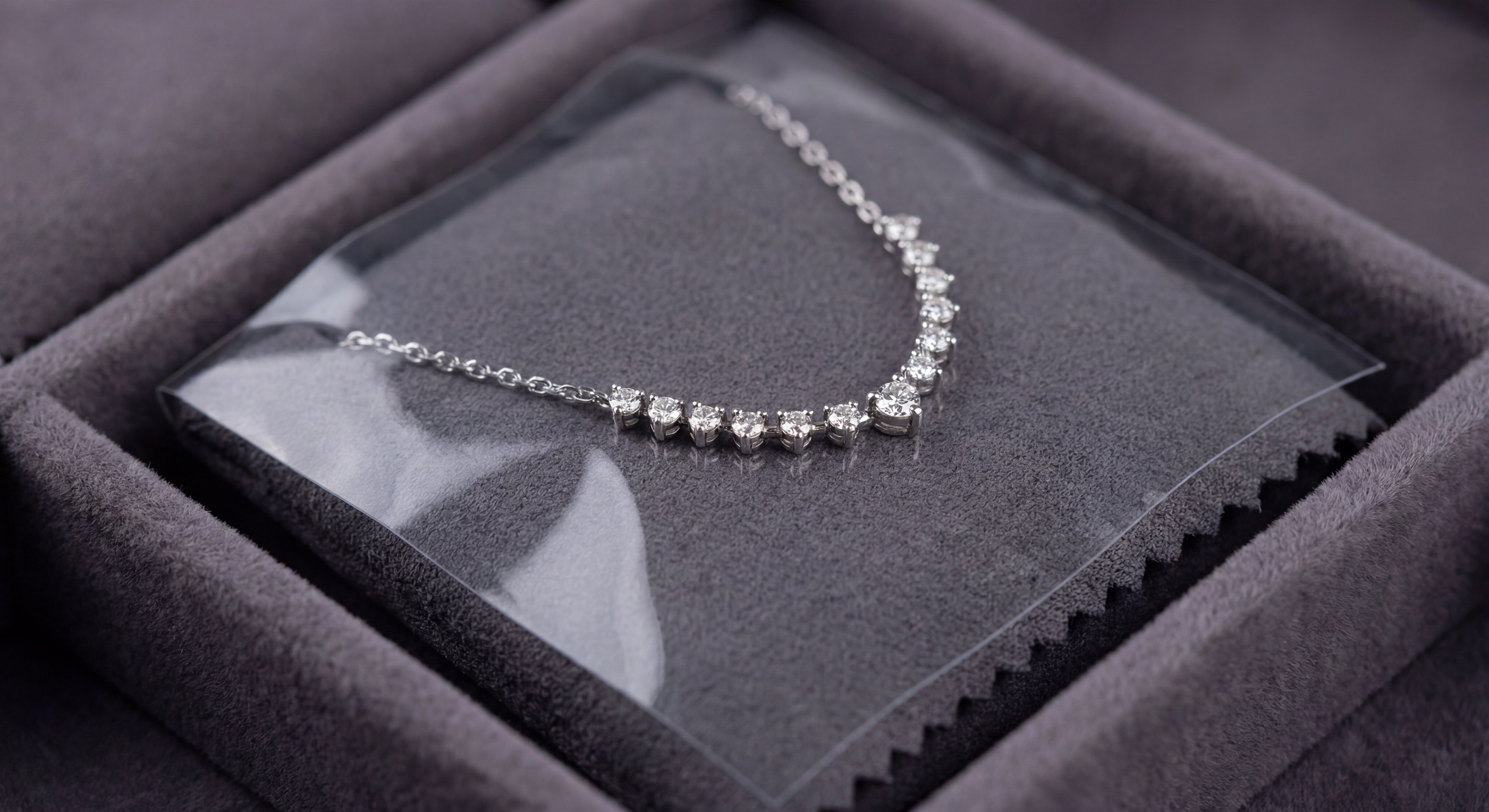
Delicate chains require soft barriers and minimal movement to stay in pristine condition over many years of use. To successfully manage how to store necklaces in a jewelry box, you should utilize soft pouches or individual compartments for your most fragile items. This isolation ensures that the hard edges of one pendant cannot gouge or scratch the polished surface of another.
Is friction the enemy of jewelry?
The truth is, even soft metals like 14k gold can be damaged by the constant “vibration” of being stored in a loose drawer. Every time you open or close a drawer, the items shift slightly, creating thousands of microscopic abrasions that eventually dull the metal’s shine.
- Pouch Storage: Place high-value items in individual silk bags before hanging.
- Soft Backing: Ensure your box is lined with microfiber or acid-free velvet.
- Fixed Positioning: Use clips or secondary hooks to keep pendants from swinging.
Should you use anti-tarnish strips?
Adding small charcoal or silica-based strips to your jewelry compartments can drastically reduce the rate of oxidation. These strips absorb the sulfur and moisture in the air that causes silver to turn black and gold to lose its luster.
Key Takeaway: Soft materials and isolation are the two most effective ways to prevent surface degradation.
| Protection Method | Cost | Effectiveness | |
|---|---|---|---|
| Velvet Lining | Low | High | |
| Individual Pouches | Moderate | Very High | |
| Anti-Tarnish Strips | Low | High (for metals) |
Focusing on soft barriers and climate control will keep your jewelry looking brand new for a lifetime.
What is the secret to maintaining a clean jewelry box?
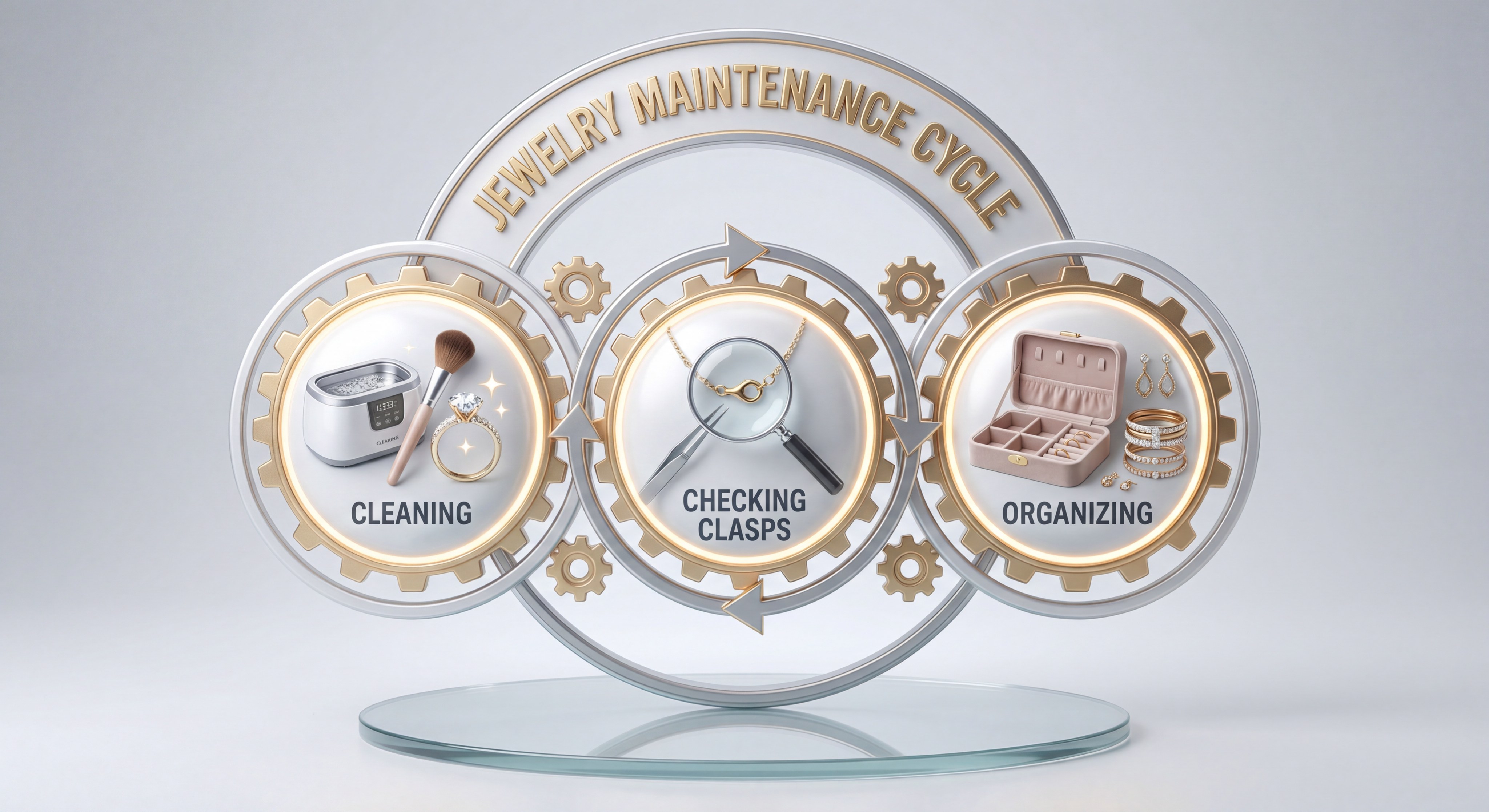
The secret to a clean box is a combination of regular dusting and an “everything in its place” mindset that prevents clutter. Maintaining how to store necklaces in a jewelry box requires a monthly audit where you check for tangles, dust, and any signs of early tarnish. If you put a piece away improperly “just for one night,” it often leads to a cascade of clutter that ruins your previous organizational efforts. By using the best jewelry box design for your specific collection size, you make maintenance a natural part of your routine.
How do you handle hidden dust?
The truth is, dust is actually abrasive and can contain minerals that scratch soft metals like silver and high-karat gold. Use a can of compressed air or a soft, clean makeup brush to gently sweep out the corners of your jewelry box once a month.
- Weekly Reset: Take five minutes every Sunday to re-hang any pieces that have shifted.
- Deep Clean: Once a year, remove all items and wipe down the interior with a damp, lint-free cloth.
- Component Check: Verify that hooks are still secure and that velvet linings haven’t become unglued.
Why is an audit necessary?
Over time, your style evolves, and you may find that you no longer wear certain pieces that are taking up prime storage real estate. Removing these items to a long-term storage bag frees up space for the necklaces you actually use, reducing the overall density of the box.
Key Takeaway: Consistency in your storage habits is more important than the complexity of your storage system.
| Task | Frequency | Time Required | |
|---|---|---|---|
| Dusting | Monthly | 2 Minutes | |
| Organization Audit | Quarterly | 10 Minutes | |
| Deep Cleaning | Annually | 30 Minutes |
A consistent maintenance schedule prevents the gradual buildup of grime and keeps your storage system functional.
How do you choose the right storage for different jewelry types?
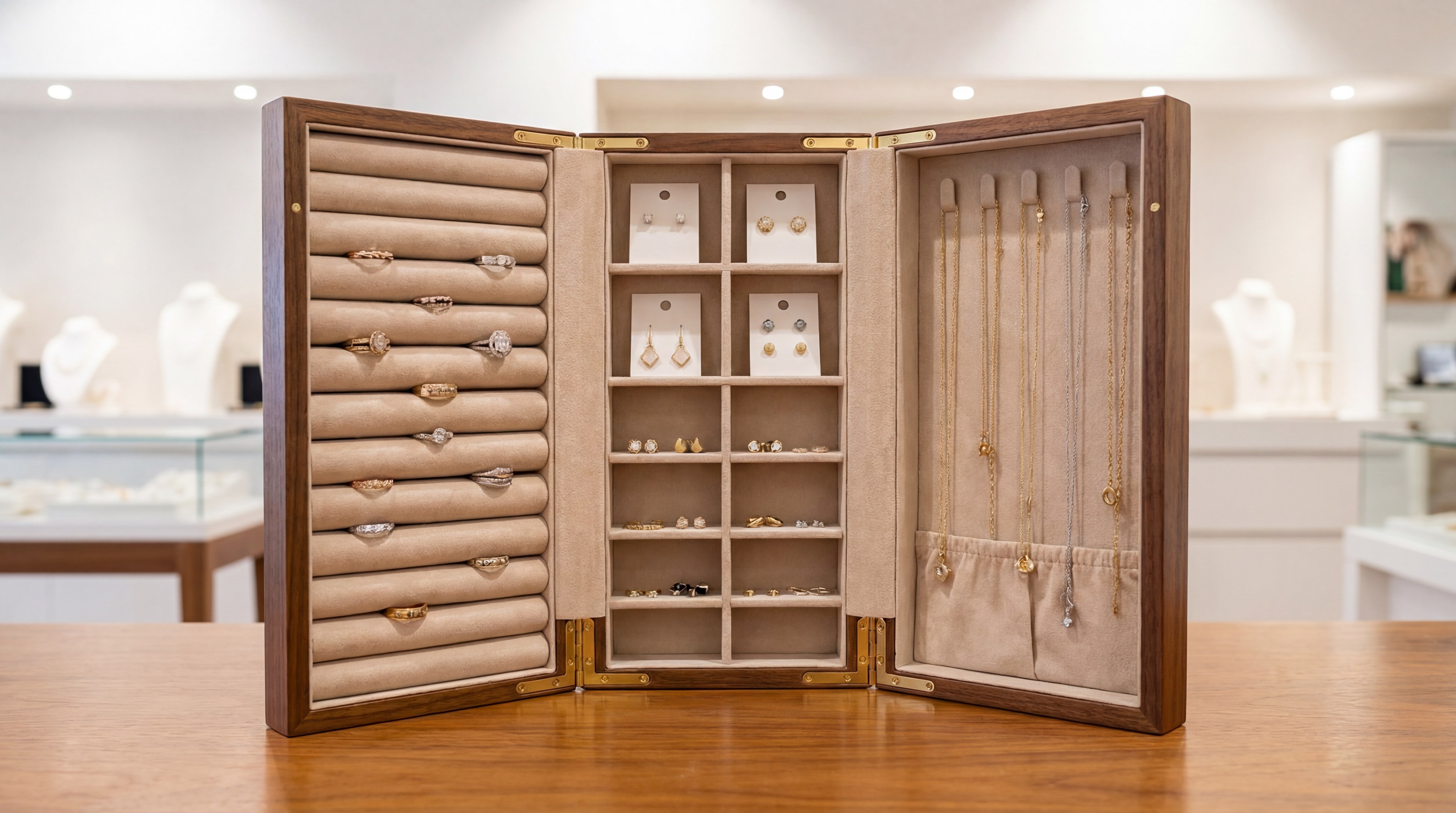
Choosing the right storage means matching the container to the specific needs of the jewelry, such as using vertical hooks for necklaces and slotted foam for rings. When you master how to store necklaces in a jewelry box, you realize that a one-size-fits-all approach rarely provides the level of protection your collection deserves. Each category of jewelry requires a different mechanical solution to stay safe, organized, and ready for use.
Should you mix different jewelry types?
Consider this: storing earrings in the same tray as necklaces is a recipe for disaster, as the sharp posts can easily snag on delicate chain links. A dedicated, multi-compartment system ensures that each type of accessory has its own “safe zone” where it cannot harm other pieces.
- Necklaces: Require vertical hanging to prevent gravity-induced knotting.
- Rings: Need firm, slotted foam to keep them upright and visible.
- Earrings: Benefit from perforated cards or small, individual bins.
What about travel storage?
When you are on the go, the rules of storage change; you need compact, high-friction solutions like jewelry rolls. These rolls use fabric flaps and ties to keep necklaces stationary, preventing them from turning into a single massive knot inside your suitcase.
Key Takeaway: A specialized storage system that respects the geometry of each jewelry type is the ultimate solution for clean storage.
| Accessory Type | Ideal Storage Feature | Primary Protection | |
|---|---|---|---|
| Necklaces | Vertical Hooks | Tangle Prevention | |
| Rings | Padded Slots | Scratch Prevention | |
| Earrings | Notched Cards | Loss Prevention |
By matching the storage method to the jewelry type, you ensure a professional and safe environment for your entire collection.
Frequently Asked Questions
Can I hang multiple necklaces on one hook?It is highly discouraged to double up your chains. Doing so increases the risk of the two items entwining at the base, making them twice as difficult to untangle and increasing the likelihood of damage to the metal links.
What’s the best way to untangle a necklace if it does get knotted?You should lay the necklace on a flat, hard surface and apply a tiny drop of baby oil or olive oil directly to the knot. Use two fine sewing needles to gently tease the links apart until the knot opens enough to pull the chain through.
How do I store necklaces when I’m traveling?The most effective trick is to thread the chain through a common plastic drinking straw and clasp the ends together. This creates a rigid barrier that prevents the chain from coiling or knotting while it is stored in your travel bag or suitcase.
Is it okay to store silver and gold necklaces together?While it is not strictly forbidden, it is better to separate them. Silver oxidizes more quickly and can transfer its tarnish to other metals through direct contact, potentially dulling the finish of your gold pieces over long periods of time.
Why does my jewelry box smell musty?A musty smell usually indicates that moisture has been trapped inside the fabric lining. You should remove all jewelry, leave the box open in a dry area for 48 hours, and then place a silica gel packet inside to absorb any future humidity.
Conclusion
Effective jewelry storage is about more than just aesthetics; it is about protecting your financial and emotional investment for the future. By applying these professional tips on how to store necklaces in a jewelry box, you can say goodbye to the frustration of knots and the disappointment of permanently damaged chains. At our core, we believe that every piece of jewelry deserves a home that reflects its inherent beauty and artisanal value. If you are looking to elevate your brand’s packaging or need professional-grade storage solutions, contact us today to explore our custom options.