
You can determine if a diamond is authentic by performing the fog, water, or light tests which reveal its unique physical properties. Many jewelry professionals and enthusiasts struggle with the anxiety of verifying high-value stones without immediate access to lab equipment. This uncertainty can lead to costly mistakes or missed opportunities in the resale market. Learn how to test if a diamond is real at home by following these seven proven techniques.
Can you use breath and how to test if a diamond is real at home?
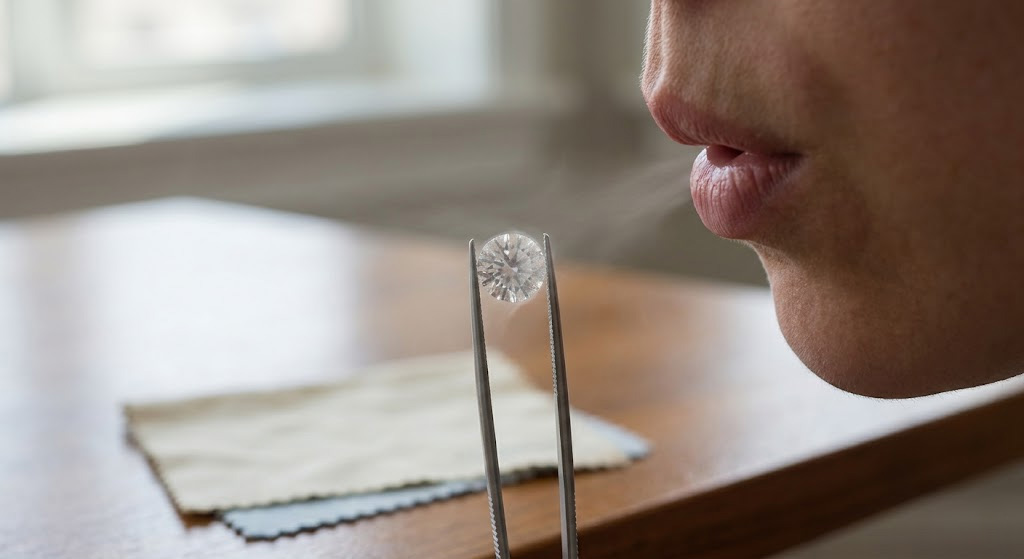
You can use your breath to verify authenticity because a genuine stone disperses heat immediately, which is a key part of how to test if a diamond is real at home. Real diamonds possess incredible thermal conductivity that sets them apart from common glass or plastic imitations.
How does thermal conductivity work?
Natural diamonds are among the most thermally conductive materials on the planet. When you breathe on them, the heat is absorbed and scattered through the crystal structure almost instantly.
- High thermal conductivity
- Instant heat dispersion
- Crystalline carbon structure But that’s not all… You will notice the fog vanishes in less than a second on a real stone. Glass or cubic zirconia will hold the moisture for several seconds.
What are the pitfalls of the breath test?
While useful, environmental factors like high humidity can sometimes interfere with the fogging process. If the stone is coated in oil or dirt, the surface tension might also alter how the condensation forms.
- High humidity interference
- Dirty stone surfaces
- Temperature of the stone Here is the kicker: A dirty stone can make a real diamond look like a fake by trapping moisture on the surface longer than usual. Always clean your jewelry before performing any visual or thermal checks at home.
Key Takeaway: The fog test is a rapid diagnostic tool that utilizes thermal conductivity to separate carbon from glass.
| Test Feature | Real Diamond Result | Fake Stone Result | |
|---|---|---|---|
| Fog Duration | Disappears instantly | Lingers for 2-4 seconds | |
| Heat Reaction | Rapidly dispersed | Heat is retained |
This data suggests that thermal reactivity remains one of the most accessible indicators for initial screening.
Does it sink or float and how to test if a diamond is real at home?
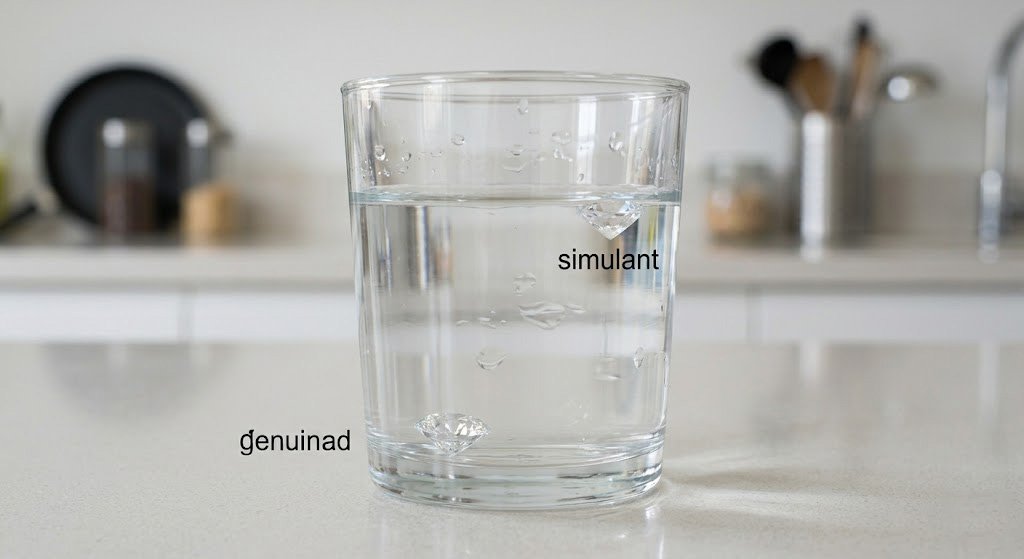
A real diamond will always sink to the bottom of a glass of water due to its high density, which is a fundamental way how to test if a diamond is real at home . This simple gravity test relies on the fact that carbon crystals are much heavier than most glass or resin simulants of the same size.
How do you measure density with water?
Because diamonds have a very tight atomic structure, they are incredibly dense gemstones. When you drop a loose stone into a clear glass of water, an authentic diamond should drop straight to the bottom.
- High specific gravity
- Atomic density
- Solid carbon mass Think about it: If the stone bobs or floats in the middle of the glass, it is likely a plastic or resin imitation. Authentic gemstones will never hover or float regardless of their size or shape.
Why does the jewelry setting matter?
This specific test is only accurate for loose gemstones that are not attached to any metal. If the diamond is already mounted in a ring or pendant, the weight of the metal will pull the piece down anyway.
- Metal weight interference
- Mounting material density
- Loose stone requirement But there is more to it: You cannot distinguish a fake stone from a real one using water if it is secured in gold or platinum. The density of the metal setting overrides the buoyancy of the stone itself.
Key Takeaway: The water test is a definitive way to identify low-density plastic fakes when dealing with loose stones.
| Density Factor | Real Diamond | Plastic/Glass Fake | |
|---|---|---|---|
| Water Reaction | Sinks quickly | May float or hover | |
| Material Weight | High mass | Low mass |
High density remains a core physical trait that separates mineral gemstones from lightweight synthetic polymers.
How does light help and how to test if a diamond is real at home?
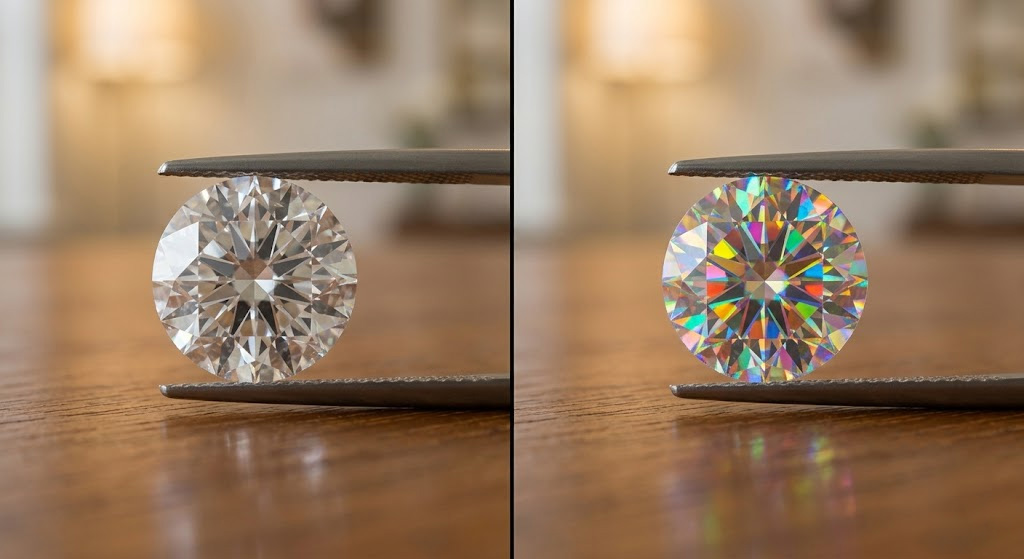
An authentic diamond reflects light to produce both white brilliance and colored fire, which is a visually stunning way how to test if a diamond is real at home. You must look for a sharp, dramatic sparkle that results from the stone’s unique internal structure and refractive properties.
What is the difference between brilliance and fire?
Brilliance refers to the white light reflected from the interior, while fire describes the rainbow flashes of color. A real diamond provides a sophisticated balance of both elements without looking like a disco ball.
- White light brilliance
- Rainbow colored fire
- Light refraction balance But that’s not all… Many fakes produce excessive rainbow flashes that look unnatural and overly saturated. A real diamond’s fire is subtle and moves with the stone as you rotate it under a light.
How do you spot scintillation patterns?
Scintillation is the play of light and dark areas created as the diamond moves. Diamonds have a complex internal structure that creates high-contrast shadows and bright spots that fakes often lack.
- High-contrast shadows
- Moving light patterns
- Internal light bounce Here is the kicker: Glass imitations often look flat or have a dull, greyish reflection rather than the sharp contrast of a real diamond. The way a stone “dances” under a flashlight is a primary indicator of its quality.
Key Takeaway: Observing the balance of brilliance and fire helps identify the superior light-handling capabilities of real diamonds.
| Light Property | Real Diamond | Common Fake | |
|---|---|---|---|
| Brilliance | Bright white | Dull or grey | |
| Fire | Subtle rainbows | Extreme rainbow “disco” effect |
This analysis confirms that optical performance is a direct reflection of a stone’s internal molecular arrangement.
Does UV light work and how to test if a diamond is real at home?
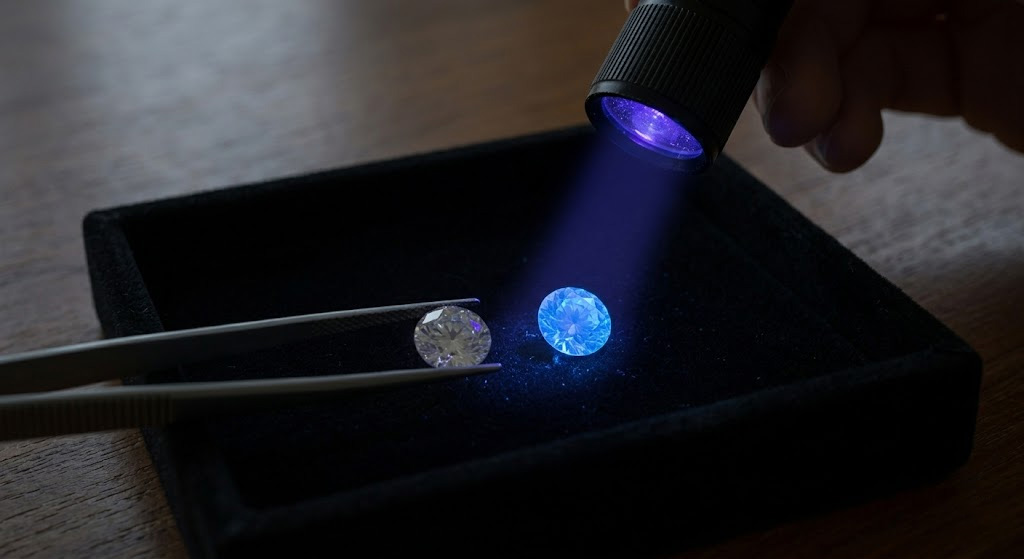
Many real diamonds emit a blue glow under ultraviolet light, which offers a unique clue for how to test if a diamond is real at home . While not every diamond fluoresces, the presence of a strong blue glow is a very common trait in natural stones.
How do you understand fluorescence?
Fluorescence occurs because of trace elements like nitrogen trapped within the diamond’s carbon structure. Roughly one-third of natural diamonds will exhibit this glow when exposed to UV rays from a black light.
- Nitrogen trace elements
- Ultraviolet reaction
- Blue light emission But that’s not all… Most common simulants like glass or cubic zirconia do not show this specific blue fluorescence. If you see a blue glow, there is a high probability the stone is a natural diamond.
What does the blue glow mean?
While a blue glow is a positive sign, a lack of glow does not automatically mean the stone is a fake. Some of the highest-quality diamonds have no fluorescence at all, making this test helpful but not 100% definitive.
- Natural diamond indicator
- Non-fluorescent exceptions
- Supplemental testing Here is the kicker: If the stone glows a different color, like green or yellow, it might be a different type of gemstone or a synthetic. Always pair the UV test with other methods to ensure the most accurate results.
Key Takeaway: UV fluorescence provides a chemical “fingerprint” that often confirms the presence of natural nitrogen in diamonds.
| UV Reaction | Real Diamond | Synthetic Fake | |
|---|---|---|---|
| Common Glow | Blue fluorescence | No glow | |
| Rare Glow | Yellow/Green | N/A |
The presence of fluorescence serves as a strong biological marker for stones formed under high-pressure natural conditions.
What does a loupe show and how to test if a diamond is real at home?
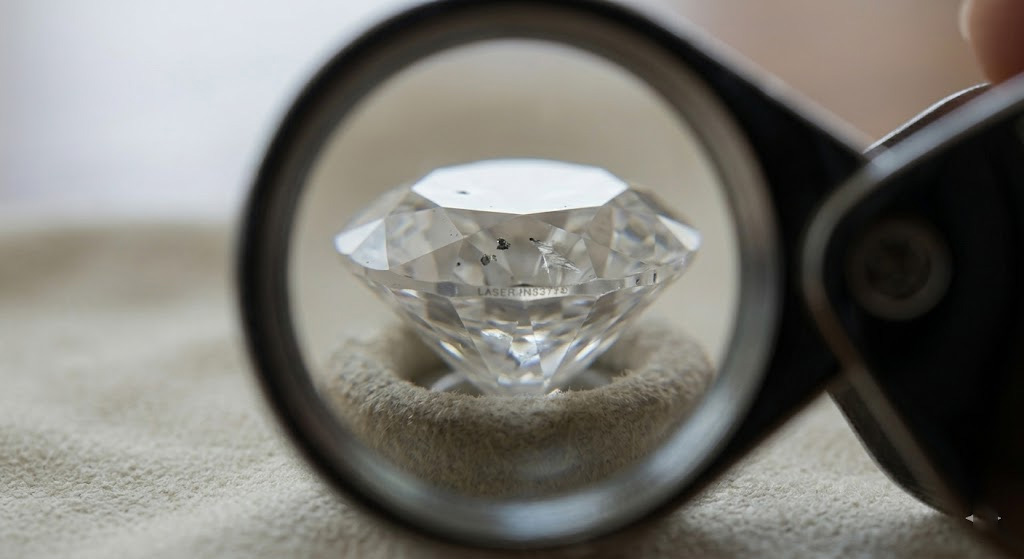
Viewing a stone through a 10x magnification loupe allows you to see internal inclusions, which is an essential step in how to test if a diamond is real at home. Real diamonds are rarely perfect and usually contain tiny “birthmarks” that prove they were formed in nature.
How do you identify natural inclusions?
Natural diamonds are forged under extreme heat and pressure, which often leaves behind tiny crystals or feathers. If a stone looks absolutely perfect under magnification, it is likely a laboratory-grown imitation.
- Tiny internal crystals
- Feather-like fractures
- Microscopic clouds Think about it: Fakes are manufactured to look perfect because they are created in controlled environments. Seeing a small imperfection is actually one of the best ways to confirm that your stone is real.
Can you spot laser inscriptions?
Professional grading labs often etch microscopic serial numbers onto the outer edge of a diamond. Finding these inscriptions with a loupe is one of the most reliable ways to verify authenticity and origin.
- Girdle serial numbers
- Lab certification marks
- Brand logos Here is the kicker: If you find a number that matches a GIA or IGI report, you can be certain of the diamond’s identity. These marks are too small to be seen with the naked eye but clear under 10x magnification.
Key Takeaway: Microscopic inspection reveals the natural flaws and professional marks that distinguish diamonds from factory-made glass.
| Loupe Feature | Real Diamond | Fake Stone | |
|---|---|---|---|
| Internal Clarity | Minor inclusions | Flawless appearance | |
| Girdle Marks | Possible serial numbers | Smooth or molded edges |
Magnification remains the gold standard for identifying the unique geological history of a specific gemstone.
Can you use dots and how to test if a diamond is real at home?
You cannot see a small ink dot through a real diamond due to its high refractive index, which is a clever way how to test if a diamond is real at home . The stone bends light so sharply that any image placed directly beneath it becomes completely distorted or vanishes.
How is the refractive index explained?
Refraction is the way light bends as it passes through a material like carbon or glass. Diamonds are so efficient at bending light that it cannot travel in a straight line through the stone’s pavilion.
- Light bending ability
- Total internal reflection
- Pavilion distortion But that’s not all… This light-bending power is what gives diamonds their sparkle and prevents you from reading through them. Lower-quality materials like glass allow light to pass through more easily, revealing the objects below.
Why do paper and ink work?
By placing a loose stone flat-side down over a dot on a piece of white paper, you are testing light bounce. If you can see the dot or a circular reflection, the stone has a low refractive index.
- Loose stone requirement
- White paper contrast
- Visual distortion check Here is the kicker: A real diamond will make the dot disappear or turn it into a scattered blur of light. If the dot remains recognizable, you are likely looking at a piece of glass or cubic zirconia.
Key Takeaway: The dot test utilizes the diamond’s high refractive index to prove it can manipulate light better than glass.
| Visual Result | Real Diamond | Glass or Quartz | |
|---|---|---|---|
| Dot Visibility | Invisible or blurred | Clearly visible | |
| Light Path | Sharply bent | Mostly straight |
Refractive distortion is a reliable physical barrier that prevents “read-through” in high-quality carbon crystals.
Is a scratch safe and how to test if a diamond is real at home?
The scratch test can distinguish a diamond from softer materials like glass, but it is a risky method for how to test if a diamond is real at home. Diamonds rank at a 10 on the Mohs scale, meaning they are the hardest natural substance and can scratch almost anything else.
What is the Mohs Scale of Hardness?
A diamond is significantly harder than glass, which ranks at 5.5, or even steel. In theory, a diamond can scratch a mirror without sustaining any damage to its own surface.
- Mohs scale ranking
- Surface durability
- Mineral hardness But that’s not all… Many modern simulants like moissanite are also extremely hard, ranking at 9.25. This means moissanite can also scratch glass, potentially tricking you into thinking it is a real diamond.
What are the risks of damaging your stone?
While a diamond won’t be scratched by glass, other real gems like white sapphires or topaz could be ruined. Applying too much pressure can also cause a real diamond to chip if you hit a cleavage plane.
- Potential for chipping
- Damage to other gems
- Irreversible surface marks Here is the kicker: It is better to rely on non-destructive tests like the fog or light tests before attempting a scratch test. Protecting the integrity of your jewelry should always be your top priority.
Key Takeaway: Hardness is a defining trait of diamonds, but the scratch test carries unnecessary risks for most jewelry owners.
| Material | Mohs Hardness | Scratch Ability | |
|---|---|---|---|
| Diamond | 10 | Scratches everything | |
| Glass | 5.5 | Easily scratched |
While durability is a hallmark of diamonds, physical force should be a last resort in any authentication process.
Why is heat risky and how to test if a diamond is real at home?
The heat test involves extreme temperature changes that can shatter imitations, making it a dangerous way how to test if a diamond is real at home . While a real diamond can withstand this stress, many glass or quartz stones will crack instantly due to thermal shock.
How do rapid contraction and expansion work?
This test involves heating a stone for thirty seconds and dropping it into cold water. Because real diamonds do not expand or contract significantly with heat, they remain completely intact.
- Thermal shock resistance
- Molecular stability
- Rapid cooling reaction But that’s not all… The weak internal structure of fake stones cannot handle the sudden change in temperature. The internal tension will cause a glass or quartz stone to shatter into pieces inside the water.
What are safer alternatives for fragile gems?
Because of the destructive nature of the heat test, it is often better to rely on non-invasive visual methods. You should avoid this test if you suspect the stone might be a different but still valuable gem.
- Non-invasive visual checks
- Preservation of jewelry
- Risk management Here is the kicker: If you destroy a high-quality white sapphire or a lab-grown diamond, you have lost a valuable item. Always consider the potential value of the stone before performing any test that could result in its destruction.
Key Takeaway: Thermal stability proves the strength of diamond bonds, but the risk of destroying the stone is very high.
| Reaction Type | Real Diamond | Glass/Quartz Fake | |
|---|---|---|---|
| Heat Exposure | Remains stable | Expansion stress | |
| Cold Water | No change | Shatters or cracks |
Structural integrity under extreme temperature shifts is a unique characteristic of the diamond’s atomic lattice.
Does weight matter and how to test if a diamond is real at home?
A real diamond weighs significantly less than a cubic zirconia of the same size, providing an accurate method for how to test if a diamond is real at home. Using a precision scale allows you to compare the density of your stone against known standards for natural diamonds.
How do you compare CZ and diamond density?
Cubic zirconia is roughly 55% to 60% heavier than a real diamond. If you have two stones of the identical size, the one that feels heavier is almost certainly the fake.
- Density comparison
- Weight-to-size ratio
- Material composition But that’s not all… This weight difference is noticeable even without a scale if you have a known real diamond for comparison. The lighter stone will almost always be the authentic one in this specific matchup.
How do you use a precision scale?
For the most accurate results, you should use a digital scale that measures in carats or thousandths of a gram. Compare the weight of your stone against a standard diamond weight chart for its millimeter dimensions.
- Digital carat scales
- Millimeter measurements
- Weight chart comparison Here is the kicker: A 6.5mm round diamond should weigh almost exactly 1.0 carat on a precision scale. If your 6.5mm stone weighs significantly more, you are definitely dealing with a cubic zirconia or other simulant.
Key Takeaway: Weight-to-size ratios are highly consistent in diamonds, making precision scales a powerful tool for detection.
| Stone Type | Weight (6.5mm Round) | Density Level | |
|---|---|---|---|
| Real Diamond | ~1.0 Carat | Standard | |
| Cubic Zirconia | ~1.6 Carats | Heavy |
This discrepancy in mass-volume ratio is one of the most scientific ways to identify lab-grown simulants at home.
Should you use tools and how to test if a diamond is real at home?
Investing in a dual-mode diamond tester is the most reliable way how to test if a diamond is real at home for frequent buyers. These devices measure both thermal and electrical conductivity to distinguish between diamonds, moissanite, and other synthetic stones.
How does thermal and electrical conductivity help?
Basic testers only measure heat, which can sometimes be fooled by moissanite because it conducts heat similarly to a diamond. Advanced dual-mode testers also measure electricity to provide a more accurate reading.
- Thermal measurement
- Electrical conductivity
- Dual-mode technology But that’s not all… Diamonds are not electrically conductive, whereas moissanite is, allowing the device to tell them apart in seconds. This level of technology removes the guesswork from your home authentication process.
How do you distinguish moissanite from diamond?
Moissanite is the most difficult imposter to spot with the naked eye because it is almost as hard and brilliant as a diamond. A dual tester is often the only way for a non-expert to confirm the difference without a lab.
- Moissanite detection
- Advanced sensor tech
- Instant verification Here is the kicker: Moissanite is actually more brilliant than a diamond, which can be confusing for beginners. Using a professional tool ensures you are not misled by the intense sparkle of a high-quality simulant.
Key Takeaway: Electronic testers provide a scientific verification that exceeds the accuracy of manual or visual home tests.
| Tester Type | Diamond Result | Moissanite Result | |
|---|---|---|---|
| Thermal Sensor | Positive | Positive | |
| Electrical Sensor | Negative | Positive |
Electronic testing remains the most definitive solution for non-experts who require immediate and accurate stone verification.
Verifying the authenticity of your gemstones is the first step in protecting your investment and ensuring the longevity of your collection. At YX Jewelry Packaging, our vision is to provide the high-quality presentation and protection your real diamonds deserve. If you have questions about how to best showcase your verified gems, please contact us today for professional guidance.
FAQ: Common Questions About Testing Diamonds
- Can I use a phone flashlight to check a diamond?Yes, you can use a phone flashlight to look for brilliance and fire by holding the stone six inches from the beam.
- What’s the best tool for testing a diamond at home?A dual-mode electronic tester that checks thermal and electrical conductivity is the most accurate consumer tool available.
- Can I test a diamond without removing it from its setting?Yes, the fog test and loupe inspection are effective even when the stone is mounted in a ring or necklace.
- How do I know if the dot test is accurate for my stone?A concise judgment is that the dot test only works for loose stones and requires a high refractive index to be successful.
- Can I trust a stone that has no inclusions under a loupe?Not necessarily, as a lack of inclusions often points toward a lab-grown diamond or a synthetic glass simulant.