
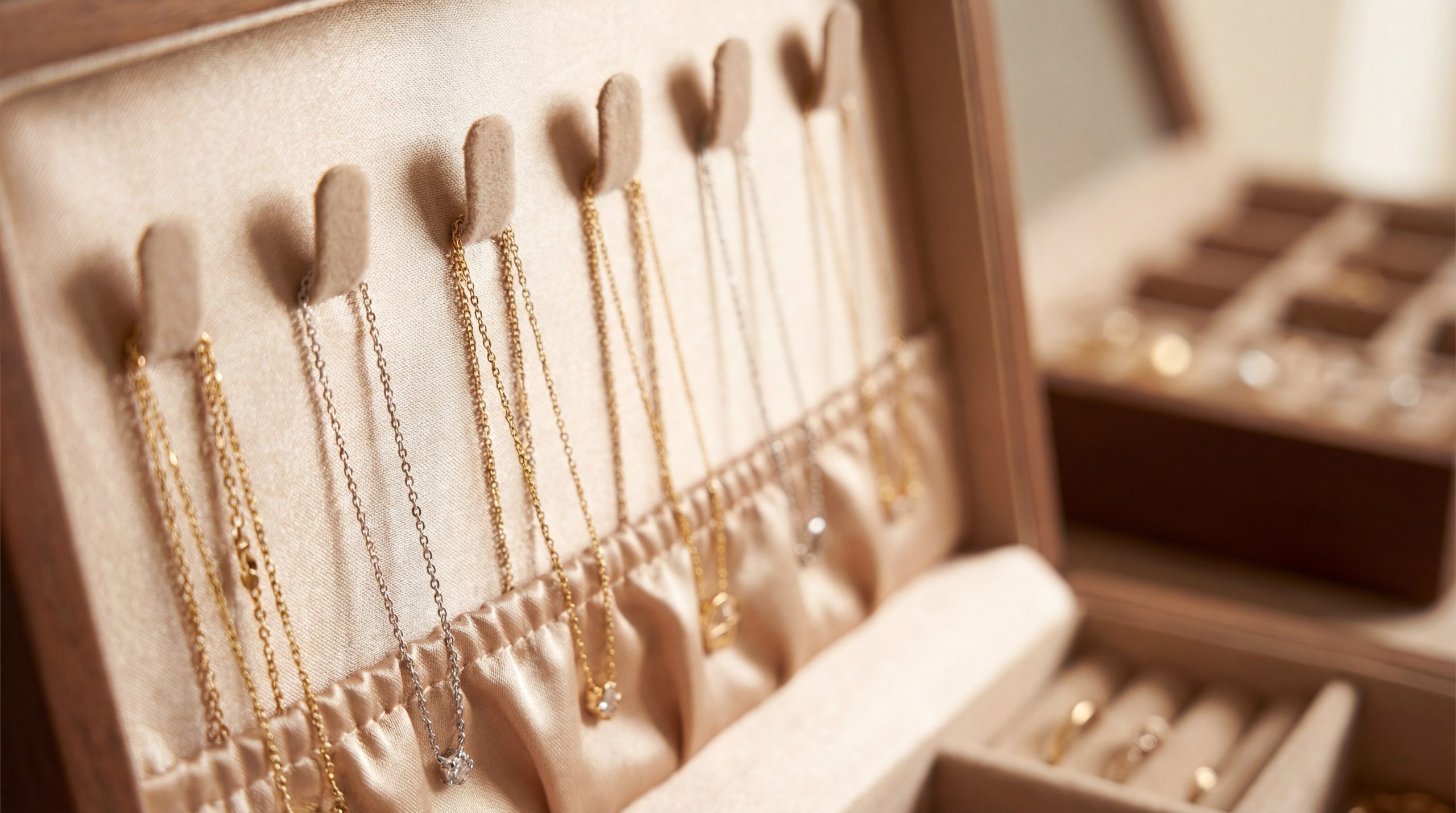
Your jewelry collection is a repository of memories, investments, and personal style, yet it often ends up as a tangled, tarnished heap in a dark drawer. Imagine the frustration of preparing for a gala only to find your signature silver necklace covered in dull grey oxidation or your favorite gold chain snapped after a twenty-minute struggle to untangle a knot. This lack of organization doesn’t just waste your time; it actively devalues your precious metals and gemstones through friction and environmental exposure. The solution is a strategic transition to professional storage. Learning how to use a jewelry packaging box effectively transforms your morning routine into a curated experience while ensuring your treasures remain in showroom condition for decades.
How to use a jewelry box for first-time setup?
To set up your jewelry box for the first time, you must begin by categorizing your pieces by metal type and frequency of use. Most enthusiasts make the mistake of dumping their entire collection into a new box without preparation.
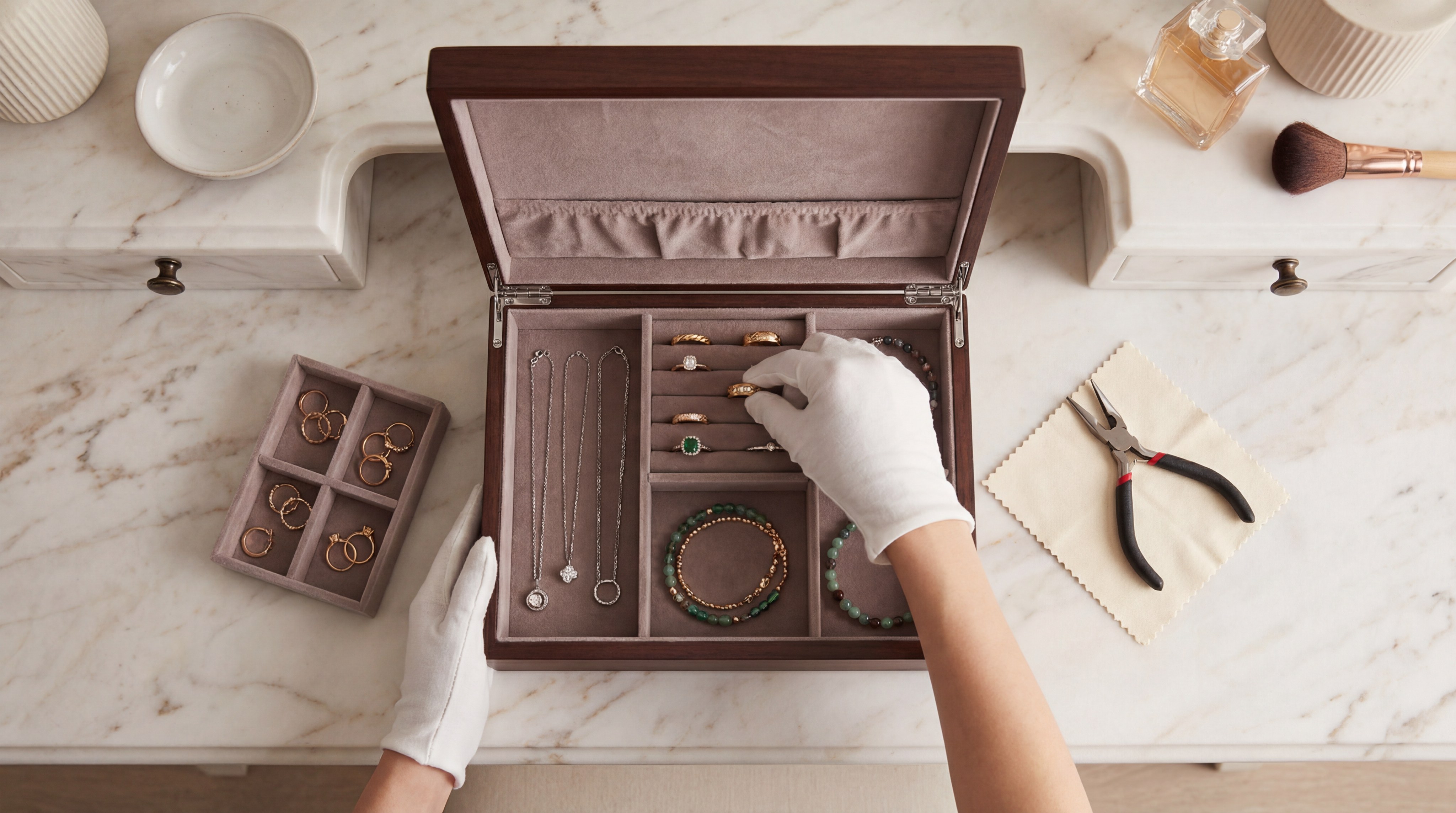
- The Inventory Audit: Lay all items on a soft white cloth to inspect for damage.
- Surface Preparation: Wipe each piece with a microfiber cloth to remove skin oils before storage.
- Strategic Placement: Reserve the top-most compartments for items you wear at least three times a week.
Think about it: If you store a gold ring next to a hard platinum band, the platinum will eventually win the battle, leaving micro-scratches on the softer gold.
Initial Setup Checklist
| Step | Action | Purpose | |
|---|---|---|---|
| 1 | Sort by Metal | Prevents chemical cross-contamination | |
| 2 | Clean Each Piece | Removes corrosive oils and dirt | |
| 3 | Map the Layout | Optimizes morning retrieval speed |
Key Takeaway: A successful setup focuses on physical isolation to prevent metal-on-metal friction.
How to use a jewelry box for necklace safety?
Utilize the integrated hooks and elasticated pouches in the lid to defeat the “tangle monster” that plagues long chains. Necklaces are the most vulnerable items in any collection because gravity and motion work together to create complex knots.
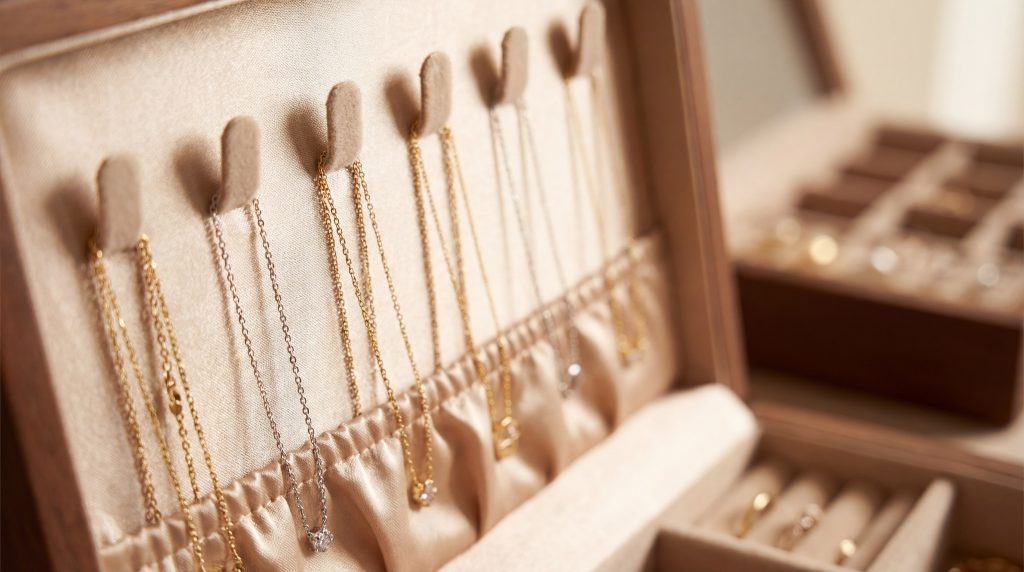
When using a dedicated necklace box , follow these steps:
- Hang the necklace on a hook to provide even tension.
- Tuck the bottom half of the chain into the pouch below.
- Fasten the clasp before hanging to ensure it doesn’t loop back on itself.
Here is the deal: If your box lacks enough hooks, thread delicate chains through a simple drinking straw before laying them flat in a tray. This physical barrier makes tangling mathematically impossible.
Key Takeaway: Vertical storage is the gold standard for maintaining the structural integrity of delicate links.
How to use a jewelry box for earring pairs?
To keep earring pairs together and accessible, you should utilize perforated earring cards or dedicated foam strips. Searching for a missing earring back is a common morning stressor that is easily solved with a specialized earring box .
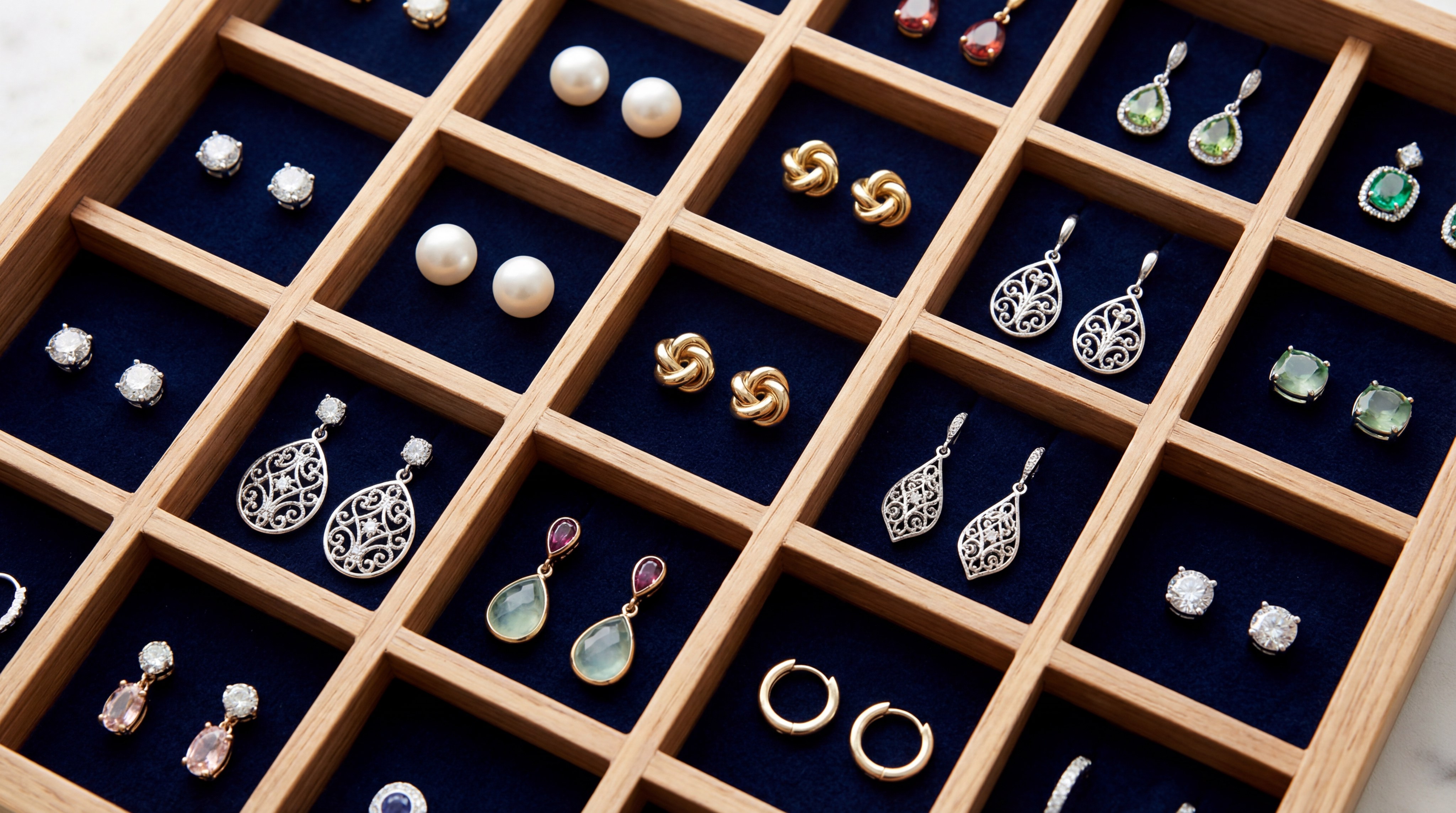
- Studs: Press them into foam inserts with the backs firmly attached.
- Hoops: Group these by diameter in deeper, square compartments.
- Dangles: Place these in individual felt-lined slots to prevent them from hitting each other.
It gets better: By using a transparent grid system, you can see your entire collection at a glance, encouraging you to wear pieces you might otherwise forget.
Key Takeaway: Never store earrings “loose” in a large bowl; the friction will dull the finish of the posts.
How to use a jewelry box for ring protection?
Properly inserting bands into padded ring rolls provides the best protection against scratches and stone loss. Ring rolls are the velvet-covered strips found in most luxury boxes, designed to grip the band while leaving the stone exposed.
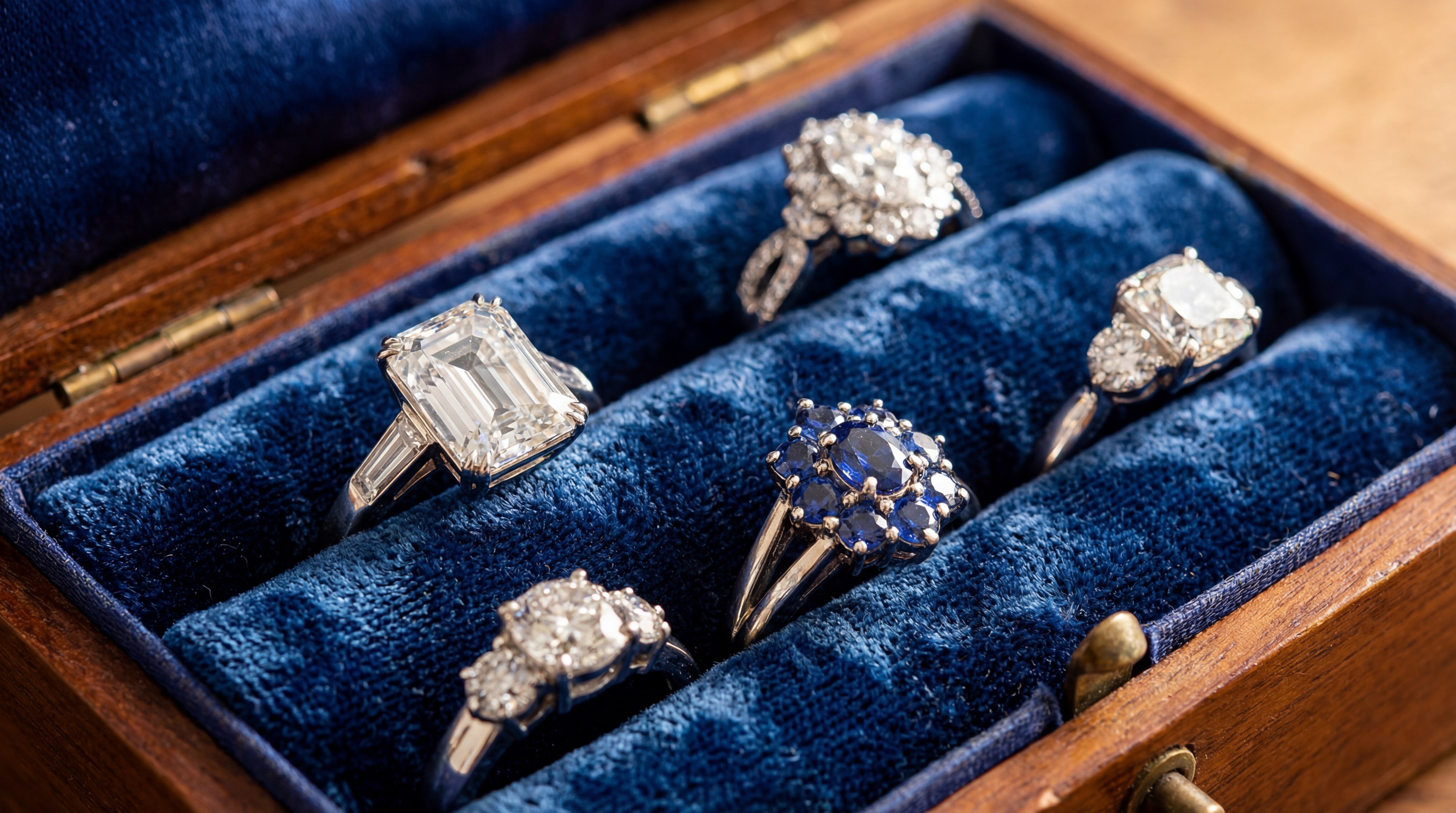
- Press the ring firmly into the crevice until the padding holds it steady.
- Leave at least one centimeter of space between rings.
- Place large cocktail rings in perimeter slots to prevent them from obstructing the lid.
You might be wondering: Is it safe to stack rings? No, because the underside of a diamond is hard enough to scratch the top of a sapphire or emerald stored directly beneath it.
Key Takeaway: If a ring feels too tight for the roll, move it to a larger open compartment to avoid deforming the band.
How to use a jewelry box for delicate bracelets?
Preserve the shape of your bracelets by using watch pillows for cuffs and flat channels for tennis bracelets. A high-quality bracelet box allows these pieces to rest without tension on their hinges or clasps.
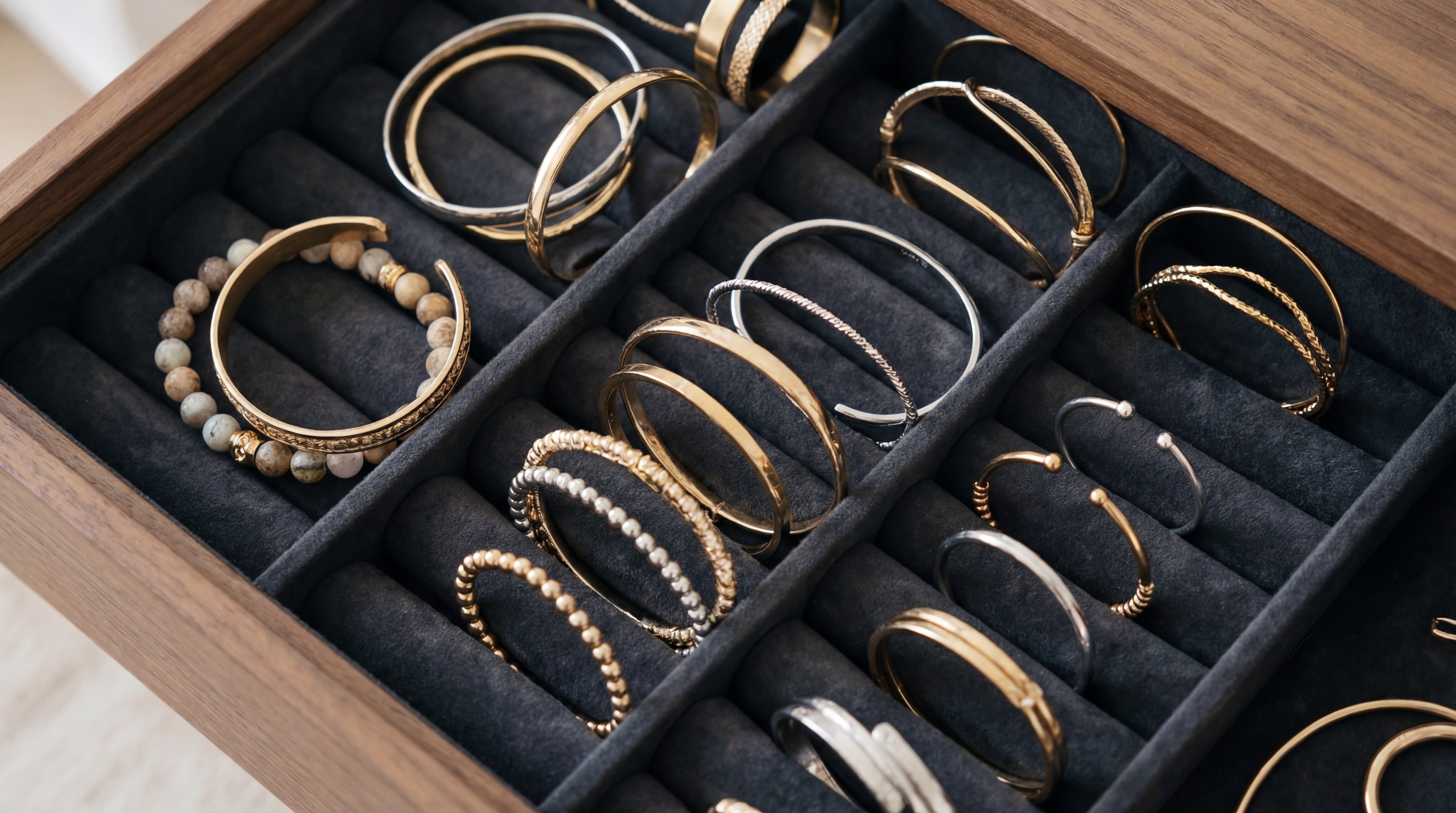
- Cuffs: Slide them over a soft cylinder to prevent the metal from “fatiguing.”
- Tennis Bracelets: These must lie perfectly flat; gravity can stretch the tiny pins over time if they are hung.
- Bangles: Stack them vertically only if they are separated by silk paper or felt dividers.
Bracelet Storage Comparison
| Method | Best For | Risk Factor | |
|---|---|---|---|
| Flat Channel | Tennis Bracelets | Low (Ideal) | |
| Soft Pillows | Cuffs & Watches | Low (Shape retention) | |
| Bulk Piling | Bangles | High (Surface scuffs) |
Key Takeaway: Avoid “nesting” bracelets inside one another, as this is the primary cause of micro-scratches.
How to use a jewelry box to prevent tarnish?
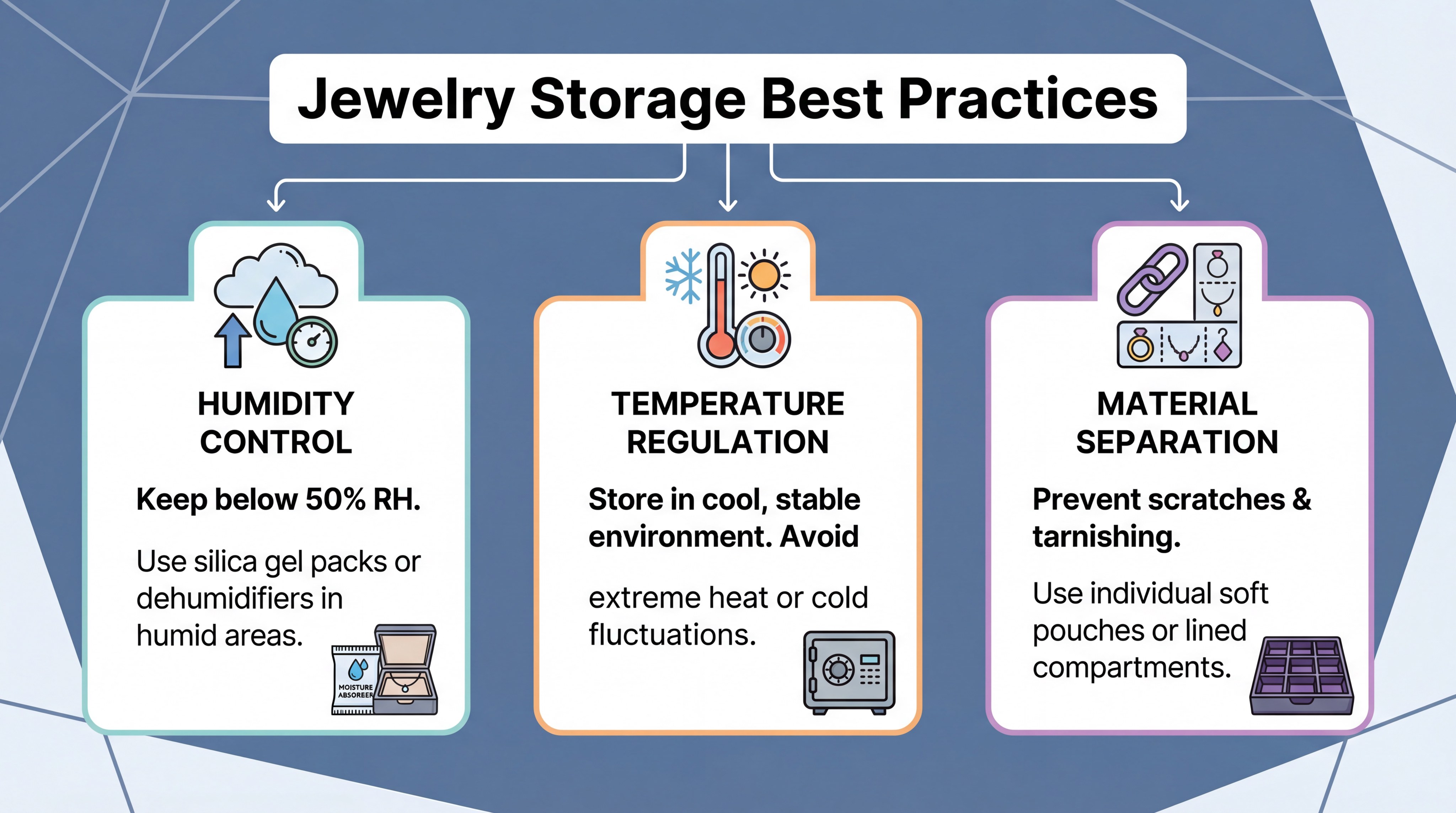
Preventing tarnish requires creating a chemically neutral environment using anti-tarnish strips and managing humidity. Tarnish is the result of a chemical reaction between your metal and sulfur or moisture in the air.
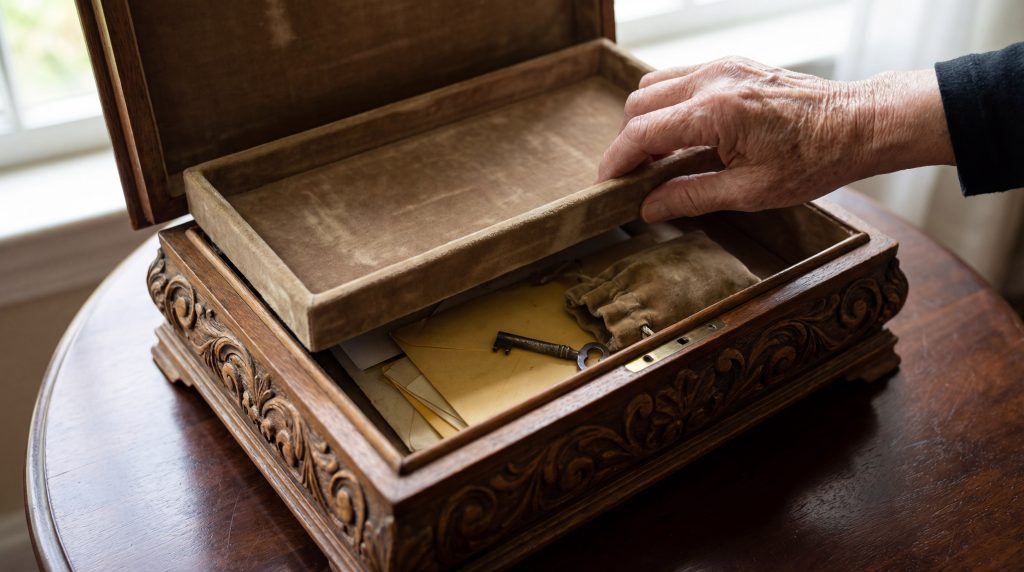
- Anti-Tarnish Tabs: Place one in every drawer to absorb atmospheric pollutants.
- Silica Packets: Keep a small packet in the bottom corner to manage internal moisture.
- Closure Check: Always ensure the lid is fully snapped shut to limit air exchange.
The secret sauce: Use a box with a treated velvet lining, which acts as a buffer against oxidation.
Key Takeaway: Replace your anti-tarnish strips every six months to maintain peak protection levels.
How to use a jewelry box for daily rotations?
Maintain efficiency by utilizing a PE film jewelry box for your most frequently worn “Top 5” pieces. This creates a “floating” display that makes your daily selection instant and visually pleasing.
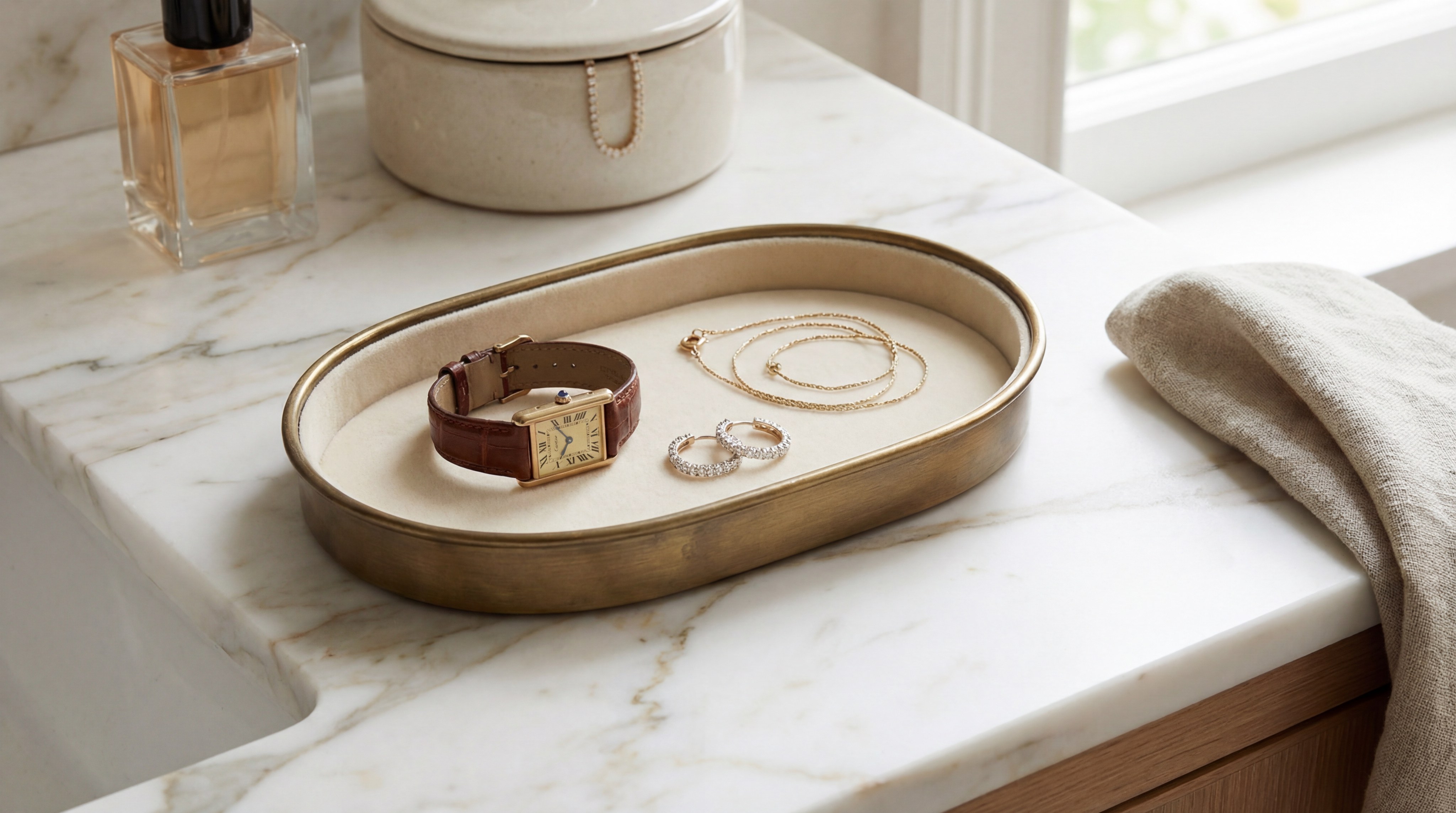
- Place your wedding band, daily studs, and watch in a visible top-tier tray.
- Use a “catch-all” section for pieces removed right before bed.
- Rotate this “active” tray every Sunday to ensure your entire collection gets seen.
Think about it: How much time would you save if your essentials were always in the exact same 2-inch radius every morning?
Key Takeaway: Dedicate the front-left compartment exclusively to “tomorrow’s jewelry” to streamline your routine.
How to use a jewelry box in small spaces?
To maximize storage in small spaces, you should prioritize vertical stackable trays and modular armoires. When square footage is limited, the only way to grow your collection safely is to think upwards.
- Stackable Systems: Use trays that lock into one another to save vanity space.
- Drawer Inserts: Convert existing furniture drawers into jewelry boxes using custom felt grids.
- Mirror Boxes: Opt for wall-mounted cabinets that double as full-length mirrors.
Key Takeaway: High-density storage works best when using 1×1 inch grids for earrings and 2×4 inch rectangles for necklaces.
How to use a jewelry box for luxury necklaces?
Luxury necklaces, such as pearls or heavy gold collars, require individual isolation in silk-lined compartments. Pearls, in particular, are organic gems that need to “breathe” and can be easily scratched by even the softest metals.
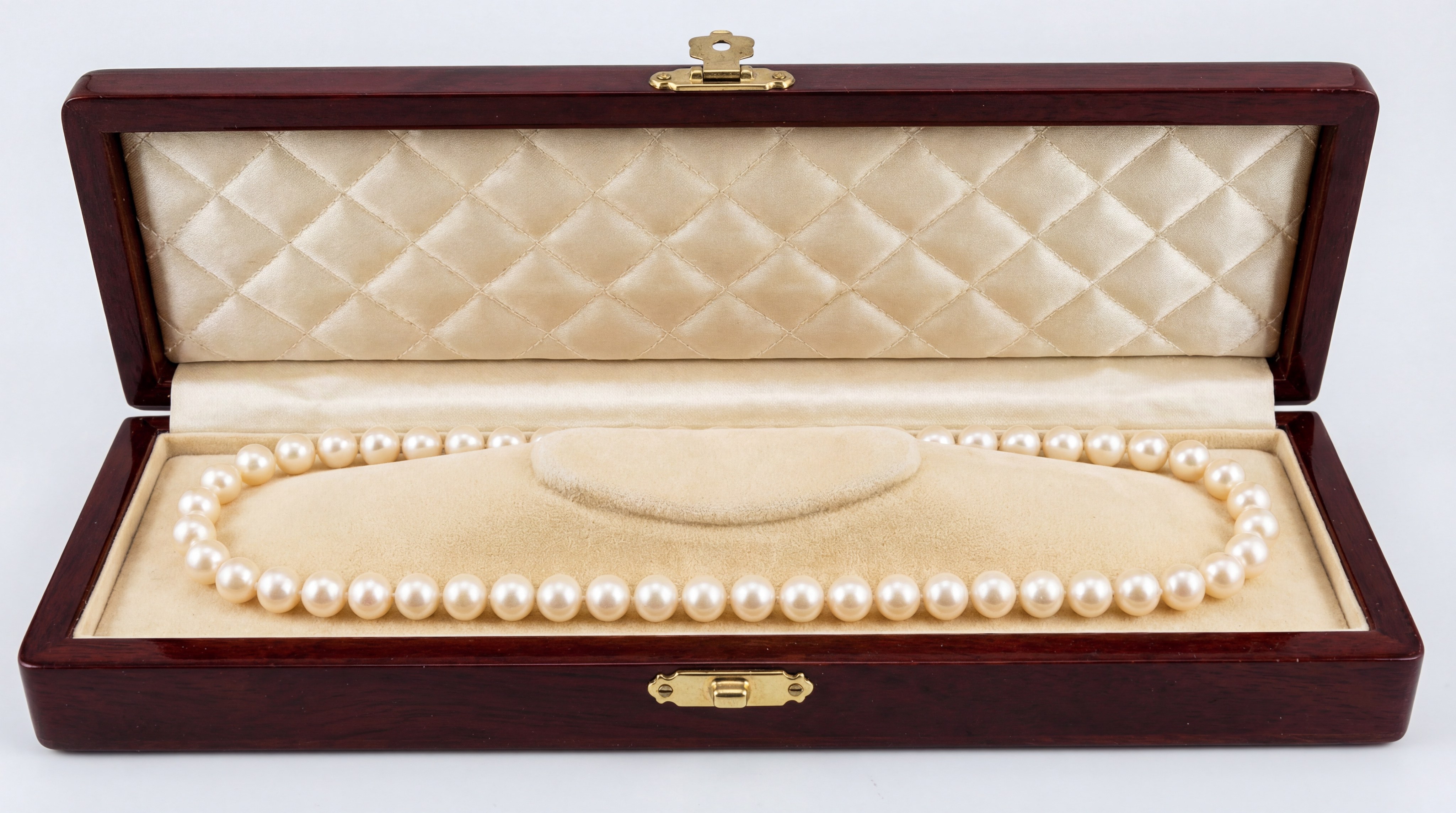
- Pearl Care: Store them in a dedicated silk pouch within the box to prevent dehydration.
- Heavy Gold: Lay these flat in long channels to prevent the weight from stretching the links.
- Pendant Shielding: Wrap large pendants in a small chamois cloth before placing them in the tray.
Here is the deal: Fine jewelry should be the only occupant of its specific slot—zero exceptions.
Key Takeaway: Use a lint roller monthly to remove dust from the lining that could act as an abrasive against soft gems.
How to use jewelry box maintenance routines?
Regular maintenance involves dusting the interior and checking the hardware to ensure a safe environment. A neglected jewelry box can accumulate moisture and dust, which eventually transfers to your jewelry.

- Monthly Dusting: Use compressed air to clear out debris from the corners of ring rolls.
- Lining Refresh: Gently brush matted velvet with a soft-bristled toothbrush to restore the pile.
- Hinge Care: Apply a tiny drop of mineral oil once a year to prevent squeaks or sticking.
Maintenance Schedule
| Frequency | Task | Tools | |
|---|---|---|---|
| Weekly | Exterior Wipe | Microfiber Cloth | |
| Monthly | Interior Blow-out | Compressed Air | |
| Bi-Annually | Strip Replacement | Anti-Tarnish Tabs |
Key Takeaway: A clean box is a safe box. If the interior smells musty, it is holding moisture that will damage your jewelry.
FAQ: Common Storage Questions
1. Can I store silver and gold in the same compartment?No. Silver tarnishes and gold is soft; keeping them together risks both chemical transfer and physical scratching.
2. Should I keep jewelry in its original gift boxes?Generally, no. Most gift boxes use high-acid cardboard and adhesives that can actually accelerate tarnishing over time.
3. How do I stop necklaces from tangling in a travel box?Thread the chain through a straw or wrap it in acid-free tissue paper before placing it in the travel pouch.
4. Are pearls safe in a standard jewelry box?Yes, provided they have a dedicated soft-lined section and aren’t stored near “hard” stones like diamonds.
5. How often should I replace anti-tarnish strips?For maximum efficacy, replace them every six months or whenever they turn from black to a copper/brown color.
Conclusion: Elevate Your Collection
Mastering the organization of your jewelry is the ultimate sign of a true connoisseur. By applying these strategic storage methods, you do more than just tidy a drawer; you actively preserve the legacy and value of your most cherished possessions. At the heart of every great collection is a commitment to protection and presentation.
Ready to upgrade your storage experience? Contact us today to discover premium packaging solutions tailored to your unique style. Our vision is to provide every collector with professional-grade tools to protect their investments, one compartment at a time.