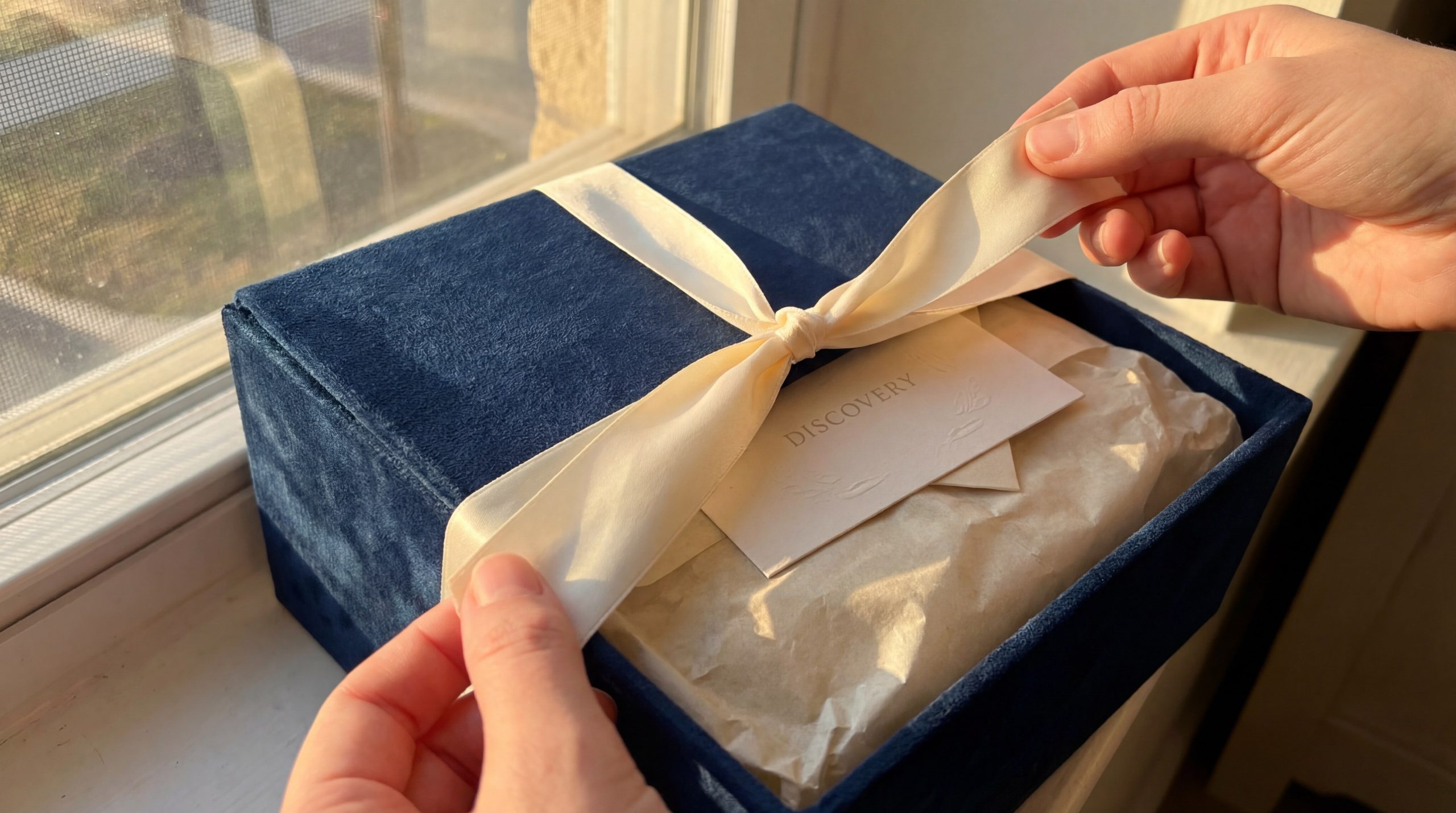
Wrapping a jewelry box with elite precision is the final signature of a luxury brand’s commitment to quality. You have likely spent months perfecting your product design and sourcing the finest materials, yet a sloppy ribbon or a loose knot can signal a lack of attention to detail to your B2B clients and end-consumers. Mastering the art of the professional wrap ensures that your packaging matches the quality of the jewelry inside, and understanding how to wrap a necklace box with technical accuracy is a fundamental skill for any high-end retailer looking to elevate their brand presence.
How do you measure ribbon for a jewelry box?
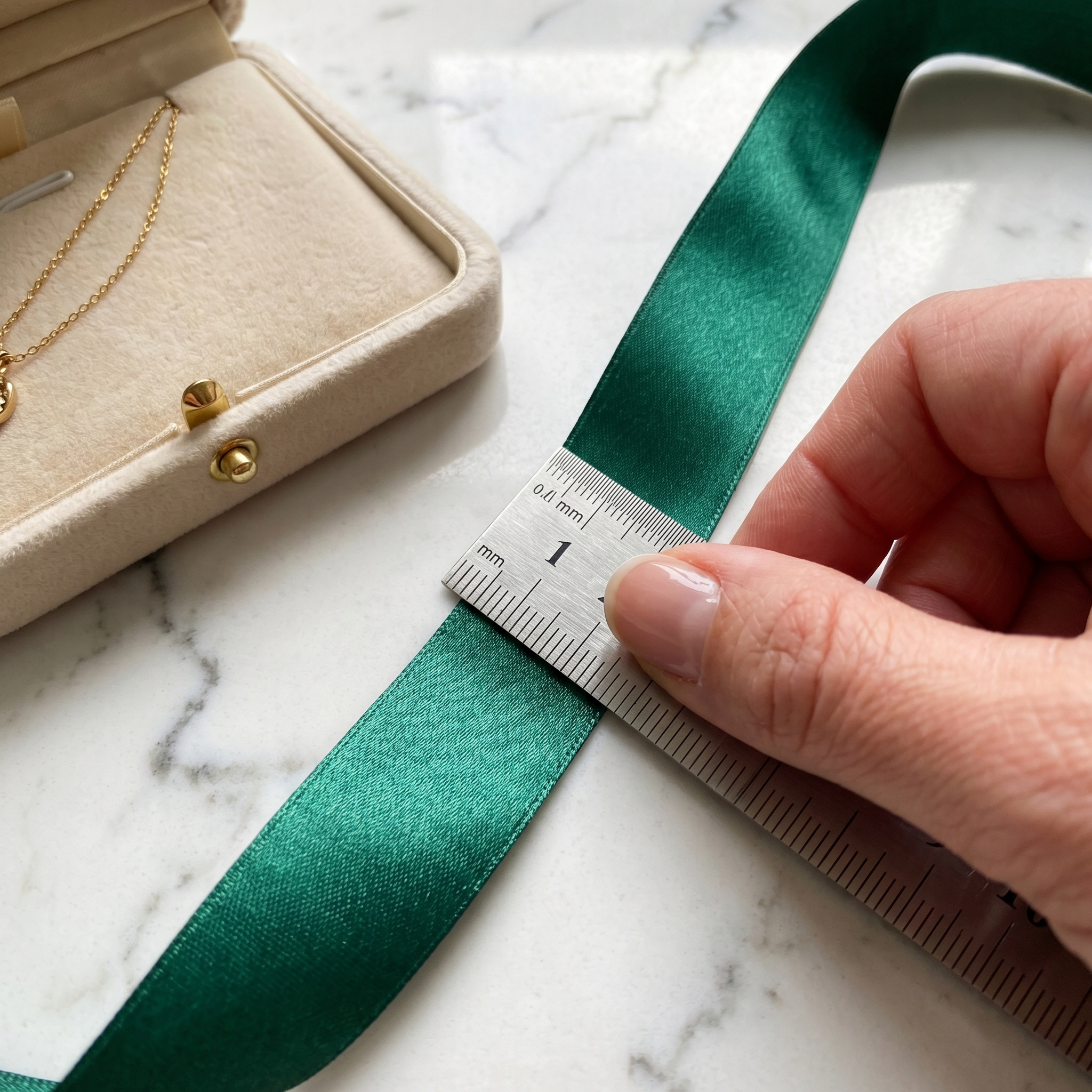
Achieving a professional finish begins with the science of measurement rather than simple guesswork. Knowing how to wrap a necklace box starts with ensuring you have enough material to work with without creating excessive waste.
The Five-Length Rule
The most reliable method for standard square or rectangular containers is the five-length rule. To execute this, you should follow these specific steps:
- Measure the longest side of the box.
- Drape the ribbon across that side as a baseline.
- Measure out exactly five times that distance.
- Use sharp shears to ensure a clean starting edge.
But wait, there’s more: for deeper boxes, such as those used for luxury watches or chunky bracelets, you should add an extra half-length. This prevents the bow from appearing stunted against the box’s vertical travel.
Key Takeaway: Correct measurement prevents the “short ribbon” disaster where a bow cannot be properly tied, forcing a complete restart and wasting premium materials.
| Measurement Step | Action | Benefit | |
|---|---|---|---|
| Initial Guide | Drape over the longest side | Establishes base scale | |
| Multiplier | Measure 5x the length | Ensures ample tail for bows | |
| Depth Adjustment | Add 10% for deep containers | Maintains visual symmetry |
Precise measurement serves as the foundation for the entire wrapping workflow, ensuring consistency across high-volume orders.
Where should the ribbon start on the box?
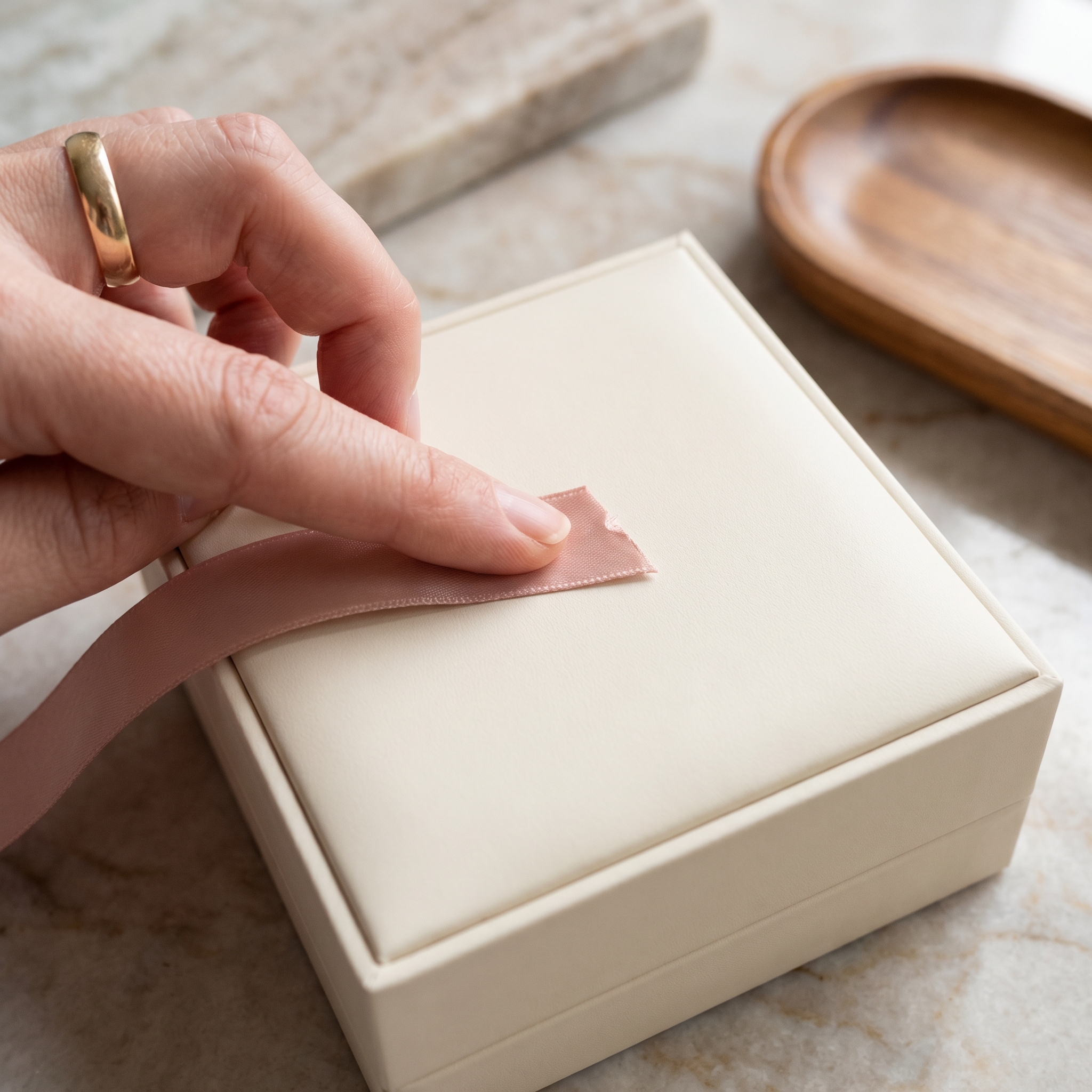
Placement is everything when determining how to wrap a necklace box for a high-end retail environment. The starting point dictates the symmetry of the final knot and the overall balance of the presentation.
The Offset Drape Method
Start by draping approximately 10 to 12 inches of ribbon (the “short end”) over the top of the box. This tail will eventually form one side of your bow while the remaining length handles the primary wrap.
- Align the ribbon perfectly with the center of the box width.
- Secure the ribbon with your thumb at the top center.
- Maintain constant tension to prevent sliding.
- Ensure the ribbon face is not twisted during the first pass.
Here is the kicker: a ribbon that is even slightly off-center at the start will result in a lopsided final presentation. Maintaining a firm grip at the center point is the “secret sauce” of professional wrapping.
Key Takeaway: The starting tail must be long enough to loop properly; if it is too short, the bow will be impossible to tighten effectively.
| Placement Check | Target Requirement | |
|---|---|---|
| Starting Tail | 10-12 Inches | |
| Positioning | Dead Center | |
| Initial Grip | Firm Thumb Pressure |
Strategic placement at the initial stage eliminates the need for adjustments once the knot is tightened.
How do you create a perfect vertical cross?

Transitioning the ribbon from a horizontal wrap to a vertical one is where most amateur errors occur. Mastering this step is essential when learning how to wrap a necklace box with a three-dimensional, boutique flair.
The 90-Degree Fold
Bring the long end of the ribbon around the box and lay it over the short end. At the center point, you must fold the long end down toward yourself at a sharp 90-degree angle.
- Hold the fold in place with significant pressure.
- Wrap the long end vertically around the box axis.
- Keep the ribbon flat against the bottom surface.
- Avoid any bunching at the intersection point.
You might be wondering: why does the bottom matter? Ensuring the ribbon remains flat on the underside prevents the box from sitting unevenly on a display surface.
Key Takeaway: The 90-degree fold must be crisp and clear. If the ribbon bunches at the intersection, the bow will sit at an unsightly angle.
| Wrapping Step | Action | Expected Result | |
|---|---|---|---|
| The Overlap | Long end over short end | Basis for the intersection | |
| The Fold | Sharp 90-degree turn | Clean, professional cross | |
| Vertical Pass | Wrap narrow axis | Full-box coverage |
The cross-pattern creates a structural lock that holds the packaging together during customer handling.
What is the secret to a tight ribbon knot?
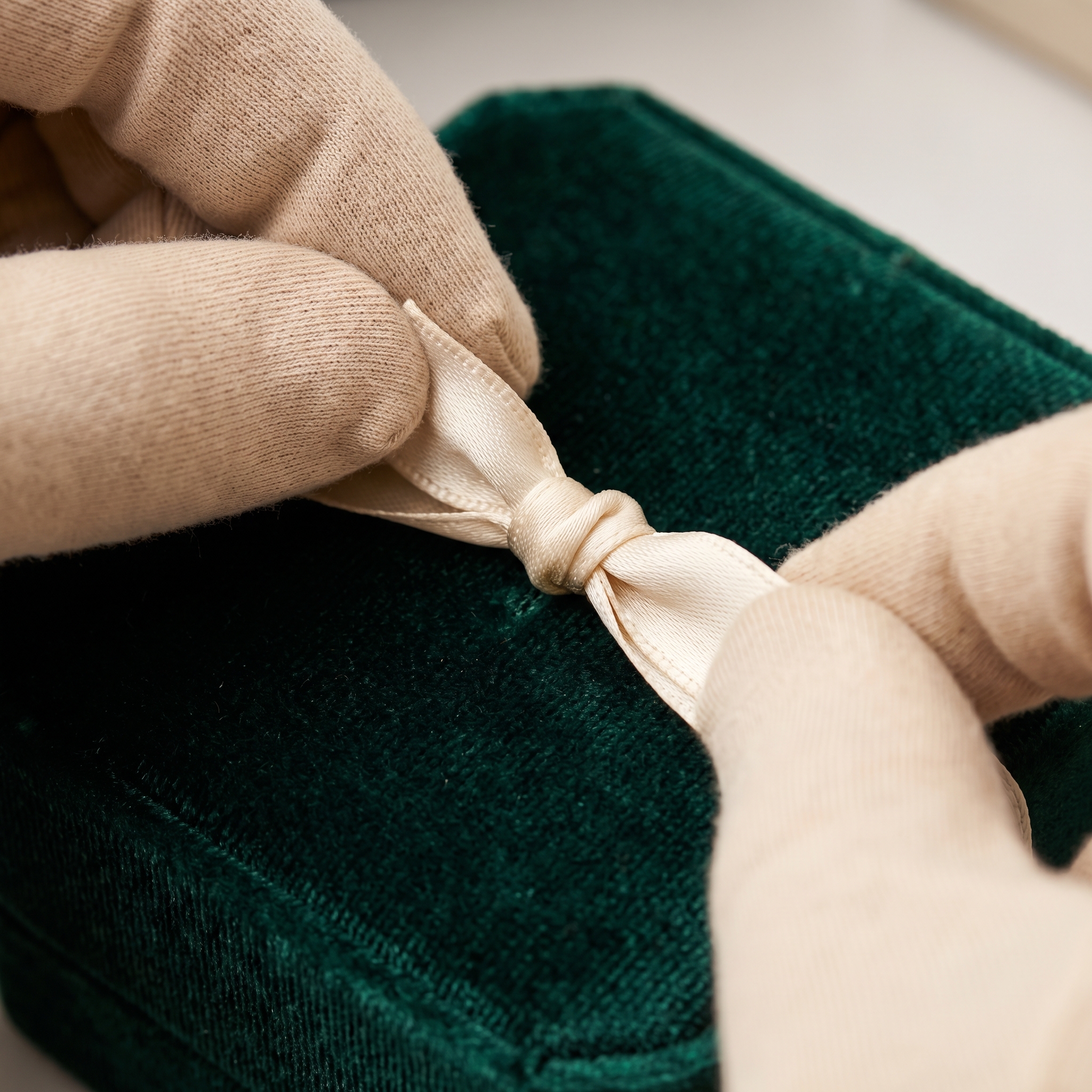
A loose ribbon is the hallmark of a rushed or unprofessional job. When considering how to wrap a necklace box , the knot provides the structural integrity for the decorative bow.
The Under-Tuck Maneuver
Take the long end and tuck it under all layers of the ribbon at the center intersection. Slip it through from the bottom right to the top left to create a secure anchor.
- Pull both ends outward simultaneously.
- Check that the ribbon is parallel to the box edges.
- Verify that the intersection is locked.
- Test the tension with a finger-slide check.
Make no mistake: if you can slide your finger under the ribbon with ease, it is too loose. It should be snug enough to stay in place but not so tight that it deforms the box edges.
Key Takeaway: The under-tuck is the specific mechanism that prevents the ribbon from sliding off the corners of the box during shipping or transit.
| Component | Status Standard | |
|---|---|---|
| Intersection | Fully Locked | |
| Surface Tension | Drum-tight / Snug | |
| Alignment | Edge-parallel |
Tension control is the dividing line between standard gift wrapping and luxury brand presentation.
How can you tie a symmetrical decorative bow?
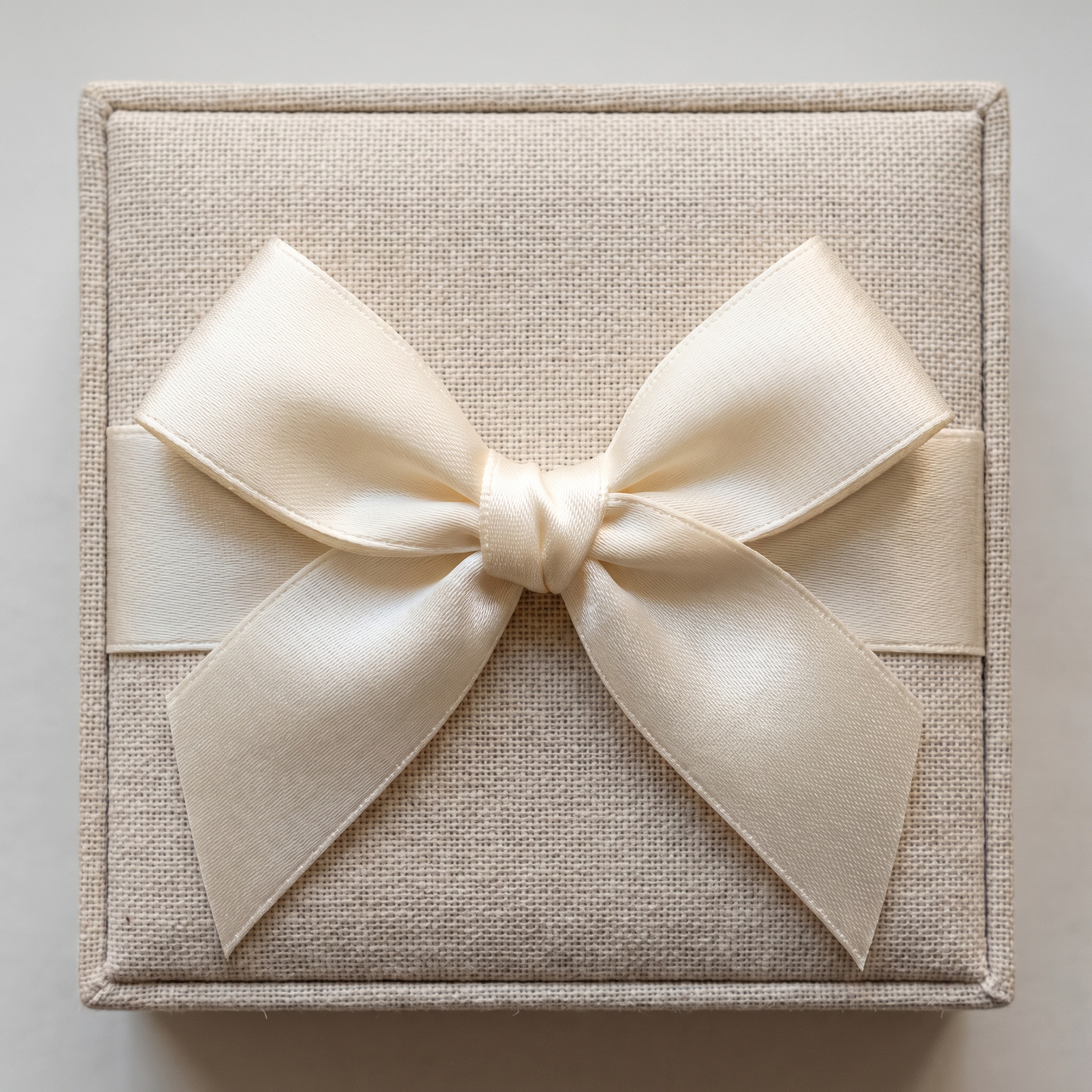
The bow is the focal point of the packaging and the first thing a client sees. If you want to know how to wrap a necklace box better than the world’s most famous jewelers, symmetry is your primary goal.
The Counter-Clockwise Wrap
Form a loop with the bottom-right ribbon tail. Bring the top-left ribbon down and wrap it counter-clockwise around the base of your first loop to ensure the “good side” faces outward.
- Create identical loop sizes on both sides.
- Push a small section through the base hole.
- Pull both loops to tighten the square knot.
- Ensure the satin sheen is facing up.
Here is the deal: avoid “granny knots” by ensuring your second loop is pushed through the correct side of the knot base. This ensures the bow sits horizontally across the box.
Key Takeaway: Symmetry in the loops and a centered square knot are the visual cues that signal high-value craftsmanship.
| Bow Element | Quality Standard | |
|---|---|---|
| Loop Symmetry | Identical wing size | |
| Center Knot | Square and centered | |
| Ribbon Face | Pattern side facing up |
A perfectly executed bow acts as a physical representation of the precision found within the jewelry piece itself.
How should you trim ribbon ends for a pro finish?
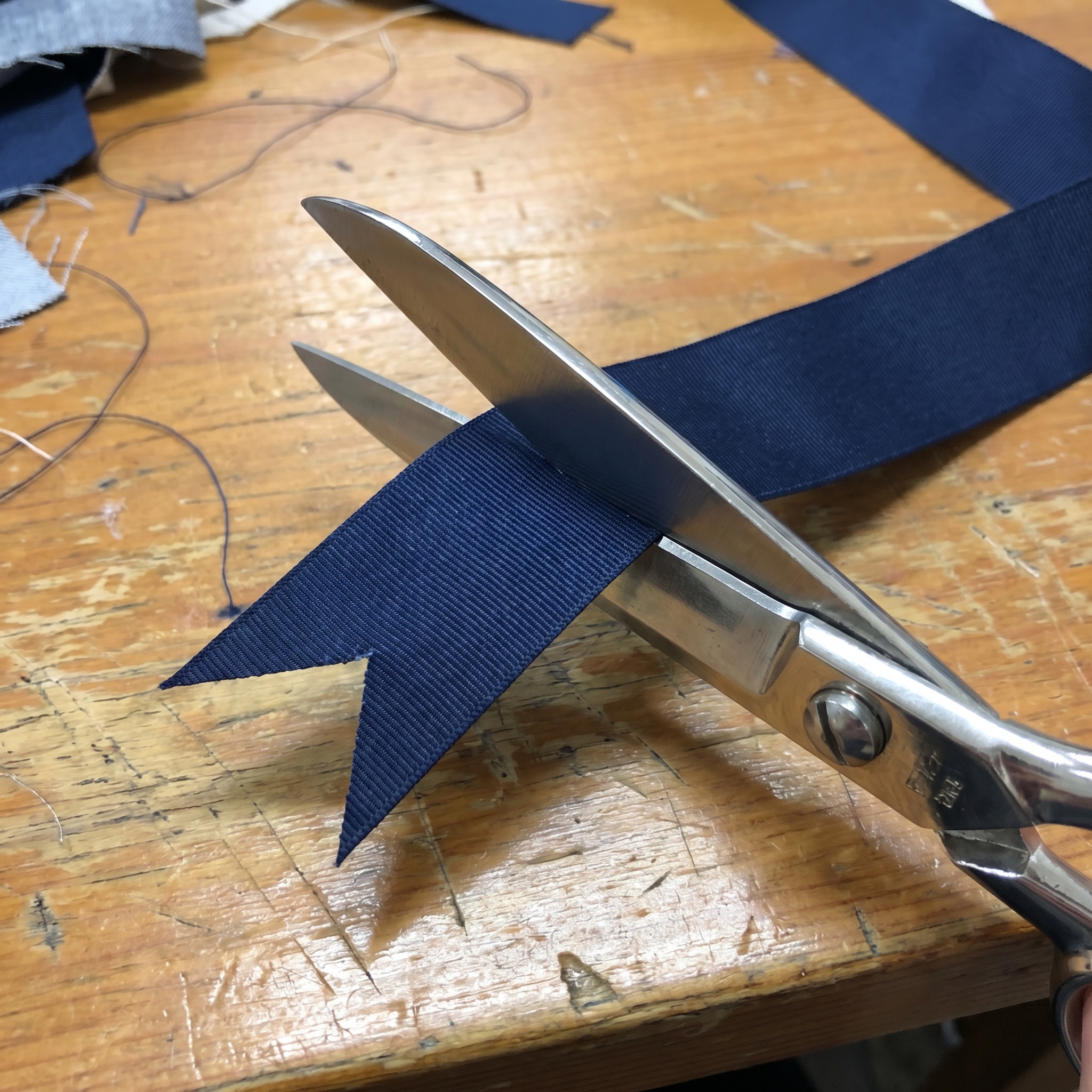
The final presentation is often ruined by frayed or uneven ribbon tails. Professionalism in how to wrap a necklace box extends to the very tips of the fabric.
The Chevron Cut Style
Fold the ribbon tail in half vertically and cut at a 45-degree angle toward the fold. This creates the classic, sophisticated “V” shape that is synonymous with luxury retail.
- Use micro-serrated shears to prevent fraying.
- Keep the angle of the slant identical on both tails.
- Consider a diagonal cut for modern branding.
- Seal edges if using synthetic materials.
Think about this: for high-volume orders, a “chewed” ribbon end immediately devalues the perceived worth of the jewelry. Sharp, deliberate cuts are mandatory.
Key Takeaway: Never use dull scissors; the cleanliness of the ribbon edge is a direct reflection of your brand’s quality control standards.
| Cut Style | Brand Image Alignment | |
|---|---|---|
| Chevron (V-Cut) | Traditional, Formal, Luxury | |
| Diagonal Slant | Modern, Sleek, Minimalist | |
| Heat-Sealed | Industrial, High-Volume |
The tail finish provides a polished end-cap to the unboxing experience, reinforcing the luxury feel.
Which materials create the best luxury look?
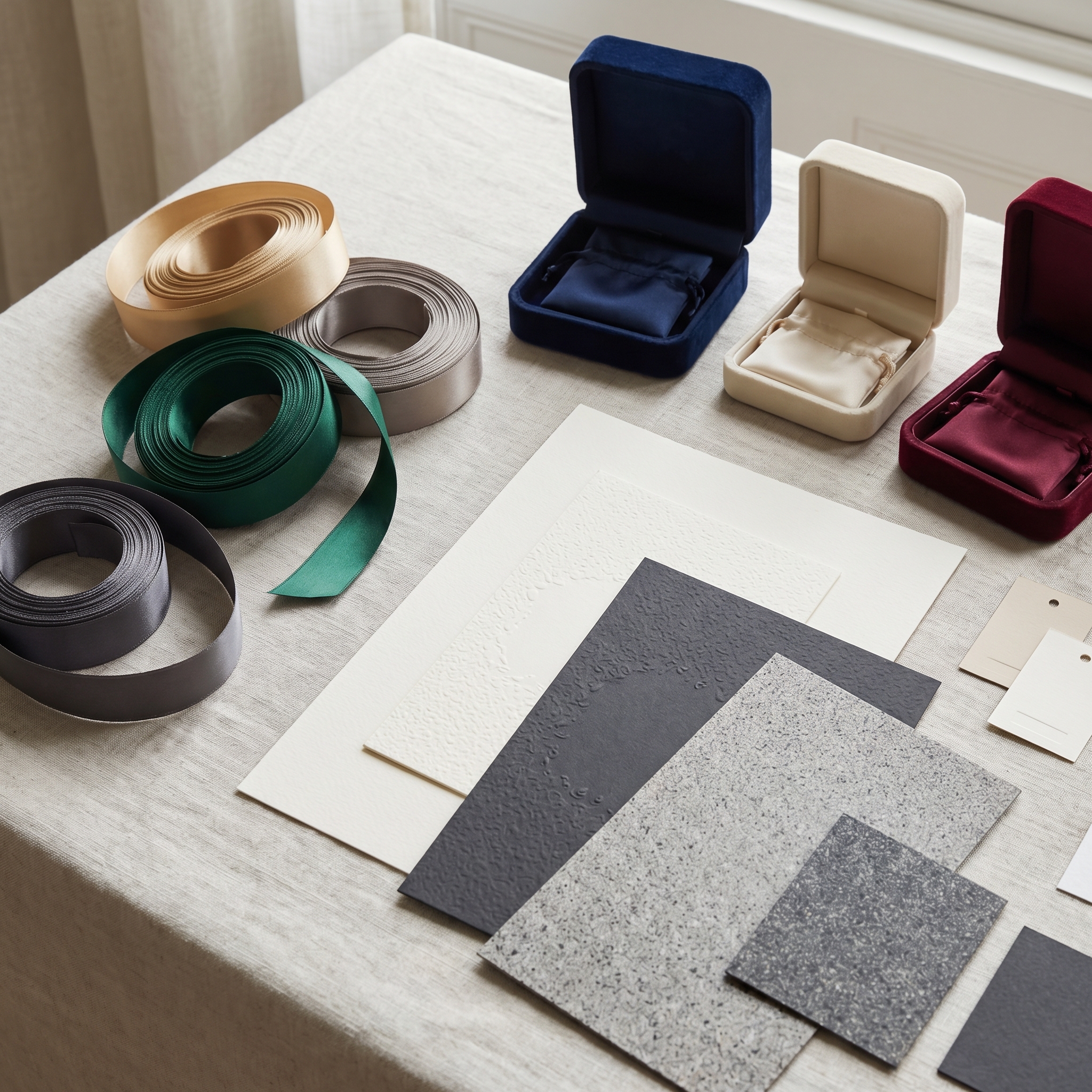
Not all materials are created equal in the world of luxury packaging. When researching how to wrap a necklace box, the tactile quality of the ribbon is just as important as the technique.
Double-Faced Satin and Velvet
Unlike single-faced satin, double-faced ribbon has a consistent sheen on both sides. This ensures that no matter how the bow is tied, the presentation remains consistently glossy and expensive.
- Use Grosgrain for better grip on heavy boxes.
- Select silk velvet for ultra-premium collections.
- Match ribbon weight to the box material.
- Ensure color fastness to prevent staining.
The real story is this: matching your ribbon weight to your box material is crucial. A heavy velvet ribbon on a thin cardboard box will cause the packaging to collapse.
Key Takeaway: High-quality materials like double-faced satin provide a “margin for error” by looking premium even when lighting is suboptimal.
| Material | Best Application | Primary Benefit | |
|---|---|---|---|
| Double-Faced Satin | Fine Jewelry | High shine, smooth feel | |
| Grosgrain | Watches/Bracelets | Durable, stays tied | |
| Silk Velvet | Heritage Pieces | Extreme prestige, weight |
Selecting the right textile ensures that the wrapping complements the jewelry’s aesthetic rather than distracting from it.
What tools ensure a consistent wrap every time?
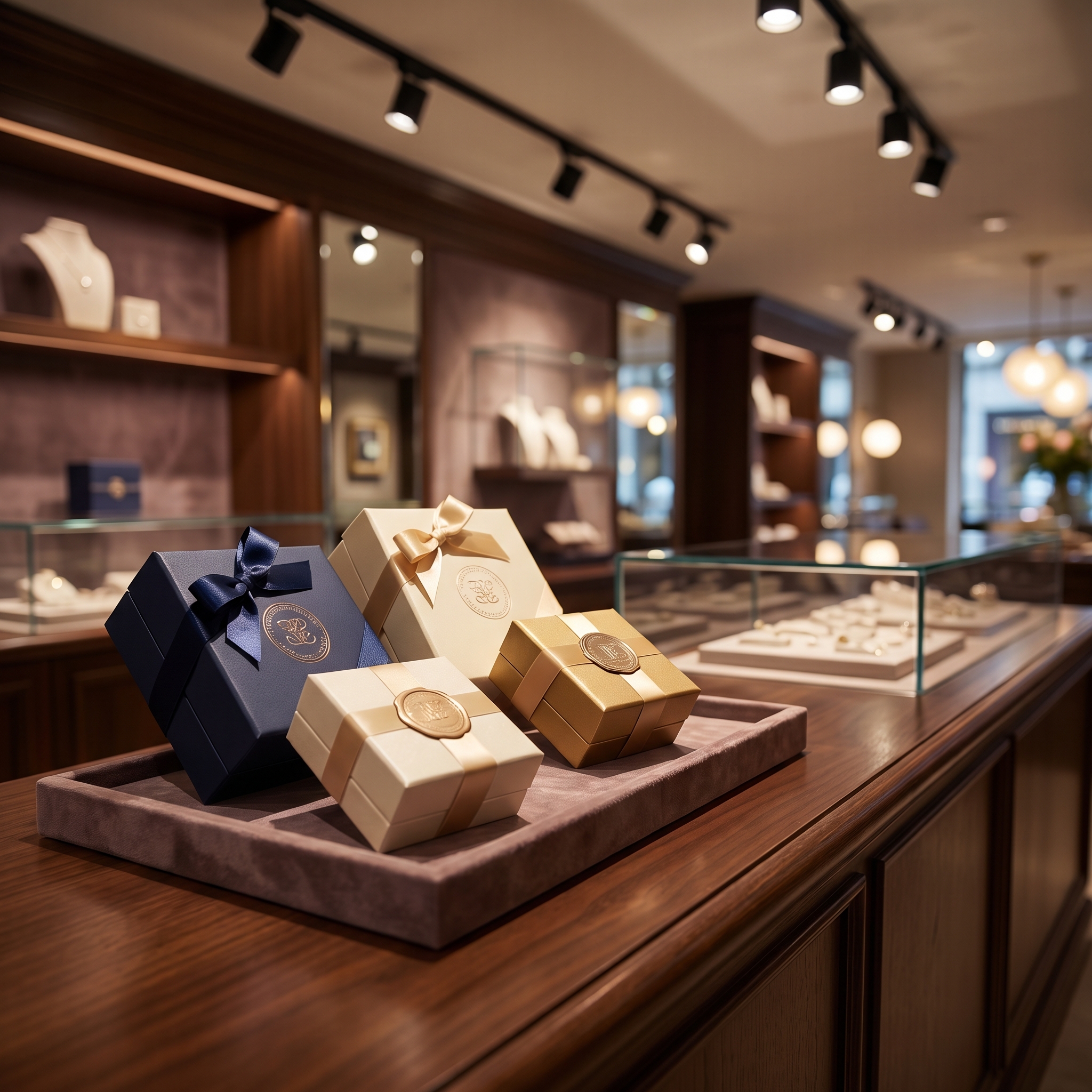
Consistency is the hallmark of a professional brand. To maintain standards in how to wrap a necklace box , your team needs a dedicated and professional workstation setup.
Specialized Retail Equipment
A weighted ribbon dispenser allows you to pull material with one hand while keeping the box steady with the other. This setup significantly increases speed without sacrificing the quality of the wrap.
- Invest in professional fabric shears.
- Use grid-marked cutting mats for measurement.
- Utilize bone folders for crisp corner wraps.
- Implement alignment templates for logos.
But wait, there’s more: the right tools reduce physical fatigue for your staff. This ensures that the 100th box wrapped in a day looks as perfect as the first.
Key Takeaway: Professional tools are an investment in brand consistency, ensuring every customer receives the same high-standard unboxing experience.
| Tool | Primary Function | |
|---|---|---|
| Serrated Shears | Precision cutting without fraying | |
| Grid Mat | Standardizing ribbon lengths | |
| Weighted Base | One-handed material dispensing |
Standardizing your toolset is the first step toward scaling your luxury presentation across multiple locations.
Can luxury wrapping be environmentally friendly?
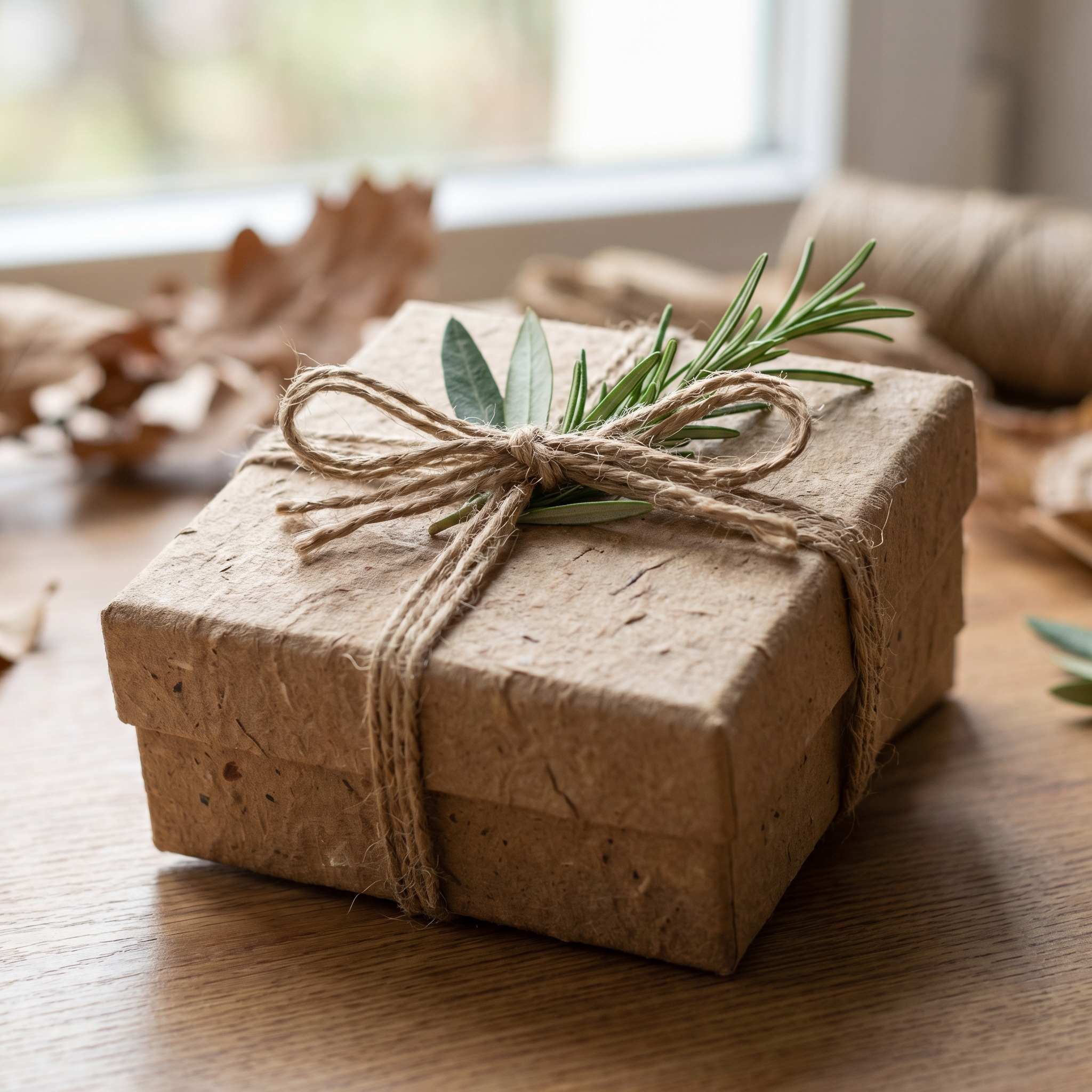
Sustainability is no longer a niche requirement; it is a B2B standard. Modern techniques for how to wrap a necklace box now prioritize “green” luxury to meet global consumer demands.
Sustainable Material Innovation
Many premium ribbons are now manufactured from recycled PET plastic bottles, offering the same high sheen as traditional satin without the environmental footprint.
- Use soy-based inks for custom printed ribbons.
- Choose biodegradable fibers like organic cotton.
- Design for reusability to extend brand touchpoints.
- Avoid plastic-based tapes in favor of friction locks.
Believe it or not, sustainable luxury is a powerful marketing angle. It justifies premium pricing and builds deep trust with eco-conscious consumers.
Key Takeaway: Adopting eco-friendly wrapping materials allows your brand to align with global sustainability trends without sacrificing the premium aesthetic.
| Eco-Feature | Environmental Impact | |
|---|---|---|
| Recycled PET | Reduces virgin plastic use | |
| Natural Dyes | Lowers chemical runoff | |
| Reusability | Extends brand visibility |
Green luxury is the future of the industry, combining ethical sourcing with high-end design.
How can retailers wrap boxes at high volumes?

Efficiency is often the enemy of artistry, yet B2B operations require speed. Learning how to wrap a necklace box at scale requires a refined and documented workflow.
The Assembly Line Approach
For high-volume retail, you should separate the tasks into stations. Have one person measuring and cutting, while another handles the base wrap and a specialist ties the final decorative bow.
- Standardize the “Five-Length Rule” in handbooks.
- Use pre-tied elastic bows for ultra-high volume.
- Implement quality control checks at the final station.
- Track “seconds per box” to optimize labor costs.
The bottom line is: quality control at the final station is non-negotiable. It prevents sub-par wrapping from ever reaching the client’s hands.
Key Takeaway: A standardized assembly process ensures that even under high-pressure holiday seasons, the brand’s luxury standards never slip.
| Volume Level | Recommended Strategy | |
|---|---|---|
| Boutique (Low) | 100% Hand-tied custom wraps | |
| Chain (Medium) | Station-based assembly | |
| Wholesale (High) | Pre-formed premium elastic loops |
Workflow optimization allows a brand to maintain its prestige while handling the logistical demands of a global market.
Frequently Asked Questions
How long should it take to wrap one jewelry box?A trained professional should be able to complete a standard ribbon wrap in 45 to 60 seconds. Speed should never come at the expense of tension or bow symmetry.
What is the best ribbon width for a necklace box?For standard necklace boxes, a width of 15mm to 20mm is usually the most aesthetically pleasing. This provides enough surface area for a prominent bow without overwhelming the box.
Can I use tape to secure the ribbon?In luxury packaging, tape should never be visible to the consumer. If you must use it, apply double-sided archival tape hidden under the intersection of the ribbon.
How do I prevent the ribbon from sliding off the corners?The “Under-Tuck” method is the most effective way to lock the ribbon in place. Friction, rather than adhesives, is the hallmark of professional wrapping.
What if the ribbon has a pattern on only one side?You must use a “twist” technique at the intersection point. This ensures the patterned side always faces outward on both the loops and the tails.
Conclusion
Mastering the intricacies of professional jewelry box wrapping is an investment in your brand’s unboxing ROI. By focusing on precision measurement, tension control, and the selection of premium materials, you move beyond simple gift-wrapping into the realm of true brand storytelling. Whether you are a boutique jeweler or a global wholesaler, the final ribbon is the seal of quality on your hard work.
Ready to upgrade your brand’s presentation? Contact us today to explore custom solutions that define the next generation of luxury packaging.
We envision a world where every jewelry unboxing is a moment of pure, uninterrupted prestige.