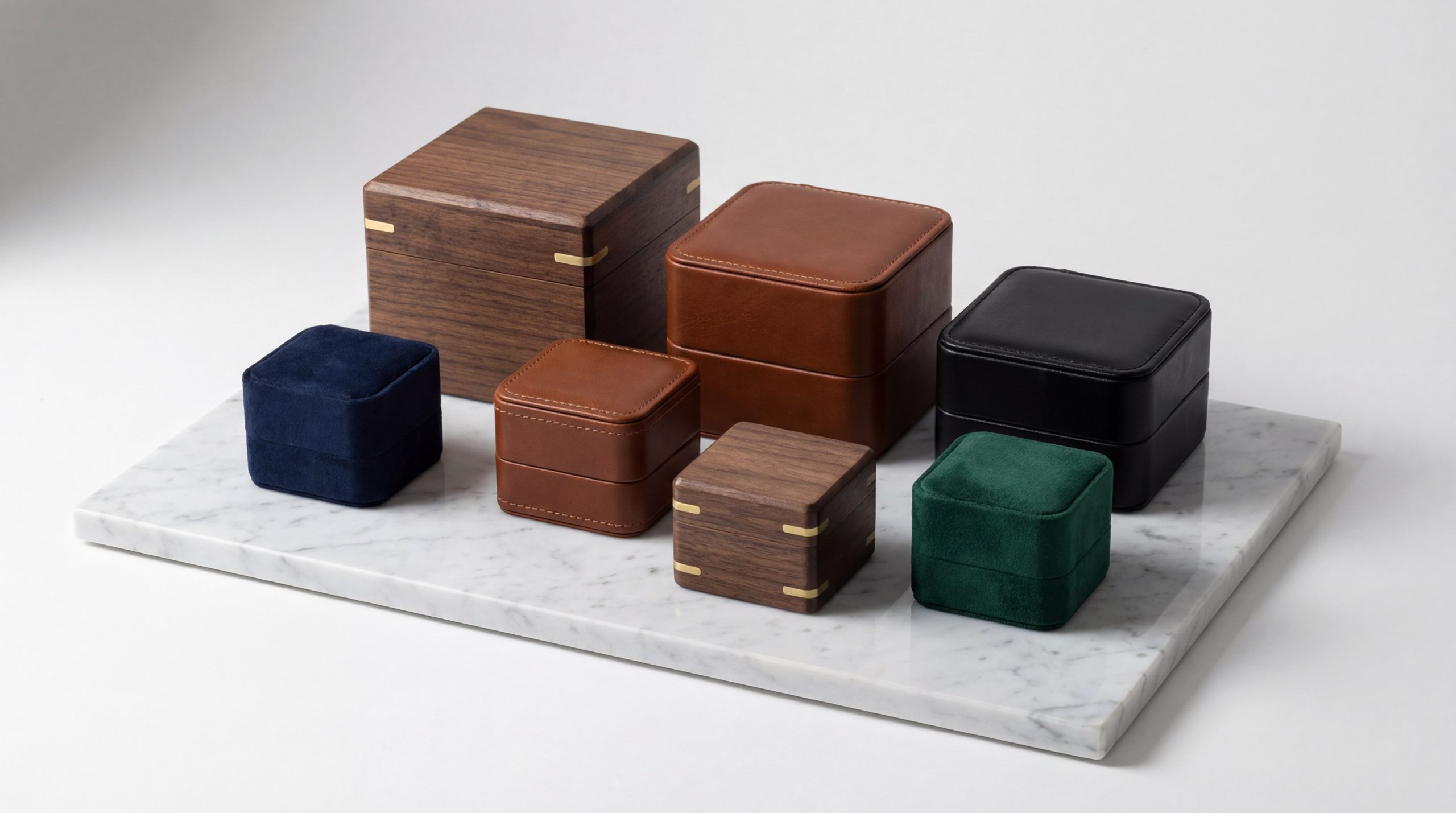
Selecting the right jewelry box material is the most critical decision you will make to balance luxury aesthetics with product safety. Many brands struggle with packaging that either looks cheap or fails to protect delicate gemstones from tarnishing and scratches. You want your customers to feel the prestige of your brand from the moment they touch the box, yet poor material choices can lead to a disappointing unboxing experience. By understanding the structural and tactile properties of various jewelry box material options, you can create a lasting impression that justifies a premium price point.
Is wood the ultimate luxury jewelry box material?
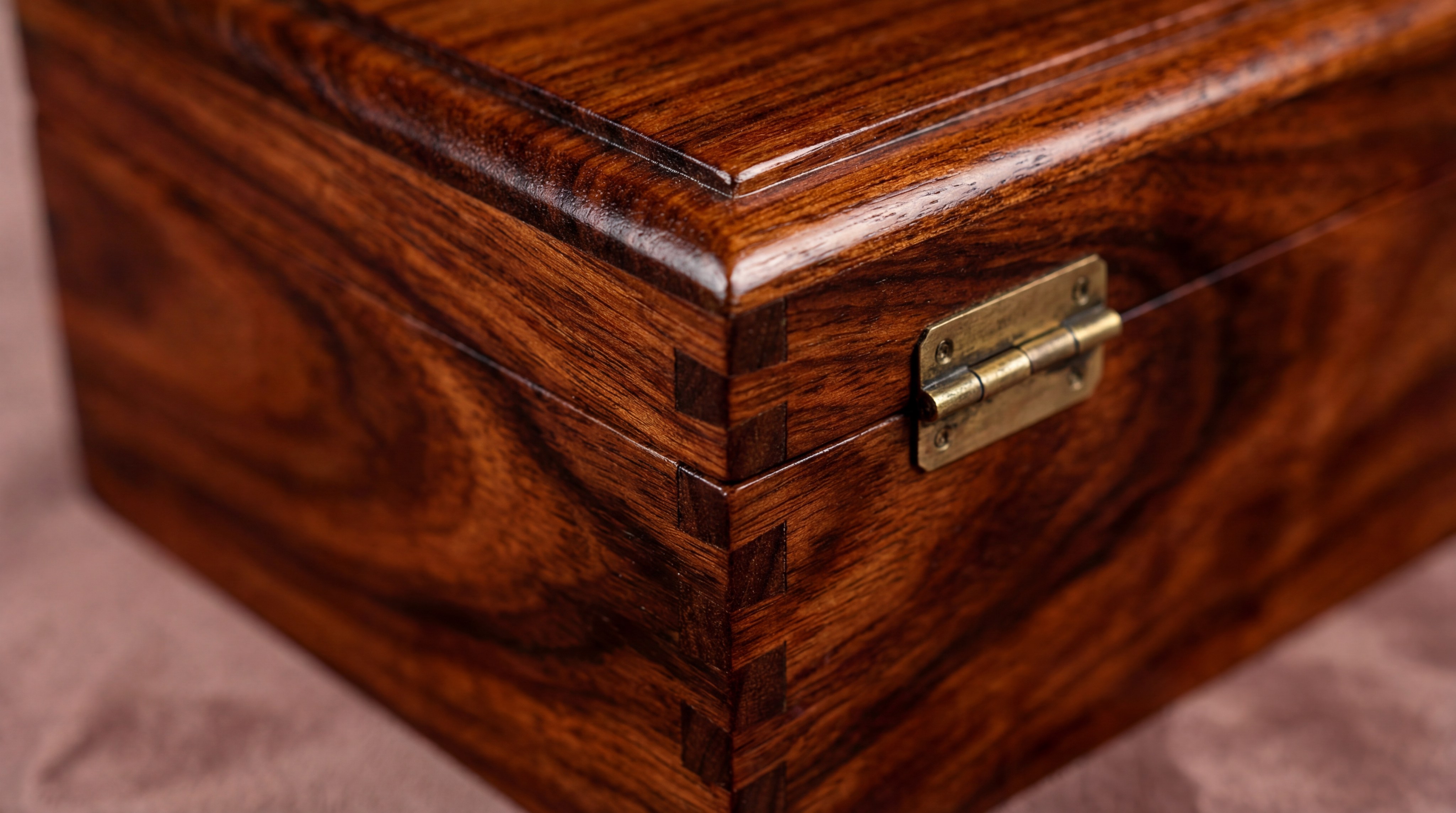
Wood is widely considered the gold standard when you need a jewelry box material that communicates heritage and high-end value. It provides a heavy, substantial feel that instantly signals quality to your customers. Whether you choose polished hardwoods or carved softwoods, this material offers unmatched structural integrity.
Traditional Wood Varieties
High-end brands often gravitate toward specific species to define their look. You can choose from several options depending on your target price point:
- Mahogany: Known for its deep reddish tint and fine grain.
- Walnut: Offers a sophisticated dark finish that pairs well with gold jewelry.
- Oak: A durable choice with a prominent grain pattern for a rustic touch.
The best part?
Durability and Longevity
Wooden containers are designed to be kept for decades, acting as a permanent storage solution for your clients. They offer excellent insulation against temperature spikes and physical pressure. This ensures that even the most delicate settings remain secure during long-term storage.
Key Takeaway: Wood provides the highest perceived value and physical protection for luxury collections.
| Wood Type | Aesthetic | Durability | |
|---|---|---|---|
| Mahogany | Classic Luxury | Very High | |
| Walnut | Modern Professional | High | |
| Pine | Craft/Artisanal | Moderate |
Review these wood types to match your brand’s specific architectural style.
Why is leather a preferred jewelry box material?
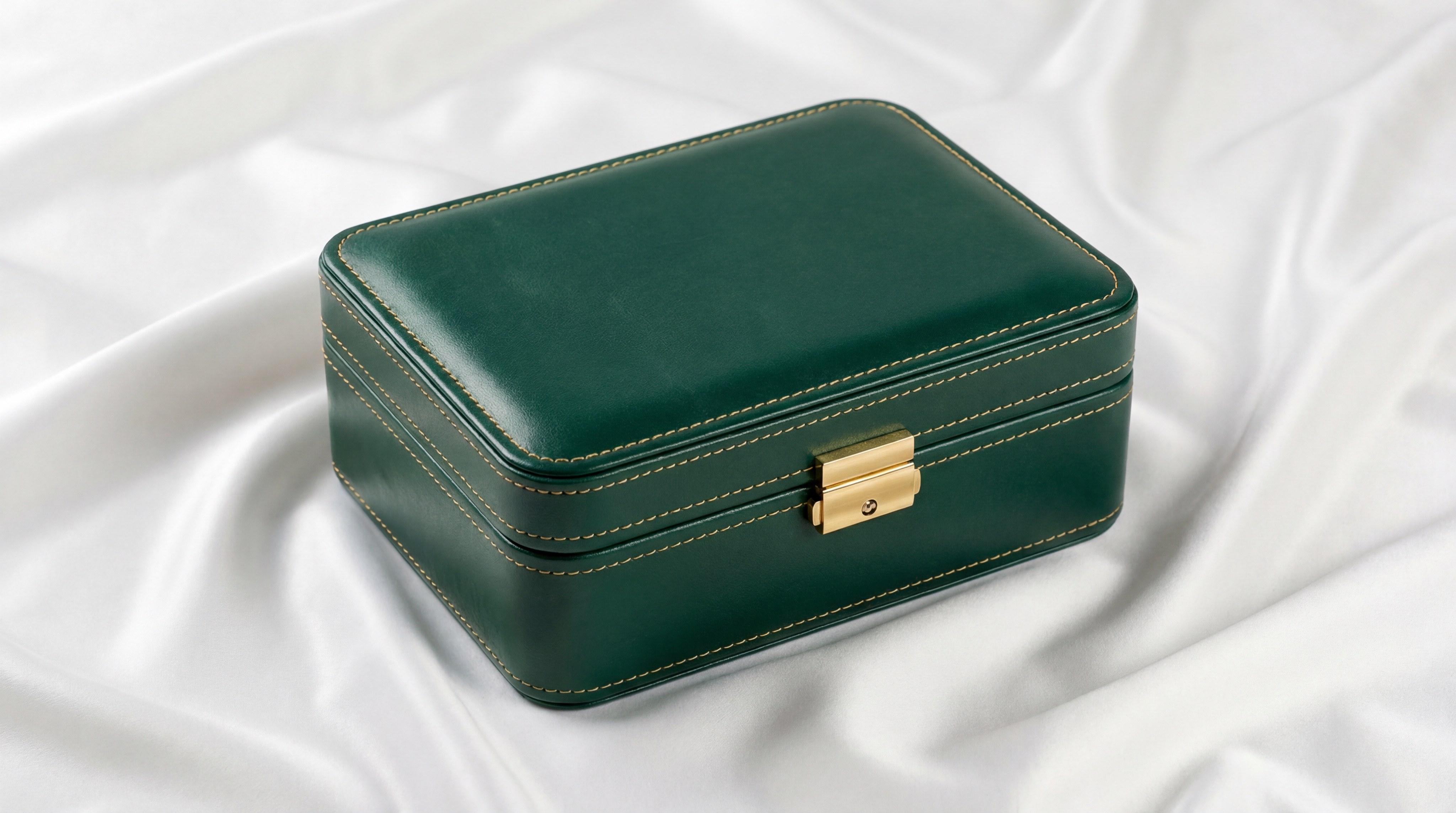
Leather is a timeless jewelry box material that offers a unique combination of flexibility, soft-touch texture, and extreme resilience. It allows you to create sleek, curved designs that are difficult to achieve with rigid wood or metal. Your customers will appreciate the tactile experience of a leather-wrapped exterior.
Genuine vs. Synthetic Options
You must decide between the prestige of natural hides and the consistency of modern alternatives. Each offers distinct benefits for your production line:
- Full-Grain Leather: Develops a unique patina over time and smells luxurious.
- PU Leather: Provides a vegan-friendly option that is easier to clean.
- Suede: Offers a matte, soft finish that prevents the box from slipping.
But that’s not all.
Versatility in Branding
Leather surfaces are perfect for high-pressure embossing and gold foil stamping. This allows you to place your logo prominently with a deep, permanent indentation. The material also comes in an infinite array of dyed colors to match your seasonal collections perfectly.
Key Takeaway: Leather is the ideal choice for brands that want a tactile, sophisticated, and customizable exterior.
| Leather Type | Cost Level | Maintenance | |
|---|---|---|---|
| Full-Grain | Premium | Periodic conditioning | |
| Top-Grain | High | Minimal | |
| PU/Faux | Accessible | Wipe clean only |
Choosing between these options depends on your brand’s ethical stance and budget.
When should you use metal as a jewelry box material?
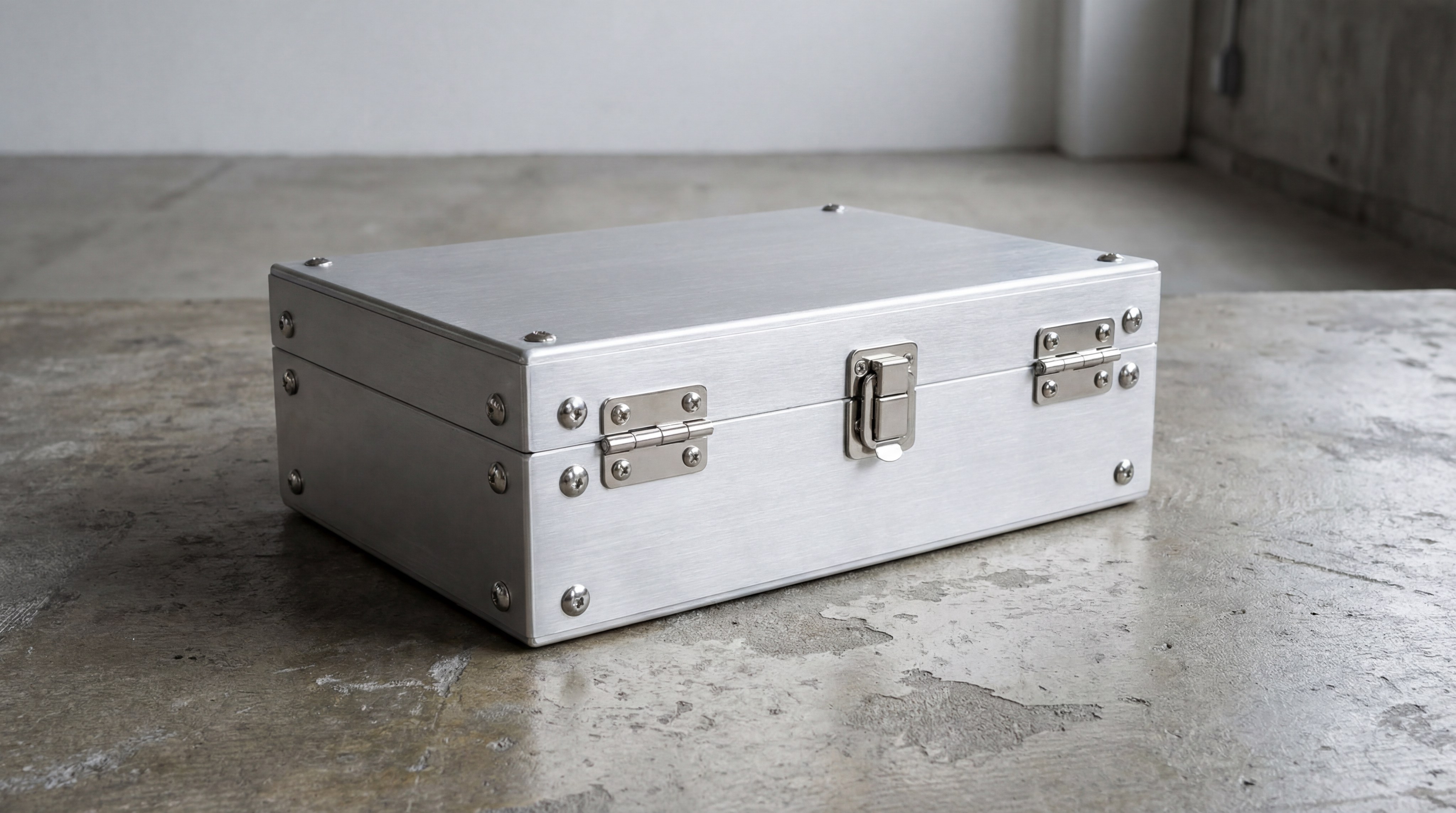
Metal serves as a modern and industrial jewelry box material that provides the ultimate shield against crushing. It is particularly effective for shipping high-value items where security is the primary concern. You can achieve a minimalist, high-tech aesthetic that appeals to younger, contemporary audiences.
Industrial Metals and Finishes
Different metals provide different weights and visual impacts for your packaging. Consider these common choices for a modern look:
- Aluminum: Lightweight and resistant to corrosion, making it perfect for international shipping.
- Brass: Provides a heavy, vintage feel that develops a beautiful aged patina.
- Stainless Steel: Offers a sleek, silver finish that is virtually indestructible.
Think about it.
Precision Customization
Metal allows for techniques like laser etching and chemical engraving that provide incredible detail. You can create intricate patterns or sharp, clean logos that won’t fade or wear off. The reflective surface also enhances the sparkle of the jewelry when the box is opened under store lights.
Key Takeaway: Metal is the best material for high-security transit and contemporary, minimalist brand identities.
| Metal Option | Weight | Aesthetic | |
|---|---|---|---|
| Aluminum | Light | Tech/Modern | |
| Brass | Heavy | Classic/Antique | |
| Steel | Moderate | Industrial |
Select a metal that complements the specific alloy of the jewelry inside.
How does acrylic serve as a jewelry box material?
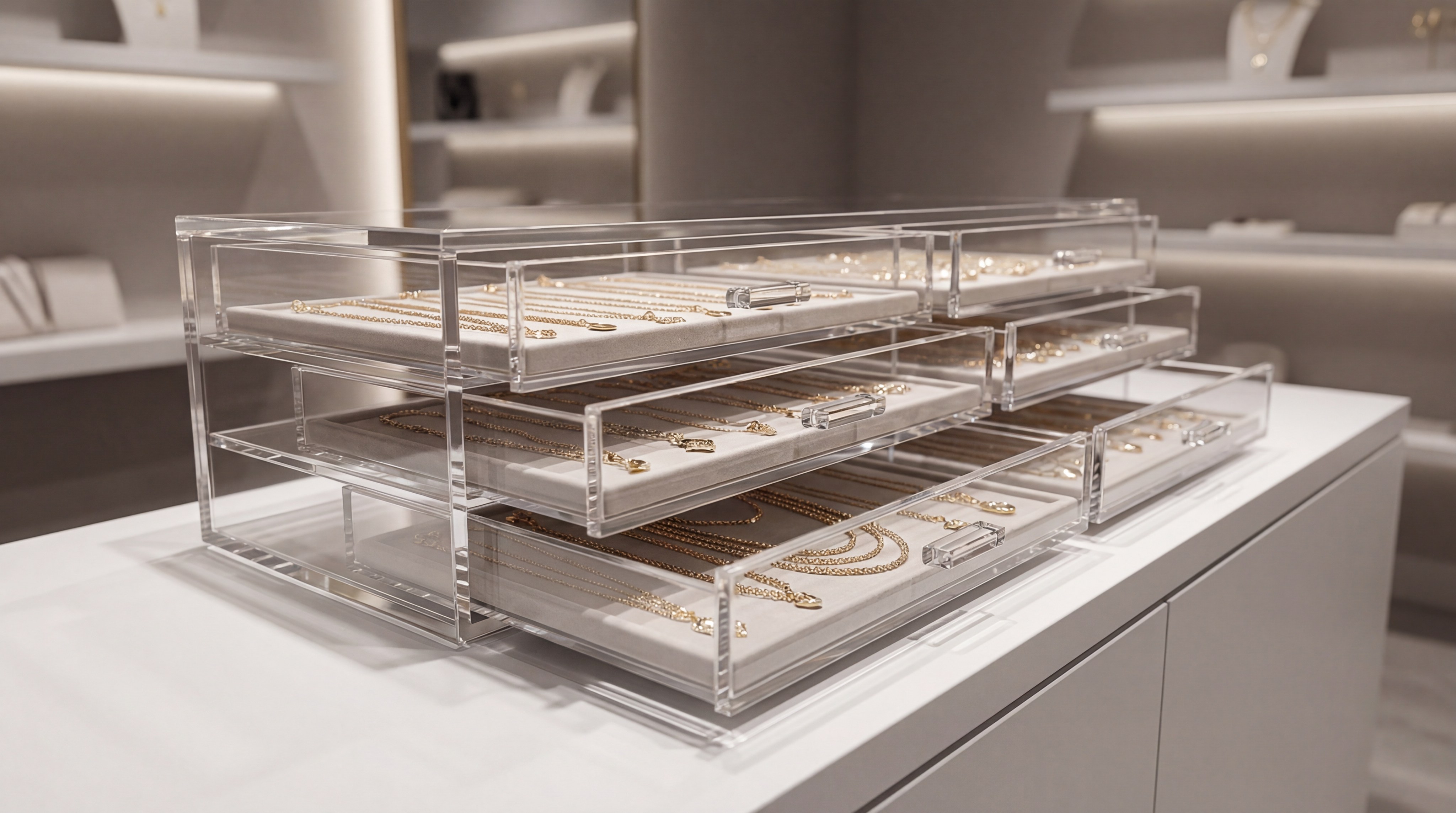
Acrylic is a revolutionary jewelry box material that prioritizes visibility and display-ready aesthetics. It allows you to showcase the product while it is still inside the protective casing. This transparency is particularly useful for retail environments where you want the customer to see the brilliance of a stone immediately.
Transparency and Clarity
High-quality acrylic mimics the look of glass but offers significantly better impact resistance. You can utilize different finishes to control how the product is viewed:
- Crystal Clear: Provides 100% visibility for maximum product exposure.
- Frosted: Offers a soft, diffused look for a more mysterious unboxing.
- Mirrored: Reflects light back onto the jewelry to enhance its brilliance.
Here is the kicker:
3D Floating Technology
You can combine acrylic frames with specialized PE films to create “floating” displays. This keeps the jewelry suspended in mid-air, protecting it from dust while providing a 360-degree view. It is an innovative way to differentiate your brand from traditional competitors.
Key Takeaway: Acrylic is the top choice for retail displays and modern, transparent packaging.
| Feature | Acrylic | Glass | |
|---|---|---|---|
| Durability | Shatter-resistant | Fragile | |
| Weight | Lightweight | Heavy | |
| Clarity | High | Exceptional |
Use acrylic when you want the jewelry to be the undisputed star of the presentation.
Which fabric is the best interior jewelry box material?
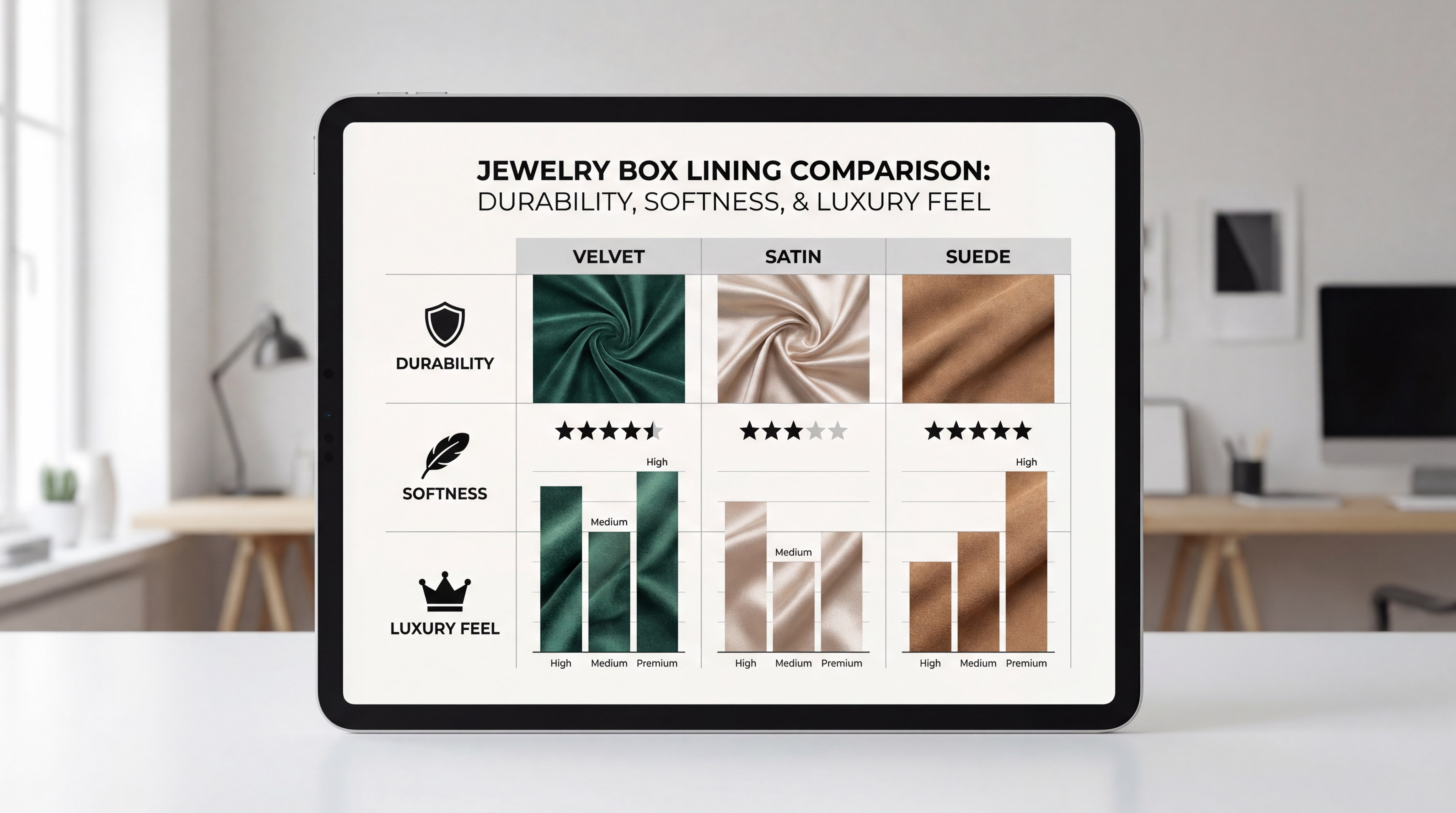
The fabric you choose as an interior jewelry box material is what actually touches your product. It must be soft enough to prevent scratches while being chemically stable enough to prevent tarnish. You should select textiles that contrast with the jewelry to make the colors “pop” upon opening.
Luxury Textile Options
The lining defines the “precious” feel of the item inside. You should consider these classic textiles for your interior:
- Velvet: The standard for luxury, offering a deep pile that cradles the item.
- Silk: A smooth, glossy option that feels incredibly high-end to the touch.
- Satin: Provides a high-shine finish that reflects light onto gemstones.
Now, consider this:
Anti-Tarnish Capabilities
Modern fabrics can be treated with anti-corrosive agents that protect silver and gold from oxidation. This is vital if you sell items that may sit in storage for long periods. Choosing a treated fabric ensures your customers always receive a bright, tarnish-free product.
Key Takeaway: Interior fabrics must balance soft-touch luxury with active chemical protection.
| Fabric | Texture | Best For | |
|---|---|---|---|
| Velvet | Plush | Rings and Earrings | |
| Silk | Smooth | Necklaces | |
| Suede | Matte | Men’s Watches |
Pair your fabric color with the metal of your jewelry for maximum visual impact.
Is bamboo the most sustainable jewelry box material?
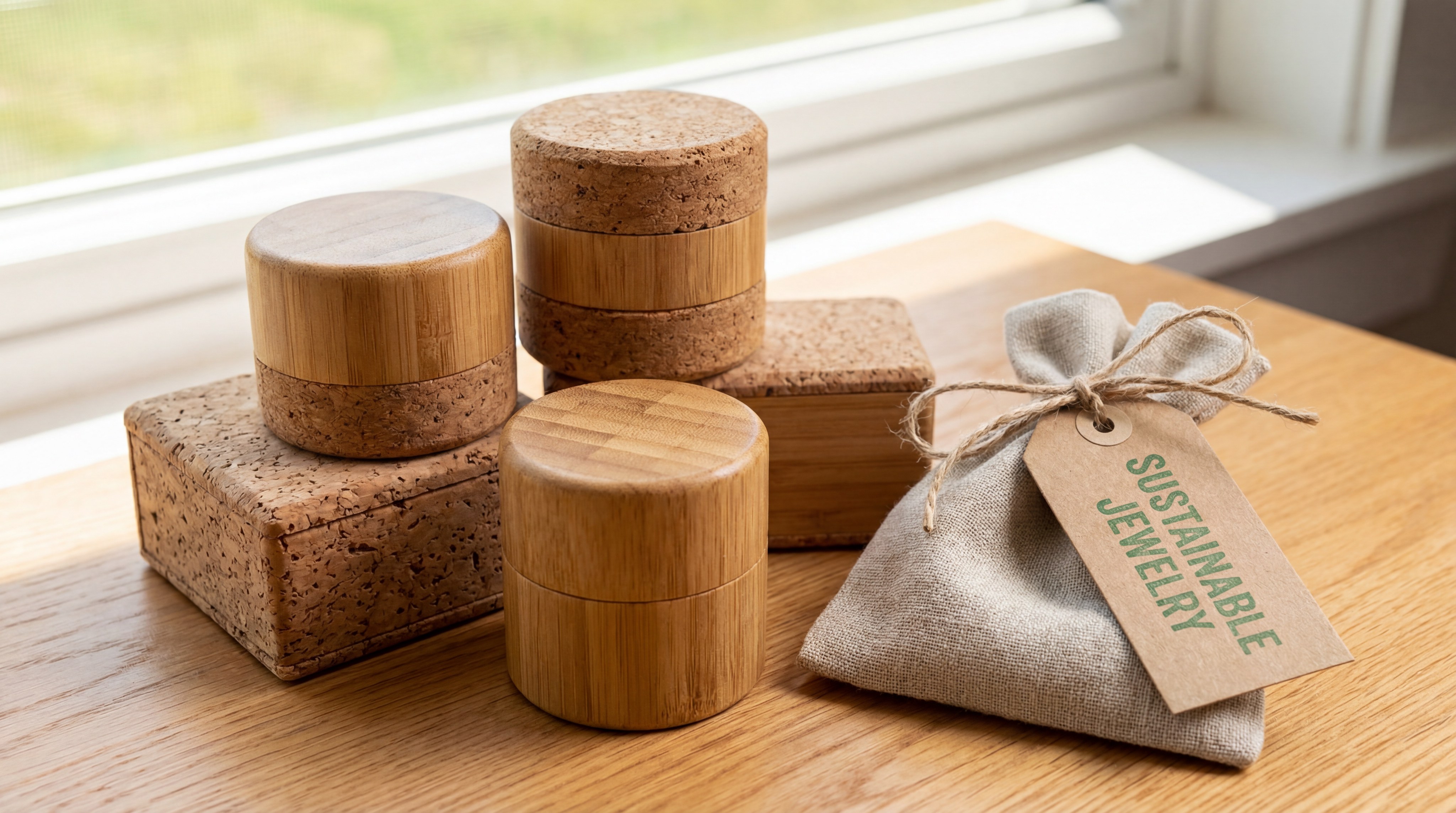
Bamboo is rapidly becoming a leading jewelry box material for brands focused on environmental responsibility. It grows significantly faster than traditional hardwoods, making it a highly renewable resource. You can offer your customers a “green” luxury experience without sacrificing the durability of a solid container.
Natural Aesthetics and Cork
Sustainability doesn’t mean you have to compromise on style. You can integrate multiple organic materials for a unique look:
- Solid Bamboo: Offers a clean, light wood grain that feels very modern.
- Cork: A naturally moisture-resistant material that provides a soft, grippy texture.
- Recycled Fibers: Can be pressed into sturdy shapes to replace plastics.
But wait, there’s more.
Biodegradability Benefits
Unlike plastic or metal, bamboo and cork will naturally break down over time if discarded. This appeals to the growing segment of eco-conscious consumers who avoid “single-use” luxury waste. By using these materials, you align your brand with global sustainability trends.
Key Takeaway: Bamboo and cork are the best materials for eco-friendly, modern jewelry brands.
| Material | Renewability | Texture | |
|---|---|---|---|
| Bamboo | Very High | Smooth/Hard | |
| Cork | High | Soft/Spongy | |
| Recycled Paper | Moderate | Textured |
Implement these materials to capture the market of environmentally aware shoppers.
Can paperboard be a premium jewelry box material?
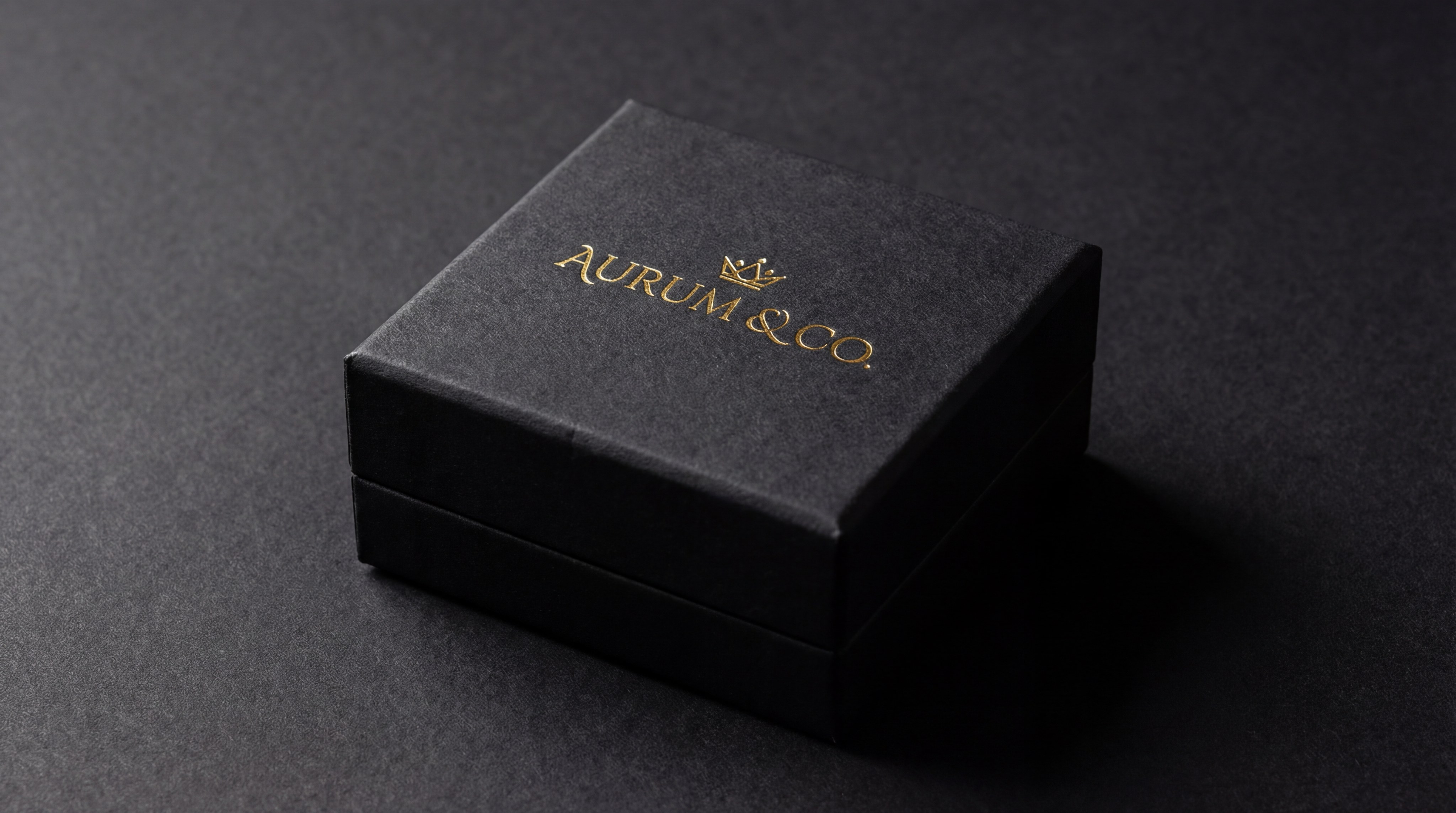
Rigid paperboard is the most versatile jewelry box material available for high-volume retailers. When you use high-density greyboard wrapped in specialty art papers, you can mimic the feel of much more expensive materials. It allows for complex structures like drawer boxes and magnetic closures at a fraction of the weight.
Custom Paper Finishes
The secret to expensive-looking paperboard is the exterior wrap. You can customize the outer layer to suit any brand identity:
- Textured Paper: Mimics the feel of linen or leather.
- Soft-Touch Laminate: Provides a “velvety” feel that resists fingerprints.
- Metallic Paper: Adds a subtle shimmer that mimics gold or silver leaf.
It gets better.
Structural Efficiency
Paperboard is incredibly efficient for shipping and storage because it can be engineered into “flat-pack” designs. This reduces your logistics costs significantly compared to pre-assembled wood boxes. Despite being light, a rigid board construction can withstand significant stacking pressure in a warehouse.
Key Takeaway: Rigid paperboard is the most cost-effective and customizable material for large-scale brands.
| Paper Grade | Strength | Best Usage | |
|---|---|---|---|
| Rigid Board | High | Premium Retail | |
| Kraft Paper | Moderate | Eco-conscious/Handmade | |
| Cardstock | Low | Gift Tags/Envelopes |
Optimize your paperboard thickness to match the weight of the jewelry inside.
What makes foam the best internal jewelry box material?
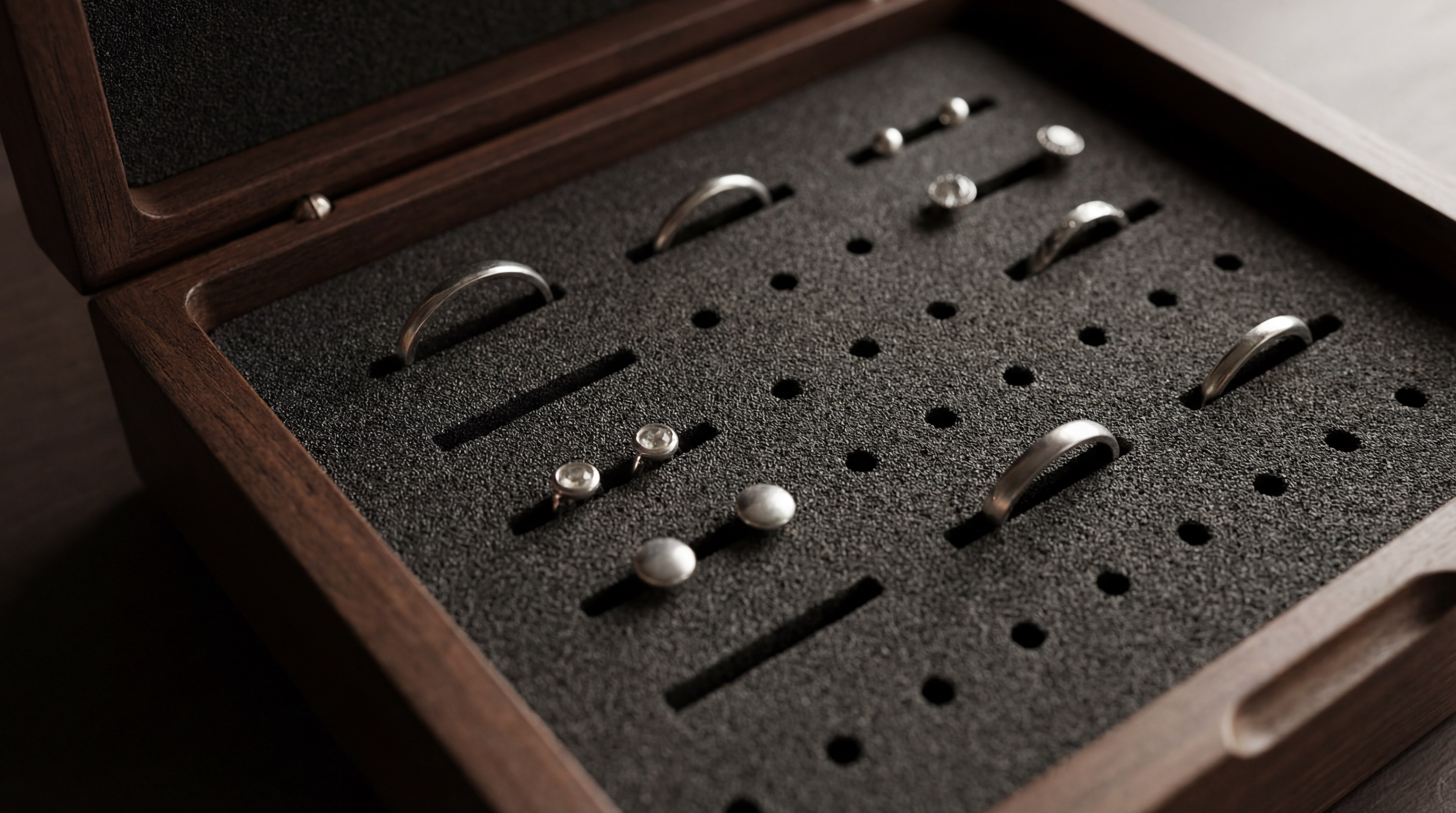
Foam is the unsung hero of the jewelry box material world, providing the actual “grip” that keeps your product centered. You need a material that can be precision-cut to the exact dimensions of your rings, earrings, or pendants. High-density foam ensures that jewelry doesn’t rattle or fall out during the rigors of shipping.
Foam Types and Densities
Not all foam is created equal, and you must choose the right density for your specific product weight:
- EVA Foam: A dense, rubbery material that holds its shape perfectly and looks premium.
- Polyurethane Foam: Softer and more sponge-like, ideal for protecting fragile gemstones.
- Velvet-Topped Foam: Combines the structural grip of foam with the luxury look of fabric.
You might be wondering:
Precision Die-Cutting
Foam can be cut into complex shapes using lasers or die-cuts to accommodate unusual jewelry designs. This allows you to create custom “seats” for multi-piece sets, such as a matching necklace and earring set. The result is a professional, organized presentation that delights the customer.
Key Takeaway: High-density foam is essential for secure positioning and shock absorption during transit.
| Foam Type | Feel | Resilience | |
|---|---|---|---|
| EVA | Firm | Excellent | |
| PU | Soft | Moderate | |
| PE | Rigid | High |
Select a foam color that contrasts with your jewelry to enhance the visual presentation.
Is tech-infused smart jewelry box material the future?
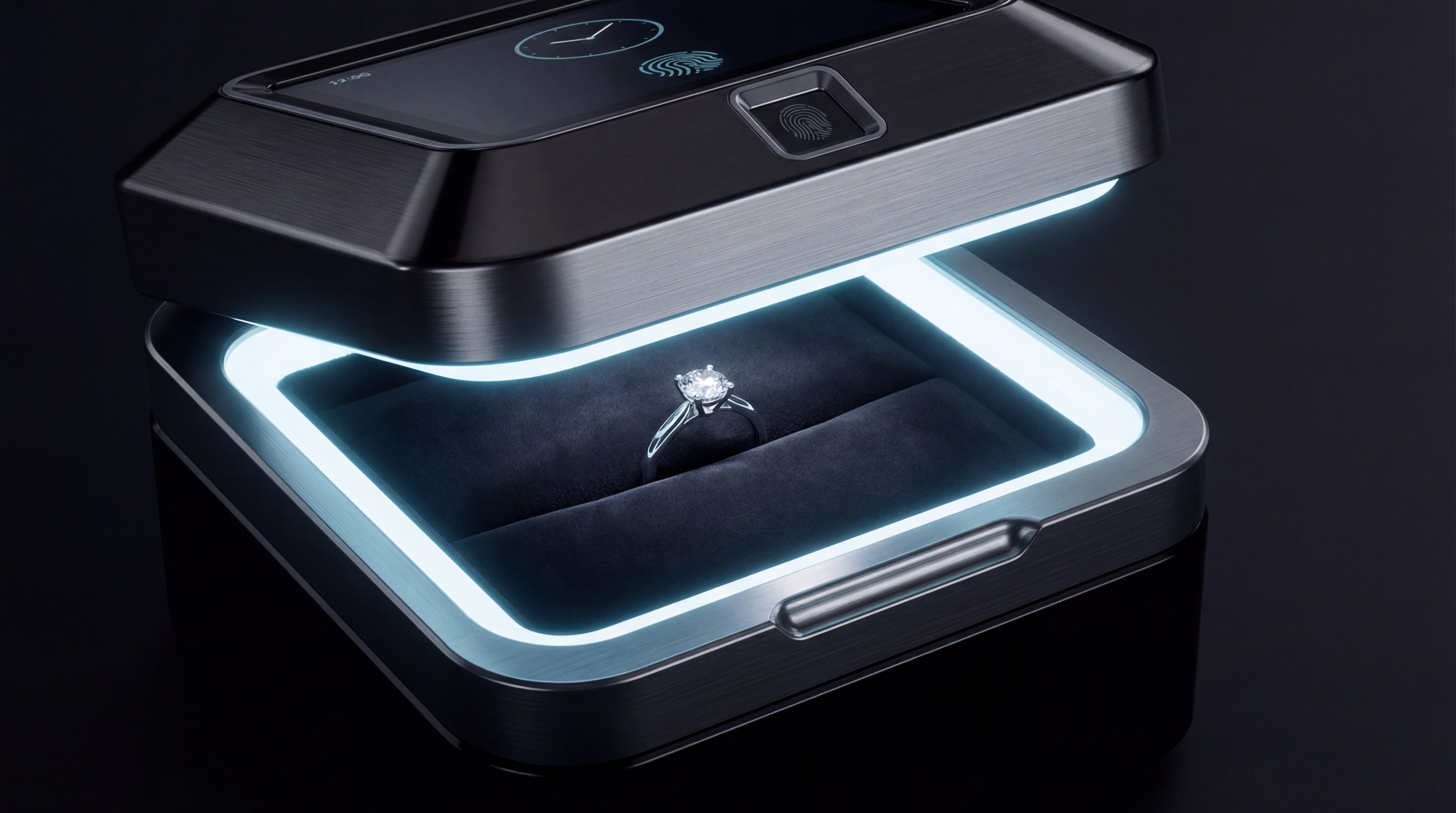
The next generation of jewelry box material integrates technology directly into the structure of the box. You can now use materials that house micro-electronics to provide an interactive unboxing experience. This transition from “passive” to “active” packaging is a major trend for luxury brands.
Integrated LED and NFC
Imagine a box that lights up the diamond the moment it is opened. You can now embed electronics into the lid material:
- LED Strips: Hidden in the lining to illuminate the jewelry from above.
- NFC Chips: Embedded in the frame to provide digital authenticity certificates.
- Smart Sensors: Can track if a high-value box has been tampered with or opened.
Bottom line?
Anti-Tarnish Innovation
New “smart” materials are infused with molecular-level copper particles that actively scrub the air inside the box. This prevents the chemical reaction that causes silver to turn black. By using these active materials, you reduce the need for your customers to clean their jewelry frequently.
Key Takeaway: Smart materials add functional value and high-tech prestige to your brand’s packaging.
| Technology | Benefit | Integration | |
|---|---|---|---|
| LED Lighting | Visual Sparkle | Lid Interior | |
| NFC Chip | Authentication | Box Frame | |
| Active Copper | Tarnish Prevention | Lining Fabric |
Consider smart materials for your highest-tier “investment-grade” collections.
How do you select a versatile jewelry box material?
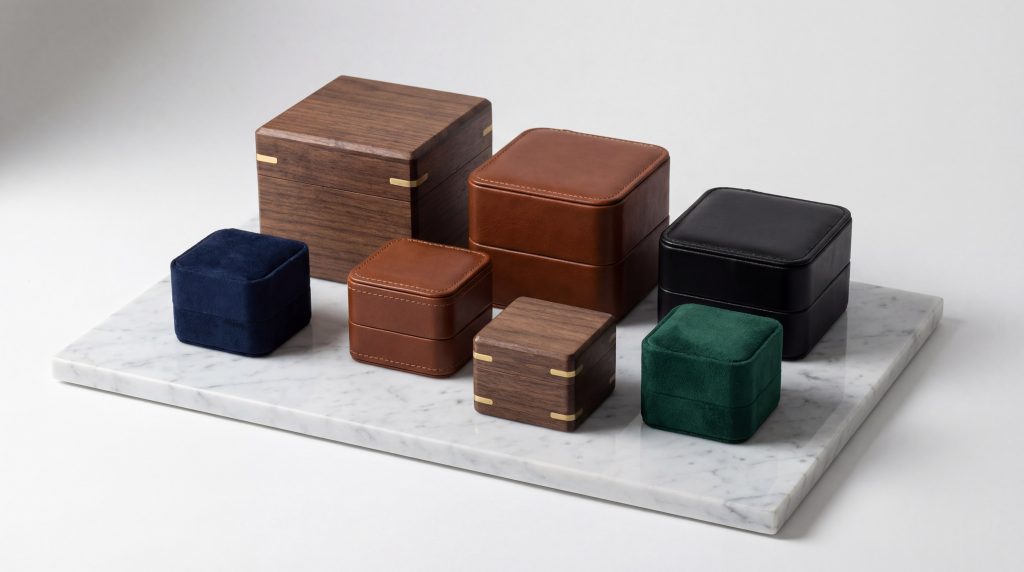
Choosing a versatile jewelry box material means finding a balance between cost, weight, and the “wow” factor. You must evaluate your primary sales channel—whether retail or e-commerce—to determine which material properties matter most. A box that is perfect for a store shelf might be a disaster for a cross-border shipping journey.
Comparing Core Factors
To make the final decision, you should weigh several competing priorities for your specific brand:
- Cost vs. Quality: Does the material price allow for a healthy profit margin?
- Weight vs. Shipping: Will a heavy wood box double your logistics costs?
- Protection vs. Style: Is the material sturdy enough for the “drop test”?
Believe it or not.
The Hybrid Approach
The most successful brands often use a hybrid material strategy. You might use a rigid paperboard exterior for shipping but include a high-quality velvet pouch or a wood-framed insert inside. This gives you the best of both worlds: the protection and low weight of paperboard with the luxury feel of traditional materials.
Key Takeaway: Versatility comes from combining different materials to solve specific logistics and branding challenges.
| Priority | Top Material Choice | Secondary Choice | |
|---|---|---|---|
| Pure Luxury | Wood | Genuine Leather | |
| E-commerce | Rigid Paperboard | Aluminum | |
| Display | Acrylic | Glass |
Evaluate your brand’s needs against these tiers to find the perfect packaging fit.
Summary of Material Solutions
Choosing the right material ensures your jewelry arrives safely and your brand is perceived as high-end. Whether you prioritize the traditional elegance of wood, the modern edge of metal, or the eco-friendly appeal of bamboo, your packaging is an extension of your product. By focusing on durability, aesthetics, and smart features, you can solve the common problems of product damage and low brand perception.
At YiXin Packaging, we are dedicated to transforming your brand’s vision into tangible, premium assets. We help global jewelry leaders create unboxing experiences that drive customer loyalty and maximize profit margins.
Ready to elevate your brand with the perfect packaging? Contact us today for a free quote and professional design consultation.
Frequently Asked Questions
Can I use recycled materials for luxury jewelry boxes?Absolutely, many high-end brands now use premium recycled kraft paper and FSC-certified woods. These materials can be finished with luxury textures to maintain a premium feel.
What’s the best material for preventing silver tarnish?Specialty anti-tarnish velvet or fabric infused with neutralizing agents is the most effective. These materials actively prevent oxidation by scrubbing the air inside the box.
What is the most cost-effective material for high-volume orders?Rigid paperboard (greyboard) wrapped in custom art paper is the industry standard for volume. It offers a premium look with lower production and shipping costs than wood or metal.
Is PU leather as durable as genuine leather for jewelry boxes?For packaging purposes, PU leather is often more practical because it is resistant to stains and moisture. However, it lacks the natural aging and prestige of genuine animal hides.
How do I choose the right foam density for my inserts?Use higher density EVA foam for heavy items like watches and lower density PU foam for light items. The goal is to ensure the item stays in place without putting too much pressure on delicate settings.