
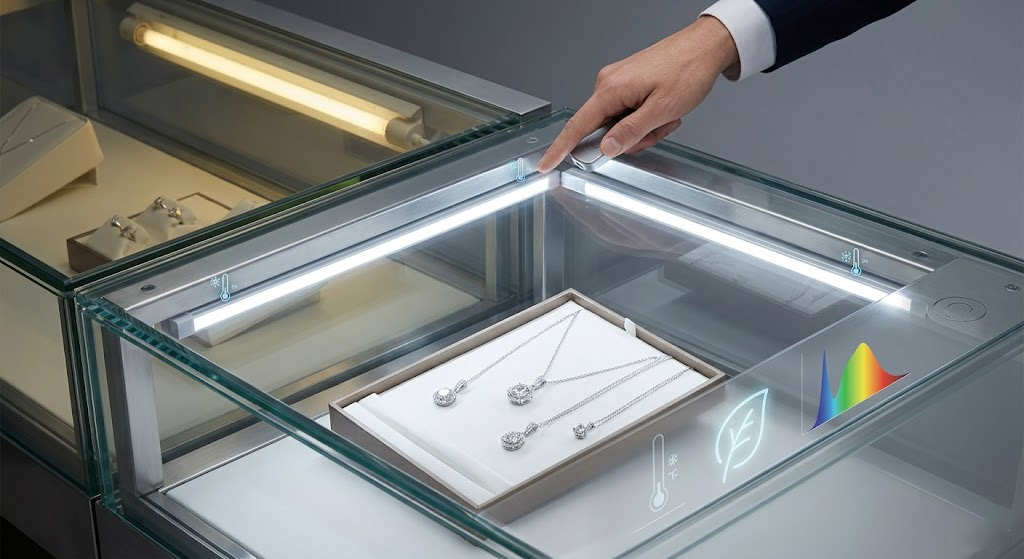
The best lighting for jewelry stores combines a high Color Rendering Index (CRI) with balanced color temperatures to ensure gemstones and precious metals sparkle with lifelike brilliance. You likely face the frustrating challenge of your expensive inventory looking dull or “washed out” under standard retail lights, failing to capture the wandering eye of premium shoppers. This lack of visual impact agitates the sales process, as customers cannot appreciate the true fire of a diamond or the rich hue of 24k gold through poorly lit glass. By mastering professional jewelry store lighting tricks , you can transform your showroom into a high-conversion environment that breathes life into every facet.
Why is layered lighting vital for jewelry store lighting tricks?
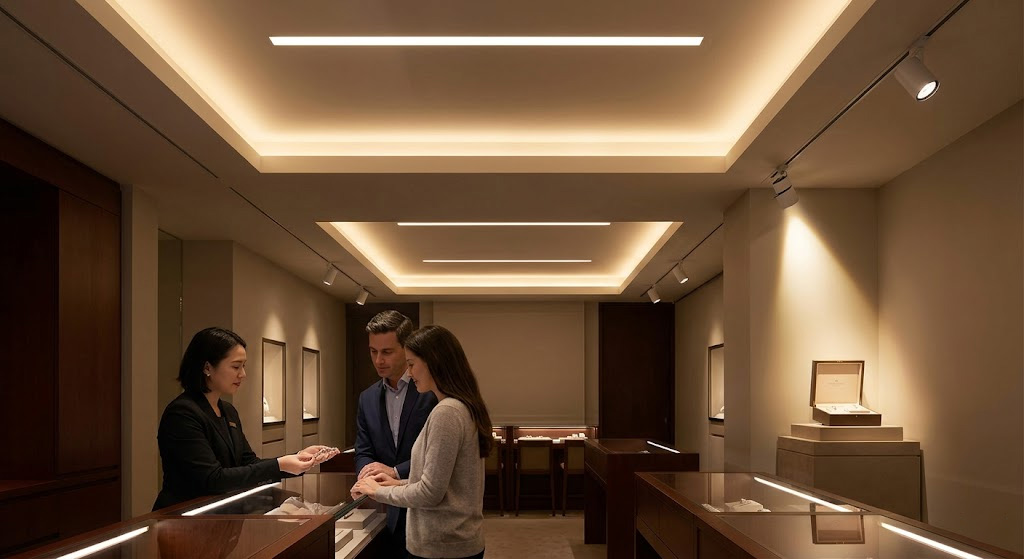
Layered lighting is the foundation of effective jewelry store lighting tricks because it eliminates flat, uninspiring shadows while creating a sense of depth and luxury throughout the showroom. Without a combination of ambient, task, and accent layers, your store risks looking like a sterile laboratory rather than a high-end boutique. When a client views a Custom Jewelry Box under layered lights, the transition from the general atmosphere to the focused sparkle of the piece creates a powerful emotional “reveal.”
Does ambient light set the mood?
Ambient lighting acts as the “canvas” for your store, providing a comfortable level of brightness that allows customers to navigate safely. It should be warm and inviting to put shoppers at ease immediately upon entry.
Think about it:
- Use recessed ceiling fixtures for a clean look.
- Aim for uniform distribution to avoid dark corners.
- Keep ambient levels lower than display levels for contrast.
How does accent lighting create focus?
Accent lighting is the most dramatic of the jewelry store lighting tricks , used specifically to draw the eye toward high-margin hero pieces or new collections. This targeted illumination makes specific items pop against the background.
But that is not all:
- Use adjustable track heads for flexibility.
- Focus beams directly on the jewelry, not the floor.
- Create a 5:1 brightness ratio between accents and ambient light.
| Lighting Layer | Primary Purpose | Impact on Customer | |
|---|---|---|---|
| Ambient | Overall Visibility | Comfort and Orientation | |
| Task | Transaction Clarity | Confidence in Purchase | |
| Accent | Visual Interest | Product Desire |
Using multiple layers ensures that no part of the store feels neglected while the jewelry remains the undisputed star of the show.
Key Takeaway: Layering creates a professional hierarchy of light that guides the customer’s journey from the front door to the final sale.
How do LED systems simplify jewelry store lighting tricks?
LED technology has revolutionized jewelry store lighting tricks by offering unparalleled control over heat, color spectrum, and energy costs. Unlike old halogen bulbs that flicker or shift color over time, LEDs provide a consistent, crisp output that keeps your diamonds dancing. This consistency is vital when presenting a Necklace Box , as the light remains uniform from the moment the box is opened until the customer tries the piece on.
Is energy efficiency a major factor?
LEDs consume up to 80% less energy than traditional metal halide or halogen bulbs, significantly lowering your monthly utility overhead. This allows you to keep your displays brilliantly lit for longer hours without financial strain.
The kicker is:
- LEDs have a lifespan of 50,000+ hours.
- Reduced maintenance means fewer ladder trips in the showroom.
- Lower energy usage supports a modern, sustainable brand image.
Can LEDs protect your inventory?
Because LEDs emit almost no UV radiation and very little forward-facing heat, they are the safest choice for protecting sensitive gemstones and organic materials like pearls. High heat from old-school bulbs can cause stones to crack or discolor over time.
But wait, there’s more:
- LEDs stay cool to the touch, protecting display adhesives.
- Lack of UV prevents fabric fading inside display cases.
- They are safer for long-term storage of high-value items.
| Feature | LED Technology | Halogen/HID | |
|---|---|---|---|
| Heat Output | Very Low | High | |
| UV Emission | Minimal | Significant | |
| Lifespan | 5-10 Years | 6-12 Months |
LEDs offer a “set it and forget it” solution that maintains the visual integrity of your store with minimal intervention.
Key Takeaway: Transitioning to LED systems is the most cost-effective way to improve both the safety and the visual appeal of your jewelry.
Which color temperature aids jewelry store lighting tricks?
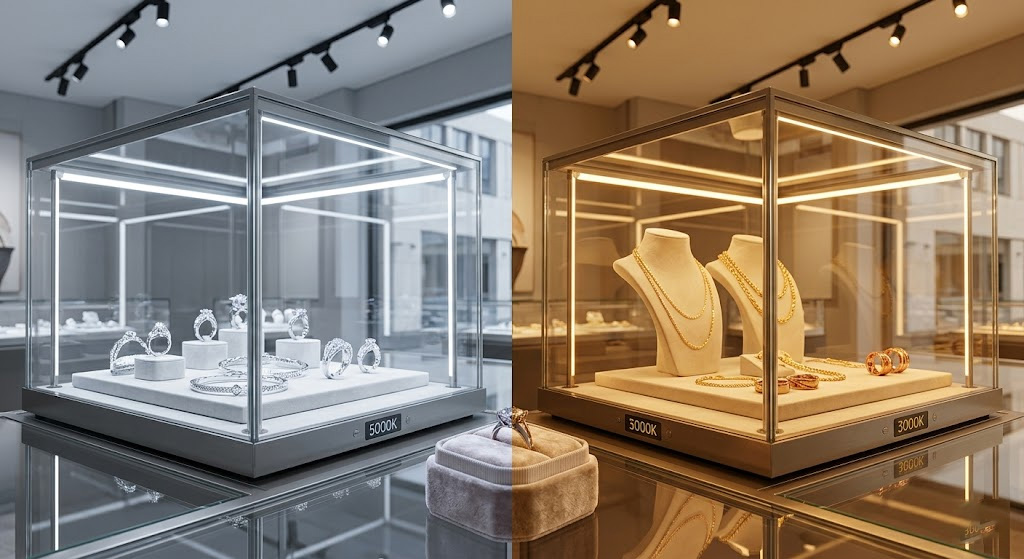
Selecting the correct Kelvin (K) rating is one of the most essential jewelry store lighting tricks because it determines how the metal and stone colors are perceived. Lighting that is too warm can make silver look yellowish, while lighting that is too cool can make gold look pale and unappealing. Finding the right balance ensures that a Ring Box presented on the counter looks exactly as the designer intended.
Why use cool light for diamonds?
Diamonds and white metals like platinum or silver thrive under “cool” light, typically ranging from 5000K to 6500K. This temperature mimics natural daylight, which brings out the blue-white flashes and “fire” hidden within a high-quality diamond.
Here is the kicker:
- 5500K is considered the “sweet spot” for diamond showrooms.
- It enhances the crispness of white gold and sterling silver.
- Cool light makes the store feel modern and high-end.
When is warm light necessary?
Yellow gold and copper-based metals require warmer tones, usually between 3000K and 3500K, to appear rich and saturated. Using cool light on gold can make it look “washed out,” which decreases its perceived value in the eyes of the customer.
Think about it:
- Warm light creates a luxurious, “old-world” boutique feel.
- It complements the skin tones of customers during try-ons.
- Use it in private viewing rooms for a cozy atmosphere.
| Metal/Stone Type | Recommended Kelvin | Visual Effect | |
|---|---|---|---|
| Diamonds/Silver | 5000K – 6000K | Crisp, White, Sparkling | |
| Gold/Rose Gold | 3000K – 3500K | Rich, Deep, Warm | |
| General Ambient | 3500K – 4000K | Neutral and Inviting |
The most successful stores use mixed color temperatures to categorize their displays by metal type.
Key Takeaway: Matching color temperature to your specific inventory is vital for showcasing the true beauty and value of different precious metals.
Does high CRI improve jewelry store lighting tricks?
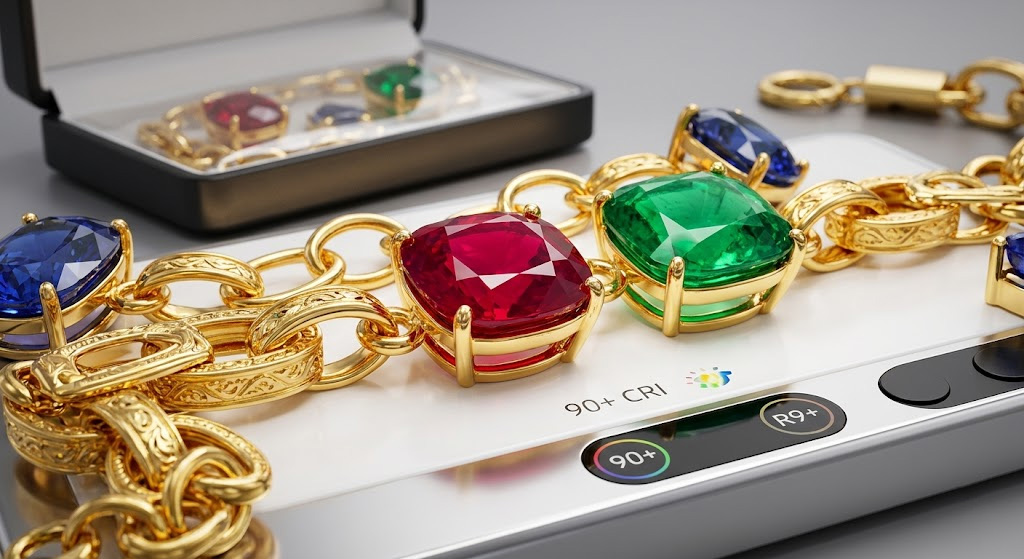
A high Color Rendering Index (CRI) is critical for jewelry store lighting tricks because it dictates how accurately colors are represented under artificial light. For a jeweler, anything less than a CRI of 90 is unacceptable, as it will dull the vibrant reds of rubies and the deep greens of emeralds. High-CRI lighting ensures that when a guest looks at a PE Film Jewelry Box , the colors of the stones remain vivid and true to life.
What happens with low CRI?
Inexpensive or low-quality lights often have a CRI below 80, which causes “color shifts” where vibrant gems look muddy or grey. This can lead to customer dissatisfaction if the piece looks different once they step outside into the sunlight.
Here is the kicker:
- Low CRI flattens the appearance of textured metals.
- It disguises the subtle “pigeon blood” red of premium rubies.
- Customers may feel deceived if the color changes at home.
Why is R9 value important?
Standard CRI only measures eight pastel colors, but jewelry requires a high “R9” value, which specifically measures saturated reds. This is crucial for evaluating the quality of gold and specific gemstones that rely on red undertones for their brilliance.
But that is not all:
- High R9 values make gold look more “pure” and expensive.
- It improves the appearance of the customer’s skin during a sale.
- It highlights the intricate details of custom engravings.
| CRI Rating | Performance Level | Suitability for Jewelry | |
|---|---|---|---|
| 90 – 100 | Excellent | Professional Standard | |
| 80 – 89 | Good | General Retail Only | |
| Below 80 | Poor | Avoid for Jewelry |
Investing in high-CRI fixtures is the only way to guarantee that your inventory looks its absolute best 100% of the time.
Key Takeaway: High-CRI lighting is a non-negotiable requirement for any jewelry store that values color accuracy and premium presentation.
Which light tones enhance jewelry store lighting tricks?
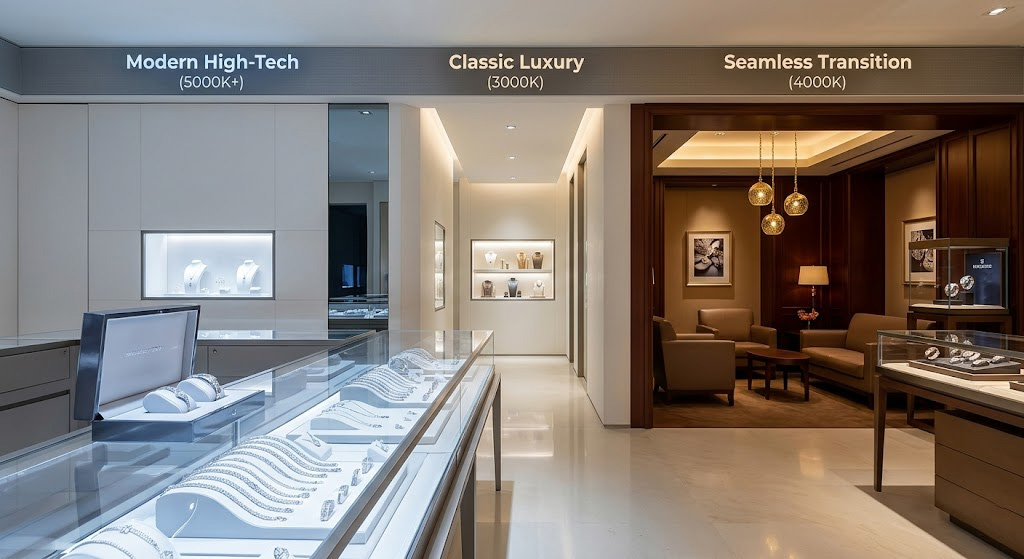
Choosing between specific warm and cool light tones is one of the more nuanced jewelry store lighting tricks that can significantly influence the “vibe” of your brand. Light tones aren’t just about the jewelry; they are about the psychology of the space and how a customer feels when they are making a high-ticket purchase. Presenting a Bracelet Box in a space with correctly balanced tones can make the difference between a browse and a buy.
Can neutral tones bridge the gap?
Neutral tones (around 4000K) are excellent for transition areas or multi-purpose displays that house both gold and silver. This tone provides a clean, professional look without leaning too heavily toward “yellow” or “blue” extremes.
Think about it:
- Neutral light feels the most “natural” to the human eye.
- It works well for watch displays and mixed-metal jewelry.
- It provides a seamless transition between different store zones.
How do warm tones impact luxury feel?
Deeper warm tones around 2700K to 3000K suggest a “classic luxury” or “vintage” aesthetic that appeals to high-net-worth individuals. These tones are often used in high-end consultation lounges to create a sense of exclusivity and calm.
But that is not all:
- Warm tones reduce “eye fatigue” during long consultations.
- They make wood-finished displays look more expensive.
- They create a welcoming, high-end hospitality atmosphere.
| Atmosphere Type | Suggested Tone | Best For | |
|---|---|---|---|
| Modern/High-Tech | Cool Tones (5000K+) | Diamonds & Fashion Brands | |
| Classic/Luxurious | Warm Tones (3000K) | Fine Gold & Antiques | |
| Clean/Minimalist | Neutral Tones (4000K) | Watches & Mixed Inventory |
Tonal consistency across your store reinforces your brand identity and sets the stage for a premium shopping experience.
Key Takeaway: Light tones should be chosen to reflect your brand’s personality while maximizing the visual appeal of your specific product lines.
Can directional light boost jewelry store lighting tricks?
Directional light is the “secret sauce” of jewelry store lighting tricks because it is responsible for creating the sparkle and scintillation that makes gems come alive. Unlike ambient light, which is diffused and soft, directional light consists of narrow, focused beams that hit the facets of a stone at precise angles. This effect is especially noticeable when showing items in a custom-fit Ring Box , where every movement of the box creates a new explosion of light.
Why is beam angle crucial?
Using spot lights with a narrow beam angle (15 to 25 degrees) allows you to “punch” through the glass of a display case and hit the jewelry with high-intensity light. This creates high-contrast reflections that draw the eye from across the room.
The kicker is:
- Narrow beams minimize unwanted glare on the showcase glass.
- They create “play of light” within the depths of the stone.
- Directional light adds drama and three-dimensionality to displays.
How to avoid distracting shadows?
While directional light is great for sparkle, it can also create harsh shadows if not positioned correctly. The goal is to use multiple directional sources from different angles to “fill” the piece while maintaining the highlights.
But wait, there’s more:
- Mount lights at a 30-to-35 degree angle from the vertical.
- Use multiple small spotlights rather than one large one.
- Ensure the light source is hidden from the customer’s direct line of sight.
| Light Type | Beam Quality | Best Application | |
|---|---|---|---|
| Spotlight | Narrow/Directional | Diamonds & Gemstones | |
| Flood Light | Wide/Diffused | General Ambient Lighting | |
| Track Light | Adjustable/Focused | Seasonal Window Displays |
Directional lighting turns a static display into a dynamic show, capturing the customer’s attention with every movement.
Key Takeaway: Precision-focused directional light is essential for creating the “fire” in diamonds that drives emotional purchasing decisions.
Where should lights go for jewelry store lighting tricks?
Strategic placement is the most overlooked element of jewelry store lighting tricks , as even the best lights will fail if they are poorly positioned. The goal is to illuminate the jewelry from the customer’s perspective while keeping the light source itself invisible. Properly placed lighting inside a showcase will highlight a Necklace Box perfectly, ensuring the pendant is the bright focal point while the background remains soft.
Should lights be inside or outside the case?
Modern jewelry store lighting tricks prioritize internal LED strips placed at the front-top edge of the showcase. This “front-lighting” ensures that light hits the facets of the jewelry and reflects back toward the customer’s eyes, rather than away from them.
Think about it:
- Avoid “backlighting” jewelry, as it creates a silhouette effect.
- Place overhead track lights slightly behind the customer’s standing position.
- Ensure internal lights are shielded so they don’t blind the shopper.
How to light the sales counter?
The sales counter is where the deal is closed, and the lighting here must be flawless. You need a mix of high-intensity spotlights for the jewelry and soft, flattering fill light for the customer’s hands and face.
But that is not all:
- Use pendants for a decorative touch that adds to the store’s “look.”
- Ensure the counter lighting matches the showcase lighting Kelvin.
- Brightly lit counters create a sense of transparency and trust.
| Location | Recommended Placement | Key Benefit | |
|---|---|---|---|
| Window Display | High-Angle Spots | Stop foot traffic | |
| Main Showcases | Internal Front-Top Strips | Maximum sparkle index | |
| Sales Counter | Overhead Pendants + Spots | Focus during try-ons |
Correct placement ensures that the light works for you, guiding the customer’s eyes to exactly where you want them to look.
Key Takeaway: Lighting should always be positioned to reflect off the jewelry and toward the customer, maximizing visual impact and scintillation.
Why is heat control key for jewelry store lighting tricks?
Heat management is a critical safety component of jewelry store lighting tricks, particularly for protecting organic and sensitive gemstones. High-wattage halogens can act like small heaters, potentially causing emeralds to “leak” their oil or pearls to become brittle and yellow. When you present a piece in a Bracelet Box , you want the customer to feel the cool, solid weight of the metal, not a stone that has been orbed by heat.
Does heat damage display materials?
Constant heat exposure doesn’t just hurt the stones; it also degrades the glues, fabrics, and plastics used in jewelry boxes and display stands. Over time, heat-damaged elements can fall apart or emit odors that ruin the luxury experience.
The kicker is:
- LED lights run up to 90% cooler than traditional options.
- Lower heat means less stress on your store’s HVAC system.
- It prevents the “warping” of delicate display inserts.
Can heat affect gemstone stability?
Gems like opals contain water; heat can cause them to dehydrate and crack—a process known as “crazing.” Maintaining a stable, cool environment is a vital part of preserving your inventory’s resale value and beauty.
But wait, there’s more:
- Use LED strips with aluminum heat sinks for better dissipation.
- Ensure showcases have adequate ventilation if using older tech.
- “Cool” lighting is a form of insurance for your most fragile pieces.
| Risk Factor | Halogen Impact | LED Impact | |
|---|---|---|---|
| Gemstone Dehydration | High Risk | Negligible | |
| Display Degradation | Frequent | Rare | |
| HVAC Load | Increases Costs | Minimal Impact |
Effective heat control through LED adoption is both a preservation strategy and a cost-saving measure for modern jewelers.
Key Takeaway: Minimizing heat is essential for maintaining the physical integrity and market value of your precious gemstone inventory.
How do jewelry store lighting tricks drive more sales?
Advanced jewelry store lighting tricks act as a psychological catalyst, increasing the perceived value of your items and clarifying the decision-making process for the customer. When jewelry is brilliantly lit, it appears more expensive and desirable, which justifies premium pricing. Consider how a Custom Jewelry Box under a perfect spotlight creates an “Instagrammable” moment that the customer wants to own.
How does lighting guide the shopper?
Human beings are naturally attracted to the brightest point in a room. By using higher light levels on your most important displays, you can literally “steer” foot traffic through your store and ensure customers see your best pieces first.
Here is the kicker:
- Brightly lit displays increase “dwell time” by 20% or more.
- Lighting creates a “wow” factor that leads to impulse buys.
- Clear lighting reduces customer hesitation during the inspection.
Does lighting build consumer trust?
High-quality, high-CRI lighting provides transparency. When a customer can see every detail of a stone clearly, they feel more confident in the quality of the product and the honesty of the jeweler.
Think about it:
- Shadows can hide “inclusions,” leading to a lack of trust.
- Bright stores feel safer and more reputable to new visitors.
- Good lighting makes the sales pitch easier by doing the work for you.
| Sales Benefit | Mechanism | Result | |
|---|---|---|---|
| Higher Perceived Value | Intense Scintillation | Easier price justification | |
| Improved Store Flow | Contrast Ratios | Increased product exposure | |
| Brand Authority | Consistent Aesthetics | Repeat customer loyalty |
Mastering the atmosphere through light is one of the most effective ways to differentiate your store from online competition.
Key Takeaway: Lighting is a strategic sales tool that increases customer confidence, dwell time, and the overall perceived value of your brand.
Are smart systems the best jewelry store lighting tricks?
Smart systems represent the cutting edge of jewelry store lighting tricks because they allow for dynamic adjustments that static lights simply cannot match. With a smart setup, you can change the “vibe” of your store at the touch of a button, transitioning from bright “diamond-focused” day lighting to a soft, romantic “gold-toned” evening atmosphere. This flexibility is perfect for showcasing items like a PE Film Jewelry Box in different environments during special events.
Is automation a game changer?
Smart systems can be programmed to follow the natural rhythm of the day, brightening the store during cloudy afternoons or dimming the lights near closing time to signal a transition. This level of control ensures your store always looks its best without manual intervention.
The kicker is:
- Dimming settings can save an additional 30% on energy costs.
- Motion sensors can boost brightness when a customer approaches a case.
- Scheduling prevents lights from being left on overnight unnecessarily.
Can you customize for specific events?
If you’re hosting a diamond gala, you can shift your entire store to 6000K for maximum sparkle. If you’re having a “Ladies’ Night” with rose gold and champagne, you can warm everything up to a soft 2700K instantly.
But that is not all:
- Individual cases can be tuned to the specific jewelry inside them.
- Remote access allows you to monitor lighting health from home.
- Smart systems are future-proofed for evolving energy regulations.
| Smart Feature | Functionality | Business Value | |
|---|---|---|---|
| Dynamic Tuning | Change Kelvin/Tones | Adapt to different inventory | |
| Motion Sensing | Targeted Brightness | Dramatic “Reveal” effect | |
| Energy Monitoring | Real-time tracking | Optimized operational costs |
Smart lighting transforms your store from a static room into a living environment that reacts to your business needs in real-time.
Key Takeaway: Smart lighting systems provide the ultimate flexibility to adapt your showroom’s mood and focus to fit any sales scenario or inventory change.
In summary, the most successful jewelry stores move beyond simple illumination to embrace complex lighting strategies that emphasize sparkle, color accuracy, and atmosphere. By layering your lights, choosing high-CRI LEDs, and matching color temperatures to your inventory, you create a space where jewelry can truly shine. These invisible details are what separate a high-end boutique from a standard retail shop. If you are ready to elevate your brand’s presentation and protect your valuable inventory, contact us today to find the perfect packaging solutions that complement your new lighting strategy. The future of luxury retail is bright, and it starts with the way you light the path for your customers.
Frequently Asked Questions
Can I use standard office LED bulbs in my jewelry cases?No, you should avoid them. Standard bulbs lack the high CRI (90+) and specific beam angles needed to make jewelry sparkle; they will likely make your inventory look flat and dull.
What is the best light for a diamond-only display?Cool white light is the best. Aim for a color temperature between 5500K and 6500K to emphasize the “fire” and brilliance of the diamond facets.
Is it okay to mix warm and cool lights in one store?Yes, and it is actually recommended. Use cool lights for silver and diamonds, and warm lights for gold and consultation areas to cater to different product needs.
How often should I update my jewelry store lights?Every 5 to 7 years is ideal. Even if LEDs haven’t burned out, lighting technology improves rapidly, and older LEDs may experience “color shift” over time.
Where is the worst place to put a light fixture?Directly behind the customer’s head is the worst. This creates a shadow over the jewelry when they lean in to look, ruining the visual experience.