Semiprecious stones are gemstones that offer exceptional beauty and symbolic depth while sitting outside the traditional “precious” quartet of diamonds, rubies, sapphires, and emeralds. You are currently standing in front of a display case filled with vibrant colors and intricate textures, ready to curate a collection that speaks to your customers’ souls. However, your buyers often feel overwhelmed by technical jargon and struggle to find a meaningful emotional connection to the pieces you offer. By mastering the narrative behind every semiprecious stone , you can transform a simple inventory item into a personalized story that drives higher sales and builds lasting brand loyalty.
What is the true meaning of a semiprecious stone?
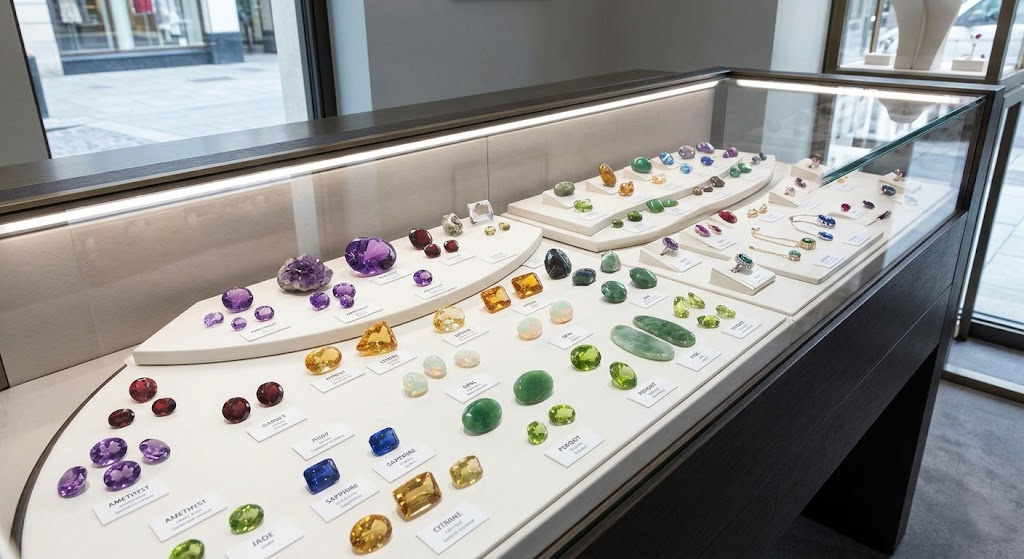
A semiprecious stone is a gemstone defined by its exclusion from the “big four” precious gems, though this distinction is largely a historical artifact of the jewelry trade. While the term was originally created to denote rarity, modern gemology recognizes that many stones in this category are actually rarer than their precious counterparts.
How do we define these gems today?
Today, the industry views these stones as a diverse family of minerals and organic materials prized for their aesthetic and metaphysical qualities. The definition has shifted from price-point indicators to a celebration of variety and accessibility.
Think about it:
- Accessibility: They allow for creative designs at various price points.
- Variety: They encompass everything from quartz to organic amber.
- Durability: Most are suitable for daily wear when handled correctly.
Here is the deal: modern consumers value the story and the color of the stone more than a traditional “precious” label.
Precious vs semiprecious: what differs?
The primary difference lies in historical marketing and traditional classification rather than actual mineralogical superiority. In the past, only diamonds, rubies, emeralds, and sapphires were deemed “precious” to maintain high market exclusivity.
The best part?
- Market Value: Some semiprecious gems, like tanzanite, can cost more per carat than sapphires.
- Chemical Composition: Both categories include minerals with similar hardness and brilliance.
- Cultural Impact: Meaning and symbolism are equally rich across both groups.
Key Takeaway: The “semiprecious” label is a traditional category that no longer dictates the true value or rarity of a gemstone in the modern B2B market.
| Feature | Precious Stones | Semiprecious Stones | |
|---|---|---|---|
| Traditional Examples | Diamond, Ruby, Sapphire, Emerald | Amethyst, Garnet, Citrine, Opal | |
| Rarity Factor | High (Traditional) | Variable (Some are extremely rare) | |
| B2B Appeal | Investment-grade focus | Design versatility and color range |
This table illustrates that while precious stones represent a narrow group, semiprecious stones offer a broader spectrum of design opportunities for retailers.
Why does a semiprecious stone hold symbolic power?
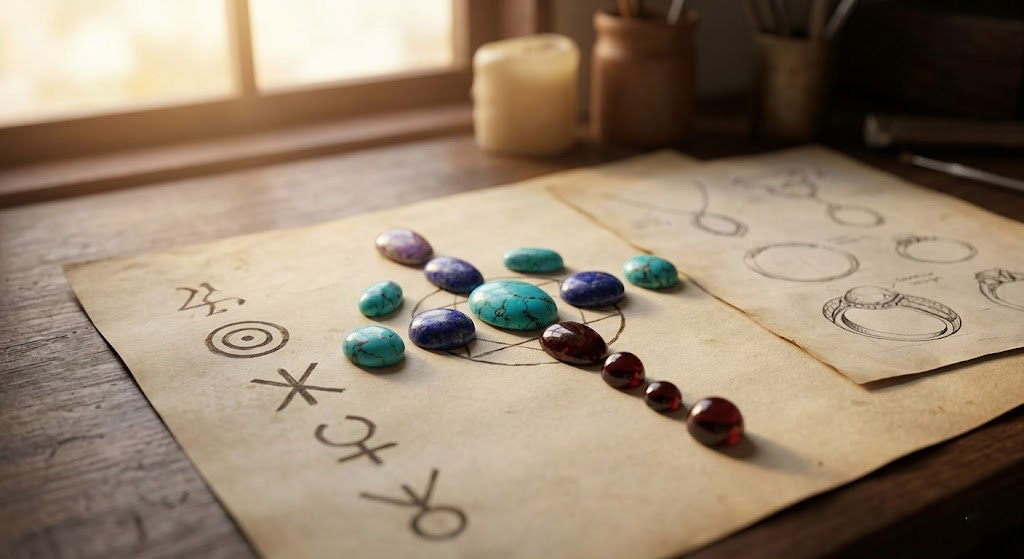
A semiprecious stone carries symbolic power because it bridges the gap between geological rarity and the human desire for emotional expression. For centuries, these gems have been used as talismans and tools for storytelling in jewelry design.
What energies do ancient cultures see?
Ancient civilizations viewed these stones as physical manifestations of celestial or terrestrial energies. They believed that wearing certain gems could influence a person’s health, luck, or social standing.
Believe it or not:
- Protection: Stones like turquoise were worn by warriors for safety.
- Wisdom: Lapis lazuli was often associated with royalty and divine insight.
- Health: Many cultures used stones to align what they perceived as bodily energies.
How do gemstone meanings drive sales?
In the B2B world, the meaning behind a stone is a powerful marketing tool that creates an immediate emotional hook for the end consumer. Sales associates who can explain the symbolism of a piece often see higher conversion rates.
The reality is:
- Personalization: Customers buy stones that represent their birth month or personality.
- Gifting: Symbolic meanings provide a “reason why” for a purchase.
- Brand Story: Meaningful gems help you differentiate your collection from generic competitors.
Key Takeaway: Symbolic power is a value-add that turns a physical product into an emotional experience, making it essential for effective jewelry storytelling.
| Element | Symbolic Association | Business Impact | |
|---|---|---|---|
| Historical Use | Protection and Status | Adds heritage value to the brand | |
| Modern Meaning | Emotional Connection | Increases customer engagement | |
| Marketing | Story-driven sales | Higher perceived value per piece |
This analysis shows that symbolism is not just folklore but a strategic asset in the jewelry retail and wholesale sectors.
Which red semiprecious stone fits your personality?
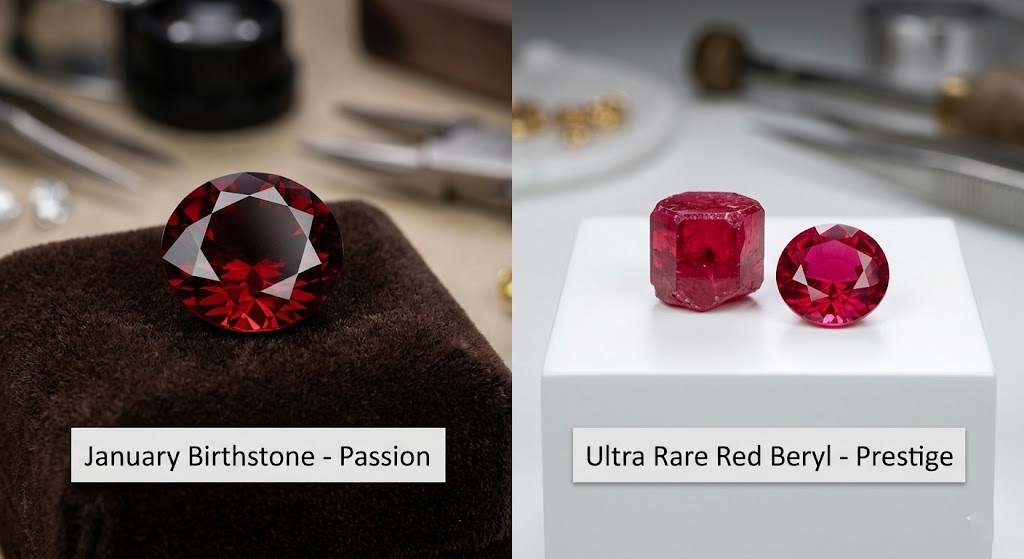
Choosing a red semiprecious stone often depends on whether you seek the fiery, energetic passion of a garnet or the sophisticated, elite rarity of red beryl. These stones are frequently used to symbolize strength, love, and vitality in high-end jewelry collections.
Does garnet represent love and passion?
Garnet is the quintessential stone of passion, widely recognized for its deep crimson hues and long history as a gift of devotion. It is a durable choice for rings and daily-wear jewelry that requires a bold statement.
Make no mistake:
- Durability: It stands up well to daily friction.
- Affordability: It provides a rich red look without the ruby price tag.
- Symbolism: It is the traditional birthstone for January, representing commitment.
Why is red beryl considered so rare?
Red beryl is one of the rarest gemstones on earth, found in very few locations globally, making it a “unicorn” for collectors. Its scarcity often drives its price well above that of many traditional precious stones.
Think about it:
- Exclusivity: Only a small amount is mined annually.
- Color Intensity: It offers a vivid raspberry red that is hard to replicate.
- Investment: Collectors specifically seek it out for its increasing market value.
Key Takeaway: Red stones offer a range from the accessible and symbolic garnet to the ultra-rare and investment-focused red beryl.
| Stone | Primary Meaning | Best Use Case | |
|---|---|---|---|
| Garnet | Passion & Commitment | Birthstone jewelry and bridal gifts | |
| Red Beryl | Rarity & Prestige | High-end collector pieces | |
| Spinel | Vitality & Joy | Durable alternative to rubies |
Red gemstones provide a versatile palette for brands looking to evoke strong emotions and cater to diverse budget requirements.
Is a blue semiprecious stone right for your style?
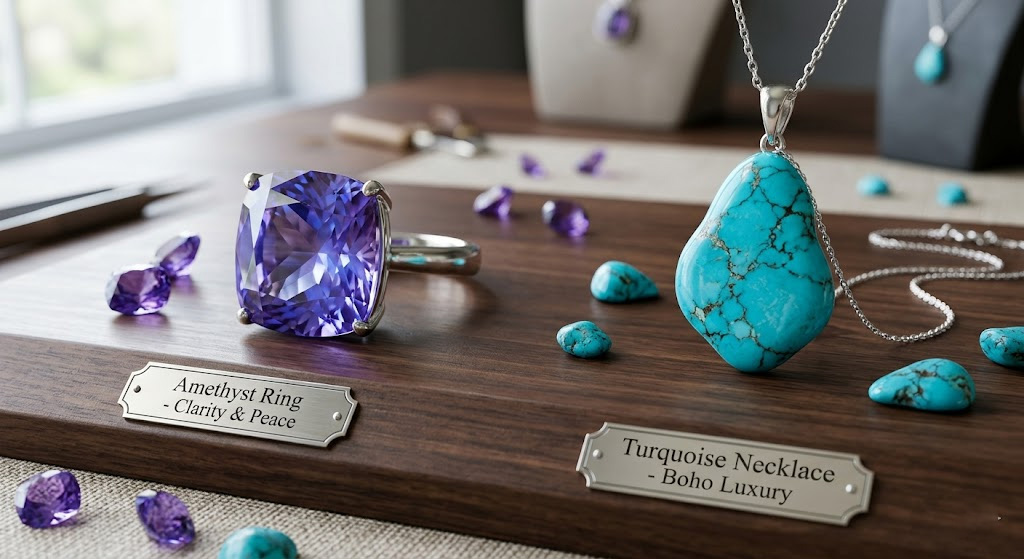
A blue semiprecious stone is the ideal choice for those who want to project elegance, calm, and a sense of timeless sophistication through their jewelry. Blue tones remain some of the most popular colors in the global jewelry market due to their universal appeal.
Why is amethyst always in high demand?
Amethyst remains a staple in the industry because of its stunning purple-to-blue-violet hues and its historical association with peace and clarity. Its wide availability in various sizes makes it perfect for both delicate pieces and large statement jewelry.
The best part?
- Versatility: It complements both silver and gold settings perfectly.
- Consistency: Large batches can be sourced with matching color profiles.
- Clarity: It often features high transparency, which maximizes brilliance.
What makes turquoise a timeless choice?
Turquoise has maintained its popularity for thousands of years due to its unique opaque sky-blue color and its cultural significance in many indigenous traditions. It offers a “bohemian luxury” feel that is currently trending in fashion-forward jewelry circles.
Here is the deal:
- Texture: The matrix (veining) in turquoise makes every single stone unique.
- Color Range: Shades range from pale robin’s egg blue to deep greenish-blue.
- Market Appeal: It is highly sought after in the Southwestern and artisanal jewelry markets.
Key Takeaway: Blue stones like amethyst and turquoise offer a balance of high-volume retail consistency and unique, one-of-a-kind artisanal appeal.
| Stone | Key Hue | Target Market | |
|---|---|---|---|
| Amethyst | Purple/Violet | Classic and elegant consumers | |
| Turquoise | Sky Blue | Artisanal and boho-chic brands | |
| Tanzanite | Deep Indigo | Luxury and evening wear buyers |
The enduring popularity of blue stones ensures they remain a low-risk, high-reward investment for any jewelry retailer’s inventory.
What makes a green semiprecious stone so unique?
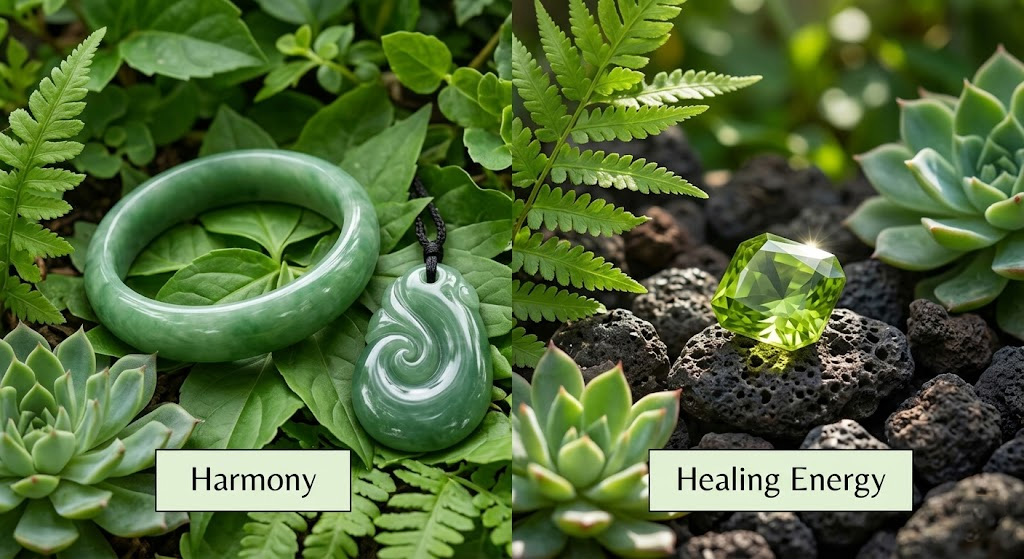
The uniqueness of a green semiprecious stone lies in its natural association with growth, renewal, and a fresh aesthetic that appeals to modern, nature-loving buyers. Green gems provide a vibrant pop of color that stands out in both minimalist and ornate designs.
Is jade the ultimate symbol of harmony?
Jade has been revered for millennia, particularly in Asian cultures, as a stone representing purity, protection, and balance. Its smooth, waxy luster and legendary toughness make it a favorite for heirloom-quality carvings and jewelry.
The reality is:
- Toughness: It is incredibly resistant to breaking or chipping.
- Variety: Available in “Jadeite” (rare/expensive) and “Nephrite” (more common).
- Cultural Power: It carries immense prestige in global markets.
How does peridot bring healing energy?
Peridot is unique because it is one of the few gemstones that occurs in only one color: olive green. It is often called the “evening emerald” and is associated with light, happiness, and the alleviation of stress.
You see:
- Unique Glow: It maintains its brilliance even under artificial light.
- Natural Origin: It is formed deep within the earth’s mantle and brought to the surface by volcanoes.
- Summer Appeal: As the August birthstone, it is a peak seller during the summer months.
Key Takeaway: Green gemstones like jade and peridot offer a mix of cultural depth and a bright, nature-inspired palette that attracts diverse customer segments.
| Stone | Green Variant | Symbolic Value | |
|---|---|---|---|
| Jade | Imperial to Forest | Harmony, Fortune, and Balance | |
| Peridot | Lime to Olive | Healing, Joy, and Protection | |
| Malachite | Banded Deep Green | Transformation and Growth |
Green stones allow brands to tap into the “wellness” and “natural” trends that are currently dominating the B2B jewelry landscape.
Why choose a warm-toned yellow semiprecious stone?
Selecting a yellow semiprecious stone allows you to offer customers a sense of joy, optimism, and solar-inspired brilliance at an accessible price point. These stones are perfect for adding a “sun-kissed” glow to your product line.
Can citrine attract wealth and joy?
Citrine is famously known as the “merchant’s stone” because it is traditionally believed to attract abundance and financial success. Its warm, golden-yellow hue makes it a popular alternative to more expensive yellow diamonds or sapphires.
Believe it or not:
- Positive Energy: It is said to never hold negative energy, making it a “feel-good” purchase.
- Affordability: It is widely available and very budget-friendly for large-scale production.
- Warmth: It pairs beautifully with yellow gold for a monochromatic luxury look.
What gives amber its natural golden glow?
Amber is an organic gemstone formed from fossilized tree resin, giving it a unique warmth and lightweight feel that minerals cannot replicate. It often contains fascinating prehistoric inclusions that tell a story millions of years old.
The best part?
- Lightweight: It is comfortable for large statement earrings or necklaces.
- History: Every piece is a window into the ancient past.
- Texture: It feels warm to the touch, unlike the cold feel of mineral stones.
Key Takeaway: Yellow stones provide a bright, cheerful aesthetic that can range from the mineral clarity of citrine to the organic, ancient storytelling of amber.
| Stone | Material Type | Consumer Appeal | |
|---|---|---|---|
| Citrine | Quartz Mineral | Prosperity and sunny aesthetics | |
| Amber | Organic Resin | Natural history and comfort | |
| Sunstone | Feldspar Mineral | Shimmer and positive energy |
Incorporating yellow gems into your catalog is a strategic way to offer “bright” designs that appeal to consumers seeking positivity.
Can an earth-toned semiprecious stone ground you?
An earth-toned semiprecious stone serves as a powerful grounding element in jewelry design, connecting the wearer to organic textures and steadying energies. These stones are increasingly popular in gender-neutral and masculine jewelry collections.
Why is agate favored for natural styles?
Agate is highly prized for its incredible variety of patterns, bands, and colors, ensuring that no two stones are ever exactly alike. It is a durable microcrystalline variety of quartz that works well for large, polished surfaces.
Think about it:
- Individualism: Customers love knowing their specific stone is unique.
- Earthiness: Its muted tones fit the “minimalist” and “desert” style trends.
- Durability: It is hard enough to be used in rings and bracelets without fear of easy damage.
Does tiger’s eye offer true protection?
Tiger’s eye is famous for its chatoyancy—a silky luster that creates a moving band of light reminiscent of a cat’s eye. It is traditionally used as a stone of protection, courage, and clear thinking.
Make no mistake:
- Visual Interest: The “moving” light effect fascinates customers.
- Masculine Appeal: It is one of the top-selling stones for men’s jewelry.
- Grounding: Its golden-brown tones represent stability and focus.
Key Takeaway: Earth-toned stones like agate and tiger’s eye are essential for brands looking to capture the “naturalist” market and expand into men’s accessories.
| Stone | Visual Effect | Design Application | |
|---|---|---|---|
| Agate | Banded/Varied | Statement pendants and organic rings | |
| Tiger’s Eye | Chatoyant (Silky) | Men’s bracelets and cufflinks | |
| Smoky Quartz | Translucent Brown | Sophisticated evening jewelry |
Earth tones provide a sophisticated, grounded aesthetic that balances the more vibrant colors found in other gemstone categories.
What is the rarest multi-colored semiprecious stone?
The rarest multi-colored semiprecious stone is often considered to be high-grade opal or specific varieties of tourmaline that showcase a stunning play of color. These gems are “showstoppers” that can serve as the centerpiece of a luxury jewelry line.
Why does opal display a play of color?
Opal is unique because its internal structure consists of tiny silica spheres that diffract light, creating a kaleidoscope of shifting colors known as “play of color.” This optical phenomenon makes opal one of the most magical and sought-after gems in the world.
Here is the deal:
- Uniqueness: No two opals will ever show the exact same flash of color.
- Prestige: Black opals from Australia are among the most valuable semiprecious stones.
- Emotional Hook: The “living” color of the stone creates an immediate fascination.
Is tourmaline the most versatile gem?
Tourmaline is often called the “rainbow gemstone” because it occurs in more colors and color combinations than any other mineral group. It can even display two or three distinct colors in a single crystal, such as the famous “watermelon” tourmaline.
The reality is:
- Color Choice: You can find tourmaline in every shade of the rainbow.
- Bi-Color Magic: Watermelon tourmaline (pink and green) is a high-demand designer favorite.
- Durability: It is a 7 to 7.5 on the Mohs scale, making it excellent for all jewelry types.
Key Takeaway: Multi-colored stones like opal and tourmaline offer unparalleled visual complexity, allowing brands to market “one-of-a-kind” luxury experiences.
| Stone | Color Mechanism | Selling Point | |
|---|---|---|---|
| Opal | Light Diffraction | Shifting, magical “play of color” | |
| Tourmaline | Chemical Zoning | Multi-colored “watermelon” effects | |
| Moonstone | Adularescence | Ethereal, floating blue/white glow |
These “phenomenal” stones attract high-end buyers who value complexity and rare optical effects over simple monochromatic color.
How should you clean and care for a semiprecious stone?
You should clean a semiprecious stone using lukewarm water and mild soap while ensuring they are stored away from direct sunlight and abrasive surfaces. Because these stones vary in hardness and porosity, a “one size fits all” cleaning approach can be dangerous for your inventory.
What are the safest cleaning methods?
The safest way to maintain the luster of most gems is to avoid ultrasonic cleaners and harsh chemicals, which can damage the internal structure of more delicate stones. A soft-bristled toothbrush can be used to gently remove dust from settings.
The best part?
- Simplicity: You don’t need expensive equipment for professional maintenance.
- Safety: Mild soap won’t strip natural oils from stones like pearls or opals.
- Longevity: Regular gentle cleaning prevents “clouding” over time.
How to store gems to prevent scratches?
Proper storage is the most overlooked aspect of gemstone care, as harder stones like diamonds can easily scratch softer semiprecious stones if they are tossed together in a tray. Individual compartments are the gold standard for preservation.
Think about it:
- Soft Lining: Use velvet or silk-lined boxes to cushion the stones.
- Separation: Keep each piece in its own pouch or slot.
- Environment: Avoid excessive heat or humidity, which can cause stones like turquoise to crack.
Key Takeaway: Professional care and organized storage are the best ways to protect the financial value and physical beauty of your gemstone inventory.
| Care Aspect | Recommended Action | Avoid | |
|---|---|---|---|
| Cleaning | Warm water + Mild soap | Ultrasonic cleaners & Bleach | |
| Storage | Individual lined pouches | Tangled piles of jewelry | |
| Environment | Cool, dry, dark | Prolonged direct sunlight |
Educating your customers on these care steps adds a layer of professional service that builds trust and reduces return rates.
Why does a semiprecious stone need premium packaging?
A semiprecious stone requires premium packaging to protect its delicate surface and to signal to the customer that the item inside is a valuable investment. In the B2B world, the container is often the first point of contact between your brand and the buyer’s perception of quality.
How does a jewelry box add brand value?
A high-quality jewelry box serves as a physical extension of your brand’s identity, reinforcing the “luxury” status of the semiprecious gems within. It transforms a simple purchase into a gift-ready masterpiece.
The reality is:
- Perceived Value: A 50stoneinapremiumboxlookslikea200 investment.
- Protection: It ensures the stone arrives at its destination without scratches or chips.
- Marketing: A branded box stays in the customer’s home, acting as a permanent advertisement.
What makes the unboxing memorable?
The unboxing experience is a critical psychological moment that determines whether a customer will return to your brand or recommend it to others. Premium textures and logical layouts create a sense of anticipation and delight.
Here is the deal:
- Texture: Using velvet or high-end art paper creates a sensory “wow” factor.
- Structure: Magnetic closures or drawer styles add a modern, premium feel.
- Detailing: Custom foam inserts ensure the jewelry is presented at the perfect angle.
Key Takeaway: Premium packaging is not an expense; it is a strategic investment in brand equity and customer satisfaction.
| Packaging Element | Benefit to Retailer | Impact on Customer | |
|---|---|---|---|
| Custom Inserts | Reduced damage during shipping | Professional presentation | |
| Branding | Long-term brand recognition | Sense of exclusivity | |
| Eco-Materials | Meets modern market demand | Guilt-free luxury experience |
High-end packaging bridges the gap between a raw mineral product and a luxury fashion accessory, completing the brand story.
Frequently Asked Questions
Can I use any semiprecious stone for an engagement ring?No, you should choose stones with a Mohs hardness of at least 7 to ensure they can withstand the rigors of daily wear.
What’s the best way to determine the value of a semiprecious stone?Rarity, color saturation, and clarity are the primary factors that professional appraisers use to judge market value.
How do I know if a semiprecious stone is ethically sourced?Look for suppliers who provide transparent documentation regarding their supply chain and mining practices.
Can I clean all semiprecious stones with an ultrasonic cleaner?Absolutely not, as many stones like opals, pearls, and emeralds have internal inclusions or porosity that can shatter under ultrasonic vibrations.
What’s the best packaging for shipping semiprecious jewelry?Rigid, custom-fitted boxes with high-density foam inserts provide the best protection against the shocks of global logistics.
Elevate Your Collection with Strategic Insights
Mastering the world of semiprecious stones allows you to offer your B2B clients a mix of emotional depth, vibrant aesthetics, and accessible luxury. By understanding the specific meanings of red, blue, green, and multi-colored gems, you can curate collections that resonate with modern consumer trends and personality types. Protecting these investments through proper care and presenting them in premium, custom-designed packaging ensures that your brand stands out in a crowded marketplace. If you are ready to transform your gemstone presentation and elevate your brand’s unboxing experience, contact us today to explore our custom wholesale solutions. We are dedicated to helping jewelers worldwide create memorable brand stories through precision manufacturing and innovative design. The future of jewelry retail lies in the intersection of natural beauty and professional presentation.