
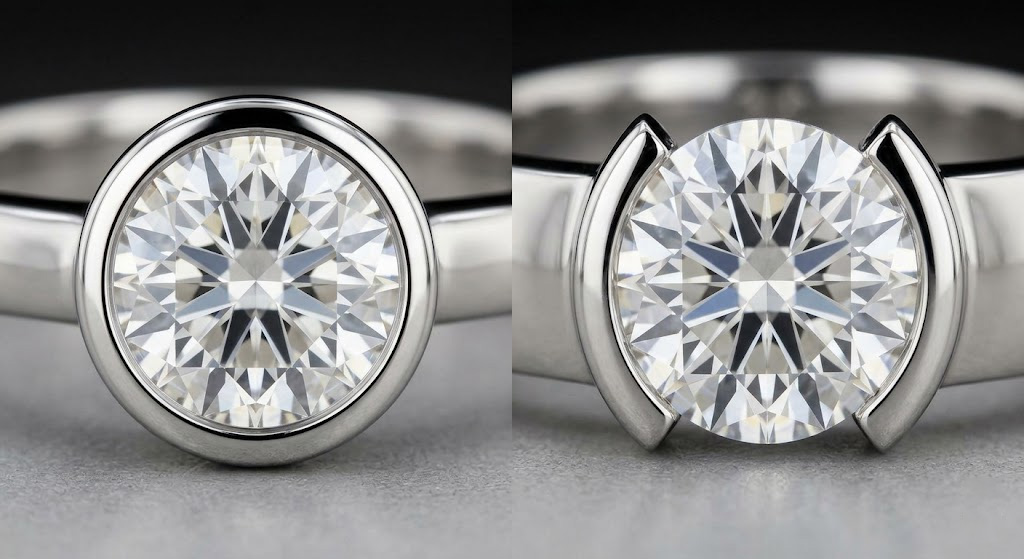
Setting a diamond involves precisely carving a seat into a metal mounting and securing the gemstone with prongs, beads, or a bezel. You face a significant risk during this process, as a single error can lead to a chipped stone or a ruined mounting. This potential for financial loss and damaged reputation is enough to keep any jeweler awake at night. Fortunately, mastering the technical nuances of setting a diamond in a ring allows you to create secure, brilliant pieces that stand the test of time.
What is the process of setting a diamond in a ring?
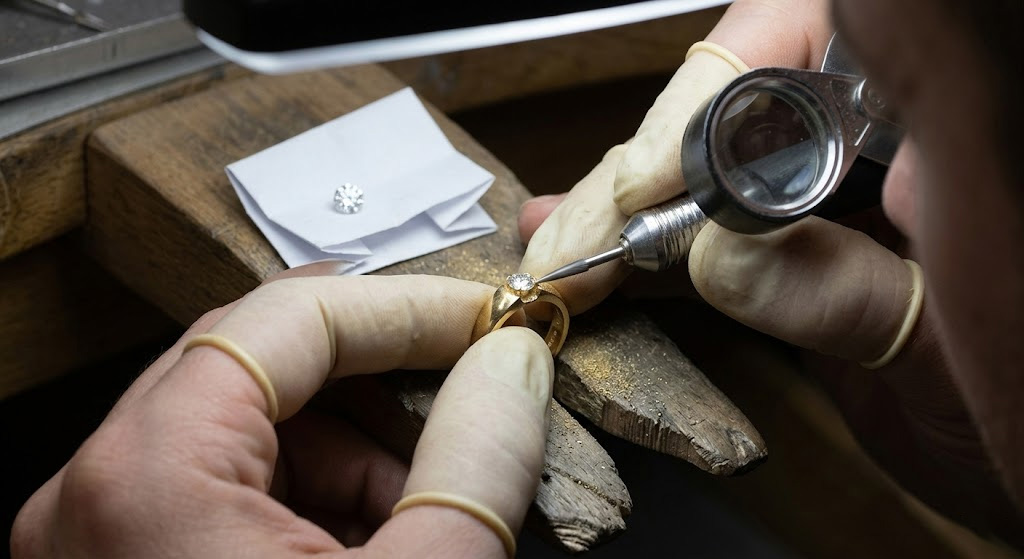
The process begins with preparing the metal mounting to receive the specific dimensions of the gemstone. You must realize that setting a diamond in a ring is a sequence of high-precision steps designed to protect the stone’s girdle while allowing maximum light entry.
Defining the Art of Stone Setting
You might be wondering why this skill is considered the pinnacle of jewelry manufacturing. It requires you to manipulate hard metals like platinum around delicate carbon crystals without causing fracture.
- Precision measurement of the stone.
- Preparation of the metal seat.
- Final tightening and polishing.
Impact on Brilliance and Durability
The way you handle the metal directly influences how the diamond interacts with light. Here is the kicker: a poorly seated stone will not only look dull but will also be prone to falling out during daily wear.
- Proper angle of the prongs.
- Depth of the pavilion in the mounting.
- Alignment of the facets with the prongs.
Understanding Setting Terminology
Before you begin, you need to speak the language of professional setters to ensure quality control. This foundation helps you identify specific parts of the mounting that require adjustment.
- Girdle: The edge of the stone that meets the metal.
- Seat: The notch where the stone rests.
- Shank: The band of the ring.
Key Takeaway: Understanding the core terminology and the relationship between metal and light is essential for any professional jeweler looking to improve their craftsmanship and output quality.
| Term | Role in Setting | |
|---|---|---|
| Girdle | Acts as the contact point for prongs | |
| Seat | Provides the structural base for the stone | |
| Burrs | Tools used to carve the metal seat |
Analysis: Mastery of technical vocabulary is the first step toward achieving repeatable precision in high-volume jewelry production.
Which metal is best for setting a diamond in a ring?
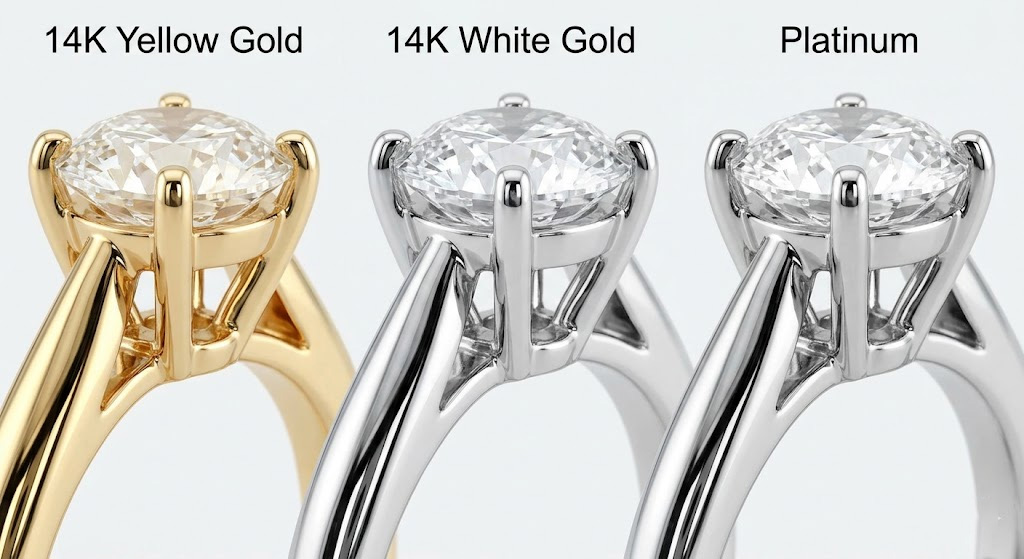
Platinum and 14K gold are generally considered the best options due to their balance of strength and malleability. Selecting the right alloy is vital when setting a diamond in a ring because it determines how much “spring-back” you will encounter when tightening the prongs.
14K Gold vs. 18K Gold
Think about it: while 18K gold is more prestigious, 14K gold is often preferred for settings because it is harder and holds stones more securely over time. You need to weigh the luxury of higher gold content against the practical security of the diamond.
- 14K gold has higher durability.
- 18K gold is softer and easier to move.
- White gold often requires rhodium plating.
Platinum and Palladium for Durability
Platinum is the gold standard for security because it does not wear away over time like gold does. When you use platinum, you are providing your customer with a setting that “hugs” the diamond with incredible tenacity.
- Extremely high melting point.
- Does not thin out over decades of wear.
- Naturally white, so no plating is needed.
Alloy Selection for Color Consistency
The color of the metal can either enhance or detract from the diamond’s natural color grade. You should choose your alloy carefully to ensure the metal prongs don’t cast an unwanted yellow or gray tint into the stone.
- Rose gold adds warmth to lower color grades.
- Platinum maximizes the “whiteness” of D-F stones.
- Consistency across the shank and head is key.
Key Takeaway: Metal choice is a strategic decision that affects both the ease of the setting process and the lifetime security of the finished jewelry piece.
| Metal Type | Key Benefit | Setting Difficulty | |
|---|---|---|---|
| 14K White Gold | High hardness | Moderate | |
| Platinum | Lifetime durability | High | |
| 18K Yellow Gold | Ease of manipulation | Low |
Analysis: Professional setters often prefer 14K white gold or platinum to ensure the prongs remain tight even under heavy daily use.
How do prong styles affect setting a diamond in a ring?
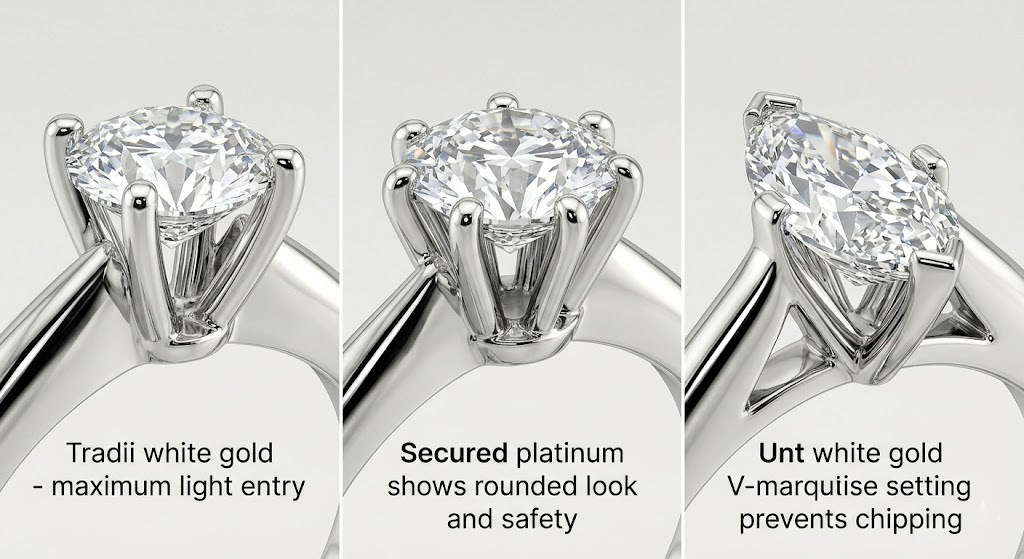
Prong styles dictate the visibility of the diamond and the level of protection provided to its most vulnerable areas. When setting a diamond in a ring, the number and shape of the prongs you choose will define the overall silhouette of the piece.
Four-Prong vs. Six-Prong Layouts
You might be wondering: is more always better? While a six-prong setting offers more security, a four-prong layout allows more light to enter the stone, potentially increasing its brilliance.
- Four prongs make stones look larger.
- Six prongs offer a more rounded appearance.
- Safety increases with higher prong counts.
V-Prongs for Fancy Shaped Diamonds
If you are working with marquise or pear-shaped stones, V-prongs are non-negotiable for protecting the fragile points. These prongs wrap around the sharp corners to prevent chipping from accidental impacts.
- Essential for “pointed” diamond cuts.
- Provides a sleek, modern aesthetic.
- Requires careful carving to fit the point.
Shared Prong and Cluster Techniques
In multi-stone designs, you can use shared prongs to minimize the amount of metal visible between stones. This technique requires extreme precision to ensure that one prong is securing two different girdles simultaneously.
- Maximizes the “carpet of light” effect.
- Reduces the total metal weight of the ring.
- Requires perfectly matched stone sizes.
Key Takeaway: Choosing the correct prong style is a balance between aesthetic preference and the physical protection requirements of the specific diamond shape.
| Prong Style | Best For | Security Level | |
|---|---|---|---|
| Four-Prong | Round/Square Brillants | Moderate | |
| V-Prong | Marquise/Pear shapes | High (for tips) | |
| Shared Prong | Eternity bands | Moderate |
Analysis: The geometry of the prongs must be matched to the diamond’s cut to prevent structural failure or stone loss.
Why choose bezel or tension setting a diamond in a ring?
Bezel and tension settings are chosen for their modern aesthetic and the superior protection they offer the stone’s perimeter. When you are setting a diamond in a ring using these methods, you are focusing on a sleek, “snag-free” design that appeals to active clients.
Full vs. Half Bezel Configurations
A full bezel surrounds the entire diamond with a thin rim of metal, making it the most secure setting available. You should consider this for clients who work with their hands or have a highly active lifestyle.
- Completely protects the stone’s girdle.
- Prevents dirt from entering the pavilion.
- Can make a stone appear slightly smaller.
The Engineering of Tension Mounts
Tension settings use the pressure of the ring’s band itself to hold the stone in place, creating a “floating” look. This is a high-stakes technique because the metal must be spring-hardened to maintain constant pressure.
- Offers a unique 360-degree view of the stone.
- Requires specialized equipment to measure PSI.
- Not all diamond types are suitable for this.
Flush and Gypsy Setting Variations
In a flush setting, you sink the diamond into a hole in the metal until the table is level with the surface. This is perfect for “scatter” designs or men’s wedding bands where a low profile is desired.
- Zero risk of catching on clothing.
- Excellent for small accent diamonds.
- Requires a very thick metal band.
Key Takeaway: Bezel and tension settings provide a contemporary look while offering the highest levels of physical protection for the gemstone’s girdle.
| Setting Type | Key Feature | Protection Level | |
|---|---|---|---|
| Full Bezel | 360-degree metal rim | Maximum | |
| Tension | Floating appearance | High (if engineered correctly) | |
| Flush | Level with metal surface | High |
Analysis: These settings require advanced bench skills but offer a competitive edge for jewelers targeting the modern, minimalist market.
What tools are needed for setting a diamond in a ring?
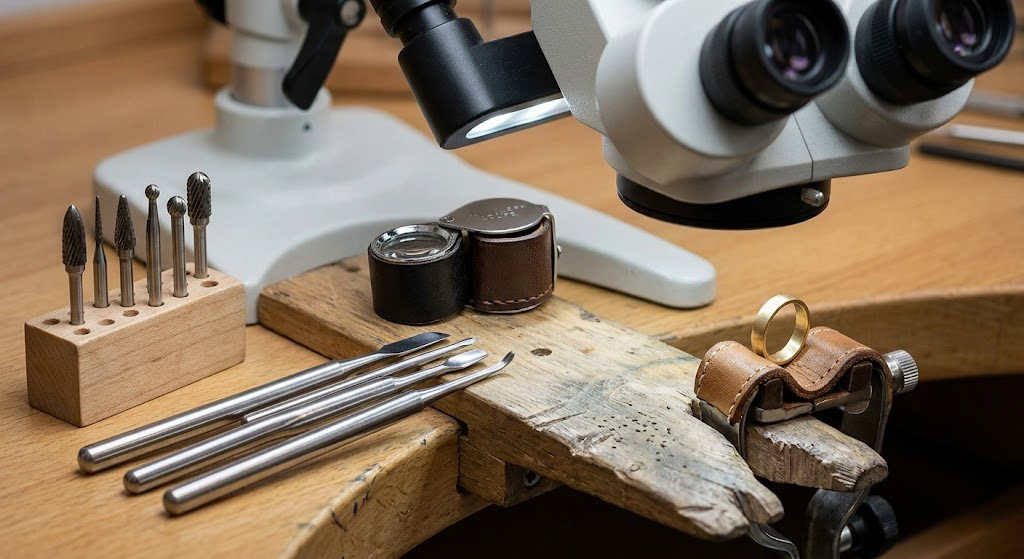
Success in setting depends heavily on having sharp, high-quality tools that allow for microscopic precision. You will find that setting a diamond in a ring becomes significantly easier when you invest in professional-grade burrs and pushers.
Burrs and Setting Pushers
The burr is used to carve the seat into the metal, while the pusher allows you to move the metal over the stone. You must keep these tools polished to avoid transferring scratches to the ring.
- Hart burrs for cutting prong notches.
- Ball burrs for rounding out seats.
- Polished steel pushers for moving prongs.
Bench Pin and Work Support
Your bench pin is your most important ally, providing the stability needed to apply force without the ring slipping. Here is the kicker: a custom-notched bench pin can halve the time it takes to set a stone.
- Wooden pin for customized filing.
- Ring clamps for holding the shank.
- Pitch bowls for fragile or odd-shaped items.
Magnification and Precision Loupes
You cannot set what you cannot see, so high-quality magnification is a requirement for professional results. Using a microscope allows you to see tiny gaps between the metal and the stone that a standard loupe might miss.
- 10x loupes for quick inspections.
- Binocular microscopes for actual work.
- LED ring lights for shadowless viewing.
Key Takeaway: A jeweler is only as good as their tools; investing in precision equipment reduces errors and increases the speed of production.
| Tool Category | Essential Item | Primary Function | |
|---|---|---|---|
| Cutting | Hart Burrs | Carving the stone’s seat | |
| Holding | Ring Clamp | Securing the ring during work | |
| Vision | Microscope | Inspecting prong contact |
Analysis: Proper tool maintenance, such as frequent sharpening and polishing, is what separates amateur work from retail-ready jewelry.
What safety steps follow setting a diamond in a ring?
Once the stone is in place, you must perform a series of quality checks to ensure it will never come loose. After setting a diamond in a ring , a professional jeweler always verifies that the metal is under the correct amount of tension.
The Professional Tap Test Method
You should use a small metal probe to gently tap the side of the diamond while holding the ring near your ear. If you hear a “click” or a rattle, the stone is loose and requires further tightening.
- Listen for high-pitched vibration.
- Check all four quadrants of the stone.
- Repeat after the final polishing step.
Checking Seat Levelness and Girdle Height
Look at the ring from the side to ensure the diamond is sitting perfectly level within the prongs. An tilted stone not only looks unprofessional but also puts uneven pressure on the diamond’s facets.
- Use a loupe to check the “air gap.”
- Ensure the table is parallel to the shank.
- Verify prongs are equal in height.
Identifying Potential Gemstone Stress
Over-tightening can cause “stress fractures” or even shatter a diamond if you aren’t careful. You should look for “fringe patterns” or tiny cracks near the points where the prongs meet the stone.
- Use polarized light if available.
- Watch for metal “flashing” or thin edges.
- Ensure prongs aren’t biting into the facets.
Key Takeaway: Post-setting inspections are the most critical part of the quality control process to prevent future customer returns and repairs.
| Safety Check | Tool Used | Goal | |
|---|---|---|---|
| Tap Test | Steel Probe | Detect stone movement | |
| Visual Leveling | 10x Loupe | Ensure symmetry | |
| Stress Check | Microscope | Prevent stone fracture |
Analysis: Rigorous testing protocols build trust with your clients and ensure the longevity of your handmade jewelry.
What mistakes happen when setting a diamond in a ring?
Common mistakes often stem from rushing the preparation phase or using excessive force during the final tightening. When you are setting a diamond in a ring, being aware of these pitfalls allows you to avoid the most expensive errors in the shop.
Risks of Over-tightening Prongs
But that’s not all; over-tightening doesn’t just risk the stone—it also weakens the metal. You might find that prongs snapped during the polishing phase were actually over-stressed during the setting phase.
- Weakens the molecular structure of the gold.
- Creates “shear points” in the metal.
- Can lead to “prong lift” later on.
Improper Seat Depth and Alignment
If you cut the seat too deep, the diamond will look “buried” in the metal and lose its fire. Conversely, a seat that is too shallow leaves the stone vulnerable to falling out from a minor bump.
- Ideally, 1/3 of the stone should be below the prong top.
- The seat must match the diamond’s pavilion angle.
- Avoid “girdle overlap” where prongs are too thick.
Metal Marring and Tool Marks
The best part? Professional work should show no signs of the tools used to create it. Deep gouges from a slipped file or burr can be difficult to remove without thinning the metal dangerously.
- Use tape to protect the shank.
- Always polish your setting tools.
- Work slowly with consistent pressure.
Key Takeaway: Most setting errors are preventable through proper training and a “measure twice, cut once” approach to carving the mounting.
| Error Type | Consequence | Prevention | |
|---|---|---|---|
| Over-tightening | Chipped diamond | Use a torque-sensitive hand | |
| Shallow Seat | Lost stone | Correct burr size selection | |
| Slip Marks | Extra labor/Thin metal | Secure the ring in a clamp |
Analysis: Error reduction in the workshop directly correlates to higher profit margins and better brand reputation.
How to present the result of setting a diamond in a ring?
The presentation of the finished piece is just as important as the craftsmanship itself. Once you have finished setting a diamond in a ring , placing it in high-quality packaging transforms it from a technical achievement into an emotional experience.
Selecting Premium Velvet Ring Boxes
You should consider the tactile experience of the customer when they first hold the box. A heavy, plush velvet box signals that the item inside is valuable and has been handled with care.
- Enhances the perceived value of the ring.
- Provides a safe storage environment.
- Available in various colors to match branding.
Custom Branded Packaging Solutions
Think about it: your packaging is a silent salesman that continues to promote your brand long after the sale is over. Custom logos and unique textures help your business stand out in a crowded luxury market.
- Reinforces brand identity.
- Creates a “unboxing” experience for social media.
- Protects the jewelry during shipping.
3D Floating Display Cases
For high-end retail displays, a 3D floating case allows the customer to see every angle of your setting work without touching the piece. This is particularly effective for showcasing the precision of your prong or bezel work.
- Protects against dust and fingerprints.
- Offers a modern, high-tech look.
- Easy to arrange in retail windows.
Key Takeaway: Premium packaging is the final “step” in the setting process that ensures the customer appreciates the quality of your work.
| Packaging Type | Best Use | Impact | |
|---|---|---|---|
| Velvet Box | Engagement rings | Classic luxury feel | |
| Custom Paper Box | E-commerce shipping | Brand recognition | |
| 3D PE Film Case | Retail displays | Modern “floating” effect |
Analysis: Integrating high-end packaging into your workflow is a proven strategy for increasing customer satisfaction and referral rates.
How to maintain security after setting a diamond in a ring?
Education is the final component of a successful jewelry sale, as you must teach the client how to care for their new purchase. After setting a diamond in a ring, providing a maintenance guide ensures the stone stays secure for decades.
Regular Professional Prong Inspection
You should advise your clients to bring the ring back every six months for a professional inspection. Over time, metal wears down, and prongs can snag on clothing, potentially loosening the stone.
- Check for “flattened” prong tips.
- Look for hairline cracks in the metal.
- Professional cleaning removes hidden debris.
Safe Cleaning Protocols for Home Use
The best part? Keeping a diamond clean actually helps keep it secure by allowing the owner to see if any movement occurs. You should recommend gentle solutions that won’t degrade the metal or the stone’s surface.
- Warm water and mild dish soap.
- Soft-bristled toothbrushes for reaching the pavilion.
- Avoid harsh chemicals like bleach or chlorine.
Advice for Daily Wear and Storage
You need to remind your customers that even the most well-set diamond is not indestructible. Removing the ring during heavy lifting or gardening is the best way to prevent the prongs from deforming.
- Store in a soft-lined jewelry box.
- Remove during exercise or heavy cleaning.
- Keep separate from other diamond jewelry.
Key Takeaway: Proactive maintenance and customer education are the keys to ensuring the diamond remains as secure as the day it was set.
| Maintenance Task | Frequency | Purpose | |
|---|---|---|---|
| Professional Check | Every 6 months | Ensure prong integrity | |
| Home Cleaning | Weekly | Maintain brilliance | |
| Safe Storage | Daily (at night) | Prevent accidental damage |
Analysis: A well-informed customer is your best defense against “lost stone” claims and unhappy reviews.
Where to find help for setting a diamond in a ring?
Finding reliable suppliers and educational resources is the best way to scale your jewelry business. Whether you need wholesale mountings or technical advice on setting a diamond in a ring , building a strong professional network is essential.
Sourcing Wholesale Ring Mountings
You might be wondering where to find consistent, high-quality castings that are ready for setting. Partnering with a reputable manufacturer ensures that the metal you are working with is free of porosity and defects.
- Look for reputable trade-only suppliers.
- Ensure the alloy mix is consistent.
- Check for a wide variety of “head” sizes.
Professional Education and Mentorship
There is no substitute for learning from a master setter who can show you the “feel” of the metal. You should seek out workshops or trade schools that offer hands-on training in advanced setting techniques.
- GIA and other accredited gemological institutes.
- Regional jeweler associations and guilds.
- Online masterclasses for specific techniques.
Partnering with Packaging Manufacturers
To truly succeed in the B2B space, you need a packaging partner that understands the needs of the jewelry industry. A factory-direct relationship allows you to get the best pricing on the boxes that protect your hard work.
- Seek out manufacturers with low MOQs.
- Look for customization options like foil stamping.
- Verify the quality of the internal padding.
Key Takeaway: Success in the jewelry industry is a collaborative effort between the setter, the material supplier, and the packaging partner.
| Resource Type | Benefit | Priority | |
|---|---|---|---|
| Casting House | Consistent metal quality | High | |
| Trade School | Technical skill growth | Moderate | |
| Packaging Factory | Professional presentation | High |
Analysis: Building a robust supply chain allows you to focus on your craft while ensuring every other aspect of the product is world-class.
Crafting a perfect piece of jewelry is only half the journey; the right presentation transforms a diamond ring into a lifelong memory. At YX Jewelry Packaging, we believe that every masterpiece deserves a home that reflects its brilliance and value. If you are looking for high-quality, factory-direct packaging to showcase your professional work, contact us today to explore our custom solutions.
Frequently Asked Questions
Can I set a diamond in a ring myself at home?No, because professional stone setting requires specialized tools and years of training to avoid breaking the stone. Without a microscope and high-speed burrs, you risk permanent damage to your jewelry.
What’s the best metal for a beginner to practice setting?Silver is best because it is inexpensive and very soft, allowing you to get a feel for how metal moves. Once you master silver, you can transition to more expensive metals like gold or platinum.
How do I know if a diamond is set correctly?A concise judgment is that it should be level, secure, and silent during a tap test. If the stone is tilted or makes a rattling sound when touched with a probe, it is not correctly set.
Can I change the setting style of an existing ring?Yes, but it usually involves replacing the entire “head” or mounting of the ring. A jeweler can solder a new prong or bezel setting onto your existing shank to give it a completely new look.
What’s the best way to protect a diamond’s points?V-shaped prongs are the best option because they wrap around the corners of marquise, pear, or princess-cut stones. This prevents the most fragile parts of the diamond from being exposed to direct impact.