

Finding a storage solution that matches the prestige of a high-value collection is a persistent challenge for serious connoisseurs. Most modern, mass-produced containers rely on synthetic polymers and chemical adhesives that can off-gas, potentially causing long-term damage to sensitive alloys and organic gemstones. You deserve a vessel that reflects the artistry of the treasures it holds while providing a chemically stable environment. By choosing a historical storage option, you align your collection with a legacy of craftsmanship, and understanding what tools help how to clean jewelry box velvet ensures that these heritage linings remain in pristine condition for decades to come.
What makes a vintage jewelry box so special?
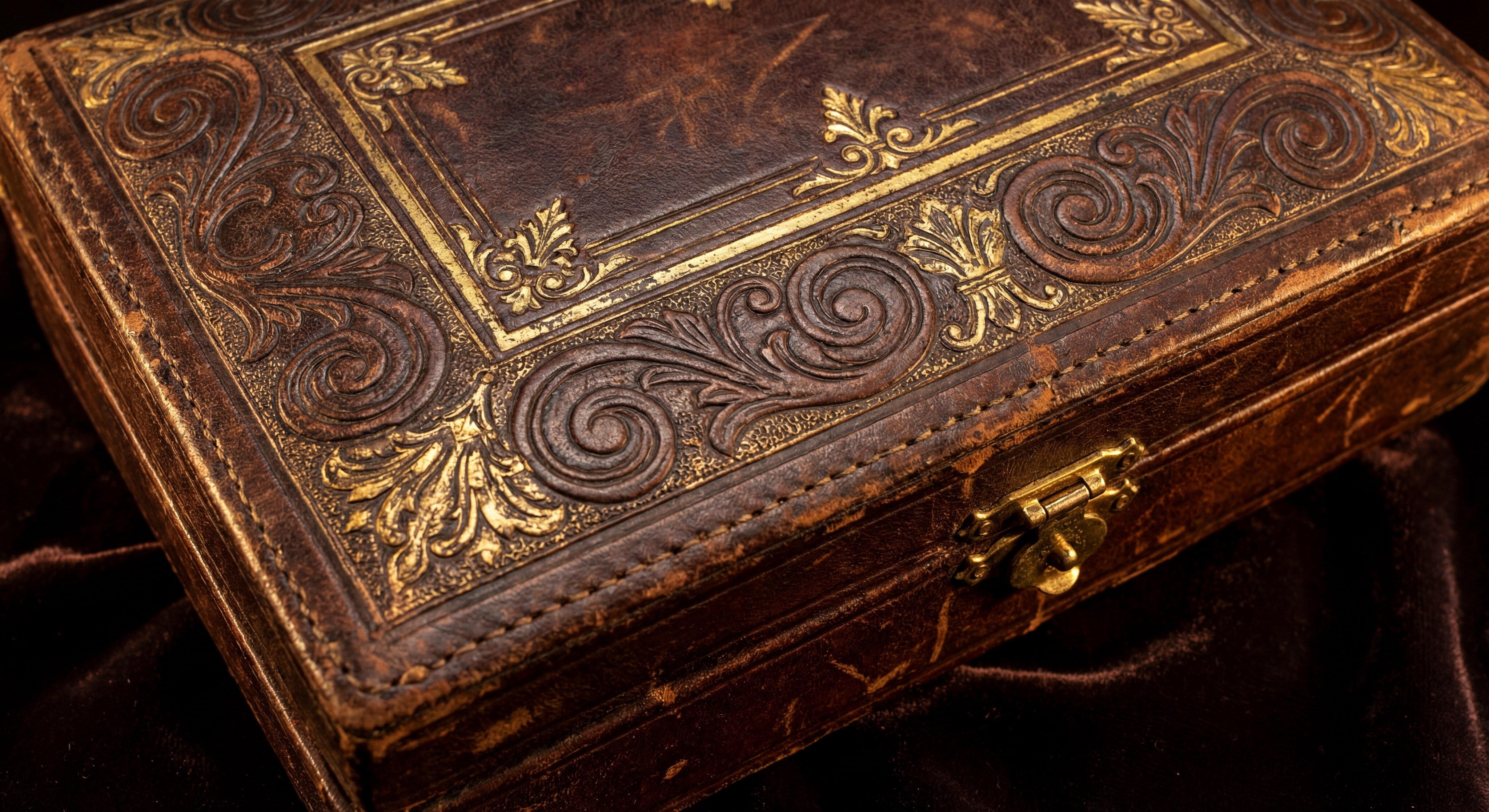
The primary appeal of a vintage jewelry box lies in its uncompromising commitment to hand-finished detail and the use of superior, natural materials that are no longer standard in modern manufacturing. These items were built during eras where longevity was the primary design metric, resulting in structural integrity that far outlasts contemporary plastic-core alternatives. You will find that the tactile weight and the precision of the joinery offer a sensory experience that elevates the simple act of selecting your daily accessories.
When you hold a piece from the 18th or 19th century, you are interacting with a product of the guild system, where master craftsmen spent years perfecting their trade. The hinges operate with a silent, heavy fluidity, and the clasps snap shut with a reassuring mechanical click that mass production simply cannot replicate. Because these boxes were often custom-commissioned, they frequently feature unique architectural flourishes like hidden compartments or specialized padding for specific jewelry types. This level of intentionality ensures that your storage is as much a conversation piece as the gems housed within it.
Key Takeaway: The “specialness” of these boxes is rooted in their non-industrial heritage, offering bespoke quality and material permanence that modern alternatives lack.
| Feature | Heritage Standard | Modern Industrial Standard | |
|---|---|---|---|
| Material Base | Solid hardwood and genuine leather | MDF, plastic, and synthetic PU | |
| Interior Lining | Natural silk or cotton velvet | Polyester felt or foam | |
| Hardware | Solid brass or forged steel | Thin alloy plating or plastic | |
| Joinery | Dovetail or mortise-and-tenon | Chemical adhesives and staples |
Why does hand-tooling beat machine stamping?
Hand-tooling involves the individual application of heated brass stamps into damp leather, a process that creates a deep, permanent impression that machines cannot mimic.
- The depth of the impression varies slightly, giving each box a unique character.
- Natural waxes are used to finish the leather, allowing it to develop a rich patina over time.
- Traditional gilding techniques use real gold leaf rather than metallic ink.
Let’s look closer at why this matters.
Does the weight of the box indicate quality?
Generally, a heavier weight indicates the use of solid hardwood frames like mahogany or oak rather than lightweight plywood or plastic.
- Heavy frames provide better impact resistance for the contents.
- Solid wood is more resistant to warping when humidity levels fluctuate.
- The density of the wood allows for more secure screw placement for hinges.
Think about this for a second.
Why is the tactile experience so important?
In a professional setting, the tactile feedback of a high-quality box reinforces the value of the assets inside and provides a sense of ritual.
- Smooth leather and soft silk create a luxury “unboxing” experience every time.
- Sturdy hardware provides confidence in the security of the items.
- The scent of aged wood and leather is naturally sophisticated.
And that’s not all.
How did the vintage jewelry box evolve?
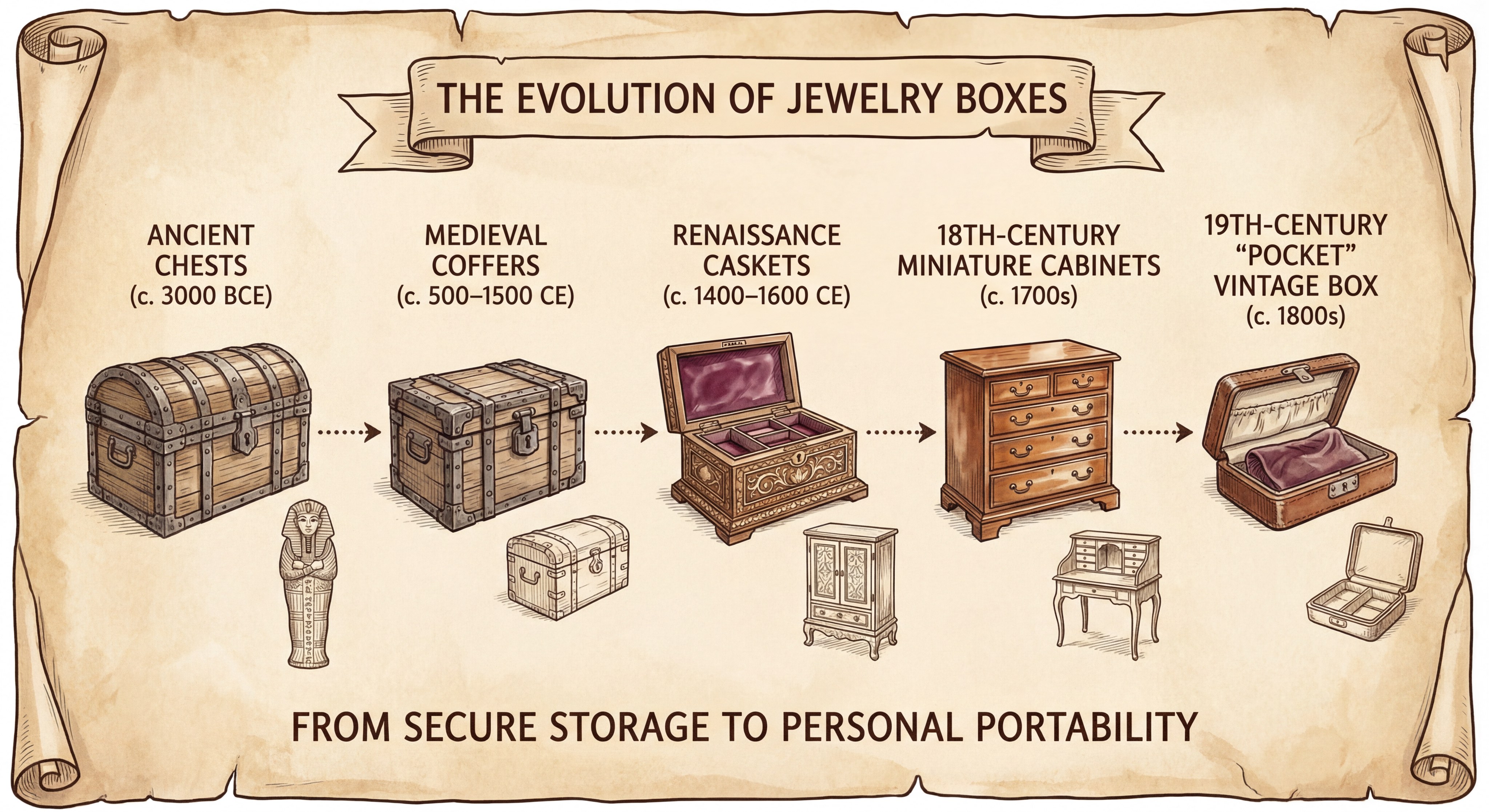
The vintage jewelry box evolved from massive, stationary furniture pieces designed for royal treasuries into the highly portable, specialized containers we recognize today. This transition was driven by changes in social mobility and the democratization of luxury, moving from the gem-encrusted Egyptian chests to the elegant, leather-bound pocket boxes of the Victorian era. You can trace the history of global trade and industrial innovation through the changing shapes and materials used to protect personal wealth.
In the early centuries, jewelry was a rarity reserved for the highest echelons of society, necessitating large chests that often served as a person’s primary bank. As the middle class expanded during the Industrial Revolution, the demand for personal storage skyrocketed, leading to the creation of standardized, yet still high-quality, velvet-lined boxes. These smaller vessels were designed to be carried in handbags or travel trunks, reflecting a new lifestyle of leisure and frequent social engagement. This shift focused the design on ergonomics and specialized fit, such as individual slots for rings and brooches.
Key Takeaway: Jewelry box design shifted from “storage as a fortress” to “storage as a portable personal luxury” as jewelry ownership became more widespread.
| Era | Dominant Style | Typical Use Case | |
|---|---|---|---|
| Ancient | Large Stone/Gold Chests | Royal treasury and burial rites | |
| Renaissance | Intricate Carved Caskets | Decorative display in noble chambers | |
| Victorian | Fitted Leather Boxes | Daily personal use and social gifting | |
| Art Deco | Geometric Lacquer Boxes | Modernist aesthetic for urban elites |
How did the Industrial Revolution change things?
It allowed for the production of high-quality metal hinges and clasps at a lower cost, making professional-grade boxes accessible to the rising merchant class.
- Steam-powered saws enabled more precise wood cutting for frames.
- Chemical dyes expanded the color palette of interior silks and velvets.
- Patent laws began protecting unique opening mechanisms.
Here is the interesting part.
Why did pocket-sized boxes become popular?
Portability became essential as travel became more common, requiring boxes that could fit securely inside larger luggage or be held during proposals.
- Small boxes were easier to hide for surprises.
- They required less material, making them more affordable as gifts.
- Specialized “fitted” interiors prevented jewelry from rattling during transit.
But wait, there’s more.
What role did royalty play in box trends?
Royal commissions often set the standard for the entire industry, as jewelers to the crown created the most elaborate and desirable designs.
- The use of specific colors, like royal purple or deep crimson, started at the top.
- Royal initials and crests influenced the trend of personal monogramming.
- Superior materials like exotic woods were first popularized by monarchs.
It gets even better.
Is a vintage jewelry box a status symbol?

A vintage jewelry box serves as a potent status symbol because the quality of the vessel has historically served as a direct proxy for the value of the treasures held within. In professional and social circles, presenting a piece of jewelry in a weathered, authentic leather box signals that you possess both heritage and a discerning eye for quality. You are not just owning an object; you are demonstrating an appreciation for a time when luxury was defined by craftsmanship rather than brand logos.
Throughout history, the exterior of a box was designed to impress even before it was opened, featuring intricate gold tooling, rare veneers, or even inlaid precious stones. For an observer, the sight of a well-maintained historical box on a dressing table or in a display case suggests a multi-generational legacy of wealth and taste. This “silent prestige” is particularly valuable in B2B antique trading, where the provenance of the box can significantly increase the perceived value of the entire set. It acts as a frame for the jewelry, enhancing its brilliance through contrast with aged materials.
Key Takeaway: A high-quality box acts as a visual guarantee of the quality of its contents, serving as a social and professional indicator of wealth and discernment.
| Indicator | High Status Detail | Low Status Detail | |
|---|---|---|---|
| Exterior | Full-grain Moroccan leather | Bonded leather or paper wrap | |
| Lining | Pure silk with retailer’s gold stamp | Synthetic felt with no markings | |
| Locking | Functional steel lock with ornate key | Simple friction clasp | |
| Edges | Gilded or hand-stitched | Glued or raw edges |
Why is the retailer’s stamp so important?
A gold-stamped logo from a prestigious historical jeweler on the interior silk acts as a certificate of authenticity for the box’s quality.
- It links the box to a specific geographic location and era.
- Famous retailers used only the highest-grade materials for their packaging.
- It provides a traceable history that collectors and appraisers value.
Do you see where this is going?
How does gold tooling affect prestige?
Intricate gold patterns require a high degree of skill to apply, making highly decorated boxes significantly more expensive and rare.
- More complex patterns indicate a longer manufacturing time.
- Real gold leaf retains its luster for centuries, unlike cheap metallic paints.
- The presence of gold tooling often mirrors the styles found in fine bookbinding.
The real secret is this.
Can a box be more valuable than the jewelry?
In rare cases, a box crafted by a master artisan or one with significant royal provenance can exceed the market value of the silver or gold it contains.
- Unique architectural designs are highly sought after by specialty collectors.
- Boxes associated with famous historical figures have immense auction value.
- Extremely well-preserved examples of rare materials like tortoiseshell are scarce.
Now, consider this.
Does a vintage jewelry box protect gems?

Yes, a vintage jewelry box often provides superior physical protection because its interior was typically custom-contoured to hold specific items securely, preventing the friction that causes scratches. Unlike “universal” modern boxes that allow items to slide around, these historical pieces use natural, non-abrasive fabrics like silk and cotton-based velvet to cradle delicate stones. You can further enhance this protection by learning safely how to clean the inside of a jewelry box to remove dust and grit that could scratch polished surfaces.
The solid wood construction of these boxes also provides a significant buffer against temperature fluctuations and physical impacts. Hardwoods are naturally insulating, which helps maintain a stable environment for organic gems like pearls or opals that are sensitive to extreme dryness or heat. Furthermore, the absence of modern acidic adhesives in older, hand-stitched constructions reduces the risk of chemical tarnishing on silver and gold. When you place a gem into a fitted vintage slot, you are utilizing a mechanical design that has successfully preserved treasures for over a hundred years.
Key Takeaway: The combination of natural, non-acidic materials and custom-fitted interiors makes historical boxes exceptionally safe for long-term gemstone storage.
| Protection Mechanism | Vintage Material | Benefit to Your Collection | |
|---|---|---|---|
| Cushioning | Natural velvet/Silk | Prevents surface micro-abrasions | |
| Inert Environment | Wood/Natural Glue | Reduces chemical tarnish risk | |
| Structural Shield | Solid Oak/Mahogany | Absorbs physical shocks from drops | |
| Organization | Individual Fitted Slots | Stops items from scratching each other |
Why is silk better than modern foam?
Modern foams can break down into a sticky residue over time, whereas natural silk remains stable and gentle on jewelry for centuries.
- Silk does not trap moisture as easily as some synthetic sponges.
- It provides a smooth surface that won’t snag delicate prongs.
- The natural fibers are free from the harsh chemicals used in foam production.
Does that make sense?
How do fitted slots prevent damage?
When a ring or brooch is held firmly in a recessed slot, it cannot move during transport, eliminating the risk of stones knocking against each other.
- Custom slots are often lined with extra padding for stone-heavy pieces.
- They allow you to see at a glance if an item is missing from your collection.
- The friction-fit is designed to be secure but easy to remove without force.
You might be wondering.
Is wood better than plastic for humidity?
Solid wood acts as a natural regulator, absorbing and releasing small amounts of moisture to prevent the interior from becoming too dry or too damp.
- This stability is crucial for “living” gems like pearls and ivory.
- Plastic containers can trap moisture, leading to mold or accelerated tarnish.
- Well-seasoned wood won’t warp or release harmful fumes.
Believe it or not.
What materials define a vintage jewelry box?

The defining materials of a high-quality vintage jewelry box include genuine Moroccan leather, solid hardwoods like mahogany, and interior linings of pure silk or high-pile velvet. These materials were chosen for their durability, aesthetic appeal, and ability to protect precious metals without causing chemical reactions. To maintain these materials, it is helpful to understand how to clean felt in a jewelry box using specialized techniques that preserve the delicate fibers.
For those interested in the structural integrity of these items, a study of how to make your own jewelry box essential dimensions and tools can reveal the complexity of the original designs. The hardware—hinges, locks, and stays—was typically forged from solid brass or steel, ensuring that the moving parts remained functional for generations. You will notice that in authentic pieces, the materials are integrated with such precision that the box feels like a single, solid object rather than a collection of parts. This material honesty is what allows a century-old box to still feel relevant and luxurious today.
Key Takeaway: Authentic boxes are built from natural, premium materials that age gracefully, developing a patina rather than degrading like modern synthetics.
| Component | Historical Material | Performance Characteristic | |
|---|---|---|---|
| Exterior | Moroccan (Goatskin) Leather | Exceptional durability and fine grain | |
| Structure | Solid Walnut/Mahogany | Naturally rot-resistant and sturdy | |
| Interior | Silk Satin / Cotton Velvet | Low friction and chemically inert | |
| Fasteners | Hand-cut Brass Screws | Rust-resistant and aesthetically pleasing |
What is Moroccan leather?
Traditionally, this is a soft, pliable goatskin leather that was vegetable-tanned and prized for its ability to take vibrant dyes and intricate gold tooling.
- It is thinner than cowhide but significantly tougher against tearing.
- The natural grain provides a sophisticated, pebbled texture.
- It was the gold standard for luxury cases in the 18th and 19th centuries.
Think about it.
Why was mahogany the preferred wood?
Mahogany was favored for its stability, beautiful deep color, and the fact that it does not have the acidic resins found in pine or cedar.
- It resists shrinking and swelling in different climates.
- The tight grain allows for very fine carving and smooth finishing.
- It provides a heavy, premium feel that signifies quality.
Is this really true?
Are antique hinges actually better?
Yes, because they were often “stopped” hinges that prevented the lid from opening too far and straining the wood or leather.
- They were typically recessed into the wood for a flush, professional finish.
- Solid brass hinges won’t snap like the cheap cast-zinc found in modern boxes.
- They were often held in place by multiple screws rather than just glue.
It’s a game-changer.
Why collect a vintage jewelry box today?

Collectors are increasingly seeking out the vintage jewelry box as a standalone art form, driven by a desire for individuality in a world of mass-produced goods. These items offer a tangible connection to the past and serve as exquisite decorative elements that complement modern interior design. You will find that a curated collection of diverse boxes provides a rich visual narrative on a bookshelf or vanity, turning storage into a sophisticated gallery of historical craftsmanship.
The resurgence in “slow luxury” has also played a significant role; people want items that tell a story and have survived the test of time. In the age of social media, the unique textures and colors of antique cases provide a perfect, aesthetically pleasing backdrop for jewelry photography, which has spiked market demand. Furthermore, as prices for high-quality antiques continue to rise, these boxes have become accessible entry points for new collectors looking to invest in historical artifacts. They occupy the perfect middle ground between functional utility and collectible fine art.
Key Takeaway: Current demand is fueled by the search for unique, “Instagrammable” aesthetics and a growing appreciation for the “slow luxury” of hand-crafted items.
| Collection Driver | Market Impact | Trend Trajectory | |
|---|---|---|---|
| Individuality | High demand for unique, one-off pieces | Increasing | |
| Photography | Resurgence in small, ornate ring boxes | Increasing | |
| Investment | Rising prices for mint-condition examples | Stable | |
| Decor | Integration into “maximalist” home styling | Stable |
How does social media influence box collecting?
Platforms like Pinterest and Instagram have popularized the “flat lay,” where antique boxes are used to add texture and history to jewelry photos.
- It has created a global market for specific styles like “heart-shaped” Victorian boxes.
- Collectors can now easily trade and find rare items across borders.
- Visual trends often drive up the price of specific colors, like emerald green or navy blue.
Keep reading.
Is box collecting a good investment?
While not as liquid as gold, rare and well-preserved boxes have shown steady value appreciation over the last decade.
- Mint-condition pieces with original linings are becoming increasingly scarce.
- Boxes with verifiable provenance or maker’s marks are blue-chip assets.
- They are easier to store and transport than large antique furniture.
The best part?
Can boxes be used as modern decor?
Absolutely; their varied heights and textures make them ideal for creating visual interest on coffee tables, mantels, or nightstands.
- They hide modern clutter like keys or earbud cases in a beautiful way.
- The mix of leather, wood, and velvet adds warmth to a room.
- They serve as excellent conversation starters for guests.
You won’t believe this.
Can a vintage jewelry box tell a story?
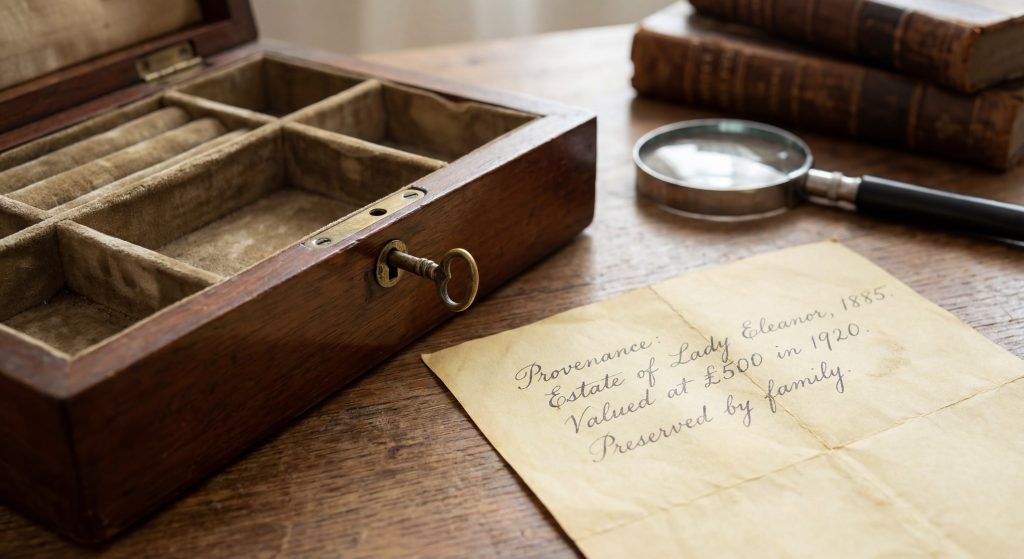
A vintage jewelry box often acts as a silent historian, carrying clues about its previous owners, the retailers of its era, and even the social customs of the time. Through engraved initials, retailer stamps, and even “secret” compartments, these vessels offer a direct window into the lives of those who once cherished the jewelry inside. You can often piece together a genealogical or commercial puzzle just by examining the markings on the lid or the silk lining.
The provenance of a box can sometimes be found in small, handwritten notes tucked behind a velvet panel or in the specific style of the monogram. In the B2B world, these historical markers are invaluable for establishing the age and authenticity of a piece, providing a layer of trust that modern certificates of authenticity cannot match. A box that has traveled across continents or survived significant historical events carries a “soul” that adds an intangible but powerful value to your collection. Every scratch and patina mark is a testament to its journey through time.
Key Takeaway: These boxes are historical documents that record the movements, names, and social standing of past generations through physical evidence.
| Narrative Marker | Information Revealed | Historical Value | |
|---|---|---|---|
| Retailer Stamp | Store name, city, and era of purchase | High | |
| Engraved Monogram | Initials of the original owner | Medium | |
| Secret Compartment | Used for hidden letters or emergency cash | High | |
| Patent Dates | Exact manufacturing timeframe | Very High |
What can a retailer’s stamp tell us?
It identifies the prestige of the original purchase location, often linking the item to famous shopping districts like London’s Bond Street or Paris’s Place Vendôme.
- It helps confirm the era based on the store’s operating dates.
- It indicates the social level of the original buyer.
- Some stamps include the jeweler’s appointment to royalty.
Imagine that.
How do we find “secret” compartments?
Many larger 19th-century boxes featured false bottoms or hidden panels triggered by a small pin or a specific sequence of lid movements.
- These were designed to hide high-value items or sensitive correspondence.
- Finding one can significantly increase the thrill and value of a find.
- They demonstrate the high level of engineering in antique cabinet-making.
That’s a huge plus.
Can engravings be traced?
Yes, using genealogical records and local histories, you can sometimes link a specific set of initials to a prominent family or historical figure.
- It turns a generic antique into a piece of documented history.
- Provenance can double or triple the value at specialized auctions.
- It creates a deeper personal connection for the current owner.
It gets even more interesting.
Is a vintage jewelry box truly sustainable?
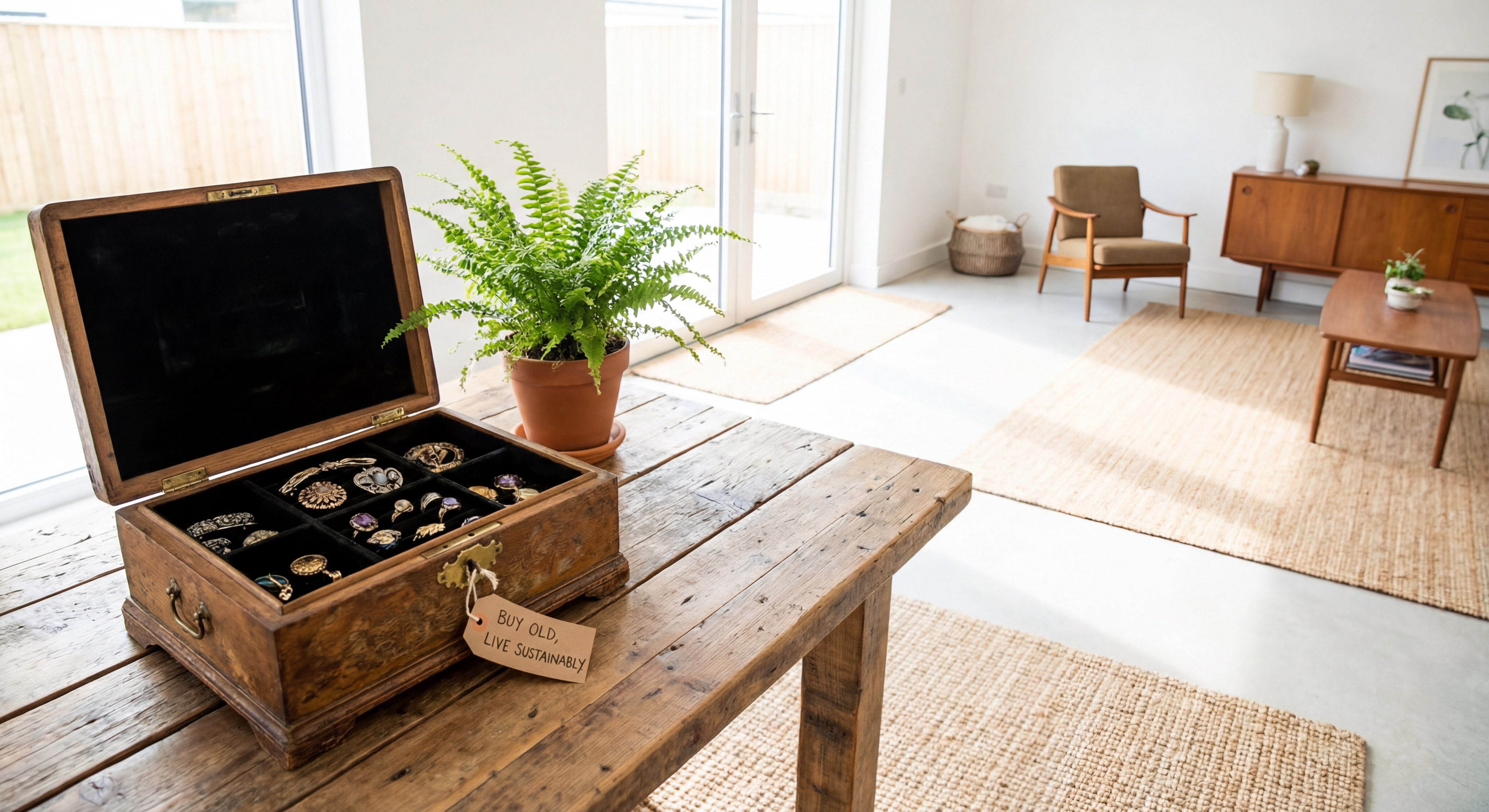
Choosing a vintage jewelry box is a profoundly sustainable decision because it utilizes existing high-quality materials and prevents the carbon footprint associated with new manufacturing. By opting for a heritage piece, you are effectively removing yourself from the cycle of “disposable” luxury and plastic-based packaging. You are investing in an item that has already proven its 100-year durability, making it the ultimate “zero-waste” choice for an environmentally conscious professional.
The “circular economy” of the antique trade ensures that materials like solid wood and genuine leather are repurposed rather than sent to a landfill. Unlike modern synthetic boxes that may only last a decade before the “leather” begins to peel, a well-cared-for antique will continue to serve for another century. Furthermore, many collectors find joy in “upcycling” these boxes by adding modern, eco-friendly silk linings or minor repairs, giving a second life to a beautiful object. Sustainability in this context isn’t just about the environment; it’s about honoring the energy and skill invested by craftsmen of the past.
Key Takeaway: Buying antique is an eco-friendly practice that prioritizes long-term durability and the reuse of premium natural materials over modern disposable alternatives.
| Sustainability Factor | Benefit of Antique | Modern Disadvantage | |
|---|---|---|---|
| Carbon Footprint | Zero (Existing item) | High (Manufacturing & Shipping) | |
| Material Life | 100+ years | 5–15 years | |
| Chemical Impact | Natural glues and waxes | Toxic adhesives and plastics | |
| End of Life | Fully biodegradable/recyclable | Non-recyclable composite waste |
Why is “buying old” better for the planet?
It reduces the demand for new resource extraction, such as logging for wood or chemical processing for synthetic fabrics.
- You are preserving a piece of history instead of creating new waste.
- Antiques often have a lower “total cost of ownership” over time.
- The quality of older materials is often higher than what is currently available.
Here’s the deal.
Can these boxes be repaired sustainably?
Yes, using traditional methods like hide glue and natural oils, an antique box can be restored without introducing new microplastics.
- Skilled restorers can replace worn silk with organic alternatives.
- Wood can be polished with beeswax rather than synthetic lacquers.
- Original hardware can be cleaned and reused rather than replaced.
It’s a win-win.
Does antique storage reflect “slow living”?
Absolutely; it encourages a more intentional, thoughtful approach to consumption and care for one’s belongings.
- It values quality and history over fleeting trends.
- The process of finding the right box takes patience and research.
- Caring for an antique creates a long-term bond with the object.
And here is the best part.
Where to display a vintage jewelry box?
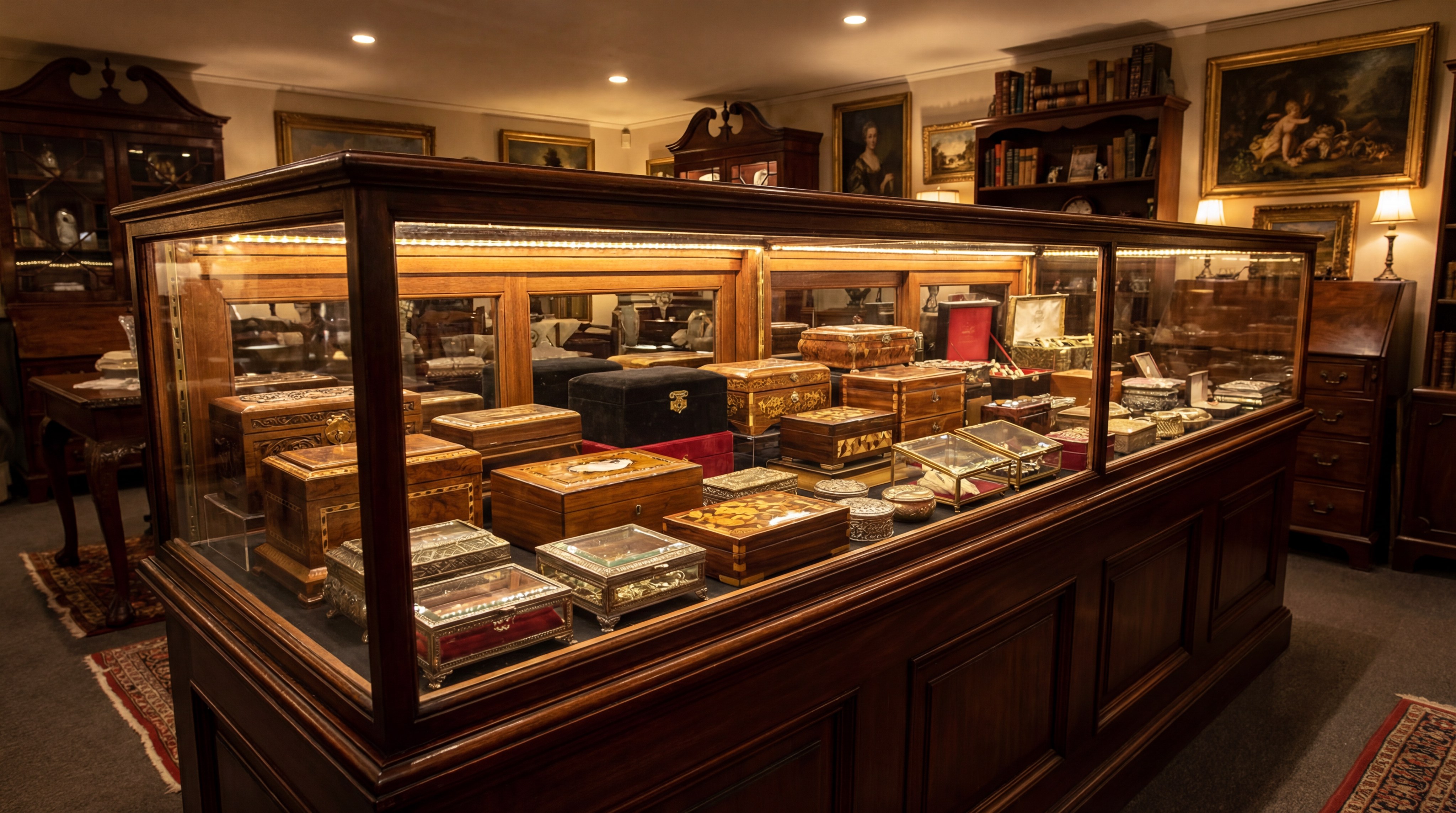
A vintage jewelry box is best displayed in a climate-controlled environment where its aesthetic beauty can be appreciated while its materials are protected from sunlight and humidity. For private collectors, a vanity or a dedicated glass-fronted cabinet offers a perfect balance of visibility and protection. If you are a professional dealer, utilizing a centralized glass display case with integrated LED lighting can highlight the rich textures of the leather and the shine of the gold tooling.
When choosing a location, you should avoid placing these items near radiators or in direct sunlight, as heat and UV rays can dry out the leather and fade the interior silk. Ideally, the box should sit on a stable surface where it won’t be knocked over, yet remains accessible for daily use. Many designers suggest “clustering” boxes of different sizes and textures to create a sophisticated focal point in a dressing room. This approach treats the storage as a piece of sculptural art, elevating the overall design of the space.
Key Takeaway: Proper display combines aesthetic visibility with environmental protection, ensuring the box remains a functional and beautiful centerpiece.
| Display Location | Pros | Cons | |
|---|---|---|---|
| Glass Display Case | Maximum visibility; Dust protection | Requires regular glass cleaning | |
| Vanity Table | Easy daily access; Tactile enjoyment | Exposed to dust and light | |
| Bookshelf | Great for “styling”; Large space | Items can be hidden behind others | |
| Safe / Vault | Maximum security; Climate control | No visual enjoyment |
Why avoid direct sunlight?
UV rays break down the natural fibers in silk and can cause the pigments in leather dyes to fade or discolor.
- Sunlight can also “cook” the natural oils out of the leather, leading to cracking.
- It can cause the wood frame to expand and contract unevenly.
- Interior velvet can become brittle and lose its soft texture.
This is where it gets interesting.
How does lighting affect the display?
Warm LED lighting can enhance the gold tooling and the deep tones of the wood without introducing harmful heat.
- Avoid old halogen bulbs that can significantly raise the temperature of a display.
- Indirect lighting creates a more sophisticated, “museum” feel.
- Lighting from the side highlights the texture of pebbled leather.
Think of it this way.
Is dust a major concern for displays?
Yes, dust can act as an abrasive on polished surfaces and can settle into the fibers of the velvet lining, making it harder to clean.
- A closed glass case is the best defense against environmental debris.
- Regular, gentle dusting with a soft cloth is essential for open displays.
- Keeping the lid closed when not in use protects the sensitive interior.
You might not know this.
How to value your vintage jewelry box?
Valuing a vintage jewelry box requires a careful assessment of its condition, the rarity of its materials, and any evidence of famous makers or owners. A box in its original, “untouched” state with a clean interior and working lock will always command a premium price. You must also consider how to use jewelry box to prevent tarnish and damage for your own collection, as a box that has proven its protective ability is often more valuable to future buyers.
In the current market, specific eras like the Georgian and Art Deco periods are particularly sought after, with prices often ranging from a few hundred to several thousand dollars depending on the complexity. If the box features a documented history or “provenance,” such as being part of a famous estate, its value can skyrocket at auction. Always look for the “maker’s mark”—usually a small label or gold stamp—which can link the piece to a prestigious workshop. Understanding these nuances allows you to invest wisely in pieces that will retain and grow their value over time.
Key Takeaway: Value is determined by a combination of physical condition, material rarity, historical documentation, and the prestige of the original maker.
| Value Driver | Impact on Price | Ideal Condition | |
|---|---|---|---|
| Condition | Very High | No leather tears; original silk | |
| Provenance | High | Documented history/Famous owner | |
| Maker’s Mark | High | Clear, legible gold stamp | |
| Materials | Medium | Rare woods or tortoiseshell |
Why is original lining so important for value?
Collectors prefer a slightly worn original silk over a modern replacement because it preserves the historical integrity of the item.
- Re-lining a box can actually decrease its value among serious purists.
- Original linings often contain the retailer’s stamp, a key identifying feature.
- The specific weave and dye of the original fabric are part of the box’s history.
Are you ready?
Does the lock mechanism affect the price?
A functional lock with its original key is a sign of a well-maintained piece and adds a significant “premium” to the valuation.
- It proves the box hasn’t been forced open or roughly handled.
- Original keys are often beautifully designed and are collectibles themselves.
- It ensures the box remains functional for its intended purpose.
You’ll love this.
How do I spot a reproduction?
Modern reproductions often use “perfect” machine stitching and synthetic glues that have a distinct chemical smell rather than the scent of old wood.
- Look for signs of hand-tooling, which will have slight, natural variations.
- Real antiques will have “wear” in logical places, like the base and the corners.
- Check the hardware; modern screws are often different from the hand-cut ones of the past.
It’s about to get even better.
FAQ Section
Can I use a vintage jewelry box for silver items?Absolutely, provided the lining is natural. Older boxes often used non-acidic materials that are safer for silver than modern plastics, though you should still monitor for tarnish based on the local environment.
What is the best way to remove a musty smell from an old box?Placing an open container of baking soda or activated charcoal inside the closed box for a few days can help. Avoid using liquid sprays or perfumes, as these can damage the leather and silk.
Can I restore the gold tooling if it has faded?While professional restorers can re-gild leather, it is a specialized skill that should only be performed on high-value items. For most collectors, a faded but original patina is preferred over a modern touch-up.
What factors affect how to keep jewelry from tarnishing in jewelry box?The primary factors are the acidity of the lining materials and the seal of the box. To learn more about environmental control, you can read about what factors affect how to keep jewelry from tarnishing in jewelry box to optimize your storage.
Are there specific boxes made only for men’s jewelry?Yes, historically “gentleman’s cases” were designed with larger compartments for watches, cufflinks, and signet rings, often using darker leathers and more utilitarian designs.
The enduring love for the historical vessel is not merely a trend; it is a recognition of a time when every object was crafted with intention and soul. By integrating these pieces into your professional or personal collection, you choose a legacy of beauty that stands the test of time. If you have any further questions about sourcing or maintaining these treasures, please do not hesitate to contact us for expert guidance.