
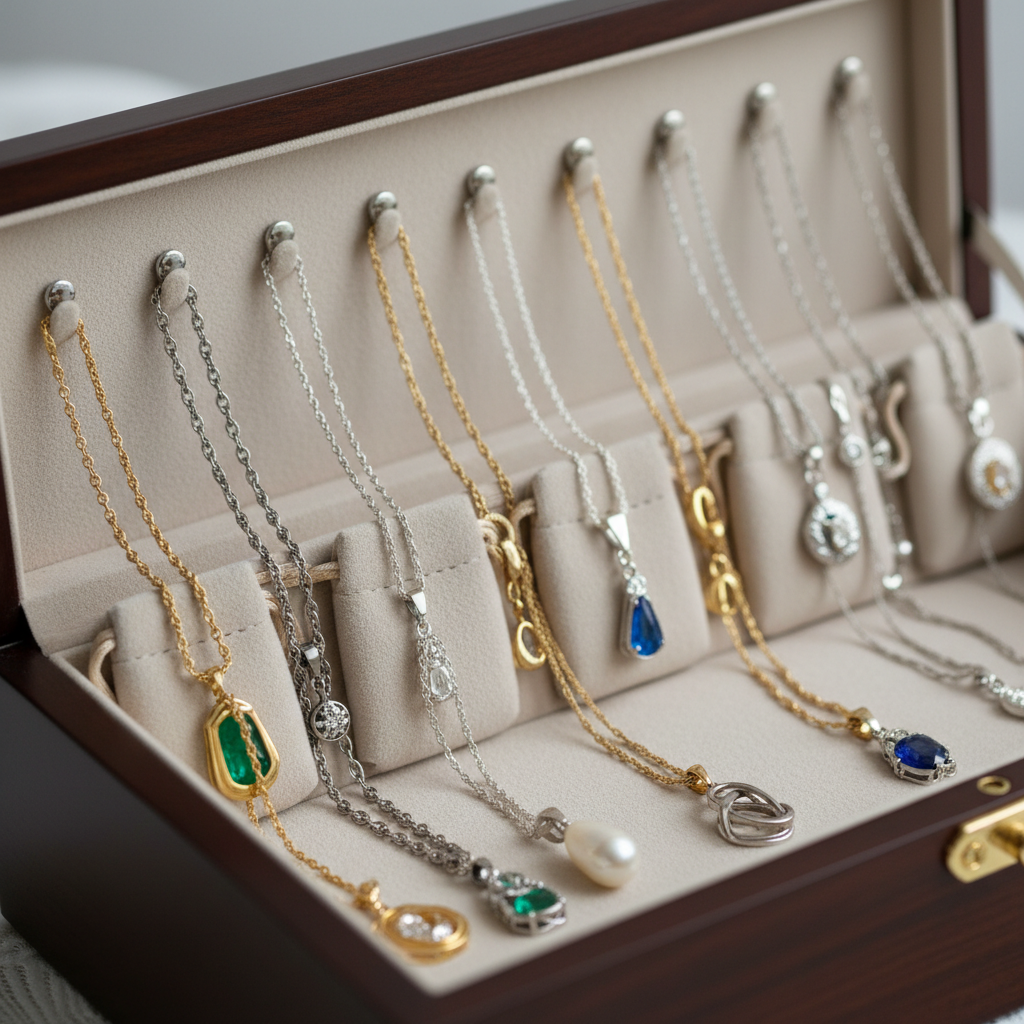
We have all experienced that moment of panic when you are rushing to get ready, only to find your favorite necklace knotted into an impossible ball or a single earring missing from its pair. It is frustrating, time-consuming, and frankly, a chaotic way to start the day that often leads to you giving up and wearing the same accessories you wore yesterday. Beyond the daily annoyance, this disorganization actively destroys your investment, as precious metals tarnish faster when piled together and delicate chains snap under the weight of other items. Here is the deal: The most effective way to organize jewelry is by implementing a systematic approach that categorizes items by type and metal, utilizing specialized compartments and anti-tarnish linings to ensure preservation and accessibility. By treating your collection with the care it deserves, you not only save time but also protect the value of every piece. For a comprehensive guide on how to organize jewelry , read on to discover professional strategies that transform chaos into a curated display.
Why Should You Organize Jewelry to Protect Value?
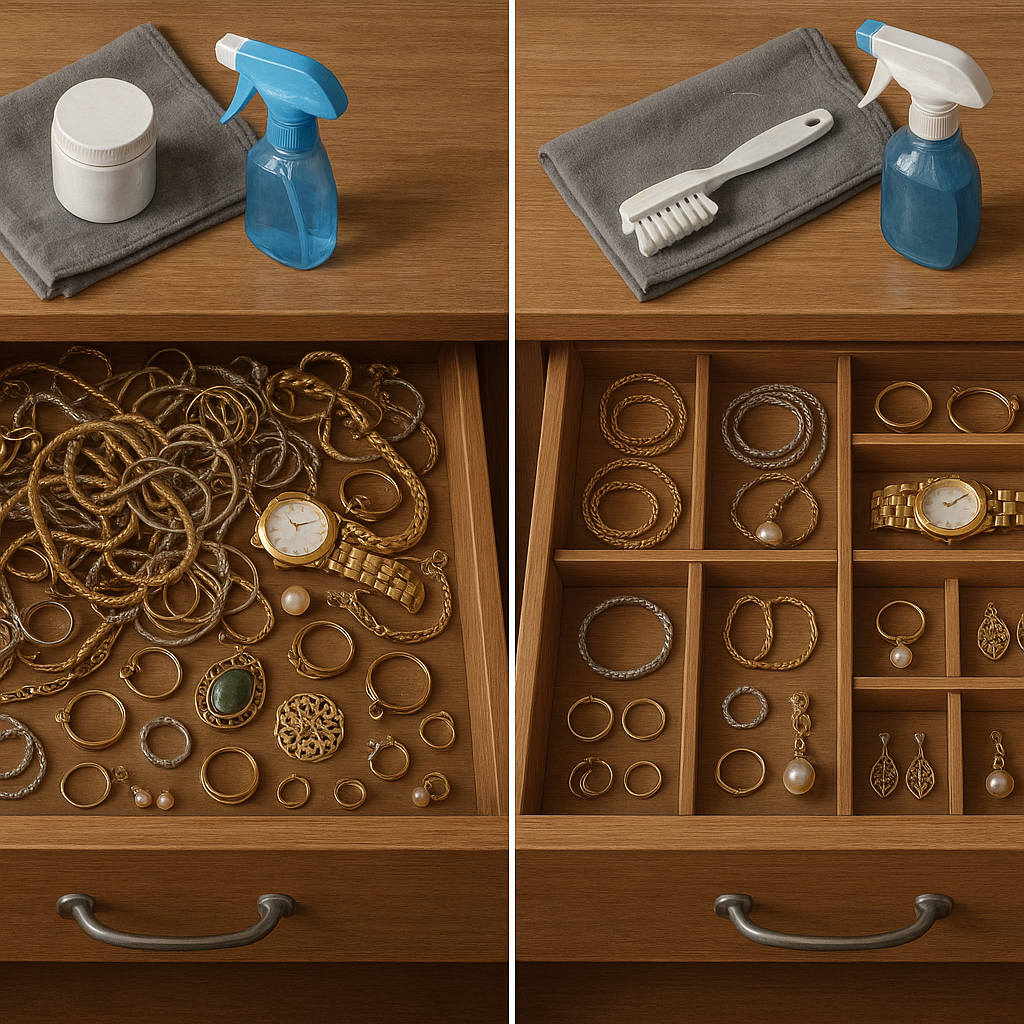
Many people mistakenly view organization as merely an aesthetic preference, failing to realize that improper storage is the leading cause of damage to fine accessories. When you toss pieces into a drawer or a single open dish, you are creating a hostile environment where materials constantly degrade one another through friction and chemical reactions. Harder gemstones like diamonds will inevitably scratch softer surfaces such as gold, pearls, or opals if they are allowed to rub against each other without barriers. Furthermore, exposure to uncontrolled humidity and air accelerates oxidation, turning bright silver black and dulling the luster of gold vermeil. A high-quality jewelry packaging box acts as a shield, providing the necessary isolation and environmental control to stop this degradation in its tracks.
Here is the brutal truth: Neglecting storage protocols essentially throws money away by reducing the resale value and lifespan of your collection. We often see customers who spend thousands on accessories but hesitate to invest in proper housing, only to pay more later in repairs and restoration costs. Professional storage solutions reduce overhead costs related to damaged goods returns for businesses and maintenance for individuals. By understanding the physics of damage—friction, oxidation, and entanglement—you can make informed decisions that keep your assets pristine for decades rather than years.
The Risks of Improper Storage
Micro-scratches on soft gemstones like pearls and opals occur almost instantly when they come into contact with harder metals or stones. Oxidation acceleration happens rapidly when different metals are stored together, as the chemical reaction from one tarnished piece can spread to others in the vicinity. Structural damage from entangled chains is perhaps the most common issue, leading to snapped links and bent settings that require professional jeweler intervention to fix.
Environmental Factors
You might not realize this, but… the air in your bathroom or bedroom is full of invisible enemies attacking your jewelry collection every single day. Humidity from showers, direct sunlight from windows, and even the chemicals in your hairspray or perfume residue can wreak havoc on sensitive metals. Storing items in the open invites dust accumulation in hard-to-clean crevices, while proper enclosed storage acts as a barrier against these environmental aggressors.
Key Takeaway: Preservation Logic
| Hazard | Consequence | Prevention Method | |
|---|---|---|---|
| Friction | Surface Scratches | Individual Compartments | |
| Air/Moisture | Tarnish/Oxidation | Velvet/Anti-tarnish Lining | |
| UV Light | Fading Gemstones | Opaque Lidded Boxes |
How Do You Choose the Best Jewelry Organizer?
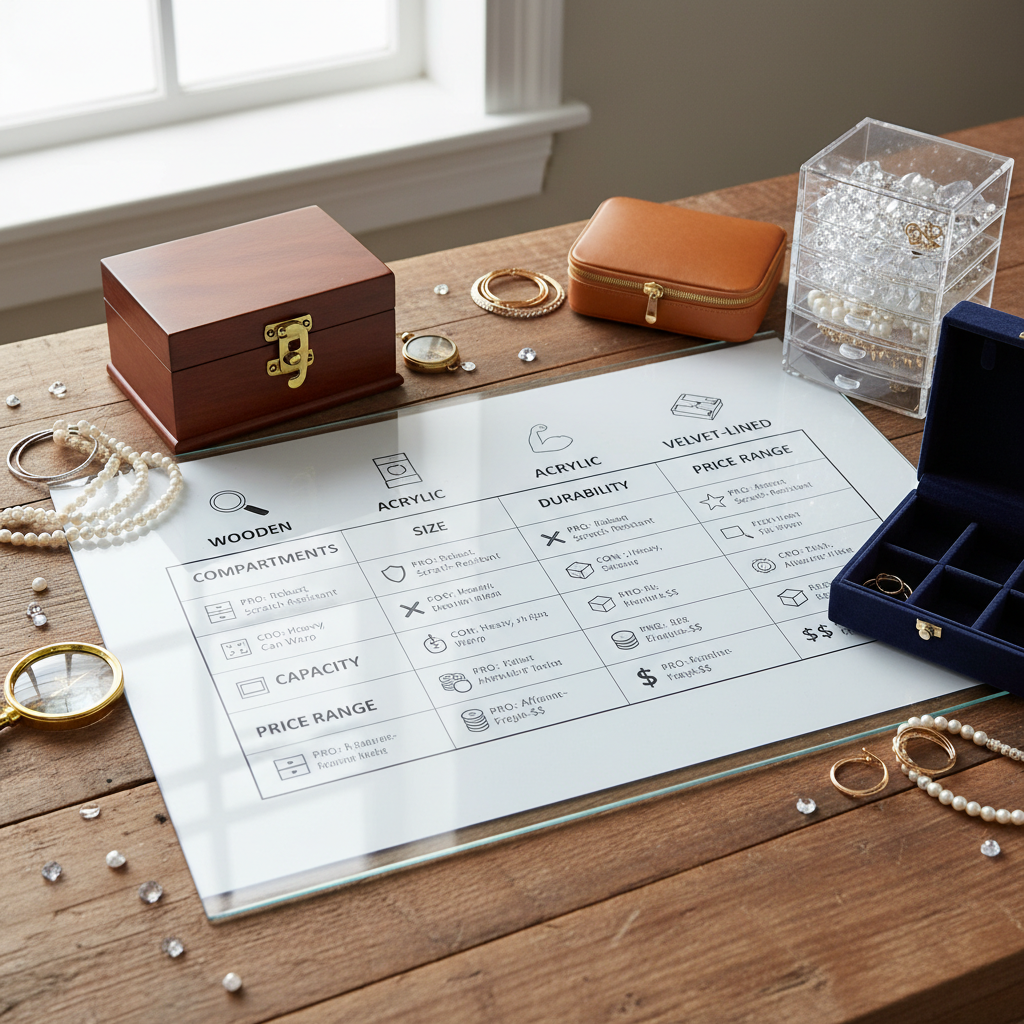
Selecting the right storage solution requires a careful audit of your specific inventory rather than a one-size-fits-all purchase. You must consider not only the quantity of items you possess but also the physical dimensions and fragility of each piece. For example, a collector with a penchant for chunky statement necklaces needs entirely different spacing than someone who primarily wears delicate stud earrings and stacking rings. Let’s break it down: If your collection includes substantial wristwear, a standard jewelry box might not suffice; incorporating a dedicated watch box ensures that structured bands and heavy timepieces maintain their shape without crushing neighboring items.
Material build quality is equally critical when choosing an organizer, as flimsy plastic containers can trap moisture and often lack the structural integrity to protect valuable contents during movement. High-end collections demand rigid exteriors made from wood or reinforced paperboard, lined with soft, chemically inert fabrics that actively prevent tarnishing. Whether you need a stationary armoire for a vast home collection or a compact roll for travel, the vessel you choose dictates the safety of the contents. Business owners must also consider how the packaging reflects brand value, as a luxurious unboxing experience reinforces the quality of the product inside.
Assessing Your Collection
Inventory count by category is the first step; knowing you have fifty rings but only three necklaces dictates a specific tray layout. Space availability is your next constraint, determining whether you need a vertical stackable system for a dresser or a flat insert for a drawer. Aesthetic requirements should not be ignored, as an organizer that matches your interior decor encourages you to keep it out and use it daily.
Material and Build Quality
For high-end collections, flimsy plastic is insufficient because it often lacks the soft internal cushioning required to prevent microscopic abrasion. Rigid structures provide impact protection, while interior materials like velvet or suede offer the friction needed to keep items in place. Investing in quality materials now prevents the need to replace cracked plastic containers or damaged jewelry later.
Key Takeaway: Organizer Selection
| Organizer Type | Best For | Storage Capacity | |
|---|---|---|---|
| Armoire | Large Collections | High | |
| Countertop Box | Daily Wear | Medium | |
| Travel Roll | Mobility | Low |
What Is the Best Way to Organize Jewelry by Type?
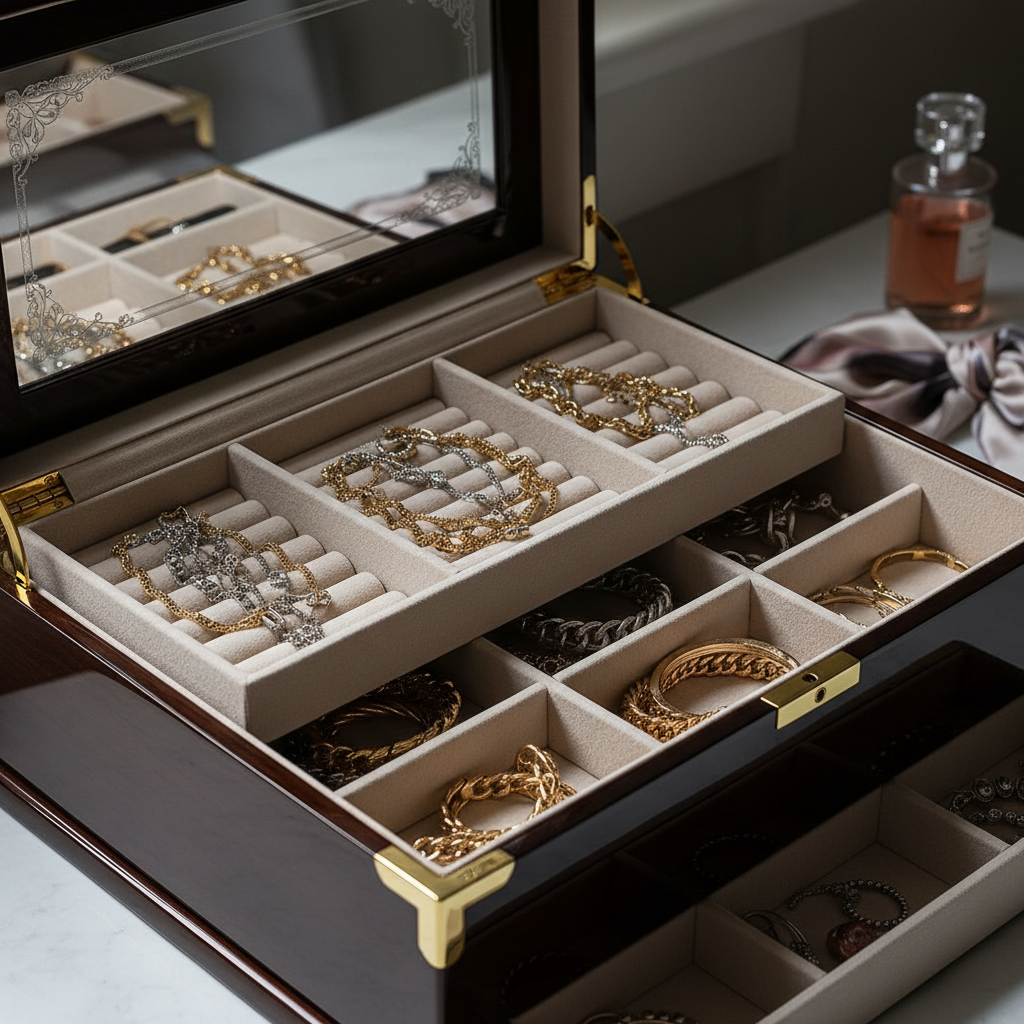
The taxonomy of efficient storage relies on the strict categorization of keeping like items together to streamline retrieval and protection. It boils down to this: When you separate your inventory by category, you immediately eliminate the risk of harder components damaging delicate ones and make the selection process effortless. Rings, for instance, are notoriously prone to scratching due to their 360-degree surface exposure; therefore, placing them in a dedicated ring box with padded rolls is non-negotiable for preservation. This method locks each band in place, preventing contact while displaying them clearly for quick selection.
Similarly, small components like earrings present a unique challenge due to their size and the propensity for pairs to become separated. Nothing is more annoying than finding one beautiful stud without its partner, rendering the remaining piece useless. Utilizing a specialized earring box with individual slots or grid partitions ensures that pairs remain united and secure. This level of granular organization might seem tedious initially, but it saves hours of frustration and prevents the financial loss associated with losing parts of expensive sets.
Categorization Strategies
Grouping by function allows you to assess your options for a specific body part instantly, such as viewing all necklaces at once. Grouping by occasion helps separate fragile evening wear from robust daily pieces, keeping heirlooms safe from daily traffic. Grouping by set ensures that matching pieces stay together, so you never have to hunt for the bracelet that matches your necklace five minutes before an event.
Managing Small Components
Loss prevention is a major aspect of jewelry organization, especially for tiny items like earring backs and small charms that vanish easily. Dedicated compartments trap these small items in a confined space, preventing them from migrating to other sections of the box. This is particularly important for travel, where movement can cause small items to shift and fall out of loose pockets.
Key Takeaway: Categorization Efficiency
| Jewelry Type | Recommended Storage | Priority | |
|---|---|---|---|
| Rings | Padded Slots | High (Scratch Risk) | |
| Studs | Grid Trays | Medium (Loss Risk) | |
| Chains | Hooks/Long Slots | High (Tangle Risk) |
How Do You Organize a Jewelry Box for Daily Wear?
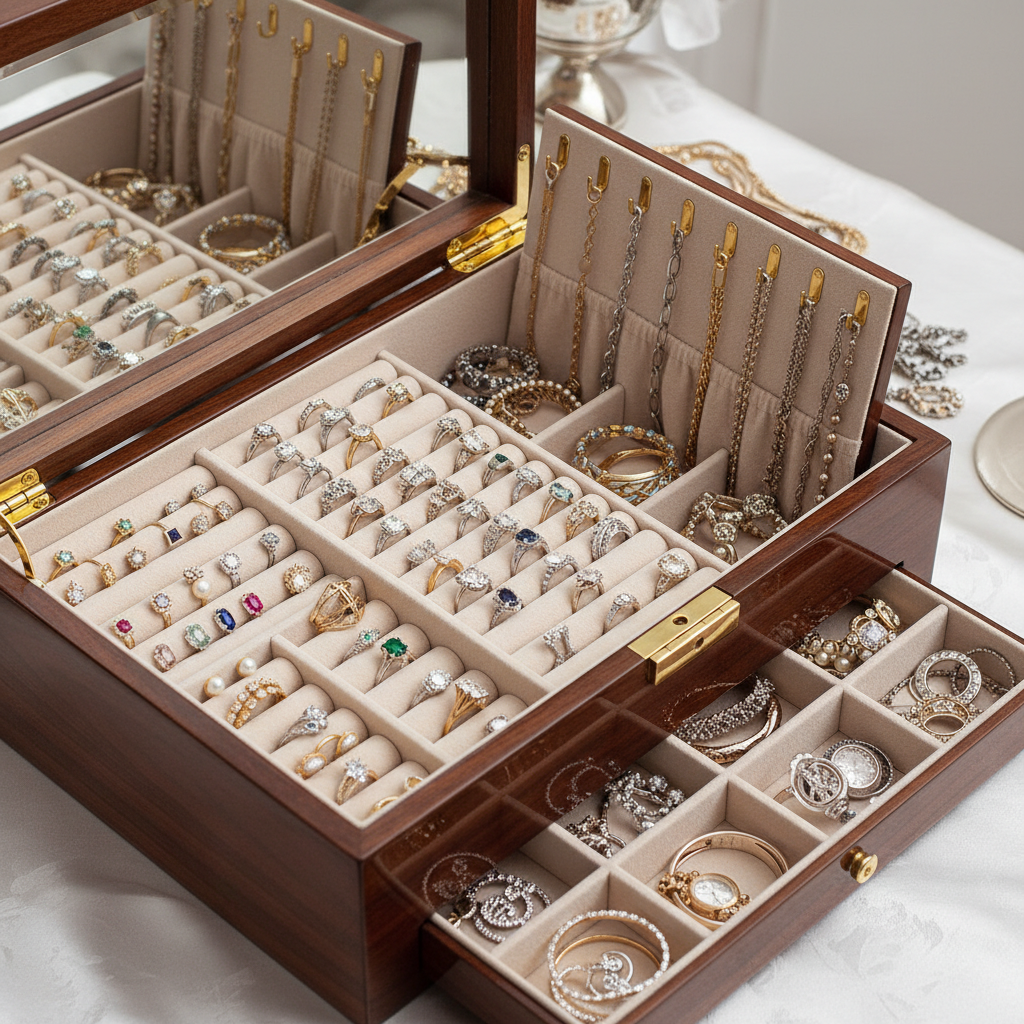
Creating a frictionless morning routine starts with establishing a “grab-and-go” section for the pieces you wear most frequently. Here’s the secret: You do not need equal access to every single item you own; you only need instant access to your daily staples. By designating the top tray of your jewelry box or a specific small dish on your vanity for these core items, you reduce the time spent searching and opening drawers. This strategy also minimizes the wear and tear on your main storage unit, as you are not constantly rummaging through the bulk of your collection just to find your wedding band or favorite studs.
Streamlining your routine in this way has a psychological benefit as well; it encourages you to actually wear your jewelry. When accessories are buried under layers of clutter or hidden in hard-to-reach places, “out of sight, out of mind” becomes the reality, and beautiful pieces sit unworn. A well-organized daily section acts as a visual menu, inviting you to add that finishing touch to your outfit without the mental load of searching. It transforms the act of putting on jewelry from a chore into a delightful ritual.
4.1 The Top Tier Strategy
Utilizing the top tray for most-worn items puts your essentials at your fingertips the moment you lift the lid. Rotating items seasonally keeps your daily selection fresh and relevant to your current wardrobe without cluttering your primary workspace. Keeping a small dish for overnight storage provides a safe landing spot for rings and watches when you sleep, preventing them from being knocked off a nightstand.
Streamlining Your Routine
Reducing friction in the selection process is key to maintaining an organized system long-term. If it is difficult to put an item back in its proper place, it will end up on the counter; if it is easy, the system sustains itself. An accessible daily section ensures that even when you are tired at night, putting your jewelry away takes zero effort.
Key Takeaway: Daily Workflow
| Item Frequency | Storage Location | Accessibility Level | |
|---|---|---|---|
| Daily | Top Tray/Dish | Instant | |
| Weekly | Middle Drawer | Standard | |
| Special Occasion | Bottom/Safe | Secure |
How Do You Organize a Jewelry Box to Prevent Tangles?
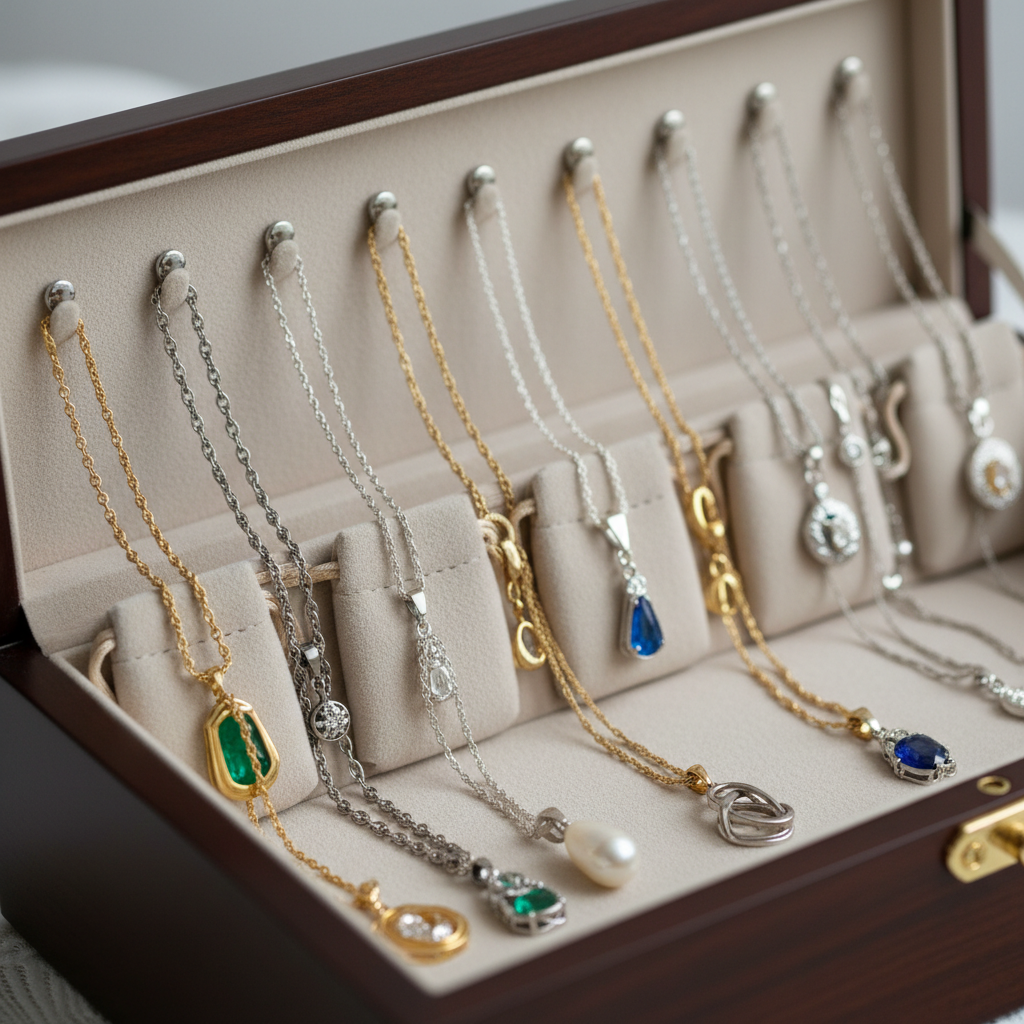
Necklace chains act like fluids; given enough time and movement, they will inevitably flow into the most complex knots imaginable. Why does this happen? It is a matter of physics involving friction between links and the lack of tension keeping them straight. The only way to combat this is through rigorous separation and suspension. A dedicated necklace box is engineered specifically for this purpose, often featuring long, narrow channels or hooks that isolate each chain. By preventing the chains from touching, you eliminate the possibility of them weaving together.
For extremely fine chains, which are the most prone to knotting, suspension is the best defense. Hanging them allows gravity to keep the links aligned and prevents the “nesting” effect that occurs in open drawers. If hanging space is unavailable, lying them flat in individual long compartments is the next best alternative. Never bunch multiple chains into a single pouch or cup, as the vibration from simply opening and closing a drawer is enough to tangle them. Investing in proper chain storage is far cheaper than paying a jeweler to untangle a gold knot or repair a snapped link.
The Physics of Tangling
Friction between different chain links creates micro-snags that act as anchors for knots to form. Lack of tension or separation allows the chain to fold back on itself, creating loops that easily thread through one another. Overcrowding in single compartments exponentially increases the variables in this equation, guaranteeing a tangled mess.
Separation Solutions
Using individual hooks is the gold standard, as it separates the chain completely from others and uses gravity to maintain straightness. Long channels in drawer inserts serve a similar function by creating walls between necklaces, ideal for drawers where vertical height is limited. Distinct packaging for each piece, such as envelopes or long boxes, is crucial for transport or long-term storage of heirlooms.
Key Takeaway: Tangle Prevention
| Chain Type | Tangle Risk | Best Solution | |
|---|---|---|---|
| Fine Gold | High | Individual Hooks | |
| Chunky Statement | Low | Flat Compartment | |
| Pendants | Medium | Long Slots |
How Do You Organize a Jewelry Box for Small Spaces?
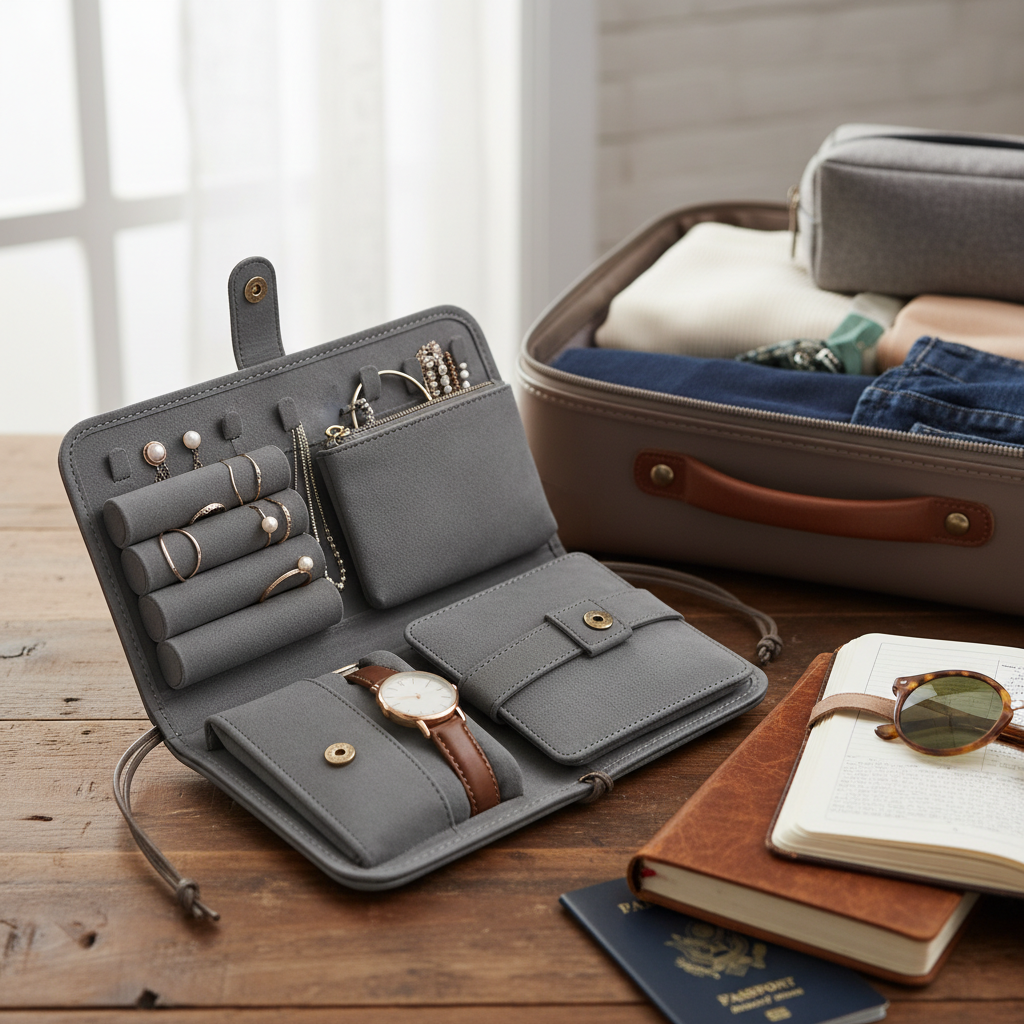
Living in an apartment or dealing with a compact dressing area forces you to think creatively about storage density. Think about it: You have limited horizontal surface area, so the only way to go is up. Vertical storage tactics are the hero of small spaces. Stackable tray systems allow you to build a custom jewelry skyscraper on your dresser, holding hundreds of items in a footprint no larger than a standard letter. These modular systems are brilliant because they can grow with your collection; you simply add another layer when you run out of room.
Another effective strategy is utilizing “dead” space, such as the back of a closet door or the interior wall of a wardrobe. Wall-mounted organizers or hanging pocket systems can store massive amounts of costume jewelry without taking up a single square inch of floor or counter space. Multi-functional furniture, like a full-length mirror that opens to reveal a jewelry cabinet, creates storage out of thin air. These solutions prove that you do not need a walk-in closet to keep a large collection organized; you just need to optimize the geometry of your storage.
Vertical Storage Tactics
Stackable tray systems offer the ultimate flexibility, allowing you to mix and match ring, earring, and necklace layers. Wall-mounted organizers behind doors utilize vertical real estate that is otherwise wasted, perfect for long necklaces that need to hang. Hidden storage mirrors serve a dual purpose, acting as a functional dressing aid while concealing a massive storage capacity inside.
Multi-Functional Furniture
Using organizers that double as décor or mirrors allows you to justify the space they occupy in a small room. A jewelry box that looks like a piece of art or a sculptural tree contributes to the room’s aesthetic while performing a function. This efficiency is vital for maintaining a clutter-free environment in tight living quarters.
Key Takeaway: Space Optimization
| Solution | Footprint | Capacity | |
|---|---|---|---|
| Stackable Trays | Minimal | Scalable | |
| Wall Mount | Zero (Floor) | Medium | |
| Armoire | Large | Maximum |
What Materials Are Best for Long-Term Jewelry Storage?
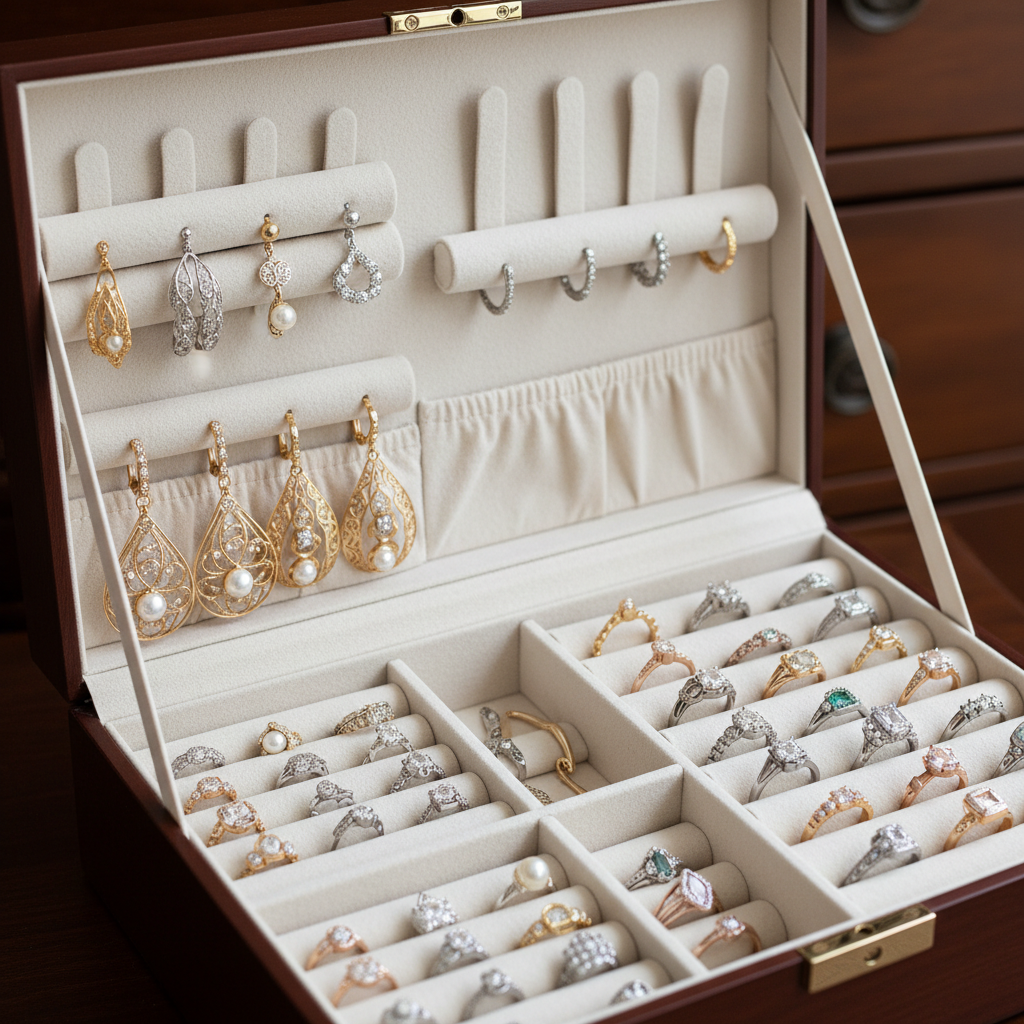
The material that touches your jewelry is just as important as the box itself, acting as the final line of defense against chemical aging. The inside matters most. You should always look for interiors lined with plush, non-abrasive fabrics like velvet, suede, or microfiber. These materials provide a soft landing for gemstones and generate enough friction to keep items from sliding around during handling. For items susceptible to heavy tarnishing, such as sterling silver, specialized anti-tarnish cloths treated with silver-protecting agents are a worthy upgrade.
Innovation in packaging has also introduced high-tech options like the PE film jewelry box . This modern solution suspends the jewelry item between two layers of transparent, flexible film, creating an air-tight seal that completely isolates the piece from oxygen and moisture. This is arguably the best method for long-term archival storage of silver or collector’s items, as it practically halts the oxidation process while allowing the item to be viewed without opening the package. Rigid exteriors of wood or hardboard provide the exoskeleton needed to prevent crushing, completing the protection system.
Interior Linings
Plush velvet is the industry standard for a reason; its pile structure cushions delicate settings and absorbs small amounts of moisture. Anti-tarnish cloth (often called Silvercloth) is embedded with particles that absorb sulfur from the air before it can reach your silver. PE Film offers a hermetic-like seal, suspending the item in a vacuum-like state that is impervious to dust and air.
Exterior Rigidity
Why rigid paperboard or wood provides better impact protection than soft pouches is simple physics; it absorbs the shock of a fall or impact. Soft pouches allow crushing forces to transfer directly to the jewelry, risking bent shanks or flattened hollow chains. A solid box structure ensures that even if heavy items are stacked on top, the jewelry inside remains untouched.
Key Takeaway: Material Science
| Material | Benefit | Best For | |
|---|---|---|---|
| Velvet | Softness | Gemstones | |
| PE Film | Air Isolation | Display/Shipping | |
| Wood | Durability | Structural Integrity |
How Often Should You Clean Your Jewelry Organizers?
We meticulously clean our jewelry, yet we often place it back into a box filled with years of accumulated dust, skin cells, and debris. Don’t ignore this: A dirty organizer defeats the purpose of storage by re-contaminating your clean items. Velvet linings are notorious dust magnets, trapping particles in their fibers that can eventually act as an abrasive against polished metal surfaces. Furthermore, if you store earrings that haven’t been perfectly sanitized, bacterial residue can build up in the compartments, posing a hygiene risk.
Establishing a maintenance schedule is simple and effective. Once a season, take everything out of your box and use a lint roller or a vacuum with a soft brush attachment to remove debris from the corners of trays. Wipe down leather or wood exteriors with appropriate cleaners to keep the material supple and crack-free. This quarterly reset not only keeps your storage sanitary but also forces you to audit your collection, reminding you of pieces you haven’t worn and allowing you to declutter items you no longer need.
8.1 Dust Accumulation
Vacuuming corners of velvet trays removes the abrasive grit that settles over time, protecting high-polish finishes. Wiping down leather exteriors prevents the material from drying out and cracking, preserving the aesthetic value of the box. Checking for moisture build-up is crucial, especially in humid climates, to prevent mold growth on fabric linings.
Maintenance Schedule
Setting a quarterly routine ensures the environment remains sterile for precious metals and prevents the buildup of allergens. It is a small time investment that pays off by keeping both the container and the contents in showroom condition. A clean box highlights the beauty of the jewelry, making the selection experience more enjoyable.
Key Takeaway: Hygiene Protocols
| Cleaning Task | Frequency | Tool | |
|---|---|---|---|
| Dust Removal | Monthly | Lint Roller | |
| Deep Clean | Quarterly | Vacuum/Brush | |
| Inspection | Annually | Magnifier |
How Do You Sort Gold and Silver in a Jewelry Box?

Mixing metals is a fashion trend, but in storage, it is a chemical hazard. Here is the deal: Different metals have different properties and reactivities. Sterling silver naturally tarnishes over time due to sulfur in the air, and if stored in direct contact with gold vermeil or plated items, that tarnish can accelerate degradation in the plating. Furthermore, there is a hardness disparity; gold is a relatively soft metal, while many silver alloys or platinum are harder. Throwing them together in a jumble guarantees that the harder metals will scratch and dull the surface of the softer gold pieces.
To prevent this metallurgical warfare, you must implement chemical segregation. Use separate drawers or distinct boxes to create a firewall between your silver and gold collections. If space is tight, use individual bracelet box packaging or pouches to isolate specific pieces within a larger compartment. This is especially critical for costume jewelry, which often contains copper or nickel that can turn green and stain adjacent fine jewelry. Treat each metal type as a separate tribe that needs its own territory to thrive.
9.1 The Chemistry of Metals
Silver tarnishes and releases gases that can discolor other items, making isolation necessary. Harder metals like platinum will micro-abrasive softer 24k or 18k gold if allowed to rub against it. Plated items require the strictest isolation because once the thin layer of gold is scratched or chemically compromised, the piece is often ruined.
9.2 Separation Techniques
Using separate drawers creates a physical barrier that prevents both contact and chemical cross-contamination. Dedicated boxes act as quarantine zones for highly reactive metals like copper or brass. This organization strategy is not just about order; it is about extending the lifecycle of the plating and polish on every single item you own.
9.3 Key Takeaway: Metallurgical Safety
| Metal Pair | Interaction Risk | Storage Rule | |
|---|---|---|---|
| Gold & Silver | Tarnish Transfer | Separate Drawers | |
| Diamond & Pearl | Scratching | Separate Boxes | |
| Costume & Fine | Chemical Reactivity | Strict Isolation |
What Are the Signs You Need a Larger Jewelry Box?
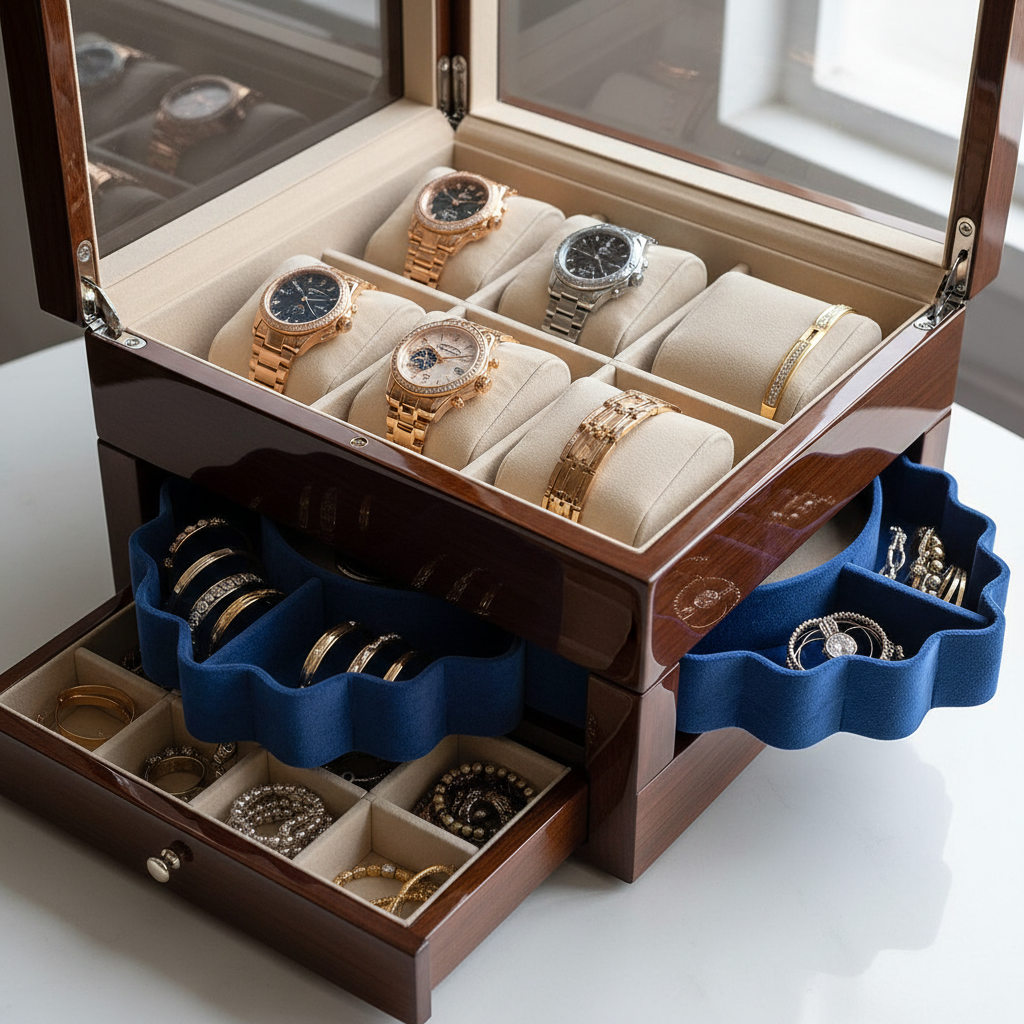
Collections are organic; they grow over birthdays, anniversaries, and impulse buys. Yet, we often try to force a growing collection into a starter box that we outgrew years ago. Sound familiar? If you have to forcefully shove a drawer closed because a bracelet is sticking up, or if you are stacking rings three-deep on a single roll, you have a capacity problem. Overcrowding is the enemy of organization; it makes items invisible and increases the pressure and friction on every piece, leading to bent posts and crushed settings.
Recognizing the signs of saturation is the first step toward an upgrade. When your current system causes frustration rather than joy, or when you find yourself leaving jewelry on the dresser because “there is no room,” it is time to scale up. Moving to a larger chest or adding a secondary unit for specific categories (like a dedicated watch case) relieves the pressure. It gives your jewelry breathing room, allowing each piece to be displayed properly and accessed without an excavation mission.
10.1 Signs of Overcrowding
Drawers jamming upon closing is a clear signal that the vertical clearance is insufficient for your items. Necklaces doubling up on hooks defeats the purpose of the hooks and invites tangling. Stacking rings on top of one another risks scratching the settings and hiding the bottom rings from view, effectively removing them from your rotation.
10.2 Scaling Up
Transitioning from a starter box to a collector’s chest allows for better categorization and room for future growth. Custom solutions or modular trays offer the ability to expand storage as your collection grows, preventing the need to buy a whole new box every few years. Investing in capacity is investing in the usability of your collection.
10.3 Key Takeaway: Scaling Capacity
| Sign | Risk | Solution | |
|---|---|---|---|
| Jammed Drawers | Crushing Items | Larger Chest | |
| Tangled Piles | Breakage | Wall Organizer | |
| Lost Items | Financial Loss | Custom Inserts |
Conclusion
Organizing jewelry is not just about aesthetics; it is a fundamental practice for protecting investments and saving time. From preventing tangles in necklaces to isolating reactive metals, the right storage strategy preserves the beauty of your collection and simplifies your daily routine. By understanding the specific needs of different jewelry types and choosing the appropriate storage vessels, you ensure that your treasured pieces remain pristine and ready to wear for generations.
At YiXin Packaging, we understand that the box is as important as the jewel it holds. Our custom solutions ensure that every piece has a secure, elegant home, blending functionality with premium design to elevate your brand or personal collection. Whether you need bulk wholesale solutions or bespoke designs, we provide the expertise to protect what matters most.
Ready to elevate your storage or create a custom unboxing experience for your brand? Contact us today for a free consultation on premium packaging solutions.
Frequently Asked Questions
Q1: What is the best material for the inside of a jewelry box?The best material is a soft, non-abrasive fabric like velvet, suede, or microfiber. These materials provide cushioning that prevents scratches and absorbs excess moisture, keeping your jewelry polished and safe.
Q2: How do you organize a jewelry box with deep compartments?To organize deep compartments effectively, use stackable trays or insert removable dividers. This allows you to create layers, ensuring that small items don’t get lost at the bottom while maximizing the vertical space available.
Q3: Can I store all my jewelry in one large box?Yes, provided the box has adequate specialized compartments. A high-quality large box should feature ring rolls, earring grids, and necklace hooks to keep different types of jewelry separate and prevent them from damaging each other.
Q4: How do I stop my necklaces from tangling in my jewelry box?To prevent tangling, store each necklace individually. Use a box with dedicated hooks and elastic pouches, or utilize long, narrow compartments that allow the chain to lie flat without bunching up against others.
Q5: Why should I store silver and gold jewelry separately?Silver and gold should be stored separately because silver is prone to tarnishing, and the oxidation can transfer to gold pieces. Additionally, gold is a softer metal and can be easily scratched by harder silver alloys if they rub together.