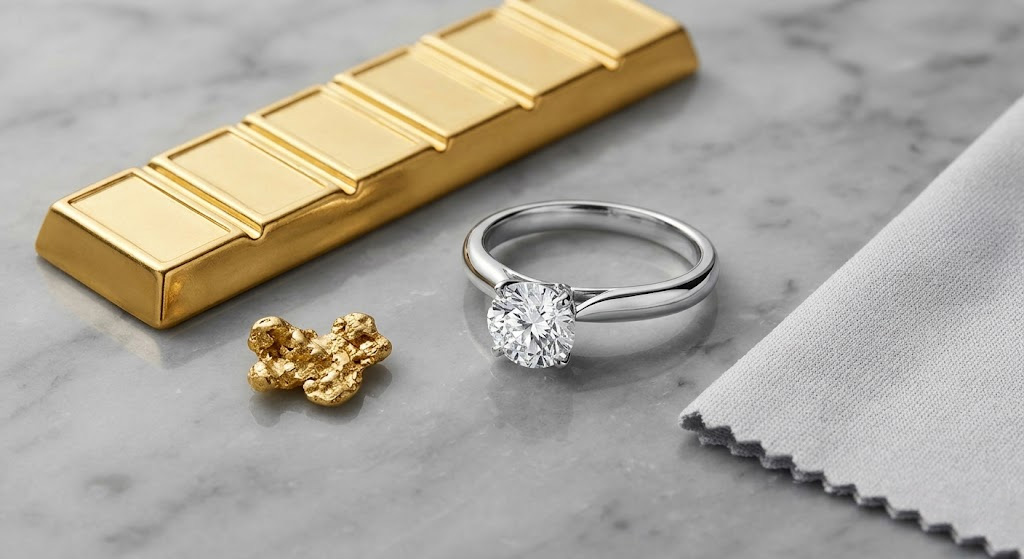
Platinum, 24K gold, and high-grade stainless steel are the primary materials that do not tarnish under normal conditions. As a jewelry retailer, few things are more damaging than a customer returning a piece that has turned black or green within weeks of purchase. This common retail pain point creates a cycle of frustration, leading to negative reviews and a significant loss of brand trust that is difficult to rebuild. By pivoting your inventory toward tarnish-resistant materials and utilizing protective packaging, you can ensure your products maintain their showroom shine from the warehouse to the customer’s home. Understanding what type of jewelry doesn’t tarnish allows you to curate a collection that reinforces your reputation for quality and reliability.
What type of jewelry doesn’t tarnish easily?
Platinum and 24K gold are the most tarnish-resistant metals available to retailers because they do not react with oxygen. When your clients ask what type of jewelry doesn’t tarnish, these noble metals should be your first recommendation for high-end investments. While base metals like copper and brass oxidize quickly, these premium options maintain their atomic structure even in challenging environments. This stability ensures that your showroom displays remain pristine without constant polishing or maintenance.
How do metals react with oxygen and moisture?
Tarnish is a chemical reaction, often called oxidation, that occurs when certain metals are exposed to air and humidity. Look at it this way: silver reacts with sulfur in the air to create silver sulfide, which is the black film you see on older stock.
- Oxidation creates a dull surface layer.
- Moisture acts as a catalyst for chemical changes.
- Sulfur compounds are the primary enemy of silver.
- Corrosion can eventually lead to structural weakness.
Why is tarnish a surface-level reaction?
In most cases, tarnish is simply a thin layer of corrosion that hasn’t yet reached the core of the metal. Let’s dive in. This means that while the piece looks damaged, the underlying material is often still intact and can be restored.
Key Takeaway: Choosing metals with high atomic stability prevents the initial chemical bond from forming, keeping the surface clear.
| Metal Type | Tarnish Resistance | Common Usage | |
|---|---|---|---|
| Platinum | Extremely High | Engagement Rings | |
| Stainless Steel | High | Fashion Jewelry | |
| Sterling Silver | Low | Classic Jewelry | |
| 24K Gold | Extremely High | Luxury Pieces |
Analytical Guidance: Retailers should prioritize Platinum and 24K Gold for heirloom pieces to minimize long-term maintenance costs.
What type of jewelry doesn’t tarnish in water?
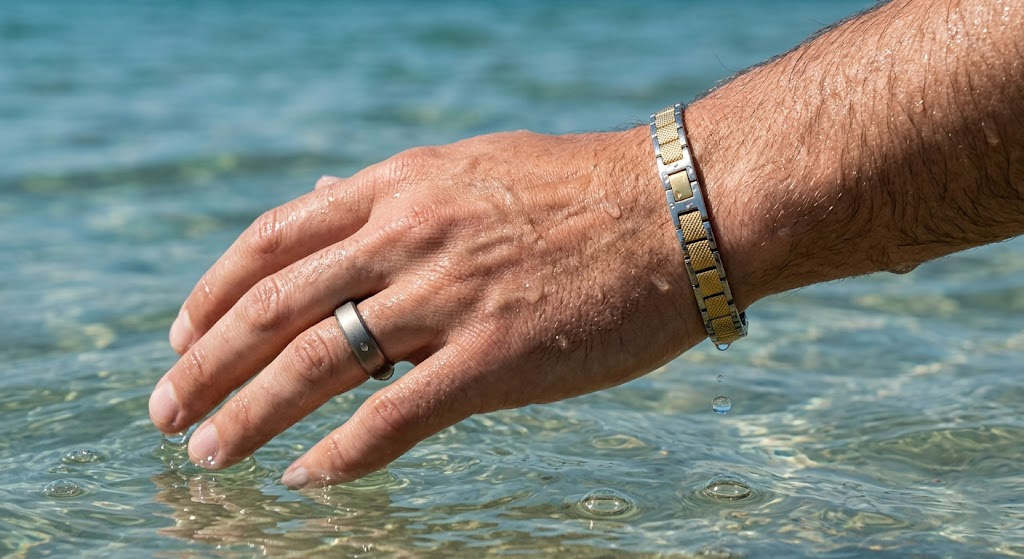
Stainless steel and titanium are the gold standard for waterproof jewelry that resists corrosion from sweat and water. Retailers frequently encounter customers seeking “shower-safe” options, so knowing what type of jewelry doesn’t tarnish in water is a major selling point. These metals form a passive oxide layer that protects the underlying material from rust and discoloration. This makes them ideal for active lifestyles and beach-bound consumers.
Is PVD coating truly waterproof?
Physical Vapor Deposition (PVD) is a vacuum coating process that produces a brilliant and functional finish. Here is the deal: PVD coating is significantly more durable than traditional electroplating because it bonds at a molecular level.
- PVD uses titanium nitride for a gold look.
- The bond is resistant to sweat and salt water.
- It does not chip or flake like standard plating.
- PVD-treated steel can last for years in water.
Why are titanium and steel safe for the shower?
Both surgical-grade stainless steel (316L) and titanium are naturally resistant to the minerals found in tap water. They do not contain high amounts of copper, which is the metal most likely to react and turn skin green.
Key Takeaway: Waterproof jewelry relies on non-reactive base metals or advanced molecular coatings like PVD to prevent oxidation in moist environments.
| Material | Water Resistance | Ideal Environment | |
|---|---|---|---|
| 316L Stainless Steel | Excellent | Daily Showers | |
| Titanium | Exceptional | Ocean/Salt Water | |
| PVD Gold Coating | Very High | Active Lifestyle | |
| Brass (Plated) | Low | Dry Wear Only |
Analytical Guidance: Marketing titanium and PVD steel as “life-proof” can significantly increase conversion rates for younger, active demographics.
What type of jewelry doesn’t tarnish for daily wear?
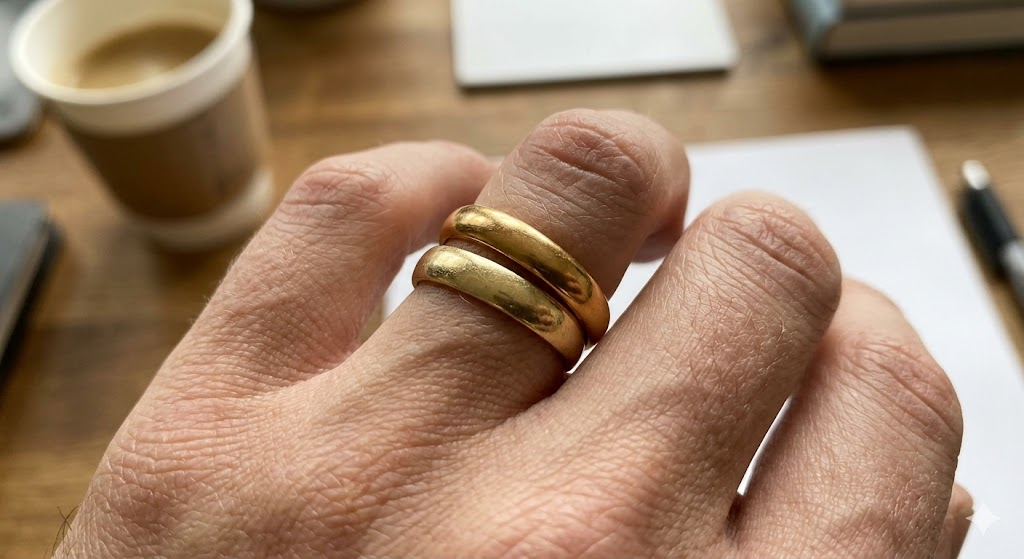
18K gold and gold-filled jewelry are the industry favorites for balancing everyday durability with a luxurious appearance. When determining what type of jewelry doesn’t tarnish during constant contact with the skin, 18K gold offers the perfect compromise between purity and hardness. It contains enough pure gold to resist tarnish while incorporating alloys that prevent the piece from bending. This makes it the standard for retail collections intended for daily use.
How does skin acidity affect metal durability?
Everyone has a unique skin pH level that can accelerate the tarnishing process on lower-quality alloys. But wait, there’s more. High acidity can eat through thin gold plating in a matter of days, revealing the reactive base metal beneath.
- High pH levels can cause rapid oxidation.
- Sweat contains salts that act as electrolytes.
- Lotions and perfumes react with copper alloys.
- Daily friction wears down protective top coats.
Why 18K gold is a retail favorite?
Retailers prefer 18K gold because it maintains its rich color without the frequent need for professional cleaning. It contains 75% pure gold, which is a high enough concentration to remain stable against skin oils.
Key Takeaway: For daily-wear collections, 18K gold and gold-filled options provide the necessary chemical resistance to withstand skin contact.
| Metal Purity | Daily Wear Rating | Maintenance Need | |
|---|---|---|---|
| 18K Gold | High | Low | |
| 14K Gold | Medium-High | Low | |
| Gold-Filled | Medium-High | Moderate | |
| Gold-Plated | Low | High |
Analytical Guidance: Recommending 14K or 18K gold for wedding bands ensures the customer’s most important jewelry remains bright for decades.
What type of jewelry doesn’t tarnish on a budget?
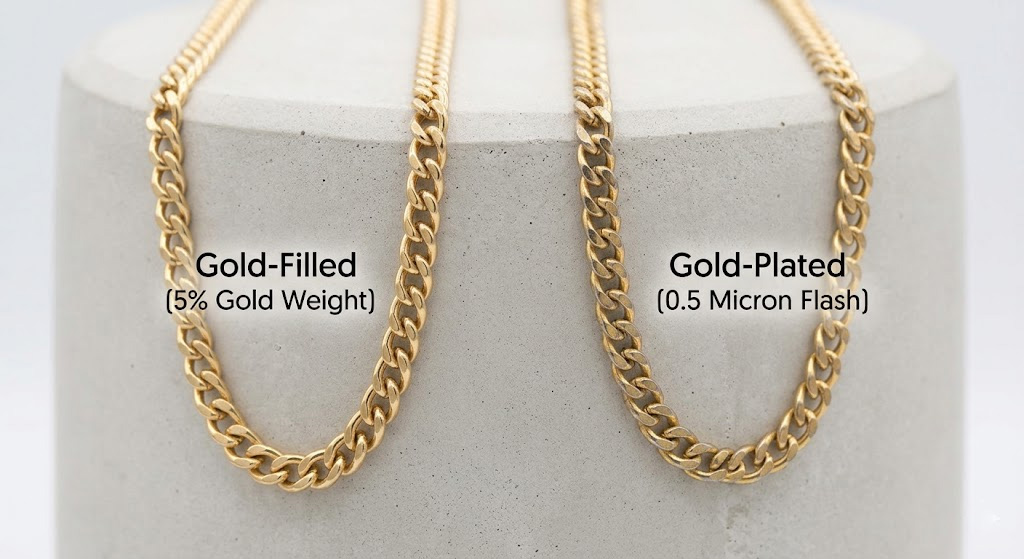
Gold-filled jewelry is the best mid-range solution for customers who want the look of gold without the high price tag. Identifying what type of jewelry doesn’t tarnish while remaining affordable is key to capturing the “affordable luxury” market. Unlike gold plating, gold-filled items have a thick layer of gold mechanically bonded to a base metal. This layer is usually 100 times thicker than standard plating, offering significantly better longevity.
Is gold-filled better than gold-plated?
Gold-filled items are legally required to contain 5% gold by weight, making them far superior to plated alternatives. The best part? This thickness allows the piece to resist tarnish even if the wearer has high skin acidity or wears it frequently.
- Gold-filled has a thick, bonded outer shell.
- Gold-plated is a thin microscopic “flash” of gold.
- Filled jewelry can last 10 to 30 years.
- Plated items often tarnish within months.
How many microns of plating are needed?
If you must stock gold-plated items, look for “heavy gold plating” which is at least 2.5 microns thick. This thickness, often found in Vermeil (plated silver), provides a temporary barrier against the elements.
Key Takeaway: Gold-filled jewelry is the ultimate budget-friendly choice for tarnish resistance, outperforming all types of standard gold plating.
| Type | Gold Thickness | Expected Lifespan | |
|---|---|---|---|
| Gold-Filled | ~100 Microns | 10-30 Years | |
| Vermeil | 2.5+ Microns | 2-5 Years | |
| Standard Plating | 0.5 Microns | 1-6 Months |
Analytical Guidance: Educating customers on the difference between “filled” and “plated” justifies a higher price point for budget-conscious collections.
What type of jewelry doesn’t tarnish or turn skin green?
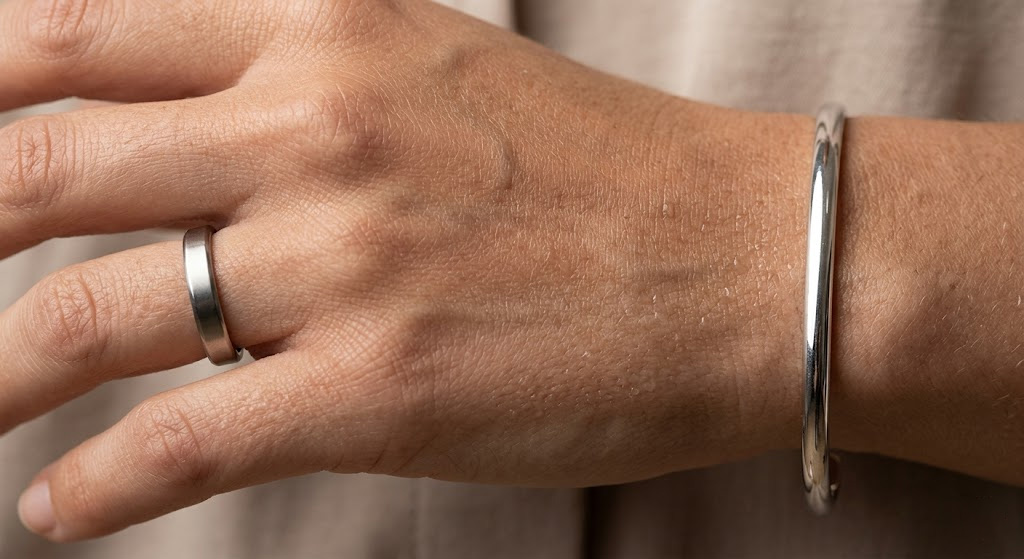
Hypoallergenic metals like titanium, niobium, and rhodium-plated silver are the best choices to prevent skin discoloration. You might be wondering: what type of jewelry doesn’t tarnish or react with the skin to cause that dreaded green stain? The green color is actually a copper-acid reaction, so removing copper from the equation is the primary solution. By stocking nickel-free and copper-free metals, you protect both the jewelry’s finish and the customer’s skin.
Why does copper cause skin discoloration?
Copper reacts with the acids in human sweat to create copper carbonates or copper chlorides. These chemical salts are green in color and are easily transferred from the metal to the surface of the skin.
- Avoid high-copper alloys like brass or bronze.
- Copper-based sterling silver is a common culprit.
- Moisture trapped under a ring speeds up the reaction.
- Green skin is a sign of metal oxidation, not a “fake” metal.
Which nickel-free metals are safest?
Titanium and niobium are inert metals, meaning they do not react with the human body or the environment. Rhodium plating is also an excellent barrier that prevents the silver beneath from oxidizing.
Key Takeaway: Eliminating reactive alloys like copper and nickel ensures the jewelry remains tarnish-free and hypoallergenic for sensitive skin.
| Safe Metal | Reaction Risk | Skin Type Suitability | |
|---|---|---|---|
| Titanium | Zero | Allergic/Sensitive | |
| Rhodium Plating | Very Low | Normal/Sensitive | |
| Niobium | Zero | Allergic/Sensitive | |
| Sterling Silver | High | Non-Sensitive |
Analytical Guidance: Labeling products as “Nickel-Free” and “Copper-Free” is an essential marketing strategy for modern retailers.
What type of jewelry doesn’t tarnish in storage?
Metals stored in vacuum-sealed environments or with anti-tarnish inserts remain in showroom condition indefinitely. For inventory management, knowing what type of jewelry doesn’t tarnish often depends on how well you isolate it from the surrounding air. Even “tarnish-resistant” silver will eventually darken if left on an open tray for months. Professional packaging acts as the final line of defense for your stock.
Can anti-tarnish tabs protect your stock?
Anti-tarnish tabs are small strips of paper that absorb the sulfur and pollutants in the air before they can reach the jewelry. The secret? These tabs create a micro-environment within the jewelry box that neutralizes the chemical threats to your inventory.
- Tabs absorb atmospheric sulfur compounds.
- One strip can protect a closed box for months.
- They are invisible to the customer but highly effective.
- Crucial for sterling silver and low-karat gold.
Does velvet or suede prevent oxidation?
Standard velvet often contains sulfur from the manufacturing process, which can actually accelerate tarnishing in silver. High-quality microfiber or treated “anti-tarnish” fabrics should be used for long-term storage displays.
Key Takeaway: Storage-related tarnish is entirely preventable through the use of airtight PE film displays and sulfur-absorbing packaging inserts.
| Storage Method | Protection Level | Best For | |
|---|---|---|---|
| PE Film Display | Maximum | Long-term Stock | |
| Anti-Tarnish Tabs | High | Boxed Shipments | |
| Open Trays | Low | High-Turnover Only | |
| Polybags | Moderate | Bulk Inventory |
Analytical Guidance: Investing in 3D floating PE film boxes protects inventory while providing a high-end visual presentation for customers.
What type of jewelry doesn’t tarnish if it is gold?
Pure 24K gold is the only version of gold that is truly tarnish-proof because it is chemically inert. Bottom line? Most gold jewelry is an alloy, and it is the other metals in that alloy that cause what type of jewelry doesn’t tarnish to occasionally fail. If you are selling 10K or 14K gold, the higher percentage of copper or silver can eventually lead to a dulling of the surface. Pure gold, however, will remain as bright in a thousand years as it is today.
What is the difference between 14K and 24K?
14K gold contains roughly 58% gold, while 24K is 99.9% pure gold. While 24K is the most tarnish-resistant, it is also the softest, which is why 14K or 18K is usually preferred for jewelry construction.
- 24K gold never oxidizes or corrodes.
- 14K gold contains copper and silver alloys.
- Lower karats (10K) tarnish faster than high karats.
- Alloys provide the strength 24K gold lacks.
Can white gold turn yellow over time?
White gold is actually yellow gold mixed with white metals and then plated with rhodium. Over time, the rhodium wears off, revealing the slightly yellowish tint of the natural gold alloy beneath.
Key Takeaway: Pure 24K gold is the only metal that is naturally and eternally tarnish-proof without the need for plating or coatings.
| Gold Purity | Tarnish Resistance | Durability | |
|---|---|---|---|
| 24K | Absolute | Very Low | |
| 22K | Very High | Low | |
| 18K | High | Moderate | |
| 14K | Moderate-High | High |
Analytical Guidance: Informing clients that white gold requires periodic re-plating helps manage expectations regarding its long-term color maintenance.
What type of jewelry doesn’t tarnish and stays safe?
Platinum is widely considered the ultimate worry-free metal for luxury jewelry because it is both tarnish-proof and incredibly dense. When presenting earrings that last, what type of jewelry doesn’t tarnish while holding gemstones securely is a top priority. Platinum does not wear away over time like gold; instead, it develops a “patina” that many collectors actually find desirable. This metal provides a lifetime of wear without the need for protective coatings.
Is platinum the ultimate worry-free metal?
Platinum is naturally white and does not require rhodium plating to maintain its color. It gets better: even if the surface gets scratched, the metal is simply displaced rather than lost, preserving the weight of the piece forever.
- Naturally white and stays white forever.
- Hypoallergenic and safe for all skin types.
- Extremely dense and durable for stone setting.
- Resistant to all common household chemicals.
Why palladium is gaining retail popularity?
Palladium belongs to the same chemical group as platinum but is lighter and more affordable. It offers similar tarnish-free properties and a naturally white finish that appeals to modern, minimalist buyers.
Key Takeaway: Platinum and palladium are the premier choices for retailers focusing on “forever” jewelry that requires zero chemical maintenance.
| Metal | Color Stability | Maintenance | |
|---|---|---|---|
| Platinum | Permanent | Low (Polishing Only) | |
| Palladium | Permanent | Low | |
| White Gold | Needs Plating | High (Re-plating) | |
| Silver | Needs Polishing | Very High |
Analytical Guidance: Positioning Platinum as a “low-maintenance” alternative to white gold is a powerful value proposition for high-spend customers.
What type of jewelry doesn’t tarnish in high humidity?
Tungsten carbide and high-tech ceramics are exceptionally resistant to the corrosive effects of high humidity and salt air. Think of it this way: in tropical or coastal environments, even some gold alloys can struggle with the constant exposure to moisture. What type of jewelry doesn’t tarnish in these climates? Industrial-grade materials used in modern jewelry design are engineered to withstand extreme environmental stress without losing their polish.
How does moisture accelerate silver sulfide?
Water acts as a bridge for ions, allowing chemical reactions to happen much faster than they would in dry air. High humidity essentially feeds the tarnishing process, turning bright silver into a black mess in just a few weeks of display.
- Humidity traps pollutants against the metal surface.
- Coastal air contains salt, which is highly corrosive.
- Condensation inside display cases can ruin stock.
- Sealed packaging is mandatory in humid climates.
Which ceramics resist tropical climates?
Modern jewelry ceramics are not like pottery; they are high-tech compounds like zirconium dioxide. These materials are completely non-reactive, making them immune to water, salt, and humidity.
Key Takeaway: For retailers in coastal or humid regions, stocking tungsten and ceramic collections minimizes the risk of environmental inventory damage.
| Environment | Best Metal Choice | Packaging Recommendation | |
|---|---|---|---|
| High Humidity | Tungsten / Ceramic | Sealed Bags / Silica | |
| Coastal/Salt Air | Stainless Steel | Microfiber Pouches | |
| Standard | 14K-18K Gold | Standard Box |
Analytical Guidance: Retailers in coastal cities should use silica gel packets in their storage bins to combat the effects of salt air on inventory.
What type of jewelry doesn’t tarnish for luxury retailers?
Luxury retailers maintain their prestige by stocking PVD-coated stainless steel, platinum, and solid gold collections. Understanding what type of jewelry doesn’t tarnish is not just about the metal; it is about the entire brand experience. When a customer pays a premium price, they expect a product that remains perfect. Combining high-quality metals with world-class unboxing experiences ensures that the perception of quality remains high long after the sale.
How to market tarnish-resistant collections?
Use terms like “Shower-Safe,” “Gym-Ready,” and “Investment Grade” to communicate the value of your tarnish-resistant pieces. Ready to start? Highlighting the science behind the metals builds trust and justifies the higher price points associated with quality materials.
- Focus on the “Forever” aspect of the metal.
- Explain the PVD or Gold-Filling process.
- Provide care guides that emphasize durability.
- Use premium packaging to reflect metal quality.
Why unboxing matters for metal perception?
The way a piece is presented influences how the customer perceives its quality and durability. High-quality packaging doesn’t just look good; it protects the metal from the elements during the critical period between the factory and the customer’s hands.
Key Takeaway: Success in the luxury market requires a dual focus on inherently tarnish-resistant metals and protective, high-end packaging solutions.
| Retail Strategy | Key Benefit | Customer Perception | |
|---|---|---|---|
| PVD Stainless Steel | High Durability | “Life-Proof” Quality | |
| Solid Gold / Platinum | Pure Value | “Heirloom” Status | |
| Custom Packaging | Brand Protection | “Premium” Experience |
Analytical Guidance: Aligning your metal selection with superior packaging standards creates a cohesive brand message of “enduring luxury.”
FAQ: What Type of Jewelry Doesn’t Tarnish?
- Can I… wear gold-filled jewelry in the ocean without it tarnishing? Yes. Gold-filled jewelry has a thick enough layer of gold to resist the salt water, though you should rinse it with fresh water afterward.
- What’s the best… metal for someone who wants to never take their jewelry off? Platinum. It is the most stable and durable metal that does not react with water, sweat, or skin oils.
- How do I know if… a piece is PVD coated or just standard gold-plated? Check the label. PVD is usually applied to stainless steel or titanium and is marketed as “waterproof” or “highly durable,” whereas standard plating is usually on brass.
- Can I… use anti-tarnish strips in any type of jewelry box? Absolutely. These strips are safe for all metals and are especially beneficial for boxes containing silver or low-karat gold.
- What’s the best… way to store sterling silver to prevent it from turning black? Airtight storage. Use a PE film display box or a vacuum-sealed bag with an anti-tarnish tab to keep oxygen and sulfur away.
Conclusion
In the competitive B2B jewelry market, your reputation is built on the longevity of your products. Platinum, 24K gold, and PVD-coated stainless steel represent the peak of tarnish-resistant technology, offering retailers a way to reduce returns and maximize customer satisfaction. By understanding the science of oxidation and the protective power of advanced packaging, you can position your brand as a leader in quality and durability.
At YiXin, we believe that high-quality jewelry deserves a protective environment that reflects its value. Our vision is to empower retailers through innovative packaging solutions that prevent tarnish and enhance the unboxing experience. To ensure your collections stay pristine from the factory to the front door, contact us today for expert packaging