
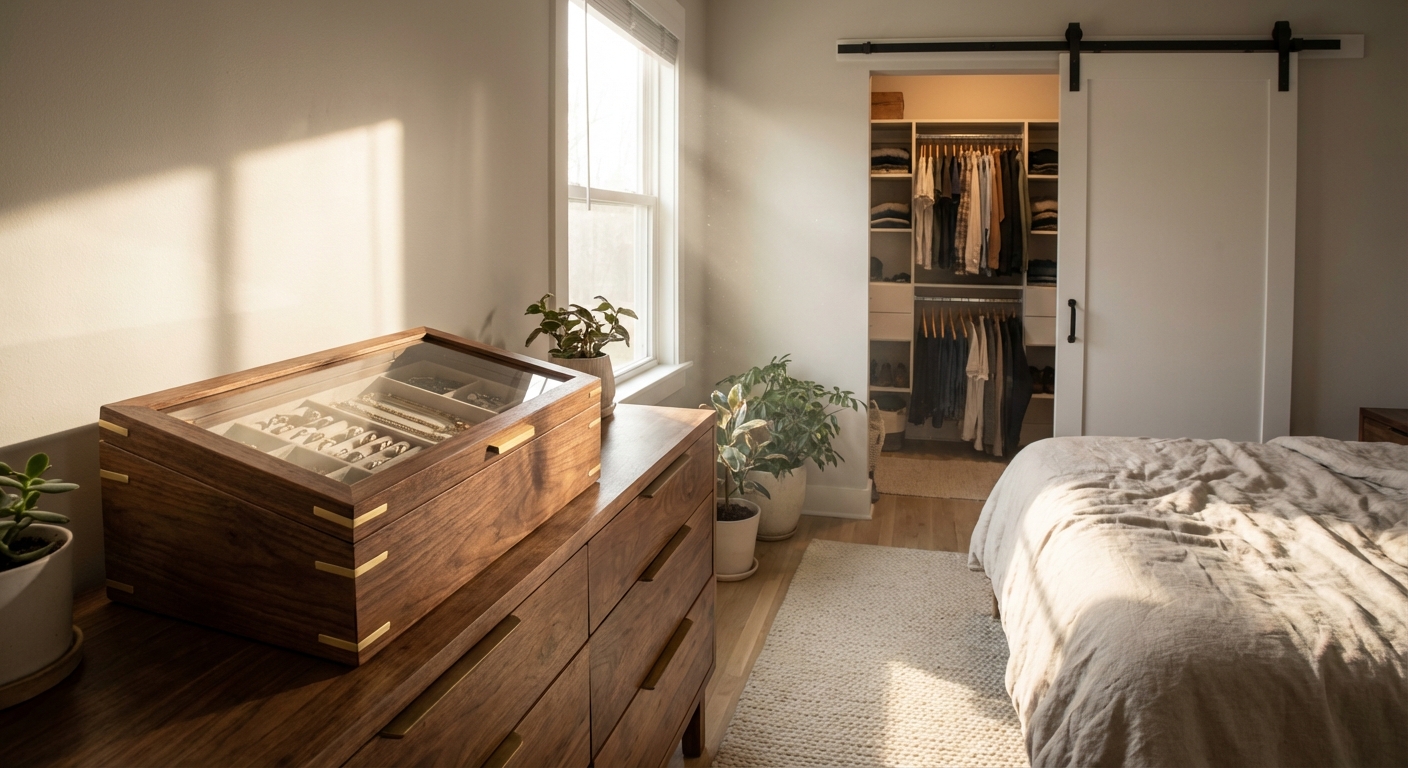
Organizing jewelry in the bedroom closet is most effectively achieved by implementing a modular system that combines vertical hanging space with specialized protective trays. You likely know the frustration of reaching for a specific necklace only to find it entangled in a knotted web of gold and silver. This daily chaos doesn’t just waste your time; it risks damaging your most delicate investments through abrasion and tension. Finding the right where to put jewelry box in bedroom setup can transform your morning routine from chaotic to serene by ensuring every piece is visible and protected.
Why is your jewelry closet currently a tangled mess?
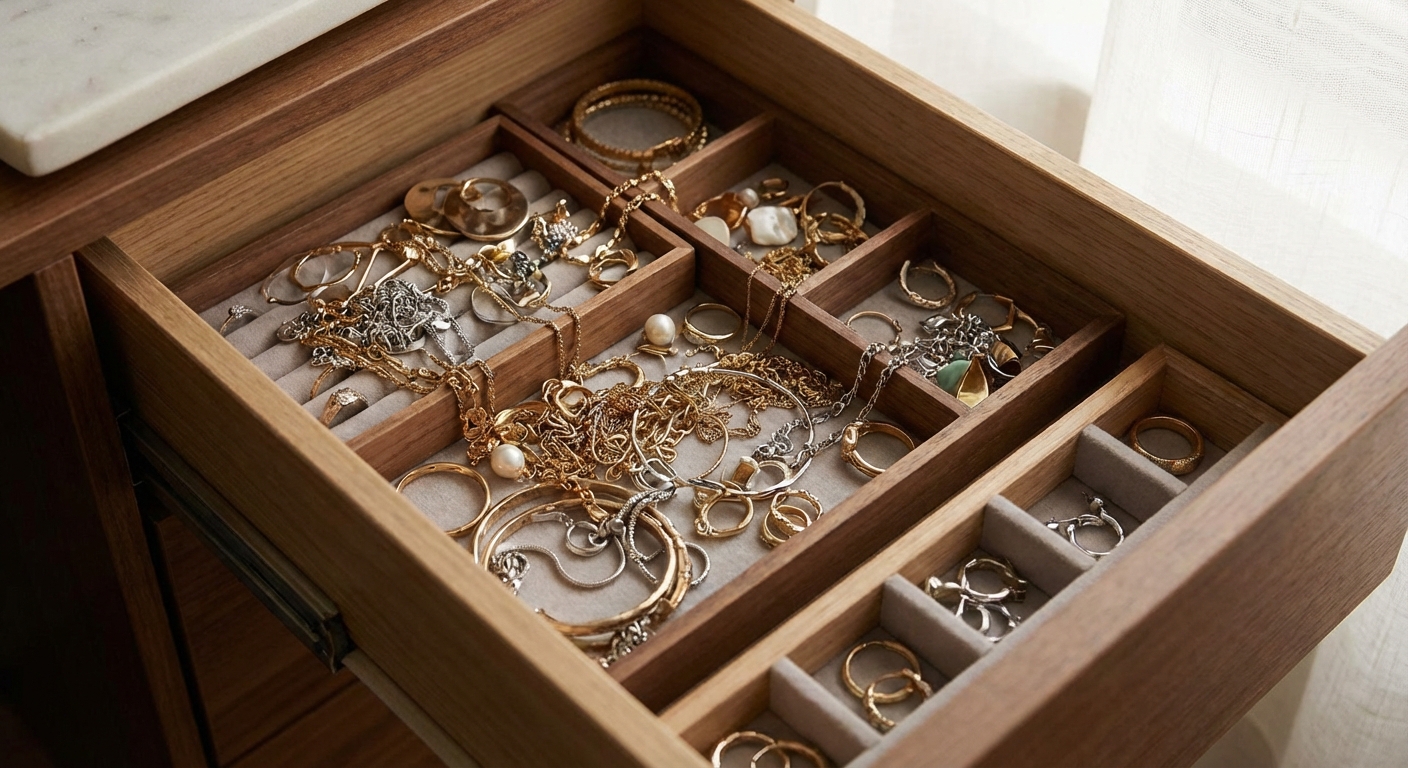
Determining where to put jewelry box in bedroom locations often reveals that a lack of “homes” for specific items is the root cause of clutter. When items are tossed into a single open space, gravity and movement inevitably lead to tangles. This lack of structure forces you to dig through piles, causing micro-scratches on polished surfaces.
Think about it.
Are you holding onto pieces you never wear?
You might be harboring jewelry that no longer fits your professional brand or personal style. These unused items occupy prime real estate and hide the pieces you actually want to wear daily. A cluttered space makes it impossible to maintain an inventory of what you truly own.
Do you lack a dedicated “home” for your gems?
Without specific compartments, items migrate and mix during your daily routine. Every category of jewelry—from studs to statement necklaces—requires a tailored storage environment to remain pristine.
- Use divided trays for small items like rings and earrings.
- Employ individual pouches for high-value gemstones.
- Install hooks for long chains to prevent knotting.
Key Takeaway: Clarity starts with a clean slate; you can’t organize what you don’t actually use or have a specific spot for.
| Cause of Mess | Resulting Risk | Solution Strategy | |
|---|---|---|---|
| Open Drawers | Tangles & Knots | Modular Dividers | |
| Mixed Materials | Metal Abrasion | Individual Slotted Trays | |
| Overcrowding | Lost Inventory | Frequency-Based Sorting |
The lack of specialized compartments is the primary driver of physical damage in home jewelry collections.
Where to put jewelry box in bedroom for easy access?
Deciding where to put jewelry box in bedroom zones requires an analysis of your morning workflow and physical ergonomics. Ideally, your storage should be at eye level within the closet to minimize bending and searching. Placing items where you already stand to dress ensures that adding accessories becomes a seamless final step.
Here is the deal.
Is a closet shelf or dresser top better for you?
A closet shelf offers more privacy and security, while a dresser top provides immediate visibility for daily staples. If you value a streamlined aesthetic, tucked-away closet organization prevents visual clutter in the sleeping area. Consider the lighting in both spots, as you need to distinguish between similar metal tones.
Can you utilize eye-level vertical space?
Vertical space is often overlooked but provides the most efficient “shopping” experience for your own collection. Wall-mounted organizers or shelf-top towers keep items at a comfortable reaching distance.
- Measure your shelf depth before purchasing organizers.
- Consider “dead space” behind closet doors for hanging pieces.
- Group items by height to maximize shelf gaps.
Key Takeaway: Position your jewelry box where you naturally finish your getting-ready routine to ensure you always add that final touch.
| Location Option | Pros | Cons | |
|---|---|---|---|
| Eye-Level Shelf | Ergonomic & Secure | Limited by Shelf Depth | |
| Dresser Top | High Accessibility | Subject to Dust/Sunlight | |
| Inside Drawer | Completely Hidden | Harder to See Inventory |
Strategically placing jewelry near your mirrors drastically reduces the time spent moving between dressing zones.
How do you start the decluttering process today?
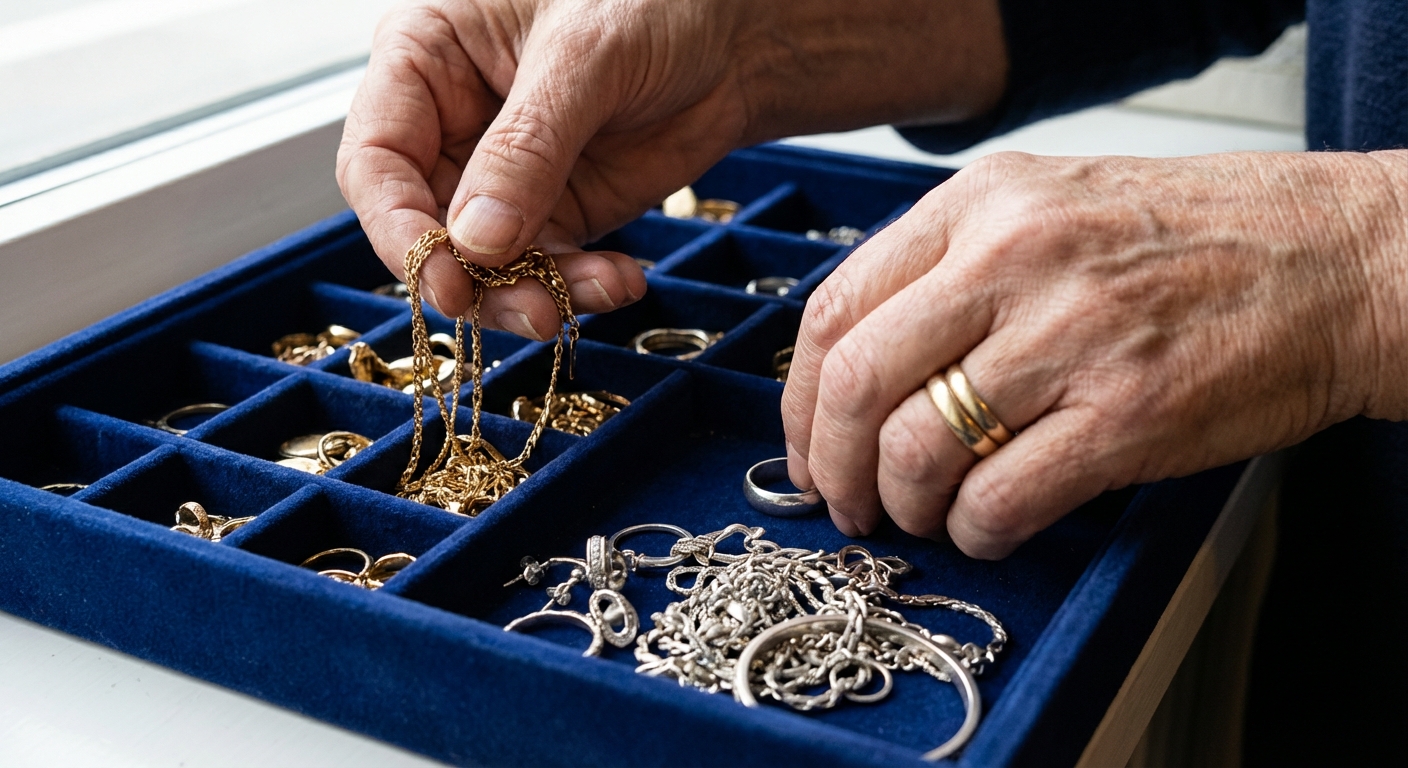
Learning where to put jewelry box in bedroom furniture begins with a rigorous audit of your existing inventory. You cannot design an efficient storage solution until you know the exact volume and types of pieces you are housing. Start by laying everything out on a neutral surface to see the full scope of your collection.
The best part?
Which pieces bring you joy and which don’t?
Professional organization requires a “keep, donate, or repair” mindset to eliminate dead weight. If a piece hasn’t been worn in two years, it is likely just taking up valuable space that could be used for better visibility of your favorites. Identify pieces that need professional cleaning or clasp repairs and move them to a separate queue.
How should you sort by type and material?
Categorization by material prevents chemical reactions between different metals and keeps your look cohesive. Silver should be stored separately from gold, and costume jewelry should never be mixed with fine gemstones.
- Group all stud earrings in one tray.
- Section off cocktail rings by stone color.
- Separate delicate chains from heavy statement necklaces.
Key Takeaway: Decluttering by category prevents overwhelm and reveals exactly how much storage space you truly require.
| Category | Sorting Metric | Preferred Storage | |
|---|---|---|---|
| Fine Jewelry | Material/Metal | Velvet-Lined Boxes | |
| Costume | Color/Trend | Acrylic Dividers | |
| Heirloom | Sentiment/Value | Safe or Locked Case |
Initial sorting is the most labor-intensive step but provides the data needed for a custom-fit storage purchase.
What are the best hidden storage hacks for small closets?
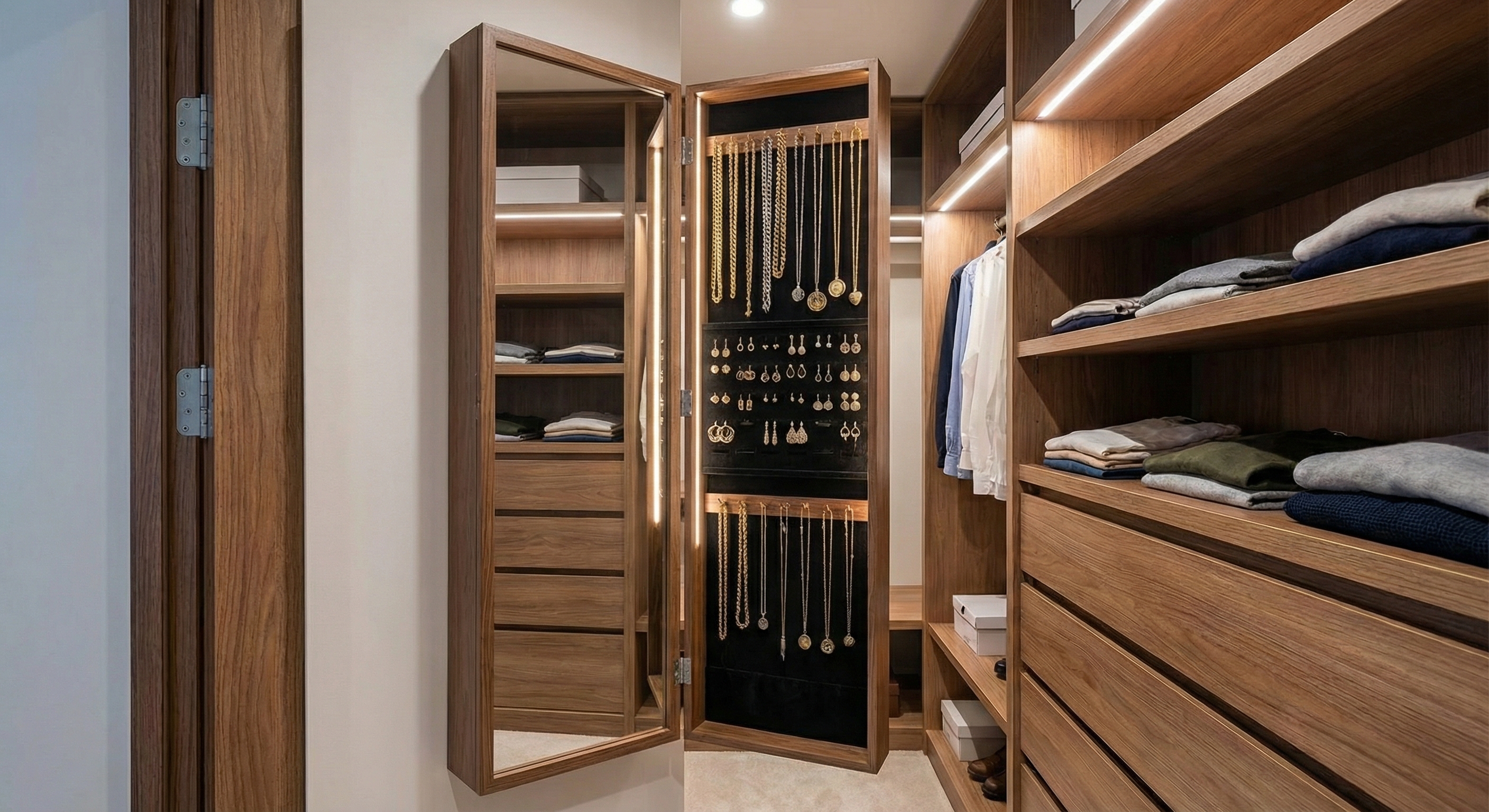
Maximizing where to put jewelry box in bedroom areas often involves finding “hidden” real estate in tight closet layouts. Small closets demand creativity, such as using the vertical planes that often go wasted between hanging garments. Sliding mechanisms and wall-mounted cabinets are the gold standard for high-density storage.
It gets better.
Could the back of your door be the secret spot?
Over-the-door organizers can hold hundreds of items without taking up a single inch of shelf space. Look for options with clear pockets so you can see earrings and bracelets at a glance. This keeps items at eye level and utilizes a surface that is otherwise purely functional.
Are pull-out velvet trays right for your layout?
Installing slim, stackable trays in a closet drawer or on a narrow shelf provides a high-end, boutique feel. These trays allow you to layer your storage while maintaining easy access to the bottom tiers.
- Search for modular trays that can be reconfigured.
- Ensure the velvet is high-quality to prevent snagging.
- Use trays with lids for items that are prone to dust.
Key Takeaway: Vertical and “dead” space can be transformed into premium jewelry real estate with the right hanging or sliding tools.
| Hack Type | Space Saved | Best For | |
|---|---|---|---|
| Over-Door Pockets | High | Costume Bracelets/Earrings | |
| Pull-Out Trays | Medium | Delicate Rings & Studs | |
| Adhesive Hooks | Low | Daily Wear Necklaces |
Utilizing door-back storage can increase your available jewelry surface area by up to 40% in standard closets.
How can you protect your precious metals from tarnish?
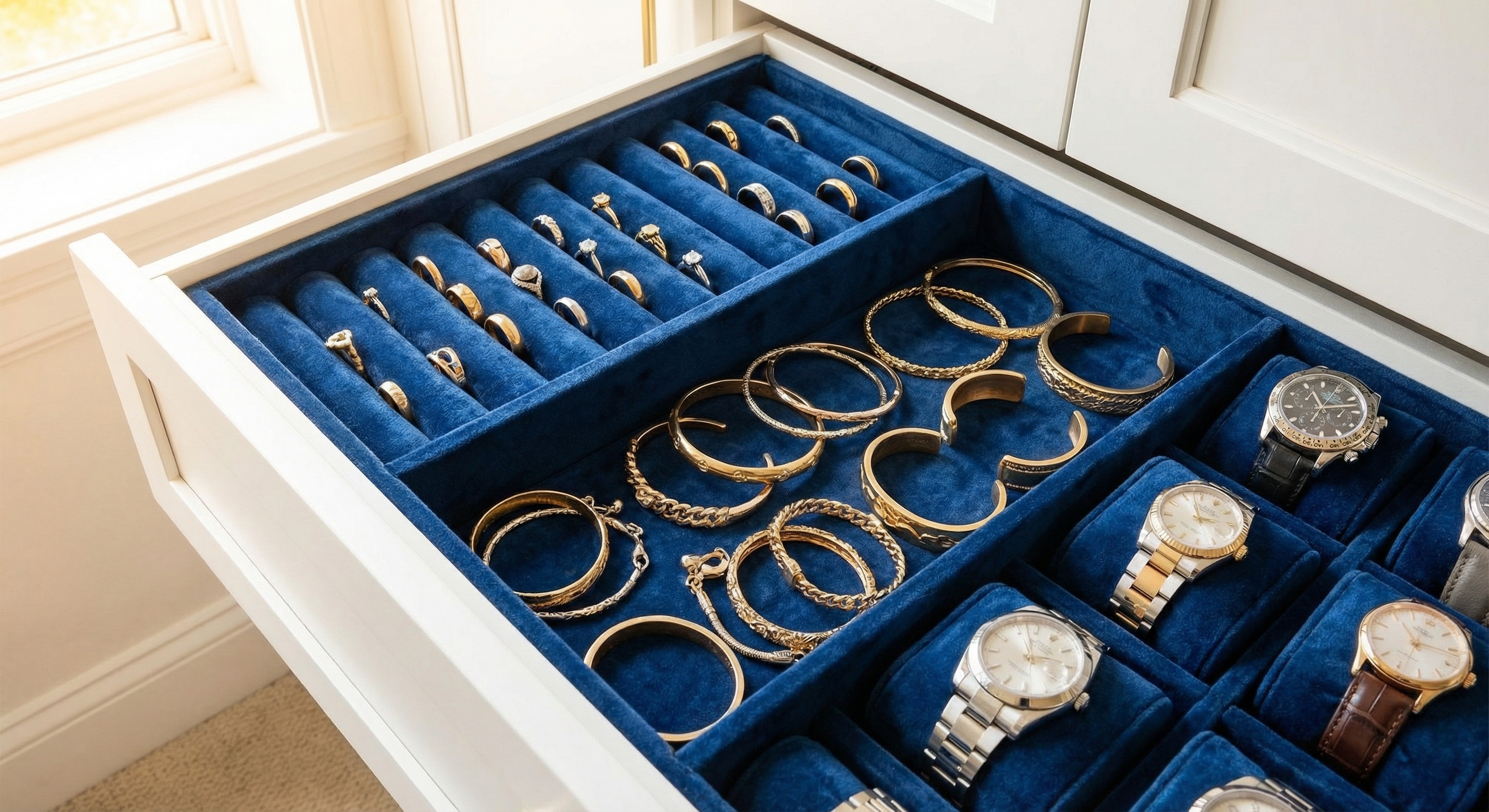
Knowing where to put jewelry box in bedroom zones also means considering the environmental factors that cause oxidation. Moisture and air exposure are the primary enemies of silver and certain alloys, leading to that dull, dark patina. Your storage must act as a barrier against the elements while providing soft cushioning.
But wait, there’s more.
Does your storage solution provide enough airflow?
While you want to limit excess air to prevent tarnish, completely airtight containers can trap moisture, which is equally damaging. A well-constructed box with a secure but breathable lid is ideal for most climates. Avoid storing jewelry in the bathroom, where steam will accelerate the tarnishing process significantly.
Should you use anti-tarnish strips or pouches?
Incorporating anti-tarnish technology into your closet setup is a low-cost, high-impact move for preservation. Small charcoal-based strips or specialized silver-cloth pouches can absorb the gases that cause discoloration.
- Place one strip in every closed drawer.
- Use individual pouches for sterling silver pieces.
- Replace anti-tarnish products every six months.
Key Takeaway: Proper storage isn’t just about looks; it’s about preserving the value and shine of your investment pieces.
| Metal Type | Primary Threat | Protection Method | |
|---|---|---|---|
| Sterling Silver | Sulfur/Oxidation | Anti-Tarnish Strips | |
| Gold (14k+) | Scratches | Velvet-Lined Slots | |
| Pearls | Dehydration/Acids | Breathable Silk Pouch |
Atmospheric protection is often the difference between a piece that lasts a lifetime and one that requires constant polishing.
Why should you categorize jewelry by frequency of use?
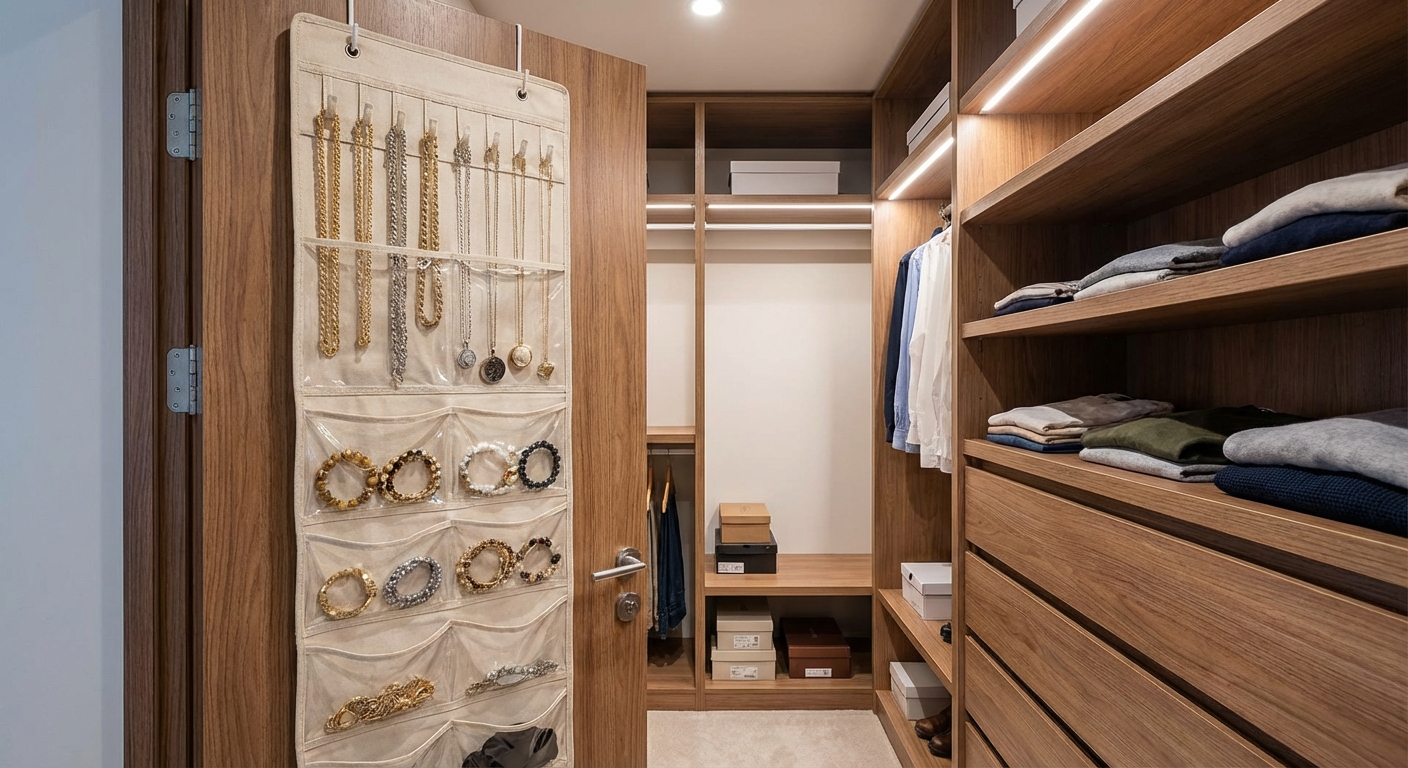
Efficiency in where to put jewelry box in bedroom design is entirely dependent on how quickly you can access your daily essentials. You don’t want to dig through evening gala necklaces to find the simple studs you wear to the office. A tiered approach to accessibility ensures your most-used items are always “front of house.”
Think of it this way.
Where do your everyday staples belong?
Your “go-to” pieces—wedding bands, daily watches, and signature studs—should occupy the most accessible top tray or a dedicated bedside dish. This reduces “decision fatigue” in the morning and ensures you never leave the house feeling unfinished. Accessibility should be the primary driver of your organizational map.
How do you safely store occasional statement pieces?
Items worn only for special events can be stored in lower tiers, back corners, or even in their original branded packaging. Keeping these larger, bulkier items out of the way prevents them from tangling with your daily chains.
- Use the “Prime Zone” (eye to waist level) for daily items.
- Use the “Lower Zone” for heavy bangles and statement sets.
- Use the “Upper Zone” for seasonal or heirloom pieces.
Key Takeaway: Accessibility should be dictated by how often you reach for an item, keeping your daily routine fast and friction-free.
| Usage Tier | Item Examples | Placement | |
|---|---|---|---|
| Tier 1: Daily | Studs, Watch, Wedding Ring | Top Tray/Eye Level | |
| Tier 2: Weekly | Hoop Earrings, Layering Chains | Second Tier/Drawer | |
| Tier 3: Occasional | Gala Sets, Brooches | Bottom Tier/Storage Box |
Frequency-based organization can shave up to five minutes off your daily grooming routine.
Is lighting the missing piece in your closet setup?
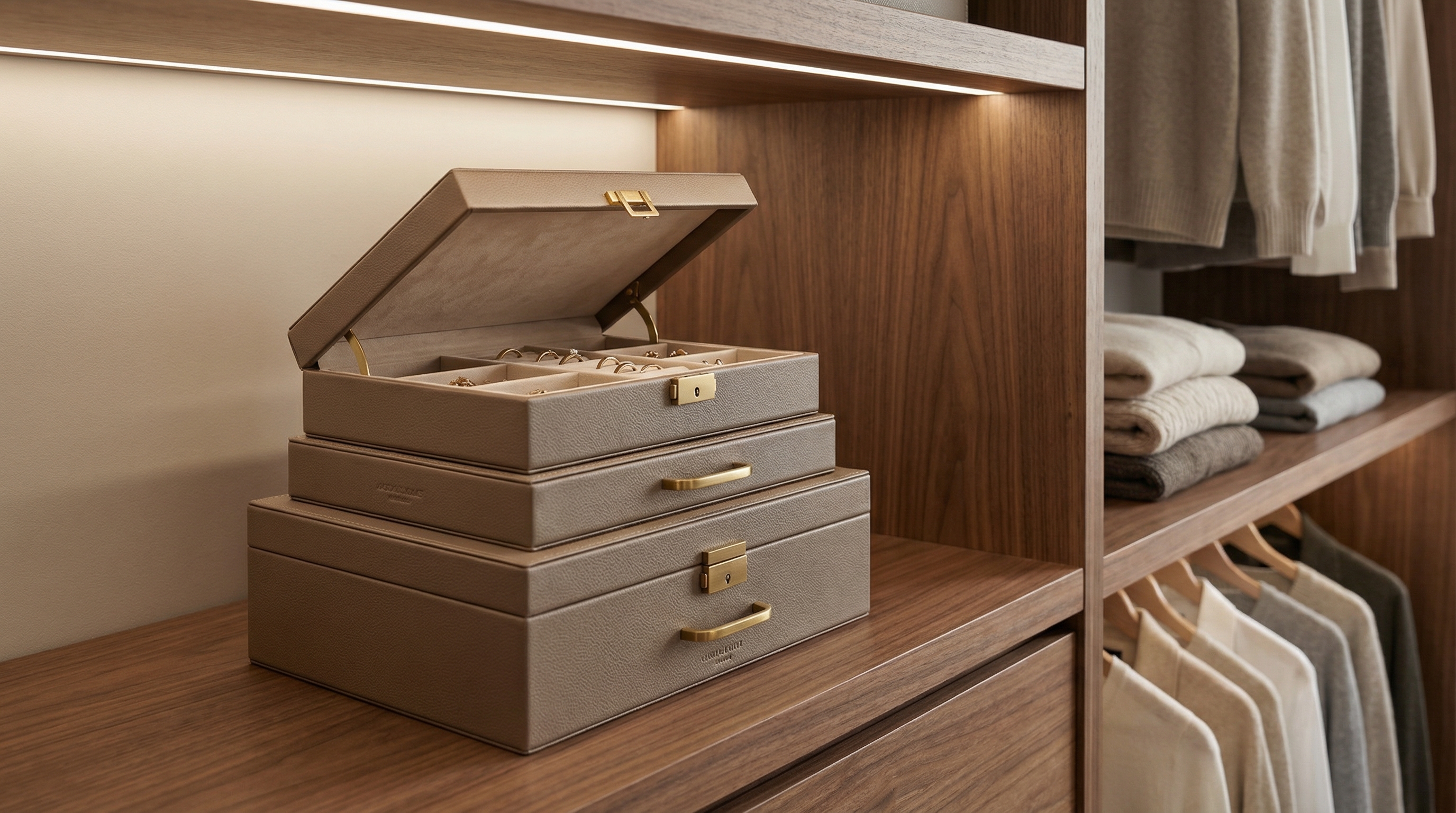
The best where to put jewelry box in bedroom locations are rendered useless if you cannot clearly see the contents of your collection. Dark closet corners are where jewelry goes to be forgotten or lost. Proper illumination allows you to differentiate between white gold and platinum or dark navy and black gemstones.
You see?
Can LED strip lights help you find that earring?
Battery-operated or hard-wired LED strips are a game-changer for closet shelves and drawer interiors. Modern LEDs don’t emit heat, meaning they won’t damage delicate stones or melt the adhesives used in some costume jewelry. Motion-activated lights are especially helpful, turning on the moment you open the closet door.
Does natural light affect your jewelry’s quality?
While natural light is great for viewing colors, prolonged exposure to direct sunlight can fade certain gemstones like amethyst or rose quartz. Position your jewelry storage away from windows to prevent UV damage and temperature fluctuations.
- Choose “Cool White” LEDs for the most accurate color rendering.
- Install lights directly above the trays to minimize shadows.
- Avoid halogen bulbs as they generate excessive heat.
Key Takeaway: Good visibility prevents “lost” jewelry syndrome and ensures you can distinguish between similar shades of gems.
| Lighting Type | Benefit | Best Application | |
|---|---|---|---|
| LED Strips | Low Heat/High Detail | Drawer & Shelf Edges | |
| Motion Sensors | Hands-Free | Main Closet Entry | |
| Spotlight | High Focus | Highlighted “Hero” Pieces |
Upgrading closet lighting is the most cost-effective way to make a modest jewelry collection feel like a high-end boutique.
How do you keep necklaces from tangling forever?
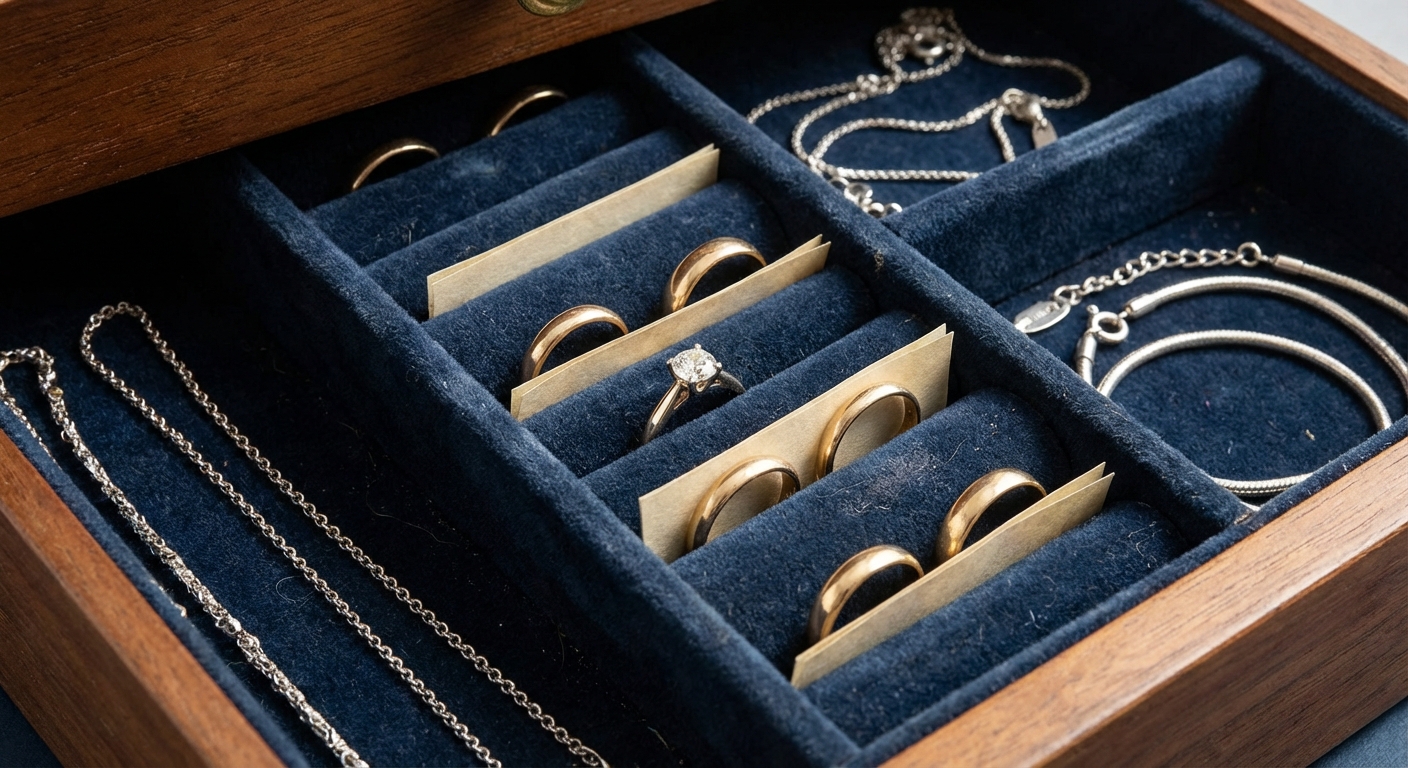
Determining where to put jewelry box in bedroom setups must address the unique architectural needs of necklaces. Gravity is the only foolproof method for preventing fine chains from knotting. If you must store them flat, they require individual channels to keep them from migrating toward one another.
Here is the kicker.
Will hanging hooks change your morning routine?
Wall-mounted hooks or tiered necklace stands are the most effective way to store chains of all lengths. By hanging them, you eliminate the risk of the “bird’s nest” tangle that occurs when multiple chains are placed in a bowl or flat drawer. This also allows you to see the full length and pendant style at a glance.
Are clear acrylic dividers worth the investment?
If hanging isn’t an option, acrylic dividers within a shallow drawer provide a visual grid that keeps each necklace in its own lane. These dividers are easy to clean and allow the beauty of the jewelry to remain the focal point.
- Space hooks at least 1 inch apart to avoid overlap.
- Use felt-lined channels for extra-delicate silk threads.
- Hang statement necklaces on reinforced hooks to handle the weight.
Key Takeaway: Hanging or individual sectioning is the only foolproof way to stop the dreaded necklace “bird’s nest.”
| Storage Method | Tangle Risk | Space Efficiency | |
|---|---|---|---|
| Vertical Hooks | Near Zero | High (Wall Space) | |
| Individual Channels | Low | Medium (Drawer Space) | |
| Open Tray/Dish | High | Low (High Mess) |
Necklace tangles are responsible for over 60% of accidental chain breakage in home environments.
What about those bulky watches and statement cuffs?
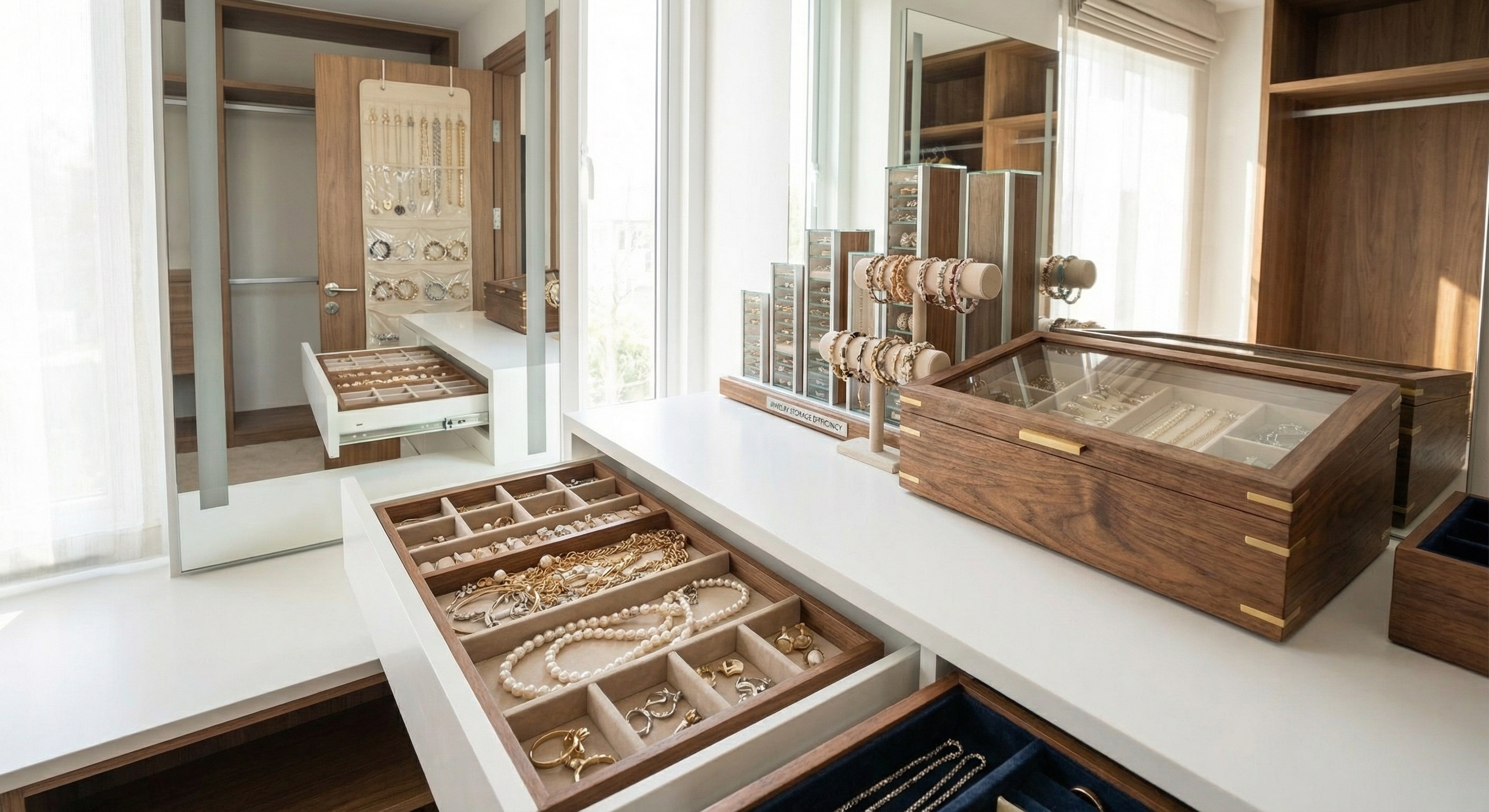
When planning where to put jewelry box in bedroom systems, many people forget to account for the physical volume of watches and cuffs. These items cannot be flattened and require structured support to maintain their shape. Forcing a rigid cuff or a leather watch band into a small slot will lead to permanent creasing or structural failure.
What’s the bottom line?
Can watch winders or pillows save your timepieces?
Soft pillows are essential for maintaining the tension of watch bands and preventing the metal from scratching the case back. For automatic watches, a winder ensures the movement stays lubricated and the time stays accurate. These larger components often require deeper drawers or dedicated shelf space.
Do you have deep enough drawers for large cuffs?
Standard jewelry inserts are often too shallow for chunky wooden or metal cuffs. You may need to look for “deep-well” organizers or use open-top acrylic bins for these larger-than-life accessories.
- Use C-shaped inserts for rigid bracelets.
- Allocate a 3-inch depth for standard watch storage.
- Store oversized “statement” pieces in individual boxes to prevent crushing.
Key Takeaway: Don’t try to force oversized items into small slots; give bulky accessories the specialized space they deserve.
| Accessory Type | Required Depth | Support Method | |
|---|---|---|---|
| Luxury Watch | 3 – 4 Inches | Padded Pillow | |
| Statement Cuff | 2.5 – 3 Inches | C-Ring or Upright Bin | |
| Tennis Bracelet | < 1 Inch | Flat Slotted Tray |
Properly supporting a leather watch band can extend its aesthetic lifespan by several years.
How do you maintain this organized system long-term?
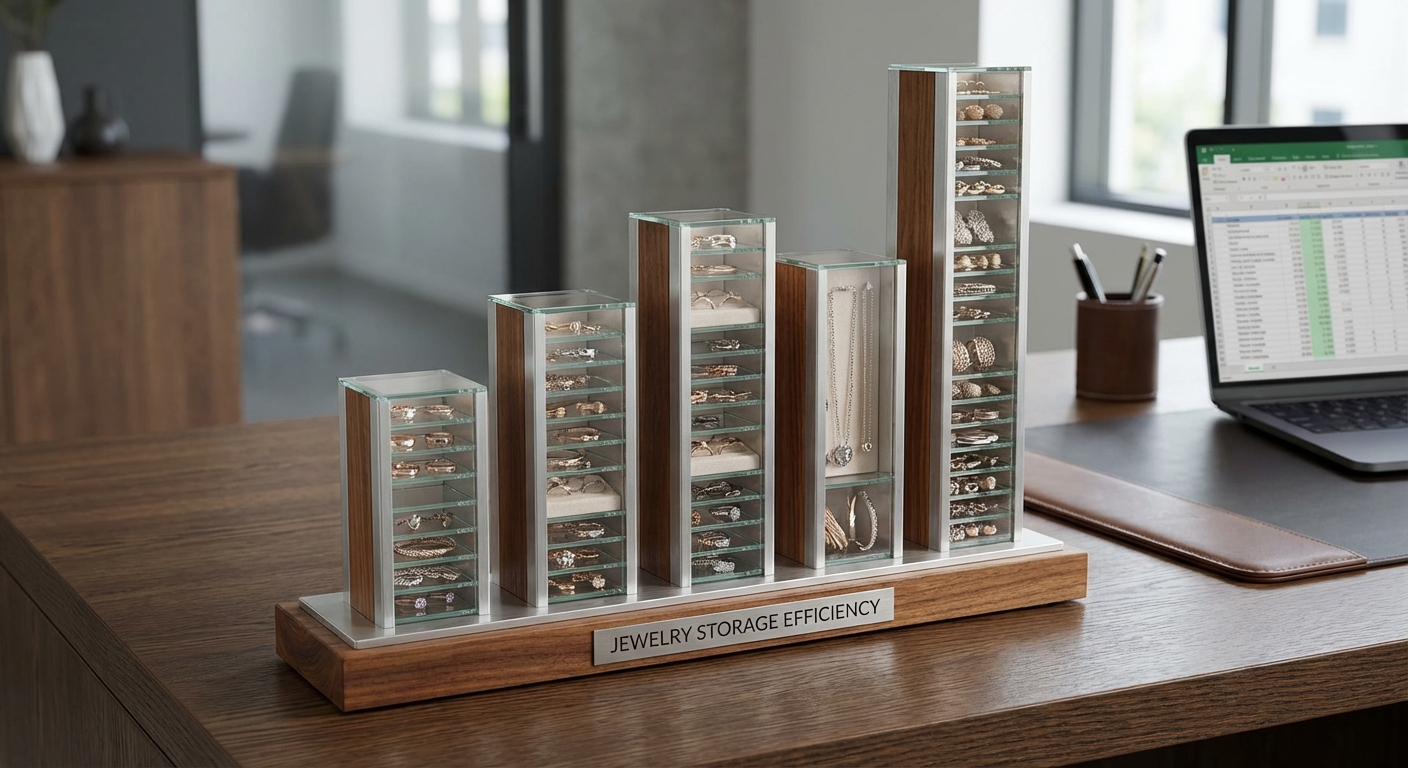
The ultimate success of your where to put jewelry box in bedroom strategy depends on your commitment to maintenance. Even the most expensive system will fail if you revert to tossing items on the nearest surface. Organization is a habit, not a one-time event, requiring consistent daily and seasonal attention.
Want to know the secret?
Will a five-minute nightly reset save your sanity?
The most organized people in the world spend five minutes every night putting their accessories back in their designated homes. This prevents the “clutter creep” that happens when items accumulate on nightstands or dresser tops. If a piece is dirty or needs repair, place it in a pre-defined “action” zone immediately.
Is it time for a seasonal jewelry audit?
Your jewelry needs change with the seasons; heavy scarves in winter might mean fewer long necklaces, while summer wardrobe shifts might highlight more colorful bangles. Use the change of seasons to rotate your inventory, bringing relevant pieces to the front and retiring others to deep storage.
- Wipe down high-use pieces with a microfiber cloth weekly.
- Check clasps and prongs every six months.
- Refresh anti-tarnish strips twice a year.
Key Takeaway: Consistency is the final ingredient in any organization project; a small daily effort prevents a major weekend overhaul later.
| Maintenance Task | Frequency | Duration | |
|---|---|---|---|
| Nightly Reset | Daily | 2-5 Minutes | |
| Microfiber Wipe | Weekly | 5 Minutes | |
| Full Inventory Audit | Quarterly | 1 Hour |
Long-term maintenance is 90% habit and 10% having the right tools already in place.
Frequently Asked Questions
Can I store my jewelry in a bathroom instead?It is generally not recommended to store fine jewelry in a bathroom. The high humidity and temperature fluctuations from your shower can cause metals like silver to tarnish rapidly and may weaken certain gemstone adhesives over time.
What’s the best way to clean a velvet jewelry tray?You can use a standard lint roller or a piece of masking tape to gently lift away dust and fibers. For deeper cleaning, a small handheld vacuum with a soft brush attachment works well to remove debris without damaging the delicate pile of the velvet.
How do I know if my jewelry box is too small?If you find yourself stacking items on top of each other or if you can no longer see the bottom of the compartments, your system is over-capacity. Overcrowding leads to tangles and scratches, signaling it is time to upgrade to a modular or larger storage solution.
Can I use Command hooks for heavy necklaces?Yes, provided you check the weight rating on the packaging. They are an excellent damage-free solution for adding vertical storage to the side of a closet cabinet or the back of a door, especially for chunky statement pieces.
What’s the best height for a wall-mounted jewelry mirror?Ideally, the center of the mirror should be at your eye level, which is typically 57 to 60 inches from the floor. This allows you to see how your jewelry coordinates with your full silhouette and outfit during the dressing process.
Strategic Conclusion
Transforming your closet into a high-functioning jewelry gallery is about more than just aesthetics; it is an investment in the longevity of your collection. By choosing the right where to put jewelry box in bedroom locations and implementing modular, protective storage, you eliminate the daily stress of tangles and the long-term risk of damage. At YiXin Packaging, we are dedicated to helping brands and individuals create unboxing and storage experiences that delight and protect. We invite you to explore our premium range of custom solutions and contact us today to elevate your jewelry organization to professional standards.