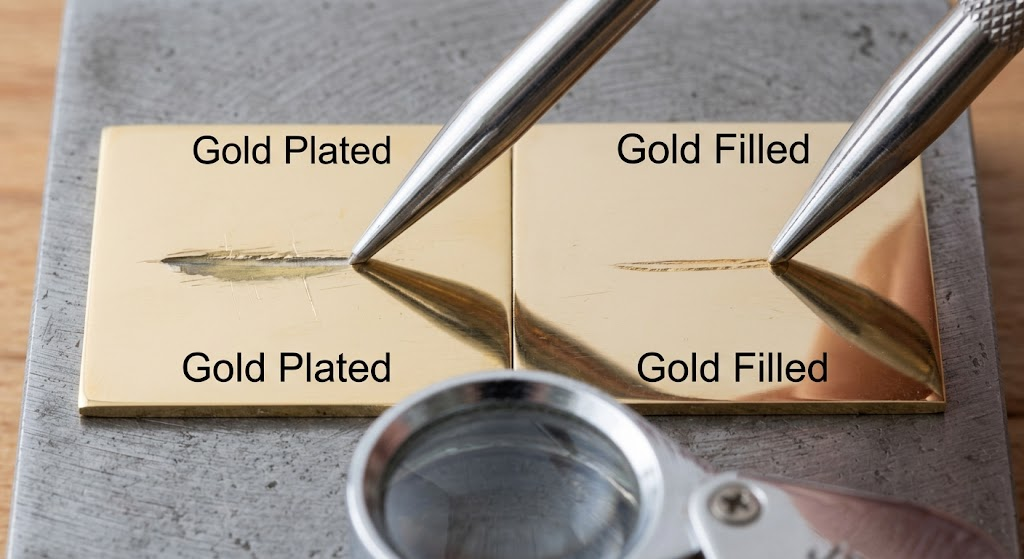
The primary difference between gold plating, gold fill, and solid gold lies in the gold content and how that gold is attached to the base metal. Choosing jewelry materials without technical knowledge leads to purchasing errors that can damage your brand’s reputation. You might accidentally buy a piece that turns green or tarnishes after only three wears, leading to customer dissatisfaction. The price gap between gold filled vs gold plated can be confusing, making it easy to overpay for low-quality items. Understanding these differences helps you select the right products and packaging for your luxury jewelry brand.
What defines gold filled vs gold plated?
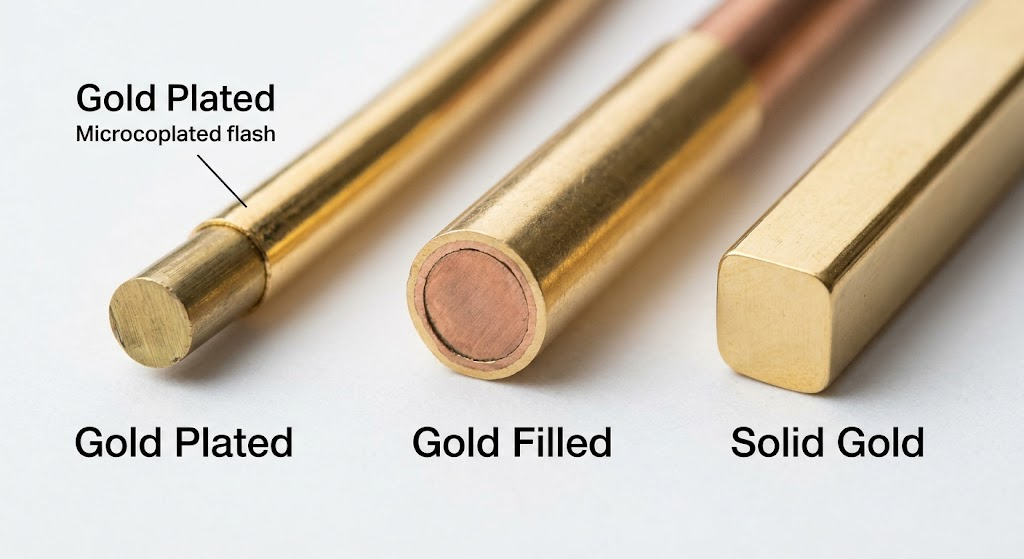
Gold filled involves a thick layer of gold mechanically bonded to a base metal, while gold plating uses a microscopic layer applied via electricity to define gold filled vs gold plated products. This structural difference determines how the jewelry will react to daily wear and environmental factors.
Believe it or not:
- Gold plating uses less than 0.05% actual gold.
- Gold filled must contain at least 5% gold by weight.
- The base metal for both is typically brass or copper.
The basics of electroplating
Electroplating uses an electric current to deposit a very thin layer of gold onto a base metal. This process is fast and cost-effective for mass-produced fashion items. However, the resulting layer is often only a few microns thick.
How mechanical bonding works
Mechanical bonding uses extreme heat and pressure to fuse a thick sheet of gold to a core metal. This creates a permanent bond that is much thicker than any electroplated coating. It ensures the piece retains its gold appearance even with heavy use.
Key Takeaway: While plating offers a temporary golden look, gold fill provides a substantial layer of real gold that resists wear.
| Feature | Gold Plated | Gold Filled | |
|---|---|---|---|
| Application | Electric Current | Heat & Pressure | |
| Thickness | Flash/Thin | Thick/Bonded | |
| Gold Content | <0.05% | 5% |
The mechanical bond in gold-filled jewelry ensures a much higher intrinsic value compared to simple electroplating.
Why price gold filled vs gold plated differently?
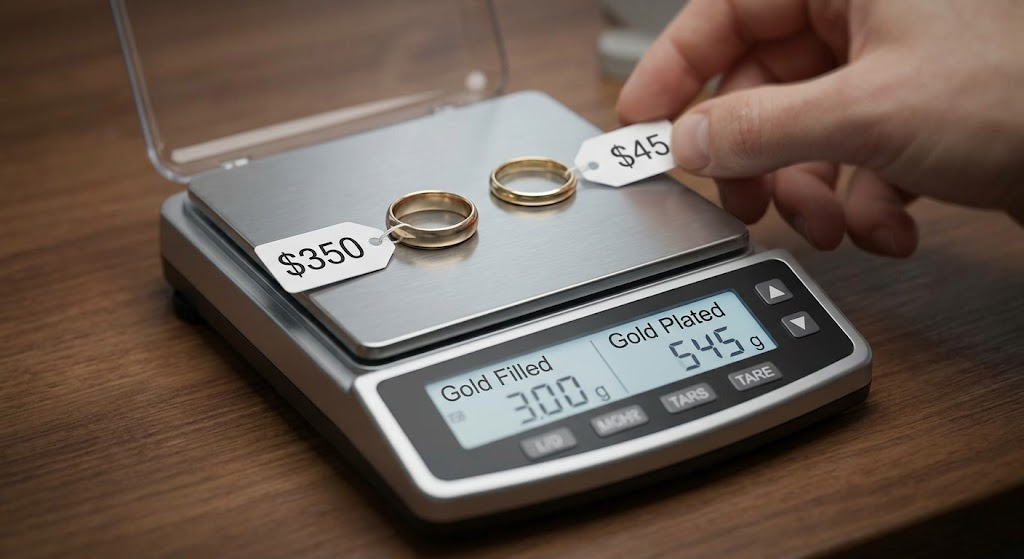
The cost of gold filled vs gold plated materials differs because of the volume of precious metal and the complexity of manufacturing. Brands must understand these price points to maintain healthy margins while offering quality.
Think about it:
- Gold filled items carry a premium due to the 1/20th gold weight rule.
- Plating is the most budget-friendly option for fast-fashion collections.
- Manufacturing gold-filled components requires more labor and specialized equipment.
Understanding the 5% solid gold rule
The 5% rule ensures that gold-filled jewelry has a measurable amount of precious metal. This makes it a mid-range luxury option that bridges the gap between budget and fine jewelry. It provides a “real gold” feel without the five-figure price tag of solid pieces.
Key Takeaway: Pricing is directly tied to the weight of the gold used and the durability of the finished product.
| Component | Plated Cost | Filled Cost | |
|---|---|---|---|
| Raw Material | Low | Moderate | |
| Labor | Low | High | |
| Market Value | Low | Mid-Range |
Higher manufacturing costs for gold-filled items reflect their status as a long-term investment for the consumer.
Does gold filled vs gold plated tarnish fast?
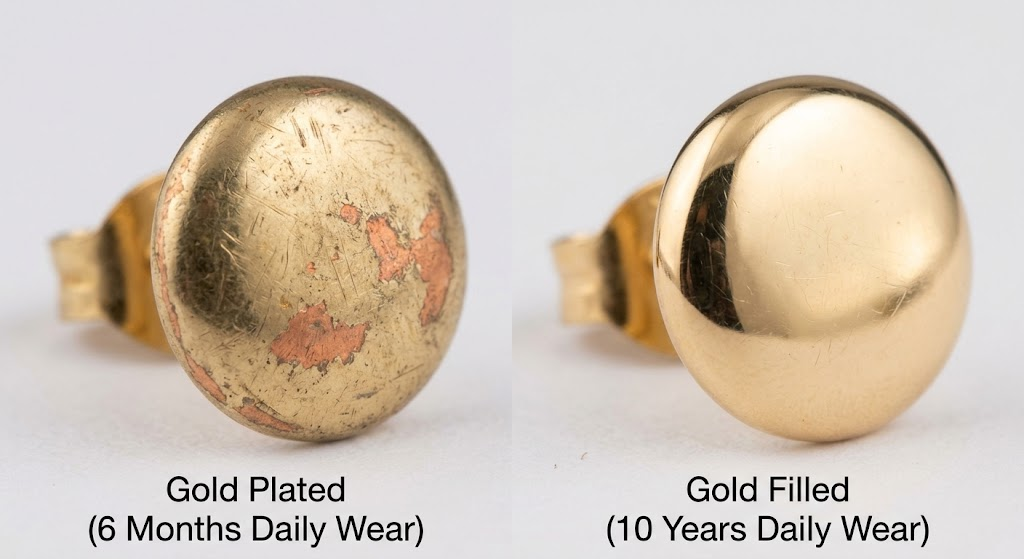
When comparing gold filled vs gold plated durability, gold filled resists tarnishing for decades while plating may wear off in months. The thickness of the gold layer is the primary defense against oxidation.
You might be wondering:
- Exposure to water and sweat accelerates tarnish on plated items.
- Gold filled can last up to 30 years with proper maintenance.
- Base metals in plated jewelry eventually seep through the thin surface.
Which metal offers a longer lifetime?
Gold-filled pieces are designed for daily wear and can withstand moisture better than plated alternatives. If your customers want an “everyday” staple, gold fill is the superior recommendation. Plated jewelry is best marketed as occasional wear for specific trends.
Can your skin turn green from plating?
Skin discoloration occurs when the base metal, like copper, reacts with the acids in your skin. Because the gold layer on plated items is so thin, it wears down quickly to expose these reactive metals. Gold fill acts as a thick barrier that prevents this reaction for most users.
Key Takeaway: Gold filled is the industry standard for non-tarnish, affordable jewelry that stands the test of time.
| Durability Factor | Gold Plated | Gold Filled | |
|---|---|---|---|
| Tarnish Resistance | Low | High | |
| Typical Lifespan | 3-6 Months | 10-30 Years | |
| Daily Wear | Not Recommended | Excellent |
The longevity of gold-filled jewelry makes it a more sustainable choice for brands focusing on quality over quantity.
Which is tougher: gold filled vs gold plated?
Solid gold is the toughest and most versatile for complex designs, but gold filled vs gold plated options offer varying levels of structural integrity. Toughness impacts how well a piece handles scratches and resizing.
Wait, there’s more:
- Solid gold can be melted and reshaped without losing its properties.
- Plating can be scratched off by simple contact with hard surfaces.
- Gold filled is durable but difficult to solder or repair.
Why complex designs favor solid gold
Solid gold is a single, consistent metal throughout, allowing for intricate 3D casting and filigree. It does not have layers that can peel or flake during the manufacturing process. This makes it the only choice for high-end engagement rings and heirlooms.
Limitations of gold-filled materials
Gold-filled wire and sheets cannot be easily cast into complex shapes without exposing the base metal core. It is primarily used for chains, simple hoops, and stamped charms. Attempting to resize a gold-filled ring often ruins the gold bond.
Key Takeaway: Solid gold offers the best versatility, while gold fill is restricted to simpler, more linear jewelry structures.
| Design Capability | Solid Gold | Gold Filled | |
|---|---|---|---|
| Casting | Unlimited | Not Possible | |
| Resizing | Easy | Difficult | |
| Scratch Repair | Polishing | None |
Solid gold remains the ultimate choice for jewelry that requires structural modifications or extreme detail.
How to clean gold filled vs gold plated items?
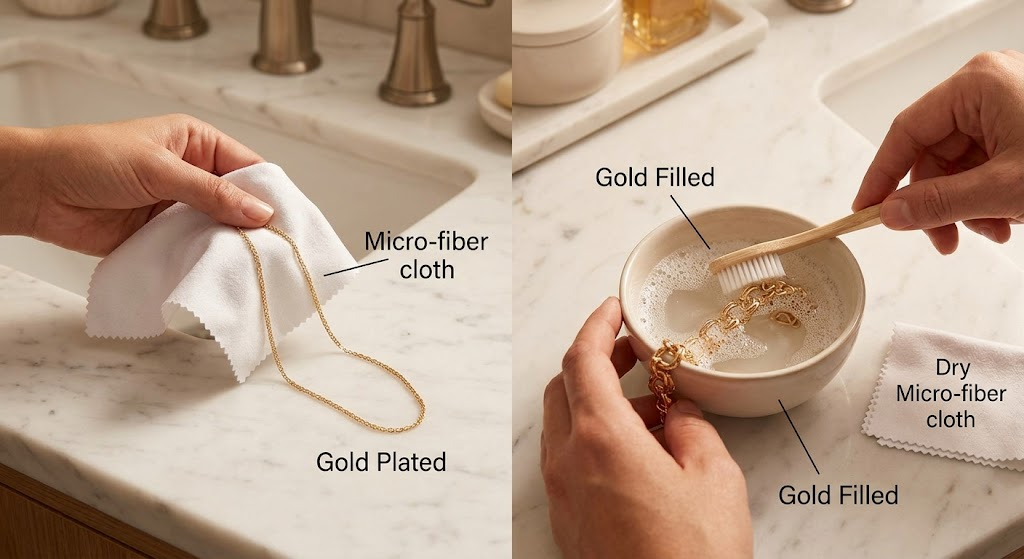
Cleaning methods for gold filled vs gold plated jewelry differ significantly because harsh scrubbing can strip away thin plated layers. Maintaining the luster requires a gentle touch and the right storage in a quality ring-box .
It’s easier than you think:
- Use only mild soap and warm water for all gold types.
- Avoid polishing cloths on plated items to prevent erosion.
- Dry jewelry immediately to prevent water spots and oxidation.
Gentle cleaning for thin layers
Plated jewelry requires the most care because the gold “skin” is incredibly fragile. Never use ultrasonic cleaners or chemical dips, as these can dissolve the thin electroplated layer. A soft micro-fiber cloth is the safest way to remove dust.
Maintaining the shine of bonded gold
Gold-filled jewelry can handle slightly more vigorous cleaning than plated pieces. You can use a soft toothbrush to reach into crevices without worrying about the gold flaking off. However, you should still avoid abrasive cleaners that could dull the surface over time.
Key Takeaway: While gold fill is more resilient, both materials benefit from chemical-free cleaning and dry storage.
| Cleaning Tool | Gold Plated | Gold Filled | |
|---|---|---|---|
| Soft Cloth | Safe | Safe | |
| Soft Toothbrush | Avoid | Safe | |
| Jewelry Dip | No | No |
Consistent, gentle maintenance is the key to preserving the golden glow of your collection regardless of the metal type.
Is gold filled vs gold plated safe for skin?
For individuals with sensitive skin, gold filled vs gold plated choices matter because the thicker bonded layer prevents base metal allergies. Most skin reactions are caused by nickel or copper hiding beneath the gold.
Look closer:
- Solid gold is naturally hypoallergenic and safe for everyone.
- Gold filled provides a thick barrier that usually prevents irritation.
- Cheap plating often contains nickel, a common skin allergen.
Hypoallergenic properties of gold
Gold itself does not react with human skin, but the alloys mixed with it can. Solid gold and gold fill have enough pure gold on the surface to keep these alloys away from your skin. This makes them much safer for ear piercings and sensitive necks.
Identifying the core base metals
Most affordable jewelry uses brass, which is a mix of copper and zinc. If the gold layer is too thin, these metals can leach out and cause “green skin” or rashes. High-quality brands often use sterling silver as a base to create Gold Vermeil, which is a safer plated option.
Key Takeaway: If you have sensitive skin, gold filled or solid gold are the only reliable options for long-term comfort.
| Skin Safety | Solid Gold | Gold Filled | Gold Plated | |
|---|---|---|---|---|
| Allergy Risk | Minimal | Low | High | |
| Green Skin | Never | Rare | Common |
Choosing the right gold type is a health consideration for many customers, not just an aesthetic one.
Gifting gold filled vs gold plated jewelry?
Deciding between gold filled vs gold plated for gifts depends on the expected longevity and the significance of the occasion. You should match the quality of the metal to the emotional weight of the event.
Let’s face it:
- Plated jewelry is perfect for bridesmaids’ gifts or “just because” treats.
- Gold filled is a thoughtful choice for birthdays and graduations.
- Solid gold is reserved for weddings, anniversaries, and milestones.
Choosing value for a gift
When gifting, you want the recipient to enjoy the piece for years to come. Gold filled offers a premium look and feel that suggests a higher level of care and investment. It is the perfect middle ground for someone who appreciates quality but isn’t looking for a diamond heirloom.
Matching the occasion to the metal
Occasional jewelry, like a statement necklace for a single gala, is the ideal use for gold plating. However, for a gift intended to be worn every day, such as a signature bracelet, gold fill is necessary. It ensures the gift doesn’t lose its beauty after only a few months of wear.
Key Takeaway: Use gold plating for fashion-forward gifts and gold fill for meaningful, long-lasting presents.
| Occasion | Best Choice | Longevity | |
|---|---|---|---|
| Fashion Event | Gold Plated | Low | |
| Milestone | Gold Filled | High | |
| Lifetime | Solid Gold | Permanent |
Selecting the right metal ensures your gift remains a beautiful memory rather than a tarnished disappointment.
Storing your gold filled vs gold plated collection?
Proper storage prevents environmental damage, which is especially critical when managing a mix of gold filled vs gold plated stock. Humidity and friction are the two biggest enemies of any gold-finished surface.
Here is the kicker:
- Airtight containers prevent oxygen from reacting with the base metals.
- Velvet-lined boxes stop different pieces from scratching each other.
- Anti-tarnish strips can significantly extend the life of plated items.
Preventing tarnish with proper inserts
Using high-quality inserts in your jewelry boxes creates a protective micro-environment. Soft fabrics like velvet or suede are essential for preventing the “rubbing” that eventually kills gold plating. For long-term storage, PE film boxes provide a 3D floating display that blocks out moisture.
Separating different metal types safely
Never store your gold-plated items in direct contact with solid gold or silver. Harder metals can easily scratch the surface of plated or filled pieces, leading to permanent damage. Individual compartments or pouches are the best way to organize a diverse collection.
Key Takeaway: Protective, organized storage is the most effective way to slow down the natural aging process of gold jewelry.
| Storage Need | Solution | Benefit | |
|---|---|---|---|
| Scratching | Velvet Linings | Surface Protection | |
| Oxidation | Airtight Boxes | Tarnish Prevention | |
| Organization | Compartments | No Metal Friction |
Investing in professional-grade storage solutions protects your inventory and ensures your customers receive pristine products.
Choosing gold filled vs gold plated for bands?
Because rings endure constant friction, selecting gold filled vs gold plated materials determines if the band will stay gold or reveal the base metal. Rings are subjected to hand washing, lotions, and hard surfaces every day.
Think about the future:
- Plated rings often show wear on the bottom of the band within weeks.
- Gold filled rings can survive years of daily use before showing wear.
- Engagement bands should always be solid gold to allow for lifetime polishing.
Why rings require high durability
Our hands are the most active part of our body, making jewelry on fingers highly susceptible to abrasion. If you sell rings, using gold fill is the bare minimum for customer satisfaction. Plating is generally only acceptable for adjustable, “fun” rings that aren’t meant for longevity.
When to invest in solid gold?
If a ring is meant to be resized or contains expensive gemstones, solid gold is the only logical choice. You cannot safely resize a gold-filled band without leaving a visible seam of base metal. Solid gold ensures that the ring can be maintained and passed down through generations.
Key Takeaway: For high-friction items like rings, gold filled is the budget-friendly standard, while solid gold is the luxury benchmark.
| Ring Type | Gold Plated | Gold Filled | Solid Gold | |
|---|---|---|---|---|
| Fashion/Trendy | Yes | Yes | Optional | |
| Everyday Signature | No | Yes | Yes | |
| Wedding/Bridal | No | No | Yes |
Choosing the right metal for rings prevents the common “green finger” complaint and builds long-term brand trust.
Packaging gold filled vs gold plated gifts?
Your choice of packaging for gold filled vs gold plated items should reflect the value and protect the specific type of gold surface. High-end packaging acts as a silent salesperson for your jewelry brand.
Bottom line:
- Custom jewelry boxes elevate the perceived value of gold-filled pieces.
- Secure packaging prevents jewelry from shifting and scratching during shipping.
- The unboxing experience is the first touchpoint for your customer’s quality assessment.
Protecting the mechanical bond
Even the tough bond of gold-filled jewelry can be damaged by rough shipping conditions. Using inserts that hold the jewelry firmly in place prevents it from rubbing against the box walls. This is especially vital for delicate plated items where even a small scratch can ruin the aesthetic.
Enhancing the unboxing experience
Luxury brands use specialized boxes to tell a story and justify a higher price point. Whether it is a velvet-lined drawer or a modern PE film display, the packaging must match the quality of the metal inside. Consistent branding across your packaging builds a professional image that customers remember.
Key Takeaway: Quality packaging is an investment that protects the physical and perceived value of your gold jewelry.
| Packaging Type | Best For | Brand Impact | |
|---|---|---|---|
| Custom Rigid Box | Gold Filled | High Luxury | |
| PE Film Display | Modern Styles | High Tech | |
| Velvet Pouch | Small Accessories | Classic Feel |
Strategic packaging ensures your jewelry arrives in perfect condition and creates a lasting impression on your customers.
Conclusion: Making the Right Choice
Mastering the nuances of gold materials is the first step toward building a successful jewelry brand. By understanding the chemical and mechanical differences between these metals, you can provide accurate information to your customers and choose the right price points for your market. Whether you focus on affordable gold-plated trends or high-end gold-filled staples, your commitment to quality defines your brand’s future.
At YiXin Packaging, we are dedicated to helping you protect and showcase your investment with premium, factory-direct solutions. We resolve the problem of generic, low-quality packaging by providing custom-designed boxes that enhance your brand’s vision of luxury and durability. Ready to elevate your brand’s presentation? Contact us today for custom packaging solutions that protect and showcase your gold collection.
Frequently Asked Questions
Can I wear gold filled jewelry in the shower?Yes, you can occasionally wear gold filled jewelry in water, but it is not recommended for long-term durability. While the thick gold layer resists moisture better than plating, chemicals in soaps and shampoos can eventually dull the finish. It is always best to remove jewelry before showering or swimming to maintain its maximum shine.
How do I know if my jewelry is gold filled or plated?Check for a hallmark on the piece, such as “1/20 14K GF,” which indicates it is gold filled. Gold-filled items are legally required to be stamped with their gold content and the “GF” initials. If there is no stamp or it only says “14K,” it is likely either solid gold or gold plated, depending on the price and weight.
Will gold filled jewelry turn my skin green?No, it is very rare for gold filled jewelry to cause skin discoloration. The thick layer of gold prevents the base metal from reacting with your skin’s oils and sweat. If you experience a reaction, you may have an extreme sensitivity to the specific alloy used, or the gold layer may have been damaged.
Is gold plating worth the money for a business?Yes, gold plating is an excellent choice for businesses focusing on fast-fashion and high-volume sales. It allows you to offer trendy designs at a very low price point that appeals to impulsive buyers. However, you must be transparent with customers about its shorter lifespan to manage expectations.
Can gold filled jewelry be resized?Generally, no, gold filled jewelry cannot be resized by traditional soldering methods. The heat required to join the metal can cause the gold layer to “sink” into the base metal or flake off, exposing the brass core. Most jewelers will only resize solid gold pieces to ensure a seamless and durable finish.