
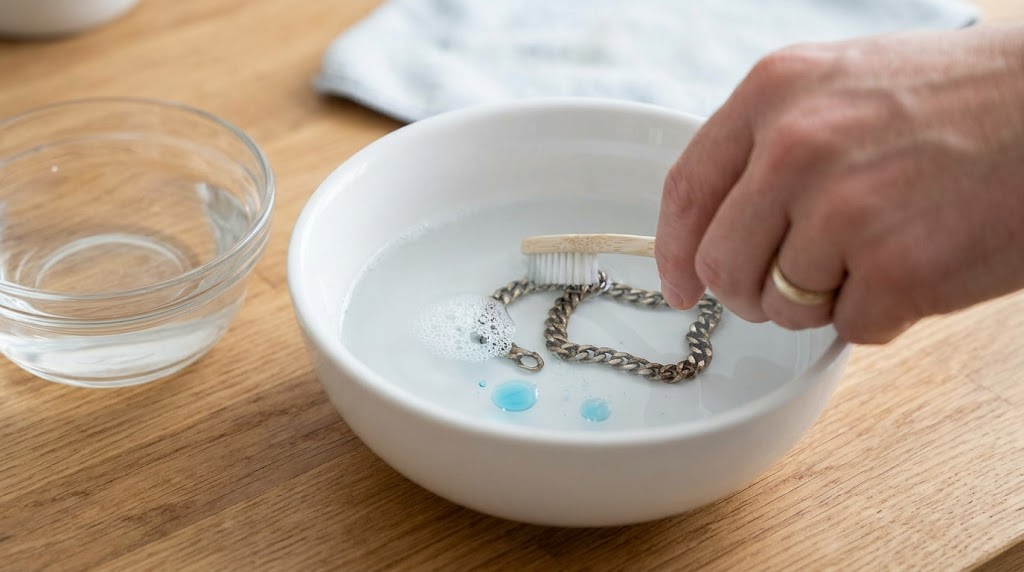
The best methods for cleaning stainless steel jewelry involve using mild dish soap and water, a toothpaste paste, or a baking soda solution to remove grime and restore shine. You want your inventory to sparkle, but everyday wear causes dullness and oily buildup. Without a proper maintenance routine, your high-quality pieces can look neglected, potentially hurting your brand’s reputation for excellence. By mastering how to clean stainless steel jewelry , you can ensure your products always meet the highest presentation standards.
Why is how to clean stainless steel jewelry important?

It preserves the metal’s luster and prevents the buildup of environmental contaminants. Regular maintenance is vital for anyone selling or wearing these durable pieces. Learning how to clean stainless steel jewelry ensures that the protective chromium layer remains intact and effective against rust.
What causes stainless steel to lose its shine?
Everyday elements are the primary culprits behind a dull finish on your metal items. Sweat, lotions, and perfumes create a hazy film that masks the natural brilliance of the steel.
- Body oils.
- Environmental dust.
- Chemical residue.
Think about it: even the strongest metal needs a little help to stay looking brand new.
Does chromium protect the metal forever?
Chromium is the secret weapon that prevents rust by forming a thin oxide layer on the surface. However, harsh chemicals like bleach or heavy grime can compromise this barrier over time.
- Avoid chlorinated water.
- Keep away from strong acids.
- Rinse immediately after ocean exposure.
The best part? You can easily restore this protection with a simple cleaning routine.
Key Takeaway: Chromium provides excellent protection, but regular maintenance is required to prevent surface dullness and long-term corrosion.
| Factor | Impact on Steel | Protection Method | |
|---|---|---|---|
| Sweat | Causes dullness | Soap and water | |
| Chlorine | Risks pitting | Avoidance | |
| Grime | Hides luster | Soft brushing |
Regular cleaning keeps the chromium layer active and ensures the surface remains reflective and bright.
Is soap and water the most effective method?
Using warm water mixed with mild dish soap is the most effective way for how to clean stainless steel jewelry without risking chemical damage. This method emulsifies oils and lifts surface dirt easily. It is the gentlest approach for routine upkeep.
Using mild dish soap for gentle cleaning
You should always start with the least aggressive cleaning agent possible to protect the finish. Mild liquid dish soap is perfect because it breaks down oils without being acidic.
- Use lukewarm water.
- Add only 2-3 drops of soap.
- Stir until bubbles form.
Look: simplicity is often the most professional choice when handling high-end inventory.
The importance of the double-rinse process
After scrubbing your pieces, you must ensure that no soapy residue remains on the metal. Soap film can attract more dust and make the jewelry look even duller than before.
- Use a separate bowl for rinsing.
- Change the water frequently.
- Inspect the links for bubbles.
Here is the kicker: a second rinse in distilled water can prevent mineral spots from forming.
Key Takeaway: A thorough double-rinse prevents soap film from attracting more dust later, maintaining the shine longer.
| Step | Tool | Goal | |
|---|---|---|---|
| Initial Scrub | Soft cloth | Remove bulk grime | |
| Rinse 1 | Soapy water | Lift oils | |
| Rinse 2 | Clean water | Eliminate residue |
Double rinsing is the secret to a residue-free finish that mimics a factory-new appearance.
How to clean stainless steel jewelry using toothpaste?

Toothpaste acts as a mild abrasive to remove tougher stains and oxidation from the metal surface. It is a highly effective method for pieces that haven’t been cleaned in a long time. Knowing how to clean stainless steel jewelry with this household staple is a great trick for deep cleaning.
Choosing the right non-gel toothpaste
You must select a plain white toothpaste to avoid damaging the jewelry’s surface. Gel formulas do not have the necessary cleaning power, while whitening versions can be too harsh.
- Use standard white paste.
- Avoid charcoal additives.
- Do not use gel varieties.
Believe it or not: the silica in white toothpaste is what provides the safe abrasive action.
Safe scrubbing techniques for polished surfaces
When applying the paste, you should always use a damp cloth and apply very light pressure. If the piece has a brushed finish, make sure to follow the grain of the metal.
- Scrub in a circular motion.
- Focus on tarnished spots.
- Use a soft touch.
The best part? This method can often remove light oxidation that soap alone cannot touch.
Key Takeaway: Avoid gel toothpaste and use plain white formulas to ensure effective cleaning action without scratching the finish.
| Paste Type | Effectiveness | Risk Level | |
|---|---|---|---|
| White Paste | High | Low | |
| Gel Version | Low | Low | |
| Whitening | High | Medium |
White toothpaste offers the perfect balance of abrasion and safety for heavily soiled stainless steel.
Can baking soda help how to clean stainless steel jewelry?

Baking soda is a natural abrasive that is perfect for how to clean stainless steel jewelry when you want a non-toxic deep clean. It reacts with residues to lift them away without the need for heavy scrubbing. It is particularly useful for restoring a high-gloss finish.
Creating a thick cleaning paste
The consistency of your cleaning solution is vital for success when using baking soda. You want a paste that is thick enough to stay on the jewelry rather than running off.
- Mix 2 parts soda to 1 part water.
- Stir until it reaches a paste consistency.
- Apply directly to the metal.
Think about it: a thicker paste allows the alkaline properties to work on the grime more effectively.
Targeting grime in hard-to-reach areas
Using a soft toothbrush with the paste allows you to get into the tiny nooks of chains and settings. The baking soda helps neutralize acidic oils that hide in these crevices.
- Scrub intricate details.
- Let the paste sit for one minute.
- Rinse with warm water.
You see: the chemical action does most of the hard work for you.
Key Takeaway: Baking soda’s natural alkalinity neutralizes acidic oils on the metal for a deeper clean.
| Ingredient | Ratio | Texture | |
|---|---|---|---|
| Baking Soda | 2 Parts | Thick Paste | |
| Water | 1 Part | Liquid Base |
A thick paste ensures the solution stays in contact with the dirt long enough to dissolve it.
Are ultrasonic machines safe for how to clean stainless steel jewelry?

Ultrasonic cleaners are generally safe for plain stainless steel jewelry and provide a deep, automated clean. They use high-frequency sound waves to dislodge dirt from areas that brushes cannot reach. This is a professional-grade option for those handling large volumes of product.
Benefits of high-frequency vibrations
The cavitation process creates millions of tiny bubbles that implode against the metal surface. This force effectively “blasts” away grime from the inside of links and hinges.
- Reaches deep crevices.
- Saves time on manual scrubbing.
- Uniform cleaning results.
Here is the kicker: it removes residues that you didn’t even know were there.
Understanding the risks for specific gemstones
You must be careful with pieces that contain glued-in stones or delicate organic gems. The intense vibrations can loosen adhesives or cause internal fractures in certain stones.
- Avoid with pearls or opals.
- Check settings afterward.
- Use only for solid metal if unsure.
Look: efficiency is great, but protecting the integrity of the piece is always the priority.
Key Takeaway: Always check for loose stones or delicate settings before using high-frequency ultrasonic cleaners.
| Piece Type | Ultrasonic Safe? | Primary Benefit | |
|---|---|---|---|
| Plain Steel Chain | Yes | Deep link cleaning | |
| Glued Gemstones | No | Risks loss of stone | |
| Solid Rings | Yes | Rapid dirt removal |
Ultrasonic cleaners are efficient for industrial-scale maintenance but require selective application to avoid damage.
What tools help with how to clean stainless steel jewelry?
The most important tools for how to clean stainless steel jewelry include soft-bristled brushes and lint-free microfiber cloths. These tools ensure you don’t leave microscopic scratches while removing debris. Using the correct equipment is just as important as the cleaning solution itself.
Choosing soft-bristle brushes for safety
A toothbrush with extra-soft bristles is the best tool for reaching into intricate designs. Harder bristles can create a cloudy appearance on highly polished surfaces over time.
- Select “extra soft” labels.
- Clean the brush after every use.
- Keep one brush per metal type.
Think about it: you wouldn’t use a scouring pad on your car, so don’t use one on your jewelry.
The role of microfiber in the finishing stage
Microfiber cloths are essential for the final buffing stage because they do not leave lint behind. They are designed to trap microscopic particles and moisture effectively.
- Use clean, dry cloths.
- Buff in small circles.
- Avoid paper towels.
The best part? Microfiber provides a mirror-like finish that makes the metal pop.
Key Takeaway: Using microfiber removes moisture and remaining debris without scratching the polished finish.
| Tool | Purpose | Replacement Cycle | |
|---|---|---|---|
| Soft Brush | Crevices and links | Every 3 months | |
| Microfiber | Buffing and drying | When soiled | |
| Lint-free cloth | General wiping | Weekly |
Using the right tools prevents the development of a cloudy appearance on high-polish stainless steel surfaces.
Why is drying vital for how to clean stainless steel jewelry?
Drying is a critical final step for how to clean stainless steel jewelry because it prevents mineral deposits from water. If you let pieces air-dry without wiping them, unsightly spots can form on the surface. These spots are often harder to remove than the original dirt.
Preventing water spots with towel drying
You should use a clean, soft towel to pat the jewelry dry immediately after rinsing. This removes the bulk of the moisture before it has a chance to evaporate and leave minerals behind.
- Pat, don’t rub aggressively.
- Check between links.
- Use a fresh towel section.
Here is the kicker: even clean tap water contains minerals that can ruin a perfect polish.
The value of a complete air-dry period
Even after towel drying, moisture can remain trapped inside hinges or clasps. You should allow the jewelry to sit in a dry environment for at least thirty minutes before storing it.
- Lay flat on a dry cloth.
- Avoid humid bathrooms.
- Ensure total dryness.
Look: moisture trapped in a storage box can lead to oxidation even in stainless steel.
Key Takeaway: Complete air-drying after a manual wipe prevents water spots and moisture-related issues.
| Stage | Duration | Primary Tool | |
|---|---|---|---|
| Towel Dry | 1 Minute | Soft Towel | |
| Air Dry | 30 Minutes | Clean Surface |
Proper drying techniques protect both the luster of the jewelry and the longevity of your storage solutions.
How to clean stainless steel jewelry with deep scratches?
Cleaning alone won’t fix physical damage, so knowing how to clean stainless steel jewelry with scratches often involves professional polishing. For minor marks, specialized polishing cloths can sometimes buff out the imperfections. Deep gouges, however, require specialized machinery to resurface the metal.
Identifying when professional buffing is needed
If the surface feels rough to the touch or the scratch is visible from a distance, it is time for professional help. Jewelers use high-speed buffing wheels and professional compounds to smooth the metal.
- Assess the depth of marks.
- Check the metal grain.
- Consult an expert.
Think about it: it is better to pay for a professional buff than to ruin the piece with DIY sanding.
Checking for structural integrity issues
While cleaning, you should take the opportunity to inspect the piece for any loose parts. Stainless steel is very hard, so if a part is bent, it often requires professional heat or tools to fix.
- Inspect the clasps.
- Check jump rings.
- Test the hinges.
The best part? Catching a loose link early prevents the loss of the entire piece of jewelry.
Key Takeaway: Professional intervention is necessary for deep scratches to avoid further damaging the metal’s surface.
| Issue | Solution | Skill Level | |
|---|---|---|---|
| Light Scuffs | Polishing cloth | Beginner | |
| Deep Gouges | Buffing machine | Professional | |
| Bent Clasp | Specialized tools | Expert |
Knowing your limits prevents accidental damage and ensures your jewelry remains in top condition for years.
How to prevent grime after how to clean stainless steel jewelry?
Prevention is the most effective strategy for how to clean stainless steel jewelry and maintaining a high-end look. By establishing simple daily habits, you can drastically reduce the amount of deep cleaning required. This keeps your inventory ready for display at a moment’s notice.
Establishing daily maintenance habits
You should wipe down your jewelry with a dry cloth at the end of every day. This simple ten-second task removes the day’s accumulation of oils and environmental dust.
- Keep a cloth handy.
- Wipe after every wear.
- Store in a clean spot.
Look: a small daily effort saves you hours of intensive cleaning in the long run.
The impact of protective coatings
You should apply perfumes, hairsprays, and lotions before putting on your jewelry. These beauty products contain chemicals that can create a stubborn, sticky film on the metal.
- Wait for lotions to dry.
- Spray perfume first.
- Remove jewelry for swimming.
Here is the kicker: most “tarnish” on stainless steel is actually just a layer of dried chemicals.
Key Takeaway: Daily habits and chemical avoidance are more effective than occasional deep cleaning sessions.
| Habit | Frequency | Effort Level | |
|---|---|---|---|
| Daily Wipe | Every use | Low | |
| Monthly Wash | 30 Days | Medium | |
| Yearly Buff | Annually | High |
Prevention reduces the time spent on intensive maintenance and keeps your jewelry looking pristine every day.
Where to store items after how to clean stainless steel jewelry?
Proper storage is the final step in the process of how to clean stainless steel jewelry to prevent future contamination. Using moisture-resistant containers keeps the metal pristine between uses. Good storage also prevents physical damage from pieces rubbing against each other.
Choosing the right protective container
You should use a dedicated box lined with soft fabric to house your cleaned jewelry. This protects the finish from environmental moisture and airborne dust particles.
- Use velvet lining.
- Ensure a tight seal.
- Choose rigid exteriors.
Believe it or not: the container you choose says as much about your brand as the jewelry itself.
Organizing pieces to prevent friction
Storing pieces individually is the best way to avoid scratches. Even though stainless steel is durable, it can still be marked by other hard metals or stones.
- Use separate pouches.
- Utilize ring slots.
- Hang necklaces.
The best part? Organized storage makes it easier to manage your inventory and find specific pieces quickly.
Key Takeaway: Individual storage in high-quality boxes prevents metal-on-metal friction and environmental damage.
| Method | Best For | Benefit | |
|---|---|---|---|
| Soft Pouch | Travel | Scratch proof | |
| Rigid Box | Long-term | Impact proof | |
| PE Film Box | Display | Dust proof |
Quality packaging preserves the work you put into cleaning and enhances the overall value of your brand.
Frequently Asked Questions
Can I use bleach to clean my stainless steel jewelry?No, you should never use bleach. Chlorine is one of the few chemicals that can actually damage the protective chromium layer of stainless steel, leading to pitting and permanent staining.
What’s the best frequency for cleaning my pieces?A weekly wipe-down is ideal. For pieces you wear daily, a quick wipe-down with soap and water once a week keeps oils from building up into a stubborn film.
How do I know if my jewelry is truly stainless steel?Stainless steel is usually non-magnetic or only weakly magnetic. If your jewelry is strongly attracted to a magnet, it may be a different alloy that requires different cleaning methods.
Can I wear my jewelry in the shower?Yes, but it is not recommended for maintaining maximum shine. While the water won’t hurt the steel, soaps and shampoos can leave a dulling residue that requires more frequent cleaning.
What’s the best way to clean intricate chains?An extra-soft toothbrush is your best tool. It can reach into the small gaps of the chain links where a cloth cannot reach, ensuring a thorough clean.
This guide has provided you with the three best professional methods for cleaning and maintaining your stainless steel jewelry collection. By following these steps, you can ensure your pieces remain bright, durable, and free from environmental damage.
At YiXin Packaging, our vision is to help you present your jewelry in the best possible light through premium, custom-designed storage solutions. To discover how our high-quality boxes can protect and elevate your brand, contact us today for a professional consultation.