
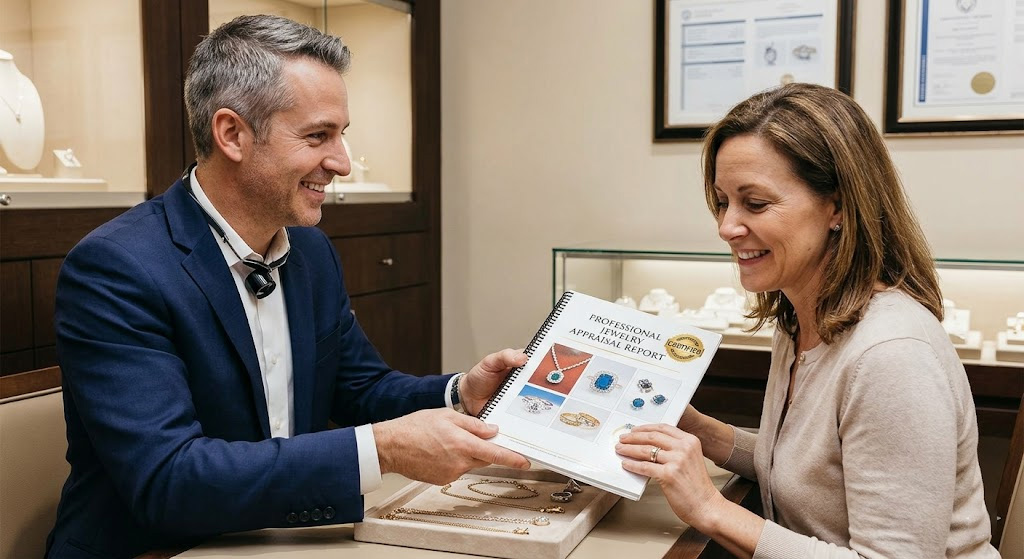
Learning how to get jewelry appraised involves hiring a certified gemologist to document the quality, authenticity, and monetary value of your items for legal or financial purposes. You may currently own valuable heirlooms or recent investments without any formal proof of their market worth. This lack of documentation leaves you vulnerable to massive financial losses if items are stolen or if you are underinsured during a claim. By following a professional valuation process, you secure a verified report that protects your assets and ensures you receive fair compensation.
Why is learning how to get jewelry appraised important?
Establishing a professional valuation is the only way to protect your investment against market volatility and physical loss. When you understand how to get jewelry appraised , you ensure that your insurance coverage matches the current replacement cost of your most valuable pieces.
Protecting Your Financial Assets
A certified appraisal acts as a legal safeguard for your wealth. Think about it. Without this document, an insurance company may only offer a minimal payout based on generic metal weights rather than the specific quality of your stones.
Meeting Legal Requirements
Professional reports are often mandatory for settling estates or dividing assets during a divorce.
- Prevents disputes among heirs.
- Provides a basis for gift tax filings.
- Documents the condition of the piece at a specific time.
Key Takeaway: Regular appraisals turn your physical jewelry into documented financial assets that are recognized by banks and insurers.
| Benefit Type | Primary Goal | Required Detail | |
|---|---|---|---|
| Insurance | Total Replacement | Retail Value | |
| Estate | Fair Distribution | Market Value | |
| Resale | Profit Maximization | Quality Specs |
This data confirms that a single appraisal report serves multiple high-stakes financial and legal functions.
What is the first step in how to get jewelry appraised?

The first step in how to get jewelry appraised is gathering all original documentation, including sales receipts, previous certificates, and diamond grading reports. Organizing these materials before meeting an expert ensures the most accurate assessment of the item’s history and provenance.
Organizing Your Inventory
You should create a detailed list of every item you intend to have valued. Now: By grouping items by material or type, you allow the appraiser to work more efficiently and potentially reduce your total service fees.
Cleaning Your Collection
A dirty gemstone can hide inclusions or alter the perceived color grade during a microscopic inspection.
- Use a mild jewelry cleaner.
- Remove dust and oils from the setting.
- Ensure hallmarks are visible.
Key Takeaway: Proper preparation reduces the time an expert spends on basic discovery, allowing for a more focused technical analysis.
| Prep Task | Tools Needed | Time Estimate | |
|---|---|---|---|
| Documentation | Folders/Receipts | 30 Minutes | |
| Cleaning | Soft Brush/Solution | 10 Minutes/Piece | |
| Sorting | Soft Trays | 15 Minutes |
A well-prepared client facilitates a smoother appraisal process and minimizes the risk of overlooked technical details.
How to get jewelry appraised by a certified professional?

You must seek how to get jewelry appraised by finding an independent gemologist who does not offer to buy or sell the jewelry they value. This independence eliminates any conflict of interest and guarantees that the valuation is based purely on market data.
Checking Expert Credentials
The most reputable appraisers hold certifications from global gemological authorities. Look: Verify that your chosen expert is a GIA Graduate Gemologist or a member of the American Gem Society to ensure they follow strict ethical guidelines.
Interviewing the Appraiser
Ask potential candidates about their specific experience with your type of jewelry, such as vintage or lab-grown pieces.
- Ask for their fee structure upfront.
- Confirm they have the necessary lab equipment.
- Verify their current standing in professional associations.
Key Takeaway: Your appraisal is only as valid as the credentials of the person signing it, so never skip the verification step.
| Organization | Certification | Reliability | |
|---|---|---|---|
| GIA | Graduate Gemologist | Industry Standard | |
| AGS | Certified Appraiser | High Ethics | |
| NAJA | Member | Specialized |
Choosing a certified professional ensures the final document is accepted by major insurance carriers and legal courts.
Which reports are needed for how to get jewelry appraised?

Selecting the correct report type is vital because insurance replacement values differ significantly from fair market resale prices. When considering how to get jewelry appraised, you must define the purpose of the valuation to ensure the appraiser uses the correct market formulas.
Insurance Replacement Reports
These reports calculate the cost of buying an identical item at a retail store today. But wait, there’s more. These valuations are typically the highest because they include retail markups and the current costs of skilled labor for custom recreation.
Fair Market Value Reports
This reflects what a willing buyer would pay a willing seller in an open, non-forced market environment.
- Used for private sales.
- Required for charitable donations.
- Essential for estate settlements.
Key Takeaway: Always request a “Retail Replacement Value” report for insurance and a “Fair Market Value” report for potential resale or taxes.
| Report Type | Valuation Basis | Typical Audience | |
|---|---|---|---|
| Replacement | New Retail Price | Insurers | |
| Fair Market | Used Market Price | IRS/Private Buyers | |
| Liquidation | Immediate Cash | Pawn Shops |
Using the wrong report type can lead to being over-insured or under-compensated during a private liquidation.
What happens when you learn how to get jewelry appraised?

During the physical inspection phase of how to get jewelry appraised , an expert uses specialized tools to verify metal purity and gemstone characteristics. This process is highly technical and involves measuring every facet of your jewelry to determine its structural and material integrity.
Technical Metal Testing
The appraiser will check for manufacturer hallmarks and test the metal for its specific karat weight. The best part? They use non-destructive methods like X-ray fluorescence to ensure your jewelry remains in pristine condition throughout the testing process.
Gemstone Microscopic Analysis
Every stone is inspected under high magnification to identify inclusions, treatments, and synthetic origins.
- Measures carat weight.
- Analyzes color and clarity.
- Verifies cut precision.
Key Takeaway: A professional inspection is a deep dive into the microscopic details that define the true value of your precious materials.
| Inspection Tool | Purpose | Benefit | |
|---|---|---|---|
| Loupe/Microscope | Clarity Grading | Verifies Authenticity | |
| Electronic Tester | Metal Purity | Confirms Karat | |
| Calibrated Scale | Weight Measurement | Accurate Valuation |
This rigorous technical methodology ensures that every dollar of value in your piece is accounted for in the final report.
How to get jewelry appraised at the right cost?
Standard professional fees for an appraisal range from 75 to 250 per item depending on the complexity of the piece. When learning how to get jewelry appraised, you should avoid any service that charges a percentage of the jewelry’s total value.
Avoiding Percentage Fees
Charging a percentage of the value is considered a conflict of interest and is banned by major appraisal organizations. Here’s why. This pricing model incentivizes the appraiser to inflate the value of your jewelry just to increase their own service fee.
Flat Fee vs Hourly Rates
Many experts charge a flat fee for single items but may switch to an hourly rate for large collections.
- Request a written estimate first.
- Ask about bulk discounts for multiple items.
- Confirm if the fee includes a printed report.
Key Takeaway: Transparency in pricing is the hallmark of an ethical appraiser, so always get a clear quote before the work begins.
| Fee Structure | Average Price | Best Used For | |
|---|---|---|---|
| Per Item | 75−150 | Single Rings/Necklaces | |
| Per Hour | 100−200 | Large Estates | |
| Per Page | 50−100 | Simple Documentation |
Selecting the right fee structure ensures you don’t overpay for the valuation of a standard or high-volume collection.
Can you use digital tools for how to get jewelry appraised?
While how to get jewelry appraised online is convenient, these estimates are usually not accepted for official insurance or legal purposes. Digital tools serve best as a preliminary step to determine if an item is worth the cost of a formal, in-person appraisal.
Limitations of Online Estimates
An appraiser cannot physically test the metal or view the stones under a microscope through a photograph. It gets better. Digital tools can help you find historical data on similar pieces, giving you a “ballpark” figure before you visit a local lab.
Using Technology for Research
You can use online databases to track the current spot price of gold and platinum.
- Monitor diamond price indexes.
- Search for auction results.
- Check designer markups.
Key Takeaway: Use digital tools for market research and discovery, but rely on in-person experts for legally binding documentation.
| Tool Type | Accuracy | Acceptance | |
|---|---|---|---|
| Photo App | Low | Not Accepted | |
| Price Index | Medium | Research Only | |
| Pro Lab | High | Full Acceptance |
Relying solely on digital tools for high-value items can lead to significant errors in your financial records.
How to get jewelry appraised for estate and tax needs?
Appraisals for the IRS or probate court must follow the Uniform Standards of Professional Appraisal Practice (USPAP). When you are researching how to get jewelry appraised for these purposes, the report must reflect the fair market value on a specific “date of death” or “date of gift.”
Complying with IRS Standards
The IRS has strict definitions of what constitutes a “qualified appraisal” by a “qualified appraiser.” Here is the kicker: If your report does not meet these specific federal standards, the government may reject your tax filing and apply heavy penalties.
Distributing Assets Fairly
A certified valuation ensures that every heir receives an equitable share of the physical property.
- Prevents family arguments.
- Provides legal proof of value.
- Simplifies the probate process.
Key Takeaway: Estate appraisals require a higher level of legal compliance and must be handled by specialists familiar with tax law.
| Legal Need | Value Basis | Critical Detail | |
|---|---|---|---|
| Probate | Fair Market | Date of Passing | |
| Gift Tax | Fair Market | Date of Transfer | |
| Divorce | Liquidation/Fair | Current Condition |
This level of documentation is essential for navigating the complexities of government tax audits and estate settlements.
How to get jewelry appraised for insurance coverage?
You should update your knowledge on how to get jewelry appraised every three years to account for the rising costs of precious metals. Insurance companies often require these updates to ensure your premium reflects the actual cost of replacing the item in today’s economy.
Staying Ahead of Inflation
The price of gold and diamonds can fluctuate wildly over a decade. Think about it. A ring appraised for
5,000in2015mightcost
8,500 to replace today, leaving you with a $3,500 gap in coverage.
Reviewing Policy Exclusions
Your appraisal should be paired with a specific insurance rider to cover “mysterious disappearance.”
- Document every hallmark.
- Include macro photography.
- Verify stone security.
Key Takeaway: An outdated appraisal is almost as dangerous as having no appraisal at all when dealing with high-value losses.
| Time Period | Market Change | Action Required | |
|---|---|---|---|
| 1 Year | Minimal | Review Prices | |
| 3 Years | Moderate | Re-Appraisal | |
| 5+ Years | High | Mandatory Update |
Regularly scheduled updates ensure that your insurance protection keeps pace with global market shifts.
What are the final steps in how to get jewelry appraised?
The final phase of how to get jewelry appraised involves securing your physical report and maintaining the condition of the pieces to preserve their value. Storing your jewelry in a high-quality protective environment prevents the scratches and wear that can lower a future appraisal score.
Storing Your Documentation
You should keep digital and physical copies of your appraisal in separate, secure locations. Now: Storing a copy in an encrypted cloud service ensures that even if your house is damaged, you can still access your proof of ownership.
Preserving Jewelry Condition
Invest in professional storage solutions to keep your pieces in “excellent” condition.
- Use microfiber-lined boxes.
- Avoid loose storage.
- Check prongs regularly.
Key Takeaway: Protecting your jewelry in premium packaging is a direct investment in maintaining its appraised value over time.
| Security Step | Method | Benefit | |
|---|---|---|---|
| Storage | Padded Boxes | No Scratches | |
| Backup | Cloud Drive | Instant Access | |
| Cleaning | Professional | Visible Hallmarks |
Maintaining the physical integrity of your items ensures that your next appraisal reflects the highest possible market value.
Frequently Asked Questions
Can I get a free estimate at a jewelry store?Yes, but it is rarely useful for legal needs. While many jewelers offer free verbal estimates to drive sales, these lack the technical depth and legal weight required for insurance or estate filings.
What is the best way to find an appraiser?The most reliable method is searching directories of certified organizations. You should look for professionals listed by the American Society of Appraisers or the National Association of Jewelry Appraisers.
How long does the appraisal process take?Most single-item inspections take about 30 to 60 minutes. However, generating the final written report usually takes three to five business days as the expert researches current market data.
Should I leave my jewelry at the appraiser’s office?It depends on the complexity of the piece. Many appraisers offer “while-you-wait” services for simple items, but intricate pieces may require overnight testing in a secure lab.
What is the difference between an appraisal and a GIA report?A GIA report grades the quality of a stone but assigns no price. An appraisal uses those quality grades to determine a specific monetary value based on current market trends.
Securing the value of your collection requires both professional documentation and superior physical protection. At YiXin Packaging, we provide the luxury storage solutions that keep your appraised assets in pristine condition for years to come. Whether you are a brand needing high-volume production or a retailer looking for custom designs, we are here to support your success. Contact us today to elevate your jewelry presentation and safeguard your investments with our factory-direct expertise.