
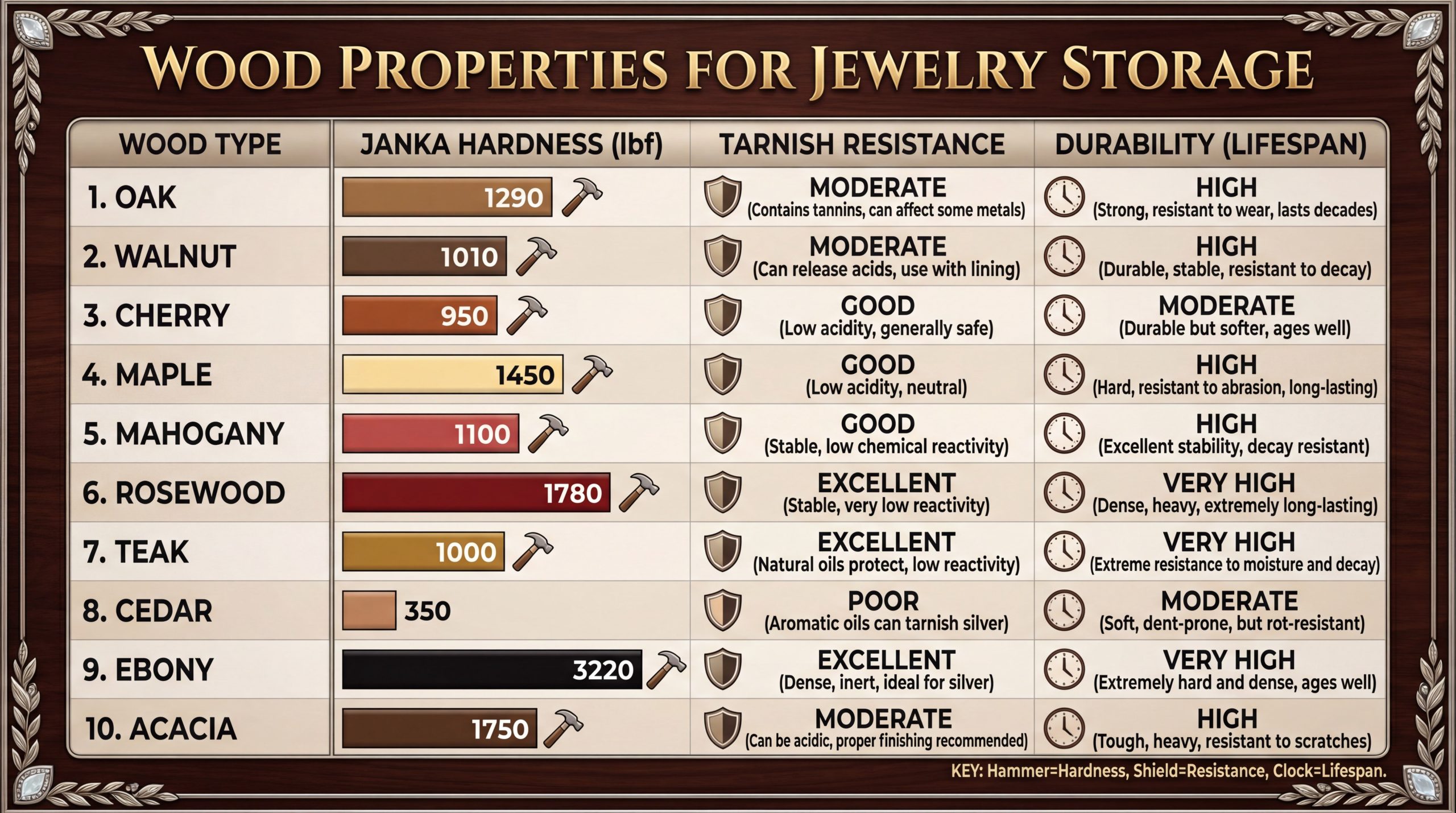
The best wood for jewelry box construction includes species like Maple, Walnut, and Padauk, as they provide the natural density and pH-neutral environment required to protect precious metals. You likely know the frustration of opening a tangled drawer only to find your favorite silver necklaces tarnished and dull. This lack of proper organization leads to micro-scratches and the gradual loss of heirloom value for your most cherished collection. By choosing a handcrafted solution from a premium best wood for jewelry box source, you ensure your valuables remain pristine while adding a sophisticated touch to your decor.
Is Maple the best wood for jewelry box luxury?
Maple is widely considered the ultimate choice for high-end jewelry storage because of its exceptional density and clean, creamy aesthetic. When searching for the best wood for jewelry box designs, artisans prioritize maple for its ability to create a high-contrast backdrop for silver and platinum.
Why choose Birdseye or Curly Maple?
These variations offer rare, swirling patterns that add a three-dimensional depth to the grain. They are prized in luxury markets for their shimmering, “holographic” effect when moved under light.
Think about it:
- Rare “birdseye” clusters provide a unique visual signature.
- High hardness ratings protect against external impacts.
- The neutral tone ensures no color bleed into fabric linings.
Key Takeaway: Maple combines structural rigidity with a versatile, bright aesthetic that suits modern collections.
| Feature | Description | Jewelry Benefit | |
|---|---|---|---|
| Grain | Rare Birdseye/Curl | High-end visual appeal | |
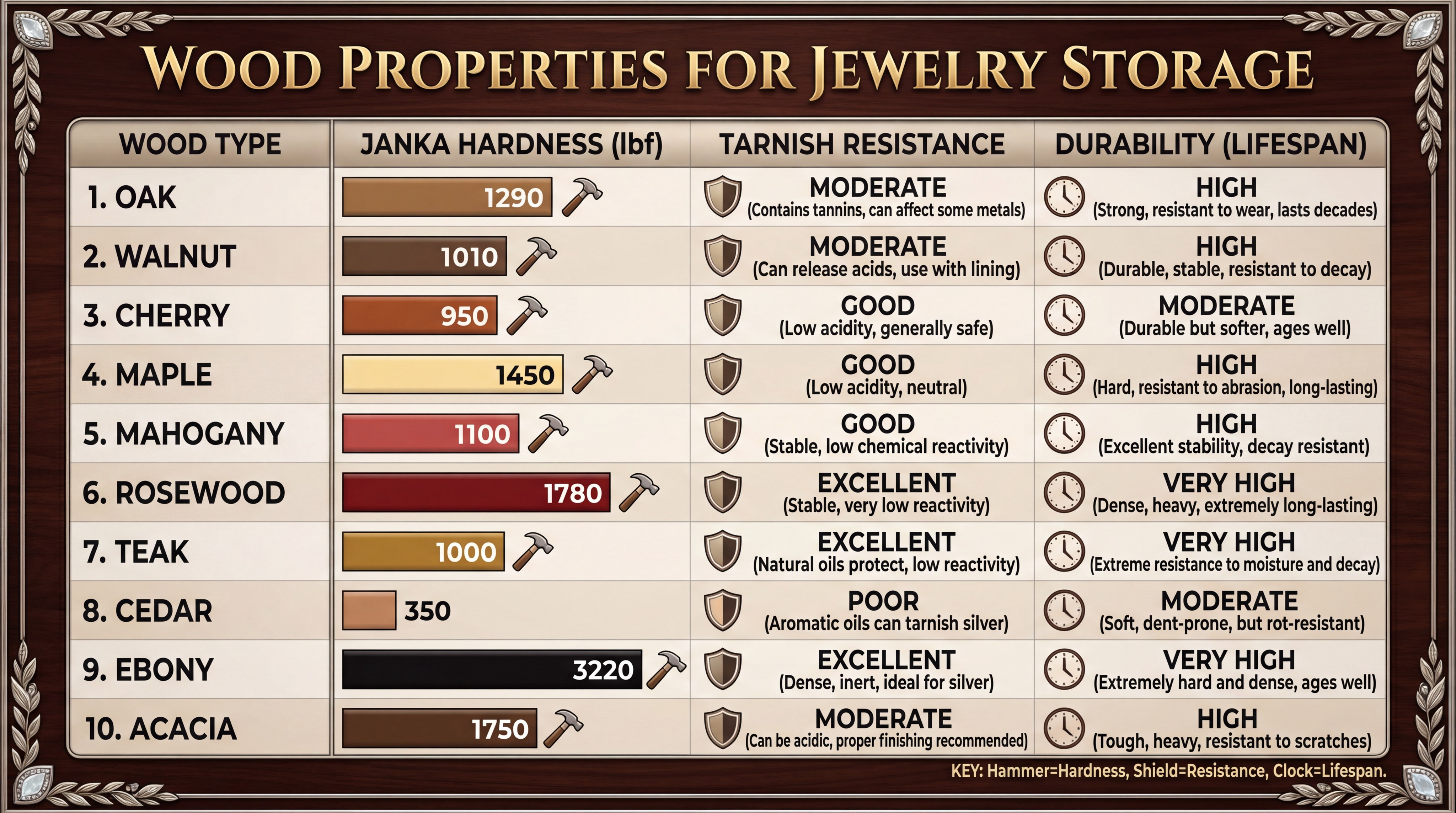
| Density | Hardwood (1450 lbf) | Superior dent resistance | |
| Chemistry | pH Neutral | Low tarnish risk |
This analysis confirms that Maple provides a stable and visually striking environment for delicate rings and earrings.
Why is Padauk the best wood for jewelry box accents?
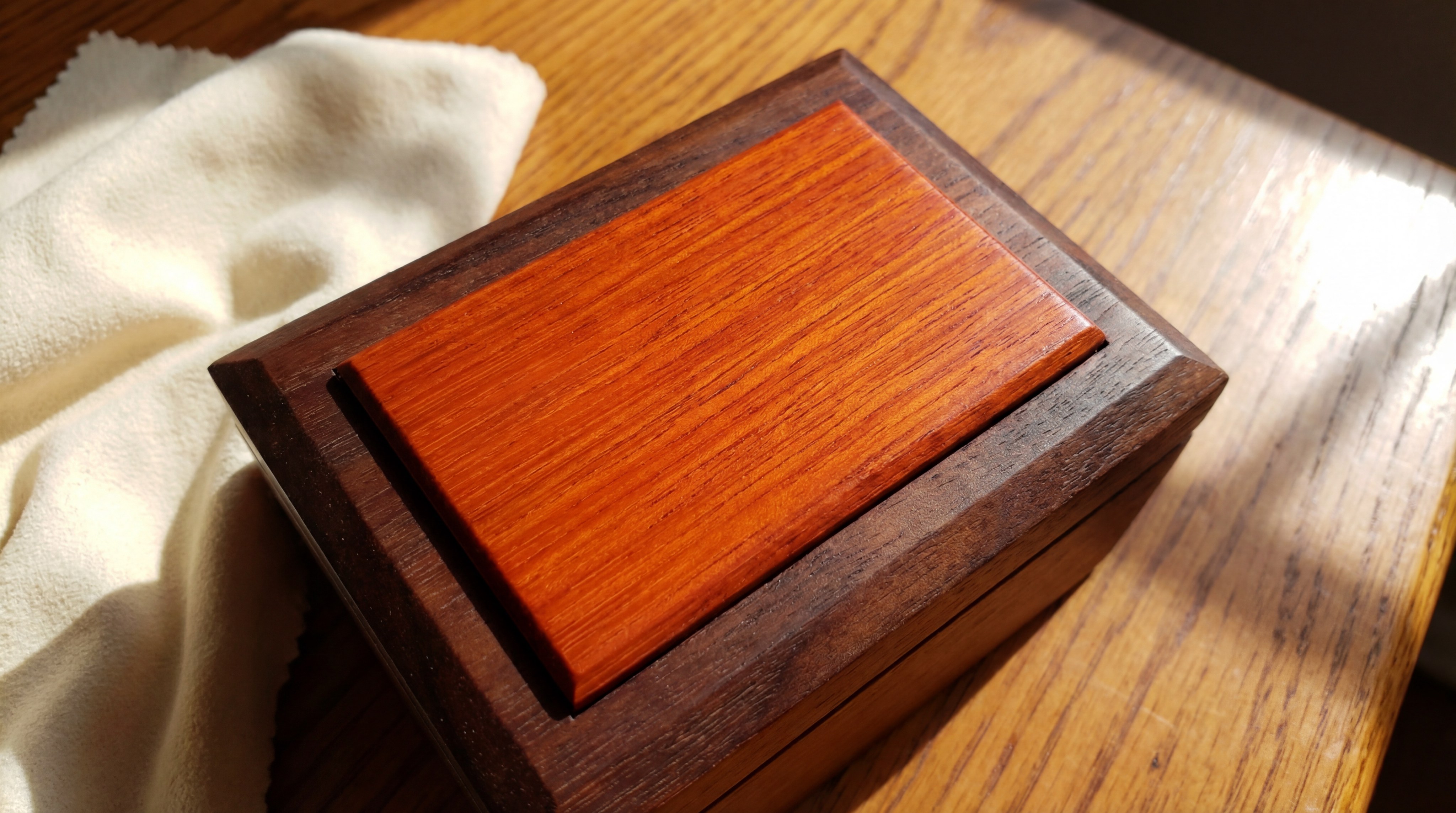
Padauk is the top choice for vibrant, statement-making storage due to its natural orange-red hue and incredible stability. Identifying the best wood for jewelry box accents often leads craftsmen to Padauk because it doesn’t warp or shrink significantly over time.
Does the color of Padauk change?
The wood shifts from a bright, fiery orange to a sophisticated, deep burgundy as it ages and is exposed to light. This natural evolution makes your storage piece feel like a living part of your home.
But here’s the kicker:
- Exceptional resistance to decay and moisture.
- Naturally oily surface that resists fingerprints.
- Striking contrast when paired with darker woods like Walnut.
Key Takeaway: Padauk is ideal for those who want a durable box that doubles as a bold piece of art.
| Feature | Description | Jewelry Benefit | |
|---|---|---|---|
| Vibrancy | Natural Orange-Red | Unique statement piece | |
| Stability | Very low movement | Precise lid alignment | |
| Surface | Semi-glossy | Easy to maintain |
This analysis confirms that Padauk balances exotic beauty with the structural integrity required for long-term gemstone safety.
Is Walnut the best wood for jewelry box heirlooms?
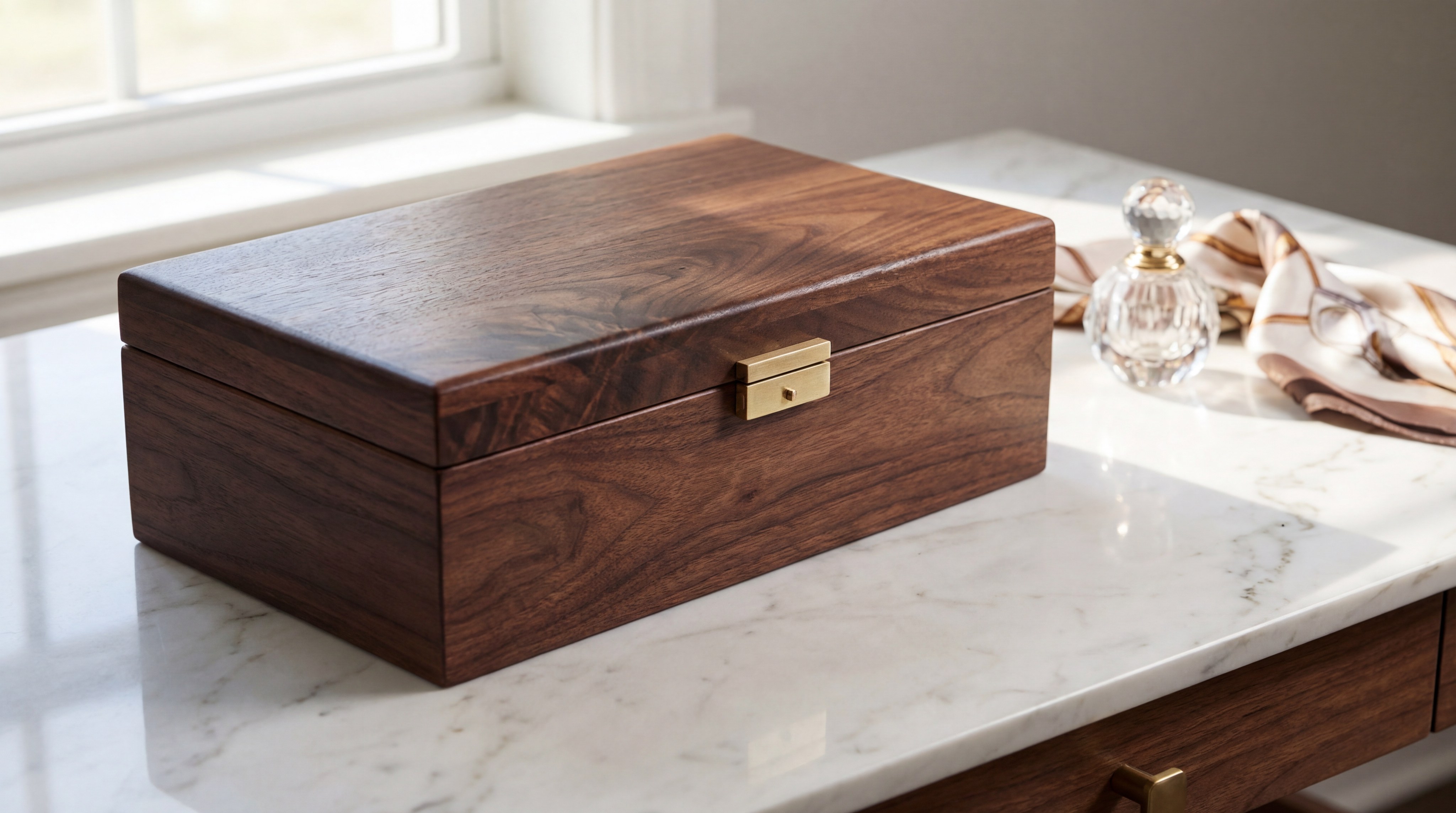
Walnut is favored for heirloom-quality storage because of its deep chocolate tones and historical reputation for longevity. Many collectors believe the best wood for jewelry box construction is Walnut due to its ability to develop a rich, lustrous patina over decades.
How does Walnut protect your items?
The tight, semi-porous grain acts as a natural buffer against humidity fluctuations. This stability is essential for preventing the moisture-driven oxidation that causes gold and silver to tarnish.
Wait, there is more:
- Resists decay and insects naturally.
- The dark color hides dust and minor handling marks.
- Complements both modern and traditional interior design styles.
Key Takeaway: Walnut is the gold standard for “quiet luxury” and timeless durability in jewelry organization.
| Feature | Description | Jewelry Benefit | |
|---|---|---|---|
| Texture | Silky and smooth | Snag-free for delicate chains | |
| Weight | Substantial/Heavy | Feels premium and secure | |
| Aging | Richer patina | Increases value over time |
This analysis confirms that Walnut remains a top-tier choice for those prioritizing traditional craftsmanship and environmental resilience.
Is Purpleheart the best wood for jewelry box color?
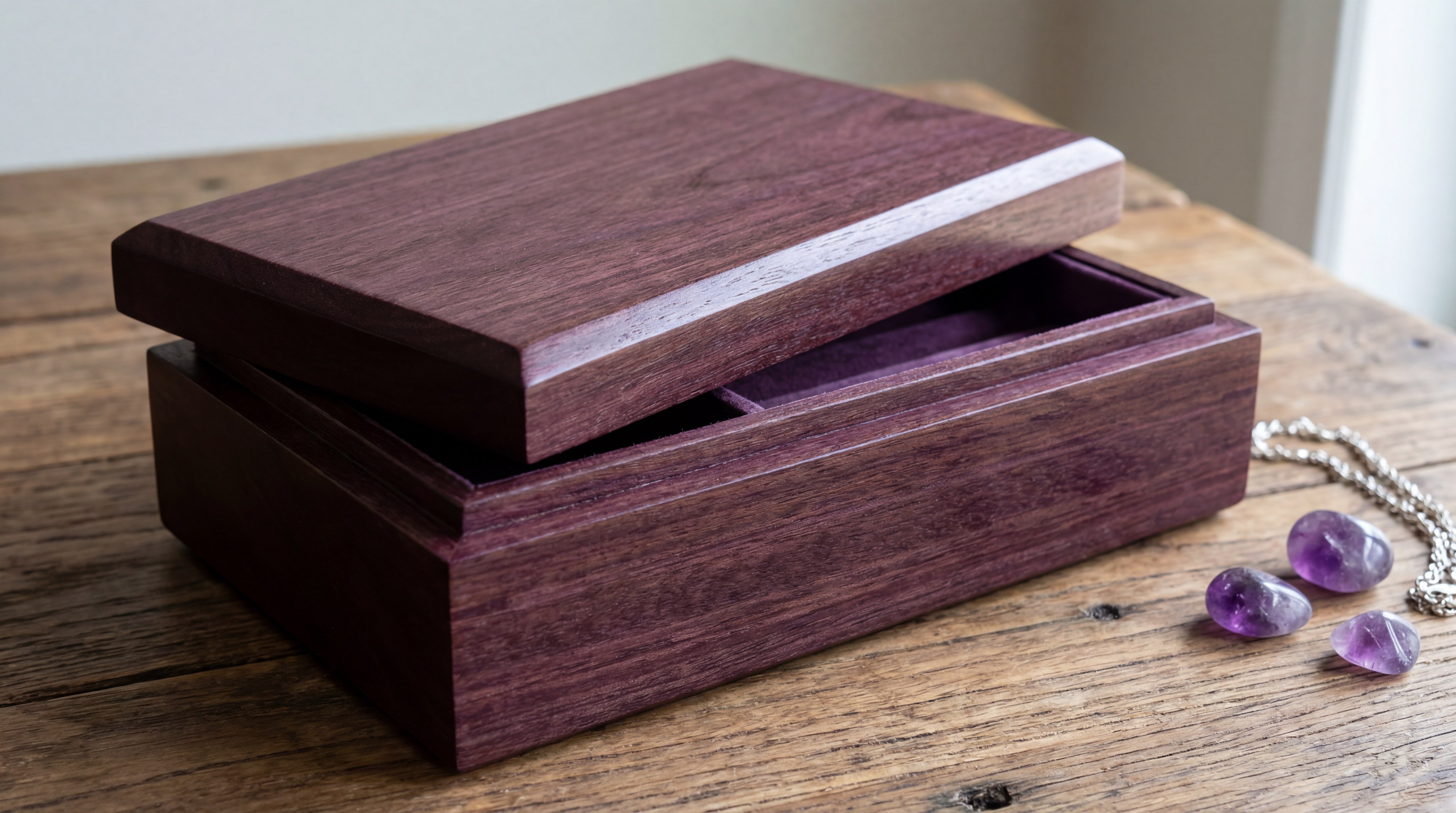
Purpleheart is arguably the most visually striking exotic wood available, turning a deep, royal purple once exposed to the air. It is often cited as the best wood for jewelry box lids when you want to create a conversation piece that matches precious stones like amethyst.
Is the purple color natural?
The wood is actually a dull brown when first cut, but oxygen triggers a transformation into a vivid violet. This unique chemical reaction provides a regal backdrop that enhances the sparkle of gold jewelry.
Think about it:
- Extremely high density makes it nearly indestructible.
- One of the hardest woods in the world for maximum protection.
- Naturally resistant to fungal and insect attacks.
Key Takeaway: Purpleheart offers unparalleled color and density for high-security, high-style jewelry storage.
| Feature | Description | Jewelry Benefit | |
|---|---|---|---|
| Color | Natural Royal Purple | Complements gold/gems | |
| Hardness | Very High | Maximum impact defense | |
| Longevity | Decades of use | Resists all warping |
This analysis confirms that Purpleheart is a superior choice for collectors seeking a combination of rarity and extreme durability.
Why use Shedua as the best wood for jewelry box grain?
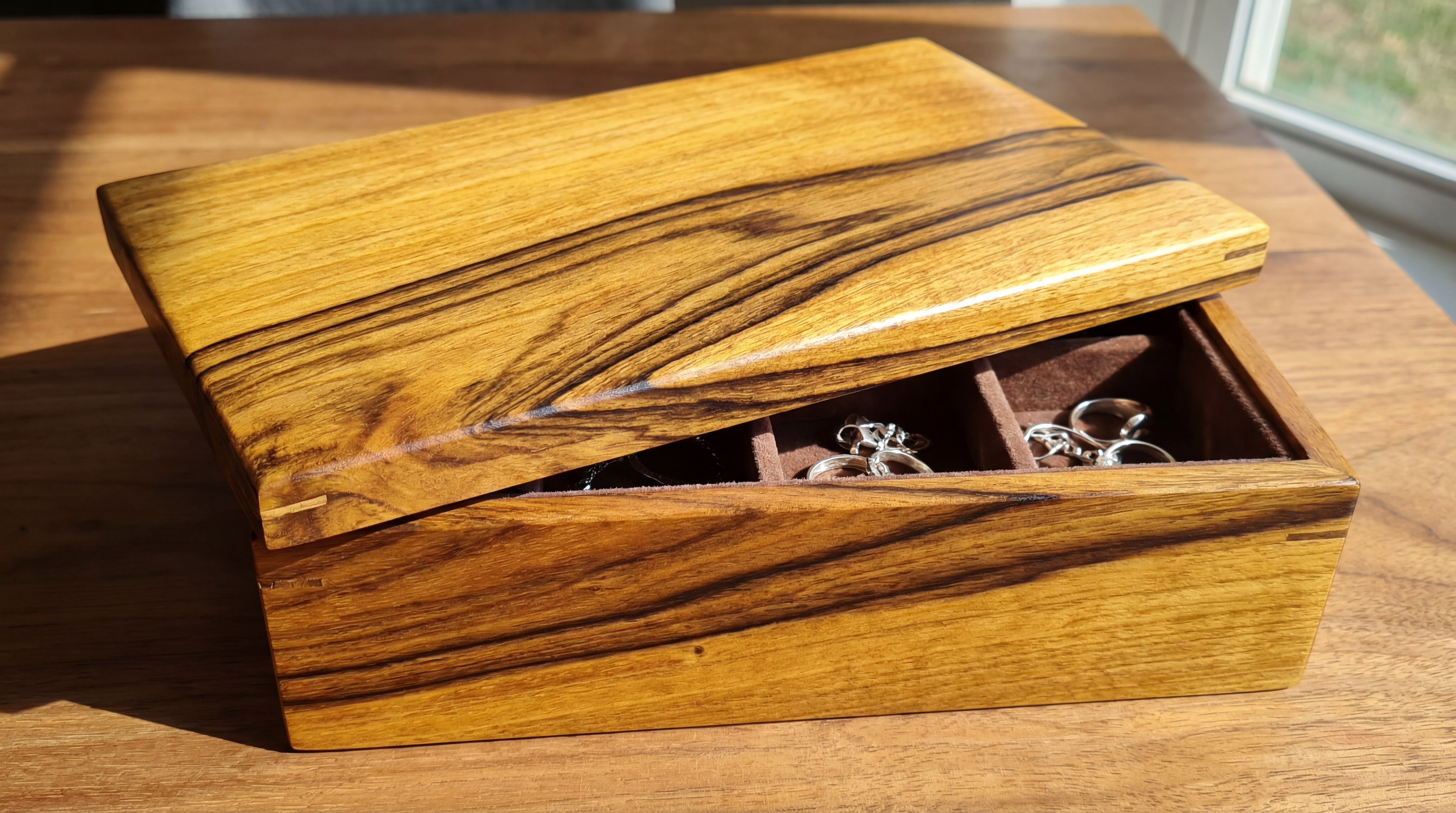
Shedua provides a stunning yellow-to-brown palette with dark, architectural streaks that offer a sophisticated, modern look. When searching for the best wood for jewelry box frames, Shedua is selected for its stiffness and ability to hold fine joinery.
Is Shedua better than Walnut?
While Walnut is classic, Shedua offers more visual “movement” in its grain patterns. It is an excellent middle-ground for you if you want an exotic feel without the brightness of Padauk.
But here’s the kicker:
- Strong enough to support multi-layer drawer systems.
- Holds finishes beautifully for a mirror-like shine.
- Unique gold-grey streaks complement mixed-metal jewelry.
Key Takeaway: Shedua is the architect’s choice for intricate, multi-compartment jewelry chests that require precision.
| Feature | Description | Jewelry Benefit | |
|---|---|---|---|
| Structure | High stiffness | Prevents frame sagging | |
| Appearance | Dark streaks | Hides wear and tear | |
| Feel | Waxy and smooth | Premium tactile experience |
This analysis confirms that Shedua is a robust and stylish alternative to traditional hardwoods for complex storage.
Is Cherry the best wood for jewelry box aging?
Cherry is a favorite among artisans for its smooth texture and the way its color deepens into a warm reddish-brown amber. Many consider it the best wood for jewelry box designs that need to feel inviting and warm, especially when storing yellow gold pieces.
Does Cherry wood darken over time?
Initially a light pinkish-brown, Cherry reacts to UV light and oxygen by darkening significantly. This “living” quality means your storage box will evolve in beauty as your jewelry collection grows.
Wait, there is more:
- Fine, closed-grain structure prevents dust trapping.
- Easy to work into curved and delicate shapes.
- Extremely smooth surface that won’t snag fine silk linings.
Key Takeaway: Cherry is ideal for a classic, warm aesthetic that matures beautifully over the years.
| Feature | Description | Jewelry Benefit | |
|---|---|---|---|
| Grain Type | Closed-grain | Ultra-smooth interior | |
| Color Shift | Pink to Deep Amber | Increasing visual warmth | |
| Workability | Excellent | Precise, tight-fitting lids |
This analysis confirms that Cherry is a reliable, aesthetic choice for those who appreciate natural wood maturation.
Is Curly Maple the best wood for jewelry box texture?
Curly Maple, often called “Tiger Maple,” features a wavy grain that creates a stunning three-dimensional ripple effect. For any high-end best wood for jewelry box project, this texture is used to create a sense of movement and luxury.
Why is the grain “curly”?
The “curl” is a natural growth distortion that makes the wood appear to ripple like water under a finish. This adds an immediate premium feel to any dressing table or display shelf.
Think about it:
- Maintains the structural strength of standard hard maple.
- Reflects light to highlight the jewelry stored inside.
- Neutral golden-white tone works with any room decor.
Key Takeaway: Curly Maple provides a high-impact visual texture that signifies elite craftsmanship.
| Feature | Description | Jewelry Benefit | |
|---|---|---|---|
| Visuals | 3D Ripple effect | Luxury gift appeal | |
| Surface | Silky and dense | Resists surface scratches | |
| Tone | Light gold | Enhances silver visibility |
This analysis confirms that Curly Maple is the superior choice for high-visibility, decorative jewelry storage.
Is Mahogany the best wood for jewelry box stability?
Mahogany has been a staple in fine furniture for centuries because of its legendary stability and resistance to swelling. You will find it is the best wood for jewelry box construction in coastal or humid environments where other woods might warp.
Why is Mahogany a timeless choice?
It features a very consistent interlocking grain that prevents twisting over time. Its deep reddish-brown color provides a hallmark of traditional elegance and high resale value.
But here’s the kicker:
- Natural barrier against moisture and air-borne pollutants.
- Interlocking grain makes it incredibly durable.
- Develops a deep, lustrous glow when polished.
Key Takeaway: Mahogany is the ultimate “safe” choice for protecting jewelry in varying climates.
| Feature | Description | Jewelry Benefit | |
|---|---|---|---|
| Stability | Interlocking grain | Superior warp resistance | |
| History | 18th-century standard | High heirloom value | |
| Chemistry | Low reactivity | Protects delicate metals |
This analysis confirms that Mahogany’s physical properties make it a premier choice for long-term metal preservation.
Is White Oak the most durable traditional option?
White Oak is famous for its incredible toughness and the beautiful “ray flecks” seen in quartersawn cuts. When looking for the best wood for jewelry box builds that can survive daily use, Oak is the most rugged candidate.
Is White Oak safe for silver?
White Oak contains natural tannins, so it is best used for boxes with a high-quality fabric lining. The wood itself provides a rigid, protective shell that resists dents and scratches better than softer species.
Wait, there is more:
- Distinctive grain patterns provide a rustic, organic look.
- One of the most stable domestic hardwoods available.
- High Janka hardness rating ensures it lasts for generations.
Key Takeaway: White Oak is perfect for a “Craftsman” style box that prioritizes durability and strength.
| Feature | Description | Jewelry Benefit | |
|---|---|---|---|
| Toughness | High impact rating | Protects against drops | |
| Pattern | Quartersawn flakes | Unique organic texture | |
| Decay | Naturally rot-resistant | Long-term storage safety |
This analysis confirms that White Oak is a robust, lifetime solution for heavy-duty jewelry protection.
Is Teak the best wood for jewelry box oil protection?
Teak is globally renowned for its high natural oil content, which acts as a built-in preservative for the wood and the items inside. It is often called the best wood for jewelry box use in humid or salt-air environments because it is virtually weatherproof.
Does Teak need a chemical finish?
Because of its natural oils, Teak can be left with a simple matte oil finish, which feels incredibly smooth to the touch. This creates a highly protective “vault” environment that guards against moisture and corrosion.
Think about it:
- Naturally immune to water damage and rot.
- Pleasant waxy feel that is gentle on the hands.
- Superior barrier against the air-borne moisture that causes tarnish.
Key Takeaway: Teak is the premier choice for coastal dwellers needing maximum protection against salt air.
| Feature | Description | Jewelry Benefit | |
|---|---|---|---|
| Oil Content | High/Natural | Built-in moisture barrier | |
| Durability | Weather-resistant | Best for humid climates | |
| Texture | Waxy and smooth | Prevents surface abrasions |
This analysis confirms that Teak provides a unique, self-preserving environment for high-value jewelry collections.
FAQ: Key Considerations for Jewelry Wood Selection
Can I use cedar for my jewelry box?No, you should avoid it for silver. While cedar smells pleasant, its strong aromatic oils can actually accelerate the tarnishing process of certain metals and react with sensitive gemstone coatings.
What’s the best wood for a jewelry box for men?Walnut and Mahogany are typically preferred. Their darker tones and understated grain patterns provide a masculine, classic aesthetic suitable for watches and cufflinks.
How do I know if the wood is safe for pearls?Always ensure the wood has a closed-grain structure like Maple or Cherry. This prevents dust and grit from getting trapped in the pores, which could eventually scratch the soft surface of a pearl.
What’s the best wood for avoiding tarnish?Maple and Walnut are top choices because they are chemically neutral. However, you must still ensure the interior is lined with anti-tarnish fabric for the highest level of protection.
Can I keep my wooden box in the bathroom?It is not recommended. The rapid changes in temperature and high humidity in bathrooms can cause even the most stable woods to warp and can lead to rapid oxidation of your jewelry.
Conclusion
Solving your jewelry storage problem requires a balance of aesthetic beauty and material science. Whether you choose the regal purple of Purpleheart or the classic stability of Walnut, the right handcrafted box is an investment in your collection’s future. At YiXin Packaging, we specialize in creating custom solutions that elevate your brand and protect your valuables. To explore our full range of professional packaging or to request a custom design, contact us today .