
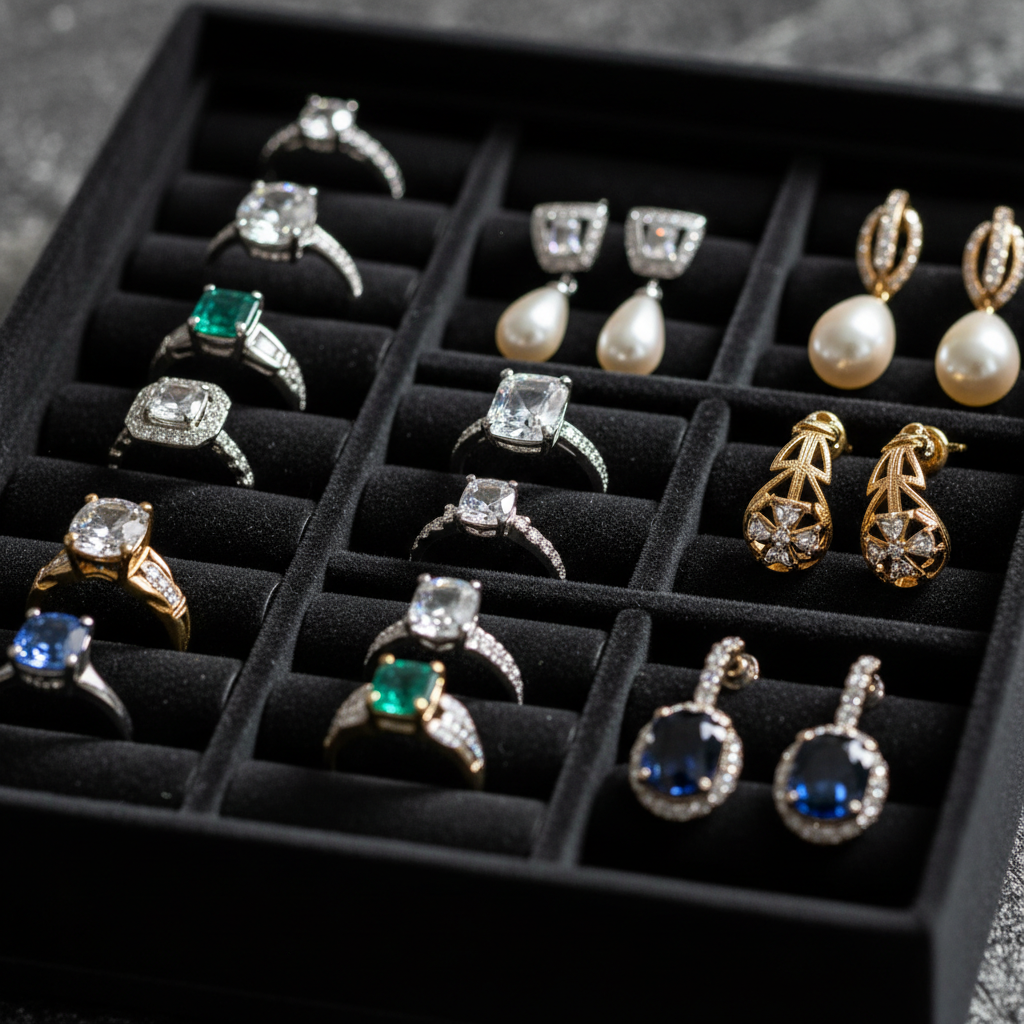
Disorganized collections cause physical damage and morning frustration for retailers and collectors alike. Knowing exactly what goes where in a jewelry box preserves value while simplifying selection. This guide details every spatial requirement for high-end items, ensuring your assets remain pristine through professional storage methods.
How to organize a jewelry box for daily efficiency?
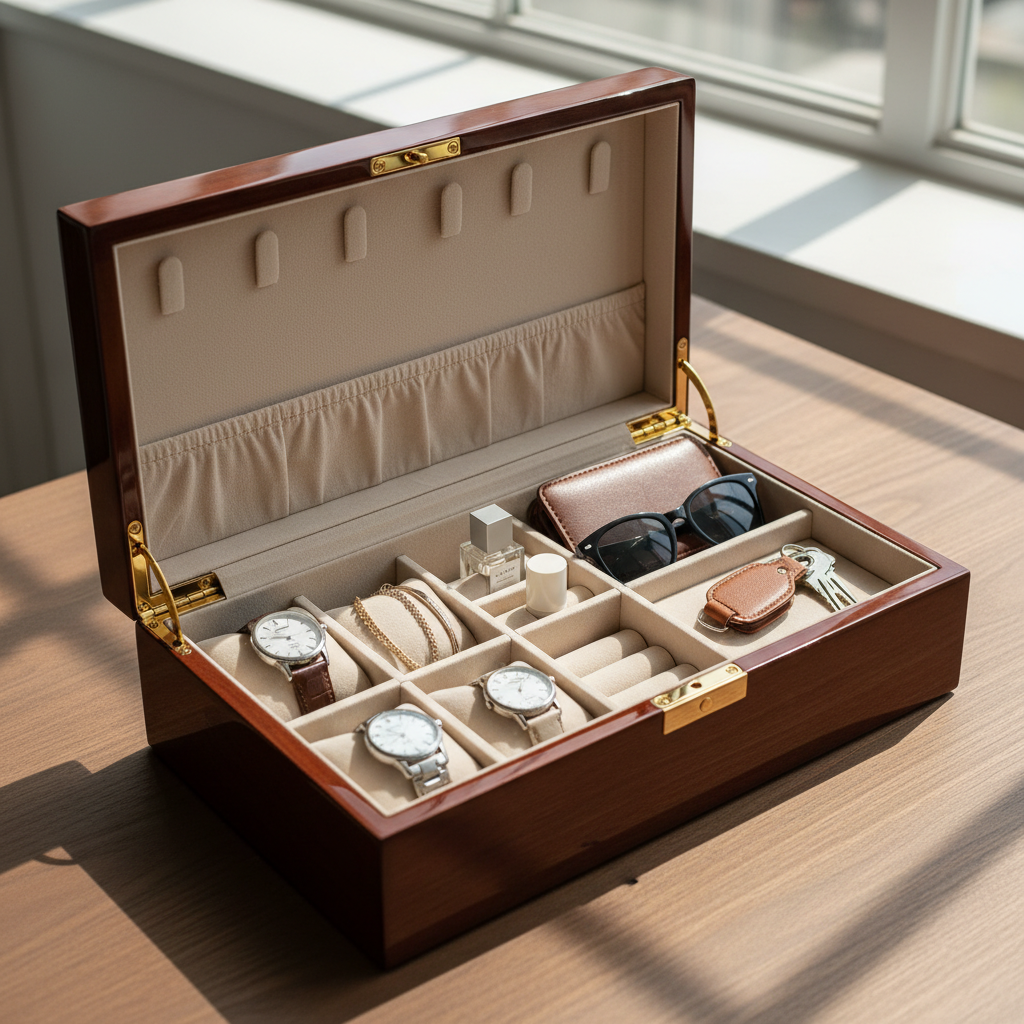
You should place your most frequently worn items in the top tray or front-facing compartments for immediate reach. Establishing a ritual around how to organize a jewelry box ensures your primary wedding bands and daily gold studs are always within sight. But here is the real question: why do experts prioritize the top tier for these pieces? It is because frequent handling is the primary source of accidental drops; keeping daily items accessible minimizes the transit distance between the box and your person. High-end retailers prioritize this accessibility within their displays to provide rapid customer service without disturbing deep inventory.
Categorizing High-Rotation Pieces
Selecting a professional case with a clear layout allows for a visual inventory in seconds. Busy professionals require this systematic approach to maintain order across changing seasons and tight morning schedules.
- Place wedding bands in the front-most ring rolls.
- Keep small gold studs in the top shallow grid.
- Hang your signature daily chain on the lid hooks.
| Item Type | Placement Zone | Access Frequency | |
|---|---|---|---|
| Wedding Bands | Front Ring Roll | Daily | |
| Diamond Studs | Top Shallow Tray | Daily | |
| Gold Chains | Hanging Lid Hooks | Daily |
Analysis: This layout utilizes the prime real estate of the container to reduce search time and mechanical wear on frequently moved components.
Key Takeaway: Prioritizing your daily essentials in top-tier compartments prevents morning stress and protects your most-used investments from unnecessary handling.
Where do necklaces go in a professional luxury box?
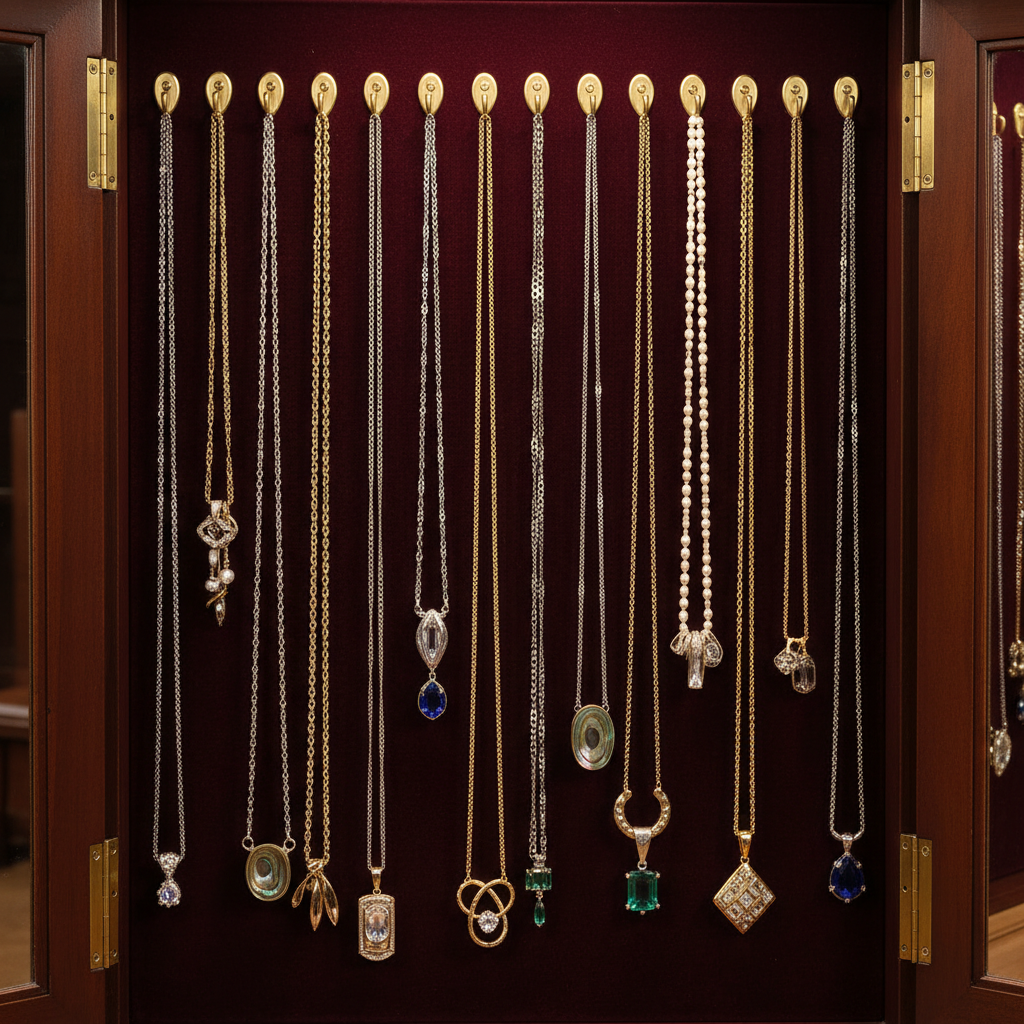
Necklaces belong on vertical hanging hooks or in flat channels to prevent the catastrophic tangling of fine links. The primary goal for chain storage is isolation to avoid the “birds-nest” effect that leads to permanent kinks. We must ask ourselves: what causes gold to knot so easily? Gravity and movement allow small links to slide into loops, creating tight knots that often require professional repair. Vertical storage utilizes gravity as an ally, keeping the chain taut and the pendant centered.
Securing Clasps and Preventing Snags
Always fasten the clasp before placing the necklace into its designated area. Open clasps frequently snag on neighboring links, which can cause surface abrasions on polished gold or silver.
- Fasten every clasp to prevent snags.
- Use individual velvet pouches for ultra-thin chains.
- Drape long pendants over specialized hanging bars.
| Storage Style | Best For | Main Benefit | |
|---|---|---|---|
| Vertical Hooks | Long Pendants | Zero Tangling | |
| Padded Channels | Fine Gold Chains | High Visibility | |
| Velvet Pouches | Fragile Gemstones | Scratch Protection |
Analysis: Isolation is the only definitive method for preventing the friction that causes fine chains to snag and weaken over time.
Key Takeaway: Vertical hanging is the industry standard for preventing the devastating tangles that often ruin delicate fine jewelry chains.
What is the best way to secure rings in a jewelry box?
Rings should be inserted firmly into padded high-density rolls to prevent metal-on-metal contact. Understanding how to organize a jewelry box for rings focuses on protecting the shank and the stone settings from abrasion. These padded rows grip the ring shank securely, ensuring that even if the box is moved, your diamonds stay pristine. But what happens if rings are too close? Spacing each piece at least one centimeter apart prevents the “clink” that signals potential surface damage to your collection.
Utilizing Professional Ring Rolls
Think about it: a loose ring sliding in a drawer is a recipe for a chipped sapphire or a scratched platinum band. High-density foam rolls provide the tension necessary to keep items stationary.
- Insert rings vertically into foam rolls.
- Group by metal color for a curated aesthetic.
- Keep statement rings in deep square sections.
| Slot Type | Material | Ring Width Capacity | |
|---|---|---|---|
| Standard Roll | High-Density Foam | 2mm – 5mm | |
| Wide Roll | Velvet Wrapped Sponge | 6mm – 10mm | |
| Deep Square | Soft Suede Lining | 10mm+ Pieces |
Analysis: Mechanical stability provided by high-density foam prevents the lateral movement that leads to gemstone-on-metal scratching.
Key Takeaway: Using high-density foam rolls is the safest way to prevent rings from colliding and causing permanent structural damage.
How to organize a jewelry box to keep earrings paired?
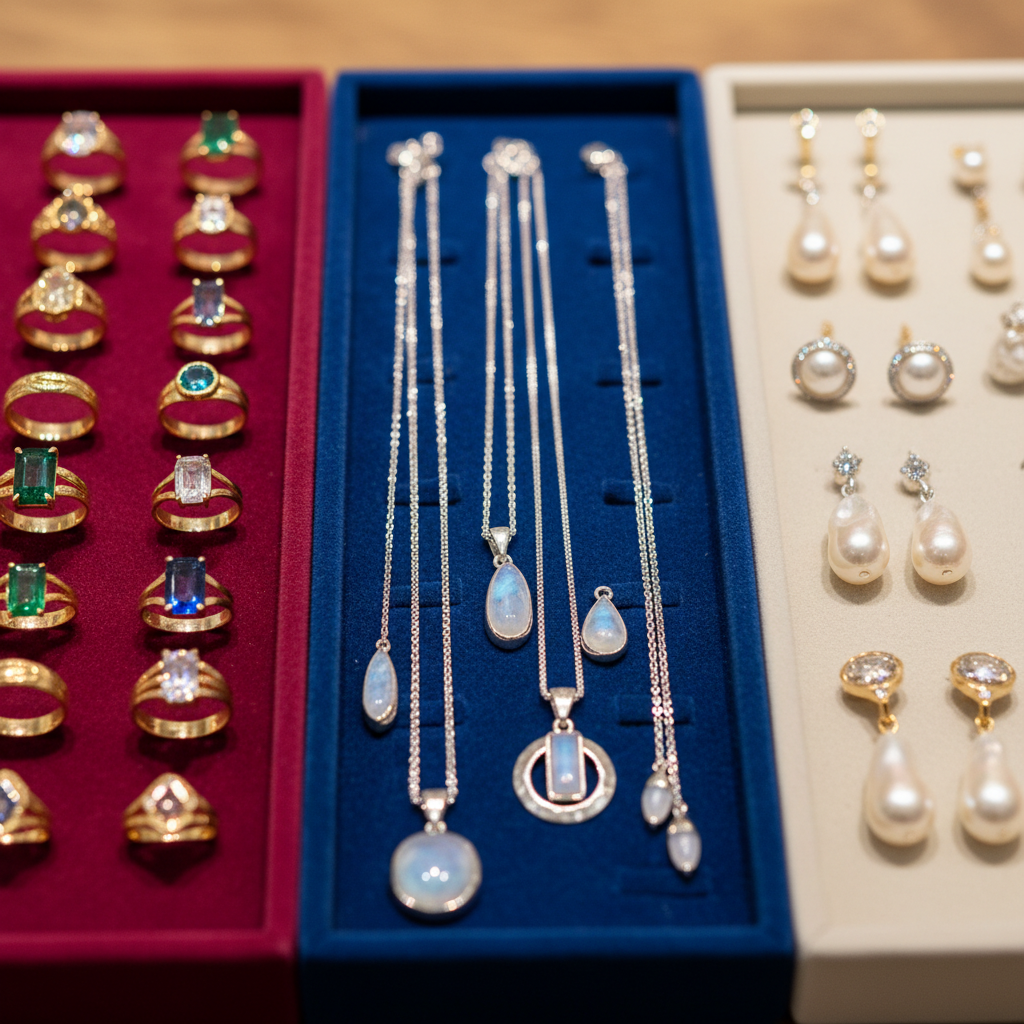
You must use specialized grids or cards to secure earring pairs and prevent the loss of matching backs. Mastering earring organization is a game of pairing and visibility. Losing a single stud often renders the entire pair useless for luxury wear. Why do retailers insist on pre-drilled plates? These plates ensure the post remains straight and the back stays attached, reducing the risk of metal fatigue.
Organizing Studs, Hoops, and Drops
Most earring damage happens when pairs are tossed together, leading to bent posts and scratched pearls. Using a grid system allows you to see every color variation at a glance, making selection effortless.
- Place small studs in the tightest grid sections.
- Hang drop earrings on specialized bars.
- Store large hoops in wider bottom compartments.
| Organizer Type | Capacity | Security Level | |
|---|---|---|---|
| Drilled Plate | 20+ Pairs | Very High | |
| Grid Tray | 12 Sections | Medium | |
| Hanging Bar | 10 Pairs | High for Drops |
Analysis: Grid-based systems enforce organization by providing a finite number of dedicated slots for specific earring styles.
Key Takeaway: Pair-based storage systems are vital for preventing component loss and protecting delicate earring posts from bending or breaking.
Why use modular dividers for luxury jewelry storage?
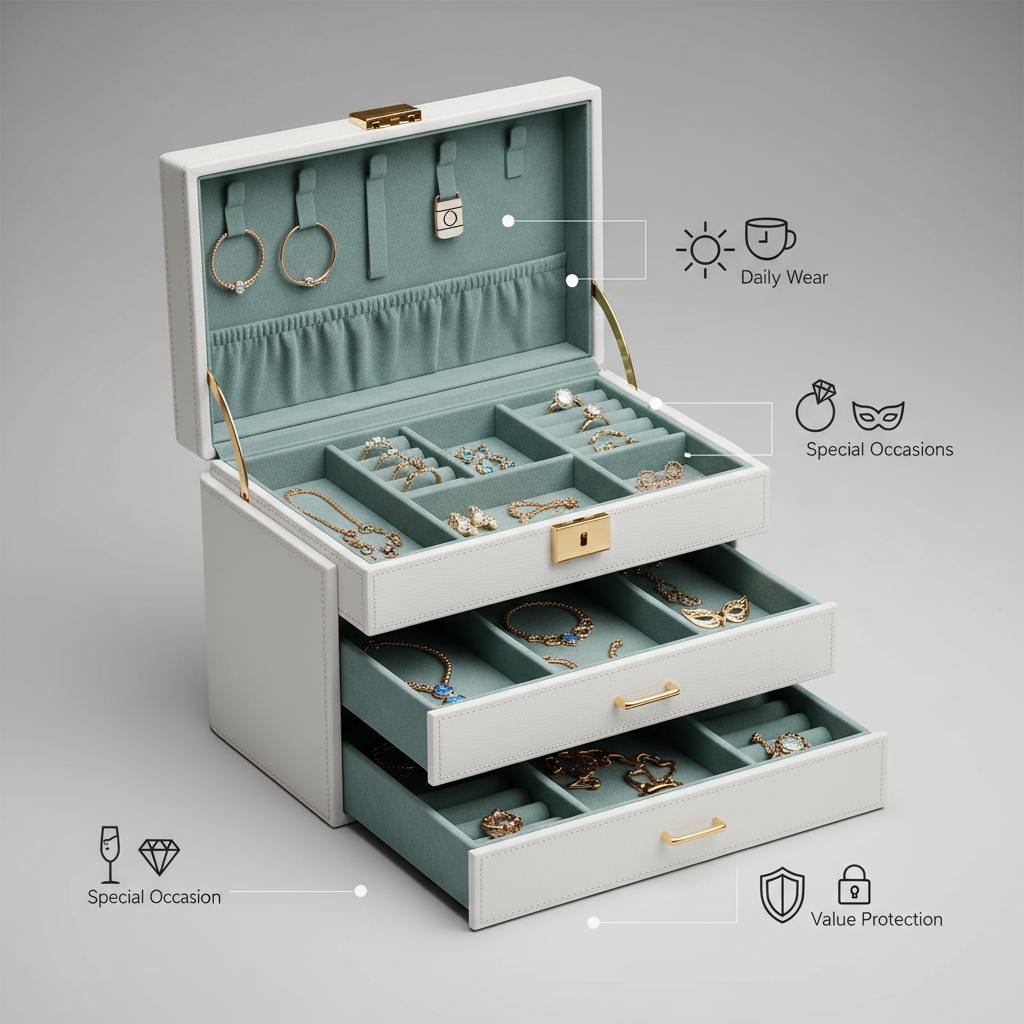
Dividers create rigid boundaries that prevent different jewelry types from sliding into a chaotic heap. When you understand how to organize a jewelry box , you realize that structural integrity is the foundation of long-term preservation. Dividers allow you to customize your storage to fit unique items like brooches or hair accessories. Does the wall material actually matter? Soft-covered rigid walls protect gemstones from side impacts during transit or handling.
Maximizing Space with Modular Walls
Modular dividers allow your storage to grow alongside your expanding collection. By adjusting the internal partitions, you can ensure that heavy watches never rest against delicate, thin-link necklaces.
- Use long slots for watches and bracelets.
- Create small squares for loose gemstones.
- Stack trays to utilize vertical drawer space.
| Divider Material | Durability | Protection Level | |
|---|---|---|---|
| Rigid Plastic | High | Low | |
| Padded Wood | Maximum | High | |
| Soft Suede | Medium | Very High |
Analysis: Modular dividers provide the structural framework necessary to prevent different jewelry styles from damaging one another.
Key Takeaway: Structural dividers are the foundation of an organized case, preventing damage caused by shifting, overcrowding, and metal clashing.
How to organize a jewelry box for bracelet protection?
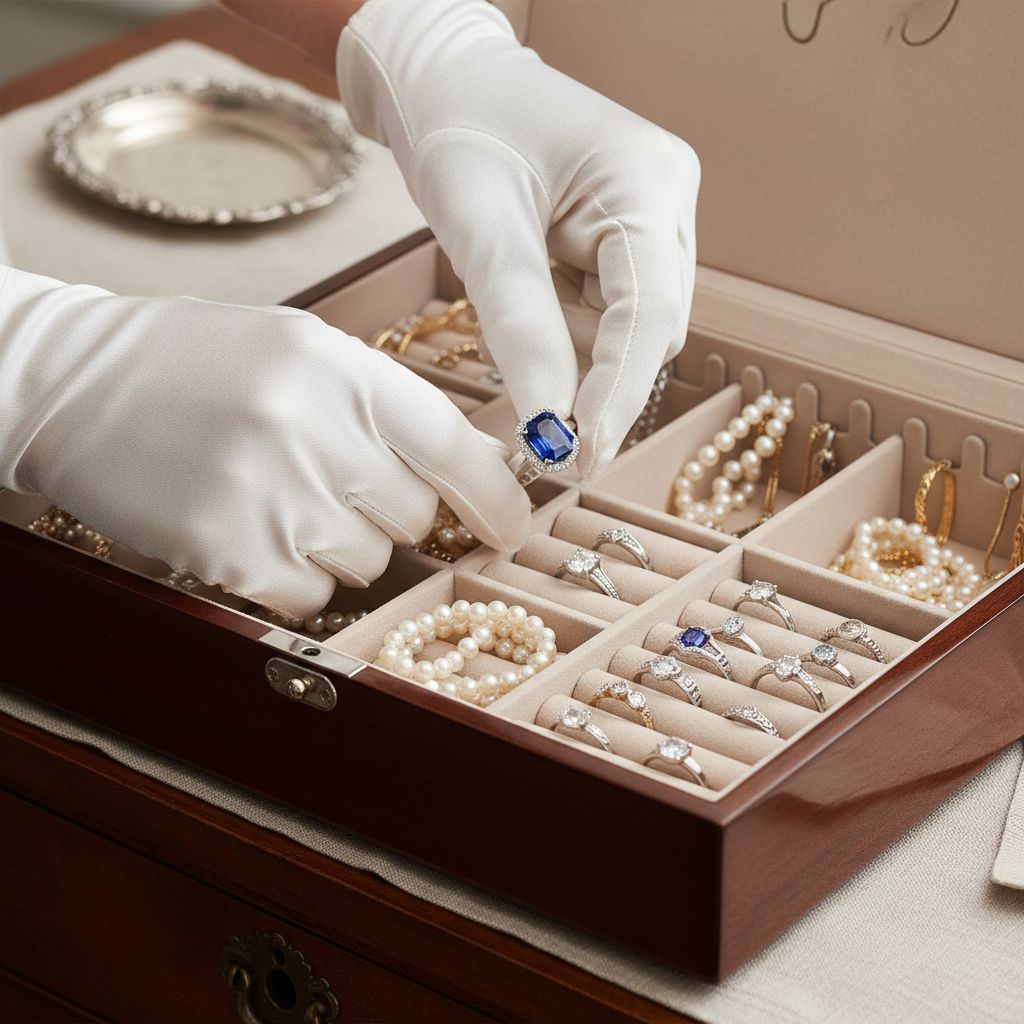
Rigid bangles require circular pillows while soft tennis bracelets need flat beds in velvet-lined channels. Bracelet organization requires recognizing the physical difference between structured metal and flexible links. Rigid bangles cannot be flattened without risking structural warping. But here’s the kicker: can hanging bracelets stretch them? Yes, the weight of a heavy link bracelet can gradually stretch the gold hinges if hung vertically; flat storage is always preferred for link integrity.
Supporting Bangles and Soft Links
Soft tennis bracelets can weaken over time if stored in a coiled position. Keeping them perfectly flat preserves the integrity of the small hinges and clasps that hold stones in place.
- Use C-shaped pillows for rigid bangles.
- Lay tennis bracelets in flat channels.
- Store heavy cuffs in deep, padded squares.
| Bracelet Style | Support Type | Primary Benefit | |
|---|---|---|---|
| Rigid Bangle | Round Pillow | Maintains Shape | |
| Tennis Bracelet | Flat Channel | Prevents Link Stretch | |
| Heavy Cuff | Large Square | Scratch Prevention |
Analysis: Matching the internal support to the bracelet’s physical structure prevents warping and extends the life of the clasp mechanism.
Key Takeaway: Proper structural support for bracelets is critical for maintaining their original jeweler-set shape and preventing link fatigue.
Where should luxury watches go in a jewelry box?

Place watches on plush cushions in deep, stable compartments located in the lowest drawer. Learning how to organize a jewelry box for timepieces focuses on protecting the delicate internal movements and the external bezel. A dedicated slot ensures the glass face remains clear of any metal-on-metal contact. Why is the bottom drawer the best location? Stability is key for mechanical watches; the lowest point of the box experiences the least vibration and movement.
Maintaining Horological Accuracy
Using a watch pillow keeps the strap under light tension, mimicking the natural shape of your wrist and preventing the bracelet from scratching the case back.
- Wrap the watch firmly around a cushion.
- Store extra links in a pouch beneath.
- Ensure the crown is fully pushed in.
| Watch Feature | Support Need | Function | |
|---|---|---|---|
| Sapphire Glass | Deep Slot | Impact Protection | |
| Metal Bracelet | Padded Pillow | Scratch Prevention | |
| Spare Links | Small Pouch | Loss Prevention |
Analysis: Watch pillows provide the necessary tension to prevent link collapse, which is the primary cause of case-back scratching.
Key Takeaway: Watch pillows are essential for maintaining the bracelet’s shape and protecting the case back from being scratched by its own links.
How to organize a jewelry box for luxury travel?
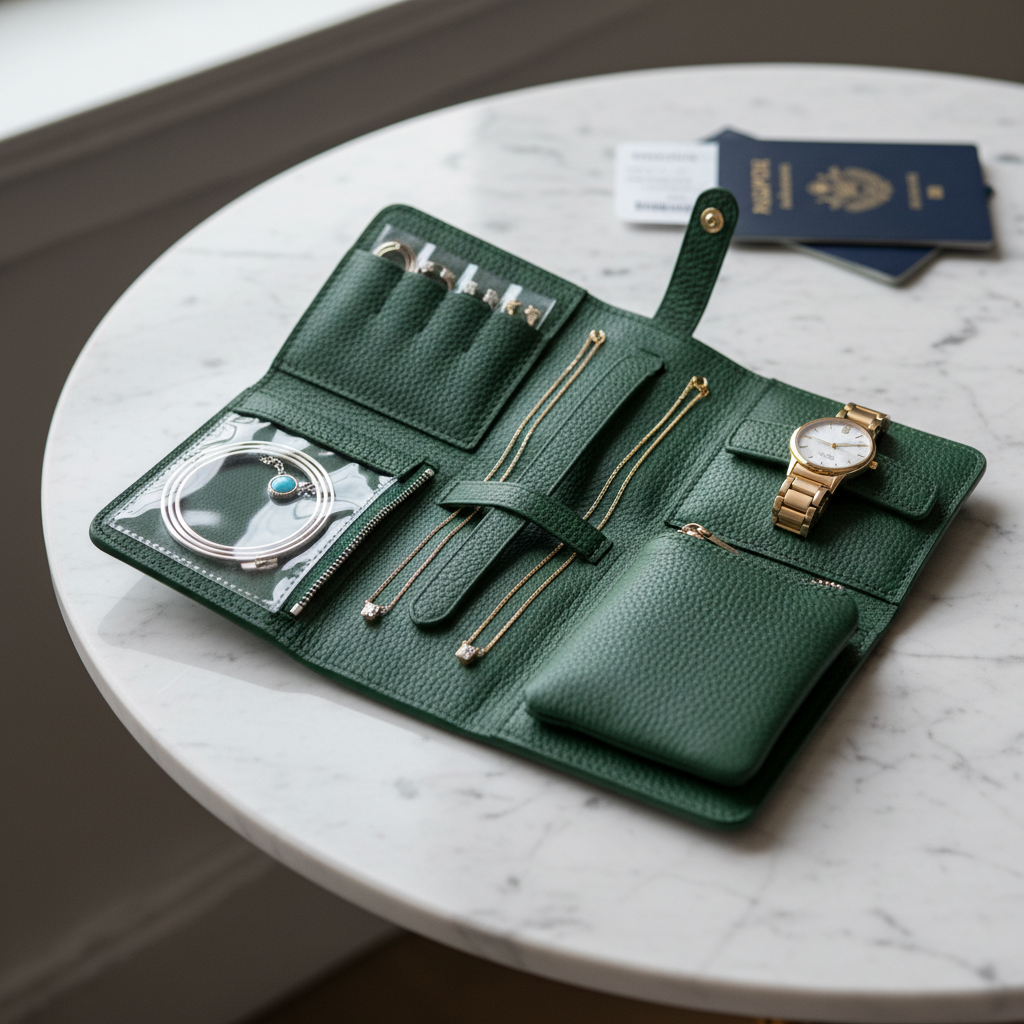
Travel organization requires hard-shell cases and secure internal ties to prevent movement during transit. When planning how to organize a jewelry box for travel, the focus shifts from visibility to extreme security. Movement is the leading cause of jewelry damage while traveling, as luggage is often subjected to significant force. What is the biggest mistake travelers make? Overcrowding a small travel case leads to friction between items that would normally be isolated at home.
Securing Items for Transit
Selecting a case with a zippered closure rather than a simple snap ensures that your valuables remain inside even if the box is dropped.
- Use travel rolls for necklaces.
- Wrap delicate gems in silk tissue.
- Choose cases with hard exteriors.
| Case Type | Capacity | Portability | |
|---|---|---|---|
| Jewelry Roll | 10 Items | Excellent | |
| Mini Hard Case | 5 Items | Good | |
| Pouch Set | 3 Items | Maximum |
Analysis: Vibration protection through tight, padded compartments is the most effective way to prevent transit-related gemstone chipping.
Key Takeaway: Secure internal fasteners and hard-shell exteriors are non-negotiable features for protecting luxury items during travel.
How to organize a jewelry box to prevent tarnish?
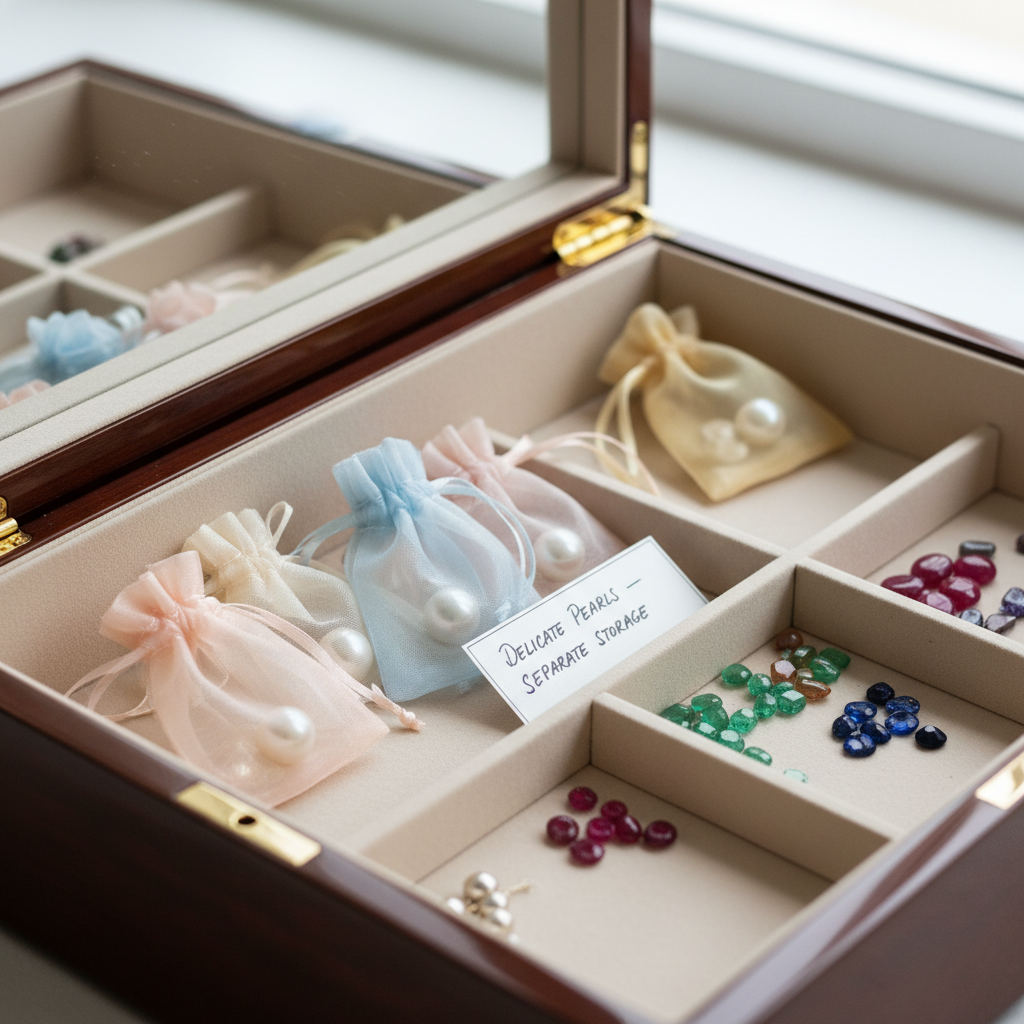
You should include anti-tarnish strips in every storage area to absorb harmful gases and moisture. When considering how to organize a jewelry box at a professional level, environmental control is just as important as physical placement. This is especially true for sterling silver and organic pearls, which are sensitive to air quality. Why do silica packets matter? Humidity is a silent killer that can turn bright silver black and dehydrate precious organic pearls.
Environmental Control Strategies
Storing silver in airtight bags within your box creates a secondary barrier against oxidation. Gold and platinum are more resistant but still benefit from a clean, dry environment.
- Change anti-tarnish strips every six months.
- Keep pearls in breathable silk linings.
- Add silica packets to humid environments.
| Metal Type | Primary Risk | Prevention Method | |
|---|---|---|---|
| Sterling Silver | Oxidation | Anti-Tarnish Strips | |
| 18K Gold | Scratches | Individual Pouches | |
| Organic Pearls | Dehydration | Breathable Silk |
Analysis: Chemical prevention through treated strips reduces the need for aggressive cleaning that eventually wears down the metal surface.
Key Takeaway: Proactive environmental protection measures are essential for preserving the original luster and market value of your collection.
How to organize a jewelry box for premium gifting?
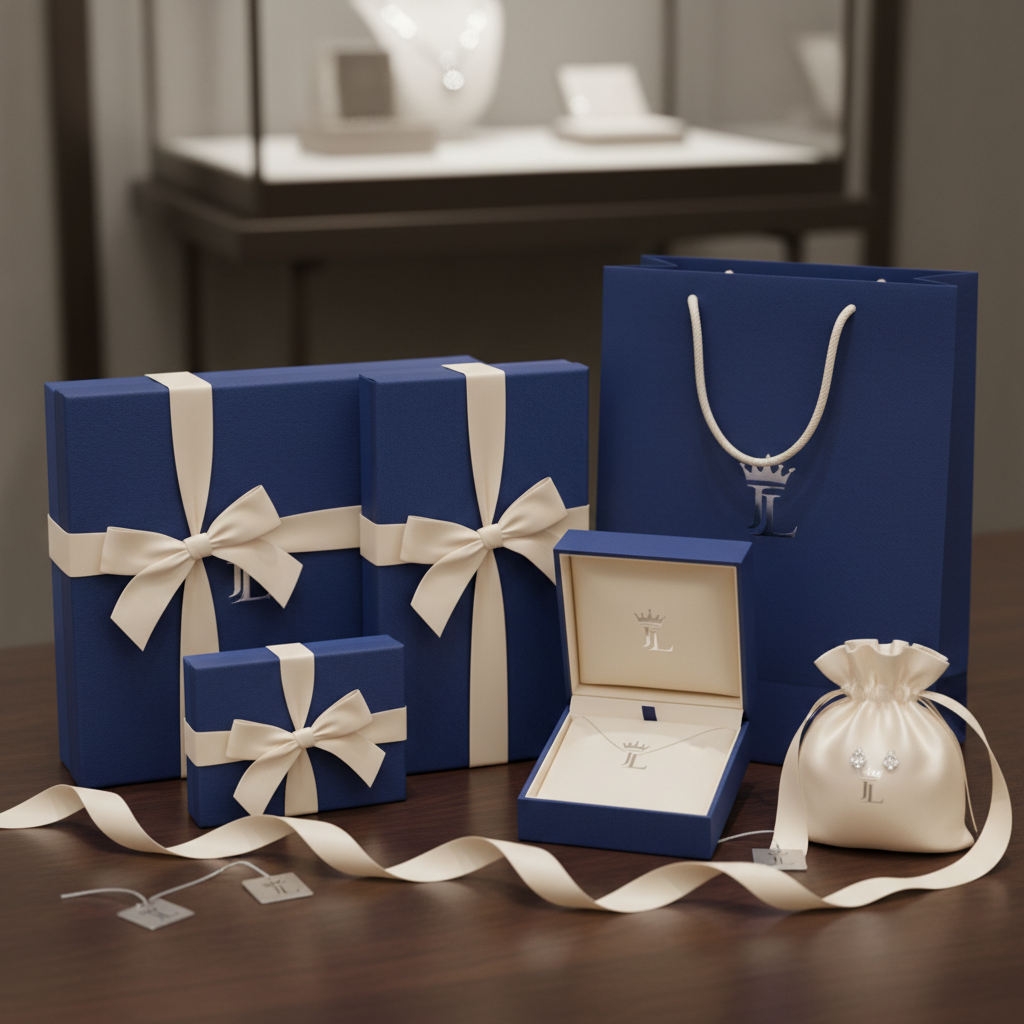
Gifting requires symmetrical placement and centered focal points within a high-quality velvet-lined container. Presentation is the final step in luxury organization. An unboxing experience defines the perceived value of a gift. How does symmetry impact the recipient? Symmetrical arrangements signal professional care and attention to detail, making the gift feel more substantial and deliberate.
Designing the Unboxing Experience
Using professional inserts creates a lasting emotional connection. Center the primary piece to draw immediate attention to the craftsmanship.
- Center the main item for impact.
- Use color-contrasting velvet linings.
- Include a personalized care card.
| Element | Purpose | Impact | |
|---|---|---|---|
| Ribbon Tie | Aesthetic | Emotional Connection | |
| Custom Insert | Security | Professional Feel | |
| Brand Logo | Identity | Trust Building |
Analysis: A well-organized gift box feels heavier and more balanced, conveying a sense of quality before the jewelry is even seen.
Key Takeaway: Symmetrical presentation and premium materials elevate the unboxing experience and significantly enhance the perceived value of any jewelry gift.
Summary of Strategic Recommendations
Mastering the layout of your collection ensures every piece remains a valuable asset. Proper organization extends the life of your jewelry and simplifies your daily routine. By implementing these professional standards, you transform a simple storage container into a curated gallery that honors the craftsmanship of your finest pieces. Invest in high-quality, structured storage today to protect your luxury for the future.
FAQ
Q1: How do you organize necklaces to prevent knots?Answer: Use vertical hooks to allow gravity to keep the chains straight, or lay them flat in long, isolated padded channels.
Q2: What is the benefit of a luxury watch pillow?Answer: It maintains the bracelet’s shape and prevents the metal links from collapsing and scratching the back of the watch case.
Q3: How often should anti-tarnish strips be replaced?Answer: Professional organizers recommend replacing environmental protection strips every six months for maximum effectiveness.
Q4: Can I store pearls with my diamond rings?Answer: No. Diamonds are the hardest gemstone and can easily scratch the soft surface of organic pearls; always store them in separate, soft-lined compartments.
Q5: Why is symmetry important in gift organization?Answer: Symmetry creates a sense of balance and professional quality that increases the perceived value of the item during the unboxing experience.