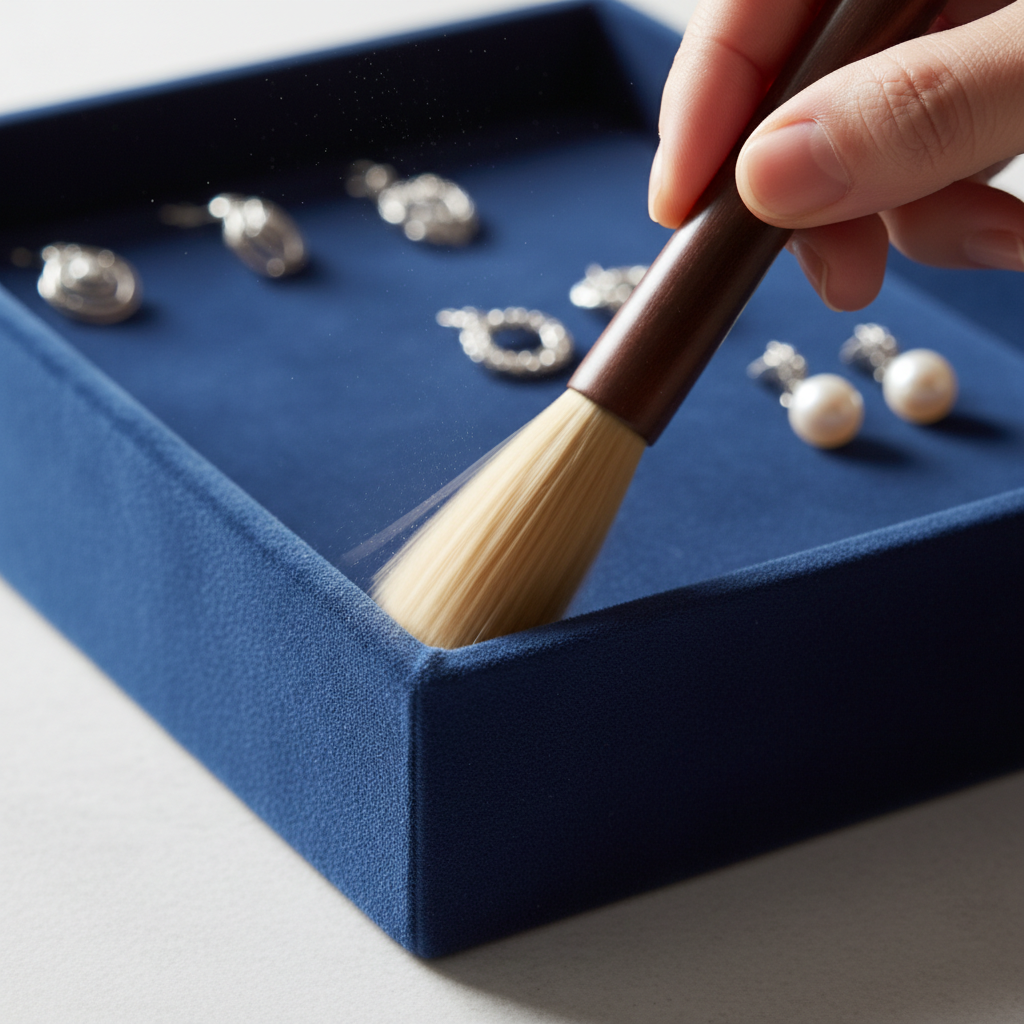
To clean your jewelry tray effectively, you should use a high-quality lint roller for dust or a mild, pH-neutral soap solution for stubborn stains. It is incredibly frustrating to open a high-end display only to find it covered in unsightly lint, grey dust, or makeup smudges. This buildup doesn’t just look messy; it ruins the professional jewelry display and can even lead to micro-scratches on delicate gold or silver pieces. Fortunately, you can restore your storage to showroom quality by following this professional guide on how to clean jewelry tray surfaces and how to clean velvet jewelry box fabric without damage .
Should you empty the tray before cleaning?
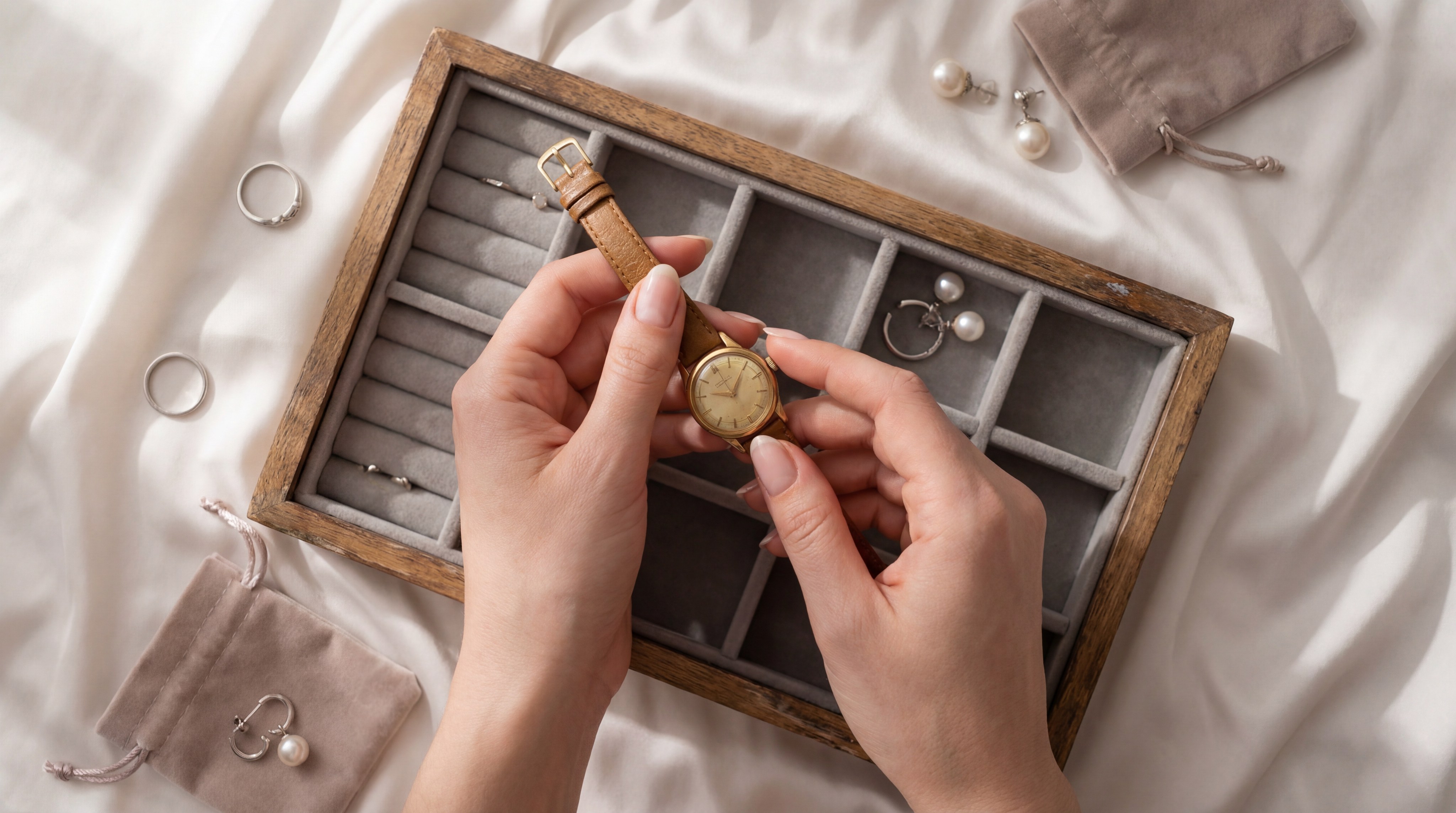
You must remove every piece of jewelry from the compartments before you begin any cleaning ritual. When you are learning how to clean jewelry tray components, safety for your inventory is the top priority. Refer to our guide on how to organize jewelry box layouts to ensure you have a structured place for your items during this process. Professional organizers recommend placing pieces on a clean microfiber towel to prevent rolling or tangling while the tray is being treated.
Is a soft surface necessary for inventory?
Think about it: placing diamonds on a hard tabletop while you work is a recipe for accidental damage. You should always use a dedicated “staging area” that is free of dust and moisture.
- Use a white silk or microfiber cloth.
- Group items by metal type to avoid tarnish transfer.
- Keep small earrings in a dedicated temporary dish.
Here is the secret: an empty tray allows you to inspect the structural integrity of the lining and glue.
Key Takeaway: Preparation prevents chemical exposure to gemstones and allows for a comprehensive inspection of the tray’s condition.
| Step | Action | Benefit | |
|---|---|---|---|
| Emptying | Relocate all jewelry | Prevents chemical damage | |
| Sorting | Group by material | Streamlines the return process | |
| Inspection | Scan for loose fabric | Identifies repair needs |
A thorough emptying is the only way to ensure that no hidden dust particles remain trapped beneath your rings or necklaces.
Is a lint roller the best way to remove dust?
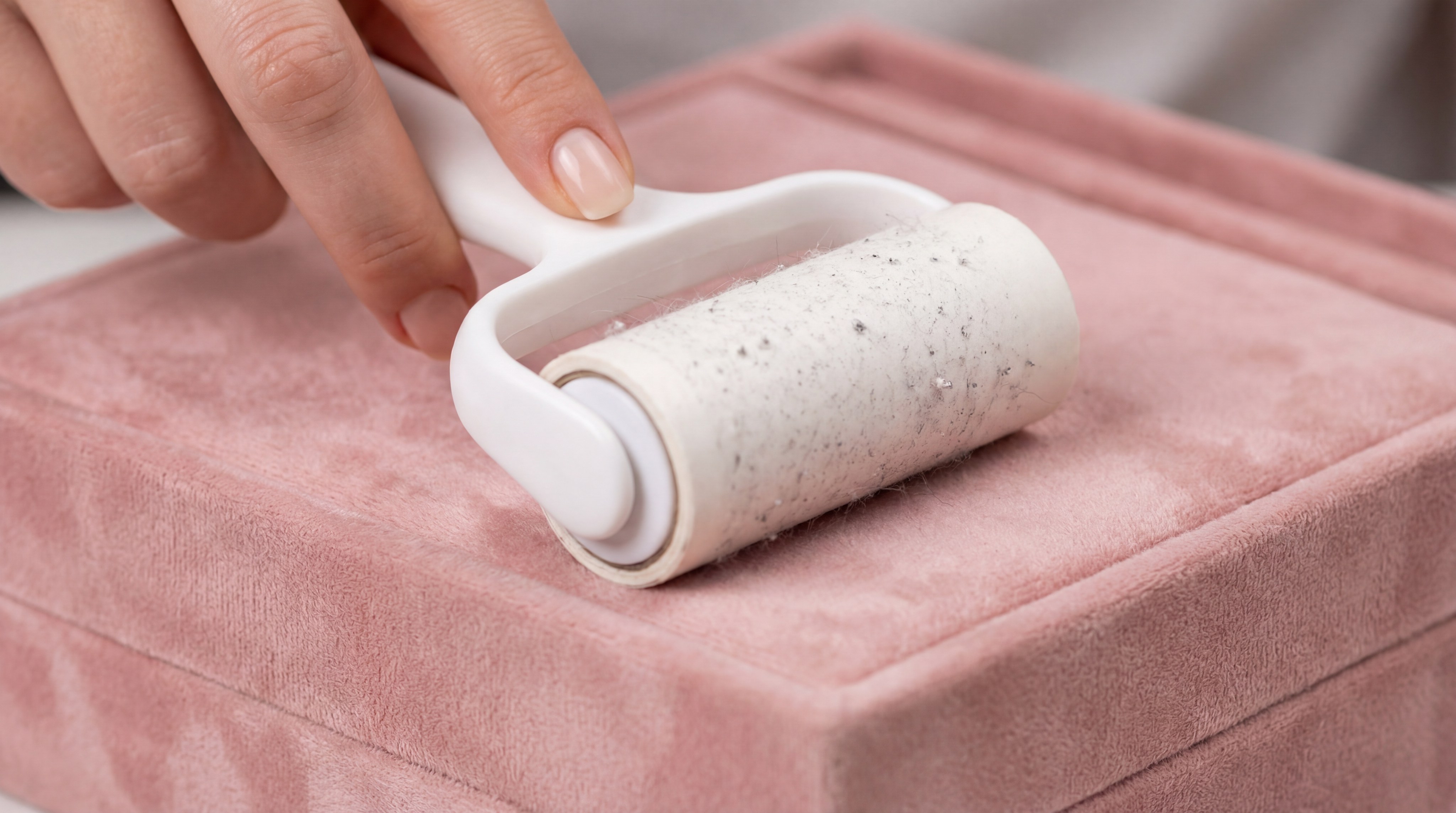
Using a professional-grade lint roller is the most efficient method for removing surface debris from velvet or felt linings. Understanding how to clean jewelry tray fabrics often starts with this simple dry method because it requires no moisture. The adhesive surface safely lifts hair, skin cells, and fibers without disturbing the delicate “nap” of the velvet. For B2B clients, keeping a roller on hand is a daily necessity for maintaining a high-end brand image.
How do I reach the corners with a roller?
You might find that standard rollers are too bulky for tight corners or small earring slots. In these cases, you can wrap a small piece of masking tape around your index finger with the sticky side facing out.
- Apply light pressure to the corner.
- Lift straight up to avoid dragging the fabric.
- Repeat until the adhesive comes away clean.
Look at it this way: precision tools are required for precision luxury storage.
Key Takeaway: Lint rollers provide a safe, dry way to maintain a pristine appearance without the risks associated with liquid cleaners.
| Tool | Application | Effectiveness | |
|---|---|---|---|
| Standard Roller | Large flat sections | High for bulk dust | |
| Masking Tape | Corners and edges | High for precision | |
| Compressed Air | Deep crevices | Moderate for loose bits |
Consistent lint removal prevents dust from becoming embedded in the fabric fibers over time.
How to clean jewelry tray stains with soap?
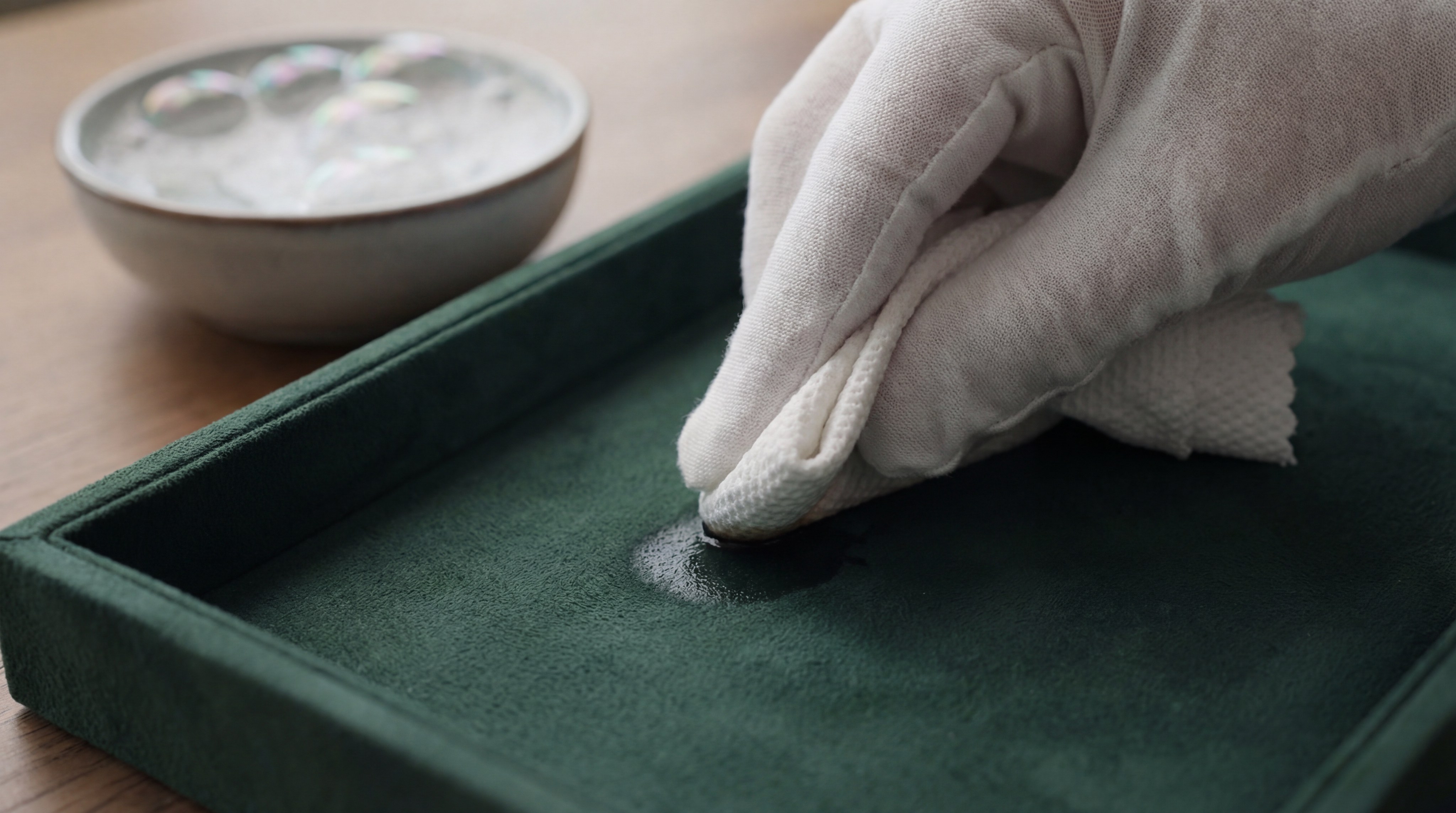
To remove organic stains like makeup or skin oils, you should use a “dry foam” created from distilled water and mild dish soap. Knowing how to clean jewelry tray surfaces requires a delicate balance of moisture control, especially when preparing jewelry for pop-ups and store moves . Never pour liquid directly onto the tray, as it can warp the internal cardboard or MDF structure. Instead, dip a clean microfiber cloth into the suds only and gently blot the affected area.
Which cleaning agents are safest for fabrics?
The best approach is to use a pH-neutral soap that does not contain dyes or heavy fragrances. These additives can leave behind a residue that might eventually react with sensitive metals like silver.
- Use distilled water to prevent mineral spots.
- Choose clear, unscented dish soap.
- Always test a small hidden area first.
Believe it or not: the less moisture you use, the better the final result will be for the tray’s longevity.
Key Takeaway: Blotting with a foam-based solution removes stubborn grime while protecting the structural core of the tray.
| Agent | Purpose | Safety Rating | |
|---|---|---|---|
| Distilled Water | Stain dilution | 5/5 | |
| pH-Neutral Soap | Oil breakdown | 4/5 | |
| Microfiber Cloth | Lifts pigment | 5/5 |
Using professional blotting techniques ensures that stains are lifted out of the fabric rather than being pushed deeper into the padding.
Can a soft brush restore the velvet nap?
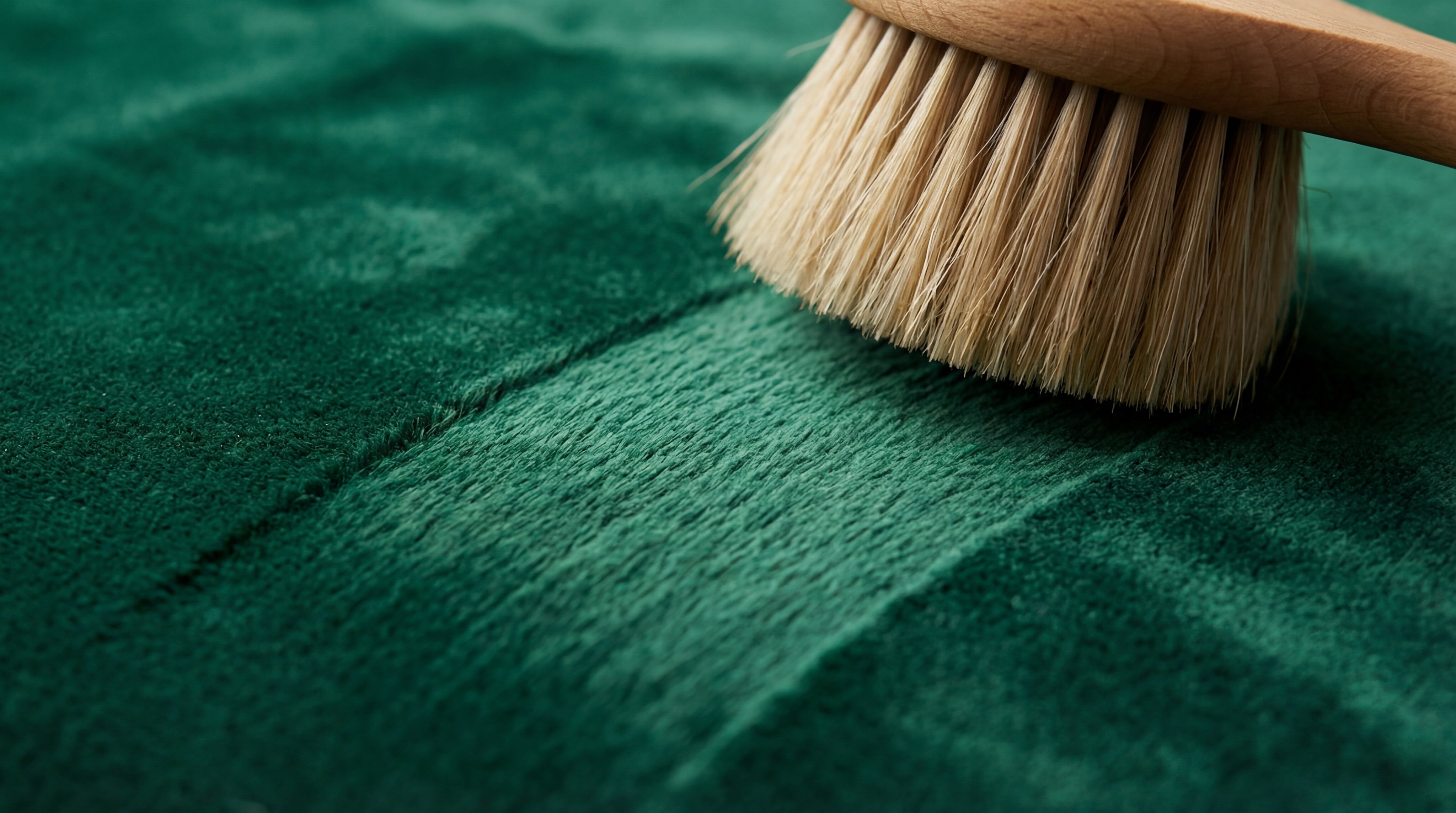
You should use a soft-bristled brush, such as a clean toothbrush or a dedicated fabric brush, to groom the velvet after cleaning. When you master how to clean jewelry tray liners, you will notice that moisture often flattens the fibers. Gently brushing the surface while it is still slightly damp will lift the “nap” and return the tray to its original soft texture. This step is crucial for maintaining the premium tactile experience that luxury brands demand.
Should I brush in multiple directions?
It is best to brush the velvet in a single, consistent direction to create a uniform and professional appearance. If you brush haphazardly, the light will reflect off the fibers unevenly, making the tray look worn or streaky.
- Start from the top left corner.
- Use short, rhythmic strokes.
- Avoid applying heavy downward pressure.
Here is the secret: a soft-bristled brush acts like a comb for the fabric, realigning every individual fiber.
Key Takeaway: Brushing is the essential finishing touch that restores the “luxury feel” to cleaned velvet surfaces.
| Brush Type | Best Use | Result | |
|---|---|---|---|
| Soft Toothbrush | Small compartments | Precise grooming | |
| Horsehair Brush | Large flat trays | Uniform texture | |
| Makeup Brush | Deep ring rolls | Dust dislodging |
Grooming the fabric ensures that your jewelry sits on a plush, even surface that reflects light beautifully.
Is a UV-C wand effective for sanitization?
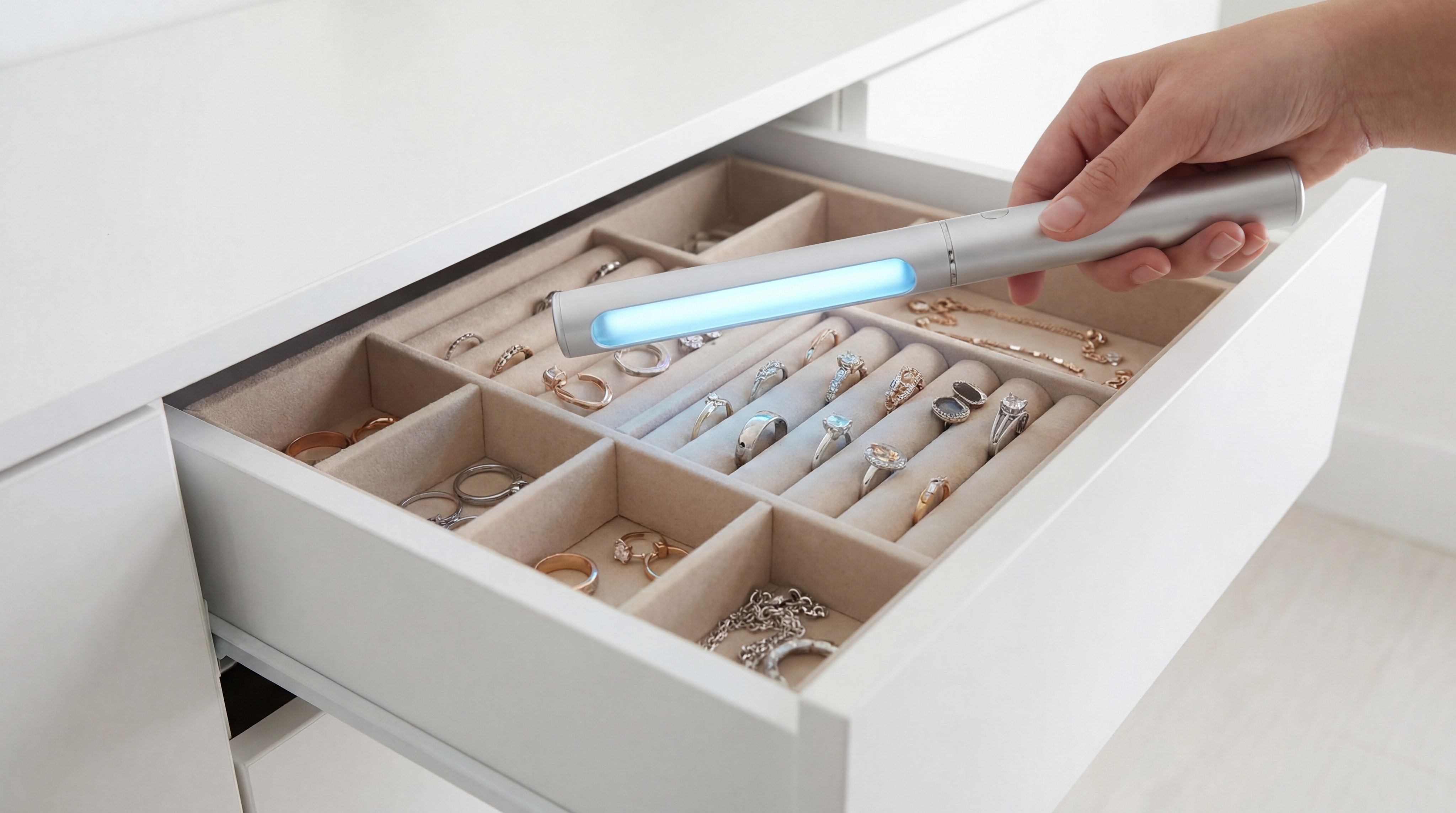
A UV-C sanitizing wand is an excellent tool for killing bacteria and germs without introducing any harmful moisture or chemicals. Researching the best way how do you organize a jewelry box often leads to hygiene, as earrings and rings touch the skin daily. When considering how to clean jewelry tray setups for high-traffic retail environments, UV-C light offers a professional, high-tech solution. Simply pass the wand over the compartments for the manufacturer-recommended time to ensure a sanitary environment.
Are there risks with light-based cleaning?
You must be careful not to leave high-intensity UV light on certain colored fabrics for extended periods, as it could potentially cause fading. However, a quick sanitizing pass is generally considered safe for most high-quality dyed velvets and synthetics.
- Keep the wand 2-3 inches from the surface.
- Follow a steady, slow motion.
- Ensure the tray is completely empty first.
The reality is: customers appreciate seeing modern hygiene standards applied to the products they handle.
Key Takeaway: UV-C sanitization provides a dry, chemical-free way to maintain hygiene in professional jewelry displays.
| Feature | UV-C Sanitization | Chemical Wipes | |
|---|---|---|---|
| Moisture | Zero | High Risk | |
| Residue | None | Possible | |
| Speed | Very Fast | Slow (Drying time) |
Implementing light-based sanitization minimizes the wear and tear associated with physical scrubbing or liquid applications.
Should you use a vacuum on delicate trays?
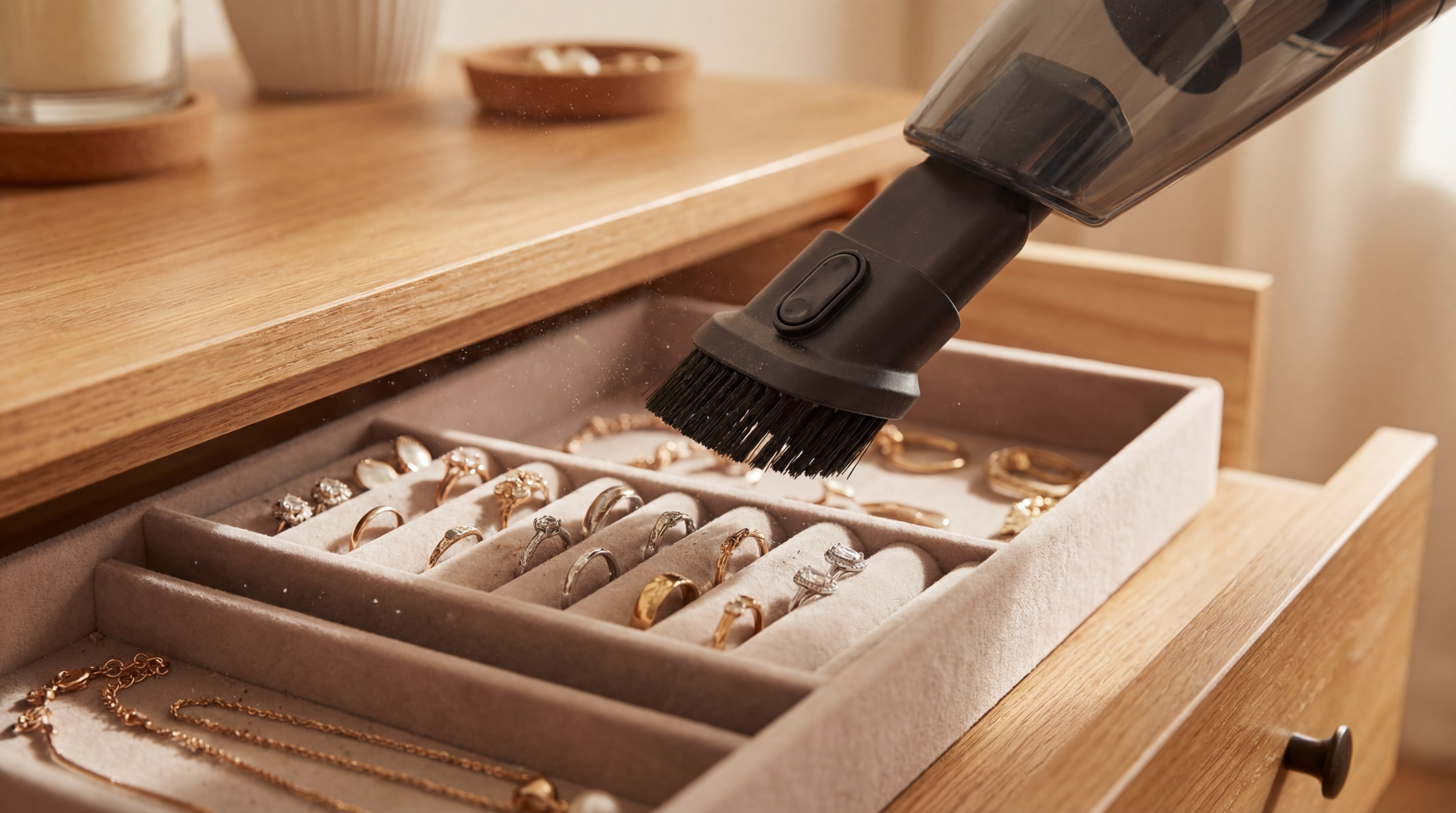
You can use a vacuum cleaner for deep dust removal as long as you use a soft brush attachment and the lowest possible suction setting. When evaluating how to clean jewelry tray interiors, vacuums are great for sucking out debris that a lint roller might miss. However, you must be extremely cautious; high suction can actually pull the fabric lining away from the adhesive base. Always keep the brush attachment moving to prevent the vacuum from “locking” onto the velvet surface.
What attachments work best for trays?
A small “crevice tool” with a soft brush tip is the gold standard for cleaning modular tray systems and drawer inserts. These attachments allow you to get deep into the corners where dust tends to settle and compress.
- Use a cordless handheld vacuum for better control.
- Check the brush for any sharp plastic edges.
- Move in the direction of the fabric grain.
Think about it: the vacuum does the heavy lifting so you don’t have to scrub the delicate fibers.
Key Takeaway: Vacuuming is a powerful deep-cleaning step that should be used sparingly and with extreme care to protect the lining.
| Equipment | Setting | Risk Level | |
|---|---|---|---|
| Handheld Vacuum | Low Suction | Medium | |
| Brush Attachment | Soft Bristles | Low | |
| Industrial Vac | High Suction | Extremely High |
Using a vacuum quarterly helps prevent the “grey” look that occurs when fine dust settles deep into a tray’s fabric.
How to clean jewelry tray slots and rolls?
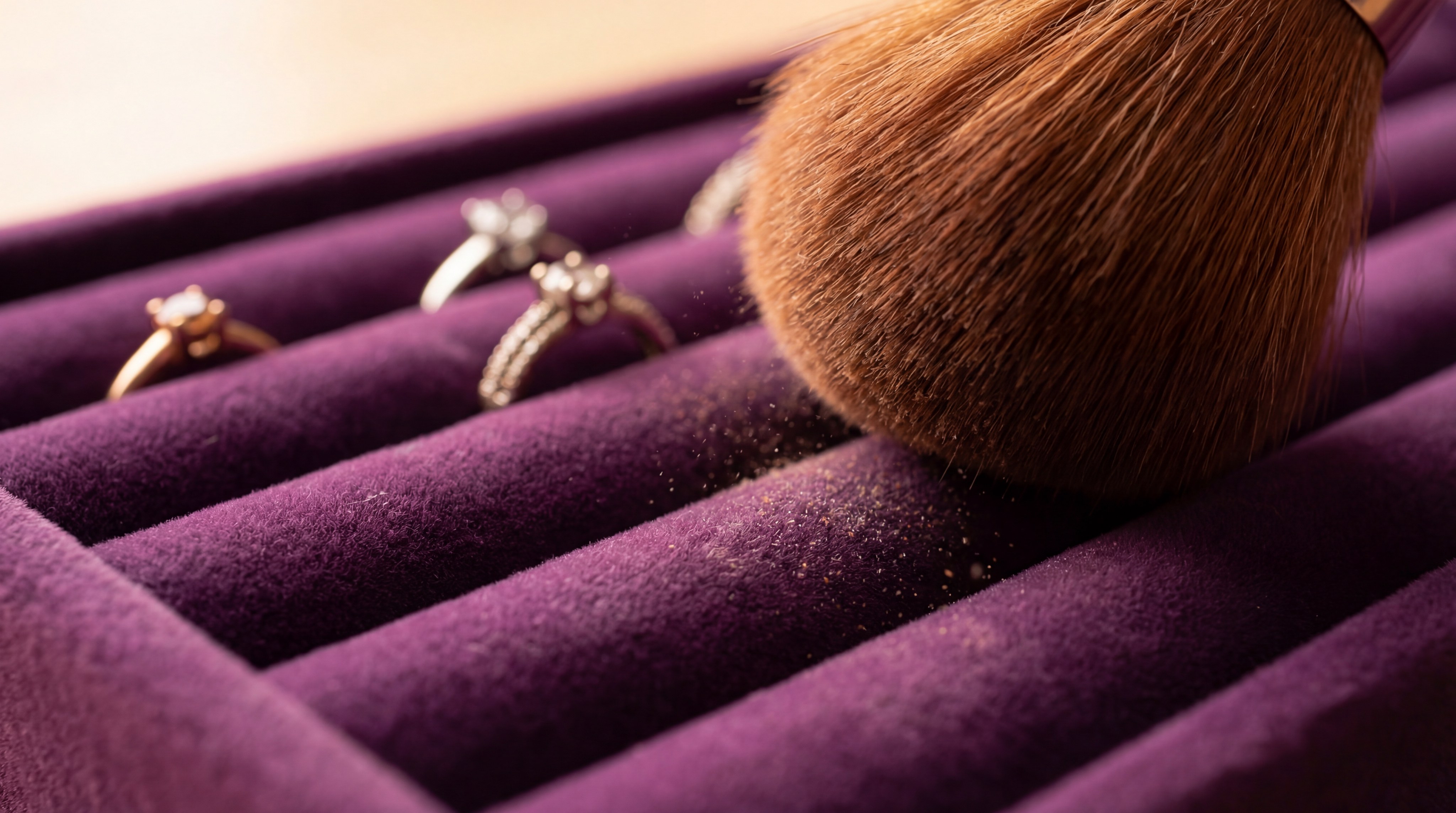
To clean tight ring rolls and earring slots, you should use a clean, fluffy makeup brush to sweep out trapped particles. If you are learning how to make jewelry box inserts , you know that these narrow gaps are the hardest to maintain. When determining how to clean jewelry tray ring sections, a brush provides the flexibility to reach into the “valleys” of the rolls. This method is far safer than using metal tools or tweezers, which could snag the fabric.
Can I use Q-tips for spot cleaning?
Yes, a cotton swab (Q-tip) lightly dampened with a cleaning solution is perfect for targeting a single drop of oil or a makeup smudge. You can rotate the cotton head to “grab” the dirt rather than spreading it across the surrounding area.
- Use a dry Q-tip first to see if the dirt is loose.
- Dampen with distilled water for sticky spots.
- Blot with a dry cotton end immediately after.
Here is the secret: precision cleaning tools prevent you from having to “deep clean” the entire tray for a minor mark.
Key Takeaway: Specialized tools like makeup brushes and Q-tips are essential for maintaining the intricate details of ring storage.
| Tool | Gap Width | Cleaning Style | |
|---|---|---|---|
| Makeup Brush | 2mm – 5mm | Dusting/Sweeping | |
| Q-tip | 1mm – 3mm | Spot Lifting | |
| Compressed Air | < 1mm | Pressure Blowing |
Detailed cleaning of ring rolls prevents the transfer of oils back onto your polished metal bands.
How does moisture control prevent dirt?
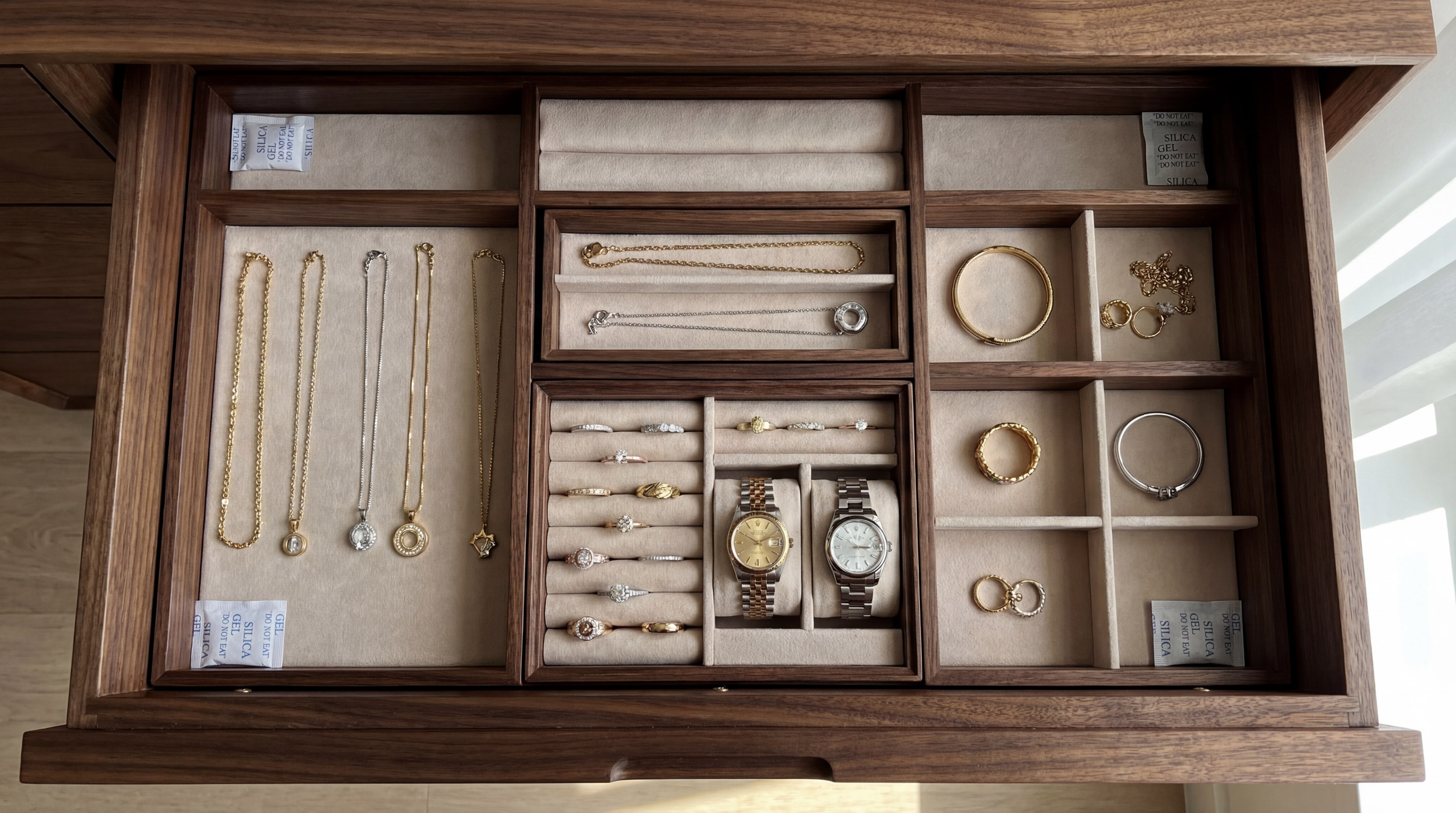
Maintaining low humidity levels is a proactive way to prevent dust from “sticking” to the tray and causing fabric rot. When considering how to clean jewelry tray setups, you must also consider the environment where the tray lives. High humidity makes fabric fibers more absorbent, allowing dust and oils to bond more strongly to the velvet. Using silica gel packets in your drawers or storage areas is a professional-grade solution for long-term preservation.
Why are silica packets helpful?
Silica gel absorbs excess moisture in the air, preventing the “musty” smell that can develop in older or vintage jewelry storage. It also helps prevent the oxidation of metals, which can leave dark marks on your tray’s lining.
- Place one packet in each tray corner.
- Replace the packets every six months.
- Use a hygrometer to monitor drawer humidity.
Look at it this way: a dry tray is a clean tray that requires significantly less maintenance.
Key Takeaway: Humidity control is a “passive” cleaning method that preserves the integrity of both the tray and the jewelry.
| Environment | Humidity Target | Prevention Result | |
|---|---|---|---|
| Luxury Drawer | 30% – 40% | No mold/Musty odors | |
| Open Display | Variable | High dust attraction | |
| Sealed Safe | < 30% | Maximum metal protection |
Controlling the climate around your jewelry trays reduces the frequency of deep cleaning sessions required.
Why is regular tray maintenance valuable?
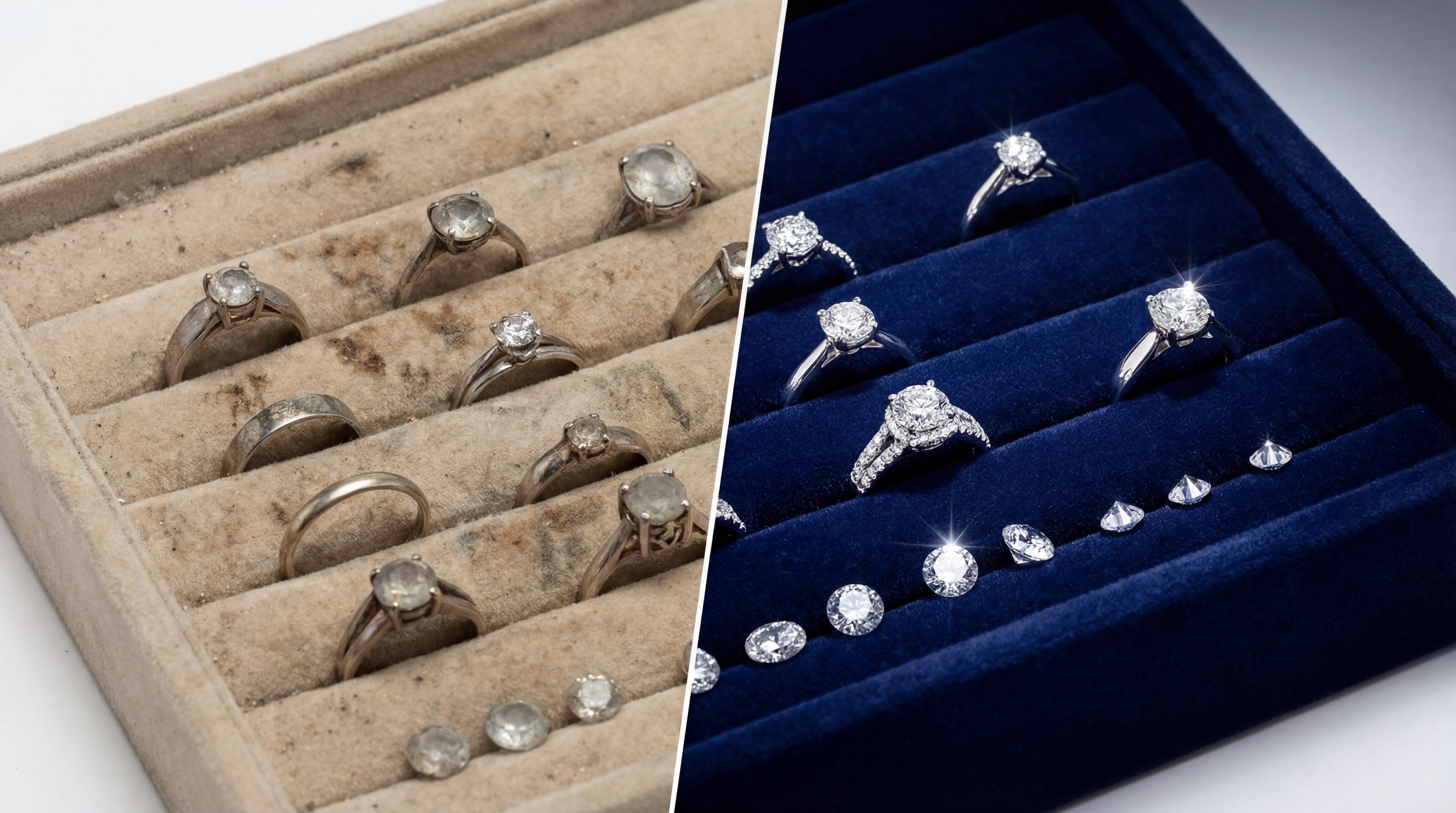
Regular maintenance ensures that your storage remains a value-adding asset for your brand rather than a liability. When you know how to clean jewelry tray liners, you are essentially protecting the “perceived value” of your inventory. A clean tray is often a key component of what you should what to include in jewelry packaging kit for luxury brands. A dirty, stained tray suggests neglect, whereas a sparkling clean one reinforces the quality and brilliance of the diamonds and gemstones on display.
Does a clean tray prevent tarnish?
Yes, because a clean tray is free of the skin oils and acidic dust that accelerate the tarnishing process on silver and low-karat gold. By removing these corrosive elements, you extend the time between professional jewelry polishings.
- Clean trays reduce metal oxidation.
- Dust-free environments prevent micro-abrasion.
- Hygiene boosts customer confidence.
The secret is: a small amount of weekly care saves hours of deep cleaning or replacement costs in the future.
Key Takeaway: Proactive maintenance preserves the aesthetic appeal and protective functionality of your jewelry storage.
| Condition | Visual Impact | Jewelry Risk | |
|---|---|---|---|
| Pristine | High Luxury | Protected/Safe | |
| Dusty | Neglected | Micro-scratches | |
| Stained | Unprofessional | Tarnish/Bacteria |
A clean display acts as a silent salesperson, highlighting the best features of your jewelry collection.
How often should you clean the tray?
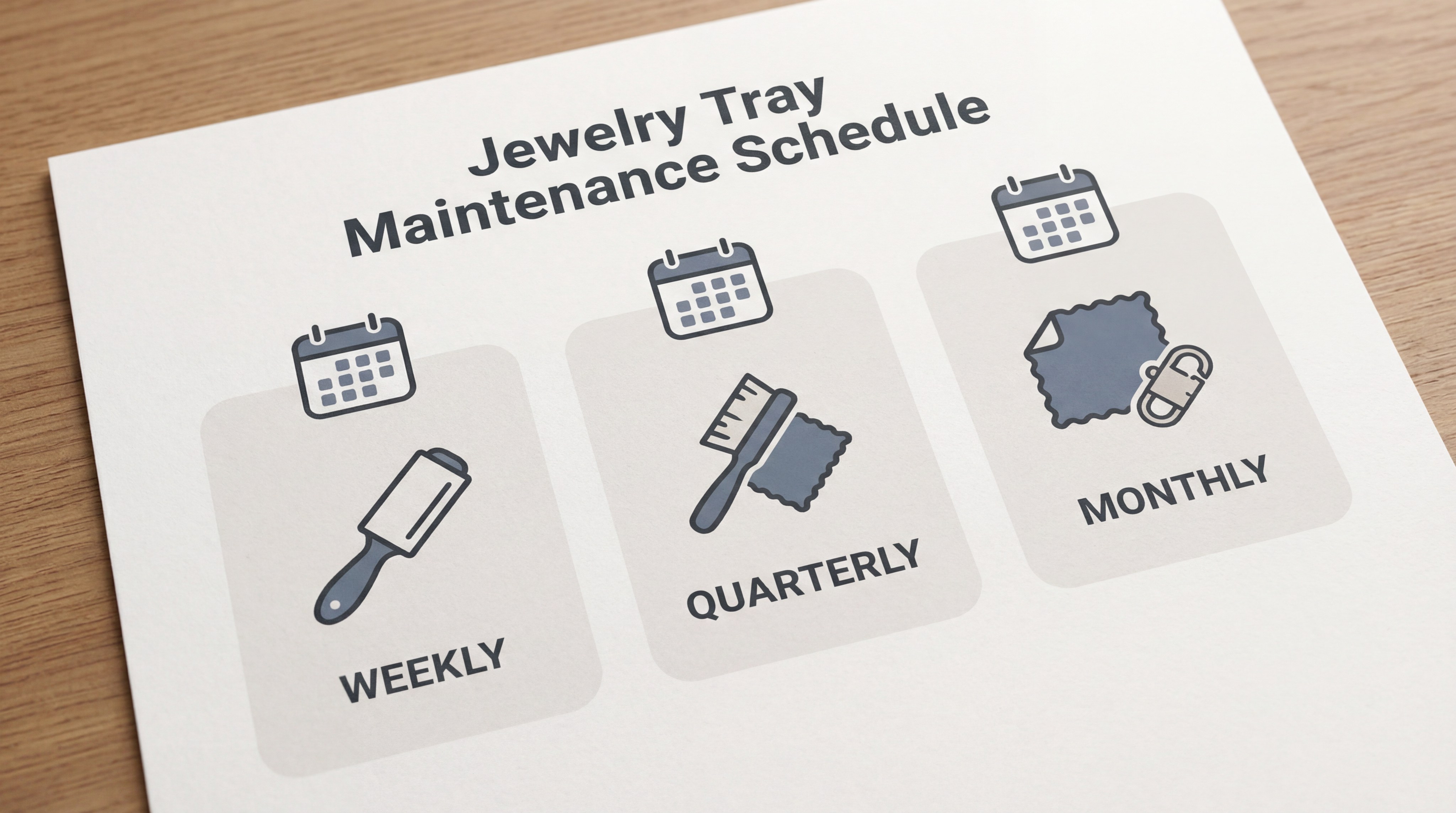
You should perform a quick “lint roll” once a week and a comprehensive deep cleaning every three to six months. Establishing a routine for how to clean jewelry tray systems ensures that dirt never has a chance to become permanently embedded. In retail environments with high customer interaction, you may need to sanitize hard surfaces and glass tops daily. For private collections, a seasonal deep clean is usually sufficient to maintain a professional look.
How do I form a maintenance habit?
The easiest way to stay consistent is to tie your tray cleaning to another routine, such as your jewelry inventory check. If you see dust starting to accumulate, address it immediately rather than waiting for a scheduled deep clean.
- Keep a lint roller in your jewelry drawer.
- Set a calendar reminder for quarterly deep cleans.
- Train staff on proper fabric grooming techniques.
Here is the secret: consistency is the most important factor in long-term fabric preservation.
Key Takeaway: A tiered maintenance schedule prevents major grime buildup and keeps your trays looking brand new for years.
| Frequency | Action | Goal | |
|---|---|---|---|
| Weekly | Lint Rolling | Surface dust removal | |
| Monthly | Hardware Polish | Shine restoration | |
| Quarterly | Deep Foam Clean | Oil and stain removal |
Following a structured schedule protects your investment and ensures your jewelry always has a world-class home.
A clean jewelry tray is the foundation of a professional and protected collection. By integrating these cleaning techniques into your routine, you preserve both the beauty of your displays and the value of your inventory. If your current storage is showing signs of permanent wear or you need custom solutions to enhance your brand, contact us today for a consultation. At YiXin Packaging, we are committed to jewelry packaging excellence, providing you with the tools to showcase your brilliance with every unboxing.
FAQ
Can I use a hair dryer to dry my jewelry tray?Yes, but you must only use the “cool” setting to prevent the heat from melting the internal adhesives or causing the fabric to shrink.
What’s the best way to remove pet hair from velvet?A sticky lint roller is usually effective, but for stubborn hair, you can use a slightly damp rubber glove to “sweep” the hair into clumps.
Can I use alcohol-based wipes on my tray?No, you should avoid alcohol as it can strip the color from dyed fabrics and cause synthetic materials to become brittle or crack over time.
Is it okay to use a steam cleaner on a jewelry tray?It depends, but generally, it is not recommended for home use because the high heat and moisture levels can easily ruin the tray’s internal structural glues.
Can I wash a jewelry tray in the sink?No, never submerge a tray in water; the cardboard or MDF core will absorb the liquid, causing the tray to swell and fall apart.